

Picking between Kimberly-Clark and Medline surgical gowns isn’t a simple procurement checkbox. This choice touches surgical team safety, infection control outcomes, and hundreds of thousands of dollars in annual supply spend.
Both brands fill hospital OR supply rooms. Both meet AAMI Level 3 and Level 4 surgical gown standards. Both carry loyal advocates among clinical staff. So why do some hospitals stick with one and phase out the other?
The real differences hide in the details:
- Barrier performance under actual OR conditions
- Gown fits across long procedures
- Supply chain reliability
- Total cost per case
This breakdown cuts through the brand marketing. Procurement teams, OR nurse managers, and supply chain directors will find what they need here to make a confident, defensible decision.
Kimberly-Clark Surgical Gowns: Product Line, Performance & OR Experience
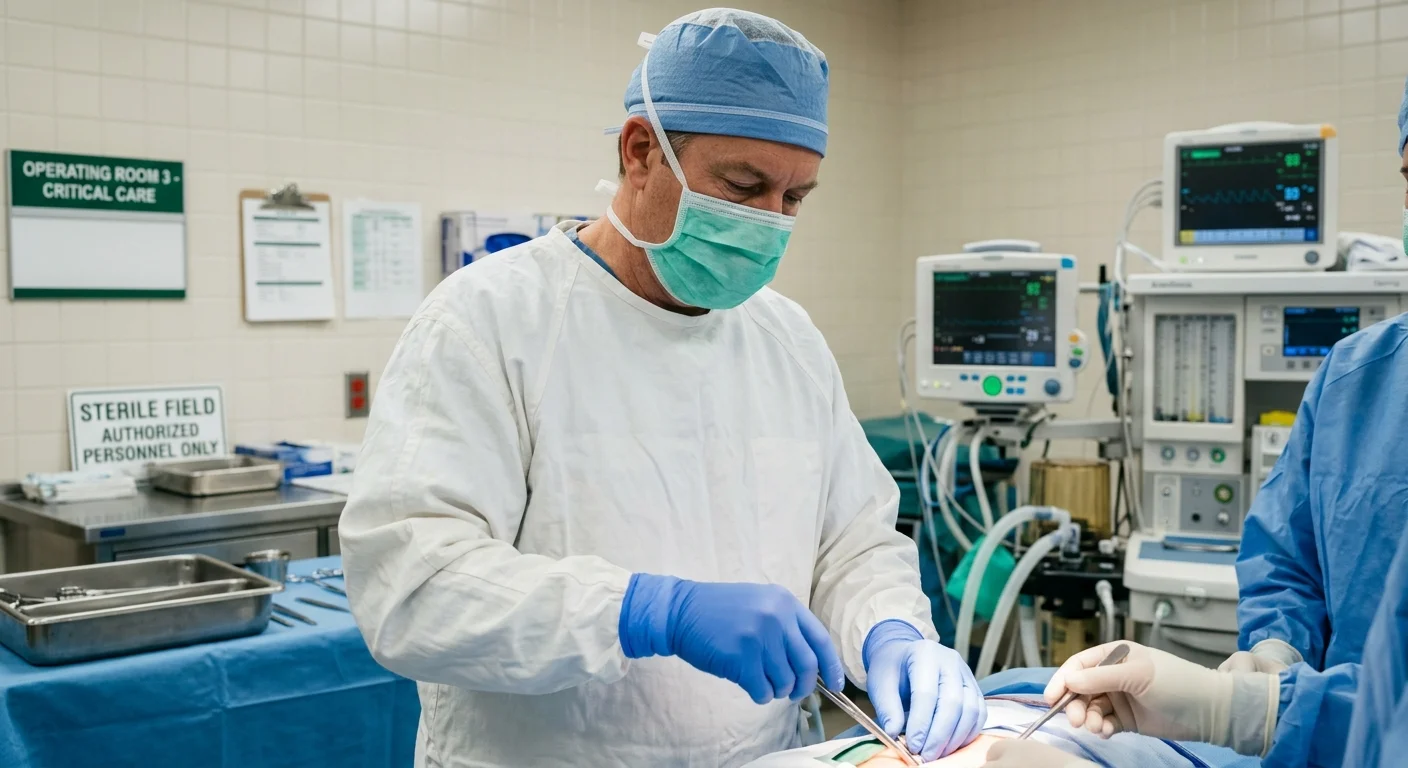 Kimberly-Clark has spent decades on one core idea: protection and breathability can coexist. You don’t have to sacrifice one for the other.
That thinking runs through every product they make — from basic OR gowns to high-performance Level 4 barrier surgical gowns . Here’s a breakdown of each tier and what it delivers on the floor.
The MicroCool KC400 Line: Their Level 4 Flagship
The KC400 is where Kimberly-Clark puts its strongest technical case forward.
This gown uses a three-layer microporous laminate — spunbond/film/spunbond construction. Most impervious gowns can’t breathe. This one does. The microporous film blocks liquid and microbial penetration. At the same time, it allows vapor to pass through. That matters in long cardiac or trauma cases. Heat buildup causes real surgeon fatigue, and this design addresses it directly.
Key compliance credentials:
– AAMI Level 4 barrier protection per ANSI/AAMI PB70
– ASTM F1671 viral penetration resistance — required for Level 4 classification
– Sterile, single-use construction that protects both patient and surgical team
The KC400 also covers a wide range of sizes and fits. Secure-Fit variants run from Large through XX-Large. OR nurse managers flag this as a key detail — diverse surgical teams need options that work across body types. Specific SKUs include the 92323 (XX-Large, Secure-Fit) and 92330 (Large, Specialty, Secure-Fit). Procurement teams get precise ordering control with that level of SKU detail.
The Rest of the KC Product Stack
Below the KC400, Kimberly-Clark rounds out its range with three more lines:
- KC100 — A disposable sterile gown with a PolyUltra fabric system and adjustable hook-and-loop neckline. Packaged 20 per case (SKU: 99285). Built for standard procedure volume at a controlled cost.
- Ultra Surgical Gowns — Made for longer, fluid-heavy OR cases. You get raglan sleeves, a generous cut, and fabric certified to INDA linting standards. That’s relevant for procedures where particulate contamination is a concern.
- KC300 — The everyday option. It trades peak barrier performance for comfort during standard procedures. A solid fit for routine OR use.
| Product Line | AAMI Level | Fabric | Best For |
|---|---|---|---|
| MicroCool KC400 | Level 4 | 3-layer microporous SMS | High-risk, fluid-intensive procedures |
| KC100 | Standard | PolyUltra | General OR volume |
| Ultra | Standard | Low-lint, raglan | Long, invasive cases |
| KC300 | Standard | Balanced | Everyday surgical use |
What This Means for OR Procurement
The KC400 is the gown that built Kimberly-Clark’s reputation in high-acuity settings. Hospitals running cardiac, orthopedic, or trauma programs tend to anchor their Level 4 gown contracts around this line. The reason is straightforward — the breathability advantage is hard to find at this barrier performance level anywhere else.
For standard procedure volume, the KC100 and KC300 give procurement teams cost-efficient choices. Both stay within the Kimberly-Clark quality system, so you’re not trading off reliability to save on cost.
Medline Surgical Gowns: Product Line, Practical Use & Hospital Adoption

Medline surgical gown footprint is hard to ignore. Over 2,500 U.S. hospitals used their OPS™ line in 2023, and they hold 65% market share in non-woven surgical gowns. Those aren’t marketing numbers. They reflect a purchasing pattern that procurement teams keep repeating, contract cycle after contract cycle.
The reason is simple. Medline surgical gowns win on clinical reliability, operational simplicity, and a cost structure that competitors struggle to match at scale.
The OPS™ System: Built Around Procedure-Matching
Medline’s OPS™ (Optimized Protection System) line runs on one practical idea — color-coded gown selection by procedure risk level. Green for low-risk. Blue for moderate. Red for high-fluid, high-microbial cases. OR staff skip the SKU charts mid-setup. The system handles that for them.
Three core models anchor the product line:
| Model | AAMI Level | Key Features | Best For |
|---|---|---|---|
| OPS™ Standard | Level 2–3 | SMS fabric, knit cuffs | General surgery |
| OPS™ Reinforced | Level 3–4 | Double-layer critical zones, impervious panels | Orthopedics, cardiac |
| OPS™ Sterile | Level 4 | Full back coverage, hook & loop closure | High-fluid procedures |
All three use SMS (spunbond-meltblown-spunbond) fabric — the same three-layer build the industry uses to benchmark fluid resistance. Medline’s SMS hits 99%+ fluid strike-through resistance on AATCC 127 testing. Tensile strength exceeds 50 lbs warp and weft. Breathability reaches above 300 g/m²/24hr MVTR. These are real performance numbers, not spec sheet padding.
Fit That Works Through a Long Procedure
Sizing gets underestimated in procurement decisions. It shouldn’t. Medline surgical gowns cut extra room through the chest and sleeves. Chest girth runs 70–80 inches, versus a 65–75 inch competitor average. Sleeve length extends to 38–42 inches. The hook-and-loop back closure spans 24–30 inches for full overlap coverage.
Those dimensions matter across a 6-hour orthopedic case. A gown that pinches or restricts movement creates real problems for the surgical team — no matter how strong the barrier rating is.
The Cost and Adoption Case of Medline Surgical Gowns
Medline packages 50 surgical gowns per case. That volume drives a per-unit cost of $4.50–$8.00, well below the $6.00–$10.00 competitor average. At the procedure volumes most hospitals run, that gap adds up fast. Procurement teams report 20–30% cost savings versus comparable alternatives — with no drop in barrier performance.
The value goes beyond price per unit. OPS™ gowns plug straight into Medline’s drape systems, so OR teams can use pre-configured kit setups. Hospitals running this integrated approach report 15 minutes saved per case in room turnover and prep. Across a high-volume surgical program, that’s a staffing efficiency figure worth including in any budget proposal.
95% of hospitals using OPS™ gowns report zero barrier breach incidents in internal audits. That one number tends to settle most procurement debates.
On sterilization, both EO and gamma methods work with OPS™ gowns. Your supply chain gets full flexibility on processing and storage — no vendor-specific sterilization setups required.
Head-to-Head Comparison: Kimberly-Clark vs Medline Surgical Gowns in Everyday OR Use
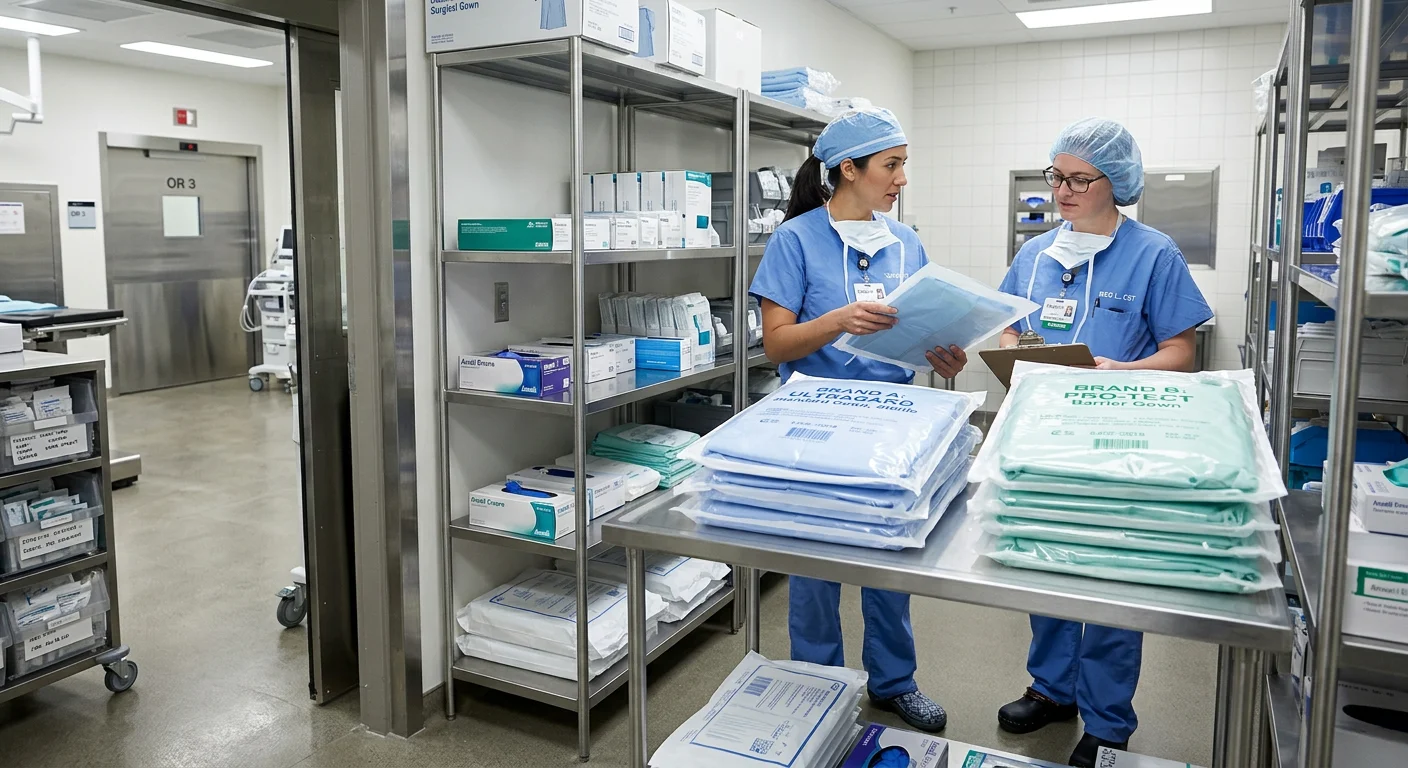 Talk to OR nurses long enough, and a pattern emerges. Kimberly-Clark comes up for comfort during long cases. Medline comes up for cost, volume, and supply reliability. Both are valid — and that tension is what makes this comparison worth working through.
Here’s how the two brands stack up across the factors that drive real procurement decisions.
Barrier Protection: Matched at the Standard, Different in Execution
Both brands meet AAMI Level 3 and Level 4 surgical gown requirements. Neither has a regulatory edge. What sets them apart is how they deliver that protection.
Kimberly-Clark’s MicroCool KC400 uses a three-layer microporous laminate. It blocks fluid and microbial penetration while letting vapor transfer out. In a six-hour cardiac case, that breathability gap is not a minor comfort detail. It’s a fatigue factor — and fatigue affects surgical performance.
Medline’s OPS™ Reinforced line takes a different path. Double-layer critical zones and impervious panels handle high-fluid environments like orthopedics and trauma. The SMS fabric hits a 99%+ fluid strike-through resistance rating on AATCC 127 testing. That’s a strong result for fluid-resistant surgical gowns in high-throughput ORs.
Bottom line: KC400 holds a technical edge for long, high-risk cases where surgeon comfort matters. Medline’s reinforced SMS construction is the stronger pick for standardized, high-volume protection.
Cost Per Case: Where the Gap Gets Significant
This is where Medline surgical gowns pull ahead on the numbers.
| Factor | Kimberly-Clark Surgical Gowns | Medline Surgical Gowns |
|---|---|---|
| Per-unit cost range | $6.00–$10.00 | $4.50–$8.00 |
| Units per case | Varies by SKU | 50 gowns/case |
| Reported savings vs. alternatives | — | 20–30% |
| OR turnover time saved | — | ~15 min/case |
Medline’s 50-gown-per-case packaging keeps per-unit costs low. Hospitals running 200+ surgical cases per week notice the difference fast. Plus, the 15-minute-per-case turnover savings from OPS™ integration with Medline drape systems add up. That’s a staffing efficiency gain — not just a product cost reduction.
Clinical Staff Experience: Fit, Donning, and Procedure Length
Kimberly-Clark offers sizing from Large through XX-Large, with Secure-Fit options. That range fills a real gap, or managers flag in diverse surgical teams. A poor gown fit mid-procedure creates a distraction and puts the sterile field at risk.
Medline tackles the same problem from a different angle. Chest girth runs 70–80 inches, against a 65–75 inch competitor average. Sleeve lengths reach 38–42 inches. OR staff get real room to move across long procedures. The hook-and-loop back closure spanning 24–30 inches keeps full overlap coverage without cutting off reach.
Neither surgical gown brand wins outright on fit. Kimberly-Clark’s structured sizing works well for teams with consistent body profiles. Medline’s larger dimensions cover more staff without needing strict size selection discipline in a busy OR.
Supply Chain and Operational Reliability
Medline’s scale is a clear operational advantage. Over 2,500 U.S. hospitals use their OPS™ line. That distribution reach means faster restocking, lower stockout risk, and GPO contract access through major networks. Supply chain directors managing lean inventory find that reliability is hard to ignore.
Kimberly-Clark’s supply chain is solid. Still, premium lines like the KC400 carry higher per-unit costs and tighter SKU-level ordering requirements. For hospitals where procurement precision is already built into the workflow, that’s workable. For high-volume systems running lean, it adds friction.
Quick Summary: Which Surgical Gown Brand Fits Your Use Case
- Choose Kimberly-Clark KC400 for long procedure times, surgeon comfort, and Level 4 breathability in high-acuity cases. These are the cases where that extra performance layer pays off.
- Choose Medline OPS™ for cost efficiency, supply reliability, and system-wide standardization across a high-volume surgical program. The budget impact and OR throughput gains are real.
Most hospitals don’t commit to one surgical gown brand across the board. The common approach: KC400 for cardiac and trauma cases, Medline OPS™ Standard and Reinforced for general surgery volume. That split setup is gaining ground — and it’s a procurement structure worth a closer look.
Buying Guide: How Hospitals Decide Between Kimberly-Clark and Medline Surgical Gowns
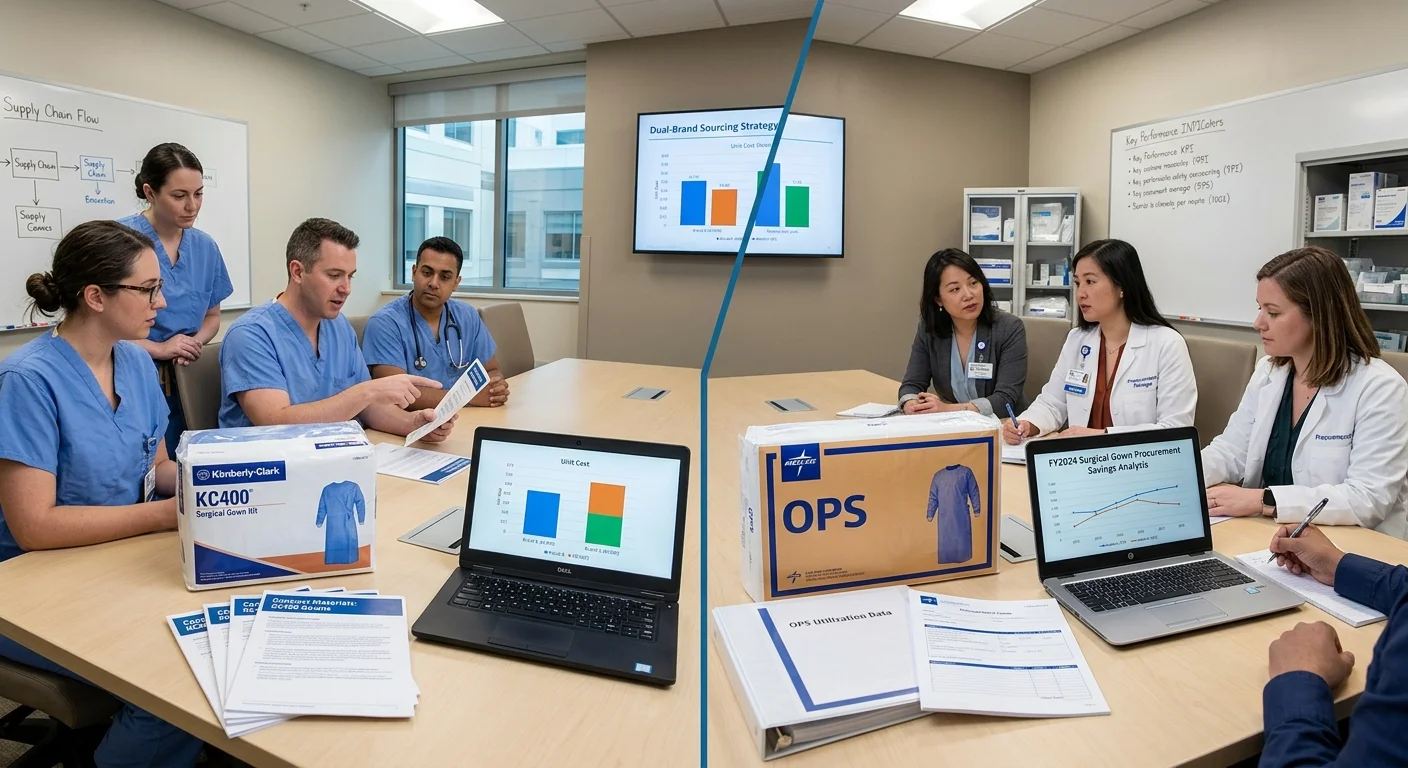 Most hospital procurement teams don’t pick a surgical gown brand. They pick a vendor that survives a structured evaluation process. The two brands that keep making the final round are Kimberly-Clark and Medline.
Here’s what that process looks like.
The Procurement Channel Reality
Almost every U.S. hospital sources surgical gowns through a Group Purchasing Organization (GPO). GPOs negotiate contracted pricing for both Kimberly-Clark and Medline product lines at the same time. The brand decision often happens after the pricing framework is already set. Procurement teams compare net GPO pricing — not list price.
GPO contracts don’t always fit facility-specific needs. Direct manufacturer sourcing or private-label arrangements become the backup option in those cases. Brand recognition rarely drives the final call either way.
The Five Criteria That Decide the Contract
1. Total Cost of Ownership — Not Unit Price
Procurement models calculate: unit cost + labor cost per use cycle + waste disposal cost . A gown that costs $1.50 more per unit but cuts room turnover time by 15 minutes may be the cheaper option at scale. Unit price alone tells you nothing useful.
2. Supply Chain Stability
Both brands get scored on backup manufacturing capacity, safety stock commitments, and shortage history. Procurement directors require documented contingency plans during RFP processes. Verbal assurances don’t count.
3. Clinical Staff Efficiency Data
Fewer gown changes, faster donning, and reduced OR prep time all carry real dollar values. Vendors who show up with clinical study data behind those claims score higher. Numbers matter more than promises here.
4. Compliance Documentation
Sterilization method alignment (EtO vs. gamma), lint-free certification for ICU/surgical environments, and AAMI-level verification all need confirmed documentation. Don’t assume anything is covered — check it directly.
5. System Integration
Hospitals running automated OR kit setups check whether a vendor’s gown line connects to their existing drape systems and inventory workflows. Medline’s OPS™ integration gives it a clear edge in this scoring category. That advantage shows up in the numbers.
The RFP Checklist Worth Keeping
Before signing any surgical gown contract, demand these deliverables from both vendors:
- Barrier performance data across all critical zones (not just peak results)
- GPO net pricing vs. direct sourcing comparison
- Three-year price stability documentation and raw material hedging position
- Supply chain redundancy proof: secondary sites, safety stock levels, and shortage incident history
- Sterilization certification matching your facility’s infection control policy
Work through this checklist before you sign. You’ll end up with a contract you can defend — to clinical leadership, to finance, and to the vendors themselves.
FAQ: Questions Hospital Teams Often Ask About These Two Brands
 Procurement teams ask the same questions every contract cycle. Here are the ones that come up most often — with straight answers.
Do Kimberly-Clark or Medline surgical gowns hold stronger AAMI compliance documentation?
Both brands fully comply with ANSI/AAMI PB70 and carry FDA 510(k) clearance. Neither has a regulatory edge over the other. The difference is in how each brand delivers compliance documents during RFP processes. Medline bundles sterilization certification and critical zone barrier data into its standard vendor packages. Kimberly-Clark requires you to go through a sales rep to get the same level of detail.
Which surgical gown brand handles backorders better?
Medline surgical gowns’ distribution network covers 2,500+ U.S. hospital accounts. That reach gives it a clear restocking advantage. Kimberly-Clark’s premium SKUs — the KC400 in particular — can run into tighter supply during high-demand periods.
Can hospitals run both surgical gown brands at the same time?
Yes. Most high-volume systems do. KC400 for cardiac and trauma. Medline OPS™ for general surgical volume. Two vendors, two contracts, zero gaps in coverage.
Which surgical gown brand do GPOs price more favorably?
Both surgical gown brands appear in major GPO networks. Medline’s per-unit cost runs $4.50–$8.00, which tends to come in below Kimberly-Clark’s $6.00–$10.00 range under comparable contract tiers. Always compare GPO net pricing — not list price. That gap can shift depending on your contract structure.
Conclusion
Choosing between Kimberly-Clark and Medline isn’t a brand loyalty question — it’s a clinical fit question.
High-volume trauma centers with serious fluid exposure risks tend to lean toward Kimberly-Clark’s reinforced AAMI Level 4 surgical gowns. That’s where the extra protection earns its place. Facilities focused on budget flexibility for routine procedures will find Medline’s AAMI Level 3 options hard to pass up.
Both brands clear the compliance bar. Both have earned real trust in real operating rooms. The difference comes down to the details — your procedure mix, your supply chain priorities, and what your OR staff can tolerate through a six-hour case.
So here’s your next move:
- Pull your last 12 months of gown usage data
- Map it against your AAMI level requirements by procedure type
- Request samples from both vendors before your next contract renewal
Your infection control team will thank you. So will your budget.
The best sterile surgical gown isn’t the most expensive one. It’s the one your team will wear the right way, every single time.