
Breathing in dusty air at work or home can leave you coughing and worried about long-term health. Many people struggle to choose the right mask for their needs. This guide explains FFP1 vs FFP2 vs FFP3, helping you understand the differences, protection levels, and how to pick the best dust mask for safety and comfort.
What does FFP mean?
FFP stands for Filtering Face Piece. It’s a term for disposable masks that filter particles and meet the European standard EN 149:2001. This certification tests how well masks filter air and prevent leaks.
FFP ratings matter to different groups:
Industrial workers use these masks in risky environments. FFP-certified masks protect against dust, aerosols, and harmful particles in the air. The rating shows how much protection you get from specific particle sizes.
DIY fans and construction workers need the right FFP level for jobs like sanding, grinding, and cement work. These tasks create different types of dust. Protection needs vary based on how long you’re exposed and how toxic the particles are.
Safety managers must pick masks that meet local certification rules. They also need to ensure masks fit workers properly. The FFP system gives a clear framework for matching protection to workplace risks. This makes worker safety and compliance simpler to handle.
FFP has three levels: FFP1 , FFP2, and FFP3. Each level filters more particles than the last. Each one fits specific exposure situations.
EN 149 Dust Mask Classes Overview
The EN 149 standard splits dust masks into three protection classes: FFP1, FFP2, and FFP3. Each class offers a stronger defense against airborne particles.
Filtration efficiency is the main difference between classes:
- FFP1 filters a minimum of 80% of airborne particles
- FFP2 filters at least 94% of airborne particles
- FFP3 captures 99% or more of airborne particles
Total inward leakage shows how much dirty air can enter the mask through gaps and filter holes:
- FFP1 allows a maximum 22% leakage
- FFP2 permits up to 8% leakage
- FFP3 restricts leakage to just 2%
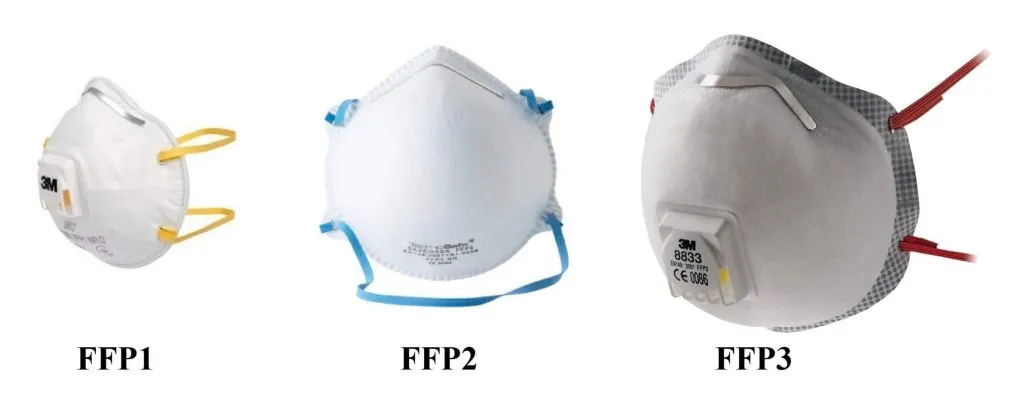
All three classes get tested with 0.3-micron particles. This particle size is the hardest to filter. Smaller and larger particles are easier to capture.
Higher-numbered masks give you a tighter face seal and stronger filtration. But there’s a trade-off: you’ll need more effort to breathe. FFP3 masks require more breathing effort than FFP1 models.
Pick your mask class based on particle toxicity and levels in your work area. High-risk situations with toxic particles need FFP2 or FFP3 protection. Yes, breathing takes more effort, but your safety comes first.
FFP1 mask rating and typical uses
FFP1 masks are the entry level for respiratory protection. But they still deliver certified filtration performance. These masks filter at least 80% of airborne particles sized 0.3 microns or larger. Maximum total inward leakage stays at 22%. They provide an Assigned Protection Factor (APF) of 4. This APF rating protects you in environments where contaminant levels reach up to 4 times the workplace exposure limit.
What FFP1 dust masks protect against?
FFP1 dust masks handle non-toxic particles well. This includes water-based and oil-based particles. You get protection from common workshop dust, light aerosols, and general smoke particles. The key limitation: these masks work for non-hazardous materials only. Never use FFP1 masks around toxic dusts, chemical fumes, asbestos fibers, or biological hazards. They don’t offer enough protection for these dangerous materials.
Where do FFP1 dust masks work best?
FFP1 masks suit light, short tasks in low-risk environments. Basic DIY projects like sanding wooden furniture, removing old paint layers, or smoothing plaster walls work perfectly. Home renovation fans often pick FFP1 masks for these occasional projects.
Light cleaning jobs are another ideal use. Sweeping out a dusty garage? FFP1 masks provide adequate protection. The same goes for cleaning ventilation systems or handling minimal dust during general housework.
Agricultural workers use FFP1 masks for processing non-toxic farm materials. Handling grain storage, moving straw bales, or working with hay produces nuisance-level dust. FFP1 masks filter this dust well. These masks keep the airways clear during harvest season work. Plus, they don’t add the breathing resistance of higher-rated models.
.jpg)
FFP2 mask rating and typical uses
FFP2 masks give you strong protection. They filter at least 94% of particles as small as 0.3 micrometers. Internal leakage stays at 8% or less. The Assigned Protection Factor (APF) of 10 cuts your exposure to airborne hazards by 10 times. You breathe safer air compared to no protection. FFP2 dust masks are the go-to choice for construction sites and industrial work.
What FFP2 dust masks protect against?
FFP2 masks block moderate-to-high dust levels and certain biological hazards. Construction dust from brick cutting, cement mixing, limestone grinding, and concrete demolition gets filtered out. These materials make fine particles. Repeated exposure damages your lungs.
Metal work particles create another threat. Grinding operations, welding fumes, and fine metal dust from machinery all get blocked. The 94% filtration stops these small metallic particles before they hit your respiratory system.
Woodworking environments create sawdust and fine wood particles. Cutting, sanding, and machining all produce these. FFP2 masks handle these organic particles well during long work sessions.
Infectious aerosols need serious protection. The World Health Organization recommends FFP2 masks during SARS, coronavirus, influenza, and avian flu outbreaks. These masks filter respiratory pathogens in healthcare settings and public spaces during epidemics.
Oil mists from machining operations get filtered too. Fine dust from heat and biohazard particles also stay blocked by FFP2 standards.
FFP2 certification types
FFP2 masks show different markings. These tell you about reusability. NR (non-reusable) models work for one shift. Toss them after your workday ends. R (reusable) versions handle multiple shifts. Clean and store them properly between uses.
Some FFP2 masks show a D marking. They passed extra clogging tests using dolomite dust. D-marked masks keep breathing resistance lower in very dusty places. Pick these for heavy construction work. Dust levels run high all day in these jobs.
.jpg)
FFP3 mask rating and high‑risk applications
FFP3 masks give you the highest respiratory protection under the European EN 149:2001 system. These masks filter 99% or more of airborne particles at 0.3 micrometers and larger. Total inward leakage stays at just 2%. This tight seal blocks almost all contaminated air. The Assigned Protection Factor (APF) is 20. You can work in areas where particle levels are 20 times the workplace exposure limit. This protection matches or beats the U.S. NIOSH N99 standard.
Jobs that require FFP3 protection
Asbestos removal needs FFP3 dust masks. Asbestos fibers cause fatal lung diseases. Mesothelioma and asbestosis are two examples. Brief exposure can harm your health for years. Teams removing asbestos wear FFP3 masks during building demolition and renovation work.
Carcinogenic dust requires this level of protection. Stone cutting, sandblasting, and concrete grinding create crystalline silica dust. This dust causes silicosis and lung cancer. Metal dusts like beryllium, cadmium, and hexavalent chromium pose similar cancer risks. FFP3 masks filter out these tiny killers before they reach your lungs.
Nuclear facilities and research labs need FFP3 masks for radioactive particle protection. Workers handle uranium compounds, plutonium samples, and contaminated materials. They need 99% filtration. Radioactive dust gets into the lung tissue. It causes radiation damage for years.
High-risk medical procedures create infectious aerosols. Putting breathing tubes in patients with tuberculosis, SARS, or new flu viruses makes airborne germ clouds. Healthcare workers wear FFP3 masks during these procedures for infection control. Biotech labs working with airborne germs follow the same rule.
Pharmaceutical manufacturing means handling toxic drugs. Chemotherapy medications in powder form threaten production staff. FFP3 masks block these toxic particles during mixing and packaging.
Ceramic manufacturing, chemical plants, and toxic metal workshops create fumes and dust. FFP3 filtration is required. Breathing takes more effort compared to FFP1 or FFP2 masks. But protection against dangerous materials makes the extra effort worth it.
.jpg)
FFP1 vs FFP2 vs FFP3: side‑by‑side comparison
The gap between dust mask classes decides if you stay safe or risk lung damage. Here’s how each FFP rating compares across key protection metrics:
| Specification | FFP1 | FFP2 | FFP3 |
|---|---|---|---|
| Filtration Efficiency | ≥80% | ≥94% | ≥99% |
| Maximum Inward Leakage | 22% | 8% | 2% |
| Assigned Protection Factor (APF) | 4x | 10x | 20x |
| Occupational Exposure Limit (OEL) | 4x WEL | 10x WEL / 12x OEL | 20x WEL |
FFP1 to FFP2: Why upgrade?
FFP2 gives you a 14-point filtration boost over FFP1. You get 94% particle capture instead of 80%. Leakage drops by 64%. Your protection factor jumps 2.5 times—from 4x to 10x the workplace exposure limit.
Certain jobs require this upgrade. Harmful substances that damage health over time need FFP2 protection. They’re not toxic, but they hurt you slowly. Metal grinding and welding produce fumes that FFP1 can’t block well enough. Healthcare workers face infectious droplets during outbreaks. FFP2 is the minimum here. Construction sites with brick, concrete, or limestone dust also need FFP2 filtration.
FFP3: Maximum protection needed
FFP3 adds just 5 points to filtration versus FFP2. But reaching 99% matters for dangerous materials. Leakage shrinks by 75%—from 8% down to 2%. The exposure limit doubles to 20 times the baseline.
Cancer-causing dusts like crystalline silica require FFP3. There’s no compromise here. Asbestos fibers need 99% filtration by law. Nuclear facilities with radioactive particles demand FFP3 protection. Dangerous germs such as tuberculosis and new viruses need this top barrier. Heavy metal dusts—beryllium, cadmium, or hexavalent chromium—also require FFP3 use. The extra breathing effort doesn’t matter. Your life depends on blocking every particle.
FFP ratings vs N95, KN95, P1, P2, P3
Each country tests dust masks using its own standards. But filtration performance stays similar across regions. These equivalents help you pick the right mask for travel or international orders.
N95 masks follow the U.S. NIOSH-42CFR84 standard. They filter at least 95% of non-oil particles at 0.3 microns. This matches FFP2 protection. Health organizations worldwide treat N95 and FFP2 as the same for airborne pathogen protection.
N99 masks raise the bar to 99% filtration efficiency. They sit at the FFP3 level. Need maximum protection against toxic dusts or dangerous aerosols? N99 gives you American-certified FFP3 performance.
KN95 masks come from China’s GB2626-2006 and GB2626-2019 standards. They also filter 95% of particles at 0.3 microns. The CDC and WHO recognize KN95 as equal to N95 and FFP2 for healthcare use. Quality varies by manufacturer, though. Buy KN95 masks from verified suppliers.
P-series masks protect workers in Australia and New Zealand under AS/NZS 1716:2012. The system mirrors FFP ratings:
- P1 filters 80% minimum (matches FFP1)
- P2 captures 94% or more (equals FFP2)
- P3 blocks 99%+ of particles (same as FFP3)
Key differences in testing methods
FFP standards measure total inward leakage. This combines filter performance with face seal quality. American N-series and Chinese KN-series focus on filtration efficiency through the material itself. Face seal testing gets less attention.
This testing gap creates small practical differences. FFP2 masks might seal tighter than some N95 models. But real-world protection stays similar with a proper fit.
Quick equivalency reference
| FFP Rating | Global Equivalents | Filtration Level |
|---|---|---|
| FFP1 | P1 | 80% |
| FFP2 | N95, KN95, P2 | 94–95% |
| FFP3 | N99, P3 | 99% |
The 1% filtration difference between standards doesn’t matter in most work situations. Pick your mask based on local certification requirements. Supplier quality matters too.
How to choose the right FFP level?
Pick the correct dust face mask by knowing what hazards you face. Three things matter: what type of contaminant, how much of it, and how long you’re exposed.
Step 1: Identify your airborne hazard
Check what particles you’re dealing with. Non-toxic workshop dust is different from toxic metal fumes. Biological aerosols pose different risks than asbestos fibers. Chemical particles need stronger protection than general construction dust. Write down the exact material you’ll encounter. This sets your baseline protection need.
Step 2: Measure concentration and exposure time
Compare airborne particle levels to workplace Occupational Exposure Limits (OELs). Short DIY tasks pose different risks than eight-hour factory shifts. Brief exposure to moderate dust needs less protection than long contact with toxic particles. Calculate how long you’ll work in the contaminated area each day.
Step 3: Match FFP rating to your risk level
Choose FFP1 for concentrations below 4 times the OEL. Light sanding projects and occasional dusty cleanup fit here. The contaminant must be non-toxic.
Upgrade to FFP2 for hazards reaching 12 times the OEL. Metal grinding needs this level. So does construction dust from brick or concrete. Protection from infectious diseases requires FFP2. Healthcare settings during flu or coronavirus outbreaks need FFP2 at a minimum.
Select FFP3 for extreme risks up to 50 times the OEL. Asbestos removal demands maximum filtration. Pharmaceutical powder handling needs it too. Tuberculosis patient care requires FFP3. Radioactive particles and cancer-causing dust leave no room for error.
Balance protection with practical comfort
Higher FFP ratings create stronger breathing resistance. FFP3 masks take more effort to breathe through than FFP1 models. Pick the lowest rating that meets your safety needs for all-day comfort. Valved masks reduce heat buildup during long wear.
Face seal quality matters as much as filtration power. Test the fit before relying on FFP2 or FFP3 protection. Facial hair breaks the seal on all FFP masks. Trim beards or choose other respirators.
Workers with heart or lung conditions struggle with high-resistance masks. Get medical clearance before wearing FFP3 every day. Some users need powered air-purifying respirators instead.
Verify regulatory compliance
Match your FFP selection to local safety laws. European workplaces follow EN 149:2001 standards. Some industries require FFP3 by law for specific tasks. Asbestos work carries mandatory protection levels. So do contaminated healthcare environments. Check your sector’s rules before ordering masks.
Review these extra factors:
- NR marking means single-shift use only—discard after work
- R marking allows multiple shifts with proper cleaning
- D marking shows superior clogging resistance for very dusty jobs
- Fluid resistance ratings matter for biological splashes that could hit your face
Fit, reuse, and correct use tips
A dust mask works when it seals tightly against your face. Gaps around the edges let dirty air bypass the filter. Your FFP rating means nothing if air leaks through the sides.
Getting a proper seal
Do a seal check every time you put on a disposable mask. Cover the filter surface with both hands. Breathe in hard and check for air leaking around the edges. Then breathe out hard. The mask should puff out a bit without air escaping from the seal. Feel air leaking? Adjust the straps and nose clip until you get a perfect seal.
Facial hair breaks the seal. Even stubble creates gaps between the mask edge and your skin. Beards cause leaks. You need a clean-shaven face for the tight seal that FFP masks require. This isn’t optional for FFP2 or FFP3 protection.
Glasses, earrings, and long hair also mess with the face seal. Move these items away from the mask edges before your seal check. Adjust your nose clip to stop air from escaping upward and fogging your glasses.
Understanding NR, R, and D markings
FFP masks have reusability codes:
| Marking | Meaning | Usage Instructions |
|---|---|---|
| NR | Non-reusable | Single shift—throw away after use |
| R | Reusable | Multiple shifts allowed with proper cleaning |
| D | Dolomite-tested | Handles heavy dust without clogging |
NR (non-reusable) masks work for one shift. Throw them away after your workday ends. Never wear an NR mask twice. The filter breaks down and stops working well.
R (reusable) masks handle multiple work shifts. Clean and disinfect the face seal area after each use. Follow the maker’s instructions. Store R masks in clean, dry, airtight containers between shifts. Replace them when breathing gets hard, or the maker’s lifespan runs out.
D marking appears on masks that passed dolomite dust clogging tests. These masks have low breathing resistance even in very dusty places. Pick D-marked masks for construction sites and heavy industrial work.
Proper handling steps
Touch the straps when putting on or removing your face mask. The filter surface stays dirty after use. Touching it moves particles to your hands.
Follow this sequence every time:
- Wash your hands well before handling the mask
- Check for tears, dirt, or moisture damage
- Put the mask over your nose and mouth
- Secure all straps or headbands tightly
- Adjust the metal nose clip for a tight fit
- Do your seal check
- Re-adjust until you get zero leakage
Remove masks by grabbing the straps. Keep your hands away from the dirty outer surface. Throw the NR masks right away in a covered trash bin.
Storage and replacement tips
Store unused masks in their original packaging until needed. Keep them away from direct sunlight, chemicals, and humid areas. Dampness ruins the filter material before you wear it.
Replace your dust mask when:
- Breathing gets harder
- The filter shows visible dirt or damage
- Straps lose their stretch or break
- The nose clip bends out of shape
- Any tears or holes appear in the material
- Your shift ends (for NR masks)
Never try to extend mask life by taping edges or changing the structure. These “fixes” ruin the protection. FFP masks are built for function—never trade fit for comfort.