

Picking between cotton and muslin bandana bibs isn’t as simple as it looks. You grab both fabrics at the store, they both feel soft — and then a teething six-month-old drools through three outfits before noon, and suddenly the difference matters a lot.
Both materials feel similar in your hands. But they perform very differently once a real baby is involved. The weave, the absorbency, and how each fabric holds up after forty washes — these details shape your baby’s comfort and your day-to-day experience.
Your little one might be a light dribbler or a full-on drool machine. Either way, knowing what’s in that bib tells you a lot about how well it will actually do its job.
What Are Bandana Bibs? (And Why Material Matters)
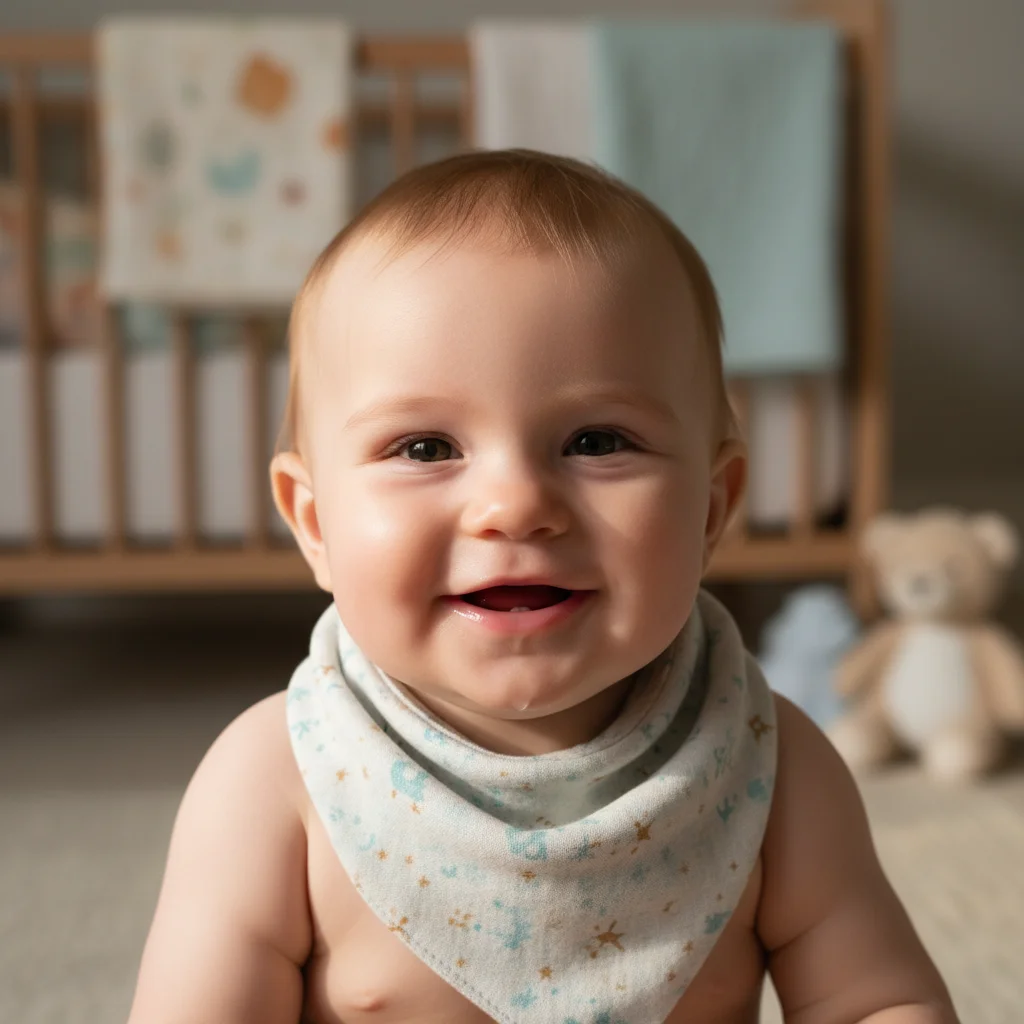 Bandana bibs look simple — a small triangle of fabric, a snap at the back, done. But there’s more going on than meets the eye.
Traditional rectangular bibs cover most of a baby’s chest. Bandana bibs are triangular and sit closer to the neck. That compact shape makes them lighter, less restrictive, and far more comfortable for babies on the move. They fasten with adjustable snap closures — not Velcro, which snags fabric and wears out fast. Most babies can wear them from newborn right through to around age three.
They also do double duty. A good bandana bib catches drool and handles teething messes. It also looks intentional. Like your baby dressed that way on purpose.
So, Why Does Material Change Everything?
Here’s the part most people skip over. A baby’s skin is five times thinner than adult skin. That’s not a small difference. Moisture, friction, and heat hit harder and faster on baby skin. A bib that traps dampness against the skin isn’t just uncomfortable. It’s a rash waiting to happen.
That’s why muslin bandana bibs made from cotton or organic cotton make such a difference:
- Breathability — Cotton muslin has an open weave that lets air flow through. This stops heat from building up and keeps babies from getting fussy and overheated.
- Moisture-wicking — These fabrics pull wetness away from the skin instead of holding it there. Less prolonged contact means less irritation and less bacterial buildup.
- Hypoallergenic properties — Organic cotton is gentle on sensitive skin. It carries no chemical residues that could trigger reactions.
Plastic-backed bibs and silicone options can’t breathe. For all-day drool management, that’s a bigger deal than most people expect.
Cotton Bandana Bibs: What They’re Made Of and How They Perform
Cotton bandana bibs have earned a permanent spot in the baby drawer. Parents keep reaching for them — and the reason is simple.
Most use 100% organic cotton, though the construction varies more than you’d expect. You’ll find three main fabric types on the market:
- Muslin and gauze — lightweight, open-weave fabrics with a natural crinkled texture
- Cotton knit — softer and stretchier against newborn skin
- Blended options — common mixes include 80% cotton with AATCC 135 wash-tested construction, or 95% organic cotton certified to OEKO-TEX® standards, which means no harmful chemical residues
Some brands layer organic cotton with bamboo or polyester fleece for extra thickness. Each blend changes how the bib absorbs moisture and dries out between uses.
How do the Layers Work?
The real absorbency comes from the double-layer construction. A single layer of cotton gauze breathes well but won’t catch much. Two layers together give you a bib that handles both drool and feeding mess all day long. It stays soft and light throughout.
That layered build does one more useful thing. It puts a small buffer between wet fabric and your baby’s skin. Less contact with dampness means less irritation — especially for babies with sensitive or reactive skin.
Most well-made cotton bandana bibs come pre-washed. So the size you see is the size you get. A typical bib measures around 33cm x 27cm — fits snug at the neck without bulk, and wide enough to catch a serious drool situation. Adjustable snap closures keep the fit consistent as babies grow from around three months onward.
Durability and Care
Cotton holds up well with regular washing. Most cotton bandana bibs handle machine washing at 30°–40°C, tumble drying on a normal cycle, and heavy daily use without losing their shape. Skip the bleach and the iron. Both break down the fabric over time and flatten the crinkled texture that keeps gauze bibs so soft.
Muslin Bandana Bibs: Why the Loose Weave Changes Everything
The secret to muslin isn’t its softness. It’s the gaps.
Muslin is 100% cotton, but what sets it apart isn’t the fibre — it’s the structure. That loose, open weave creates tiny air channels through the fabric. Air moves. Heat escapes. Skin stays comfortable instead of clammy. Regular cotton sits denser against the skin. It traps warmth and moisture with nowhere to go. Muslin lets everything breathe.
That difference matters a lot during a long afternoon of drool and teething.
The Weave Does the Work
A standard bib absorbs. A muslin bandana bib absorbs and stays comfortable to wear. That’s the distinction worth paying attention to.
Multi-layer muslin — four layers or more — stacks that open weave to boost absorbency without losing the lightweight, airy feel. Drool gets pulled in. Spit-up gets caught. Each layer works to push wet fabric away from your baby’s neck and chin, where rash-prone skin sits closest to the surface.
Plus, it dries fast. A damp, warm bib is where bacterial buildup starts. This one refreshes between uses instead of staying wet.
It Gets Better Every Time You Wash It
Here’s the part that surprises most people. Muslin bandana bibs get softer with every wash. Not rough. Not pilled. Softer — you’ll notice it clearly around the tenth wash, and that softness holds through fifty washes and beyond.
Care is simple: machine wash on a normal cycle, tumble dry on low or air dry. No special treatment. No delicate settings. Regular use makes the fabric work better over time.
| Feature | Muslin Bandana Bibs | Regular Bibs |
|---|---|---|
| Breathability | Excellent — open weave airflow | Poor — traps heat and moisture |
| Absorbency | High — handles drool and spills | Lower — wet underlayers common |
| Softness after washing | Increases with each cycle | Static or roughens over time |
| Overheating risk | Reduced | Higher, particularly with synthetics |
Sensitive baby skin reddens from friction. It flares with prolonged dampness. For skin like that, breathability, absorbency, and softness that improve with washing aren’t extras. That’s the whole job of the bib.
Head-to-Head Comparison: Cotton vs Muslin Across 6 Key Factors
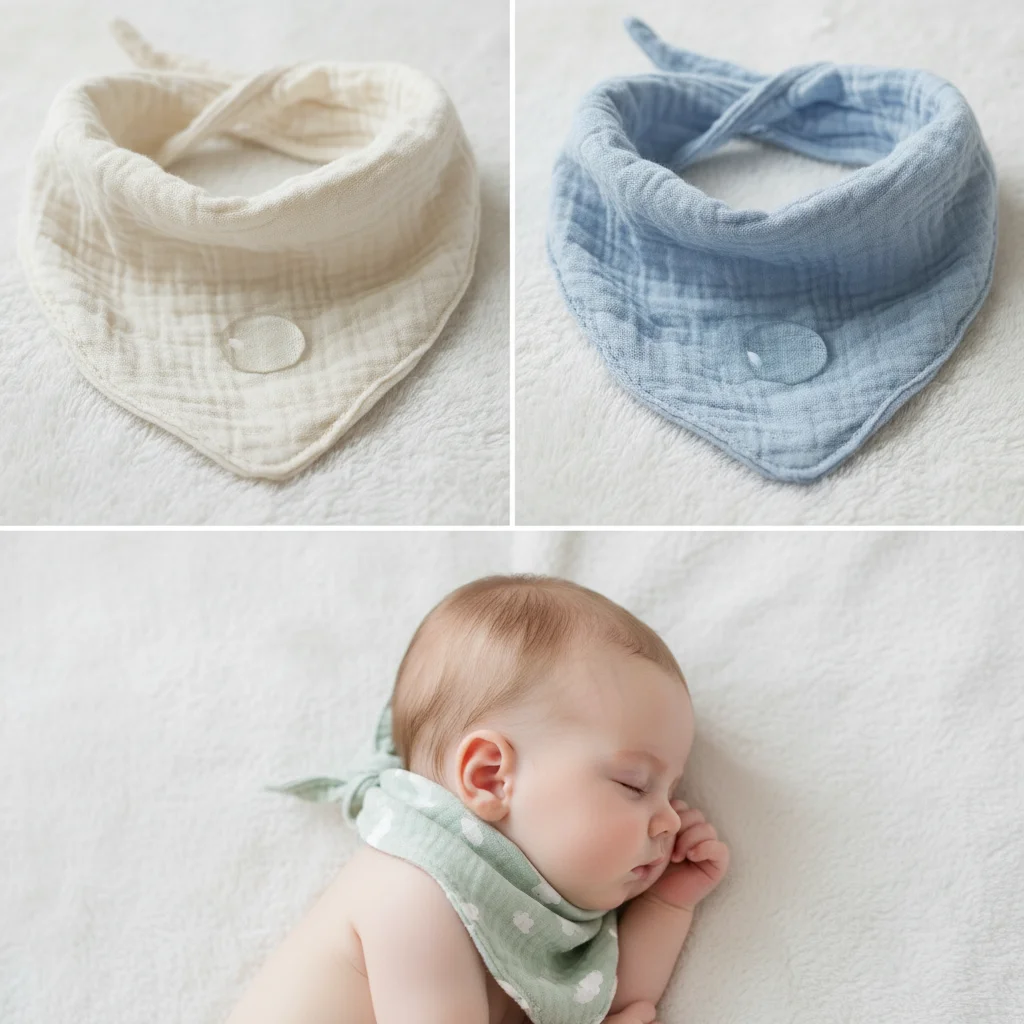 Six factors. Two fabrics. One clear winner for each — and knowing which wins where is the whole point.
Both cotton and muslin bandana bibs do the job. But they do it in different ways. Those differences show up at the exact moments that matter: a sweaty summer afternoon, a heavy drool session, the fortieth time you’ve pulled something out of the wash.
Here’s how they stack up.
1. Absorbency: Cotton Takes This One
Cotton’s denser fibre structure holds more moisture — full stop. A heavy drool day or a full feeding spill? That extra fibre density does real work.
Muslin absorbs well, too. But its open weave — the thing that makes it so breathable — also limits how much it holds. You’ll reach for bib number two faster.
Winner: Cotton — for heavy drool and messier feeding stages.
2. Breathability: Muslin, By a Significant Margin
This is where muslin bandana bibs pull ahead. The loose plain weave creates constant airflow against your baby’s skin. Heat moves out. Moisture lifts. The bib stays comfortable instead of turning into a warm, damp layer pressed against a sensitive neck.
Standard cotton — tighter weaves in particular — traps that warmth. On a hot day, or during a long stretch of teething, that’s the difference between a settled baby and an uncomfortable one.
Winner: Muslin — not a close call.
3. Softness: An Honest Tie
Muslin starts soft. That slight crinkled texture feels gentle from the first wear. It gets softer with every wash.
High-quality cotton — Pima or Supima varieties especially — starts smooth and crisp, then softens over time. Different textures. Both are gentle on sensitive skin.
Winner: Tie — depends on which texture your baby’s skin prefers.
4. Weight: Muslin Feels Like Almost Nothing
Muslin is gauze-light. Babies wearing muslin bandana bibs barely notice anything around their neck. That matters more than it sounds. Try keeping a bib on a wriggly seven-month-old all morning — lighter wins.
Cotton varies. Some cotton bibs are fine. Others are denser and heavier, adding friction and bulk during active play.
Winner: Muslin — for all-day comfort and wearability.
5. Durability: Cotton Holds Up Better Long-Term
A tighter weave resists snags and pulls better. Cotton bandana bibs tend to hold their structure through heavy rotation — daily washing, constant use — better than muslin does.
Muslin’s loose threads are more vulnerable. It’s not fragile, but it rewards gentler care to stay looking good after fifty washes.
Winner: Cotton — if longevity through hard use is the priority.
6. Quick-Drying: Muslin Wins
A lighter fabric dries faster. That’s the whole equation. Muslin refreshes between uses in a way that heavier cotton can’t match. That’s a real advantage as you cycle through multiple bibs before lunch.
A bib that stays damp breeds bacteria. For teething babies, fast drying isn’t a bonus feature. It’s a practical necessity.
Winner: Muslin — especially during high-drool stages.
So, Which Should You Choose?
| Factor | Cotton Bandana Bibs | Muslin Bandana Bibs |
|---|---|---|
| Absorbency | ✅ Higher | Good, not maximum |
| Breathability | Moderate | ✅ Superior |
| Softness | Softens over time | ✅ Soft from washing once |
| Weight | Varies, often heavier | ✅ Lightweight |
| Durability | ✅ More resilient | Requires gentler care |
| Quick-Drying | Slower | ✅ Faster |
The straight answer: muslin bandana bibs win four of the six categories that affect daily comfort — breathability, weight, softness, and drying speed. Cotton edges ahead on raw absorbency and structural durability.
For most babies, most of the time, muslin is the more practical daily choice. For parents dealing with heavy feeders or who want bibs that hold up through rougher handling, cotton closes the gap fast.
Which One Is Better for Your Baby’s Skin? (Sensitive Skin Deep Dive)
More than half of all mothers say their baby has sensitive skin. That’s not a niche concern — it’s the norm. The numbers behind common newborn skin problems show why a baby bib ‘s fabric deserves more thought than most people give it: dry skin affects 29% of newborns, atopic dermatitis 28%, and diaper rash 15%. Your baby’s skin is delicate. The signs don’t always show up until something goes wrong.
A bib sits pressed against the neck and chin all day. Those are the spots where drool pools, friction builds, and heat collects. For a baby already dealing with dryness or eczema in its early stages, that constant contact can push irritation into a real flare.
Why Muslin Bandana Bibs Have a Specific Advantage Here
This is where the fabric conversation becomes a skin conversation.
Muslin bandana bibs work with sensitive skin rather than against it, for three specific reasons:
- No trapped moisture. The open weave pulls dampness away from the surface instead of holding it there. Wet fabric sitting against reactive skin is one of the most reliable triggers for contact rash.
- No synthetic residues. 45% of American parents seek out fragrance-free products — and for good reason. Organic muslin has none of the chemical finishes that can trigger reactions on thin, barrier-compromised skin.
- No friction heat. Denser fabrics hold warmth. Muslin disperses it. For babies with atopic dermatitis, heat is a known irritant — cutting it down matters.
More parents now reach for plant-based, skin-tested products. A muslin bandana bib made from certified organic cotton fits that same thinking — gentle material, minimal interference, nothing added that doesn’t belong there.
Cotton bandana bibs aren’t harsh. But their denser weave holds more moisture against the skin for longer. For a baby with already-reactive skin, that difference — small on paper — shows up fast in practice.
Best Use Cases: Cotton vs. Muslin Bandana Bibs
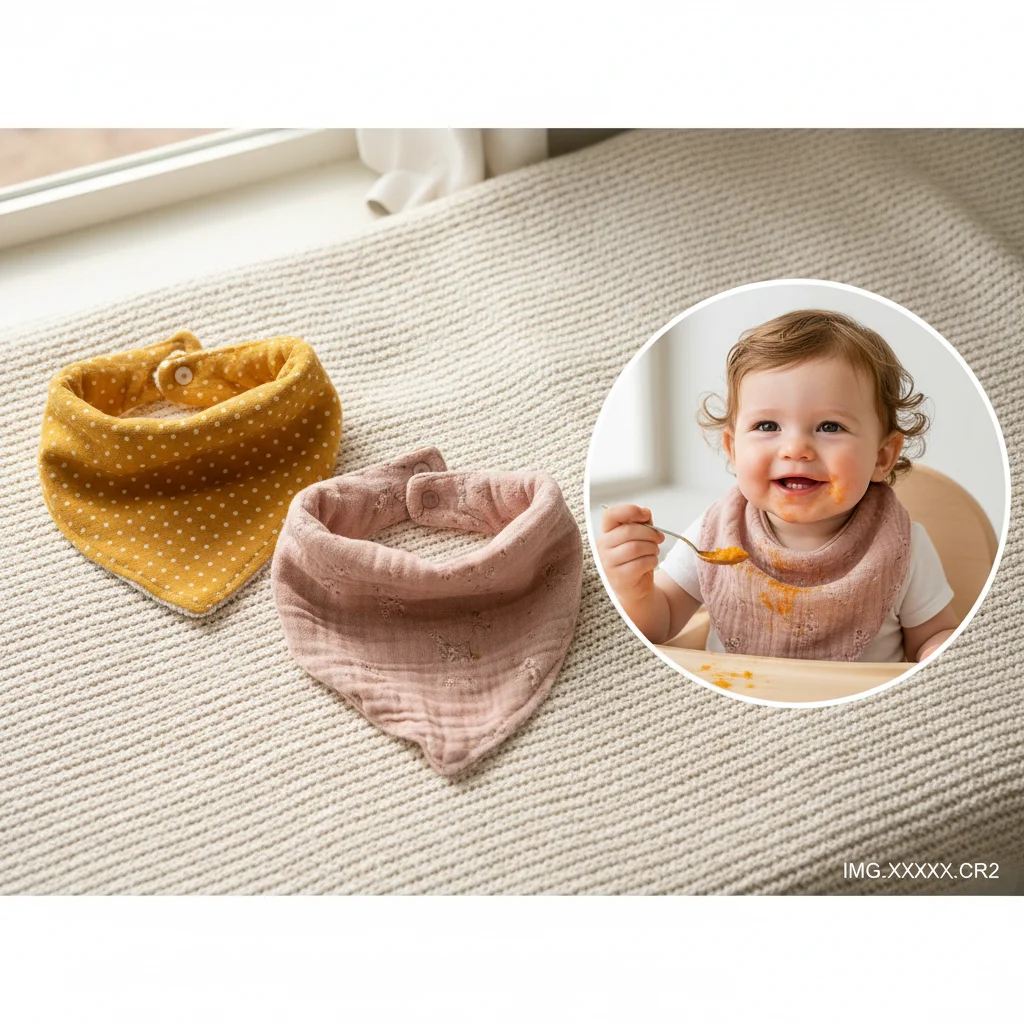 A bib for a three-month-old is not the same as one for a nine-month-old smeared in sweet potato puree. Age, season, and how much your baby drools — these are the real deciding factors.
Reach for Muslin Bandana Bibs:
- Drool is the main issue. In the first few months, babies produce constant light moisture, not food mess. Muslin handles this well. The open weave keeps air moving against the neck all day. The soft texture stays gentle on sensitive skin and never goes stiff between changes.
- The weather is warm. Summer afternoons and hot climates are where muslin shines. That loose plain weave holds a 35.9% share of the breathable baby textile market for good reason. It pushes heat away from the skin instead of trapping it.
- Your baby wears the bib all day. Muslin bandana bibs are light and barely noticeable. They stay comfortable through naps, playtime, and everything in between.
Reach for Cotton Bandana Bibs:
- Solid foods have started. From around six months, meals get thick and messy fast. Cotton’s denser weave tackles purées, porridge, and real food residue far better than muslin. It also holds up through the multiple washes each day that this stage demands.
- Winter has arrived. Lower breathability is a plus in cold weather. Cotton holds a bit of warmth close to the skin. That small thermal boost works in your favour during cooler months.
The Smartest Move: Build a Mixed Set
Most parents end up here. Start with 10–12 muslin bandana bibs for daytime drool and summer use. Add 5–8 cotton bibs for mealtimes and cold-weather days. That ratio covers the full range of what your baby needs — softness and airflow during calm moments, durability and absorbency once things get messy.
The Verdict: Our Recommendation for Different Baby Profiles
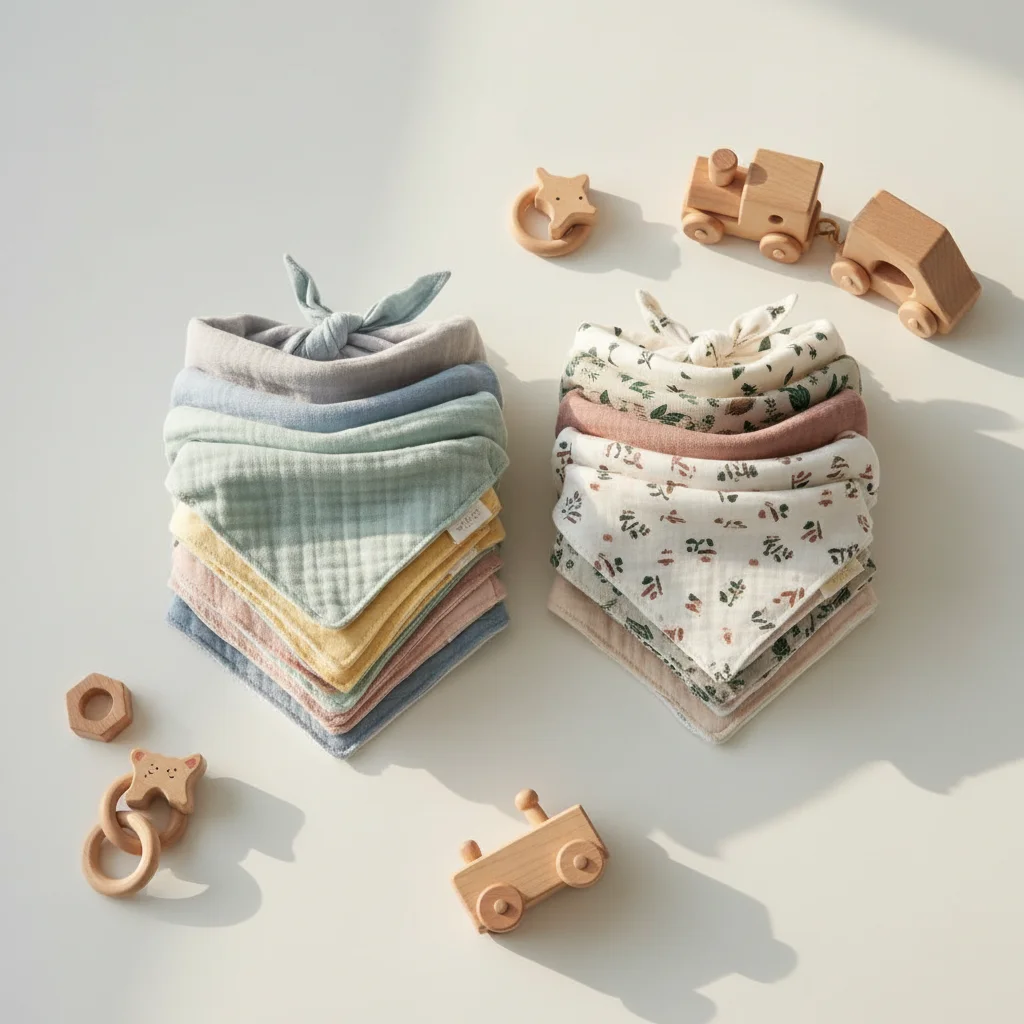 Every baby is different. And the right newborn bib reflects that.
Match the fabric to what your baby needs right now — not what sounds good on paper.
Baby drools a lot and runs warm: Start with muslin bandana bibs. The open weave lets air move against the neck all day. Less heat. Less irritation. Less fussing.
Baby has sensitive or reactive skin: Go with muslin again — organic cotton muslin. No synthetic finishes. No trapped moisture. Nothing sits against delicate skin longer than it should.
You’re in the solid foods stage: Cotton is the better pick here. It handles thick purées and real-food mess far better than muslin does.
You live somewhere cold: Cotton has a denser weave. It holds up better through the winter months and keeps the neck area warmer.
The truth? Most parents need both. Muslin bandana bibs handle the day-to-day load. Cotton fills the gaps. Together, you’re covered — whatever the season, whatever the stage.
Conclusion
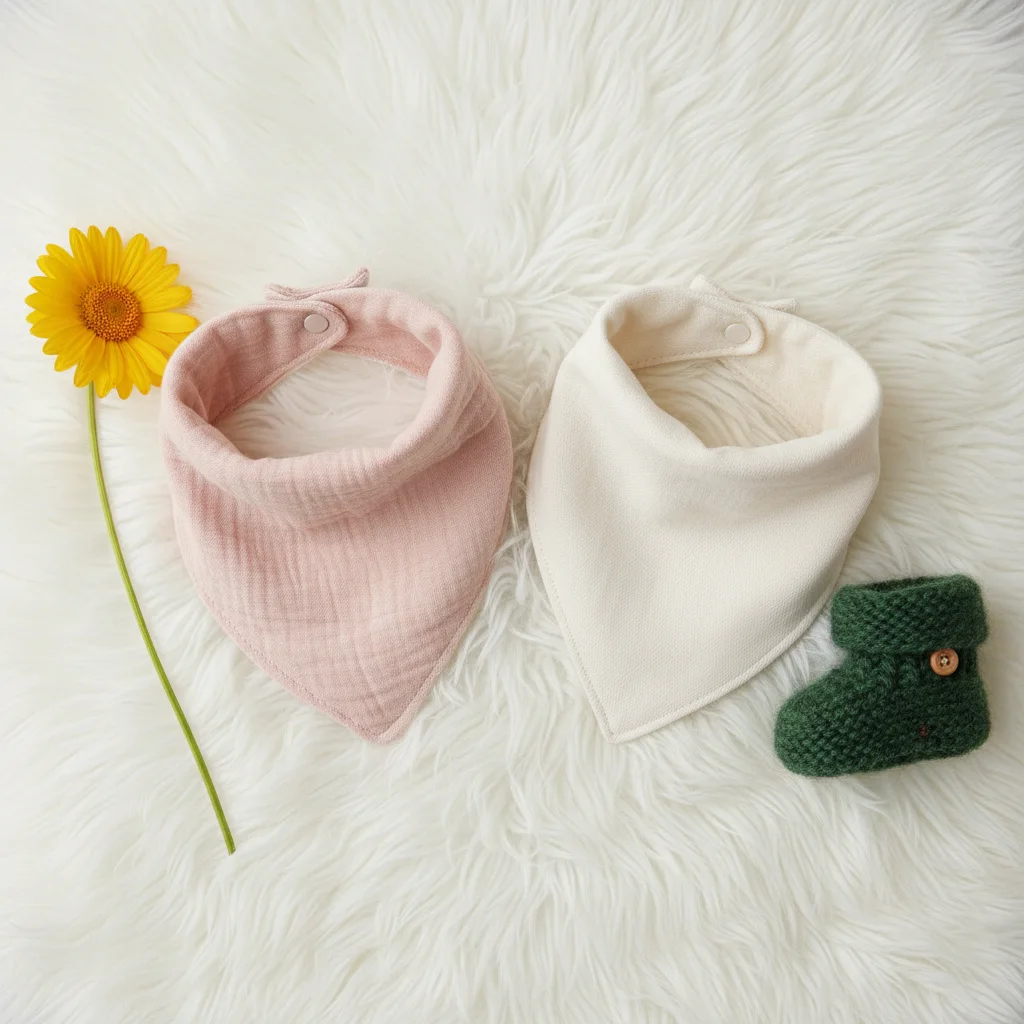 Picking between cotton and muslin bandana bibs is simpler than it sounds. It comes down to knowing your baby.
Your little one runs warm? Drools a lot? Has skin that flares up fast? Muslin bandana bibs are worth it. That open, breathable weave is not just a marketing buzzword. It is the real difference between a bib that works with your baby’s skin — and one that works against it. For everyday use where durability and structure matter more, cotton does the job well.
The real takeaway? There is no single best option — just the right choice for your child, right now.
Pick up a quality set of muslin bandana bibs. Feel the fabric. Trust that instinct. The best bib is the one your baby does not notice — and you never have to second-guess.