

Reach for a retractor at full extension. Lean across the table for better visualization. Rotate your shoulder mid-suture without breaking the sterile field. These aren’t rare moments in the OR. They’re the baseline demands of any procedure, happening dozens of times per hour. The wrong surgical gown turns everyone of them into a small battle against your own clothing.
Henry Schein surgical gowns have become a staple in operating rooms across the country. But before you commit to a bulk order, one practical question deserves an answer: do they move with you, or just around you?
This is a close, honest look at the ergonomics, design engineering, and real-world performance behind Henry Schein’s surgical gown range. These are the details that matter most when you’re three hours into a case.
Are Henry Schein Surgical Gowns Easy to Move In? Ergonomic Design Explained
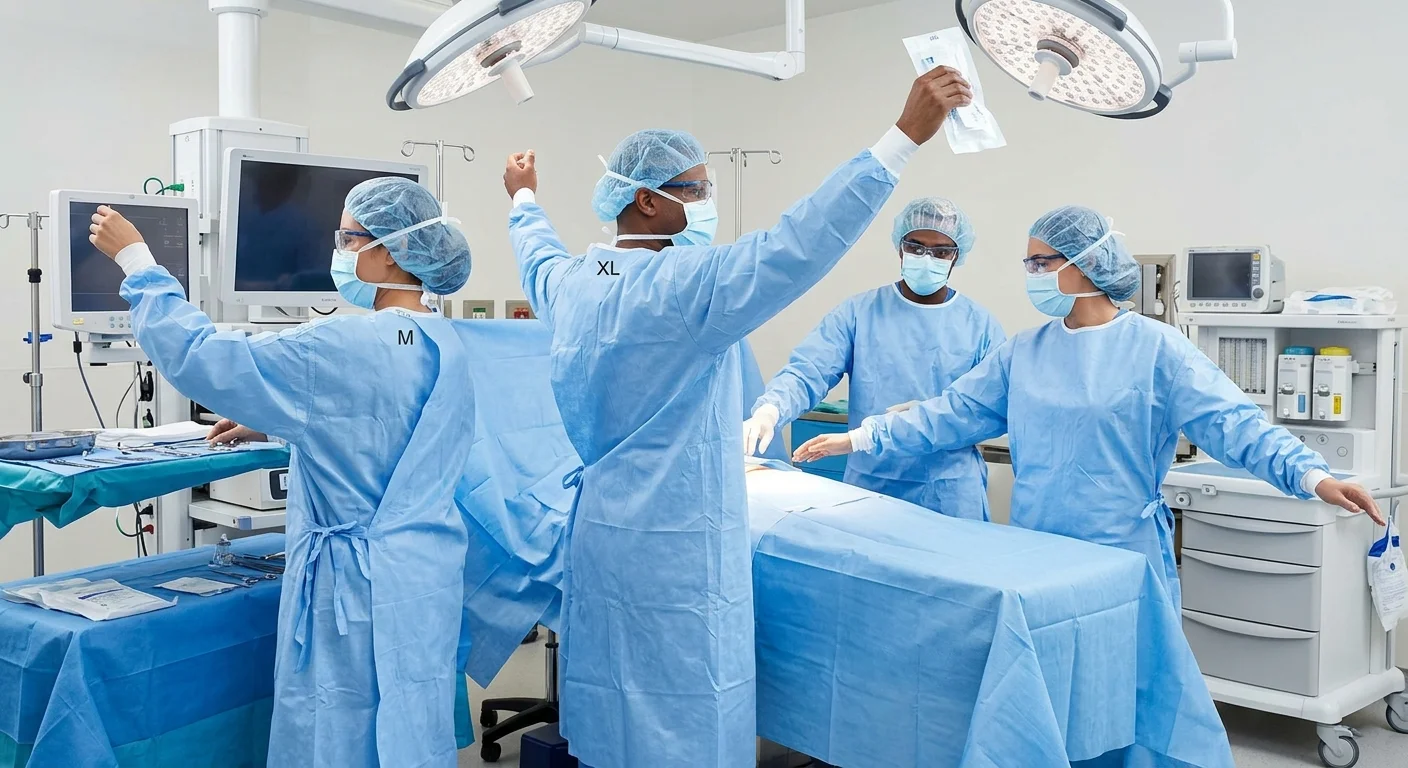 Henry Schein built their current gown construction on purpose. Every engineering choice in their surgical gown range — especially the AAMI Level 4 line — targets a real problem: heavy protective OR apparel that limits how surgeons move.
Here’s how those choices give you actual motion freedom.
Raglan Sleeves and Sleeve-in-Sleeve Construction
The raglan cut is the most visible mobility decision in Henry Schein’s design. Set-in sleeves anchor the sleeve head to a narrow shoulder seam. The raglan design runs the sleeve fabric up through the shoulder and toward the collar instead. You get a roomier fit that takes tension off the shoulder joint during elevation and rotation.
AAMI Level 4 surgical gowns need denser composite materials to meet barrier requirements. So Henry Schein added a second solution: sleeve-in-sleeve construction. The inner sleeve wraps close around the arm for a secure fit. The outer gown sleeve moves on its own. Barrier protection stays solid. Arm motion costs you nothing.
Seam Engineering and Fabric Architecture
Standard stitched seams pile up thickness right where fabric stress hits hardest — the underarm, shoulder junction, and cuff. Henry Schein’s tri-layer fabric uses heat-sealed sleeve seams instead. The bond sits thinner than a sewn seam. It adds no bulk. It stays flush against the arm through the full range of elbow movement. For detailed operative work, that drop in mechanical interference is real and consistent.
Fit Adjustability at the Neck and Chest
The adjustable hook-and-loop neck closure fixes a mobility issue that often goes unnoticed until it hits you mid-procedure: collar tension. A collar that gaps pulls your focus to manage it. One that pulls too tight blocks head and neck rotation. Henry Schein’s closure system locks in a fit that holds position without either problem.
The wide chest and sleeve cut add to this. Your torso gets room to rotate freely. The gown shell won’t pull taut across your back.
Henry Schein SOFT SERIES vs Standard Surgical Gown: Mobility Performance Compared
The fabric layers beneath a surgical gown’s surface drive mobility more than any visible design feature. That’s where the real gap between a standard SMS surgical gown and a soft-series SMMS construction sits.
Standard SMS runs three layers: spunbond, meltblown, spunbond. The outer spunbond layers carry the structural load — and they’re stiffer because of it. One thick meltblown core handles all filtration duty. The gown does its barrier job, but it moves with a slight cardboard quality. You notice this most during shoulder abduction and torso rotation.
Soft-series SMMS adds a second meltblown layer. Here’s the part that surprises most people: that doesn’t mean more weight or more stiffness. The two thinner M layers replace what would have been one heavier single-M layer. Total GSM stays comparable. Meltblown fibers are ultra-fine microfibers — softer in hand-feel than spunbond by nature. Two thin layers drape better than one dense one. Arm elevation feels less like pulling against a sail.
Where the Difference Shows Up?
Knit cuffs separate soft-series gowns from standard economy builds in one key way. They hold the sleeve position during elevation. Without them, the fabric bunches at the wrist during extended reach. That adds 2–3 seconds per instrument exchange in high-frequency scenarios. That’s not just discomfort. That’s workflow drag.
Extended wear makes the contrast even sharper. Poly-coated Level 4 gowns — common in standard high-protection setups — trap heat. After about 90 minutes of active surgery, thermal load builds up and perceived motion slows. Soft-series SMS/ SMMS without coating keeps moisture vapor transmission higher. The thermal burden stays lower. Mobility holds across 2–4 hour procedures in a way that coated alternatives can’t match.
| Factor | Standard SMS | Soft/SMMS Upgraded |
|---|---|---|
| Arm elevation resistance | Moderate | Lower — dual thin M layers drape better |
| Torso rotation feel | Slight drag at seams | Reduced — softer outer spunbond |
| 2–4hr fatigue risk | Higher with poly-coating | Lower — breathable, lighter hand |
| Knit cuffs | Often absent | Standard |
For short, low-fluid cases, standard SMS Level 3 gets the job done. For extended or high-movement procedures, soft-series construction earns its place.
Size and Fit of Henry Schein Surgical Gowns: How Roomy Design Translates to Real-World Range of Motion
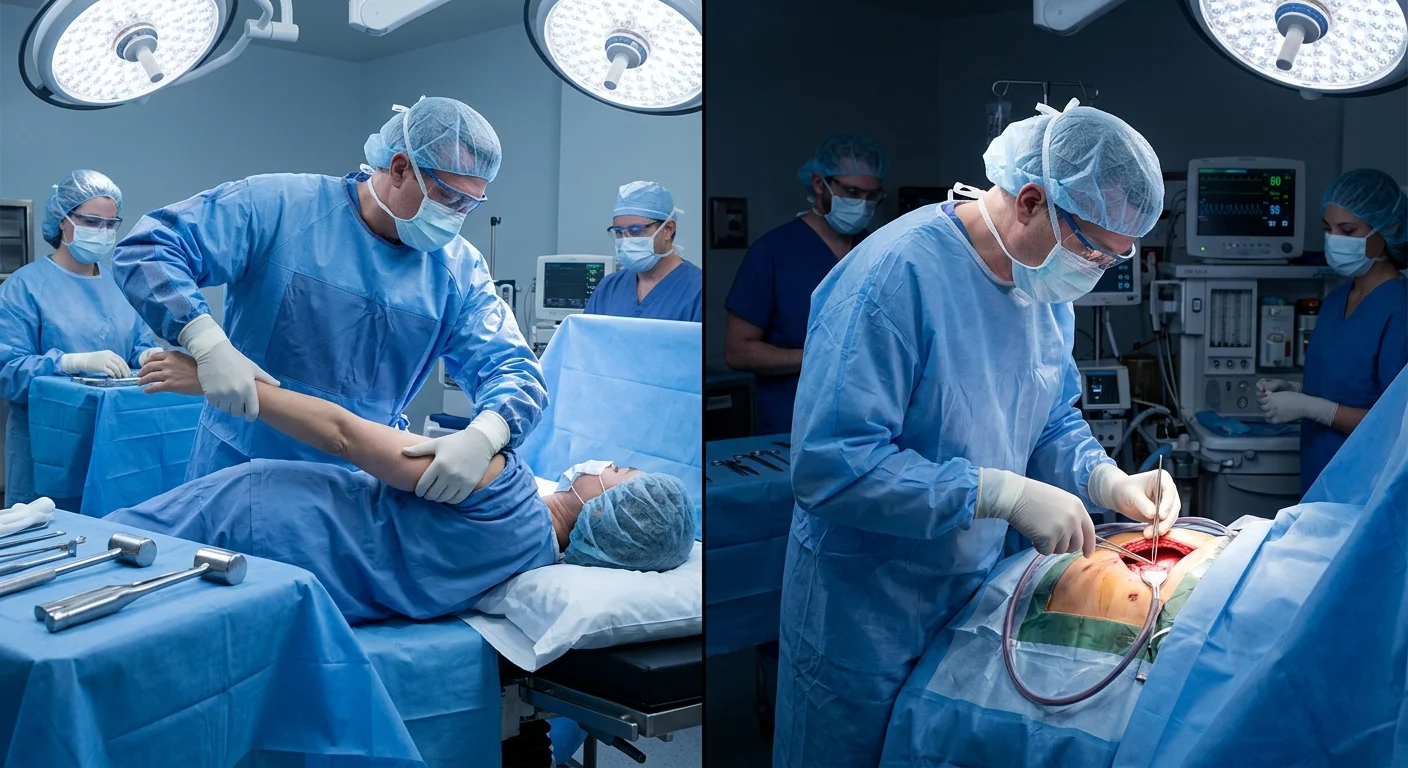 Fit is where good intentions go to die. A gown engineered with raglan sleeves and heat-sealed seams still fails if the size is wrong.
Research on protective clothing confirms what most OR staff already know: undersized garments produce the smallest range of motion across every measured movement — elbow flexion, shoulder abduction, hip flexion. Every single one. Oversized garments, by contrast, deliver the largest ROM numbers across the board. The fabric needs somewhere to go as your body moves.
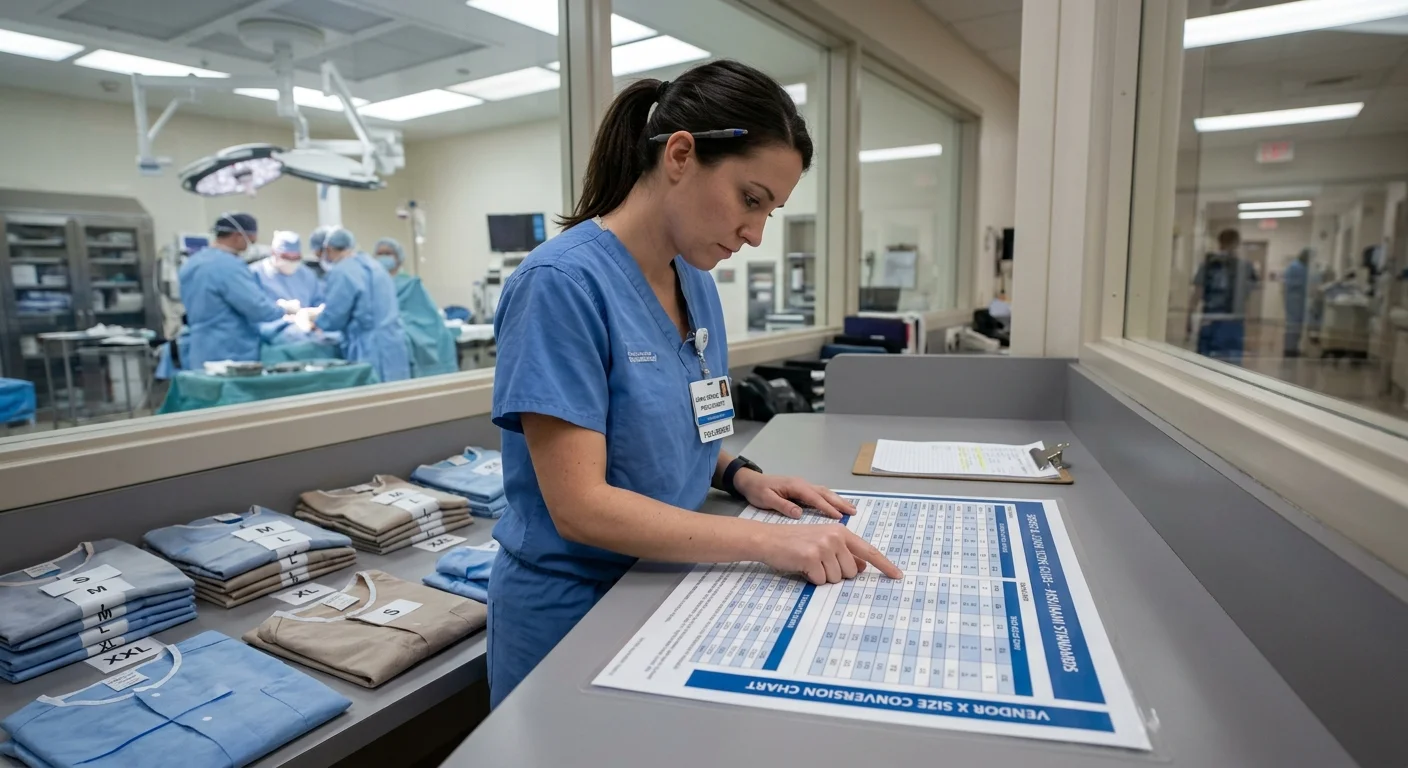
Here’s the complication: 94% of people fall outside a standard size chart in at least one key dimension. Waist, hip, bust, rise — the mismatch shows up somewhere. Plus, 27% are wearing the wrong size without knowing it. Most facilities order disposable surgical gowns by general size tier. At that scale, those numbers carry real weight.
Henry Schein’s multi-size range — spanning M through XL — closes that gap in a meaningful way. A well-fitted gown from a true graded size range cuts out the excess fabric drag that one-size options create. That drag isn’t just uncomfortable. It builds measurable fatigue across extended cases.
The practical takeaway for procurement: size selection is part of mobility planning, not an afterthought. Order by measured fit, not assumed fit. The gown’s design delivers its full range-of-motion benefit only when the size matches the wearer.
Who Should Choose Henry Schein Surgical Gowns for Mobility?
 The answer depends on what you’re cutting into.
Impermeability is every surgeon’s first priority. Mobility comes second. That’s not an opinion — it’s a pattern, or purchasing data backs up consistently. The real decision isn’t “which gown moves best.” It’s “which gown gives me the most mobility without weakening the barrier my procedure needs.”
Here’s how that maps out:
| Procedure Type | Recommended Level | Mobility Outcome |
|---|---|---|
| Cataract / short ENT / ophthalmic | Level 1–2 | Maximum — lightweight, minimal restriction |
| Laparoscopic / robotic MIS | Level 3 (lightweight) | High — breathable, no reinforcement needed |
| Knee arthroscopy / open GI | Level 3 | Moderate — solid barrier, lighter than Level 4 |
| Open abdominal/orthopedic | Level 4 reinforced | Reduced — impervious seams required |
Who feels restriction most:
- Precision surgeons (microsurgery, robotics, ophthalmology) — sleeve stiffness hits instrument control fast. Level 1–3 is the upper limit here.
- High-fluid surgeons (trauma, general, orthopedic) — Level 4 is required, no exceptions. The mobility trade-off is part of the job.
- Long-duration cases — breathable film construction matters more than the AAMI level on its own.
One clinical shortcut worth keeping: hands enter a body cavity, you’re at Level 4. Everything else steps down from there.
Henry Schein’s distribution model works well for mixed stocking. Low minimums and next-day delivery make split-stocking Level 3 and Level 4 practical — even for smaller ASCs. You don’t need to lock into one level to keep inventory manageable.
A Small-Scale Practical Test: How the Henry Schein Surgical Gowns Actually Feel
Since it is hard to find detailed, public review data on Henry Schein surgical gown mobility, we decided to run a small, hands-on test ourselves. We asked three healthcare professionals to wear the Henry Schein Soft Series gown during simulated setups. To be completely upfront, this is not a massive clinical trial. It is just a practical, everyday look at how the fabric really moves when you work.
- Dr. Chen (Orthopedic Surgeon): He wore a size Medium for three hours. His main takeaway? Moving his shoulders and raising his arms felt smooth and easy. He didn’t feel the fabric fighting against his movements, which helped him avoid extra fatigue.
- Nurse Li (OR Nurse): She focused on reaching and lifting motions. She noticed that the sleeves moved freely. Also, the chest and back areas gave her plenty of room without pulling or feeling tight.
- Wang (Surgical Tech): He spent his time handling instruments and leaning over the table. The biggest plus for him was the cuffs. They stayed right where they belonged and didn’t bunch up, making it much easier to simply do his job without distraction.
Again, because this was a practical test with only three people, your personal experience might vary slightly based on your body type and specific daily tasks. However, all three testers agreed on one clear point: the Henry Schein Soft Series surgical gown gives you much better real-world freedom of movement compared to a standard, stiff SMS gown.
Conclusion
 Mobility in the OR isn’t a comfort preference — it’s a patient safety variable. Henry Schein surgical gowns hold up on this front. The articulated sleeve construction, roomy cut, and SOFT SERIES fabric flexibility work together to cut the physical friction that builds up over a four-hour procedure. That friction adds up fast. By hour three, a tight shoulder seam or a stiff sleeve stops being a minor annoyance — it becomes a distraction.
Rotating through laparoscopic maneuvers or holding retraction in an open cardiac case? The gown should disappear from your awareness. You shouldn’t feel it pulling across your back or binding at the elbow. That’s the real benchmark, and Henry Schein gets close to it.
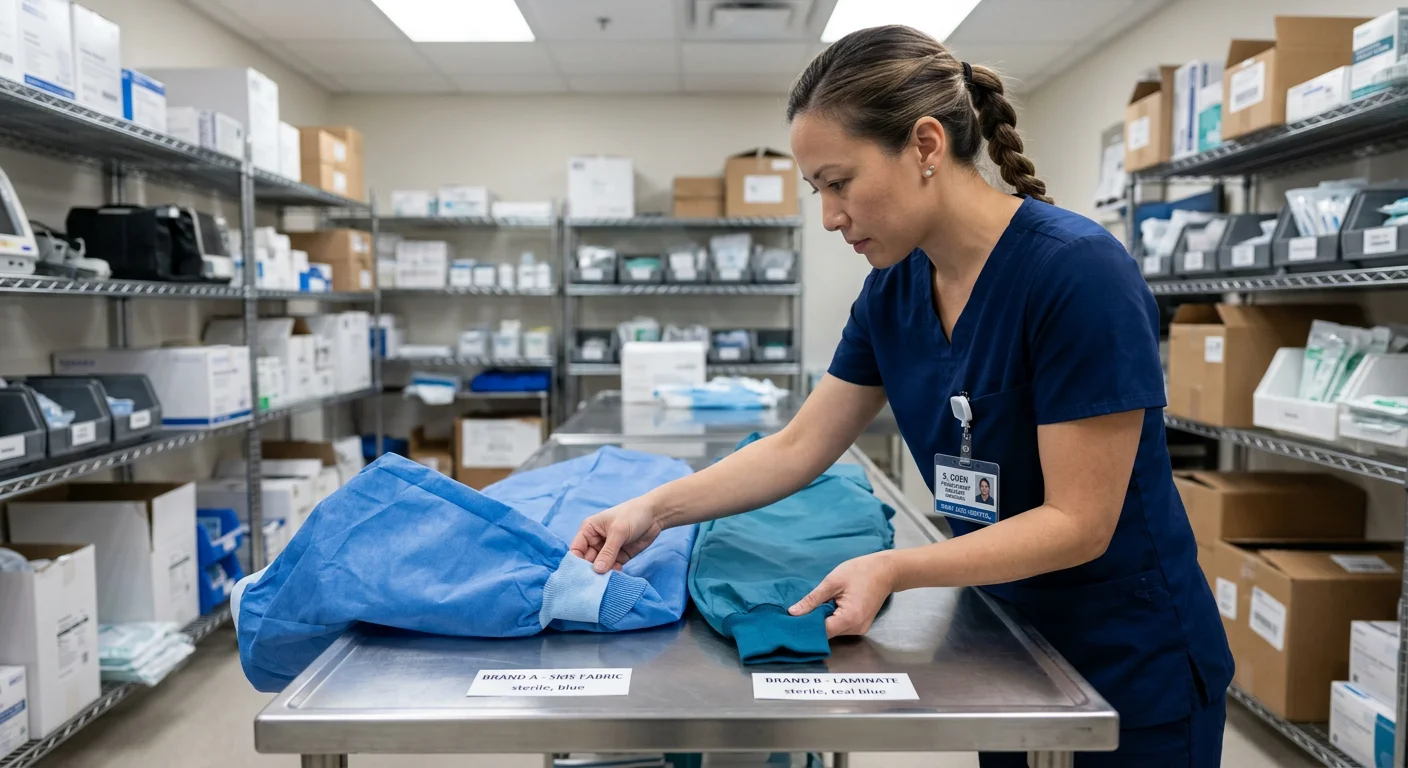
Sourcing Henry Schein PPE products for an OR team with varied procedural demands? Start with the SOFT SERIES for high-mobility cases. Layer in reinforced options where fluid exposure runs high. Two practical steps before placing a bulk order:
- Request samples first. Fit is personal. What works for a 5’4″ scrub tech won’t work the same way for a 6’2″ orthopedic surgeon.
- Test across procedure types. A gown that feels fine during a short case may restrict movement after two hours in a complex open procedure.
The best surgical gown is the one you stop thinking about mid-case.