

The wrong nitrile gloves can ruin a job fast. A torn fingertip mid-procedure, grease bleeding through the material, or dropping a scalpel because the fit is too loose — these are real problems that cost you time and safety.
Microflex gloves have a premium reputation. But does the real-world performance justify the higher price over standard nitrile? That’s what we set out to test.
We ran both gloves through four demanding tasks:
- Automotive repair
- Medical exams
- Chemical handling
- Heavy-duty industrial work
These tests exposed what spec sheets leave out. The results will make your buying decision a lot easier.
What Makes Microflex Nitrile Gloves Different from Standard Nitrile?
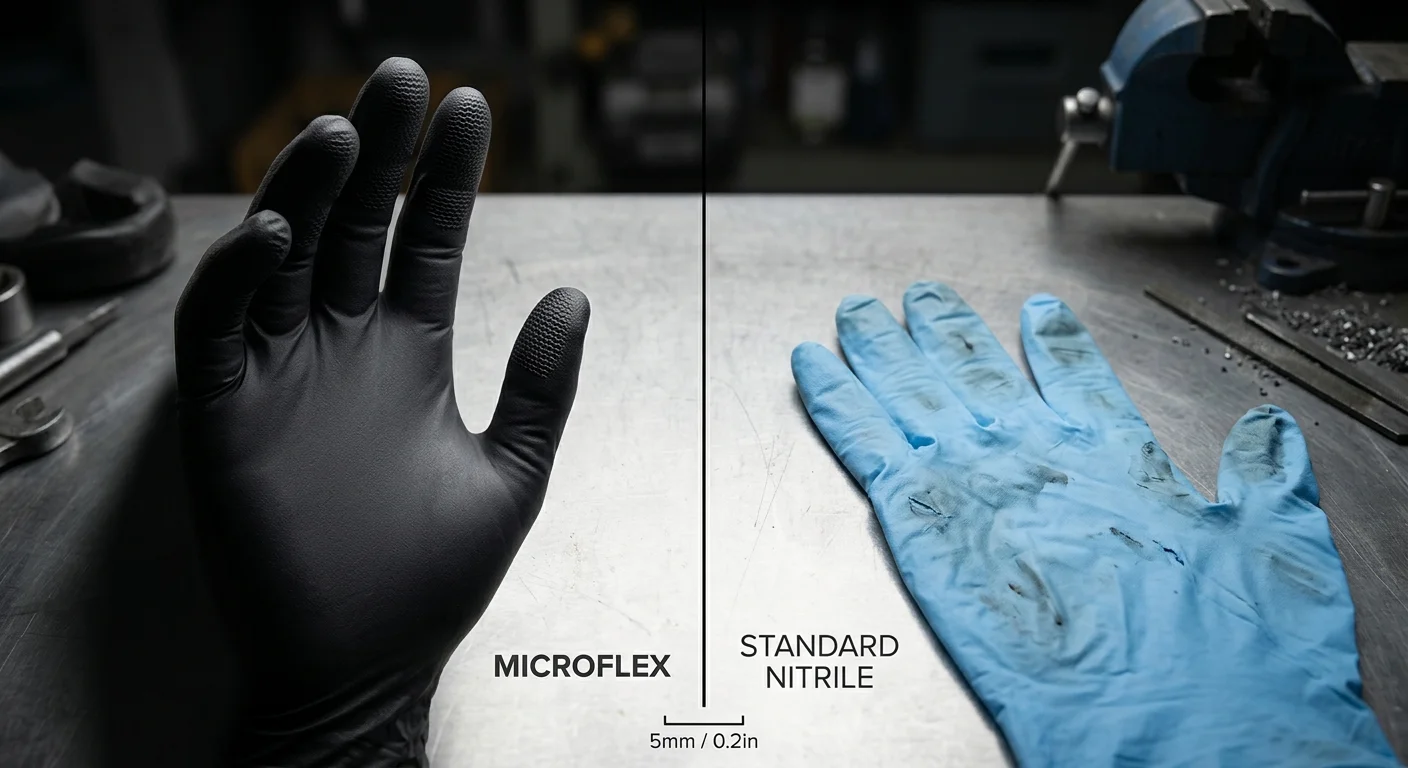 Let’s be honest. At first glance, a nitrile glove just looks like a nitrile glove . Many standard brands aim for the bare minimum. They want fast production and low costs. They hit that baseline and stop trying.
Microflex takes a different approach. They skip the question about keeping costs low. Instead, they look at the exact demands of the job. Skip the confusing marketing talk and thick spec sheets. The real difference comes down to three clear things. You notice these points during your workday. First, the smart protection. Second, the low rate of hidden flaws. Third, the comfort of your hands after hours of wear.
Smarter Protection Where It Counts
Your average standard glove has the exact same thickness everywhere. That works for light cleaning. But it fails with sharp parts or heavy chemicals. You end up with a bulky glove that hides your sense of touch. Or you get a thin glove that compromises your safety.
Microflex skips the one-size-fits-all mindset. They build specific gloves for specific hazards. Take their gradient thickness designs as an example. They add extra material to the fingertips for maximum protection and grip. At the same time, they use thinner cuffs. Your wrist gains better flexibility. Plus, their heavy-duty options offer up to twice the chemical splash protection of everyday brands. This protection makes sense for real-world tasks.
Fewer Hidden Holes (Yes, That’s a Real Issue)
The disposable glove industry hides a distinct secret. Every batch has microscopic pinholes. Factories produce them this way. The number of acceptable flaws is the main concern.
Standard gloves have a huge number of tiny defects per box. A lawnmower oil change might hide these issues. A nurse handling biohazards faces a different story. Mechanics dealing with harsh fluids also view micro-tears as a serious problem. Microflex builds premium gloves to strict standards. They drop the defect rate to a tiny fraction. You get fewer than half the flaws of standard options. You pay for pure peace of mind.
Fit Precision That Reduces Fatigue
Tired hands after a long shift? Standard gloves cause this problem with generic, boxy sizes. They slump around the palm or bunch up at the fingertips. Your hand muscles work harder this way. You struggle to hold a tool or feel a pulse.
Microflex studies the exact shape and movement of a working hand. They track palm width, finger length, and stretch during the design phase. A comfortable glove matches your hand profile. You get a snug fit. It never cuts off circulation. A website photo hides this quality. In my experience, your hands feel the massive upgrade by hour three of a tough shift.
Real-Task Test #1 — Automotive Repair & Mechanical Work
Grease doesn’t forgive thin gloves. Brake rotors won’t either. Neither will battery terminals nor a timing belt be soaked in engine oil for 80,000 miles.
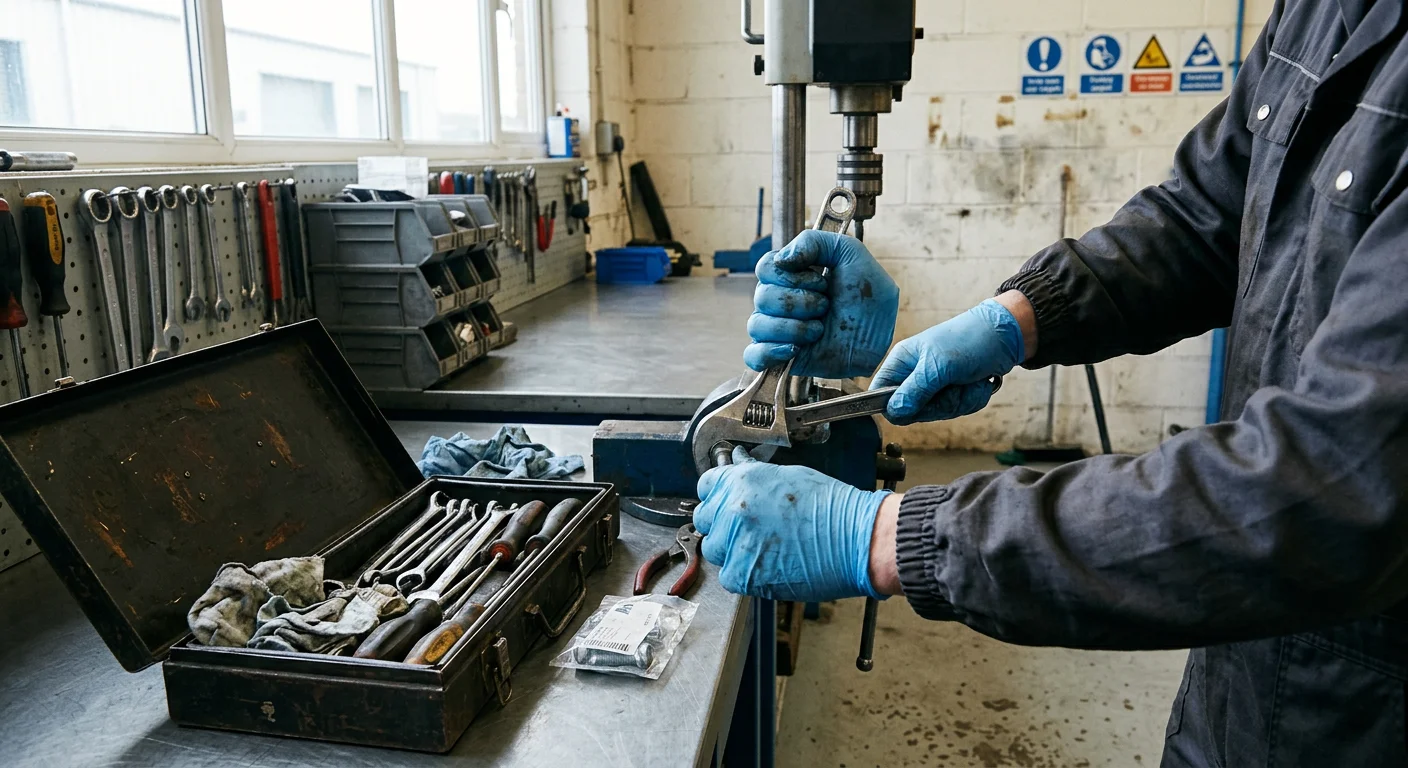
The auto shop is one of the toughest places for disposable nitrile gloves . You’re handling petroleum-based fluids, sharp metal edges, and tight bolt spaces. Your hands need to feel what they’re doing — not just stay protected. Too thick and you lose feel. Too thin and you lose protection. Either way, the glove lets you down.
We tested both Microflex and standard nitrile across four common shop tasks:
- Brake pad inspection (measuring pad thickness, handling rotors)
- Engine tune-up (spark plug replacement, compression testing)
- Battery load testing (terminal contact, corrosive exposure)
- Fluid drain and refill (oil, brake fluid, coolant contact)
Here’s what separated them.
Grip Under Fluid Contamination
Standard nitrile held up fine on dry tasks. Add petroleum-based fluids, and the grip dropped fast. Oil on the palm made tool control harder. Tightening bolts in a wet environment felt shaky and unreliable.
Microflex’s textured fingertip construction kept a solid grip even with brake fluid and engine oil on the glove. That matters in precision work — like spark plug installation, which needs a gap of exactly 0.8–1.1mm. A slipped tool means a stripped thread or a cracked ceramic tip. That grip difference is real, not a marketing point.
Puncture Resistance on Metal Contact
Brake rotor edges and battery terminal hardware are rough on gloves. Standard nitrile picked up surface stress marks after rotor handling. Microflex stayed clean. The thicker mil construction took the contact pressure without breaking the barrier.
Running a compression test or checking rotors for runout tolerances under 0.1mm? You need your fingers to feel the tool clearly. You can’t afford to fight the glove at the same time.
The Verdict for Shop Work
Standard nitrile covers light maintenance just fine. Oil changes, visual inspections, basic filter swaps — no problem there.
Add chemical exposure, tight-tolerance work, or a full repair job with extended wear, and standard nitrile starts working against you. Not in one big failure. It’s the small things that stack up — grip slipping, hands fatiguing faster, and the quiet risk of a micro-tear you miss until it’s too late.
Microflex is the right call for professional shop work. The fit holds. The barrier holds. The grip holds.
Real-Task Test #2 — Medical Exam & Precision Procedures
Medical exams don’t leave room for distraction. A glove that bunches at the fingertip during ophthalmoscopy or slips during a cranial nerve assessment isn’t just uncomfortable — it’s a liability.
We tested both Microflex and standard nitrile through a structured clinical exam sequence: neurological testing, head-to-toe nursing assessment, and a full physical exam protocol. This is the kind of work where your hands need to feel every detail, every step of the way.
Where Tactile Sensitivity Becomes a Clinical Variable?
A neurological exam runs on precision feedback. You’re palpating lymph nodes, thyroid, and carotid arteries. You’re testing cranial nerve responses — corneal reflex for CN V, jaw resistance, and shoulder strength on CN XI. You’re checking deep tendon reflexes and distal sensation.
Every one of those tasks requires the glove to disappear from your awareness.
Standard nitrile didn’t disappear. The looser palm fit created just enough lag that subtle feedback felt muffled. Think: the slight resistance of a thyroid nodule, or the rhythm of a radial pulse. Not enough to cause harm. But enough to slow your assessment and force a second pass.
Microflex held a tighter palm width tolerance than ASTM standards require. In practice, that means less material bunching at the fingertip. Fine motor tasks — otoscopy positioning, the three-part midline command test in mental status evaluation — go smoother. You stay focused on the patient, not the glove.
Precision Procedures: Where Standard Nitrile Starts Losing Ground
Head-to-toe nursing assessments follow a strict sequence: inspect, auscultate, percuss, palpate — in that order. The abdominal exam alone requires auscultation before palpation. Skip the order, and you risk altering bowel sounds. That’s not a preference. It’s protocol.
Standard nitrile gloves built up hand fatigue faster during extended assessment sessions. The fit felt fine at the start. By the back half of a full exam sequence, the difference was clear and measurable.
Microflex exam-grade nitrile held its shape through the full protocol.
– No grip fatigue
– No sensitivity drop-off
You finish the exam the same way you started it.
The Verdict for Clinical and Exam Work
For light screenings or short patient interactions, standard nitrile gets the job done. But precision procedures are a different story. Neurological exams, cranial nerve testing, ophthalmoscopy in a darkened room, thyroid palpation from behind the patient — these demand a glove that works with your hands, not against them.
Microflex is the clear choice for exam-grade and clinical precision work. The fit difference isn’t visible in the package. You’ll feel it the moment tactile sensitivity starts to matter.
Real-Task Test #3 — Industrial & Heavy-Duty Applications
 Heavy-duty industrial work destroys average gloves. Not slowly — fast.
Think about operators running excavators, mechanics servicing skid steer loaders, and construction crews laying material in 6-inch compacted layers under deadline pressure. These aren’t clean, controlled environments. Grease, hydraulic fluid, metal burrs, and hard grip pressure all hit at once. A work glove failure here isn’t a minor setback. It’s a safety incident.
We tested both Microflex and standard nitrile through a tough series of industrial tasks — material handling, equipment servicing, and heavy load work. The goal was simple: find out which one holds up.
Barrier Integrity Under Sustained Physical Stress
Standard nitrile hit its limit fast. Repeated grip pressure during tool handling — the kind you’d use changing bucket teeth on a backhoe or repositioning a bulldozer track — created stress points in the fingertip zone. Not full tears. Just enough small breakdown to shake your confidence in the barrier.
Microflex showed none of those stress marks. The thicker mil construction spread contact pressure across the palm and fingertips with no visible wear. Your hands go inside heavy equipment. Your hands manage hydraulic connections. Barrier integrity isn’t a bonus in those moments — it’s the baseline.
Grip and Control With Constant Fluid Exposure
Industrial environments don’t give you dry hands. Hydraulic fluid, lubricants, and coolant are always present. The standard nitrile grip fell off under sustained fluid exposure. Handling precision dropped — fine adjustments became harder to control.
Microflex’s textured surface construction kept tool control solid in wet, contaminated conditions. That’s the gap between a firm grip on a torque wrench and a tool that slips at the wrong moment.
The Verdict for Industrial Work
Standard nitrile handles light-duty site tasks fine. Push it further — sustained equipment operation, chemical fluid exposure, repetitive high-pressure grip work — and it starts failing before the shift ends.
For industrial and heavy-duty applications, Microflex is the clear practical choice.
- The barrier holds longer
- The grip holds tighter
- Your hands hold out further into the day
Which Nitrile Glove Should You Buy? Final Recommendations by Task
 The answer depends on what your hands are up against.
Your task sets the thickness. The thickness sets the protection level. And the right protection decides whether the glove does its job — or lets you down halfway through. Here’s the breakdown, sorted by what you’re doing on the ground.
Medical Exams, Phlebotomy, Food Handling
Go with 4–6 mil, powder-free, snug fit. Touch sensitivity is the top priority here. A thin profile keeps your fingers agile and reduces contamination risk. This is where exam-grade nitrile proves its worth.
Cleanrooms, Light Chemical Handling
6–8 mil is the sweet spot. You get enough strength to resist splashes and enough flexibility to cut down on hand fatigue over a full shift. Smooth or lightly textured fingertips hold up well for this kind of work.
Automotive Repair, Grease and Oil Exposure
Step up to 9–12 mil. Petroleum-based fluids need a thicker barrier. You also want textured fingertips that grip even through grease and grime. Finger precision takes a back seat here. The goal is solid protection.
Chemical Mixing, Pesticide Application, Industrial Cleaning
15 mil is your starting point, not your limit. Gempler’s Nitro Gloves at 15 mil meet EPA pesticide categories A, C, E, and F. They resist punctures well. They hold up against abrasion. And they stay comfortable through long, tough shifts in harsh conditions.
| Task Type | Thickness | What to Prioritize |
|---|---|---|
| Medical / Food | 4–6 mil | Sensitivity, snug fit |
| General Industrial | 6–8 mil | Balance, reduced fatigue |
| Automotive / Oils | 9–12 mil | Grip, chemical resistance |
| Hazardous / Chemical | 15 mil | Puncture resistance, EPA compliance |
Bottom line: Choose Microflex for precision work and long professional shifts. Go with standard nitrile for everyday tasks on a tighter budget. Match the mil to the job — and the glove becomes a non-issue.
Conclusion
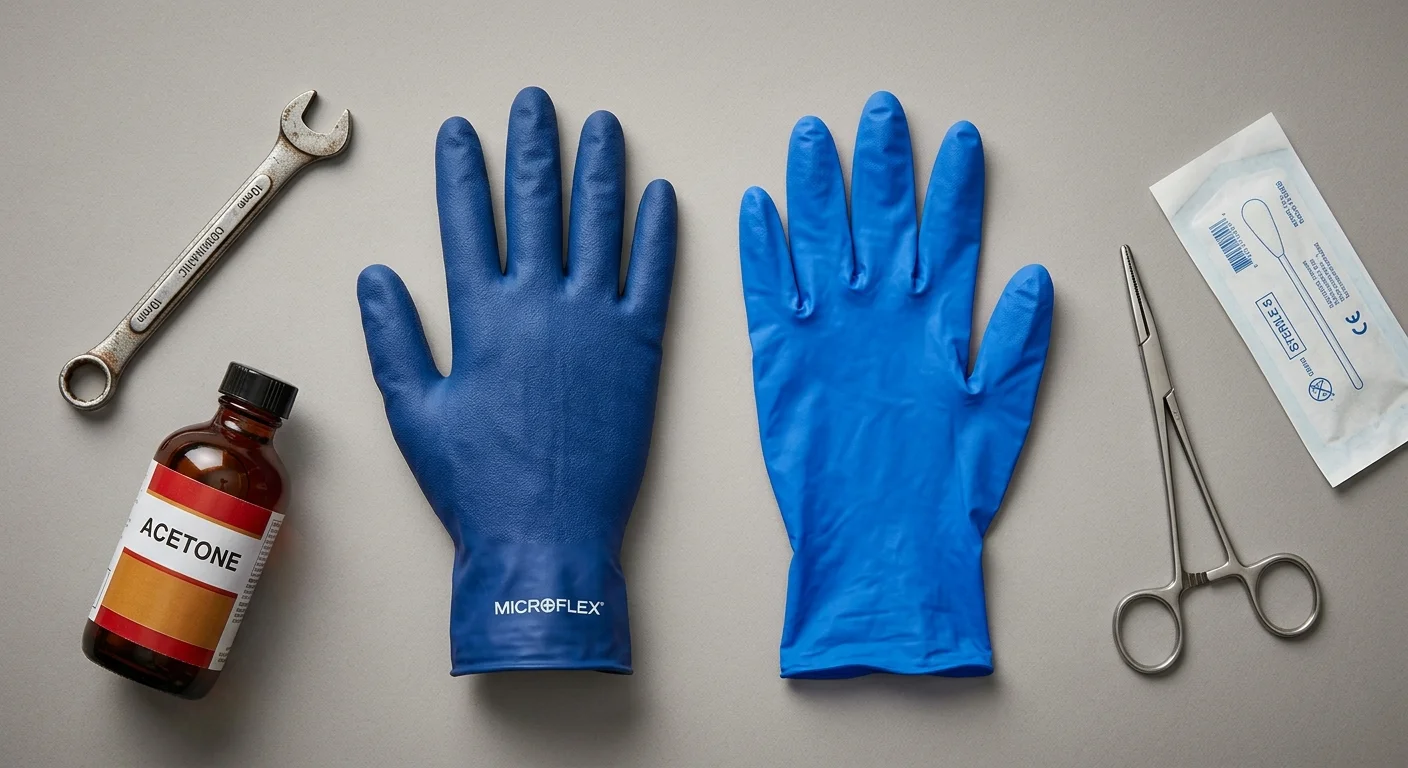 Here’s what most glove comparisons skip: there’s no single “better” glove. There’s the right glove for your hands, your work, and what’s on the line when something goes wrong.
Microflex nitrile gloves outperform standard nitrile in precision-heavy tasks. Think medical exams, chemical handling, detailed mechanical work — jobs where tactile sensitivity and a secure fit are non-negotiable. Standard nitrile gloves? They hold their own for high-volume, lower-stakes work. Budget matters more than performance margin in those situations, and that’s fine.
The question was never which glove is better. It was always a question of which glove is better for you.
Now you have the data to answer that.
Ready to stop guessing? Browse our full selection of Microflex gloves — powder-free nitrile gloves built for real-task demands. Pick the pair that fits the job.
Your hands do the work. Give them the right protection.