

Deciding between surgical gown rentals and buying your own supply seems simple at first. Then you open a spreadsheet full of hidden costs, sterilization schedules, and AAMI compliance requirements you didn’t see coming.
Setting up a new surgical suite or rethinking how your facility handles OR apparel? This choice carries more weight than most procurement teams expect.
Get it wrong, and you face two bad outcomes:
- Drowning in laundry logistics
- Locked into a costly ownership model that doesn’t scale
Get it right, and you free up capital, cut compliance headaches, and keep your OR running without disruption.
Here’s a clear, practical breakdown of both options — so you can stop second-guessing and make a confident call.
Experiencing Surgical Gown Rentals: What It’s Actually Like
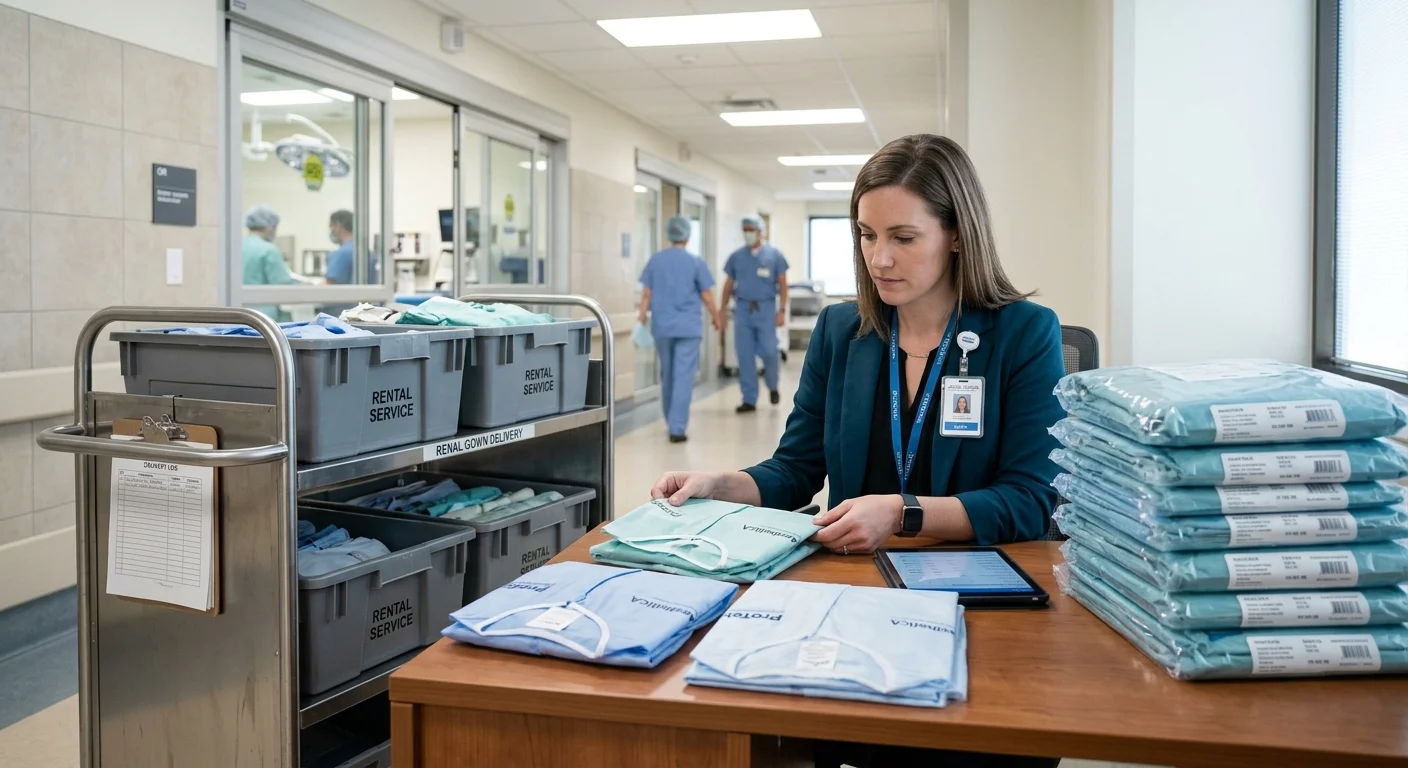 Surgical Gown rental programs do more than handle laundry. They take the entire management burden off your plate.
Here’s how it works in practice. A supplier like Elis purchases, owns, and maintains the gown inventory. Your team never touches a sterilization schedule. You receive clean, compliant sterile surgical gowns at the start of each cycle. You return the used ones. The whole loop runs without your facility carrying any of the operational weight.
That’s the rental model at its core.
What You’re Getting?
Reusable surgical gowns from rental programs are not the flimsy alternatives some procurement teams expect. These gowns are built for repeated hospital use:
- Heavier stitching and reinforced ties are designed to survive industrial processing
- Solid, high-barrier fabric that holds AAMI-compliant protection levels across repeated wash cycles
- Gowns that can be processed up to 75 times without losing protective performance
Facilities like Garron Hospital have trialed these gowns with surgical staff before full rollout. That means fit, comfort, and quality get validated before any large-scale commitment. Rental suppliers also offer single and triple pack options to match different procedure volumes and departmental needs.
Cost & Convenience: Surgical Gown Rentals vs Buying
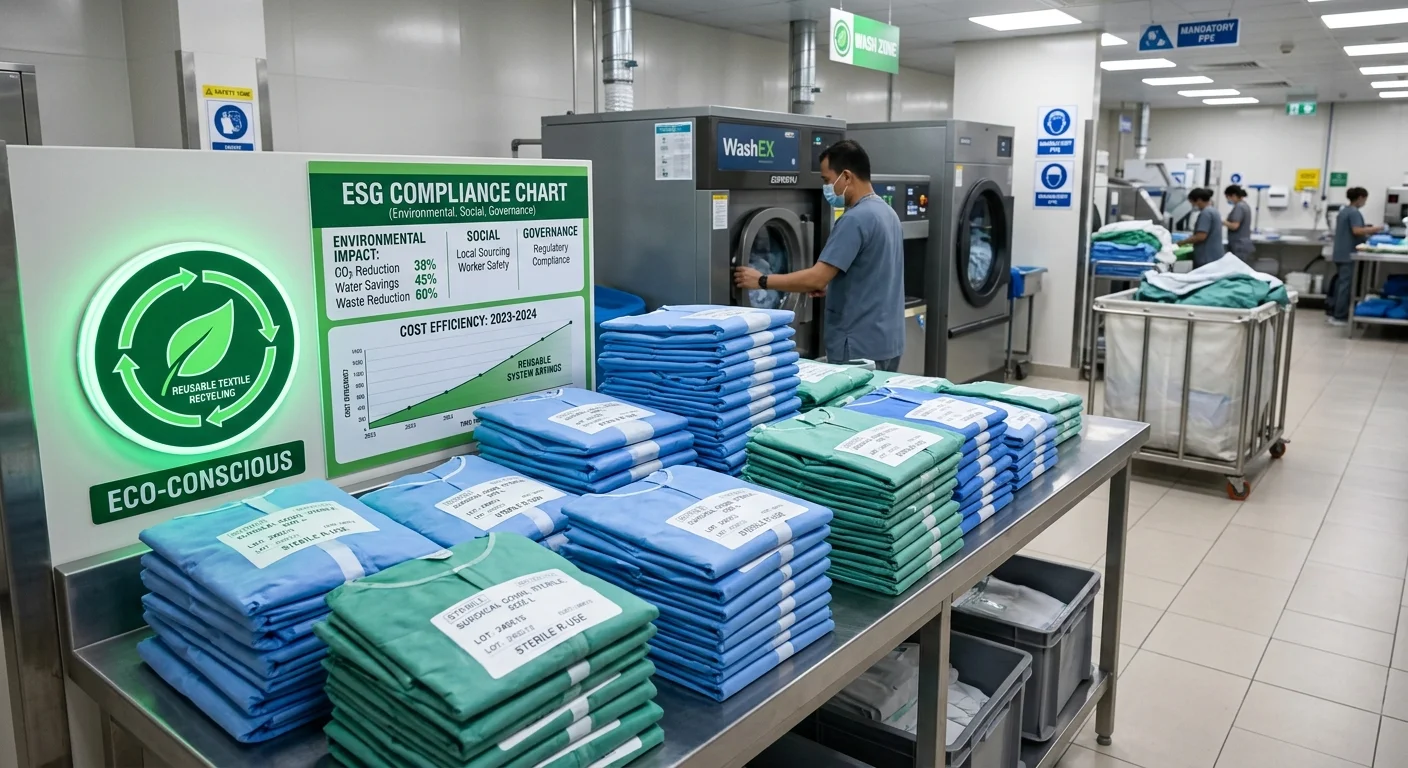 The real cost of managing surgical gowns almost never shows up in the line item you expect.
Most procurement teams focus on unit price. What they miss — until it’s too late — is everything around that unit price. Sterilization overhead. Clinical waste disposal. Storage infrastructure. Staff time is spent on inventory instead of patient care. Add it all up, and the gap between renting and buying looks nothing like the original quote sheet.
Breaking Down the True Cost of Ownership
Buying your own surgical gown supply means owning every problem that comes with it.
The upfront commitment is just the beginning:
- Capital outlay on initial inventory — enough to cover peak procedure volumes plus contingency stock
- Investment in compliant processing equipment, or outsourced sterile processing contracts
- Ongoing staff training to meet the surgical gown standards AAMI requires across repeated wash and sterilization cycles
- Storage systems built to protect gown integrity between uses
These costs don’t arrive in one invoice. They build up across departments and budget periods. By the time a facility runs a true total cost of ownership analysis, operating room apparel often turns out to be one of the more expensive line items that no one was tracking.
Where Surgical Gown Rentals Programs Win on Convenience?
The case for surgical gown rental goes beyond saving time. It’s about keeping operations simple.
Rent, and the supplier carries the capital risk. Your facility carries none of the inventory burden. No tracking gown condition across wash cycles. No scheduling conflicts with sterile processing. No compliance audits triggered by a gown processed one cycle past its rated limit.
What a well-run medical linen service removes from your operations:
- Inventory management and par-level monitoring
- Industrial washing and sterilization scheduling
- AAMI compliance tracking across individual garment lifecycles
- Clinical waste disposal costs are tied to single-use disposable gowns
- Emergency replacement orders when stock runs short mid-week
That last point matters more than most people admit. A sterile surgical gown shortage mid-schedule doesn’t just cause inconvenience. It delays procedures. It creates billing problems and staffing complications that ripple through the rest of the day.
The Honest Tradeoff
Buying does offer something surgical gown rental can’t match: long-term cost control. That’s true — but only if your volumes are high, predictable, and stable.
Facilities with consistent, high-volume surgical schedules and existing sterile processing infrastructure may find ownership becomes cost-competitive over several years. The math shifts once you’ve paid down the initial investment and your healthcare textile management processes run on a steady rhythm.
But that break-even point takes time. It also assumes nothing goes wrong. Equipment failures, staffing gaps in sterile processing, or regulatory updates to surgical gown compliance standards can quickly reset that math.
Here’s a direct comparison:
| Factor | Surgical Gown Rentals | Surgical Gown Buying |
|---|---|---|
| Upfront cost | Low | High |
| Monthly cost | Fixed, predictable | Variable |
| Compliance burden | Supplier-managed | Facility-managed |
| Scalability | Flexible | Rigid |
| Clinical waste costs | Eliminated | Ongoing |
| Best for | Growth-stage or variable-volume facilities | High-volume, stable operations with processing infrastructure |
For most small-to-mid-size facilities and ambulatory surgical centers, surgical gown rentals are the lower-risk, lower-overhead path. This is especially true in the early stages of operations, where capital is better used elsewhere. The convenience advantage is real, it’s measurable, and it grows stronger over time.
Infection Control, Quality, and Compliance: Surgical Gown Rentals vs Buying
 Safety comes first for any gown choice. You cannot compromise on infection control. Every gown must pass strict medical rules. They must keep fluids and germs out. A brand-new disposable gown seems like the safest option. That is not the whole story. High-quality reusable gowns protect your team equally well. Studies prove they sometimes offer better protection. Plus, reusable fabrics feel softer. They let the skin breathe. Staff members often wear stiff, plastic-type disposable gowns during long procedures. This makes them appreciate real comfort.
The cleaning process makes reusable gowns work. Buying your own stock puts a heavy burden on your team. They must make every single wash flawless. A rental program removes this headache. Professional medical laundry services use specialized cleaning technology. They run strict tests. Most hospitals lack the resources to build these systems. The result? You receive a fresh, safe, and sterilized gown every time. You skip the stress of managing the laundry.
Disposable gowns seem like a great idea for infection control on paper. You toss them out after one use. This prevents cross-contamination from a previous patient. The reality inside the operating room often differs. Batch quality varies a lot. Some boxes contain very thin gowns. Fast movements by a doctor or nurse can cause rips. Reusable gowns give you a consistent, durable layer of safety. The fabric stops unexpected tearing. You just need outside experts for the cleaning process.
How to Choose a Surgical Gown Rental Provider Without Stress?
 The wrong surgical gown rental provider won’t warn you upfront. The problem shows up three months later — a surprise invoice, a compliance gap, or a missed delivery that stalls your morning surgical schedule.
The good news: avoiding a bad provider is straightforward. You need to know what to check before signing anything.
The Criteria That Matter
Not all medical linen service vendors run the same way. Here’s where to focus your attention:
Fee structure — get everything in writing.
Ask for a full, itemized fee schedule before the conversation goes any further. Find out what triggers extra charges. A provider who won’t hand over a clear written schedule is already showing you who they are.
Compliance tracking — don’t take their word for it.
A reputable medical gown laundry service should show you how they track each garment through its wash and sterilization cycle. Ask how they enforce surgical gown standards AAMI — and what they do with gowns nearing their cycle limit. You want a documented process. A verbal reassurance is not enough.
Emergency response — test it before you need it.
Call after hours. Send an email on a Friday evening. Any provider handling hospital linen rental for active surgical facilities should respond within 24 hours — no exceptions. They can’t show that during the sales process? They won’t deliver it during a supply shortage.
Scalability — match their capacity to your growth.
Your facility may grow. Procedure volumes may shift across the year. Your surgical gown rentals provider needs flexible par-level adjustments built into the contract. A rigid fixed-volume arrangement means emergency orders every quarter — and that costs you time and money.
A Simple Evaluation Checklist
Before committing to any healthcare textile management partner, run through these steps:
- Request sample contracts, sterilization reports, and inspection documentation
- Check their experience with operating room apparel in facilities close to yours in size and specialty
- Confirm termination terms — 30 to 60 days’ notice with no penalty clauses is the standard to expect
- Ask for three to five recent client references from surgical settings
- Confirm they carry adequate liability insurance and meet all surgical gown compliance requirements in your region
The right surgical gown rental provider takes the complexity off your plate. The vetting process itself tells you a lot — a surgical gown rental provider who makes it hard to get basic answers won’t get easier to work with after you sign.
Conclusion: Which Option Is Right for You?
 Choosing between surgical gown rentals and buying isn’t as complicated as it seems. Focus on three things: know your volume, respect your budget, and never cut corners on sterile surgical gown compliance. In the OR, every detail carries weight.
Running a high-volume facility with predictable scheduling? A medical linen service built around reusable surgical gowns could be one of the best operational decisions you make this year. Smaller facility, more flexible schedule, or still figuring things out? Rentals give you breathing room without the overhead.
Either way, don’t delay this decision.
Take these steps now:
- Contact a certified surgical gown rental provider
- Ask for a cost comparison based on your facility size
- Get that quote in writing
Your budget — and your future self — will be glad you did.
The right
hospital surgical gown
is out there. Go find it.