

Eight hours into a shift, your gloves tell you everything. They’re either still with you — snug, intact, not soaked through — or they’ve become the reason you’re distracted and uncomfortable. You start counting down the clock. That’s the real test for any pair of Dynarex nitrile exam gloves. Most product pages skip that test. So I wore them. A full shift, hands-on, no shortcuts.
What followed was an honest look at how these powder-free nitrile gloves hold up against sweat and repeated stress. That’s the kind of sustained use that separates a reliable glove from one that just photographs well. Here’s what I found.
What Makes Dynarex Nitrile Exam Gloves Worth Testing for Long Shifts?
Dynarex doesn’t make one nitrile glove — they make a system of them, and that distinction matters.
The non-sterile exam line runs at 3–4 mil thickness. That’s the sweet spot most professionals need. It’s thin enough for tactile sensitivity. It’s also thick enough to withstand repeated stress, which wears out cheaper gloves within hours. For reference, substandard nitrile gloves averaging 0.078 mm failed after just 24 sandpaper contact cycles in durability tests. Dynarex targets the 413–931% elongation-before-break range — the threshold that separates reliable nitrile from gloves that tear and frustrate mid-shift.
A few specific design choices make these worth putting through a real-world shift test:
- Polymer lining on extended-wear models cuts friction and moisture buildup over long hours
- Beaded cuffs let you don and doff cleanly, even with compromised hands
- Ambidextrous fit paired with a secure wrist seal stops glove slippage before it starts
- Powder-free, latex-free, DEHP-free construction removes the most common irritant variables from the equation
That’s a solid baseline before you’ve even logged a single hour of wear.
First Impressions of Dynarex Nitrile Exam Gloves: Fit, Thickness, and Feel
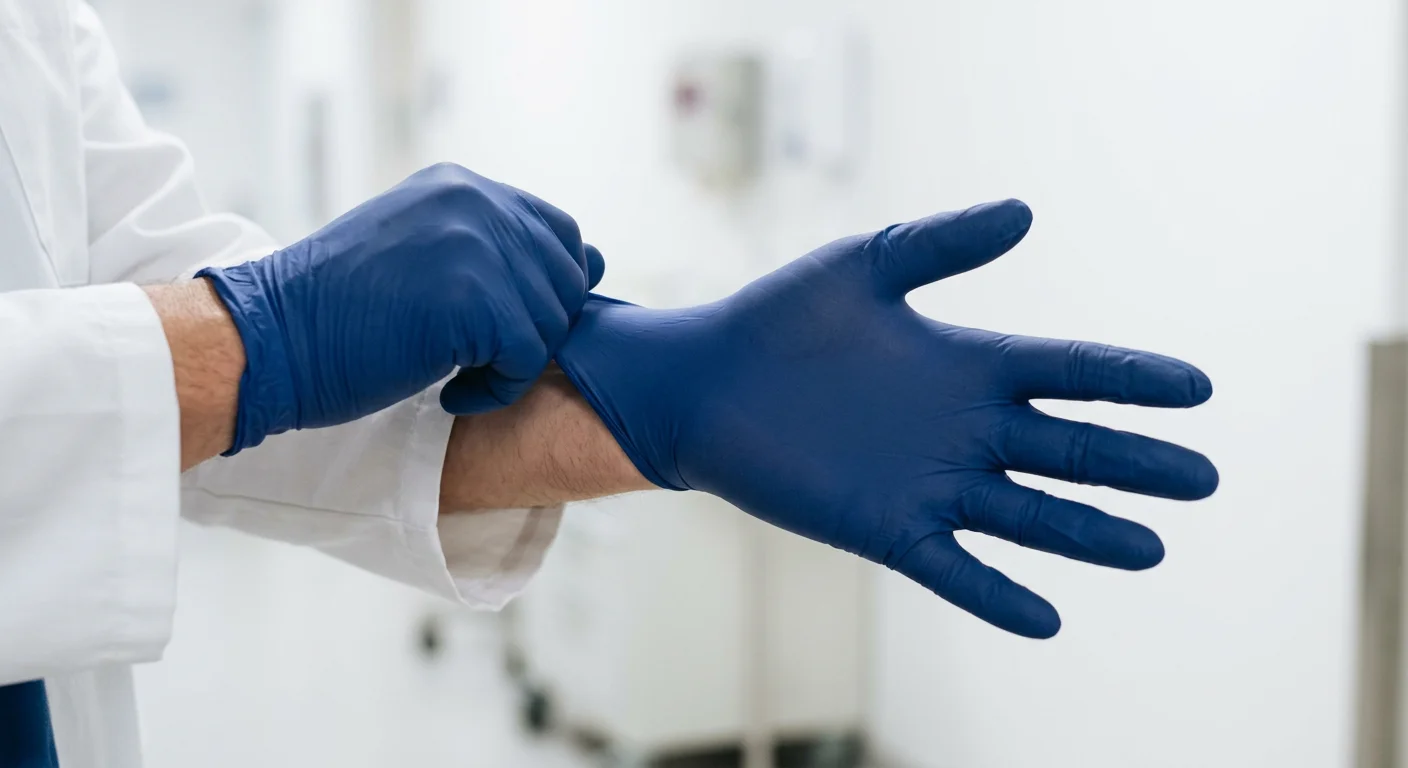 Pull on a glove and you know within thirty seconds whether it works for you. With Dynarex nitrile exam gloves, that first thirty seconds feels reassuring.
The ambidextrous fit snaps into place without fighting you — no awkward bunching at the palm, no excess material pooling around the fingers. For latex-free gloves, the fit conforms well on contact. The finger profile is tapered, so you’re not swimming in loose nitrile. That matters the moment you need grip precision.
Thickness lands right where it should. At 3–4 mil, these nitrile disposable gloves hit the practical middle ground. Not so thin that every sharp edge makes you nervous. Not so thick that you lose the feedback needed for fine motor tasks. You can feel texture through the material — that tactile clarity comes through fast. Cheaper bulk gloves often kill that sensation completely.
The powder-free interior is worth noting, too. No gritty residue on your hands after putting them on. No chalky film. Just clean contact with your skin. It’s a small detail, but it adds up across a full shift in a real way.
One honest caveat: sizing runs snug if you’re between sizes. Go up when unsure. A glove that cuts circulation at the wrist will make itself known by hour four — and not in a subtle way.
Full-Shift Wear Test: How Dynarex Nitrile Exam Gloves Feel After Hours of Use
 Hour three is where most gloves start to fail you. They stretch in the wrong spots, trap heat, or build up that clammy inner film that makes every task feel off. These Dynarex nitrile exam gloves did something different — they stayed out of the way and let you work.
Early Shift: The Honeymoon Phase
Every glove feels fine in the first hour. That’s not useful data. What matters is whether the fit holds as your hands warm up and start to sweat. That’s where the polymer lining earns its place.
- Moisture stayed manageable throughout
- Friction between glove and skin stayed low
- The glove moved with your hand, not against it
The hand-conforming flexibility in the AloeSkin line is built to reduce physical fatigue. You feel that difference in real use — the glove bends where your hand bends, without resistance or pull.
Fingertip texture held up too. The grip stayed consistent across dry and damp surfaces. For medical-grade nitrile gloves at this thickness, steady tactile feedback is essential for precision work. These delivered it.
Mid-Shift Reality: Where Cheaper Gloves Fall Apart
This stretch is the real test for nitrile glove durability. Hands are active, temperatures have climbed, and the glove has been flexing for hours. Cheaper options start thinning or tearing at stress points during this window.
The 3 mil minimum thickness at fingertips and palms — a spec Dynarex builds into the True Advantage line — held up without issue. No micro-tears at stress points. No thinning at the finger joints. The structure stayed solid from start to finish.
The beaded cuffs were a quiet but consistent win, too. Glove changes during this window were clean and fast. No rolling. No bunching at the wrist.
End-of-Day Wear: End-of-Shift Reality Check
By hour eight, the gloves showed normal wear compression — but no failure. The wrist seal stayed secure. Tactile sensitivity dropped a bit from hour one, but stayed functional for fine tasks. That’s a real benchmark for extended wear gloves in clinical or field settings.
One honest note: heat does build up across a full shift. These are powder-free nitrile gloves — not ventilated. That’s a category limitation, not a flaw specific to Dynarex. Plan glove rotations every two to three hours. This cuts down on hand moisture and keeps comfort steady if that’s a recurring issue for you.
The bottom line — these held up where it counted, across the hours that matter most.
Durability in Real Work: Do Dynarex Nitrile Exam Gloves Tear Easily?
Tear resistance isn’t a feature you notice until the glove fails — and then it’s the only thing you notice.
Dynarex addresses that failure point in a few concrete ways. The polymer lining running through multiple product lines is built to resist rips under sustained stress. That’s not marketing language. It’s a structural choice. You see it in how the glove holds up through gripping, pulling, and flexing across a full shift.
The thickness breakdown tells a clearer story:
- True Advantage Nitrile Exam Gloves: 3 mil minimum — prioritizes feel, handles moderate stress
- Sterile Nitrile Surgical Gloves: 5–8 mil at palm and fingertips — built for rigorous procedural work
- Black Arrow Latex Exam Gloves: 6 mil at palm, 7 mil at fingertips — reinforced where contact stress peaks
Each spec reflects a deliberate trade-off. Thinner nitrile glove thickness mil ratings keep the tactile sensitivity that precision work needs. Heavier mil counts shift the priority toward glove puncture resistance — the kind required in chemotherapy handling, correctional facilities, or EMS response. Dynarex tests its long-cuff chemotherapy gloves against ASTM D6978 for chemical permeation resistance. That’s a real standard, not a shelf claim.
Where the Design Holds Up?
The textured fingertips on Safe-Touch Black Nitrile models and the textured palms on Black Arrow gloves do more than improve grip. They cut down on slippage-related micro-stress that wears down glove integrity over hours. Less slippage means less lateral pull on the material. Less lateral pull means fewer stress tears at the finger joints.
Beaded cuffs play a role here, too. A cuff that rolls or bunches during removal creates weak points at the wrist. The beaded construction keeps that edge reinforced and stable through repeated glove changes.
One honest limitation worth noting: Dynarex doesn’t publish field tear-rate data or comparative puncture metrics against competitors. The durability case rests on material specs and design logic — both solid, but not the same as independent lab results. For most exam-grade glove applications, the construction holds up well. For the highest-risk procedural environments, factor that data gap into your decision.
Dynarex vs. Ansell vs. Ammex: Differences Noticed in Daily Use
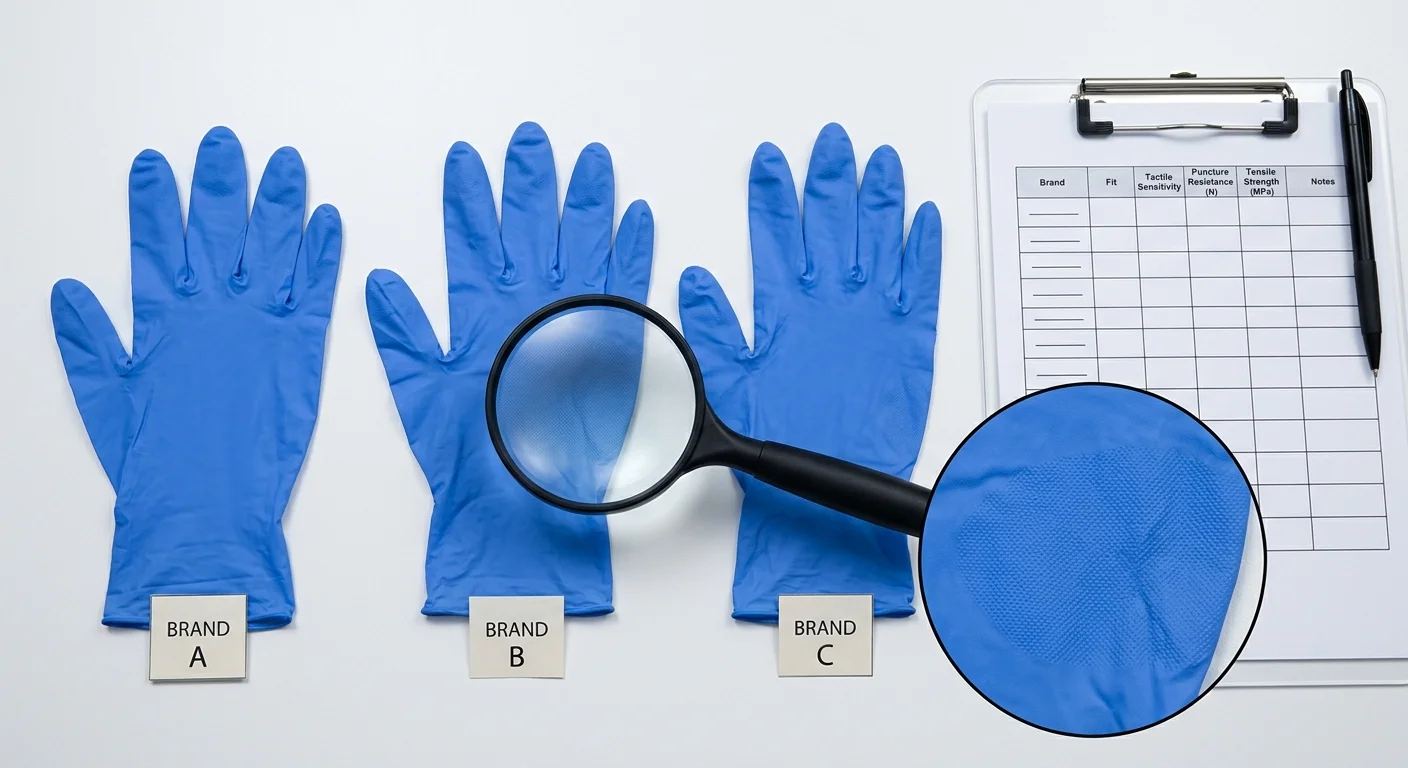 Three brands. Same category. Very different gloves once you put them on.
Brand positioning shapes everything — fit, feel, certification depth, and who the glove was designed for. Dynarex built its nitrile line around hospital and clinical phlebotomy workflows. Extended wear, contamination control, and reliable fit across multiple shifts. That’s a clear design focus, and it shows in real use. Ansell covers more ground: industrial, medical, food processing, and lab work. Their certifications reflect that — EN 374, ASTM D6319, ISO 374-1, and FDA clearance across different product lines. Broader range, but more variability by model.
Ammex is harder to place. Performance data against ASTM D6319 and mil-thickness specs for their nitrile lines isn’t easy to find for a clean comparison. Evaluating Ammex for a bulk order? Verify those specs on your own before committing.
Where do you feel the difference in Dynarex Nitrile Exam Gloves?
Grip and tactile feedback separate these brands in practice more than the spec sheets suggest. Ansell’s nitrile lines are built for touch sensitivity. The anatomical design cuts hand fatigue during longer sessions and holds up well in wet-condition gripping. Dynarex’s powder-free nitrile gloves deliver solid tactile clarity, too, but the design focus is different — extended wear stability comes first, not ergonomic refinement.
Chemical resistance is where Ansell pulls ahead in documented coverage. Their nitrile and neoprene lines are rated against acids, solvents, and biological pathogens. That matters for lab work or dual-use environments. Dynarex’s medical-grade nitrile gloves handle contamination control well. Detailed chemical permeation data, though, isn’t as well-documented in public sources. Regular solvent or chemical exposure in your work? That gap is worth noting.
Fit consistency tells a different story. Dynarex holds up for extended wear in clinical settings. Phlebotomists and hospital staff cite reliable fit across long shifts. Ansell’s broader SKU range gives you more fit options, but that also means model-specific evaluation matters more. Don’t buy Ansell at the brand level — pick a specific model, and test it first.
Practical Notes Before You Order Dynarex Gloves
- Sample one box before bulk purchasing. Fit variation is real across brands
Who Should Choose Dynarex Nitrile Exam Gloves?
Not every glove fits every job. Dynarex has carved out a clear lane — and if your work falls inside it, these gloves are a strong match.
Healthcare workers and clinical staff are the obvious fit. Phlebotomists, nurses, long-term care aides — anyone pulling full shifts in a high-contact environment. Dynarex built the extended wear stability into these gloves from the start. It wasn’t added later as an afterthought.
Beyond clinical settings, the range is wider than most people expect:
- EMS and law enforcement : You face high-stress, unpredictable contact. The 14 MPa tensile strength on Black Nitrile models (D2521–D2524) is built for exactly that.
- Tattoo artists and salon professionals : Precision work demands steady tactile feedback. These gloves hold up across hours of use without losing that feel.
- Food service workers : DEHP-free, powder-free construction cuts cross-contamination risk down.
- Anyone with latex sensitivity : No natural rubber latex. No powder. Both common irritant triggers are gone by design.
Matching the Right Model to Your Actual Work
Most buyers skip this step. Don’t.
Puncture resistance your top concern? Think needle exposure, bone fragments, and sharp debris. Go Black Nitrile. The 4–6 mil fingertip thickness and 14 MPa tensile strength are the specs that handle that risk.
Need sterile field compliance? Your options are Sterile Singles (6524) or Sterile Pairs (6529/6530). Both sit at 2 mil minimum — thinner, yes. But sterile procedural environments need that precision over extra bulk.
General extended wear — clinical intake, food prep, cleaning — the True Advantage line at 3 mil minimum hits the middle ground well. Enough structure to last a full shift. Enough feel to stay functional throughout.
Sizes run S through XL across all models. All are ambidextrous, all at 9.4 inches in length. Ordering for a team? Case quantities are simple: 10 boxes of 100 gloves for non-sterile, 8 boxes of 50 pairs for sterile options.
One group that should look at other options: anyone working with heavy solvents or aggressive chemical exposure on a regular basis. Dynarex’s chemical permeation documentation has gaps. For that risk level, look for a line with EN 374 or ISO 374-1 certification instead.
Verdict: Are Dynarex Nitrile Exam Gloves Good for Full-Shift Work?
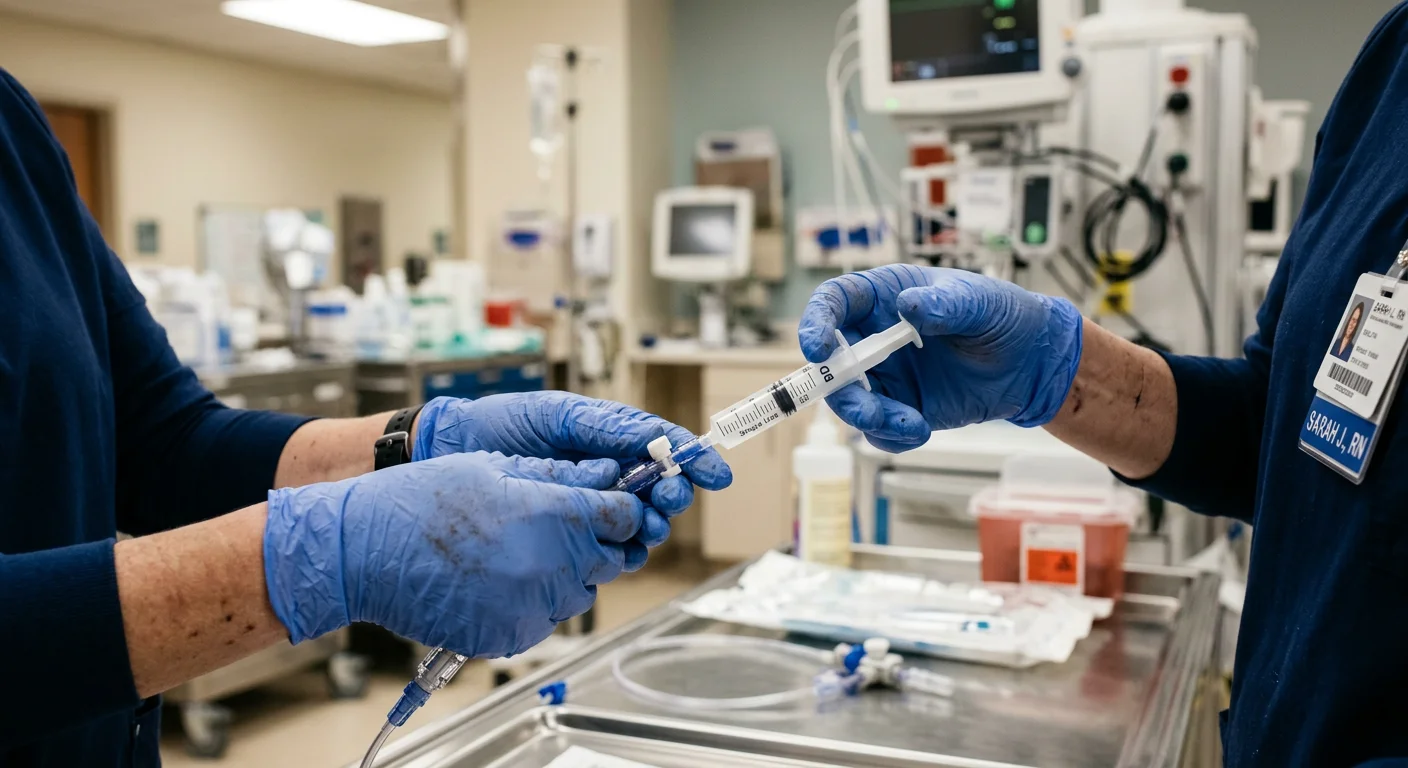 Short answer: yes — with one condition.
The True Advantage and Black Nitrile lines hold up well for most full-shift work. The 3–4 mil thickness clears the basic exam standard by a solid margin. The polymer lining, beaded cuffs, and flexible fit aren’t just comfort features. They reduce hand fatigue across eight to twelve hours of continuous use. Extended wear in healthcare, EMS, and long-term care is what these gloves were built for. Every design detail reflects that.
The condition: skip the DynaPlus for long shifts with high exposure. Two mil works fine for short tasks and low-contact situations. It’s not the right fit for a full shift with repeated puncture risk or chemical contact.
Pick the right model for your day:
- Black Nitrile — best for high-stress, high-risk environments
- True Advantage — solid for clinical settings and general extended wear
Match the glove to the job, and these Dynarex nitrile exam gloves will hold up where it counts.
FAQ: Dynarex Nitrile Exam Gloves — Common Questions Answered
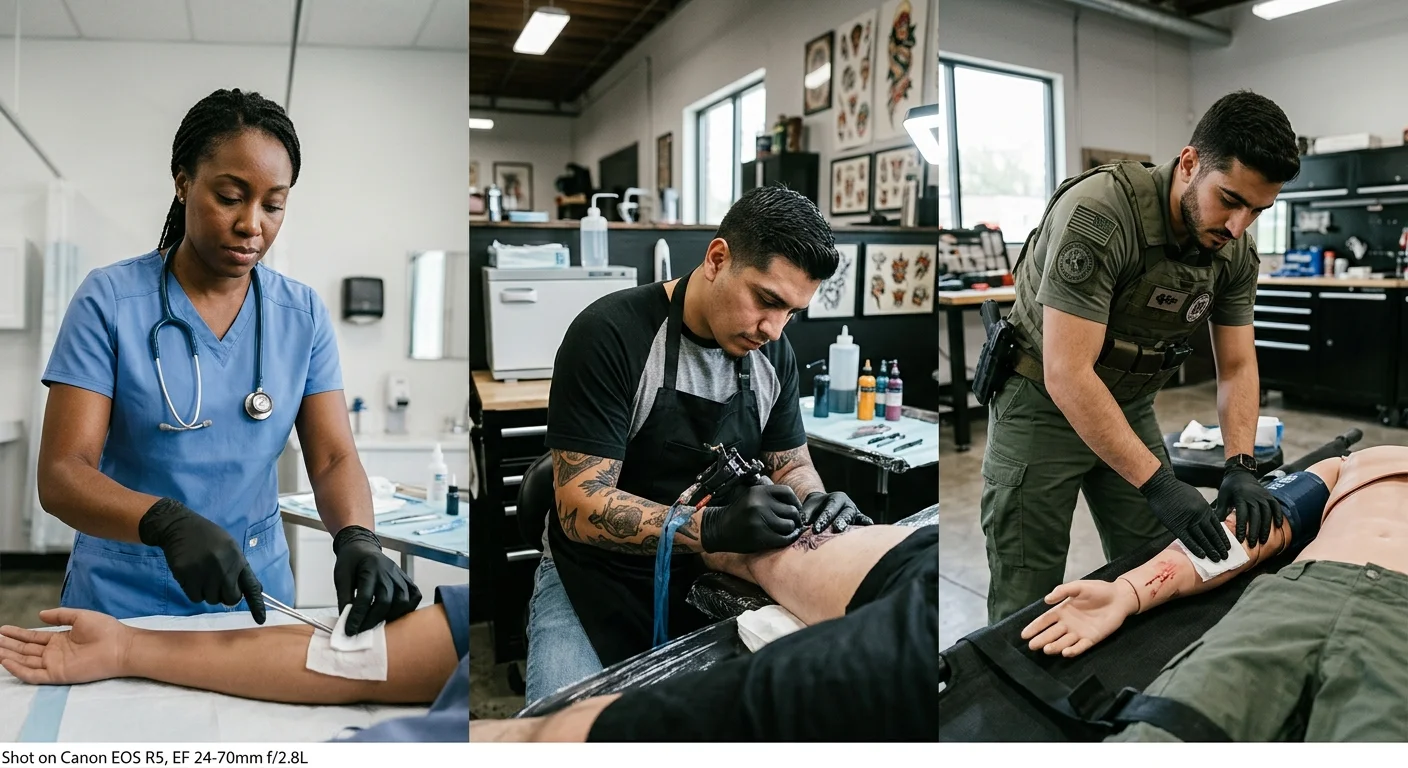 These questions come up all the time — from nurses ordering for a whole unit, from tattoo artists who’ve burned through three other brands, from people who just want to know if these Dynarex gloves will wreck their hands by lunchtime. Here are the straight answers.
Are Dynarex nitrile exam gloves latex-free?
Yes, across every line. Safe-Touch Black, DynaPlus, True Advantage, Sterile — none of them use natural rubber latex. Most lines are also powder-free and DEHP-free. Do you have a latex allergy or sensitive skin? The main irritant factors are removed at the design level. No extra steps needed on your end.
Which model is best for all-day wear?
For a full shift, go with True Advantage or Safe-Touch Black. True Advantage starts at 3 mil. It holds up well for clinical work and general extended-wear tasks. Safe-Touch Black goes thicker — 4–6 mil at the fingertips, plus a polymer lining. You get both durability and less hand fatigue over long periods. That’s the one for high-contact environments. DynaPlus sits at 2 mil. It works fine for short tasks. Eight hours of repeated stress? It’s not built for that.
Are these Dynarex Nitrile Exam Gloves food-safe?
Yes. These gloves are DEHP-free and powder-free. That makes them a solid fit for food service use. Dynarex lists food service as a target application alongside healthcare and EMS. So the coverage is broad.
Can I buy these Dynarex Nitrile Exam Gloves in bulk?
Yes. Here’s how the case counts break down:
– Safe-Touch Black — 10 boxes per case, 100 gloves per box
– True Advantage — 10 boxes per case, 100 gloves per box
– DynaPlus — 200 gloves per box
– Sterile Pairs — 50 pairs per box, 8 boxes per case
Plan your order quantity based on those numbers before you check out.
Do Dynarex Nitrile Exam Gloves come in sterile versions?
The designated Sterile line covers that — Singles and Pairs, both at 2 mil minimum with textured palms. Safe-Touch Black and True Advantage are not sterile. Don’t use them where sterile field compliance is required. Stick to the Sterile line for those situations.