

Peeling off a baby’s bib after mealtime often reveals a disaster zone. Spaghetti sauce, pureed carrots, and unidentifiable crusty bits are par for the course. But before you toss that stained fabric in the trash, know that most bibs can be saved.
Cleaning baby bibs doesn’t have to be a chore. It just requires matching the cleaning method to the material. Here is the streamlined guide to keeping your bibs fresh, sanitary, and stain-free.
Understanding Your Baby Bib Material (Material Identification & Care Label Basics)
Baby bibs come in different materials. The material affects how you clean it, how long it lasts, and whether that spaghetti stain stays or goes.
Quick Bib Material Identification Guide
Cotton bibs feel soft and breathable against your fingertips. They have a natural fabric weave you can see up close. Drop water on them—they soak it up fast. Terry cloth versions have those familiar loops that make them thirsty. These are the workhorses of the bib world. They dominated the market in 2023 for good reason.
Bamboo bibs take softness to another level. They feel almost silky, with a subtle natural sheen. They’re lightweight but thirsty—perfect for constant droolers. Many combine bamboo with cotton muslin. This combo pulls moisture away from the baby’s skin.
Silicone bibs are easy to spot. They have that flexible, rubbery feel—no fabric texture at all. They’re seamless and waterproof. The built-in crumb pocket gives them away. Nothing soaks into these.
Plastic-backed bibs feel stiff when you touch them. Flip them over, and you’ll see the thin waterproof layer bonded to the cloth front. They’re stiffer than all-fabric options. But they keep clothes bone-dry underneath.
Polyester or terry cloth bibs have a synthetic sheen. They feel less soft than cotton but dry faster. The medium thickness balances absorption with easy washing.
Decoding Care Labels Like a Pro
Those tiny symbols on bib tags matter. They show you how to keep bibs in great shape.
Machine wash icons show a little tub. Look for the temperature: 30°C or 40°C for cotton and bamboo. Higher temps work for synthetics.
Tumble dry symbols are a square with a circle inside. One dot means low heat (perfect for cotton). Air drying is safer for bamboo. Silicone needs to air dry only.
The crossed-out triangle means skip the bleach. This applies to every bib material.
Wipe clean icons show a hand or a cloth. That’s your signal for silicone and plastic-backed bibs.
Material Performance at a Glance
| Material | Absorbency | Durability | How to Clean |
|---|---|---|---|
| Cotton (terry) | High | Lasts 50+ washes | Machine wash |
| Bamboo | High (moisture-wicking) | Medium-high | Machine wash |
| Silicone | Low (waterproof) | Very high | Wipe or dishwasher |
| Plastic-backed | Low | Medium | Wipe surface |
| Polyester | Medium | High | Machine wash |
Cotton and bamboo bibs soak up everything fast. That’s great for keeping the baby dry. But it means frequent changes and more laundry. Silicone and plastic options create a barrier—no soaking, minimal mess. They work best for teething babies and toddlers who fling food everywhere.
Match your bib to the meal. Fabric bibs for everyday eating. Silicone for messy self-feeding time. Your cleaning routine just got simpler.
Step-by-Step Cleaning Guide for Fabric Baby Bibs (Cotton, Bamboo, Polyester)
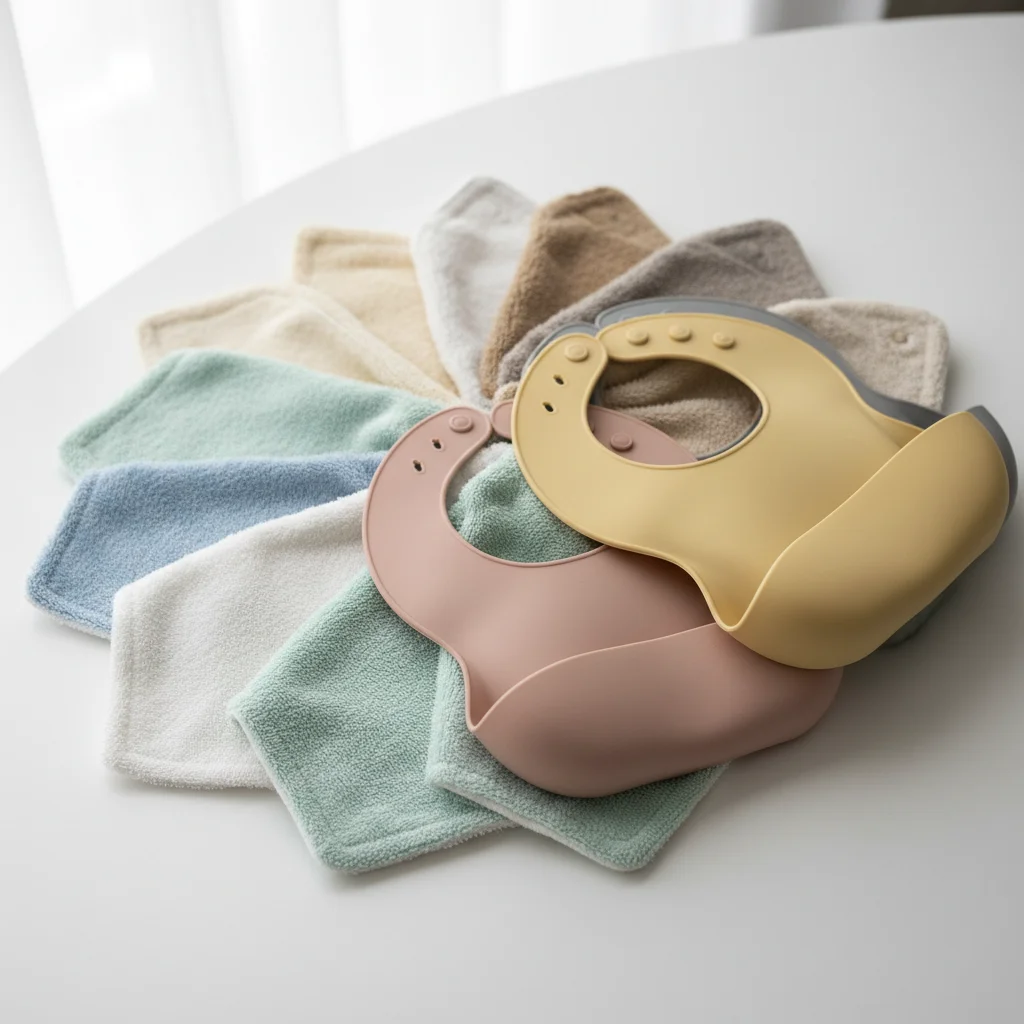
Fabric bibs absorb everything your baby throws at them. All that absorbency means they need the right cleaning approach. You want them to stay soft, effective, and stain-free.
Step 1: Pre-Treat Those Stains Right Away
Grab that bib the moment it comes off your baby. Fresh stains come out 90% easier than dried ones.
Flip the bib to find the worst spots. Squirt a small amount of liquid baby-safe detergent onto the stain. Rub the fabric against itself. No harsh scrubbing needed. Let it sit for 10-15 minutes while you wipe down the high chair.
For stubborn stains like blueberry puree or sweet potato: Mix 1 tablespoon baking soda with 1 tablespoon dish soap and 2 cups cold water in a bowl. Drop the bib in. Let it soak for 10-30 minutes. This combo breaks down food particles without harsh chemicals.
Never use hot water at this stage. Hot water sets protein stains from breast milk, formula, and spit-up. Cold water lifts over 90% of these stains instead.
Step 2: Soak for Deep Cleaning
Fill your sink or a basin with cold water. Add half a cup of white vinegar. This deodorizes and softens the fabric. Drop your pre-treated bibs in. Let them soak for 30 minutes.
Got protein-based stains? Make a stronger overnight soak. Mix equal parts water and diluted white vinegar (1:1 ratio). Submerge the bibs. By morning, those crusty formula stains will release.
Bamboo bibs love cold soaks. Cold water preserves the fabric’s natural antibacterial properties. Your bibs will last twice as long.
Step 3: Machine Wash the Right Way
Temperature: Set your washer to cold or warm. Never exceed 40°C (104°F). Higher temps shrink cotton and bamboo bibs by 5-10%.
Cycle: Choose gentle or delicate every time. This protects the polyester backing. It also keeps cotton fibers from pilling.
Detergent: Use baby-safe or mild organic detergent. Skip fabric softeners. They coat fibers and reduce absorbency by up to 30%.
Pro tip for Velcro bibs: Place them inside a mesh laundry bag. This prevents the hooks from snagging other clothes or losing their grip.
Add one cup of white vinegar to the rinse cycle instead of the softener. Your bibs come out soft without any residue.
Step 4: Double Rinse Every Load
Run an extra rinse cycle after the main wash. Baby’s skin is sensitive. Even trace amounts of powder detergent can cause irritation. That second rinse removes 100% of residue. This matters most for newborns.
Step 5: Dry Smart to Preserve Quality
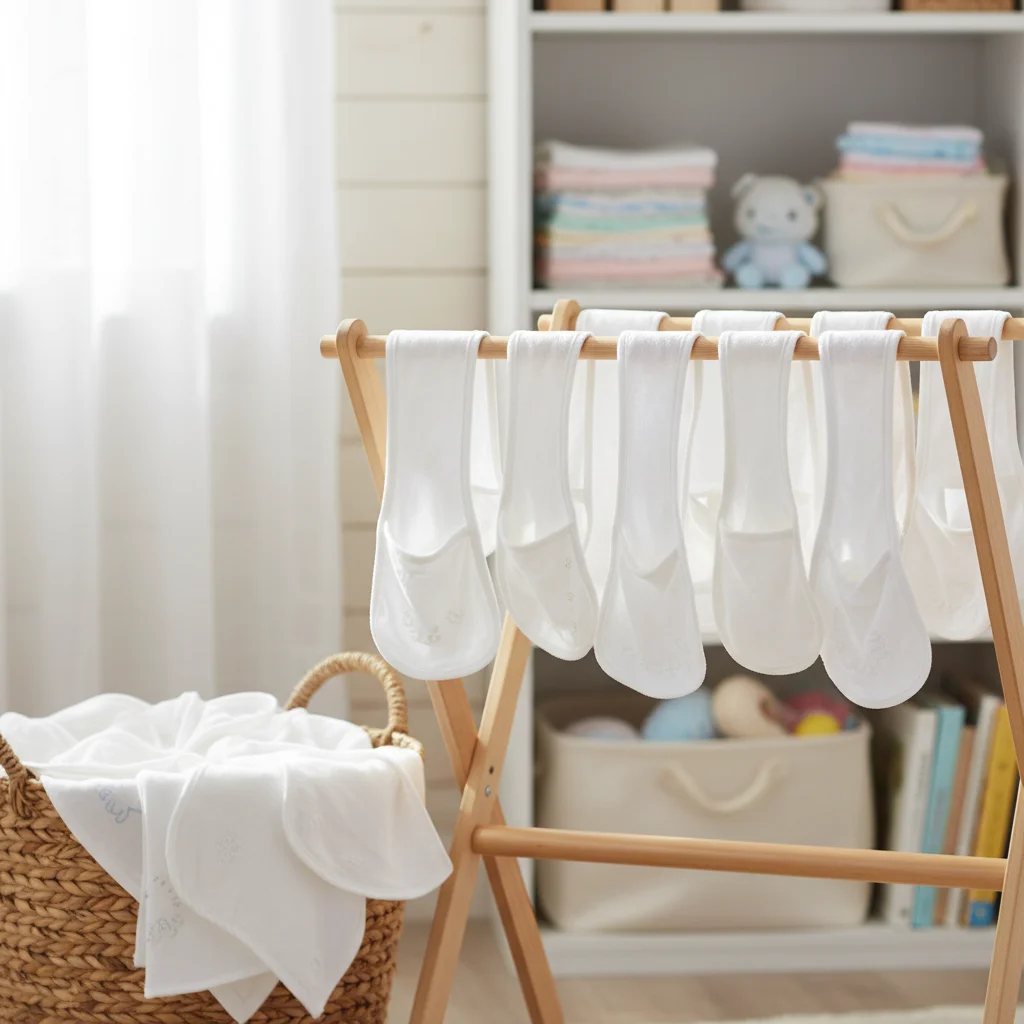
Air drying wins every time. Hang bibs on a drying rack or clothesline. They maintain 100% of their absorbency. Bamboo bibs need air drying. Heat shrinks them fast.
Need them to dry faster? Use your dryer on the lowest heat setting. Cotton and polyester can handle it. Bamboo cannot. Low heat keeps absorbency at 90-95%. It also prevents shrinkage.
Never blast fabric bibs with high heat. High heat stiffens fibers. It reduces absorbency to 70-80%. You’ll also see noticeable shrinking.
Step 6: Sun-Dry for Natural Stain Lifting
Here’s my favorite secret. After washing, hang bibs in direct sunlight for 10-30 minutes. UV rays bleach out remaining stains. No chemicals needed. I’ve watched stubborn carrot stains fade in bright sunshine.
This works great on white and light-colored cotton bibs. The sun also kills lingering bacteria.
Quick Timing Reference
- Cotton bibs: Pre-treat 10-15 min → soak 30 min → wash 30-45 min cycle
- Bamboo bibs: Cold soak 30 min → gentle wash → air dry
- Polyester bibs: Hand wash 5-10 min or gentle machine 30 min → low heat or air dry
One final tip: Always wash new bibs before first use. This removes 100% of manufacturing residues. It makes them softer and more absorbent from day one.
How To Clean Silicone and Plastic Baby Bibs (Wipe-Clean Method)
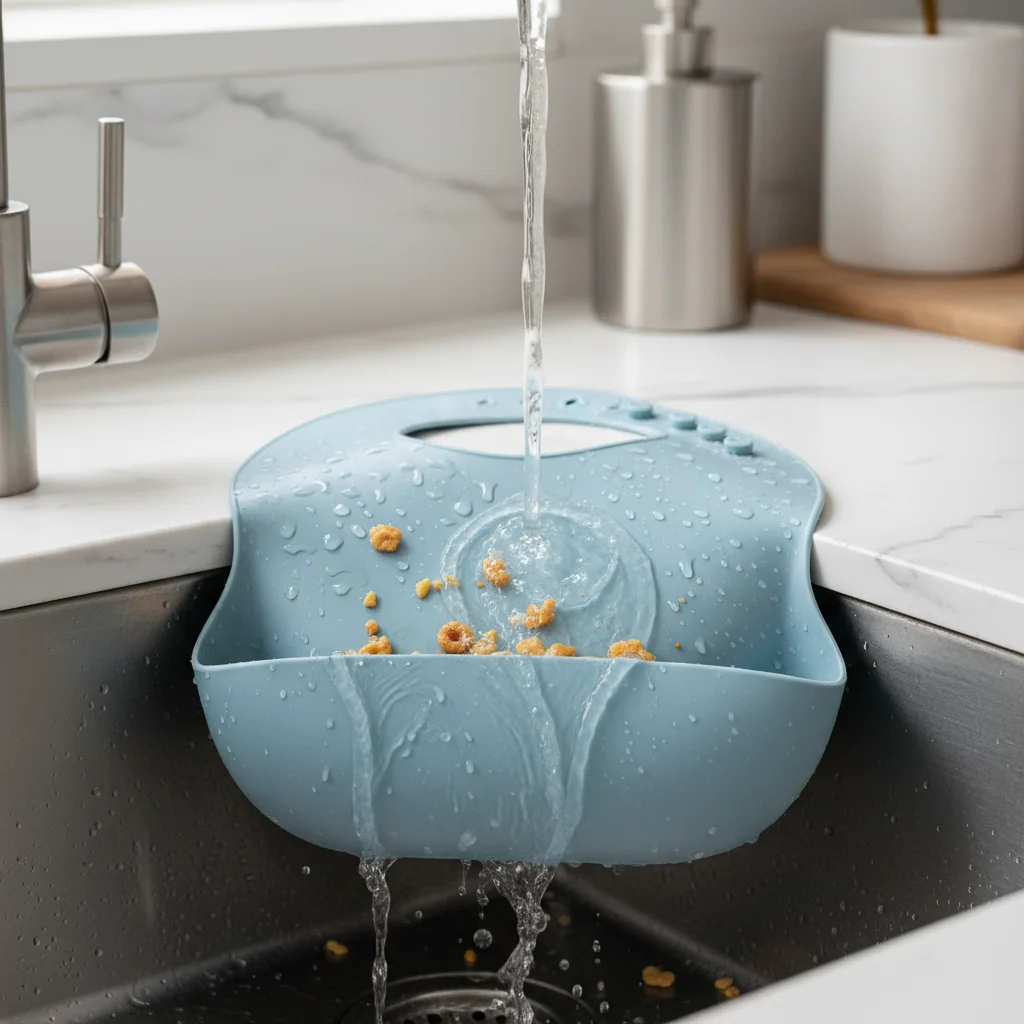
Silicone and plastic bibs are the closest thing to magic in the messy world of baby feeding. No soaking. No stain treating. No wrestling with the washing machine between meals.
These waterproof wonders repel food instead of absorbing it. That puree your baby just flung across the kitchen? It slides right off. Just wipe, and you’re done.
The Basic Wipe-Clean Routine (30 Seconds Flat)
Step 1: Rinse under running water. Hold the bib under your faucet. Let the water pressure do the work. Food bits slide off right away. Use lukewarm water—never hot. Temperatures over 30°C damage the plastic coating. This causes warping.
Step 2: Add a drop of mild soap. Squeeze one small drop onto the bib surface. Rub with your fingers or a soft cloth. Work it into the crumb pocket seams where food hides.
Step 3: Rinse well. Run the bib under water again. Make sure zero soap residue remains. Soap buildup creates a sticky film. This attracts more mess.
Step 4: Wipe dry with a towel. Give it a quick wipe. Or shake off excess water and let it air dry on your counter for five minutes.
Done. Your bib is clean and ready for round two.
The Super-Quick Method for Busy Moments
Some days you have 10 seconds between one meal and the next nap.
Rinse the bib under cold running water. Shake off the water. Wipe with a dry kitchen towel. Skip the soap. This works great for light messes like yogurt or applesauce.
I do this all the time during hectic mornings. The bib goes right back on for the next feeding.
Dishwasher Cleaning (Hands-Free Option)
Many silicone bibs are dishwasher safe. Check your bib’s care label first.
Place bibs on the top rack. The bottom rack gets too hot. High heat warps plastic and weakens silicone over time.
Use your regular dish detergent. Run a normal cycle. Let bibs air dry after the cycle finishes.
Here’s my honest take: Hand wiping beats the dishwasher every time. It takes 30 seconds versus an hour-long cycle. Plus, dishwasher heat and strong spin can shorten your bib’s life. The harsh conditions wear it down faster. I use the dishwasher for deep cleaning once a week—not for routine wipes.
Sun-Drying for Natural Sanitizing
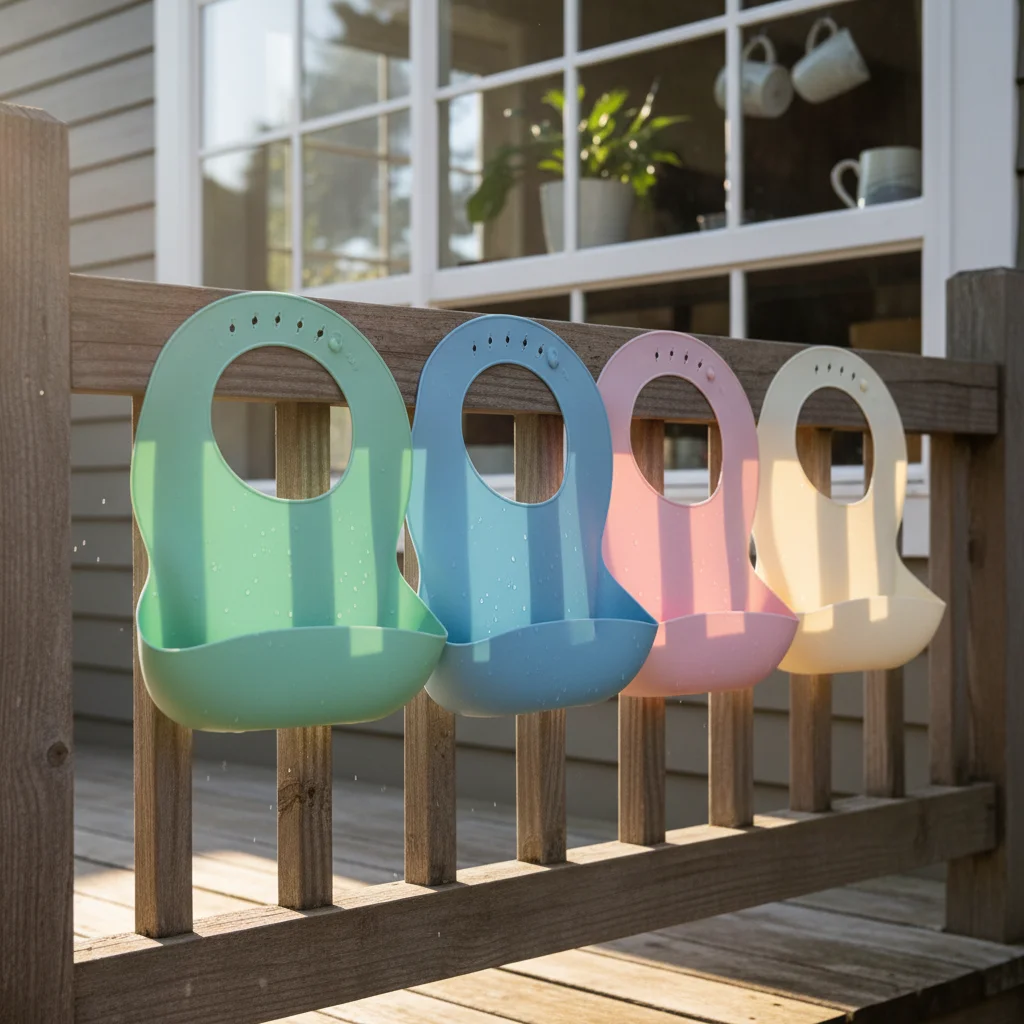
After wiping your silicone bib clean, hang it outside in direct sunlight for 15-20 minutes. UV rays kill 99% of bacteria. No chemicals needed. This natural method keeps bibs fresh and clean between deep washes.
I line up my silicone bibs on my back porch railing after lunch. By snack time, they’re dry, sanitized, and ready to go again.
Removing Stubborn Stains: Targeted Solutions by Stain Type
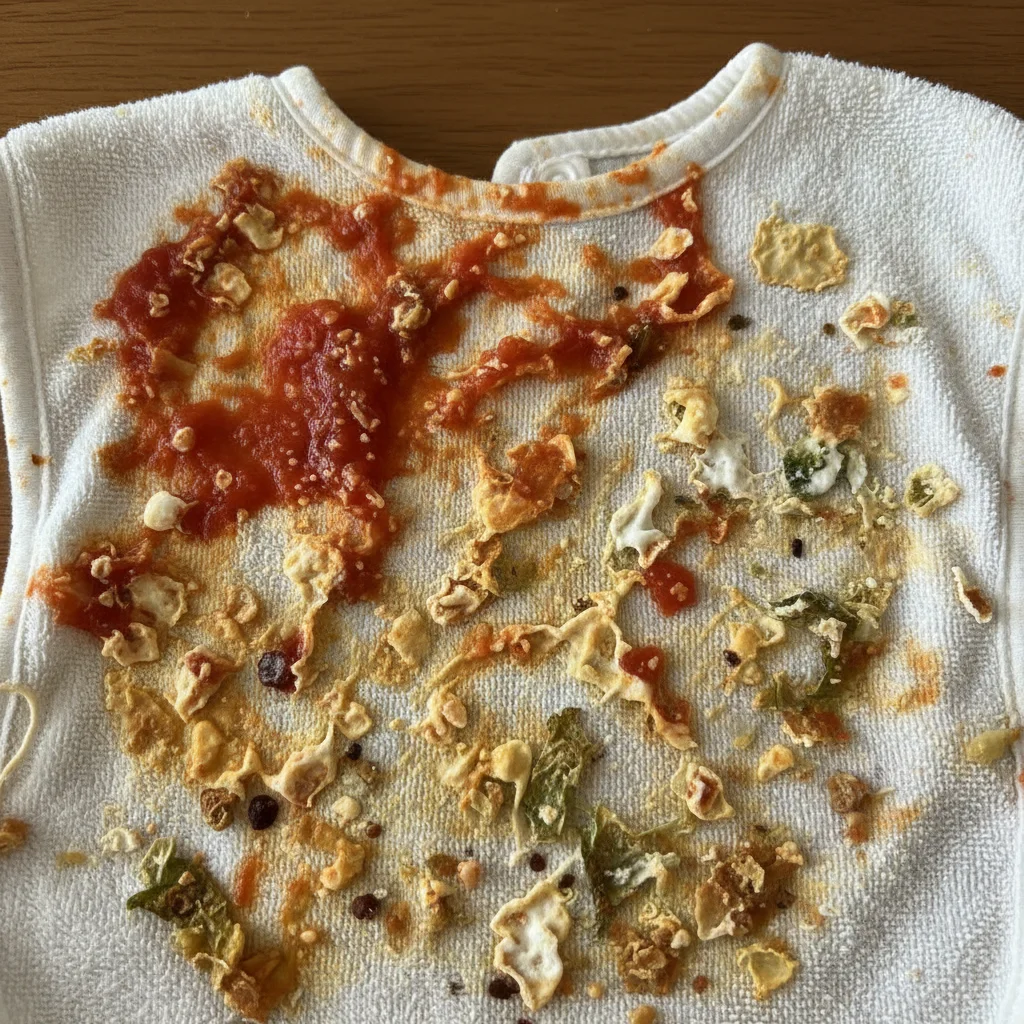
Stains differ. You need the right fix for each one. Wrong methods might lock a spot in forever. Check this guide for common messes.
Formula, Milk, and Protein Stains
The Rule: Skip hot water on protein. It “cooks” the stain into the fibers.
Rinse right away with cold water. Run water from the back of the fabric to push the mess out. Rub liquid enzyme detergent into the wet spot. Let it sit. Soak the item for 30 minutes in cold water. Add an enzyme cleaner like OxiClean for a boost. Then, machine wash cold. Check the spot before you dry it.
Oil and Grease Stains
The Rule: Soak it up first. Then cut the grease.
Put baking soda or cornstarch on fresh grease. This absorbs the oil. Brush it off after 15 minutes. Use standard dish soap on the stain. It cuts grease better than laundry detergent. Rinse with hot water. Check your label first—use hot for cotton, warm for bamboo.
Fruit, Juice, and Tannin Stains
The Rule: Water first, soap second.
Blot extra liquid. Don’t rub. Rubbing spreads the color. Dab the spot with dish soap and warm water (mix 1 part soap, 2 parts water). Rinse with cool water. Got old marks? Put a stain remover spray on for five minutes before washing.
The Mustard Challenge
Mustard dye is strong. Mix liquid detergent with cold water. Put it on the stain. Soak the bib in cold, soapy water for 10 minutes. Rub the fabric against itself to loosen the yellow color. Air dry the item. Heat locks yellow forever.
Diaper Blowout Stains
Hygiene matters most here. Flush the newborn’s bib under cold running water quickly to remove solids. Use an enzyme spray. Let it sit for 10 minutes to break down the mess. Wash in cold water with detergent. Add a cup of white vinegar to the rinse cycle. This kills odors.
Deep Cleaning Methods for Set-In Stains
- Overnight Vinegar Soak: Got dried stains? Soak bibs overnight. Mix equal parts white vinegar and cold water. This breaks down proteins gently. It won’t hurt the fabric.
- Baking Soda vs. Enzymes: Use a baking soda paste (3 parts soda, 1 part water). This works on fresh oil stains or delicate bamboo. Try enzyme sprays with a toothbrush scrub for old, tough protein stains.
- Sunlight Bleaching: Stuck with yellow stains like curry or mustard? Hang the damp bib in direct sunlight. Leave it for 4-8 hours. UV rays act as a natural bleach. They break down colors that detergents miss.
Dealing With Odors and Mold on Baby Bibs
That sour milk smell is the worst, isn’t it? It happens when trapped moisture and leftover proteins create a breeding ground for bacteria and mold. Since mold spores can actually trigger health issues like asthma, it’s vital to handle this quickly.
The White Vinegar Fix
Forget harsh chemicals—white vinegar is your MVP here. Its acidity neutralizes odors and knocks out about 82% of mold species without leaving toxic residue.
- For mild smells: Spritz a 50/50 vinegar-water mix all over the bib. Let it sit for 30 minutes, then air dry.
- For the serious funk: Soak bibs in a gallon of water with a cup of vinegar for 2-4 hours before simply washing them. This usually resets the fabric completely.
Handling Visible Mold
Spot some fuzz? Act fast. Dab full-strength vinegar or hydrogen peroxide (be careful with colors!) on the spot. Let it soak, then let the sun finish the job with its natural UV sanitizing power.
When to throw it out: If black mold appears, if it covers more than half the bib, or if the smell won’t go away, just toss it. It’s simply not worth the risk to your baby’s immune system.
Stop the Stink Before It Starts
Prevention is way easier than scrubbing. First, never toss a wet bib in the hamper —rinse and let it dry first to stop bacteria growth. Second, ensure good airflow when drying; humidity is the enemy. Finally, I recommend keeping an open box of baking soda in your bib drawer. It absorbs moisture passively and keeps everything fresh.
Critical Do’s and Don’ts for Baby Bib Care
Some habits protect your baby’s bibs. Others destroy them faster than you can say “spaghetti night.” A bib can last twelve months or give up after three. These simple rules make the difference.
The Do’s That Help Baby Bibs Last Longer
Wash baby bibs in cold water (max 30°C).
Hot water shrinks cotton bibs and weakens fabric fibers. Cold water protects absorbent bibs and keeps their shape.
Use mild, fragrance-free detergent for baby laundry.
Strong scents and additives may irritate sensitive skin. A gentle baby-safe detergent plus an extra rinse removes residue from drool bibs and feeding bibs.
Pre-wash new baby bibs.
New cloth bibs may carry dust or factory residue. One wash keeps baby feeding accessories safe from the start.
Soak cotton baby bibs in diluted white vinegar monthly.
Mix 1 part vinegar with 4 parts water. This removes hard-water buildup and keeps absorbent bibs soft without fabric softener.
Wipe silicone baby bibs and waterproof bibs right after meals.
Quick cleaning prevents food stains from setting, especially on toddler bibs used for self-feeding.
Separate light and dark cloth bibs.
Color bleeding can stain white baby bibs and make them look old.
Keep 5–10 baby bibs in rotation.
Rotating drool bibs and feeding bibs reduces wear and extends product lifespan.
Change wet baby bibs immediately.
Damp fabric can cause skin irritation or rashes.
The Don’ts That Damage Baby Bibs
Do not wash cloth baby bibs above 40°C.
High heat causes shrinkage and shortens the life of cotton bibs.
Avoid fabric softener on baby bibs.
Softener leaves residue, lowers absorbency, and may irritate the baby’s skin. Vinegar works as a safer alternative.
Do not over-wash baby bibs.
Frequent unnecessary washing breaks down fabric faster. Wash feeding bibs when dirty, not by habit.
Never put stained baby bibs in the dryer.
Heat sets stains permanently and may damage snaps on adjustable bibs. Treat stains before drying.
Common Questions Parents Ask About Cleaning Baby Bibs (FAQ)
Parents reach out with the same questions every single week. These answers cut through the confusion and give you what you need to know.
How Often Should I Wash Baby Bibs?
It depends on age and mess level.
Newborns and heavy droolers may use 10–20 cloth bibs a day. Change fabric bibs as soon as they’re wet—damp material can irritate skin and encourage mold. Babies under 2 months should have bibs washed after every use. Premature or immunocompromised infants may need sanitizing in addition to washing.
Toddlers (1–2.5 years) create bigger food messes. Wash bibs after each meal. Silicone or wipe-clean bibs are easier here—rinse and reuse.
Why Are My Baby’s Bibs Turning Yellow?
Milk residue oxidizes over time, causing yellow stains.
Sunlight works well: place washed bibs in direct sun for 2–4 hours. For stubborn stains, soak in a solution of 2 teaspoons unscented bleach per gallon of water for 2 minutes, then rinse thoroughly. A gentler option is a 1:1 mix of white vinegar and water, soaked for 30 minutes.
Replace bibs that are cracked, torn, heavily discolored, or trapping residue that won’t come out.
Can I Put Silicone Bibs in the Dishwasher?
Yes—if labeled dishwasher safe.
Place on the top rack and use a hot cycle (at least 140°F / 60°C). A closed basket helps prevent slipping into the filter. Air-dry fully after washing to avoid moisture buildup in pockets.
Dishwashers save effort, but hand-wiping is faster for daily use.
Is Unscented Detergent Safe Enough, or Do I Need Special Baby Sanitizer?
For healthy babies over 2 months, mild unscented detergent plus a double rinse is usually sufficient.
Choose formulas without fragrance, dyes, triclosan, or harsh additives. An extra rinse reduces residue that can irritate skin.
Daily sanitizing is generally only necessary for newborns under 2 months, premature babies, or infants with weakened immunity—unless your pediatrician advises otherwise.
Conclusion
Cleaning baby bibs the right way keeps them soft, stain-free, and safe for daily feeding. Match the cleaning method to the material, treat stains early, avoid high heat, and rotate bibs to extend their lifespan. Smart care saves money and protects delicate skin. Looking for custom baby bibs or private-label feeding products? Contact us for tailored solutions and a competitive quote.