

Finding the right custom disposable bib supplier doesn’t have to be confusing. Whether for restaurants, healthcare, or private-label, mistakes cost time, money, and reputation. This guide shows how to evaluate custom disposable bib suppliers , check compliance, compare prices, and explore customization options—from materials to logo printing—so you can order bibs that meet both budget and brand standards.
Understanding Custom Disposable Bibs: Materials, Specifications & Quality Standards
Your material choice makes or breaks disposable bib performance. Pick wrong? You’ll face complaints, returns, and wasted inventory costs.
Core Material Options & Performance Profiles
PE (Polyethylene) is the go-to for budget-conscious restaurants. This material blocks water and oils, keeping clothing protected. Light construction (29-40gsm for paper-poly mixes) keeps costs down. But there’s a catch. Thin material rips under stress. It doesn’t breathe well. Users feel uncomfortable during long wear.
.jpg)
Use PE for: fast-casual dining, food processing lines, and short tasks where liquid protection matters most.
PP (Polypropylene) works better for healthcare. It breathes more than PE. Heat doesn’t build up during long procedures. The softer texture feels better on patients. Water resistance is lower than PE, but it handles most food service needs just fine.
Best for: long meal times in senior care, outpatient clinics, cafeteria dining.
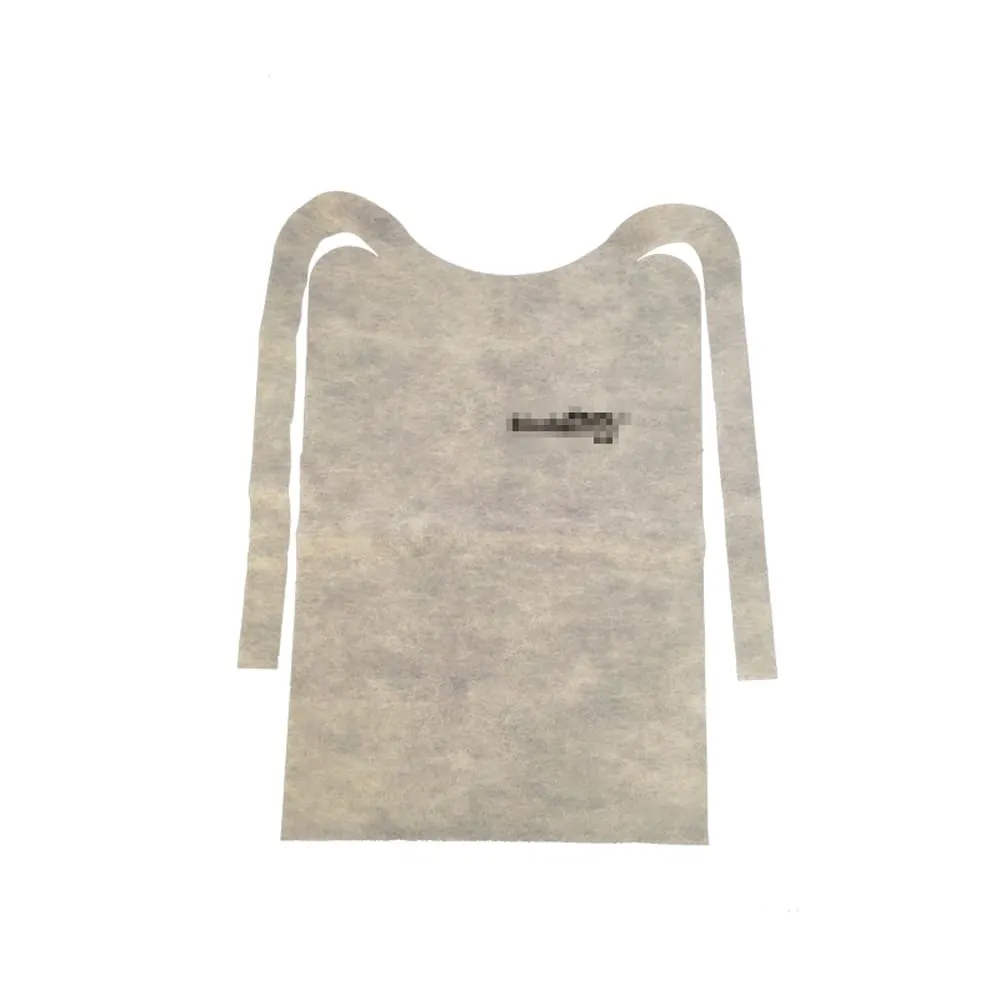
CPE (Chlorinated Polyethylene) is upgraded PE. Stronger material resists tears during active use. You get flexibility and softness close to PP. It still keeps excellent waterproof protection. Cost runs 15-20% higher than standard PE. Still not as tough as PVC, though.
Good for: upscale dining spots wanting a premium feel, pediatric dental offices, and multiple uses.
PVC (Polyvinyl Chloride) gives maximum protection in tough spots. Beats all other options against water, oils, and chemical splashes. The downside? Heavier weight and stiff feel hurt comfort. Poor breathability cuts down wear time.
You need this for: chemical handling, industrial food processing, and high-risk medical procedures.
Three-Ply Construction (PP/Tissue/PE) mixes the best properties. The tissue core (2.1g weight) soaks up moisture. This part qualifies as “essential character” under HTSUS classification 4818.50.0000 (duty-free status). Non-woven polypropylene outer (2.8g) feels soft. Polyethylene backing stops liquid from getting through. Built-in crumb catcher pockets boost the function. Total weight runs 7-8g per bib.
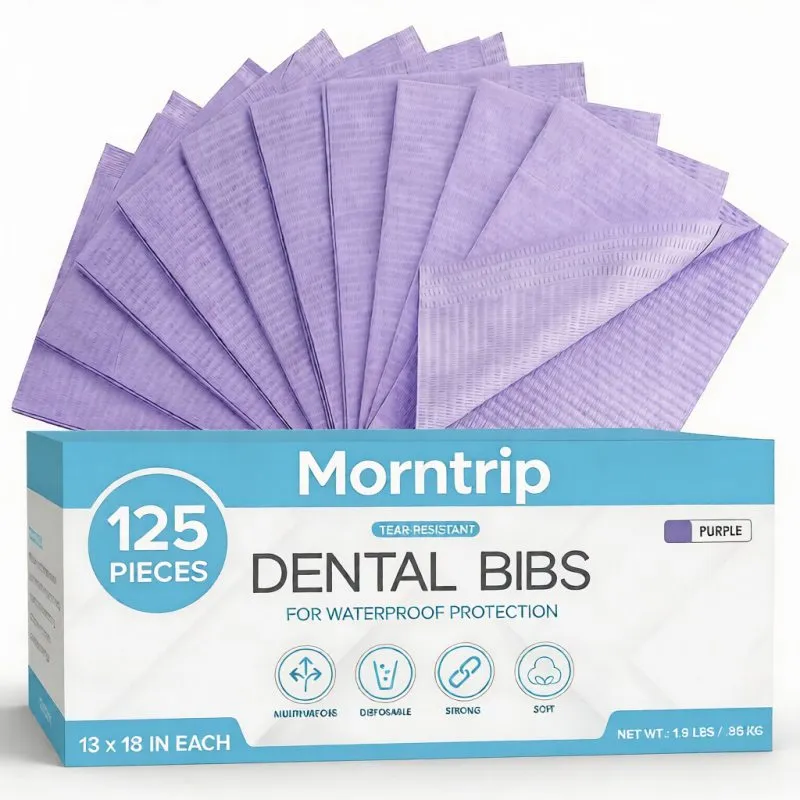
Paper-Film Laminates balance cost and performance for dental bibs . One or two paper plies (40-58gsm) absorb moisture on the front. PE film or backing stops soak-through. Standard sizes: 43×56cm, 45×56cm for dental work. Poly-backed versions have 13″ x 18.75″ imprint area with 0.5″ bleed allowance.
Critical Specifications by Application
Medical Disposable Bibs must meet healthcare contamination protection standards. Check supplier certifications before bulk orders. Material needs to block fluid penetration under pressure. Neck openings must fit various patient sizes without gaps.
Restaurant Disposable Bibs need quick-open designs and clear branding space. Perforated sides allow fast removal. No need to undo closures. Hook-and-loop or tie closures fit both adults and children. Paper bibs with pockets (40×60cm or 40×80cm standard) catch dropped food well.
Waterproof Disposable Bibs need PE, CPE, or PVC backing, no matter what front material you use. Test samples in real conditions. Pour water on them. Add food oils. Stress them with movement. Seams and pocket attachments usually fail first.
Material Selection Decision Matrix
Pick PE or CPE for: The main concern is liquid protection. Budget is tight. Single-use disposal is certain. Wear time under 30 minutes.
Pick PP or non-woven for: Breathability counts. Extended wear expected (45+ minutes). Patient comfort comes first. Moderate moisture exposure.
Pick PVC for: Chemical resistance needed. Heavy soiling expected. Higher cost justified by durability. Breathability doesn’t matter.
Pick three-ply or laminated for: Need both absorption and waterproofing. Professional look matters. Premium positioning justifies cost. Pocket function adds value.
Get material samples from suppliers. Ask for actual GSM weights, thickness measurements, and tear strength data. Compare their claims against your specific use case before you commit to MOQ orders.
Customization Options: Printing Methods, Design Capabilities & Brand Guidelines
Logo placement turns plain disposable bibs into brand assets. Your printing method choice affects cost per unit, minimum order volumes, and brand appearance on every bib.
Print-on-Demand vs. Traditional Digital Printing
Print-on-Demand (POD) removes inventory risk for market testing. Your file goes straight to production. No manual setup steps. You can order 50 logo-printed bibs today, 200 next week, different designs each time. Great for restaurants testing seasonal promotions or medical facilities trying new branding. The POD market hits USD 59.3B by 2033 with 27.8% annual growth. Per-unit costs stay higher than bulk runs. Expect to pay 40-60% more per bib compared to 10,000-unit digital printing orders.
Traditional Digital Printing works best once you’ve locked in your design and need 5,000+ units. Setting up costs spread across larger quantities drops your per-piece price a lot. Turnaround runs faster than offset printing. You still get customization flexibility. Color matching stays consistent across the entire run. The digital printing market is expected to reach USD 59.93B by 2034. North America controls over 40% of the global share.
Choose POD for: Market testing, multiple design variations, uncertain demand volumes, and fast pivots.
Choose digital for: Proven designs, predictable reorder schedules, and cost optimization on known quantities.
.jpg)
Variable Data Printing (VDP) for Multi-Location Brands
VDP technology personalizes each bib. Brand consistency stays intact. Does your restaurant chain need bibs showing different franchise locations? VDP merges your customer database with design templates. One print run produces thousands of unique pieces. Each franchise gets its location name, phone number, or promotional code printed on the bib.
This isn’t one-off customization. It’s mass personalization at big scale. Healthcare networks use VDP for medical disposable bibs showing different clinic addresses. Dental practices print appointment reminders on dental bibs for custom orders. The technology handles text changes, image swaps, and layout adjustments. The press doesn’t need to stop.
Cost impact: VDP adds 15-25% to base printing costs. You skip separate runs for each location. One setup fee covers all variations.
.jpg)
Hybrid Printing for Premium Brand Presentation
Hybrid printing combines digital flexibility with traditional printing quality. Your base design prints with digital methods. Then, analog processes add premium touches. Think metallic inks, spot varnishes, or embossing effects. Great for upscale dining establishments wanting branded disposable bibs that match their premium positioning.
QR codes integrate with ease. Print unique codes linking to menus, loyalty programs, or feedback forms. The hybrid market grows to USD 16.5B by 2034. Brands demand both customization and quality.
Expect a 30-45% cost premium over standard digital. Minimum orders usually start at 3,000 units. Analog setup needs this quantity.
AI-Powered Design Capabilities
AI design tools cut expensive graphic designer fees for basic customization. Input text prompts describing your desired look. AI creates multiple personalized disposable bib design options in seconds. Background removal happens on its own. Image enhancement fixes low-resolution logos. Content translates to multiple languages for international franchises.
Pre-press AI checks your files before printing starts. It catches font problems, resolution issues, and color mismatches. Automated proofing ensures your waterproof disposable bibs print as previewed. Quality checks run on every file. Brand guidelines get maintained without manual review.
Production AI forecasts demand based on your ordering history. It schedules print runs during optimal equipment windows. Predictive maintenance stops mid-run failures that waste materials.
Brand Guidelines Compliance Systems
Web-to-Print (W2P) platforms lock down brand standards. Customization stays enabled. You upload approved logo files, color specifications, and layout templates. Franchise owners or department managers design their own bibs within your preset boundaries. They can’t use the wrong colors or distort logos by accident.
The system auto-validates every design against your brand rules before sending it to production. High upfront platform costs (USD 5,000-15,000 setup) pay back. Brand violations get eliminated. Approval cycles get reduced.
Eco-Friendly Printing Options
Sustainable printing methods matter for eco-friendly disposable bibs. Water-based inks replace solvent chemicals. Digital proofing cuts paper waste from approval cycles. POD and W2P systems print exact quantities needed. Overstock disposal gets eliminated.
Asia-Pacific markets show 25.4% growth in eco-focused customization. Regulatory pressure and consumer preference drive this. European buyers ask for small-batch sustainable options.
Eco-printing adds 10-20% to costs. It opens access to green-minded buyer segments. These segments are more common in healthcare and premium dining sectors.
Request printed samples showing your actual logo on your chosen material before committing to MOQ. Colors look different on PE versus paper-poly laminates. What works on screen often needs adjustment for physical printing.
Quality Assurance & Compliance Standards for Different Applications
Compliance failures cost more than money. A contamination incident in healthcare can trigger lawsuits. It brings regulatory sanctions. Your reputation takes permanent damage. Your custom disposable bibs supplier must prove their products meet industry standards. Get this proof before placing bulk orders.
Healthcare & Medical Standards: Non-Negotiable Requirements
Medical disposable bibs face strict regulations. FDA registration is mandatory for U.S. healthcare facilities. Your supplier needs a Class I medical device classification at a minimum. Check their 510(k) clearance for patient-contact products. European buyers need CE marking under the Medical Device Regulation (MDR) 2017/745.
Materials must pass biocompatibility testing per ISO 10993 standards. This covers cytotoxicity. It covers skin sensitization. It covers irritation potential. Lab reports should document testing on the exact material you’re ordering. Generic certificates don’t count. Waterproof backing layers need fluid barrier performance data. ASTM F1670 tests measure viral penetration resistance. ASTM F1671 covers bacterial barrier effectiveness.
Dental practices need dental bibs custom-made that meet infection control protocols. The CDC requires single-use patient protection items. This prevents cross-contamination. Material makeup affects disposal classification. Paper-based bibs often qualify as general medical waste. Plastic-heavy types may need regulated medical waste handling. This changes disposal costs.
Sterilization compatibility matters for surgical-grade uses. Ask if materials withstand ethylene oxide (EtO) processes. Ask about gamma radiation processes. Most standard disposable bibs don’t need pre-sterilization. But specialty medical procedures may require it.
Food Service & Restaurant Compliance
Restaurant disposable bibs fall under food contact substance regulations. FDA’s Title 21 CFR Parts 170-189 governs materials touching food. Your supplier must provide migration testing results. These show whether chemicals leach from bib materials into food or drinks. PE and PP pass this test. Some low-quality dyes or adhesives fail.
European food businesses need to comply with EU Regulation 1935/2004. This covers materials for food contact. Your branded disposable bibs with printed logos must use food-safe inks. Request certificates of compliance for all printing materials. Many buyers miss this detail. Customs officials then reject shipments.
Allergen declarations protect your brand. Some adhesives or coatings contain latex proteins. Others use wheat-based sizing agents. Full material disclosure prevents allergic reaction incidents. Document everything for liability protection.
Environmental & Sustainability Certifications
Eco-friendly disposable bibs need third-party validation. Don’t trust supplier claims alone. Look for these certifications:
FSC (Forest Stewardship Council) certification proves that paper components come from well-managed forests. Chain-of-custody documentation tracks materials from the forest to the finished bib. This matters for brands with sustainability goals.
Compostability standards vary by region. ASTM D6400 covers U.S. industrial composting. EN 13432 applies in Europe. Home compostable products need TÜV Austria OK Compost HOME certification. Most “biodegradable” claims lack proper testing. They mean nothing without these standards.
BPI (Biodegradable Products Institute) certification validates compostable claims in North America. The BPI mark on packaging proves your bibs meet ASTM D6400 requirements. This matters for institutional buyers with zero-waste goals.
Carbon footprint declarations help corporate sustainability reporting. Request Life Cycle Assessment (LCA) data. This shows the environmental impact of raw materials through disposal. Leading suppliers provide cradle-to-grave analysis.
Request complete compliance documentation packages before finalizing orders. Include material safety data sheets (MSDS). Include test reports. Include regulatory certificates. Verify certificate dates match your product specs. Verify the scope matches your quantities.
Target Industry Applications & Use Case Analysis
Each industry needs specific features that generic disposable bibs can’t provide. Healthcare, food service, and senior care facilities all have different performance needs, usage patterns, and compliance standards.
Full-Service Restaurants & Fine Dining
Adult disposable bibs in upscale restaurants must protect clothing without making diners feel childish. Black or white three-ply construction (PP/tissue/PE) looks refined. The bibs absorb wine drips and sauce splashes. The PE backing stops stains from reaching tablecloths.
Seafood restaurants have special needs. Customers crack crab shells and peel shrimp. Standard 40×60cm bibs are too small. Extended 40×80cm sizes with reinforced pockets catch shell fragments better. Hook-and-loop closures beat ties. Wet hands can’t tie knots.
Premium steakhouses use logo-printed bibs as branding tools. Full-color digital printing on white non-woven surfaces shows detailed logos and taglines. The 13″ × 18.75″ imprint area fits restaurant names, addresses, and QR codes. These codes can link to wine lists or loyalty programs. Perforated side seams make removal easy without bothering other diners.
Quick-Service & Casual Dining Chains
Volume beats looks here. Restaurant disposable bibs need quick setup and easy disposal. Single-ply PE construction (29-35gsm) cuts costs by 40% compared to three-ply options. Bulk dispensers near entry doors let customers grab their own.
Multi-location chains use VDP technology for local branding. One 50,000-unit print run creates branded disposable bibs with individual franchise addresses and phone numbers. Regional promotions print on bibs—”Kids Eat Free Tuesdays” in family areas, “Happy Hour Specials” near business districts.
Fast-casual wings and barbecue spots need paper bibs with pocket designs. Customers eat messy foods fast. Standard 40×60cm sizes with 6cm-deep crumb catchers stop sauce stains on clothing. Pre-folded stacks fit wall-mounted dispensers. This controls usage and cuts waste.
Healthcare Facilities & Patient Care
Medical disposable bibs do two jobs—protect patient dignity and control infection. Skilled nursing facilities use PP-based bibs for three meals each day plus snacks. Breathable material stops heat buildup during long wear. Soft texture won’t irritate fragile skin on older patients.
Outpatient clinics need fluid barrier protection that meets ASTM F1670/F1671 standards. CPE backing blocks blood and body fluid during minor procedures. Tie closures fit different patient neck sizes. They don’t restrict breathing or swallowing.
Pediatric departments need smaller sizes and fun designs. 30×40cm bibs with printed cartoon characters calm anxious patients. Bright colors (blue, pink, yellow) create good feelings. Parents like disposable bibs better than cloth ones that need washing.
Dental Practices & Orthodontic Clinics
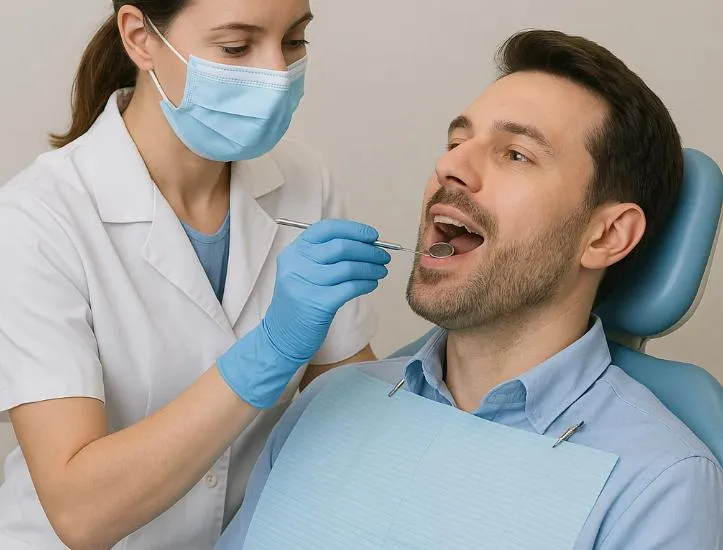
Dental bibs custom orders often call for 43×56cm or 45×56cm sizes. Two-ply construction (paper/PE film) handles both absorption and waterproofing. The paper layer soaks up water spray from dental tools. PE film protects patient clothes from solution runoff.
Orthodontists use bibs to teach patients. Printed care instructions show proper brushing methods after adjustments. Practice logos and contact info turn bibs into branded reminders. Patients remember the office from the bib design.
Root canal specialists need waterproof disposable bibs with neck chains, not ties. Patients stay reclined for 60-90 minutes during root canals. Metal bead chains stay secure without staff help. Full PE or CPE backing stops moisture from soaking through during irrigation.
Senior Living & Memory Care Communities
Assisted living dining rooms use personalized disposable bibs to keep resident dignity intact while handling spills from tremors and incontinence. Dementia patients do better with familiar colors and patterns than clinical white. Facilities order bibs that match their decor.
Memory care units benefit from bibs with resident names in large fonts. Staff can spot individuals fast during group meals. Printed names help residents who struggle with recognition. Personalization adds just $0.08-$0.12 per unit on orders of 1,000+.
Long-term care facilities track usage to manage inventory better. Residents who need help at every meal use 3-4 bibs each day. Independent diners may use 1-2 bibs per week. POD ordering flexibility stops overstocking. It ensures enough bibs during flu season when spills increase.
Buyer’s Checklist: Critical Factors Before Placing Orders
Assumptions destroy bulk orders. To avoid surprise costs and delays, smart buyers must verify these critical factors before signing any contract for custom disposable bibs.
MOQ & Pricing Realities
Customization pushes Minimum Order Quantities (MOQs) higher. While stock items start at 5,000 units, custom printing often requires 10,000 to 50,000 units. Ordering below these thresholds can spike per-unit costs by up to 80%. Always calculate your total project cost, not just the single unit price.
True Lead Times
A “4-6 week” production quote is deceptive. You must add time for material sourcing, FDA/FSC certification verification, and shipping. Ocean freight saves money but adds 25-40 days compared to air. Always build buffer time into your schedule, particularly during holiday peaks.
Quality Control & Sampling
Never approve production based on a digital file. Pay for physical custom samples to test materials and print quality in real conditions. Before the final balance payment, a Third-Party Pre-Shipment Inspection (PSI) is conducted based on AQL standards. It is cheaper to catch defects at the factory than to handle returns later.
Specifications & Documentation
Vague instructions cause errors. clearly define vector artwork, Pantone colors, and specific material weights (GSM). Ensure packaging complies with regulatory labeling (FDA, CE). Finally, get all warranty terms and defect resolution policies in a written purchase order.
Conclusion
The right custom disposable bibs provide protection, comfort, and brand impact across restaurants, healthcare, and senior care. Material, design, printing, and compliance affect performance and cost. Verify samples, certifications, and lead times before placing bulk orders. For tailored disposable bib solutions that meet your quality and branding standards, contact us today for a personalized quote.