

It’s challenging to determine if disposable coveralls are truly safe simply by looking at them. Workers risk exposure if suits are poorly made. In this article, we explore Uvex disposable coveralls , including their manufacturing location, the materials used, and how European production ensures reliable protection.
Uvex Disposable Coveralls: Manufacturing Locations in Europe
Uvex operates a global manufacturing network with 47 production sites and sales locations across 22 countries, giving the brand a wide reach. The main manufacturing of Uvex disposable coveralls and other protective equipment happens primarily in Europe.
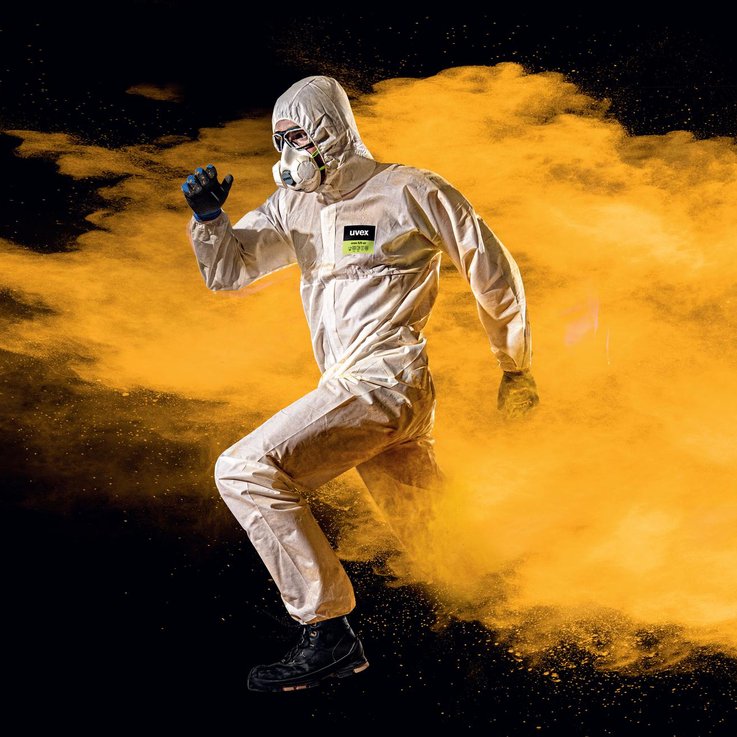
Germany: The Heart of Uvex Manufacturing
Germany serves as the central hub for Uvex safety products. Specialized facilities focus on distinct product categories:
Fürth, Bavaria – Eye protection manufacturing
Lüneburg – Hand protection and industrial gloves
Ellefeld – Protective textiles and clothing, likely including disposable coveralls
Italy: Supporting European Production
The Ceva facility in Italy produces Uvex safety footwear for the European market, complementing Germany’s textile and protective clothing production.
Where Uvex Disposable Coveralls Are Made
Uvex does not publicly disclose the exact facility for disposable coveralls. The company manufactures Type 4/4B/5/6 coveralls that comply with strict European standards, but production location details are kept private.
Based on product categories, disposable coveralls likely fall under protective textiles, pointing to the Ellefeld, Germany, facility as the probable manufacturing hub. Ellefeld specializes in protective clothing, making it the most plausible site for coverall production.
How to Confirm Uvex Coverall Origins
For compliance documentation or supplier verification, Uvex regional offices can provide:
Exact facility information for specific product SKUs
Certificates of origin for regulatory compliance
Manufacturing quality documents
Details on production standards and internal controls
Even without full public disclosure, Uvex maintains high-quality European manufacturing standards. Every product carries CE markings and meets strict EU safety regulations, regardless of the exact production site.
The exact building location is less important than Uvex’s controlled European manufacturing approach, which ensures consistent quality and oversight at every stage.
Uvex’s European Manufacturing Philosophy: Why Production Stays in Europe
Uvex generates 80% of its value within Europe, demonstrating that its manufacturing is not outsourced. The company owns and controls every step of production to ensure consistent quality and reliability.
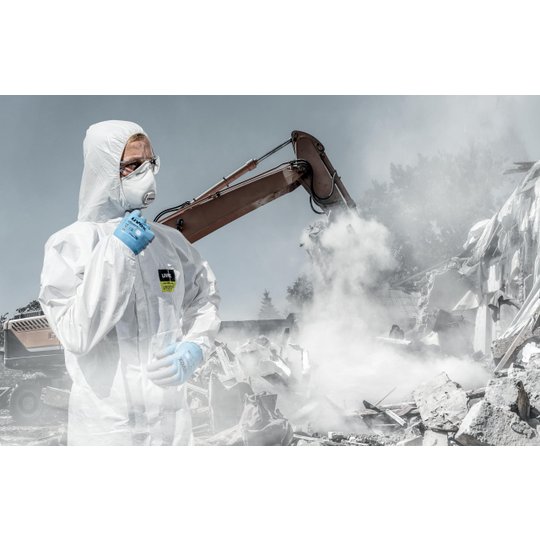
Germany: Nearly a Century of Manufacturing Excellence
Germany has been Uvex’s production base for 95 years. Over this time, the company has refined its manufacturing processes, becoming Europe’s largest hand protection maker, still producing on European soil. This long-term presence allows Uvex to maintain expertise and high standards.
The Benefits of Europe-Based Production
Unlike many companies that seek cheaper labor overseas, Uvex keeps development and production in Germany and Europe for several strategic reasons:
Full value chain control – Oversees all steps from concept to final product
Know-how protection – In-house production safeguards proprietary technology and processes
Quality oversight – Direct supervision at every stage ensures consistency
Faster response times – Shorter paths from design to delivery
Lüneburg Facility: Integrated Glove Production
The Lüneburg plant employs over 250 workers, producing protective gloves, and is Europe’s largest glove production site. The facility operates a fully integrated process that includes:
Yarn and liner manufacturing
Special compounding of materials
Custom molding technology
Advanced coating methods
Development of tailored solutions
Production of specialized gloves, including those for disabled workers
Environmental Standards Beyond Compliance
Uvex has not used solvents in production for over a decade. Since 2016, facilities have run on CO2-neutral energy. Plants hold ISO 14001 and ISO 50001 certifications for environmental and energy management.
Uvex also tests approximately 200 critical substances under its internal standards, exceeding EU REACH regulations. Products carry DERMA certification, ensuring they are free from allergenic materials.
Supporting Facilities in Italy
The Ceva, Italy, factory produces Uvex safety footwear using modern equipment and on-site development, reducing lead times and keeping production efficient.
Production Capacity and Focus
Uvex plants operate at full capacity. For example, Obernzell runs three shifts making cycling helmets, while Fürth focuses on safety eyewear. Safety products contribute 76–81% of total company sales, ensuring steady reinvestment into European manufacturing and maintaining high standards across all product lines.
Quality Standards and Certifications at Uvex Coverall Facilities
Uvex ensures consistent quality across all its manufacturing sites. Every facility operates under ISO 9001 certification, creating a unified quality baseline across the company’s global production network.
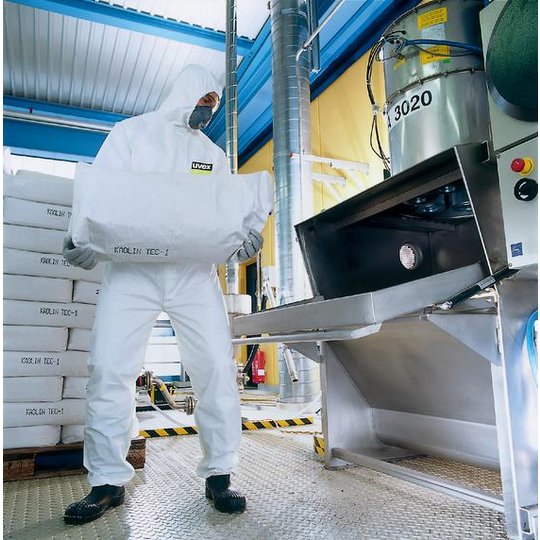
Major Uvex Facilities with Core Certifications
Nine key facilities maintain this standard:
UVEX Safety Group GmbH & Co. KG (Germany)
UVEX Cagi S.R.L. (Italy)
UVEX Safety Textiles GmbH (Germany)
UVEX Safety Gloves GmbH & Co. KG (Germany)
Laservision GmbH & Co. KG (Germany)
UVEX Arbeitsschutz GmbH (Germany)
UVEX Heckel s.a.s (France)
UVEX Safety Equipment (Kunshan) Co., Ltd. (China)
UVEX Bardejov, k.s. (Slovakia)
Some sites go beyond ISO 9001. For example, the Lüneburg glove facility holds four certifications: ISO 9001 (quality), ISO 14001 (environment), ISO 45001 (worker safety), and ISO 50001 (energy management). Ceva’s Italian footwear plant matches this standard, integrating heat pumps and photovoltaic systems, and earned an 84-point EcoVadis Platinum Medal, placing it in the top 1% of global manufacturers.
Environmental Standards and Sustainability
Uvex emphasizes sustainability across all sites. Fürth’s eye protection facility holds ISO 9001:2015, ISO 14001, and ISO 50001 certifications and runs regular in-house lab tests exceeding industry standards.
The Rednitzhembach logistics center achieved DGNB Gold pre-certification in 2024, featuring:
760 kWp photovoltaic peak yield
Wood-chip heating sourced from sustainable forestry
60% less energy usage than standard new construction
Compliance with KfW Standard 40 building efficiency
Uvex safety gloves carry Oeko-Tex® Standard 100 certification. The Lüneburg plant has run 100% solvent-free production for over 10 years, ensuring eco-friendly processes without compromising quality.
Third-Party Validation
The Uvex Safety Group has received an EcoVadis Gold Medal with 78 points, ranking it in the top 5% of companies for sustainability practices worldwide. These certifications are not just paperwork—they require annual audits and provide documented, measurable performance data.
Uvex maintains multiple in-house test labs and develops proprietary testing tools and protocols. With 80% of value creation handled internally, Uvex ensures full control over quality at every checkpoint.
Your disposable insulated coveralls are produced in facilities where quality management is integrated into every stage of operations, from design to final product, not added afterward.
Uvex Disposable Coveralls: Material and Product Specifications
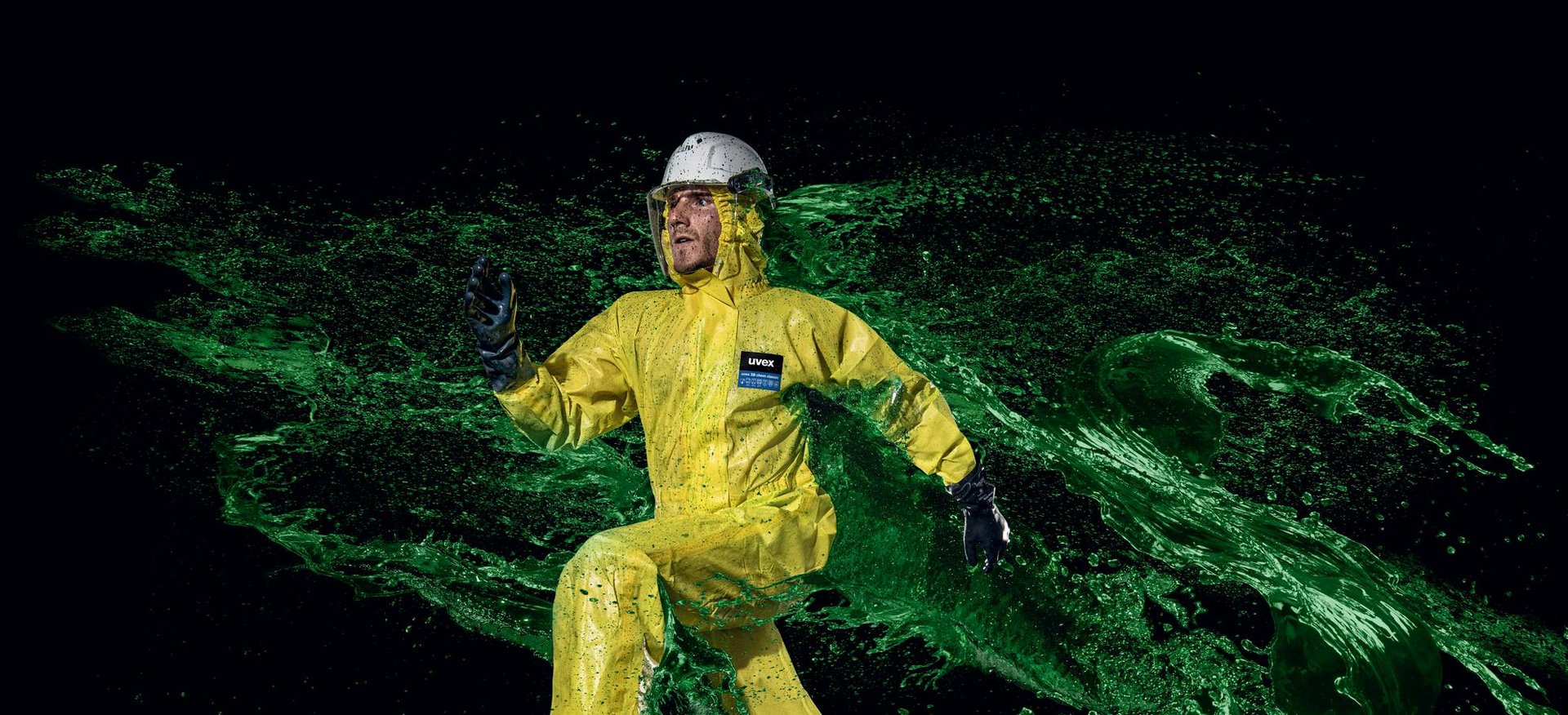
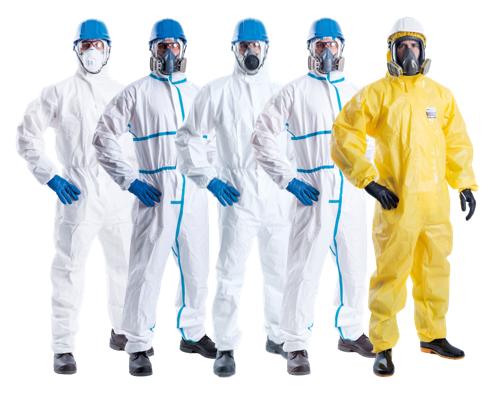
Uvex offers six disposable coverall models designed for specific workplace hazards. Coverage ranges from basic particle protection to full chemical splash resistance, ensuring workers have the right protection for every task.
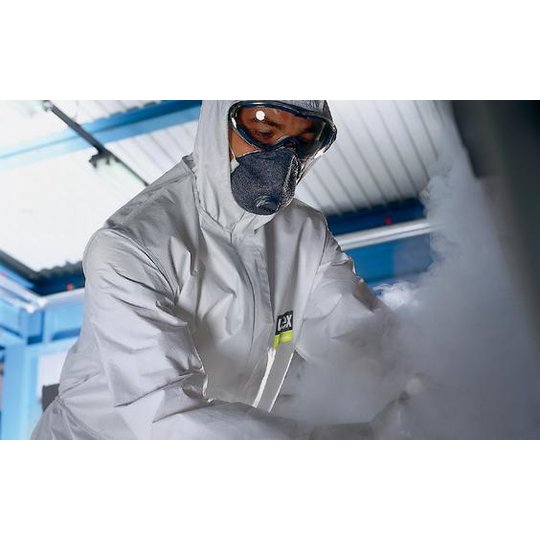
Type 3B Chemical Protection Models
UVEX 3B Chem Classic delivers the highest liquid protection in UVEX’s disposable range. Features include:
Welded seams with full taping for a liquid-tight barrier
Fabric weight of 75 g/m² for durability in harsh chemical environments
No silicone or paint-contaminating substances, safe for painting applications
Quiet material for distraction-free movement
UVEX 3B chem light provides the same liquid-tight protection with a lighter, more flexible material. It enhances mobility while maintaining the same chemical resistance and paint-safe performance.
Type 4B Spray Protection
uvex 4B sits between full chemical protection and particle-only models. Key features:
com4 laminate fabric: breathable yet blocks particles and spray
Orange taped seams indicating spray-tight zones
Lighter than Type 3B for improved airflow and cooler wear
Suitable for paint shops, chemical mixing, and limited liquid exposure
Type 5/6 Particle and Limited Spray Models
UVEX 5/6 classic is the base model, combining polypropylene nonwoven with polyethylene film. Features include:
Lightweight outer fabric at 65 g/m² for all-day comfort
Full particle barrier with limited spray protection
Elastic bands at the hood, arms, and legs, plus an elastic waistband for a secure fit
Two-way zipper with self-stick flap
Finger loops to keep sleeves in place and a three-part hood for head coverage
Smooth internal seams to prevent irritation
UVEX 5/6 comfort enhances breathability with polyethylene laminate on the front and SMS back section for moisture control. Ideal for cleanroom Class 8 work (ISO 14644-1), electronics manufacturing, and pharmaceutical environments.
UVEX 5/6 air offers maximum breathability using full SMS layers (spunbond-meltblown-spunbond), creating the lightest and most comfortable coverall . Features include:
Water-repellent outer layer with airflow
Taped seams for particle and spray protection
EN 1149-5 antistatic certification
ISO 13982-1 Type 5 and EN 13034 Type 6 compliance
Middle finger loops and a self-stick zipper flap for a secure fit
Choosing the Right Model for Work Conditions
Uvex tested the 5/6 series for breathability using chest and back sensors:
UVEX 5/6 air: lowest internal temperature, best for hot or physically demanding environments
UVEX 5/6 comfort: medium climate control, balances protection and breathability
UVEX 5/6 Classic: highest internal temperature, suitable for standard environments with light activity
Select your Uvex coverall model based on heat exposure, physical effort, and workplace requirements to ensure both protection and comfort.
How to Identify Genuine Uvex Disposable Coveralls
Counterfeit protective gear is a serious safety risk. Fake Uvex disposable insulated coveralls may look authentic, but fail when protection matters most. Here’s how to verify genuine Uvex coveralls before purchase.
Check the CE Marking and Label
Every authentic Uvex coverall must have a CE marking, indicating Category III PPE approval. Look for the marking next to the Uvex name and model number.
Internal labels should include:
Compliance standards (EN 14605, ISO 13982-1, EN 13034)
Batch number for traceability
Production date
Size information
Missing or incomplete labels indicate counterfeit products.
Verify Material Construction
Uvex uses specific materials for each protection type. Compare materials against these specifications:
|
Type |
Standard |
Genuine Material |
Protection Test |
|---|---|---|---|
|
3 |
EN 14605 |
PP spunbond laminated PE film |
Liquid-tight jet test |
|
4 |
EN 14605 |
PP spunbond laminated PE film |
Spray-tight test |
|
5 |
ISO 13982-1 |
PP spunbond laminated PE film |
Particle-tight |
|
6 |
EN 13034 |
PP SMMS |
Limited spray-tight |
Distinct Uvex material technologies include:
UVEX sms – Multi-layer polypropylene; breathable and soft, unlike single-layer knockoffs
UVEX Com4 laminate – PP nonwoven bonded to microporous PE film; flexible and breathable
UVEX laminate light – Uniform thickness with high protection
UVEX Laminate Classic – PP nonwoven with PP film; chemical-resistant and flexible
Inspect Seam Construction and Taping
Seams reveal product quality quickly. Genuine Uvex coveralls use fully taped seams in specific colors (e.g., orange for Uvex 4B). Check:
Seam strength: should withstand light pulling; industry standard ≥30 N
Stitch density: consistent spacing indicates proper manufacturing
Test the Zipper and Closures
The front zipper should move smoothly with a self-stick flap covering the track. Defective zippers are common in counterfeits. Pre-use inspection ensures protection is intact.
Conduct a Pre-Use Damage Check
Before wearing, examine the coverall for:
Seam integrity: no loose threads or breaks
Material holes: no holes larger than 5x5 mm²
Flame resistance: meets EN ISO 15025, self-extinguishing in ≤2 seconds
Elastic components: hood, wrist, and ankle bands should stretch and return properly
Verify Packaging and Storage Marks
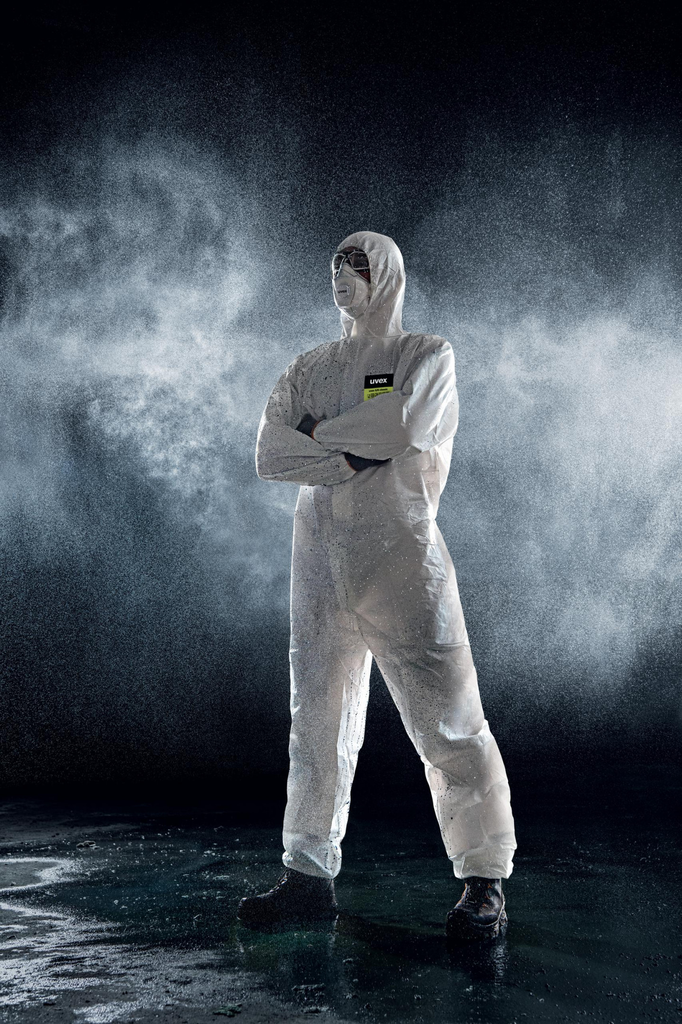
Authentic Uvex coveralls arrive in original packaging showing:
Uvex branding and logo
Product specifications
Batch codes matching internal labels
Storage instructions
Repackaged suits or missing instructions are red flags.
Check the Size Range
Uvex offers sizes S–XXXL for most models. Limited size availability often indicates counterfeit products. Proper fit is critical: gaps allow contaminants in, while overly tight suits restrict movement and tear easily.
Request Compliance Documentation
Authorized Uvex distributors provide certificates verifying:
EN 14605 compliance (Types 3 and 4)
EN 14126 for biological hazard protection
ISO 13982-1 particle-tight performance
No documentation or refusal to provide certificates is a warning sign. Genuine Uvex coveralls are fully traceable with documented test results.
Uvex vs. Competitors: Manufacturing and Quality Comparison
Uvex stands out in the PPE industry through in-house production and strict quality control. The company manages 80% of its value creation internally, a level of integration most competitors cannot match. With 49 facilities across 23 countries, these are not just sales offices—they are full-scale manufacturing plants. This vertical integration ensures consistent quality and reliability across all Uvex products, including disposable coveralls.
Market Focus and Leadership
Uvex’s safety products division generated €546 million in sales for fiscal year 2023/24, representing 81% of total revenue. Unlike competitors who split resources across unrelated product lines, Uvex concentrates on core PPE categories where protection matters most.
In the DACH region (Germany, Austria, Switzerland), Uvex holds roughly 10% market share across PPE segments. They compete with global giants like Honeywell, 3M, Ansell, and DuPont, yet maintain leadership in their European home market through local production and specialized expertise.
Production Scale and European Advantage
The global hand protection market reached $25.3 billion in 2024 and is projected to grow to $42.7 billion by 2030, a 9.1% CAGR . Uvex operates Europe’s largest hand protection factory in Lüneburg with over 250 employees, producing gloves from raw materials to finished products entirely on-site.
Many competitors outsource production to Asia, which can reduce costs but increases lead times and introduces quality risks. By keeping production in Germany and Italy, Uvex ensures shorter supply chains, tighter quality control, and faster response to market demands.
European PPE market trends favor locally produced, high-quality products. The sector is projected to grow from $24.3 billion in 2024 to $34.4 billion by 2032, representing a 4.4% annual growth rate. Uvex’s balanced 40% domestic and 60% international sales mix positions the company to capture this expanding market effectively.
Financial Stability and Resilience
Uvex posted €661 million in total sales for fiscal 2024 with €85.9 million adjusted EBITDA, maintaining a 13% EBITDA margin during economic uncertainty. Their default probability dropped to 0.050 in December 2024, the lowest in recent years, demonstrating strong financial resilience.
Competitors faced similar market pressures, but Uvex’s vertical integration shielded them from disruptions. When Asia-based suppliers experienced shutdowns, Uvex kept German and Italian facilities running smoothly. Their credit default swap spread of 2.475% in mid-2024 reflects investor confidence in the company’s stability.
Private equity firm Warburg Pincus valued Uvex at €800 million for their majority stake in July 2025, highlighting the strength of Uvex’s integrated manufacturing model. This demonstrates that investing in local, controlled production delivers measurable market and financial advantages.
Procurement Considerations for Uvex Coveralls in Industry
When sourcing protective coveralls, price alone isn’t enough. Certifications and standards indicate real protection versus empty claims. Uvex disposable coveralls carry multiple certifications tailored to different workplace hazards, ensuring compliance and safety.
Core Protection Standards to Verify
Every Uvex Type 5/6 coverall meets ISO 13982-1 Type 5 for solid particles and EN 13034 Type 6 for limited liquid splashes. Essential additional certifications to check include:
EN 14126 – Protection against infectious agents
EN 1149-5 – Antistatic properties to prevent ignition
EN 1073-2 – Defense against radioactive particles
The uvex 5/6 classic model carries all five certifications, providing versatile protection for most industrial environments without needing multiple suit types.
Testing Criteria That Prove Quality
Key tests demonstrate Uvex coverall performance:
EN 14126 – Blocks biological hazards, Class 6 performance (20 kPa) for blood and fluid tests
ISO 16603/16604 – Synthetic blood penetration
ISO 22610 – Wet bacterial penetration
Material strength tests under DIN EN 14605 evaluate:
Abrasion resistance
Flex cracking down to -30°C
Tear resistance
Tensile strength
Puncture resistance
Liquid barrier capability
Uvex materials remain flexible in freezing conditions, avoiding cracks or compromised protection in cold warehouses or outdoor work.
Seam Construction and Water Resistance
Seams are as critical as the fabric. Taped seams create sealed barriers, while exposed stitching allows contamination. Water penetration is tested using a three-class system, with Class 3 offering the highest protection. Always request documentation verifying both fabric and seam performance.
Antistatic Performance Verification
EN 1149 series prevents static buildup in flammable environments:
EN 1149-1 – Surface resistivity
EN 1149-3 – Charge decay speed
EN 1149-5 – Integrated garment certification
Uvex coveralls meet EN 1149-5 requirements, suitable for electronics manufacturing, chemical processing, and other static-sensitive workplaces.
Flame Resistance Standards
Uvex suits undergo limited flame spread testing under EN ISO 14116:
No burning to garment edges
No holes larger than 5x5 mm²
Zero flaming or melting debris
Afterflame and afterglow ≤2 seconds
Outer material achieves Index 3 protection, inner layers Index 1. Stitching resists 260°C without melting, and strength exceeds 30 N even after multiple washes.
Size Range and Fit Verification
Uvex offers sizes S through XXXL per EN ISO 13688 standards, ensuring ergonomic fit and marking clarity. Proper sizing prevents gaps that compromise protection. Sample testing is recommended before bulk orders to confirm fit across worker body types.
Climate and Comfort Testing
Uvex Type 5/6 suits trap heat during physical activity. Climate testing at 21°C and 60% humidity evaluates heat control, moisture levels, and water vapor release. Breathable models like uvex 5/6 air or comfort improve worker safety and efficiency in hot or demanding environments.
Documentation and Traceability
Each genuine Uvex coverall comes with a CE Declaration of Conformity. Key compliance certificates include:
Permeation resistance (ISO 6529 / EN 374-3)
General garment requirements (EN ISO 13688)
Chemical compatibility (DIN 32781)
Batch numbers should match documentation to enable recall tracking if defects arise.
Non-Reusable Classification
Uvex Type 5/6 coveralls are labeled non-reusable (NR). Reusing disposable suits compromises protection through micro-tears, chemical absorption, and seal breakdown. Plan disposal according to local hazardous waste regulations.
Procurement Efficiency Tips
Test sample kits against your specific work conditions
Match the model (classic, comfort, air) to temperature and activity level
Bulk orders typically start at 100 units; check shelf life and storage conditions
Verify authorized distributor status and cross-check supplier credentials with Uvex regional offices
These practices ensure you procure genuine Uvex coveralls that deliver certified protection, durability, and worker safety.
Understanding where Uvex disposable coveralls are manufactured helps you choose genuine, high-quality protective gear that meets strict European standards. Knowing the production site, materials, and safety certifications ensures your team stays protected from chemicals, dust, and other workplace hazards. For businesses looking to customize similar protective products, we can provide tailored solutions and competitive quotes— contact us today to discuss your requirements.