

It can be hard to trust that PPE is really made where it says. Mistakes in sourcing coveralls can waste money and slow down projects. Supertouch coveralls follow ISO 9001 standards across multiple countries. Understanding their manufacturing origin helps you verify quality, trace batches, and protect your team.
Supertouch Coveralls: Manufacturing Locations in the UK, Ireland, and China
Supertouch manufactures coveralls across the UK, Ireland, and China, creating a flexible supply network for the European PPE market. This multi-country setup balances cost efficiency, quality control, and fast delivery, supporting both disposable and higher-spec protective garments.
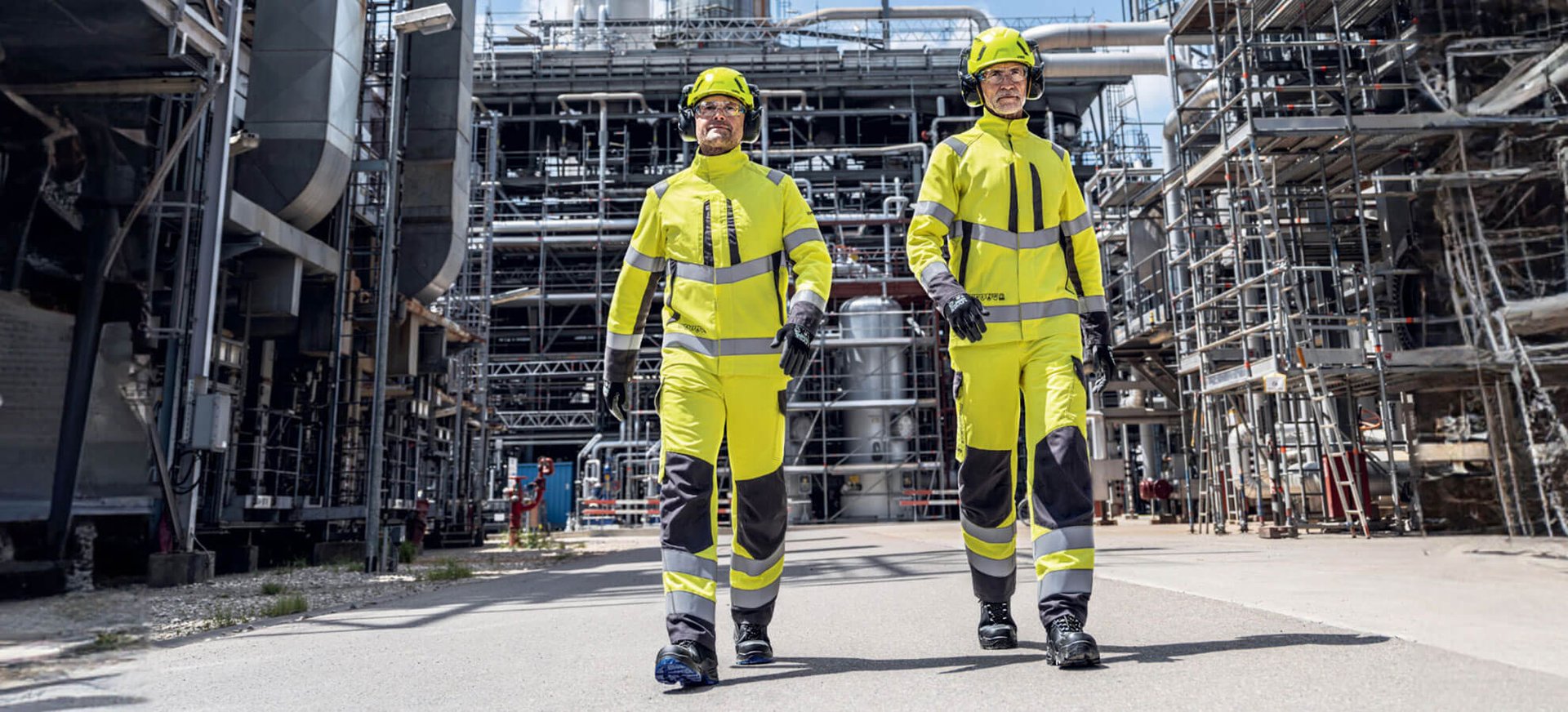
The Three-Site Production Strategy
Supertouch’s three manufacturing locations each serve a specific purpose:
UK: Domestic production, quality control, and regulatory compliance
Ireland: EU distribution hub for faster deliveries
China: High-volume production for cost-effective disposable coveralls
This structure lets buyers choose based on need: UK-made for compliance-sensitive orders, or China-made for high-volume, cost-efficient supply—all meeting EN and CE safety standards. The multi-site network ensures reliable delivery across Europe, even during supply disruptions.
Post-Brexit Manufacturing and Distribution Impact
Brexit changed how Supertouch coveralls reach EU customers. Products like the Supertex Ultra Type 4/5/6 Coverall (SDS4) now require customs clearance when shipped from the UK, adding 3–5 business days to delivery.
Ireland has become a key EU distribution hub. Distributors such as A to Z Safety Centre (Cork) stock Supertouch coveralls for men locally, enabling faster shipments within the EU customs union.
For buyers, this means sourcing from Irish-stocked inventory ensures quicker delivery for time-sensitive projects, while UK-stocked products may face delays.
What Supertouch’s Manufacturing Network Means for Buyers
Supertouch keeps specific factory details private, which is standard for mid-sized PPE brands . What matters is how the supply chain is structured:
China: High-volume, cost-effective production for disposable and standard coveralls
UK: Specialty and compliance-sensitive lines with strict quality control
Ireland: Fast EU distribution, avoiding customs delays
Procurement Tip: Always ask your distributor:
“Which facility produces this Supertouch model?”
Knowing the origin helps you anticipate lead times, price stability, and customs requirements—more important than the listed price alone.
Supertouch Company Overview and Manufacturing Credibility
Supertouch has been operating from Smethwick, West Midlands, since 1996 and remains a firmly established UK PPE brand. The company runs its headquarters and national distribution centre at Rabone Park, which acts as the central hub for supplying protective clothing and equipment across the construction, healthcare, food processing, and industrial sectors.
This centralized UK operation allows Supertouch to maintain tight control over inventory, compliance, and product quality, while supporting fast nationwide distribution.

Financial Performance and Market Position
Supertouch’s financial performance reflects the profile of a stable, mid-sized PPE manufacturer rather than a speculative reseller.
In the 2018 financial year, the company reported:
Revenue: £20.4 million
Gross profit: £6.3 million
Net income: £1.8 million
EBIT: £2.4 million
Cash reserves: matched EBIT levels
For procurement teams, this matters. These figures show that Supertouch operates with healthy margins, positive cash flow, and long-term operational stability—important indicators when you are sourcing safety disposable coveralls and protective clothing.
In the UK industrial PPE market, Supertouch competes with established brands such as Tower Supplies, Standard Safety Equipment Company, Gordini, and Jak. This competitive environment keeps pricing realistic and compliance standards high, which benefits buyers across construction, manufacturing, and facility management sectors.
Quality Credentials That Matter to Buyers
Supertouch supports its manufacturing credibility with structured quality, sustainability, and compliance systems rather than marketing claims.
Supply Chain Transparency & Sustainability
Supertouch holds GRS (Global Recycled Standard) certification and operates the Blue Sphere® sustainability program, which provides 100% traceability across its supply chain. This allows procurement teams to verify material origins, manufacturing stages, and sustainability data, which is increasingly important for corporate audits and ESG reporting.
Professional Risk Assessment & PPE Selection
HSE-trained specialists carry out on-site workplace risk assessments, identifying hazards and recommending appropriate coveralls and PPE based on real job conditions. This ensures customers are not simply buying generic disposable coveralls , but equipment matched to chemical exposure, dust levels, or flame risk.
Regulatory Compliance
All Supertouch coveralls and protective garments comply with UK and EU regulations.
Type 4/5/6 coveralls meet EN standards for chemical splash and particulate protection, while flame-retardant garments are certified to relevant fire safety requirements.
For buyers, this means Supertouch products are built to pass regulatory inspections, site audits, and safety reviews—not just price checks.
ISO 9001:2015 Compliance and Quality Control at Supertouch Manufacturing Sites
Supertouch manages its UK, Irish, and Chinese manufacturing partners under a unified ISO 9001:2015 quality management system, ensuring all coveralls meet the same strict production and inspection standards. This certification is process-driven—it governs material sourcing, worker training, production, quality inspections, and defect resolution—guaranteeing consistent quality across multiple countries.
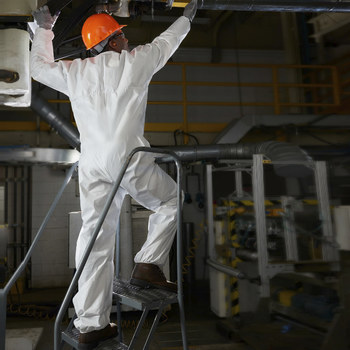
What ISO 9001:2015 Means for Supertouch Coveralls
ISO 9001 controls every stage that affects the final product, including:
Resource Control (Clause 7): Factories maintain calibrated equipment, trained staff, and controlled environments (temperature, humidity, dust) to ensure fabric and seam consistency.
Operational Control (Clause 8): Raw materials are inspected, in-process quality checks monitor seam bonding and fabric integrity, and only compliant garments are shipped.
Performance Monitoring (Clause 9): Internal audits and customer feedback track trends and highlight recurring issues such as tearing or zipper failure.
Continuous Improvement (Clause 10): Defects are investigated, root causes identified, and corrective actions implemented to prevent recurrence.
Documentation That Protects Your Purchase
ISO 9001 requires traceable records for every batch:
Calibration logs for accurate measurement tools
Training records for qualified workers
Batch traceability from raw materials to finished coveralls
Audit reports verifying procedure compliance
Corrective action records proving that defects have been resolved
These records enable Supertouch to provide auditable, traceable PPE—critical for construction, healthcare, and industrial buyers.
Globally, there are over 900,000 ISO 9001 certificates across 1.3 million sites. Studies show certified factories achieve higher productivity, lower defect rates, and more reliable output. For buyers, this means consistent quality, predictable delivery, and fewer on-site failures.
Procurement Tip: Ask your distributor for the ISO 9001 certificate number and audit date for the specific manufacturing site of your Supertouch model. This confirms the PPE comes from a controlled and compliant production environment.
How Supertouch Disposable vs Reusable Coveralls Are Made
Supertouch produces both disposable coveralls and reusable protective suits , but the two product types follow completely different manufacturing paths. These production choices determine not only price, but also durability, environmental impact, and long-term operating cost.
Disposable Supertouch coveralls are designed for single-use contamination control, while reusable models are built for repeated industrial laundering and sterilization. The materials, weights, and output volumes tell the real story behind those differences.

Materials Used in Supertouch Disposable Coveralls
Disposable coveralls rely heavily on petroleum-based nonwoven materials, especially polypropylene.
In a typical 1,000 kg production batch, Supertouch suppliers use:
743.36 kg of polypropylene chips for the spunbond and meltblown layers
246 kg of LDPE film for barrier protection
These components form SMS (spunbond–meltblown–spunbond) nonwoven fabric, the standard structure used in medical and industrial disposable coveralls .
Each finished disposable suit weighs about 0.250 kg, allowing factories to produce roughly 4,000 coveralls per batch. After seam tapes, adhesives, and finishing materials are added, the total material input reaches 1,093.51 kg.
This lightweight structure is exactly why Supertouch disposable coveralls are easy to wear, breathable, and cost-effective for short-term protection—but also why they are not designed to survive laundering or heavy abrasion.
Polypropylene dominates this category for a reason. It accounts for about 80% of healthcare protective fabrics worldwide, and the global disposable coverall market has grown from $3.5 billion in 2020 toward a projected $5.8 billion by 2028, driven by healthcare, cleanrooms, and infection-control demand.
Materials Used in Supertouch Reusable Coveralls
Reusable Supertouch coveralls use a very different fabric system designed for mechanical strength, washing resistance, and shape retention.
A typical batch uses:
540 kg of cotton
291 kg of polyester, with roughly 50% coming from recycled PET bottles
Each reusable suit weighs 0.369 kg, about 48% heavier than a disposable one. Because of that added material, the same batch yields only 2,710 units instead of 4,000.
Total material input is 902.53 kg, lower than disposables—but spread across fewer garments built for long-term use.
This higher fabric density gives reusable coveralls their durability, but it also means higher energy use per garment and a higher upfront price.
Cost and Environmental Performance in Real-World Use
On paper, reusables look attractive. U.S. cleanroom data shows that switching to reusable protective garments can reduce direct operating costs by up to 58%, saving large users $120 million per year, with industry-wide potential reaching $210 million annually.
Energy savings are also significant. Reusable systems can reduce non-renewable energy use by 59%, with some manufacturing stages seeing up to 77% lower energy demand compared to disposable supply chains.
However, the performance side tells a more complicated story.
Non-sterile reusable coveralls typically last around 80 wash cycles, while sterilized versions average about 40 cycles. But testing shows that bacterial filtration efficiency (BFE) drops sharply after laundering. In many sterile garments, BFE falls below 70%, while disposable coveralls consistently deliver around 98% filtration for their single use.
That means reusable Supertouch coveralls may be cheaper and greener on paper—but they do not maintain the same contamination-control performance over time.
What This Means for Buyers
Disposable and reusable Supertouch coveralls serve very different risk profiles. Reusables reduce waste and long-term energy use, but only if laundering, inspection, and replacement cycles are properly controlled. Disposables offer predictable, certified protection every time, which is why they remain dominant in healthcare, cleanrooms, and high-risk industrial work.
Smart buyers do not look only at the purchase price. They calculate total cost of ownership, protection level, and compliance risk—and that is where disposable Supertouch coveralls often prove to be the safer investment.
Supertouch’s Supply Chain Traceability and Ethical Manufacturing Practices
Supertouch operates one of the UK’s most transparent PPE supply chains through its Blue Sphere® traceability program, tracking every coverall from raw material sourcing to factory production and final delivery. Procurement teams can verify material origin, assembly location, and transport conditions, reducing reliance on marketing claims. This level of traceability supports ESG reporting, corporate audits, and regulatory compliance.

EU Regulations Driving Traceable PPE
From 2026, EU rules make product traceability mandatory for textiles and PPE:
Digital Product Passport (DPP): Requires verified data on material origin, production site, and environmental impact. Blue Sphere® allows distributors to provide compliant documentation immediately.
Green Claims Directive: Eliminates unverified sustainability marketing. Supertouch links each coverall to production records, offering proof for claims like “carbon neutral” or “ sustainable PPE .”
Textile Destruction Ban (July 2026): Companies must document the disposal of used or surplus PPE. Blue Sphere® records end-of-life handling to protect buyers from regulatory exposure.
EPCIS 2.0 Tracking for Real-Time Supply Chain Visibility
Supertouch’s system uses EPCIS 2.0, the global standard for event tracking and capturing:
Factory completion and palletization
Warehouse storage
Transport, customs handling, and final delivery
Environmental conditions (temperature, humidity) for chemical-resistant, medical, or food-grade coveralls
At the SKU and batch level, buyers can see:
Manufacturing factory
Raw materials used
Storage duration
Transit condition violations
A centralized control tower monitors shipments in real time, triggers alerts for delays or environmental risks, and logs ESG metrics like carbon emissions per shipment.
Verifying Ethical Manufacturing
Distributors can provide auditable documentation for each shipment:
Batch-specific traceability reports
Factory audit records
Material origin certificates
Transport and storage logs
This ensures ethical sourcing, labor standard compliance, and environmental accountability, reducing risk for regulated industries such as healthcare, pharmaceuticals, food processing, and construction.
Why Supertouch’s Manufacturing Locations Influence B2B Procurement Decisions
The origin of PPE products directly impacts the total cost of ownership, delivery reliability, and supply-chain risk. Multi-location sourcing is increasingly important: in 2025, 43% of contract manufacturers reshored production, with another 16% exploring reshoring projects. Rising transport costs, tariffs, and sustainability regulations are driving companies toward geographically diverse manufacturing to maintain predictable supply and quality.
Supertouch follows this strategy, operating in the UK, Ireland, and China, balancing cost efficiency, compliance, and delivery speed—a combination that benefits B2B buyers.

Geographic Proximity Reduces Risk and Improves Responsiveness
Closer factories respond faster to urgent needs, small batch orders, and project-specific PPE requirements. Offshore-only production can introduce delays due to tariffs, port congestion, and slow quoting processes. Research shows 88% of B2B manufacturing teams have lost deals due to operational bottlenecks, with companies averaging a 5% annual revenue loss.
Supertouch mitigates these risks through:
UK & Ireland: Regional production and distribution, enabling faster delivery within the EU and UK
China: High-volume, cost-effective manufacturing for price-sensitive coveralls
This multi-location approach ensures stable pricing, predictable lead times, and reliable supply.
Transparency Builds Buyer Confidence
Accuracy drives trust in B2B PPE procurement . Errors in orders, stock, or delivery can disrupt operations, especially for companies placing hundreds of orders per month. Manufacturing location data provides clarity on:
Which factory produced the product
Whether it is stocked within the EU or the UK
Potential customs or shipping delays
Compliance with regional standards
With over 85% of B2B buyers researching suppliers online and 64% seeking independent verification, Supertouch’s multi-site network, batch tracking, and certifications provide clear, verifiable information—reducing uncertainty and supporting confident purchasing decisions.
How to Verify Supertouch Coveralls’ Manufacturing Origin for Your Business Needs
Product labels reveal more than most buyers realize if you know what to look for. Under international textile labeling rules—including the U.S. Textile Fiber Products Identification Act and EU equivalents—every Supertouch coverall must indicate:
Country of origin
Fiber composition
Manufacturer or importer
Care instructions

For incoming inspections, your quality team should check that the origin marking is permanent and legible, the fiber content matches specifications, and the brand or manufacturer aligns with Supertouch documentation. A simple tape test helps: press clear adhesive tape onto the label and peel off. If the ink lifts easily, the marking may not survive handling, creating compliance risk.
Always cross-check label claims against SKU-level records. A box labeled “Made in the UK” should match Supertouch’s technical file for that specific product code. Request the SKU-level manufacturing declaration from your distributor, linking the product to a specific factory and batch.
Certifications That Support Supertouch Manufacturing Claims
Supertouch holds multiple internationally recognized certifications:
ISO 9001 – Quality Management
ISO 14001 – Environmental Management
ISO 45001 – Occupational Health & Safety
AEO – Authorised Economic Operator status for customs security
SATRA Gold – Independent PPE testing and compliance
These certifications apply to named facilities under the audited scope, not abstract claims. When verifying origin, always request:
Certificate copy
List of covered manufacturing sites
Most recent audit date
If a certificate only mentions “global operations” without site specifics, ask for detailed documentation. Legitimate ISO certificates list the facilities included.
Physical Inspection Checks That Reveal Factory Differences
Third-party inspectors typically use AQL sampling to verify manufacturing origin. Buyers can apply the same checks:
Material verification – Lab or in-house tests confirm polypropylene, SMS , microporous film, or cotton/polyester content to prevent substitution.
Fabric weight (GSM) – Slight differences across factories can reveal site changes or spec drift.
Seam strength and stitch density (SPI) – Inspect seam tape and count stitches per inch; different factories often produce noticeable variations.
Garment dimensions and weight – Unexpected changes in sleeve length, leg width, or garment weight may indicate a production site switch.
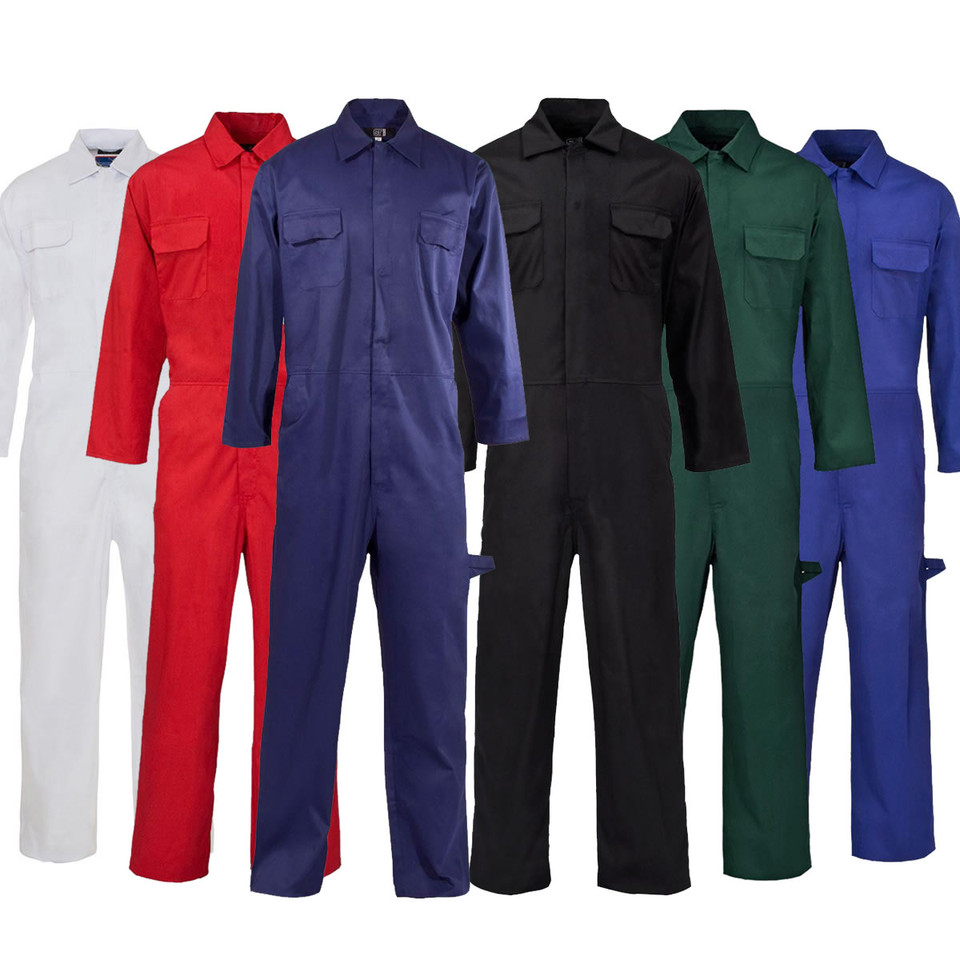
Pre-Shipment Packaging and Origin Verification
Before shipping, ensure:
Outer cartons and inner packaging display the correct country of origin
Labels comply with the destination market’s legal format (EU vs UK vs US)
Moisture control and packaging materials meet transport and storage requirements
Professional inspection firms such as Testcoo, SGS, or Bureau Veritas can conduct:
Initial Production Checks (IPC)
During Production Checks (DUPRO)
Final Random Inspections (FRI)
These audits confirm that Supertouch coveralls are compliant, correctly labeled, and traceable to the producing factory before reaching customs, protecting your organization from regulatory and quality risks.
Knowing where Supertouch coveralls are manufactured ensures consistent quality, regulatory compliance, and reliable delivery. With production in the UK, Ireland, and China, combined with full traceability through ISO 9001 and Blue Sphere®, every batch can be tracked, materials verified, and supply-chain risks minimized. For disposable, reusable, or customized protective products, a personalized quote is available to secure the right safety solution.