
Most procurement teams assume all Microgard coveralls come from the same manufacturer. In reality, two separate companies produce protective workwear under the Microgard name—one in China, one in the USA.
This distinction affects pricing, lead times, certifications, and compliance. Whether you’re sourcing disposable coveralls for chemical handling, cleanrooms, or hazmat response, knowing the origin of your Microgard coveralls is critical for worker safety, regulatory compliance, and budget planning.
In this guide, we’ll break down both manufacturers, their product lines, quality standards, and how to verify your protective gear before placing an order.
Microgard Coveralls: Two Manufacturers Explained

The Microgard Coveralls name often confuses the protective clothing market because it refers to products made by two different manufacturers using similar branding.
Ansell AlphaTec MICROGARD® is the global manufacturer supplying chemical protective coveralls , including the Microgard 1500, 1500 Plus, 1800, 2000, and 4000 series. These products originate from Microgard Ltd., which Ansell later acquired and integrated into its AlphaTec portfolio. Ansell products are consistently labeled as “Microgard” or “MICROGARD®.”
International Enviroguard, based in the United States, produces a separate line under the MicroGuard® brand. This range includes MicroGuard MP® and MicroGuard CE® coveralls. The capital “G” in MicroGuard is intentional and serves as a clear brand distinction.
How to Identify the Manufacturer of Microgard Coveralls
You can confirm the manufacturer by checking three key details on the product or packaging:
Brand labeling – Ansell products display Ansell AlphaTec alongside Microgard , while International Enviroguard products list International Enviroguard with MicroGuard .
Spelling format – Microgard refers to Ansell products; MicroGuard (capital G) identifies International Enviroguard.
Model structure – Ansell uses numeric series such as 1500, 2000, and 4000, while International Enviroguard uses MP and CE designations.
Accurate identification is essential for correct sourcing, certification review, and repeat purchasing. Confusing the two brands can result in different protection levels, certifications, and pricing than intended.
Most buyer errors occur when Microgard Coveralls are assumed to come from a single company. In reality, these are two distinct product lines with separate manufacturing origins, standards, and supply chains.
Ansell Microgard Coveralls Manufacturing Location: China
Ansell acquired Microgard Ltd. on March 31, 2015, for GBP 59 million (approximately USD 88 million). The deal valued Microgard at about nine times its trailing twelve-month adjusted EBITDA and gave Ansell full control of a dedicated manufacturing facility in Xiamen, China—the core production base for Ansell Microgard Coveralls.
Before the acquisition, Microgard generated roughly USD 40 million in annual revenue and employed around 750 people worldwide. Its growth was driven mainly by EMEA and APAC markets. The Xiamen plant served as the central hub, producing chemical-resistant and disposable coveralls distributed to more than 75 countries.
China-Made Ansell Microgard Coveralls Product Lines
Several Ansell Microgard Coveralls are currently labeled “Made in China.” Key examples include:
AlphaTec® 2300 STANDARD Bound – Model 111
Formerly branded as MICROCHEM®, this Type 5/6 coverall provides medium-duty chemical protection. It features bound seams, a yellow design with finger loops, and a wide size range from S to 5XL.
EDGE® 67-200 Series
These lightweight (47 gsm) white coveralls are designed for low-risk industrial and clean applications. With stitched seams and a three-year shelf life, they offer a cost-effective option in sizes S through 2XL.
Both lines follow legacy Microgard design principles while aligning with Ansell’s AlphaTec product structure.
Manufacturing Quality and Global Supply Capability
The Xiamen facility operates under Ansell’s global quality management system, using modern equipment and standardized inspection processes. Ansell Microgard Coveralls produced here meet international PPE requirements for multiple markets.
Strategically located, the plant supports efficient distribution across Asia-Pacific and Europe, balancing cost control with reliable lead times. This manufacturing base was a key growth driver before the acquisition and remains central to Ansell’s position in the global chemical protective coveralls market.
MicroGuard MP Coveralls Made in the USA: International Enviroguard
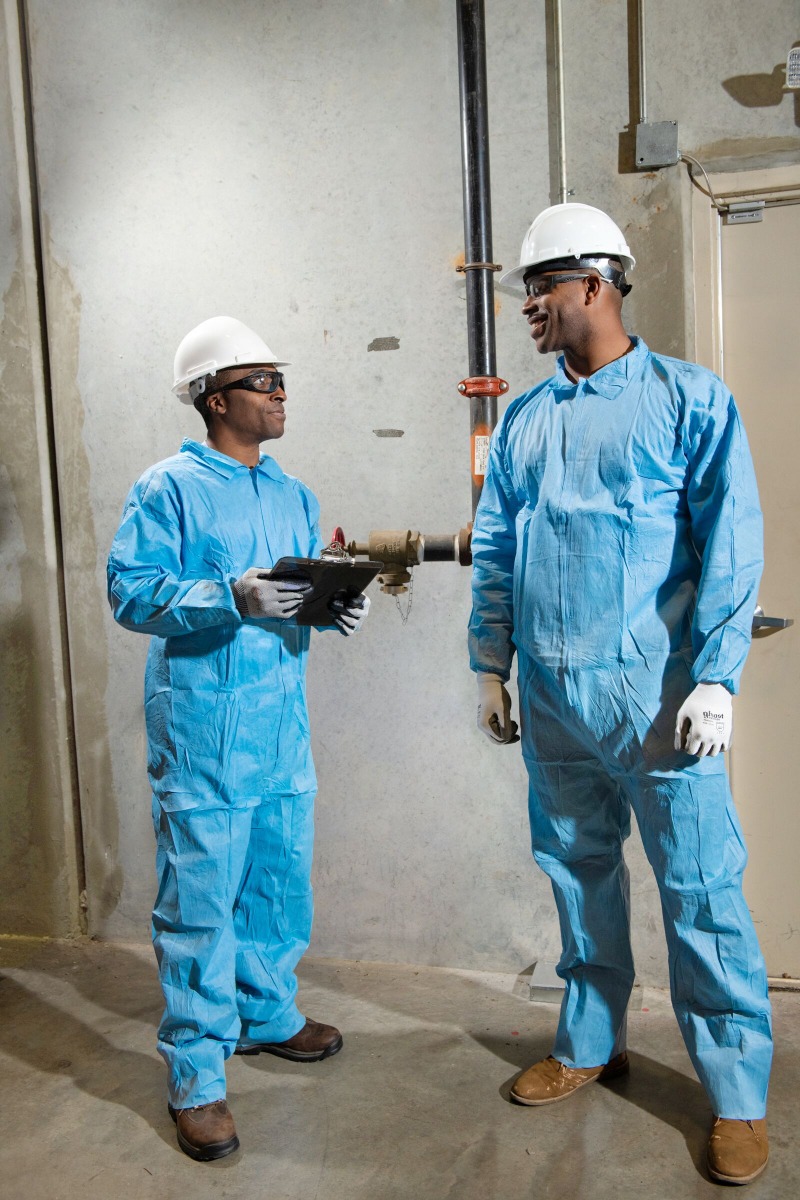
International Enviroguard manufactures disposable protective garments in the United States under the MicroGuard MP® brand. These coveralls serve the domestic, industrial, and cleanroom markets. While the company does not publicly disclose exact factory locations or production volumes, all MicroGuard MP coveralls are marketed as Made in the USA.
MicroGuard MP coveralls use microporous laminate construction, combining a soft nonwoven inner layer with a breathable microporous film laminated to polypropylene backing. This structure delivers single-use industrial protective clothing designed for extended wear with balanced comfort and barrier performance.
MicroGuard MP Coveralls Material Performance
MicroGuard MP fabrics meet multiple ASTM and EN performance standards:
MicroGuard MP® 8015VPK Coverall
Burst strength: 20 lb (ASTM D3787)
Tensile strength: 23.2 lb MD / 18.5 lb CD (ASTM D5034)
Tear resistance: 5.9–6.0 lb (ASTM D5733)
MicroGuard MP® 8104 Boot Covers
Surface resistivity: 1.2 × 10⁹ Ω (BS EN 1149-1:2006)
Air permeability: <0.55 cfm (ASTM D737)
The low air-permeability rate improves particle blocking while maintaining breathability. Compared with standard polypropylene and many SMS coveralls , MicroGuard MP laminates offer improved liquid resistance, lower lint generation, and stronger tear performance within the same price tier.
MicroGuard MP Product Range and Applications
The MicroGuard MP coveralls range includes garments for industrial, cleanroom, and contamination-controlled environments:
Cleanroom coveralls (Models 8013 and 8019 “bunny suits”)
Certified for ISO Class 6–8 (Class 1000+), non-sterile, packed 25 units per case.
Standard disposable coveralls
Medium sizing with elastic wrists and ankles; minimum 36-inch chest and 32–34-inch waist.
Accessories
18-inch microporous sleeves (Model 8065)
17-inch boot covers with vinyl soles
All garments use white fabric, allowing easy visual detection of contamination.
Why Buyers Choose U.S.-Made MicroGuard MP Coveralls
MicroGuard MP coveralls appeal to buyers with Buy American requirements and those prioritizing North American supply chains. Domestic manufacturing simplifies logistics, reduces lead times, and aligns more easily with U.S. regulatory and documentation standards for industrial protective clothing.
Quality Standards and Certifications for Microgard Coveralls

Both Microgard coverall manufacturers operate under strict safety systems, but their certification frameworks differ by market. Reviewing supplier documentation helps confirm intended use, regulatory compliance, and product authenticity.
Ansell Microgard Coveralls: Certification Framework
Ansell’s Microgard coveralls are produced under an ISO 9001:2015–certified quality management system at its Xiamen manufacturing facility. This certification covers design control, production, and final inspection. Independent auditors such as SGS or Bureau Veritas conduct regular factory assessments.
At the product level, Ansell Microgard coveralls comply with the EU PPE Regulation (EU) 2016/425 Category III for high-risk protection. Core certifications include:
EN ISO 13982-1 (Type 5) – dry particle protection
EN 13034 (Type 6) – limited liquid splash protection
Type-examination certificates are issued by notified bodies such as Intertek or BSI.
Models like the AlphaTec 2300 STANDARD carry valid CE markings with four-digit notified body numbers, confirming third-party verification. Mechanical performance—including seam strength, abrasion resistance, and burst strength—is tested under EN 14325. Certifications remain valid for five years unless design changes require re-testing.
International Enviroguard MicroGuard Coveralls: U.S. Compliance
MicroGuard MP coveralls manufactured by International Enviroguard meet ANSI/ISEA 101-2024 standards for limited-use protective clothing. This updated standard introduced clearer labeling rules and tighter sizing requirements.
Barrier performance aligns with ASTM F1670 (synthetic blood resistance), while viral penetration testing follows ASTM F1671, conducted by accredited third-party laboratories such as Nelson Labs. Manufacturing sites maintain ISO 9001:2015 certification, covering raw material inspection through final product release.
Cleanroom-rated MicroGuard garments meet ISO Class 6–8 requirements, with particle emission testing performed under IEST-RP-CC003.4. Anti-static performance complies with EN 1149-1, maintaining surface resistivity at or below 10⁹ Ω—critical for electronics and pharmaceutical environments.
Verifying Authentic Microgard Coveralls
Both manufacturers issue Certificates of Conformity (CoC) with bulk orders. Before purchasing, confirm:
CE markings and notified body numbers on EU products
ANSI/ISEA compliance statements for U.S.-made coveralls
Matching model numbers across certificates, cartons, and labels
Missing or incomplete certification is a common indicator of gray-market or counterfeit Microgard coveralls.
Microgard Coveralls Made in USA vs China: Buyer Considerations
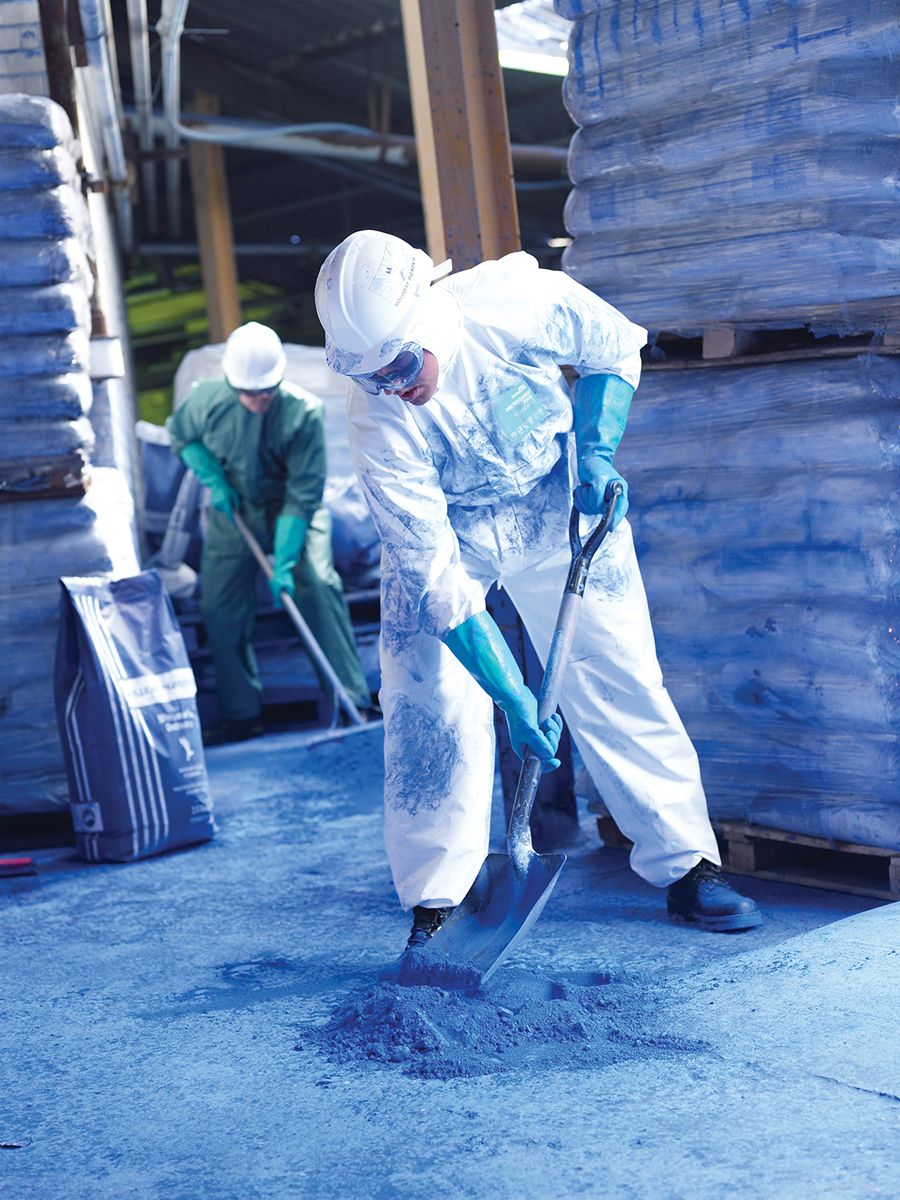
The manufacturing origin of Microgard coveralls directly affects price, compliance, lead time, and supply-chain risk. China currently accounts for about 28% of global manufacturing value-added, while the United States holds roughly 16%. This imbalance shapes sourcing decisions for disposable and chemical resistant coveralls .
Cost Structure and Pricing Impact
Labor costs drive most price differences. U.S. manufacturing wages exceed $25 per hour, while comparable labor in China averages $5–7 per hour. This gap makes China-based production more competitive for high-volume Microgard coveralls.
Large orders—such as 10,000 Type 5/6 coveralls for routine maintenance—typically favor China-made Ansell Microgard products due to lower per-unit costs. For smaller or specialized runs, the pricing gap narrows. U.S. manufacturers like International Enviroguard offset higher labor costs through automation, making MicroGuard MP coveralls more competitive in niche or short-run orders.
Compliance, Documentation, and Traceability
U.S.-made Microgard alternatives benefit from stricter regulatory oversight, including OSHA requirements and FDA-aligned documentation for cleanroom or pharmaceutical environments. This results in clearer traceability, standardized labeling, and faster regulatory alignment for North American buyers.
China-made Microgard coveralls remain compliant with EU and international PPE standards but involve higher buyer due diligence. Supplier audits, third-party inspections, and detailed certification reviews become more important—especially for chemical-resistant or biologically protective applications.
Manufacturing Technology and Precision
U.S. manufacturers lead in automation and precision manufacturing. Many facilities now use advanced cutting, bonding, and prototyping technologies to support customized or technically complex protective clothing.
China’s large-scale initiatives, including advanced robotics adoption, support high-volume, consistent production. Ansell’s Xiamen facility uses modern equipment to maintain quality while delivering significant capacity advantages. This combination supports the global distribution of Microgard coveralls without sacrificing performance consistency.
Supply Chain and Strategic Risk
Trade imbalance increases exposure to tariffs, export controls, and geopolitical disruptions. A single policy change can delay shipments of China-made protective workwear.
With projections suggesting China’s manufacturing share will continue to grow, buyers managing critical PPE inventory should consider dual sourcing. Maintaining both U.S.-based and overseas suppliers—even at higher unit costs—helps protect continuity for essential Microgard coveralls and other safety-critical garments.
How to Verify Microgard Coveralls’ Country of Origin & Avoid Counterfeits
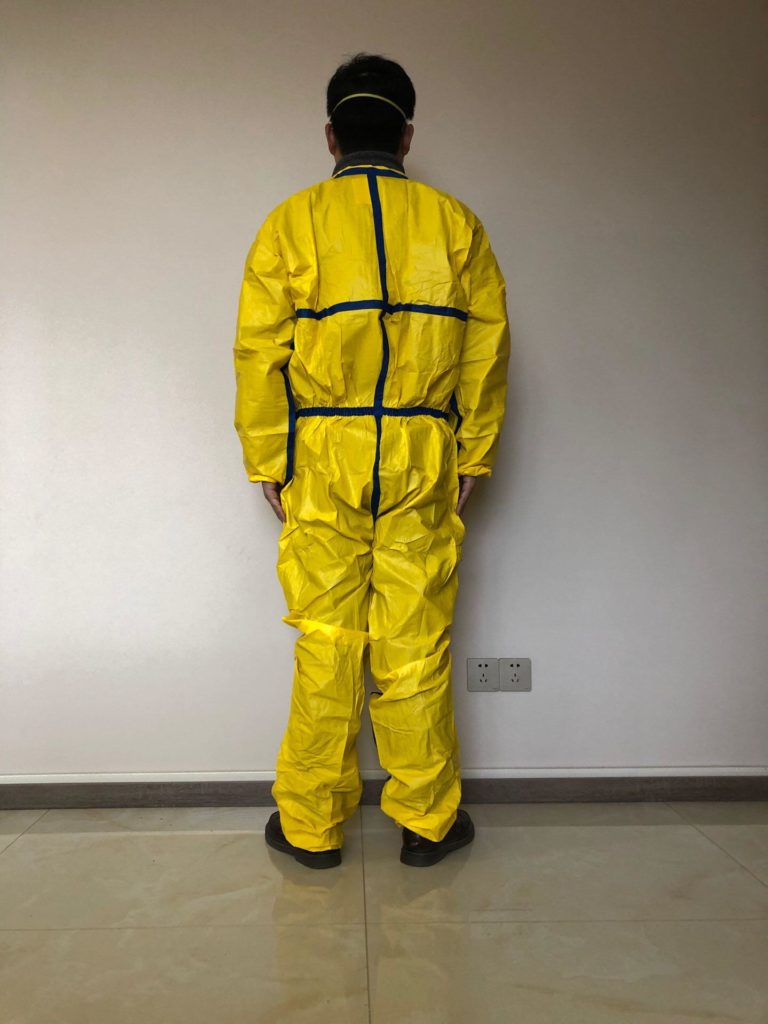
Counterfeit protective gear is a serious safety risk. Customs authorities worldwide flag suspicious Certificates of Origin (CO) for disposable coveralls in over 90% of inspections. Ensuring the authenticity of your Microgard coveralls is essential for worker safety and regulatory compliance.
Request Official Origin Documents
Start with a Certificate of Origin. This proves where your Microgard or MicroGuard coveralls were manufactured. Suppliers should provide:
Preferential CO – for trade agreements and duty reduction.
Non-preferential CO – standard proof of manufacturing location.
Check the issuing body:
Chambers of commerce : 61% of cases, highest reliability.
Customs authorities : 23% of cases.
Exporter self-certification : 49% of cases.
Manufacturer-issued : 12% of cases.
Both paper and electronic certificates are accepted internationally. Electronic COs include verification codes, reducing fraud risk, while paper versions require original stamps and wet signatures.
Examine Certificate Details
Before goods arrive, cross-check:
Issuing body name and stamp
Certificate number and date (matches export timeline)
HS code (e.g., 6210.10 or 6210.40 for protective coveralls)
Product description (“ Disposable chemical resistant coveralls ”)
Quantity and weight (matches commercial invoice and packing list)
Origin statement (“Made in China” or “Made in USA”)
Any inconsistencies may trigger customs verification, delaying delivery.
Confirm Rules of Origin Compliance
Trade agreements often require minimum local content. For example, U.S. free trade deals typically mandate 35% originating materials plus processing. Verify this by requesting:
Bill of materials
Processing records
Supplier certificates
Example : A $5 FOB Type 5/6 coverall must include ≥$1.75 in originating content and processing. Anything lower may not qualify under trade rules.
Cross-Reference Shipment Documents
Ensure all data aligns across:
Certificate of Origin
Commercial invoice
Packing list
Bill of lading
Red flags include weight mismatches, quantity discrepancies, product description differences, or conflicting shipper names.
Verify via Customs Channels
Contact your country’s customs authority with the CO number and issuing body to confirm authenticity. Processing typically takes 2–4 weeks, but it prevents seizures or fines. Request exported shipment declarations to cross-verify actual shipments.
Maintain a Verification Audit Trail
Document every check to protect against future audits:
Original or certified CO
Supplier’s origin declaration
Bills of materials with country codes
Value-content calculation worksheets
Supplier emails confirming production location
Screenshots from electronic CO verification portals
Spot Counterfeit Microgard Coveralls
Labels : Authentic Ansell Microgard coveralls have crisp printing and CE markings with four-digit notified body numbers.
Seams and strength : Real Type 5/6 coveralls pass 20+ lb burst tests; fakes often fail below 10 lb.
Lab reports : Request batch-specific test reports and verify directly with the issuing lab.
Proper verification protects your workforce and prevents costly mistakes. Never accept unverified Microgard or MicroGuard coveralls—one counterfeit shipment can endanger lives.
Microgard Coveralls vs Competitors: Manufacturing, Performance & Protection

Ansell Microgard coveralls are engineered with layered fabric technology that sets them apart from standard microporous competitors. Differences are evident in filtration efficiency, seam strength, and overall barrier protection.
Fabric Construction & Protection Levels
Microgard 1500 Series: SMS microfiber multilayer spunbond construction. Filters 100% of particles >3 µm; 1500 PLUS blocks 99.9%. Generic SMS competitors rarely publish data for particles below 5 µm.
Microgard 2000 Series: Breathable microporous laminate offers particle and liquid spray protection without stiffness. Silicone-free coating is ideal for spray painting and surface-sensitive work.
Microgard 2300 Series: Polyethylene barrier coating over a bi-component nonwoven inner layer prevents delamination under abrasion. Competitors often use separate film and backing layers that can fail in high-friction applications.
Seam Technology & Barrier Integrity
4000/5000 Series: Ultrasonic-welded seams with external taping for maximum liquid and particle resistance.
2500 PLUS: Internal 3-thread overlock plus external tape, outperforming single-stitched seams on budget coveralls.
2000 STANDARD: Bound seams with lock-stitching pass EN 14605 high-level water spray tests. Typical competitor seems to leak under the same test.
Mechanical Strength Comparison: Microgard 2300
|
Property |
2300 Standard |
2300 Comfort |
|---|---|---|
|
Tear Resistance MD |
>20 N (class 1/6) |
>60 N (class 3/6) |
|
Tear Resistance CD |
>60 N |
>40 N |
|
Tensile Strength MD |
>60 N |
>100 N |
|
Tensile Strength CD |
>60 N |
>60 N |
|
Puncture Resistance (EN 863) |
>5 N |
>5 N |
Note: The comfort version trades cross-directional tear resistance for higher machine-direction strength, supporting tasks that involve frequent kneeling or stretching.
Biological and Contamination Protection
EN 14126 Certified: Type 3-B, 4-B, 5-B protection.
ISO 22610 / 22611 / 22612: Zero penetration in wet microbial, contaminated aerosol, and dry microbial tests.
Standard microporous competitors often skip full EN 14126 testing, providing limited verification of viral or microbial barriers.
Cleanroom & Anti-Static Compliance
ISO 9073-10: Linting control for cleanroom suitability.
EN 1073-2 & EN 1149-5: Radioactive contamination and anti-static protection.
Additional certifications: ASTM F1670/F1671 (bloodborne pathogens) and DIN 32781 (pesticide handling).
Multi-standard compliance reduces the need for multiple SKUs in mixed-hazard facilities.
Weight, Comfort, and Cost Considerations
Competitor MicroGuard MP® 8012: 1.6 oz/yd², lighter but weaker in tear and abrasion resistance.
Microgard coveralls: Heavier multilayer construction for better protection and durability.
Premium: 15–30% higher per unit, justified by verified barrier performance, stronger seams, and broader regulatory compliance.
Budget teams choosing generic Type 5/6 coveralls accept lower mechanical strength in exchange for lower costs.
Always verify certification and source before purchasing Microgard coveralls. Check supplier reputation, confirm protection levels, and request samples when needed. For reliable bulk orders, rely on authorized Ansell distributors or certified MicroGuard dealers—they ensure genuine products and provide technical support.
Need custom protective coveralls? Contact us today for a quote and tailored solutions for your workplace.