
Country of origin matters more than most buyers expect. It affects price, quality, and even company trust. Labels are not always clear, and brand history adds to the confusion. This article explains exactly where Liberty coveralls are manufactured today and why production moved overseas, using clear facts instead of guesses.
Liberty Coveralls Current Manufacturing Locations (China and Vietnam)
Dickies runs Liberty’s production through its own factories in two countries. All coveralls ship from facilities in China and Vietnam since the brand acquisition. The setup matches what most major workwear brands use today—offshore production with central quality checks.
China Production Facilities
The Chinese manufacturing network sits in two provinces famous for garment work: Fujian and Guangdong. Dickies owns these facilities. They’re not contract shops.
Fujian Province operations:
– Kingtai Industrial (Xiamen) Co., Ltd. : 5th Floor, No. 10 Huli Industrial District of Xiamen SEZ. This mid-sized facility employs 101-500 workers. It makes Liberty coveralls plus other Dickies products.
– Haicang facility : No.3 Building, No.9 Dongfu West 2nd Road, Xiamen 361027. Another 101-500 worker site run through the MacNeill Pride Group. Focus is on apparel manufacturing.
Guangdong Province sites:
– Shenzhen factory : The biggest Chinese operation. It employs 1,001-2,000 workers. This size lets them run bulk production for Liberty’s standard coverall styles.
– Dongguan locations : Multiple facilities. Each employs 101-500 workers. They handle special production like flame-resistant treatments.
– Guangzhou JF Gloves & Garments : No.24 Shilian Road, Panyu District. Makes accessories and matching workwear parts.
Extra capacity comes from Hangzhou (Zhejiang Province, 101-500 workers ) and Pinghu Economic Zone (No. 58 Xixiaogang Road). The Pinghu site specializes in outdoor gear construction methods used for heavy-duty coveralls .
Vietnam Manufacturing Operations
Vietnam factories make a large amount of Liberty coveralls. Dickies doesn’t share exact facility addresses. Production focuses on Soc Trang Province. The company runs at least one major plant there with 1,001+ workers.
Shipping records show regular Vietnam-to-US container shipments. Take Vietnam Garments Manufacturing Ltd. in Vung Tau (a similar operation). They ship 437 containers totaling 5,047 kg of garments to American brands each month. Liberty’s Vietnam output follows the same shipping patterns.
The Vietnam facilities meet modern apparel standards. Companies like Vietnam Dugarco run 25 factories with 160+ production lines and 8,000+ workers. Liberty’s Dickies-owned operations match this level of industrial setup.
Why China and Vietnam?
Dickies hasn’t shared official reasons for picking these locations. Industry economics explain it. Both countries offer strong apparel manufacturing systems. They have trained workers. Textile chains sit within easy shipping distance. Production costs run far below U.S. levels.
Worker counts show smart capacity planning. Smaller 101-500 worker facilities in Xiamen and Dongguan handle special runs (FR treatments, custom orders). The 1,001-2,000-worker Shenzhen plant and Vietnam’s large sites produce standard Liberty coverall models. These stock retailers are across the country.
Your Liberty coveralls probably came from whichever factory had space at order time. Dickies moves production around these facilities based on order size, fabric stock, and shipping dates—not quality levels.
Liberty Brand History: From Alabama to Overseas Production
Liberty Coveralls started in Birmingham, Alabama, in the 1900s. This small regional workwear maker built a strong name. They made tough cotton coveralls for Southern factory workers, miners, and industrial hands. Liberty ran its own cutting and sewing shops in Alabama for decades. Local workers there knew what heavy-duty workwear was needed.
The Birmingham Manufacturing Era (1912-1990s)
Liberty’s Alabama factory ran for over 80 years. The Birmingham shop made cotton duck coveralls and denim work pants. Workers created building methods that made Liberty products last. These included reinforced stress points, triple-stitched seams, and heavy-duty zippers built for tough jobs.
The company served regional customers at first. They sold through hardware stores, farm shops, and work gear distributors in the Southeast. Liberty became a known name in Alabama, Mississippi, Georgia, and nearby states. Many workers bought the same brand their fathers wore.
The Walls Acquisition Shift (1990s)
Walls Industries bought Liberty in the 1990s. American workwear brands were joining together then. This changed how Liberty made its products. Walls moved some work to contract factories. The Birmingham shop stayed open but made less.
Walls brought Liberty to big retail chains across the country. Sales spread beyond the Southeast. They made more coveralls, but contract shops made most of them now. The Alabama plant made fewer. Liberty kept its brand name. They mixed U.S.-made and imported items.
Dickies Takes Control (2013)
Williamson-Dickie Manufacturing Company bought Liberty in 2013. Liberty went from a regional Alabama maker to a global workwear brand. Dickies closed all U.S. shops. They moved Liberty coverall making to their China and Vietnam factories.
This happened fast. By 2014, Liberty coveralls showed “Imported” labels, not “Made in USA.” Dickies kept the Liberty name and classic designs. But they changed where and how everything got made. The Birmingham factory shut down for good. This ended Liberty’s 100+ year tie to Alabama making.
Liberty vs Liberty Uniform: Clearing the Confusion
Two different companies use “Liberty” in workwear manufacturing. Liberty Coveralls (owned by Dickies) and Liberty Uniform Manufacturing Co. share nothing except part of their name. Mixing them up causes confusion about factory locations and products.
Liberty Uniform Manufacturing Co. operates in Spartanburg, South Carolina. They’ve made public safety uniforms since 1987. Their catalog focuses on shirts, trousers, and outerwear for law enforcement and private security. The famous Liberty® flame logo shows up on police uniforms across America. Bib overalls? Industrial coveralls ? You won’t find those here. They stick to one specialty: protective service apparel.
Their product lines include:
- Comfort Zone® : Premium law enforcement uniforms with top-grade fabrics
- Top Brass® : Police shirts, trousers, and commando sweaters
- Millennium™ : Police jackets with Taslan® nylon shells and Thinsulate® insulation
- Spartan™ : Value-priced outerwear using quality materials
- New Star® : Civilian-styled blazers and dress shirts for uniform wear
Liberty Uniform uses a “narrow and deep” manufacturing approach. They make fewer product types. But they run high-volume production. This keeps overhead low. Prices stay competitive. Everything ships from their South Carolina facility— 100% American-made.
Liberty Coveralls (Dickies brand) makes industrial workwear in China and Vietnam. No connection exists between the two companies. Dickies bought the Liberty Coveralls name in 2013. They make bib overalls, flame-resistant coveralls, and general work apparel. Construction crews use them. So do factory workers and maintenance teams.
How to tell them apart:
Check the product label. Liberty Uniform items show the flame logo trademark plus brand names like Comfort Zone® or Top Brass®. Tags list Spartanburg, SC as the manufacturing location. Their official site, libertyuniform.com , sells public safety gear—no industrial coveralls appear.
Liberty Coveralls (Dickies) labels say “Imported” with Dickies branding. You’ll find them at farm stores, industrial shops, and general workwear retailers. No flame logo. No South Carolina address. No law enforcement product lines.
Shopping for police uniforms? You want Liberty Uniform Manufacturing in Spartanburg. Need tough coveralls for factory work or farming? That’s Liberty Coveralls through Dickies’ overseas facilities. The products, customers, and manufacturing are different despite sharing “Liberty” in the name.
How to Verify Liberty Coveralls Manufacturing Origin?
Want to know the source of your Liberty work coveralls ? You don’t need special tools. Just start with the care label. Flip the coveralls inside out. Check the tag near the waist or bib. It states “Made in China” or “Vietnam.” But the real info is in the codes below. Check the SKU and batch numbers. These codes link your pair to the original factory.
Need more proof? Send those numbers to your supplier. Ask for a Certificate of Conformance (CoC). This helps with bulk orders. Good distributors give you factory locations and material records. Dealing with strict safety protocols? Ask for shipping documents or lab tests. This verifies flame-resistant (FR) claims.
Watch out for counterfeits. They show up in discount channels often. Real Liberty workwear has consistent stitching and branded hardware. Price looks too good to be true? Like $15 for FR gear? Steer clear. Generic zippers are a bad sign, too. Check the label and build quality. This protects you from cheap fakes.
Every Liberty coverall carries factory clues. You just need to know where to look. Start with the product itself—no special tools needed for basic checks. Advanced tracing requires supplier help, but you can run initial screenings on your own.
Liberty Coveralls Price and Value Analysis
Liberty coveralls lead the budget workwear market. You find them for $39.99 to $48.60 at stores like Tractor Supply and Walmart. This price beats premium brands like Carhartt and Ariat by 30-60%. It creates a top choice for value. You get tough gear without paying for the brand name.
Market Comparison and Features
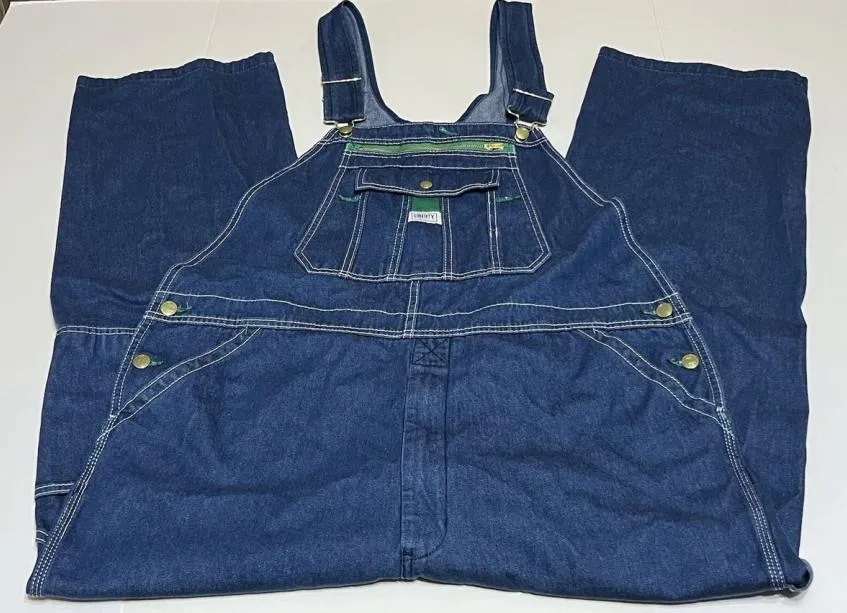
Liberty is entry-level, but it offers great value against mid-range rivals. Look at the Rigid Denim bibs ($40) and Flex Denim models ($48.60). They use triple-needle stitching and bartack reinforcements. You see this durability in $80+ gear from Dickies or Carhartt.
The difference is the fabric. Liberty uses 11.5 oz cotton denim. This is lighter than the 12-oz duck canvas Carhartt uses. But this “middle-weight” fabric handles general farm tasks well. It fits light industrial work too. You get toughness without the stiffness of heavy canvas.
Key Utility Features:
- Patented 5-piece bib pocket includes a secure zippered phone spot.
- Triple-needle stitching stops seam blowouts.
- Functional layout features hammer loops and useful pockets. They rival the utility of $100+ Berne models.
Cost of Ownership and Best Use Cases
Does cheaper mean more expensive later? Not always. For general use, the math favors Liberty. Say you replace a $40 pair every two years. That costs about the same per year as buying a $90 premium pair every five years. This low start price makes Liberty great for:
- Weekend Warriors & DIYers: You don’t wear out gear daily.
- Growing Workers: Apprentices or teenagers outgrow sizes fast.
- Mild Climates: Liberty offers uninsulated models. They work best in temps above 50°F. Working in freezing or wet weather? Layer up or pick insulated options from Berne or Filson.
The Verdict: You might not need Flame-Resistant (FR) protection or waterproofing. If so, Liberty safety coveralls give you the best durability per dollar right now.
FAQ: Liberty Coveralls Manufacturing
People researching Liberty coveralls ask the same questions over and over. Most answers hide in shipping labels, corporate history, or retailer confusion. This FAQ cuts through the noise. You get verified facts about where Liberty makes coveralls, quality standards, and where to buy them.
Are Liberty Coveralls Still Made in Alabama?
No. Liberty stopped all Alabama production in 2013. That’s when Dickies bought the brand. The Birmingham factory ran for over 100 years. It closed for good. Every Liberty coverall you buy today comes from China or Vietnam. The Alabama heritage lives on in marketing and brand history. But actual production? It moved overseas.
What’s the Difference Between Liberty Bib Overalls and Liberty Coveralls?
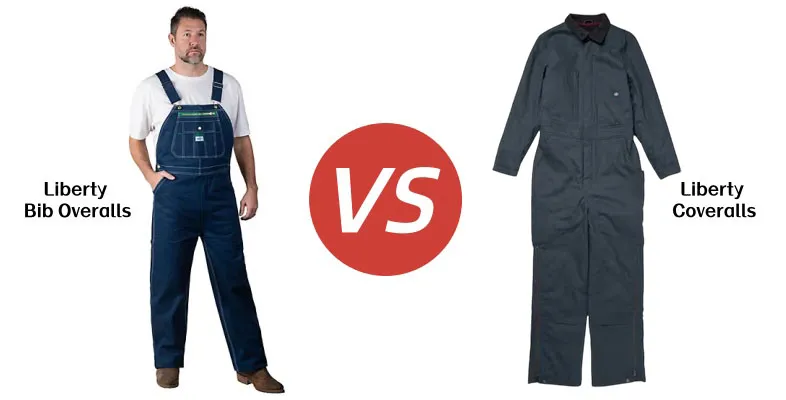
Liberty started with bib overalls—work pants with chest bibs and adjustable straps. These are still the brand’s signature products. Coveralls are different. They’re one-piece garments that cover your whole body, arms, and legs included. Liberty makes both styles now. People use the terms the same way in casual talk. But here’s the real difference: bibs leave your upper body exposed for layering. Coveralls give you full-body protection.
Do Liberty Coveralls Meet American Safety Standards?
Yes, but there are limits. Standard Liberty denim and duck overalls meet basic workwear durability needs. But they lack special safety certifications. Liberty makes no flame-resistant (FR) models. You need NFPA 2112, ASTM F1506 , or arc-rated protection? Choose a different brand. Carhartt, Ariat, and Bulwark offer FR coveralls with proper test certificates. Liberty sticks to basic work durability. Think tear resistance, reinforced stitching, and functional design. Not chemical protection. Not fire safety.
Where Can I Buy Authentic Liberty Coveralls?
Tractor Supply Co., North 40 Outfitters, and Walmart stock Liberty products nationwide. Farm stores carry the best selection. You can also shop online at Amazon and rural outfitter websites. Watch out for deep-discount sellers offering Liberty FR coveralls or strange models. Liberty doesn’t make flame-resistant workwear. Prices under $30? That signals possible fakes. Real Liberty bibs cost $39.99-$48.60 at legit retailers.
How Does Overseas Manufacturing Affect Liberty Quality?
Quality stayed the same after the China/Vietnam shift. Dickies keeps strict factory standards. You get the same triple-needle stitching, bartack reinforcement, and heavy cotton fabric in current models. Customer reviews average 4.6/5 stars. That matches ratings from before the offshore move. What changed? Manufacturing transparency and “Made in USA” appeal. The coveralls perform just like the Alabama-made era for typical farm and light industrial use.
Can I Get Liberty Coveralls with Custom Embroidery?
Major retailers offer embroidery for bulk orders. Tractor Supply and farm co-ops handle company logos, employee names, and safety messages. Turnaround times? 24-48 hours for hemming, striping, and patchwork based on distributor specs. Buying just one pair? You might need to make a special request. Contact the store’s commercial sales department. They’ll give you pricing and minimum order info for custom work.
Are There True American-Made Alternatives to Liberty?
Round House makes 100% USA-made bib overalls in Shawnee, Oklahoma. They’ve been at it since 1903. Every pair gets cut and sewn in the USA using American cotton. Prices run $59.95-$79.95 for regular production. Their irregular and seconds inventory? That sells at $9.95-$39.95. That beats Liberty’s import pricing. Round House matches old Liberty, Alabama, quality and construction methods better than anyone. They’re the last major U.S. overall maker still working on American soil.
Conclusion
Liberty coveralls are no longer made in the United States. Since the Dickies acquisition, all production has moved to China and Vietnam, following modern global workwear manufacturing standards. Understanding the origin helps buyers make informed decisions. If you need custom disposable coveralls for your application, feel free to contact us for a tailored quote and reliable production support.