
One wrong suit can leave paint soaking through seams or vapors reaching your lungs. That confusion costs time, money, and safety. This article breaks down how paint coveralls really work, which materials and certifications matter, and how to match protection levels to water-based, solvent-based, and high-risk paint jobs.
Types of Paint Coveralls: Disposable Vs. Reusable
Your painting work shows you which coverall type fits best. Three factors matter: protection level, how often you face paint exposure, and long-term costs.
Disposable Paint Coveralls: The Preferred Choice For High-Risk Work
Tyvek® material sets the standard for disposable paint coveralls . DuPont’s fabric breathes well. It blocks chemical splashes and airborne particles. Here’s what makes it work:
- Superior chemical barrier : Multi-layer construction blocks paint solvents, VOCs, and harmful particles
- High-temperature resistance : Handles temperatures over 300°C during spray operations
- Single-use design : DuPont warns against washing and reusing these suits. This keeps protection intact.
Price range : ¥200-1,000 per paint coverall suit (includes full-face respirator). Material quality affects the price.
Choose disposable for :
– Heavy paint splatter environments
– Automotive spray booths using solvent-based paints
– Coating work with toxic chemicals
– Jobs needing clean disposal after each use
Black paint resistance tests show absorption rates over 0.9. You skip the hassle of washing paint-soaked clothing. Plus, no contamination risk.
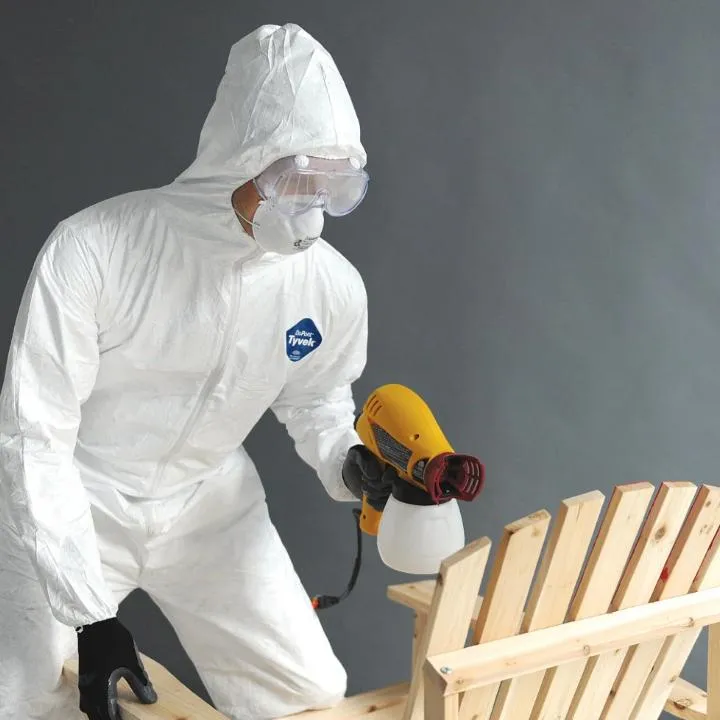
Reusable Paint Coveralls: An Economical Choice For Everyday Work.
Reusable paint coveralls take a different approach. They use washable polyester with built-in chemical resistance. But they need regular care:
- Activated carbon filters : Replace these on schedule (not truly long-term reusable)
- Honeycomb inner lining : Boosts breathability. Resists acid and alkali.
- Example spec : D-level basic protection, anti-static/waterproof polyester (Model KR100)
Critical maintenance point : You can wash the coverall fabric. But activated carbon cartridges need replacement based on maker guidelines.
Choose reusable for :
– Light to moderate paint exposure
– Regular factory painting with minimal splatter
– Budget-tight operations with lower chemical risks
– Pair with complete PPE set (gloves, goggles, respirator mask)
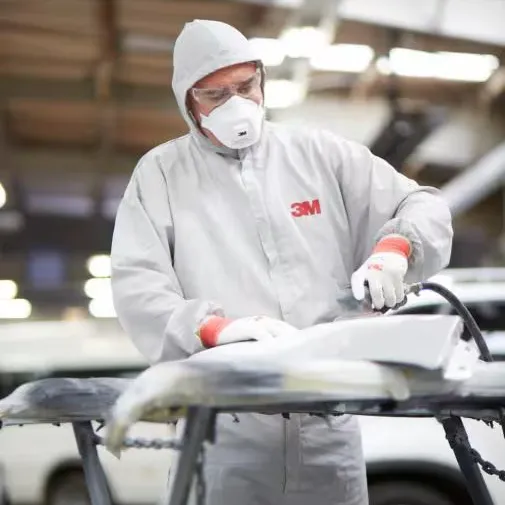
Quick Comparison Decision Table
| Feature | Disposable Paint Coveralls | Reusable Paint Coveralls |
|---|---|---|
| Protection Level | High barrier (multi-layer Tyvek®), heat & chemical resistant | Activated carbon filters (require replacement), acid/alkali resistant |
| Durability | Single-use, discard after use | Washable multiple times; filters have limited lifespan |
| Cost per Use | Low upfront, high replacement frequency | Higher upfront, lower long-term purchasing frequency |
| Best Use Cases | Heavy overspray, high-risk chemical work | Low overspray, routine maintenance tasks |
Before buying either type:
✓ Verify GB/T 38147-2019 compliance and national certification marks
✓ Inspect seal integrity : Check zippers, elastic bands, wrist/ankle closures
✓ Confirm filter specs : Standard N95 masks DON’T filter chemical vapors—you need activated carbon cartridges
✓ High-hazard work : Use complete PPE system (coverall + full-face respirator + chemical-resistant gloves)
The wrong choice costs more than money. Poor protection leads to respiratory damage and skin contamination. Match your coverall type to your actual work conditions, not just the lowest price.
Paint Coveralls Material Characteristics: An In-Depth Comparison
Material choice determines safety. Your painting coveralls either provide real protection or a false sense of security. Construction, chemical resistance, and physical durability vary significantly between fabric types.
PTFE Composite: The Three-Layer Advantage
PTFE composite fabrics outperform single-material designs using a three-layer architecture. A durable polyester or nylon outer shell resists abrasion, shielding the critical PTFE microporous membrane. This barrier blocks molecular-level chemicals while allowing sweat vapor to escape, backed by a soft inner liner. This structure balances robust chemical defense with essential breathability.
3M Fabric Performance Data
Different 3M models utilize specific fabric technologies. Here is how they compare in real-world protection:
| Model | Fabric Type | Repellency(R) / Penetration(P) | Best Application |
|---|---|---|---|
| 4510 | PP/PE Laminate | R (Surface Repellent) | Light Splatter |
| 4520 | SMMMS Breathable | P (Particulate) | Dust + Light Chemical |
| 4530 | SMMS + Flame Retardant | R (Surface Repellent) | High Heat Spraying |
| 4540+ | SMS Breathable | P (Particulate) | Daily Maintenance |
| 4565 | Laminate + Taped Seams | R (Enhanced Repellency) | High Hazard Chemical |
Note the difference : “R” rated coverall suits repel surface liquids, whereas “P” rated models resist permeation. High-hazard painting requires “R” protection.
Chemical Permeation Realities
ASTM F739 testing proves aggressive chemicals like Acetone and Carbon Disulfide can permeate fabrics immediately. “Immediate penetration” signals a rapid barrier breach, necessitating layered protection (coveralls, gloves , and respirators) rather than relying on the suit alone.
Fabric Comparison: T/C vs. Cotton vs. Polyester
Fabric composition dictates performance. T/C (polyester/cotton) blends offer the best balance, featuring high breaking strength and better chemical resistance than pure cotton (which absorbs liquids) or polyester. Crucially, T/C matches cotton’s breathability, significantly reducing heat stress during long shifts compared to pure synthetics.
Critical Specs & Evaluation
Professional gear must meet strict metrics: permeation rates ≤1.0 μg/min/cm² and high hydrostatic pressure resistance. Look for verified mechanical data like DuPont Tyvek®’s abrasion ratings. Always demand lab reports for your specific solvents; generic “chemical resistant” claims without specific permeation data leave you exposed to invisible risks.
Seven Key Factors for Choosing Paint Coveralls
Paint coverall shopping doesn’t need to be guesswork. Seven technical criteria separate gear that works from products that just look good. Industry standard AQ/T 6107-2008 sets these benchmarks. They link to your safety in real spray environments.
1. Chemical Protection Performance: Dual Barrier Evaluation System
Chemical protection has two critical measurements:
Penetration Resistance :
– Measures liquid flow through fabric flaws—seams, pinholes, zipper gaps
– High-grade protection : Blocks toxic paint chemicals and strong solvents
– Low-grade protection : Guards against occasional contact with mild chemicals
– Dust-tight models must pass particle tests with leak rates below standard limits
Permeation Resistance :
– Tracks molecular diffusion through intact material over time
– Breakthrough time shows how long protection lasts during continuous exposure
– Supplier lab data should show performance against your specific paint solvents
Critical rule : Your spray paint coverall protection level must meet or exceed your most dangerous chemical. Testing against “typical chemicals” means nothing if your paints use specialty compounds.
.jpg)
2. Mechanical Strength: Durability Defines Protection Life
Fabric tears during work? Your chemical barrier fails right away.
Required performance metrics :
– Breaking Strength : Fabric resists ripping from equipment snags
– Elongation at Break : Material stretches without tearing during movement
– Flex resistance : Resists wear at stress points—knees, elbows, shoulders
Match mechanical durability to your work intensity:
– Industrial spray booth operations need maximum abrasion resistance
– Light home painting allows lower durability ratings
– Automotive refinishing needs high tear strength due to the tight workspace movement
Toughness keeps the protective barrier intact. Weak fabric loses chemical resistance after minimal use.
3. Corrosion Resistance: The Real Test of Solvent Exposure
Paint solvents attack coverall materials through chemical reactions. Visual inspection misses this damage.
Verification requirements :
– Demand supplier corrosion test data for your specific paint types
– Check resistance against paint thinners, hardeners, and reducer chemicals
– Automotive painters: Verify protection against urethane, acrylic, and epoxy-based coatings
Warning sign : Generic “chemical resistant” labels without chemical-specific data. Real corrosion resistance needs actual solvent exposure testing, not broad claims.
Your material must handle continuous contact with your harshest chemical, not average conditions.
4. Seal Integrity: Gaps Are Failure Points
Perfect fabric protection fails if seams leak.
Inspection checklist :
✓ Seam construction: no loose threads or weak heat seals
✓ Zipper design: storm flaps to block liquid ingress
✓ Elastic cuffs: secure sealing without circulation restriction
✓ Ergonomic fit: prevents gaps at neck, waist, and closures
Added benefit : High-visibility colors (bright orange, yellow) improve safety in multi-worker spray environments. Tychem® fabric studies show visibility reduces accident rates.
Liquid splashes and paint aerosols exploit every opening. Sealed seams matter as much as fabric quality.
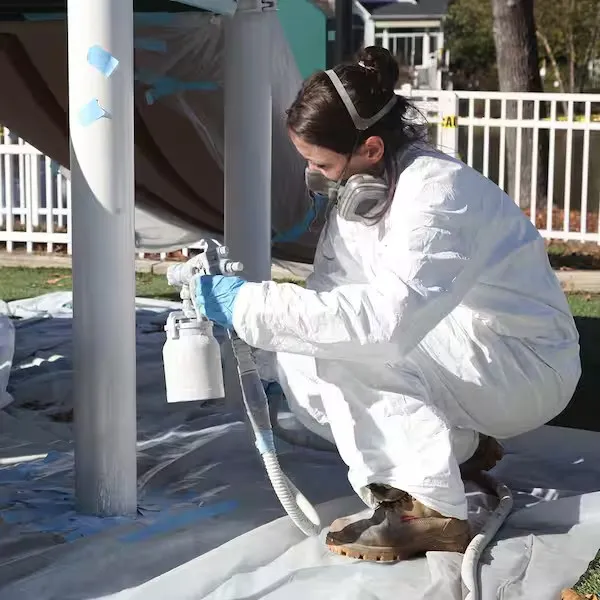
5. Heat Resistance & Flame Retardancy: Essential in Explosion-Risk Areas
Spray booths using flammable solvents create fire hazards.
Tychem® 2000 SFR performance example :
– Fabric shrinks away from flame sources on contact
– Self-extinguishing property prevents fire spread
– Required for explosion-classified painting areas
You need this for :
– Automotive refinishing with solvent-based clear coats
– Industrial coating operations near heat sources
– Any environment with flammable vapor concentrations
Standard paint coveralls ignite fast. Flame-resistant coverall models add critical seconds for escape during flash fires.
6. Fit & Comfort: Decisive for Long Shifts
The wrong size ruins protection and productivity.
Sizing principles:
– Measure over regular work clothes—coveralls go on top
– Allow 2-4 inches extra room for movement without excess fabric bunching
– Test arm reach, squatting, and overhead positions before buying bulk quantities
Breathability standards:
– Tyvek® 500 Xpert : CE Category 5-B/6-B certified, balances particle protection with moisture vapor transmission
– Breathable models prevent heat stress during multi-hour painting sessions
– Non-breathable gas-tight suits work for short-duration high-hazard tasks
Ergonomic features:
– Articulated knees and elbows reduce movement restriction
– Elastic waist maintains position without constant adjustment
– Two-way zippers allow ventilation control
Uncomfortable gear gets removed mid-job. Proper fit and breathability keep you protected all day.
7. Cleaning, Maintenance & Total Cost of Ownership
Disposal frequency impacts your real protection costs.
Disposable paint coveralls :
– No cleaning needed—eliminates contamination transfer risk
– Inspect for tears, holes, or fabric degradation before each use
– Disposal costs add up with frequent use
Reusable paint coveralls:
– Washing extends service life but needs proper decontamination procedures
– Check manufacturer washing instructions—improper cleaning destroys chemical barriers
– Replace fabric that shows cracks, excessive wear, or punctures
– Some models offer recyclable materials to reduce waste
Key maintenance rule:
– Visual inspection before every use catches fabric failures
– Track replacement frequency against exposure intensity
– Calculate cost-per-use, not just purchase price
Maintenance discipline affects protection reliability. Damaged coveralls provide zero safety regardless of original quality.
Four-Step Selection Process
Step 1 – Determine Protection Level
Match AQ/T 6107-2008 classification table to your paint hazards. Use minimum protection for low-toxicity water-based paints. Use high-grade protection for isocyanate-containing industrial coatings.
Step 2 -Verify Material Performance
Confirm that chemical resistance, mechanical strength, and corrosion resistance meet your specific work environment. Cross-check supplier data against your paint product safety data sheets (SDS).
Step 3 – Select the correct size
Try on coveralls with a full PPE ensemble (respirator, gloves, safety glasses). Movement restrictions reduce work quality and safety compliance.
Step 4 – Configure Complementary Equipment
Explosion-risk areas need flame-resistant coveralls PLUS static-dissipative footwear. High-toxicity chemicals need coveralls PLUS full-face respirators and chemical-resistant gloves. Incomplete PPE systems create dangerous protection gaps.
Performance baseline : Your protection must exceed your maximum hazard level, not average conditions. Spray booth collection efficiency ≥95% improves air quality, but doesn’t replace proper coveralls. DuPont SBPP fabric shows poor barrier properties—avoid for serious paint protection. Polypropylene layers filter particles well in combination with proper outer shells.
Smart selection weighs all seven factors together. Cheap coveralls that fail on breathability or mechanical strength waste money through reduced wear time and compromised safety. Match your investment to actual hazard exposure. Overspending on gas-tight suits for water-based paint jobs makes no sense. Underspending on protection for solvent-based automotive work risks serious health damage.
Ultimate Guide to Paint Coverall Sizing
Wearing the wrong size compromises both safety and mobility. Follow ISO 13688:2013 standards by measuring your actual body dimensions, not the garment size.
1. How to Measure Correctly?
Always measure over your regular work clothes:
- Waist : Measure at the natural waistline.
- Inseam : Inside leg measurement from crotch to ankle.
- Chest : Fullest part with arms relaxed.
2. The Three “Must-Have” Fit Rules
If a suit fails any of these, change the size immediately:
- Seal Integrity : Wrist, ankle, and neck closures must seal tightly against chemical exposure.
- Freedom of Movement : You must be able to squat, bend, and reach overhead without the fabric tearing or pulling.
- No Loose Fabric : A tight (but comfortable) fit prevents the suit from catching on equipment or collecting paint overspray.
3. Critical Selection & Maintenance Factors
- Full PPE Test : Always test sizing while wearing your respirator, gloves, and boots.
- Anti-Static Capability : Static-dissipative suits (like Model 1021) require a snug fit. The conductive grid (5mm×5mm) must contact the body to maintain electrical continuity and prevent sparks.
- Shrinkage Awareness : Disposable Tyvek® coverall suits don’t shrink, but reusable polyester suits do. Account for shrinkage (ISO 5077) when sizing washable gear.
Top Recommended Paint Coveralls by Scenario
Professional painters contend with distinct hazards. We see everything from particle clouds in water-based sprays to toxic vapors. Select protection based on specific exposure risks. Don’t rely on generic “paint safe” claims.
1. Water-Based & Low Dust Environment (Water-Based/Powder Coating)
Top Pick: DuPont Tyvek® (Model 1422A)
You get the industry standard for water-based coatings here. It balances Type 5/6 particle protection with great breathability. This helps you stay cool.
The smooth, high-density fabric (120g) stops lint contamination. So, it works perfectly for automotive priming or furniture finishing. You need that clean surface quality.
Budget Alternative: Basic polyester suits save cash. But they don’t breathe well and miss the particle blocking power you get with Tyvek.
2. Solvent-Based & High Chemical Risk (Oily/Organic solvents)
Priority Choice: DuPont Tychem® F
Solvent-based paints release vivid organic vapors. You need a stronger barrier. Tychem® F creates a comprehensive Type 3/4/5/6 shield. It stops solvents like toluene and xylene dead.
It meets GB/T 38147-2019 standards too. Use it for mixing zones or cleaning equipment with toxic VOCs.
Selection Note: Standard Tyvek® resists light splatter. But Tychem® handles strong vapors and direct liquid contact best.
3. High Dust & Structural Projects (High dust/large structures)
System: P3-Rated Coverall + Complete 3M PPE
Industrial sites like shipyards are tricky. You deal with heavy dust clouds and fall hazards together.
Safety here demands a **P3-rated multi-layer suit**. Pair it with a full PPE setup (full-face respirator, tough gloves, and fall gear). Don’t skip this setup. It stops isocyanate exposure and dust inhalation.
Quick Decision Guide
- Best All-Rounder:
DuPont Tyvek® covers 80% of standard tasks. You get the best mix of safety and comfort. - Best for Solvents:
DuPont Tychem® F is a must-have for organic chemicals and carcinogens. - Best for Industry:
3M PPE System gives you modular protection. It fits complex, high-dust spots well.
Final Rule: Never downgrade protection to save cash. Match your gear to your highest hazard level. Remember, lung damage and chemical reactions often last forever.
Safety Standards and Certifications of Paint Coveralls
Paint coverall certifications tell you what’s tested versus what’s just marketing. Different groups set rules for chemical protective clothing . Know which certifications matter for your paint work. Your safety depends on it.
EN Certification System (Europe)
EN ISO 13982-2 (Type 5 Protection) handles solid particles:
– Blocks fine paint dust and dry coating particles
– You need this for powder coating and sanding work
– Tyvek® 1422A and similar models have this cert
– Tests check if particles get through materials and seams
EN 13034 (Type 6 Protection) covers liquid chemical splashes:
– Stops light spray and paint splatter
– This is the minimum for water-based paint jobs
– Does NOT work for ongoing liquid contact
– Most basic disposable suits meet this level
EN 14126 (Biological Protection) adds germ barriers:
– Advanced models like Tychem® F include this
– Stops contamination in pharmaceutical coating plants
– Most paint jobs don’t need this. Exception: biocidal paints
CE Certification & Declaration of Conformity
CE marking shows European safety compliance . Here’s what it means:
- The maker says the product meets EU health and safety rules
- Coveralls must pass tests for their stated type (Type 3, 4, 5, or 6)
- undefinedKey point : CE certification needs third-party lab testing, not just the maker’s word
- Look for a certification body number next to the CE mark. This proves independent checks happened
Common certification bodies for paint coveralls :
– Notified Body 0407 (BSI Group, UK)
– Notified Body 0121 (SGS, Belgium) undefined
– No body number? The certification might be incomplete undefined
China GB Standards
GB/T 38147-2019 sets China’s paint protection rules: undefined
– States how well respiratory gear must filter during painting undefined
– Requires N95 + activated carbon filters in organic vapor areas undefined
– Sets spray booth air speed rules to cut aerosol contact undefined
– undefinedDeadline : Enforced since 2020 for factory coating work undefined
GB 39800-2020 covers chemical protective clothing: undefined
– Sorts coveralls by how well they resist chemical seepage undefined
– Makes manufacturers publish the breakthrough time for specific chemicals undefined
– Paint chemicals tested: toluene, xylene, acetone, methyl ethyl ketone undefined
ASTM (United States)
ASTM F739 checks chemical seepage through protective materials: undefined
– Shows breakthrough time (how long before the chemical gets through) undefined
– Measures seepage rate (chemical flow through fabric over time) undefined
– Units: μg/cm²/min. Lower numbers = better protection undefined
– undefinedYour move : Ask suppliers for test data on YOUR specific paint solvents undefined
ASTM F1670 tests synthetic blood penetration: undefined
– Designed for medical use, but it works for liquid paint resistance undefined
– Pass/fail tests at different pressure levels undefined
– Helps confirm liquid barrier strength undefined
undefined
Anti-Static Certification Requirements
Flammable paint vapors need anti-static protection:
Surface resistance specs : undefined
– Safe range: 6×10⁶ to 10⁸ Ω (stops static buildup without shock danger) undefined
– Too low = electrical shock risk undefined
– Too high = static sparks can happen undefined
Volume resistance limits : undefined
– Must stay under 10⁷ Ω through the whole fabric undefined
– Needs a conductive grid built into the fabric undefined
– Testing follows GB/T 12703.1-2008 standard undefined
Certification Verification Process
Check labeling for applicable standards, CE marking, and the notified body number.
Request third-party laboratory test reports showing chemical permeation and penetration performance against actual paint solvents.
Verify certification validity by confirming the certification body, test dates, and relevance to the specific chemicals used in painting operations.
Match protection level to job risk: Type 5/6 for water-based paint work, Type 4 for solvent-based spray applications, and Type 3 for direct chemical handling.
Watch for red flags such as vague compliance claims, missing third-party test documentation, or pricing that is unrealistically low for certified paint coveralls.
Conclusion
undefinedThe right paint coveralls make the difference between controlled protection and hidden exposure. Understanding materials, certification standards, and job-specific risks helps you choose gear that truly performs on site. For projects with special requirements, we offer undefinedcustom paint coverall solutions tailored to your application—contact us to discuss specifications and receive a competitive quote. undefined
undefined