

Finding the right spunbond nonwoven fabric supplier in India is harder than it should be. The country’s nonwoven sector is massive and fragmented. Most suppliers sound the same — same promises, same claims, same brochure language.
You’re sourcing polypropylene nonwoven fabric for reusable bags, medical-grade SMS rolls, or agricultural covers. The problem isn’t a shortage of suppliers. The problem is telling the good ones apa rt from the rest.
This guide does that work for you. We evaluated and ranked the top 10 spunbond nonwoven fabric suppliers across India. Our ranking is based on:
- Product range and GSM capabilities
- Certifications and compliance records
- Export track record
- Real-world reliability from buyers
Skip the guesswork. Use this list to start shortlisting your next supply partner.
Why Source Spunbond Nonwoven Fabric from India?
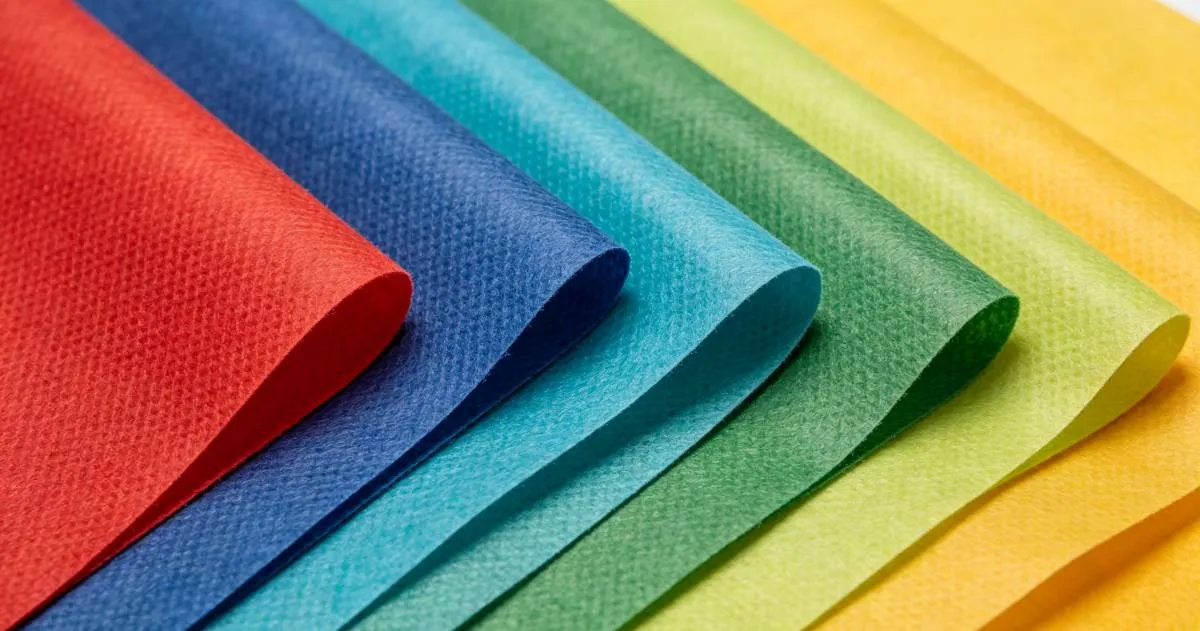 India ranks among the world’s top five exporters of PP spunbond nonwoven fabric . The numbers make a strong case for why buyers keep coming back.
Wholesale pricing for virgin PP spunbond runs ~USD 1.70–2.70/kg FOB India across the 10–120 GSM range. Standard hygiene-grade 20–25 GSM rolls land at USD 2.0–2.5/kg. That sits below what Chinese and Turkish suppliers charge for the same grade. For heavy industrial grades (60–80 GSM), India undercuts Turkish suppliers by USD 0.3–0.5/kg.
That cost edge has real reasons behind it:
- Gujarat sits close to major petrochemical hubs, keeping PP resin costs low
- Haryana and Maharashtra add production capacity for medical and packaging grades
- Labor costs stay competitive across the board
- The sector is growing at a 6.1% CAGR through 2035, which keeps investment flowing into efficiency
So prices don’t just look good now — the structure supports them long-term.
Compliance is also covered. Export-focused Indian manufacturers carry OEKO-TEX certification, ISO 9001/14001, and third-party lab reports as standard. That documentation meets US and EU buyer Requirements without back-and-forth. Stock rolls ship within 7–14 days from ports like Nhava Sheva and Mundra.
You get three things in one source: competitive pricing, export-ready documentation, and growing production capacity. For buyers looking to move beyond single-country sourcing, India puts all of that in one supply chain.
How We Selected These Top 10 Spunbond Nonwoven Fabric Suppliers?
Every spunbond nonwoven fabric supplier on this list earned their spot through a structured scoring process — not web traffic, paid placement, or brand name.
We scored each candidate across five weighted dimensions:
- Product quality & certifications (40%) — ISO 9001, OEKO-TEX, and compliance documents you can verify. These must cover the actual product lines being sold.
- On-time delivery & production stability (25%) — steady lead times, reliable reorders, and consistent output capacity each month
- Total cost competitiveness (20%) — not just unit price. We also looked at MOQ flexibility and whether quotes stay stable over time.
- Export track record (10%) — cross-border shipment history, trade documentation capability, and experience with international buyers
- Verified buyer feedback (5%) — defect rates, return rates, and how fast they respond in real purchasing situations
Each spunbond nonwoven fabric supplier got a score from 1 to 10 per dimension. We weighted, totaled, and ranked those scores. No supplier made the final list without solid, verifiable evidence — website records, industry database entries, certification copies, or documented buyer cases.
We review and update this list as new supplier data comes in.
#1 Cambrics Non Woven Pvt. Ltd. — Best for Custom Bags & Pan-India Supply
Rajkot-based. Gujarat-rooted. They’ve been building one of India’s more versatile nonwoven operations since 2018.
Cambrics Non-Woven Pvt. Ltd. runs a fully integrated setup — PP spunbond fabric production and finished bag manufacturing under the same roof. That matters more than it sounds. Fabric specs and bag construction get coordinated in-house. So you skip the back-and-forth between separate mills and converters. That saves time and reduces errors.
Their product range covers polypropylene nonwoven fabric across a wide GSM range. You get lightweight rolls for disposable applications, all the way up to heavy-duty grades for reusable retail bags. D-cut, W-cut, box bags, loop handle — these are the standard formats buyers need for nonwoven fabric for bag applications.
Gujarat’s location keeps PP resin costs lean. Pan-India delivery runs on India’s western logistics backbone. It reaches Delhi NCR, Mumbai, and Bangalore with no major friction.
- Location: Rajkot, Gujarat
- Core products: PP spunbond fabric rolls + finished nonwoven bags
- GSM range: 8–200 GSM (estimated)
A solid choice for buyers who want spunbond fabric wholesale and finished bags from a single, accountable source.
#2 Jaintex Nonwovens Pvt. Ltd. — Best for Large-Volume Hygiene & Medical Orders
Close to 30 years in Delhi’s textile trade speaks louder than any brochure.
Jaintex Nonwovens Pvt. Ltd. has been active in the Delhi/NCR corridor since 1996. They registered formally in 2006. Their factory sits in Tronica City Industrial Area, Ghaziabad (U.P.) — one acre of dedicated production space. It serves both domestic and export buyers.
Their main products: PP spunbond nonwoven fabric, laminated nonwoven, and printed nonwoven. Hospital-use applications show up directly in their product listings. That makes them a solid fit for buyers who convert fabric into disposable medical and hygiene products — masks , gowns , drape layers, diaper components, and sanitary product substrates.
- Location: Punjabi Bagh, Delhi / Ghaziabad (manufacturing)
- Core products: PP spunbond, laminated nonwoven, printed nonwoven fabric
- Primary applications: Hygiene, medical, packaging
One thing to flag: certifications, GSM specs, and production capacity are not listed in any public documents. Request a full technical datasheet before submitting any RFQ.
#3 Maruti Polyfabs — Best Budget Option for Bags & Industrial Use
Bhiwani rarely comes up in nonwoven industry talks. Gujarat and Delhi NCR take most of the attention. That’s why Maruti Polyfabs is worth a closer look.
They’ve been running out of Sector-26 Industrial Area, Bhiwani, Haryana, since around 2012. The facility runs two dedicated spunbond lines — a 2400 mm line and a 2200 mm line. Together, they push out 350 tonnes/month of PP spunbond fabric. For a 20-person team, that’s a strong output-per-head ratio. Heavy automation drives most of the production.
The product range covers PP spunbond nonwoven fabric rolls, colored polypropylene rolls, printed nonwoven, and nonwoven geotextile. GSM coverage runs from light hygiene grades up to heavier industrial weights. That covers the full range of bag converters and industrial buyers typically need.
The certifications stand out: ISO 9001:2015, ISO 13485:2016, CE, FDA, EN14126, and SITRA. That’s a full medical-grade compliance stack — rare for a budget supplier. So if you’re sourcing fabric for disposable protective wear or hygiene products alongside bag fabric, this pairing saves you a lot of qualification work.
FOB pricing for standard 40–80 GSM bag grades sits at USD 1.3–1.5/kg on full-container orders. That puts them near the low end of India’s export price range.
- Location: Bhiwani, Haryana
- Core products: PP spunbond rolls, colored & printed nonwoven, geotextile
- GSM range: ~10–100 GSM (estimated)
- Certifications: ISO 9001, ISO 13485, CE, FDA, EN14126, SITRA
- Monthly capacity: ~350 tonnes
This supplier fits price-sensitive bag manufacturers, industrial packaging converters, and export traders targeting cost-driven markets in the Middle East or Africa.
#4 Aditya Nonwoven Fabric Pvt. Ltd. — Best for Eco-Friendly PP Nonwoven Options
Bhiwani keeps producing surprises. Aditya Nonwoven Fabric Pvt. Ltd. started in 2011 in Haryana’s industrial corridor. They built a clear niche: PP spunbond nonwoven fabric focused on reusability and cutting down single-use waste.
Their eco-friendly claim needs a quick explanation. This isn’t Recycled PP or PLA. The case is practical — PP nonwoven bags outlast single-use PE bags by 20–50 use cycles. That cuts per-use material cost and reduces waste volume. For brands handling ESG disclosures or meeting EU single-use plastics rules, this difference is worth noting.
Core product focus:
– PP nonwoven carry bags and fabric rolls for bag conversion
– GSM range: estimated 60–100 GSM for standard retail and promotional bags
– Printable surfaces for logo and branding applications
Pricing sits at about ₹95/kg — squarely mid-range for India’s PP spunbond market. You won’t pay an eco-premium on the unit price.
Best fit for:
– Brand buyers moving from PE to reusable PP bags
– Export traders supplying supermarkets or promotional bag converters
– Price-sensitive B2B buyers who need durable, multi-use bag fabric
One clear limitation: medical-grade SMS fabric, GRS-certified recycled content, and compostable material specs are not confirmed in any public documentation. Got those on your checklist? Reach out and confirm before sending an RFQ.
- Location: Bhiwani, Haryana
- GST: 06AAJCA2941C1Z3
- Certifications: ISO 9001/14001 status — confirm with them directly
#5 Global Nonwovens — Best for Hygiene-Grade Spunmelt (SMS/SMMS) Fabric
Not every spunbond mill can make SMS. Even fewer can make it well at 10 GSM.
Global Nonwovens is based in Maharashtra, close to the Nhava Sheva port and near India’s western hygiene manufacturing belt. Their focus is tight and clear: SMS and SMMS spunmelt fabric for hygiene-grade end uses.
The gap between standard spunbond and spunmelt is real. A regular spunbond layer delivers 30–60% BFE. An SMMS line built with inline electret treatment hits ≥98% BFE. That gap decides whether your diaper backsheet or surgical cap does its job — or just looks like it does.
Core product specs:
– GSM range: 8–40 GSM (hygiene-grade low-weight focus)
– Structure: SMS and SMMS multi-layer composite
– Primary applications: Baby diaper topsheet/backsheet, feminine hygiene cover layers, adult incontinence outer fabric, disposable medical components
– Key performance: GSM uniformity CV ≤ 5–8%, MD tensile ~35–50 N/5cm at 15 GSM SMS
Best fit for: OEM converters supplying premium diaper or sanitary napkin brands. Also suits medical procurement buyers sourcing 25–40 GSM SMS for disposable protective apparel.
#6 Rajshree Group of Industries — Best for Broad Product Mix & Reliable Export
Most buyers don’t realize the problem until they’re already juggling five different suppliers. Rajshree Group of Industries, based in Gujarat, fixes that. You get one conversation instead of five.
Their facility covers it all under one roof: PP spunbond nonwoven fabric, meltblown, finished bags, FFP/ N95 masks , disposable bedsheets, caps, and shoe covers. Every product falls under ISO 9001:2015 (SGS-UKAS) certification.
That range has real value. A packaging trader sourcing nonwoven fabric for bags plus medical consumables often deals with 3–4 vendors. Rajshree cuts that down to one. You get the same quality system across every SKU. Fewer contracts. Fewer shipments. Lower per-unit logistics cost.
Rajshree also has a confirmed export record into Dubai/UAE. The documentation, customs process, and export cycle are tested and proven. Middle East buyers don’t need to guess — it works.
- Location: Gujarat, India
- Core products: PP spunbond rolls, meltblown, nonwoven bags, masks, disposable medical items
- GSM range: ~25–80 GSM (bags); broader range available for industrial grades
- Certifications: ISO 9001:2015 (SGS-UKAS)
- Export markets: UAE/Dubai confirmed
Best fit for: Multi-category traders, hospital supply chain companies, and packaging manufacturers who want consolidated sourcing without losing compliance.
#7 Vishal Synthetics — Best for Packaging & Multi-Application Nonwoven Rolls
Kadi, Gujarat, has become one of India’s more productive nonwoven manufacturing hubs. Vishal Synthetics (GST: 24AABFV4018Q1ZX) is a big part of that.
Their main product is PP spunbond nonwoven fabric in roll form. The working GSM range runs from 15 to 150 GSM. Some marketplace listings also quote up to 300 GSM for specific grades. Widths go up to 1600 mm, slit to your spec. Roll length is made-to-order.
For packaging converters, two specs stand out. First is the hydrophobic, water-repellent finish. Second is the wide GSM range. Together, you get coverage for moisture-sensitive wrapping, reusable carry bags, and industrial protective covers — all from a single supplier.
- Location: Plot No. 68, GIDC, Kadi-382715, Gujarat
- GSM range: 15–150 GSM (primary); 50–300 GSM quoted across listings
- Width: Up to 1600 mm
- Finish: Hydrophobic / liquid-repellent available
- Colors: White + custom colors
You’ll find them listed on IndiaMART, TradeIndia, and ExportersIndia. Before sending your RFQ, confirm your target GSM, slit width, and hydrophobic spec upfront.
#8 Redifil Nonwovens — Best for Super Soft Hygiene & Personal Care Grades
Softness in nonwoven fabric isn’t a marketing word. It’s an engineering outcome. Redifil Nonwovens, the PP spunbond brand under Radiant Fibertech Pvt. Ltd., has built its entire identity around delivering exactly that.
Their Super Soft PP Spunbond runs on SS (dual-beam) and SSS three-layer spunbond architecture. That structure pulls fiber fineness down to ~1.3–1.8 dtex. Standard PP spunbond sits at 2–3 dtex by comparison. So bending stiffness drops 20–40%, and handfeel scores climb by 1–2 grades on standard panel tests. You get all of that without losing tensile strength on high-speed hygiene production lines.
Core specs: – GSM range: 10–25 GSM (Super Soft line); 10–200 GSM overall – Width: Up to 1600 mm, slit to 250 mm – Structure: SS / SSS – Certifications: ISO, CE, DNB – MOQ: 2 , 000 kg
Both hydrophilic and hydrophobic finishes are on offer. The hydrophilic grade brings the contact angle down to ~30–60°. That makes it a solid match for diaper topsheets and sanitary napkin cover layers. The hydrophobic version covers backsheet and liquid-barrier applications.
Best fit for: Diaper and feminine hygiene OEM converters, personal care brands that put skin-contact comfort first, and medical disposable manufacturers who need soft plus protective composite layers.
#9 Spunline Nonwoven Pvt. Ltd. — Best Dedicated PP Spunbond Specialist in Rajkot
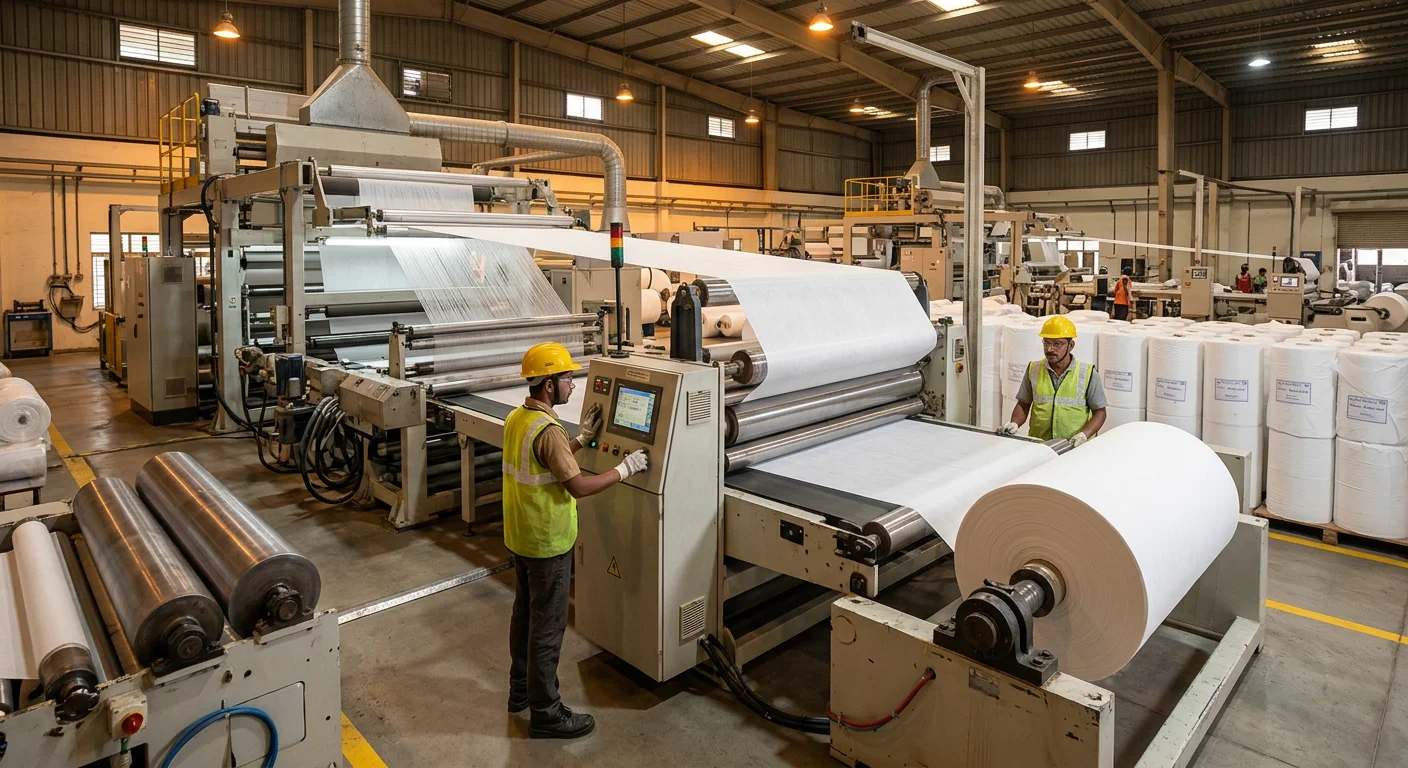 Rajkot keeps producing focused manufacturers. Spunline Nonwoven Pvt. Ltd. is a clear example of what a small team — 11 to 50 people — can do by betting on one product and refining it over time.
Their setup runs a 2.6 m double-beam spunbond line, built for PP spunbond nonwoven fabric and nothing else. No SMS. No meltblown. No PET. Just polypropylene spunbond, done with precision.
That focus pays off in consistency. Double-beam lines running fixed specs produce tighter GSM uniformity. You also get more stable MD/CD tensile ratios. That’s what bag converters, agricultural cover manufacturers, and disposable medical substrate buyers need on repeat orders.
What they offer: – GSM range: ~10–90 GSM (estimated; custom weights available) – Width: Up to 2.6 m; slit to custom widths – Colors: White + custom colors including Pantone-matched options – Applications: Packaging bags, agricultural crop covers, furniture base fabric, hygiene outer layers
One real limitation to know: buyers needing SMS composites, meltblown cores, or high-BFE barrier structures will need a second supplier. Spunline isn’t built for that — and makes no claim otherwise.
Best fit for: Manufacturers running long, repeat orders in fixed GSM specs — bag plants, agricultural fabric distributors, and branded packaging converters.
#10 Favourite Fab — Best OEKO-TEX Certified Option for Export Buyers
OEKO-TEX STANDARD 100 certification isn’t optional for EU and North American buyers anymore. This document keeps your product off the “rejected” pile at customs. It also keeps you clear of the EU’s Empowering Consumers for the Green Transition Directive, which is enforceable from September 2026.
Favourite Fab runs a Dehradun production facility and a Delhi export desk. They’ve built their whole business around this compliance reality.
What makes them relevant for export buyers:
- GSM range: 8–200 GSM — covers disposable hygiene liners, lightweight medical covers, reusable bag fabric, and industrial wipes. All from a single certified source.
- OEKO-TEX STANDARD 100 certification covers the full GSM series — not just select grades. One supplier relationship gives you full compliance documentation across your entire product line.
- Trial pallet policy: ~500–800 kg mixed-GSM pallets are available before you commit to FCL quantities.
- Export documentation: Every order ships with a commercial invoice, packing list, CoO, and OEKO-TEX certificates — ready for EU and North American clearance.
The Dehradun–Delhi dual-base setup keeps production costs low. At the same time, you get fast document turnaround for export clearance through Nhava Sheva or Mundra.
Best fit for: EU-bound brands dealing with green-labeling compliance. Also suits Amazon/Walmart sellers who need verified third-party certification, and mid-sized importers sourcing across multiple GSM applications — without managing audits across multiple suppliers.
Quick Comparison: Top 10 India Spunbond Nonwoven Suppliers at a Glance
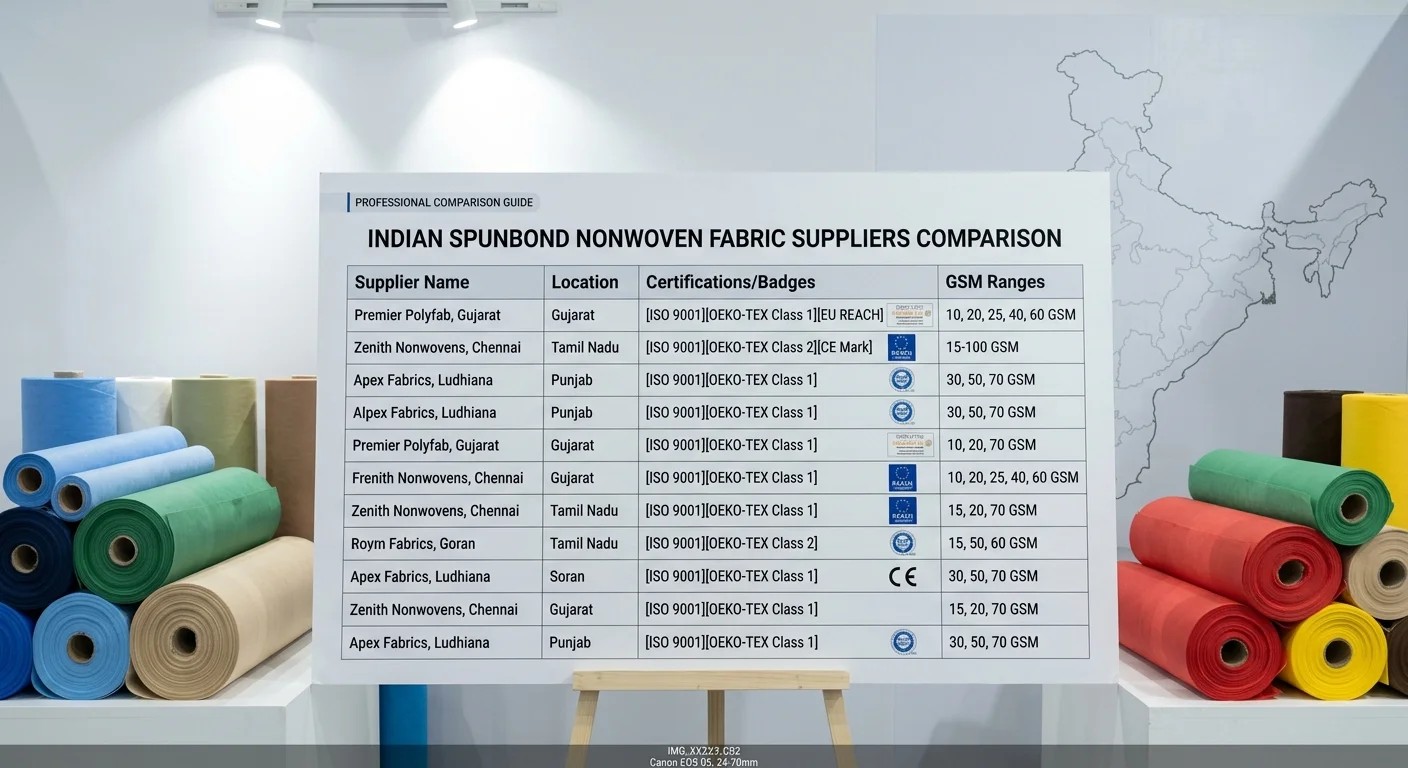 Ten suppliers. One table. Everything you need to make your first cut.
| Supplier | Location | Core Products | GSM Range | Key Certifications | Best For |
|---|---|---|---|---|---|
| Cambrics Non Woven | Rajkot, Gujarat | PP spunbond rolls + finished bags | 8–200 GSM | ISO 9001 | Bag converters, wholesale buyers |
| Jaintex Nonwovens | Delhi / Ghaziabad | PP spunbond, laminated, printed | 15–100 GSM | Check with supplier | Hygiene & medical converters |
| Maruti Polyfabs | Bhiwani, Haryana | Spunbond rolls, geotextile, printed | ~10–100 GSM | ISO 9001, ISO 13485, FDA, CE | Budget buyers, export traders |
| Aditya Nonwoven Fabric | Bhiwani, Haryana | PP spunbond for reusable bags | ~60–100 GSM | ISO 9001/14001 (verify before order) | Eco-focused bag brands |
| Global Nonwovens | Maharashtra | SMS / SMMS spunmelt | 8–40 GSM | ISO 13485, OEKO-TEX | Diaper & hygiene OEM converters |
| Rajshree Group | Gujarat | Spunbond, meltblown, masks, medical | ~25–80 GSM | ISO 9001:2015 (SGS-UKAS) | Multi-category traders |
| Vishal Synthetics | Kadi, Gujarat | PP spunbond rolls, hydrophobic finish | 15–150 GSM | Check with supplier | Packaging converters |
| Redifil Nonwovens | Gujarat | Super Soft SS/SSS spunbond | 10–200 GSM | ISO, CE, DNB | Personal care & hygiene OEMs |
| Spunline Nonwoven | Rajkot, Gujarat | PP spunbond (dedicated single-line) | ~10–90 GSM | Check with the supplier | Repeat-order bag & agri buyers |
| Favourite Fab | Dehradun / Delhi | PP spunbond rolls, export-ready | 8–200 GSM | OEKO-TEX STANDARD 100 | EU-bound & compliance-driven buyers |
Who Should Contact Whom — Fast Buyer Routing
Don’t shortlist all ten. Pick two or three that fit your product type and order volume.
- Hygiene & medical grades (SMS/SMMS, ≤40 GSM): Global Nonwovens → Redifil Nonwovens → Maruti Polyfabs
- Bag fabric & wholesale spunbond rolls (60–100 GSM): Cambrics → Aditya Nonwoven → Spunline Nonwoven
- Export with compliance documents: Favourite Fab → Rajshree Group → Maruti Polyfabs
- Industrial & packaging (80–150 GSM, hydrophobic finish): Vishal Synthetics → Rajshree Group
- Price-first sourcing on a tight budget: Maruti Polyfabs → Aditya Nonwoven → Jaintex Nonwovens
One thing to keep in mind: GSM ranges and certifications change over time. Request a current technical datasheet and a certificate copy before you send your RFQ. The data here comes from verified public sources as of 2024–2025.
FAQ: Sourcing Spunbond Nonwoven Fabric from India
Buyers ask the same five questions. Here are straight answers.
Q: What’s the typical MOQ for PP spunbond fabric from India?
MOQ depends on supplier size. Large manufacturers start at 1–2 metric tons per specification. Mid-sized and smaller mills accept 500 kg–1 ton per spec. The 500 kg figure is well-documented in the industry. Use it as your floor number when you negotiate trial quantities.
Q: Can I place a trial order before committing to bulk?
Yes. Most spunbond nonwoven fabric suppliers set MOQ by individual specification — one GSM, one width, one color. Pin down those variables first. Then send one clear line: “500 kg/spec trial order, bulk monthly supply upon approval.” It’s industry-standard and leaves zero room for confusion.
Q: What customization options are available?
Indian spunbond suppliers handle a wide range of custom requests:
- Custom colors — white, black, Pantone-matched
- Logo or pattern printing
- UV stabilization for outdoor and agricultural use
- Hydrophilic or hydrophobic finishing for medical, hygiene, and agri applications
- Custom roll dimensions — GSM range 12–150 GSM, widths 15–320 cm
Confirm every variable — GSM, width, color, finish — before production starts. Changes after the fact cost time and money.
Q: What lead times should I plan for?
- Stock grades: 1–3 weeks production
- Custom specifications: 3–6 weeks production
- Sea freight to Asia/Middle East ports: add 1–4 weeks
Ask spunbond nonwoven fabric suppliers to break out production lead time, sample lead time, and FOB shipping schedule as three separate figures in their RFQ response. Bundled timelines hide delays.
Q: Are eco-friendly or biodegradable options available?
PP nonwoven is not biodegradable. That matters for compliance documentation, so be clear about this in your spec sheet. Two real alternatives exist in the Indian market:
- Recycled PP spunbond — available from select suppliers
- PLA / biobased nonwoven — limited supply in India; check availability before you finalize your RFQ
Is sustainability a hard requirement? Contact Aditya Nonwoven or Favourite Fab to ask whether they carry recycled PP or PLA-based grades. Do this before submitting your RFQ — not after.
Conclusion
India’s spunbond nonwoven fabric industry is large — and built for serious buyers. Sourcing polypropylene nonwoven fabric for medical-grade applications, agricultural covers, or high-volume bag manufacturing? The ten suppliers listed here are the strongest, most export-ready options available right now.
The real work, though, starts now.
Use this guide as your shortlist, not your final answer. Pick two or three suppliers that fit your GSM range, MOQ requirements, and application needs. Then reach out directly. Request samples before you commit to bulk orders. Ask about certifications, lead times, and export experience to your region.
Bad procurement decisions cost money. Buying on incomplete information is one of the most common ways buyers lose. This guide gives you a clear starting point so you avoid that.
Your ideal spunbond nonwoven fabric supplier is already on this list. You just need to make the first move.