

Finding the right non woven fabric manufacturer matters more than most buyers realize. Pick the wrong one, and your entire supply chain suffers. The problem? Hundreds of producers operate across the US, Europe, and China — and spotting a truly credible supplier takes real effort.
The global non woven fabric market is heading past $70 billion by 2030. The manufacturers behind that growth vary widely. Some are century-old European technical specialists. Others are fast-moving Chinese exporters with strong price-to-quality ratios.
Your sourcing needs shape everything. Sourcing spunbond non woven fabric for hygiene? Need meltblown material for filtration? Looking for SMS composites for medical use? The supplier you pick controls product consistency, lead times, and long-term reliability.
This guide breaks it all down:
- Rankings of the top 10 producers worldwide
- A side-by-side look at regional capabilities
- A clear framework to help you make the right sourcing call
Global Non Woven Fabric Market Overview (2025–2030)
The numbers tell a clear story. The global non woven fabric market sits between $50–60 billion in 2025 and is set to reach $70–80 billion by 2030. That’s a steady compound growth rate of 5 . 5–6.0% per year. This isn’t explosive, venture-capital growth. It’s a durable, infrastructure-level expansion. A mature industry building on real demand.
What’s driving it? Three forces: aging populations consuming more hygiene and medical products, rising demand for disposable goods across developing markets, and sustained industrial demand in filtration and automotive sectors.
Market Structure: Fragmented by Design
Here’s what surprises most buyers. Despite the scale, no single company dominates. The top five global producers — Berry Global, Freudenberg, Ahlstrom, Fitesa, and a few others — hold just 20–25% of total market share combined. The remaining 75%+ is split across hundreds of regional and local manufacturers. Most are concentrated in China, India, and Southeast Asia.
That fragmentation creates both opportunity and risk:
- Opportunity : Competitive pricing, customization flexibility, and access to niche capabilities — specialized GSM ranges, functional finishes, and bio-based materials
- Risk : Inconsistent quality systems, uneven certification coverage, and supply chain vulnerability during demand shocks
What This Means for Sourcing in 2025–2030?
Polypropylene remains the dominant material — it accounts for 63% of all non woven fabric production. Spunbond technology leads by process, making up 53% of market volume. It serves hygiene, medical, and agricultural applications.
So what does this mean for B2B buyers? A tiered supplier approach beats chasing the biggest names. Put your strategic volume with certified global manufacturers. Use vetted regional producers for cost optimization and custom Requirements. That split gives you both reliability and flexibility across your supply chain.
#1 Berry Global Inc. — Leading Non Woven Fabric Manufacturer in the USA
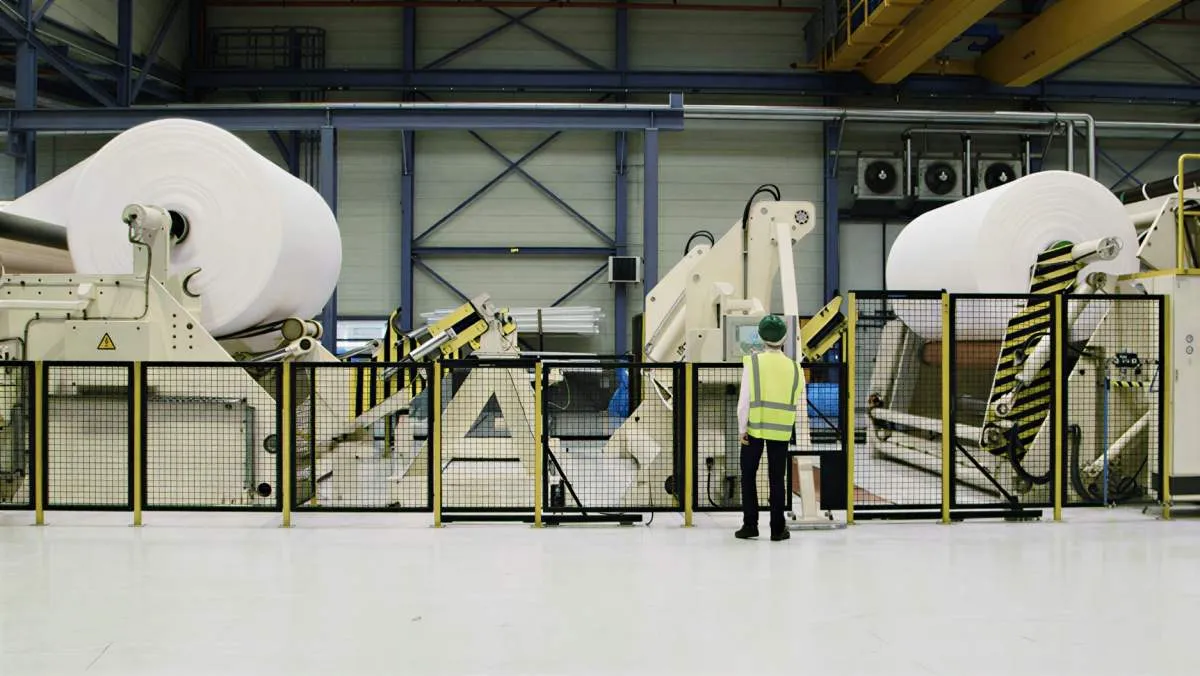 Berry Global has been building things since 1967. It started as Berry Plastics in Evansville, Indiana. Today, it ranks among the most dominant non woven fabric producers on the planet — 42 , 000 employees, 250+ manufacturing facilities, and $12.26 billion in revenue for fiscal year 2024.
The non woven side of the business runs through their Health, Hygiene & Specialties division. This is where the serious volume lives.
What does Berry make?
Their product line covers the full technical range:
- Spunbond (Endura™ series) — fiber diameters from 1.5 to 3.0 dtex, built for diaper topsheets, medical gown base fabric, and construction liners
- Meltblown (Endura™ series) — fibers down to 1–5 μm, electret-capable for filtration-grade use
- SMS / SMMS composites — layered structures built for surgical drapes, isolation gowns, and high-barrier adult incontinence products
- Airlaid — absorbent cores for feminine hygiene and industrial wipes
GSM range runs 8–120 gsm. Roll widths reach 3.2 m and beyond.
The Closed-Loop Angle
Berry’s biggest edge over competitors like Fitesa or Freudenberg isn’t product variety — it’s their Endura™ closed-loop recycling system. Berry takes post-industrial trim waste, reprocesses it, and feeds it back into spunbond and meltblown production. The result is a clear CO₂ reduction per kilogram compared to virgin PP material.
For buyers with sustainability targets, that’s a real advantage.
B2B Sourcing Realities
Berry is built for large-format, long-term supply agreements — not spot orders. MOQ benchmarks at their tier run 5–10 metric tons for spunbond hygiene grades. Medical SMS runs require a minimum of 10,000–20,000 meters. Lead times for North American customers range from 4–8 weeks on established specifications.
Certifications include ISO 9001, ISO 13485, ISO 14001, OEKO-TEX® Standard 100, and FDA 21 CFR compliance for medical and food-contact materials.
Berry runs three production regions — Americas, Europe, and Asia (including PGI Non-Woven China operations). So a multinational brand can source the same specifications from multiple continents at the same time. No need to compromise on quality across regions.
Best fit for: High-volume hygiene brands, medical PPE supply chains, and industrial buyers who need certified quality with genuine sustainability credentials built into the material itself.
#2 Freudenberg Performance Materials — Germany’s Technical Non Woven Fabric Leader
Weinheim, Germany. A quiet industrial city. It’s home to one of the most advanced non woven fabric manufacturers on earth.
Freudenberg Performance Materials has been building technical textiles since the 1800s. Today, it pulls in €1.42 billion in annual revenue. The company employs over 5,000 people and runs 36 factories across 15 countries.
Where Does Freudenberg Separate Itself?
This isn’t a commodity supplier. Their fine denier spunbond technology produces filaments at 2.5–3 dtex. That’s noticeably finer than the 3.3–6 dtex range most producers work with. Finer fibers create tighter pore structures. You get better filtration efficiency and stronger mechanical performance at the same weight.
Their process range covers spunbond, wetlaid, needle-punch, thermobonding, and laminated composites — all at once. Most regional non woven fabric production companies master just one.
Who Buys From Them?
Automotive OEMs. BMW. Volkswagen. Daimler. Their materials clear the VOC, fogging, and FMVSS 302 flammability requirements. Most competitors don’t even make it past that stage.
Best fit for : European industrial buyers, automotive Tier-1 suppliers, and technical filtration applications that need co-development support and long-term OEM-grade documentation.
#3 Ahlstrom — Finland’s Specialty Non Woven Fabric Manufacturer for Filtration & Medical
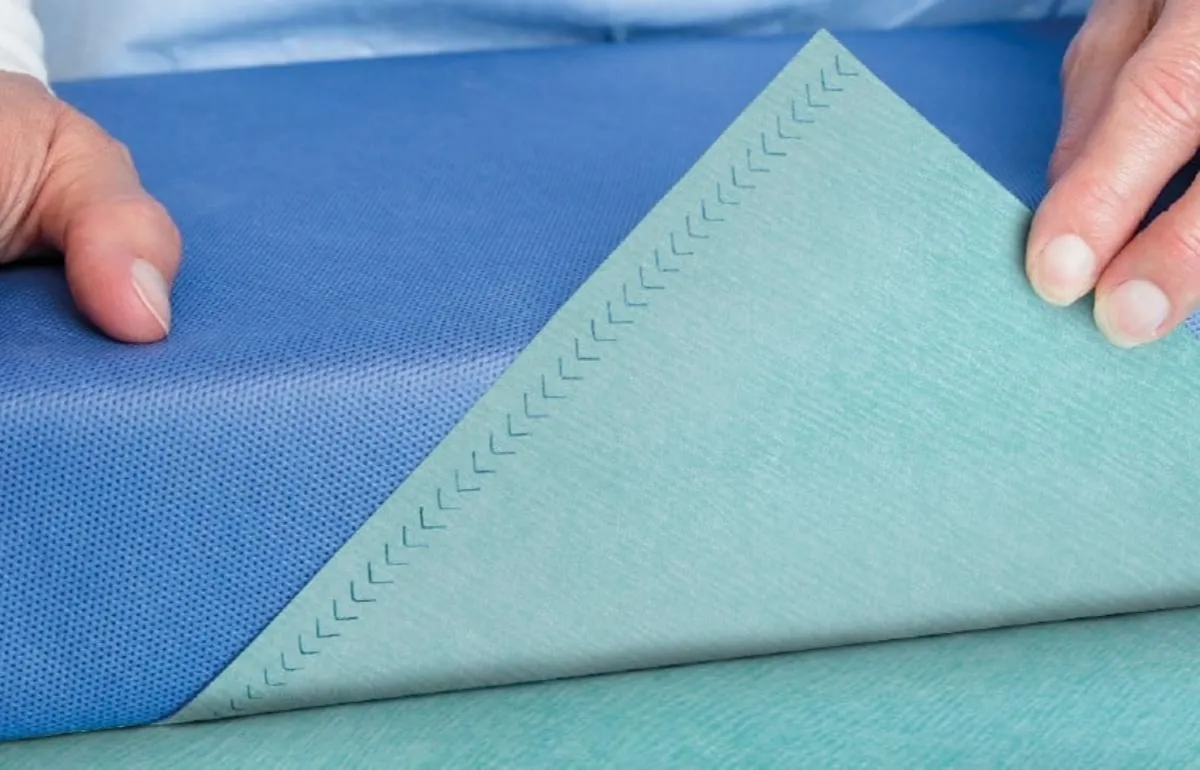 Ninety-five percent renewable fiber. That one number tells you exactly where Ahlstrom stands among global non woven fabric manufacturers.
Based in Espoo, Finland, Ahlstrom pulls in €3 billion in annual revenue. They run factories across Europe, North America, South America, and Asia. Their goal isn’t to cover every product category. They focus on two areas: filtration and medical/life sciences.
Filtration & Medical: Where Ahlstrom Earns Its Reputation
Their Disruptor® water filtration media covers drinking water, POU/POE cartridges, and food-grade process water pre-filtration. On the air side, they handle HVAC, automotive intake, and industrial dust control.
The medical line goes deep.
- PureArmor™ is a breathable, liquid-barrier non woven. It targets bloodborne pathogen protection and cleanroom apparel. It meets AAMI Level 3–4 barrier standards.
- The portfolio also includes mask filtration layers, surgical drape substrates, and lateral flow assay diagnostic membranes.
Supply Chain Advantage for Global Buyers
European and North American production keeps lead times at 2–4 weeks. That’s much faster than cross-continental sourcing. Multi-region capacity cuts single-point supply risk, too.
Certifications: ISO 13485, ISO 9001, ISO 14001.
Best fit for: Filtration OEMs, medical disposables manufacturers, and ESG-driven procurement teams. Especially those who need an auditable renewable fiber content built directly into the material specification.
#4 Kimberly-Clark — Global Hygiene Non Woven Fabric Manufacturer
Kimberly-Clark doesn’t lead this list by selling non woven fabric on the open market. It leads because it consumes more of its own output than almost any other company on earth.
Huggies. Kotex. Depend. Each of those products runs on non woven substrates that Kimberly-Clark engineers, manufactures, and quality-controls in-house. That’s the captive producer model. It creates a very different kind of supplier compared to Berry or Fitesa.
What do they make?
Their core non woven applications cover the full hygiene stack:
- Diaper topsheets : 12–18 gsm apertured spunbond PP or bicomponent PE/PP, fiber fineness at 1.3–2.2 dtex, rewet values held below 0.5g
- ADL layers : 20–40 gsm air-through bonded bicomponent webs, void volume above 90%
- Hydroknit™ wipes base : pulp + PP/PE hydroentangled, zero adhesives, wet strength built into the fiber bond itself
Their External Sales
This is the real question for B2B buyers. K-C sells to outside buyers in select situations — wipes base sheets, industrial substrates, and commodity SMS grades where captive lines carry surplus capacity. Minimum volumes start at several hundred metric tons per year on long-term call-off contracts. Pricing tracks PP and pulp benchmarks.
Best fit for : Hygiene brand manufacturers sourcing benchmark-grade topsheet or ADL substrates, and wipes producers looking for Hydroknit™-style base materials.
#5 Fitesa S.A. — Brazil-Based Global Spunmelt Non Woven Fabric Manufacturer
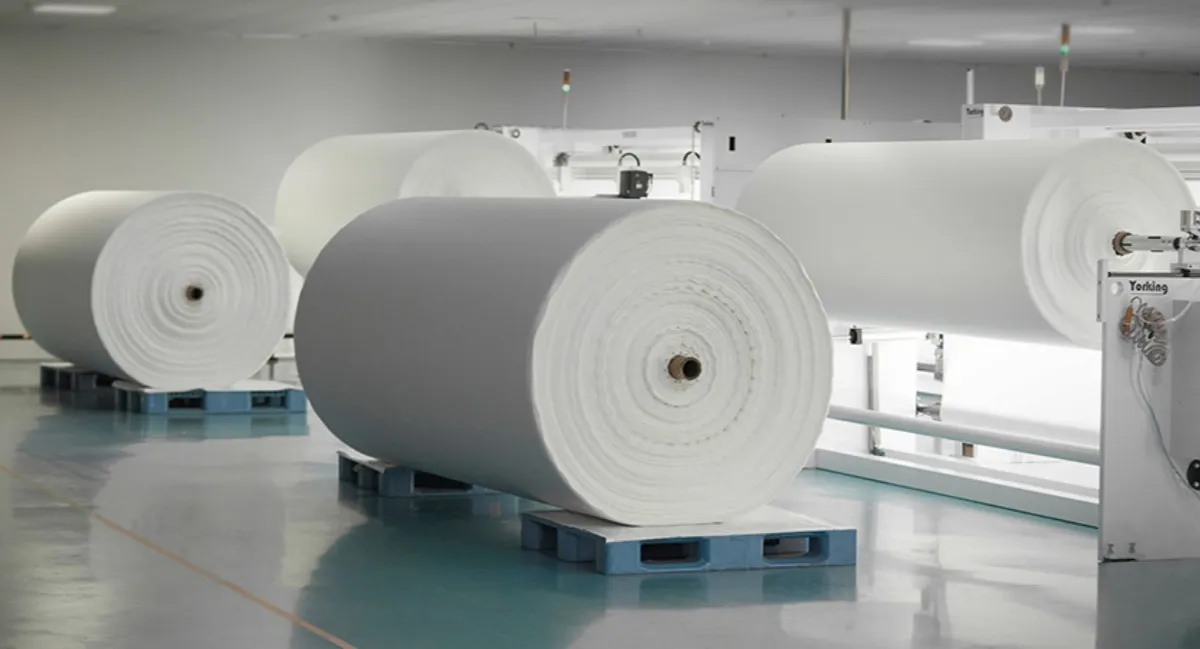 Gravataí, Rio Grande do Sul. Not the address most buyers expect from the world’s #2 merchant spunmelt non woven fabric manufacturer. Fitesa built a full global operation from this Brazilian industrial city. That’s 45 years of history, with 30+ years focused on hygiene and medical nonwovens.
Production Footprint That Impacts Your Lead Times
Fitesa runs plants across Brazil, the USA, Mexico, Germany, Italy, Sweden, and Asia. That’s not a brochure claim — it has direct effects on your landed cost.
- Americas buyers : Brazil/Mexico origin delivers 5–10% lower landed cost than EU-sourced spunmelt
- US/Canada converters : Domestic plants mean 2–5 day truck delivery , zero import duty
- EU medical buyers : Regional EU plants ship in 1–7 days , so EN 13795 compliance stays straightforward
What Fitesa Makes?
SMS, SMMS , and SSMMS structures cover medical gowns at 25–60 gsm. High-barrier surgical grades push hydrostatic head past 40–70 cm H₂O. Hygiene topsheets come in at 10–18 gsm. Fitesa also holds the world’s largest bicomponent spunmelt capacity — a direct advantage for premium diaper softness applications.
Best fit for : Latin American and African converters who need cost-competitive spunmelt. Also strong for global hygiene brands that want multi-region supply from one qualified spunbond non woven fabric supplier .
#6 Lydall / Unifrax — High-Performance Filtration Non Woven Fabric Specialist
Lydall started in 1869. That’s not a marketing line — it’s a signal. Over 150 years, this company narrowed its focus to one thing: specialty filtration materials that perform where standard non woven fabric fails.
In 2021, Unifrax acquired Lydall for $1.3 billion. The deal brought together Lydall’s filtration non woven expertise and Unifrax’s high-temperature fiber and thermal management capabilities. Today, the combined business runs under the Alkegen platform.
You get a portfolio that industrial buyers don’t often find under one roof:
- HVAC/HEPA filtration media (Arioso® series) — MERV 13–16 / H13-grade composites, pressure drop 70–130 Pa, particle capture ≥99.95% at MPPS
- Industrial bag filtration — needle-punch felts in Aramid, PPS, P84, and PTFE, rated to 260°C continuous, dust emissions controlled to ≤5–10 mg/Nm³
- Automotive thermal-acoustic non wovens — engine bay heat shields handling 600–800°C peaks, cabin NVH materials absorbing α = 0.6–0.9 at 1–4 kHz
Best fit for : HVAC equipment manufacturers, industrial dust collection system integrators, and automotive Tier-1 suppliers. If your team needs thermal management and filtration materials from one qualified industrial non woven fabric manufacturer, this is a strong option to put on your shortlist.
#8 TWE Group — Germany’s Carded & Airlaid Non Woven Fabric Manufacturer
Over 110 years. That’s how long TWE Group has been based in Emsdetten, Germany. It’s a family-owned operation. They never went public. They never chased headlines. They built a reputation as one of Europe’s most respected non-woven fabric production companies — steadily, without fanfare.
Founded in 1912, TWE employs 1,400+ people across 12 plants in Europe, North America, and Asia. Annual revenue sits around $450 million.
Where does TWE focus?
Two processes define their position: carded (needlepunch) and airlaid.
Carded nonwovens use PET, PP, or viscose fibers at 15–250 gsm. The fibers go through a mechanical bonding process. You get a finished material suited for automotive interiors, mattress layers, and wipes substrates. Airlaid uses fluff pulp combined with SAP. It reaches 80–500 gsm, with absorption rates of 10–20 g/g. That’s the hygiene absorbent core business.
Their estimated European market share:
– 8–12% in carded/needlepunch
– 5–10% in airlaid
Best fit for : European automotive Tier-1 suppliers, hygiene absorbent core converters, and household wipes manufacturers. If your business needs a certified industrial non woven fabric manufacturer with real process depth, TWE is a strong candidate to evaluate.
#7 DuPont — Iconic Non Woven Fabric Brand Behind Tyvek & Sontara
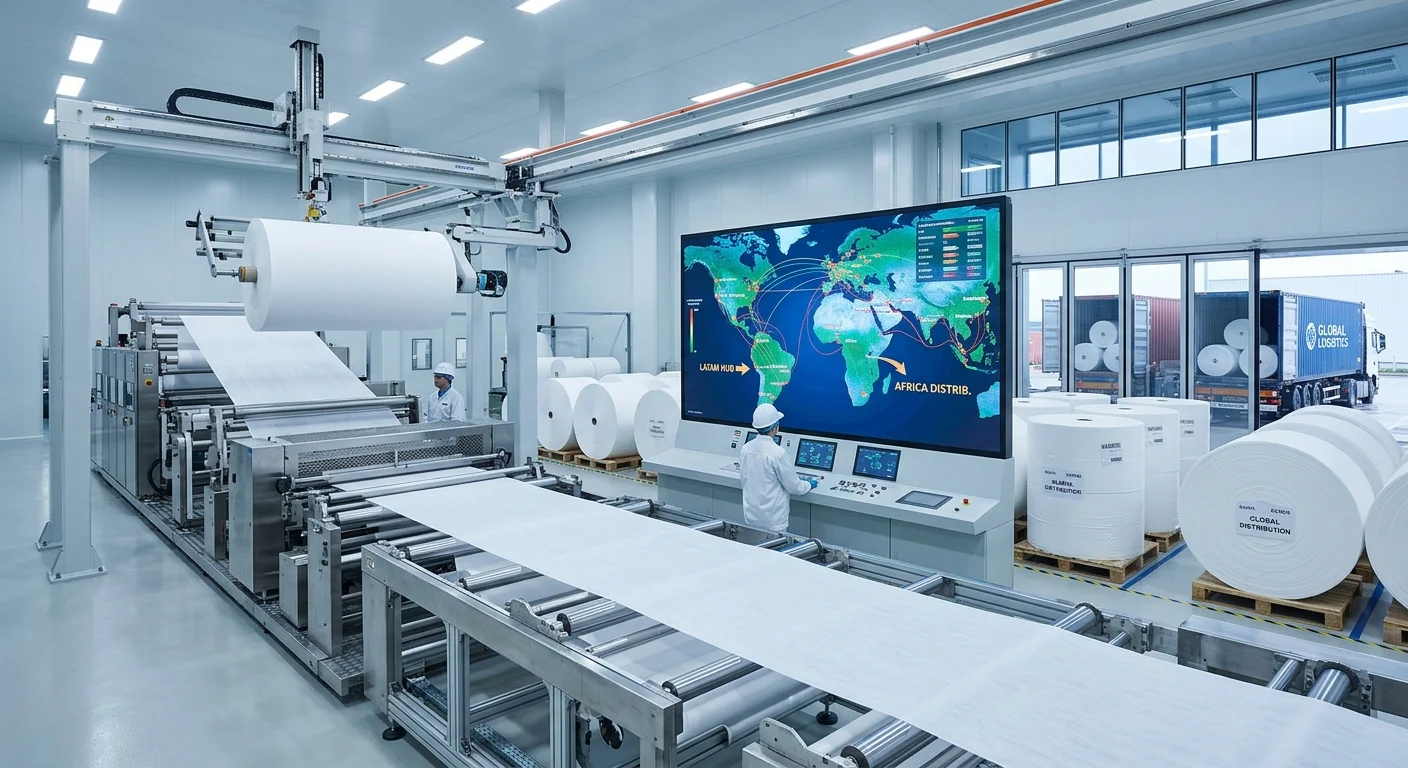 Two products. That’s what defines DuPont’s non-woven legacy.
Tyvek® and Sontara® — neither one belongs in the commodity fabric conversation. DuPont didn’t build them to compete on price. They built them to do things no other material could do.
Tyvek®: Flashspun HDPE, Not Your Standard Non-Woven
Tyvek isn’t spunbond PP. It’s not SMS. The process is flashspun HDPE — 100% high-density polyethylene filaments. Fiber diameters range from 0.5 to 10 μm. Heat bonds them into a sheet with a density of 0.38–0.63 g/cm³. That structure produces something unusual: liquid-resistant but breathable at the same time. Water column resistance exceeds 1,000 mm. Moisture vapor transmission runs 1,000–3,000 g/m²·24h, depending on grade.
No other industrial non woven fabric manufacturer has pulled this off at scale. Flashspun HDPE is DuPont’s territory — and so far, no one has taken it.
Where it works: – Protective apparel (Tyvek 400/500/600): 41–45 gsm, EN 14126 certified. Particle filtration efficiency hits 98–99% for 0.3–3 μm particles. That’s well above standard 30–40 gsm PP SMS, which tops out at 90–95%. – Medical sterile packaging (Tyvek 1073B/1059B): bacterial barrier exceeds 10⁶ CFU. Sterility holds for 5–10+ years. Compatible with EO, steam, and hydrogen peroxide sterilization. – Building WRAP (Tyvek Housewrap): water resistance above 200–300 cm H₂O, breathability at 10–50 US perms. Built for 30–50-year building lifecycles.
Sontara®: Spunlace for High-Demand Surfaces
Sontara works differently. Hydroentangled fibers — 55% cellulose / 45% polyester at 40–75 gsm — bonded by high-pressure water jets. Zero adhesives. Zero chemical binders. That’s a big deal in cleanrooms, surgical suites, and aerospace MRO environments. Particle contamination is the enemy in those spaces, and Sontara gives you nothing to worry about on that front.
Absorption capacity runs 5–8× the fabric’s own weight. Tensile strength reaches 100–300 N/5 cm. Boeing and Airbus both approve it as a standard wipe material — not an alternative option. A baseline specification.
Pricing & Buyer Fit
| Product | B2B Price Range |
|---|---|
| Medical Tyvek (1073B) | ~$2–4/m² |
| Building wrap (bulk project) | ~$0.50–0.80/m² |
| Tyvek 400 coveralls (10,000+ units) | ~$2–4/unit |
| Sontara industrial wipe rolls | ~$3–8/kg |
DuPont goes after high-specification buyers: pharmaceutical manufacturers, medical device OEMs, passive-house construction projects, aerospace MRO. Your application demands commodity-grade coverage? Standard PP spunbond is cheaper and faster — go that route. But your spec sheet requires documented sterile barrier performance, aerospace OEM approval, or a 30-year building envelope? There’s no real substitute on the market.
Best fit for: Medical device packaging lines, PPE brands serving pharma and biotech, premium construction projects in North America and Europe, and aerospace/cleanroom wipe procurement.
#9 Zhejiang Kingsafe Group — China’s Leading Industrial Non Woven Fabric Manufacturer
Kingsafe has been making non woven fabrics in Zhejiang for 30+ years. The group started in 1993. Today, it runs production bases in both Huzhou, Zhejiang, and Foshan, Guangdong. You get 40+ international production lines — spunlace, spunbond, meltblown, spunmelt, and hot-air-through processes, all under one roof.
Annual output hits 22,000 metric tons. The product range covers a lot of ground:
- SSS, SSMMS, and SSSMS spunmelt structures
- Cotton spunlaced fabrics
- Flushable composites
- PP/pulp blends
These materials go into wet wipes, baby diapers, facial masks, and protective clothing .
Who Should Source Here?
Kingsafe works well for cost-focused buyers who need multiple SKUs. Wet wipes OEMs, hygiene brand converters, and medical protective gear distributors can all consolidate orders across different process types in one place. That saves time and cuts supplier complexity.
For medical markets with strict regulations, check tensile strength, sterilization compatibility, and cleanliness specs before placing large orders.
Best fit for : Wipes and hygiene OEMs, baby care brands, and protective apparel distributors. So if you need flexible multi-process sourcing at competitive Chinese manufacturing costs, Kingsafe is worth a close look.
#10 Dalian Ruiguang Nonwoven Group — China’s Certified Non Woven Fabric Producer
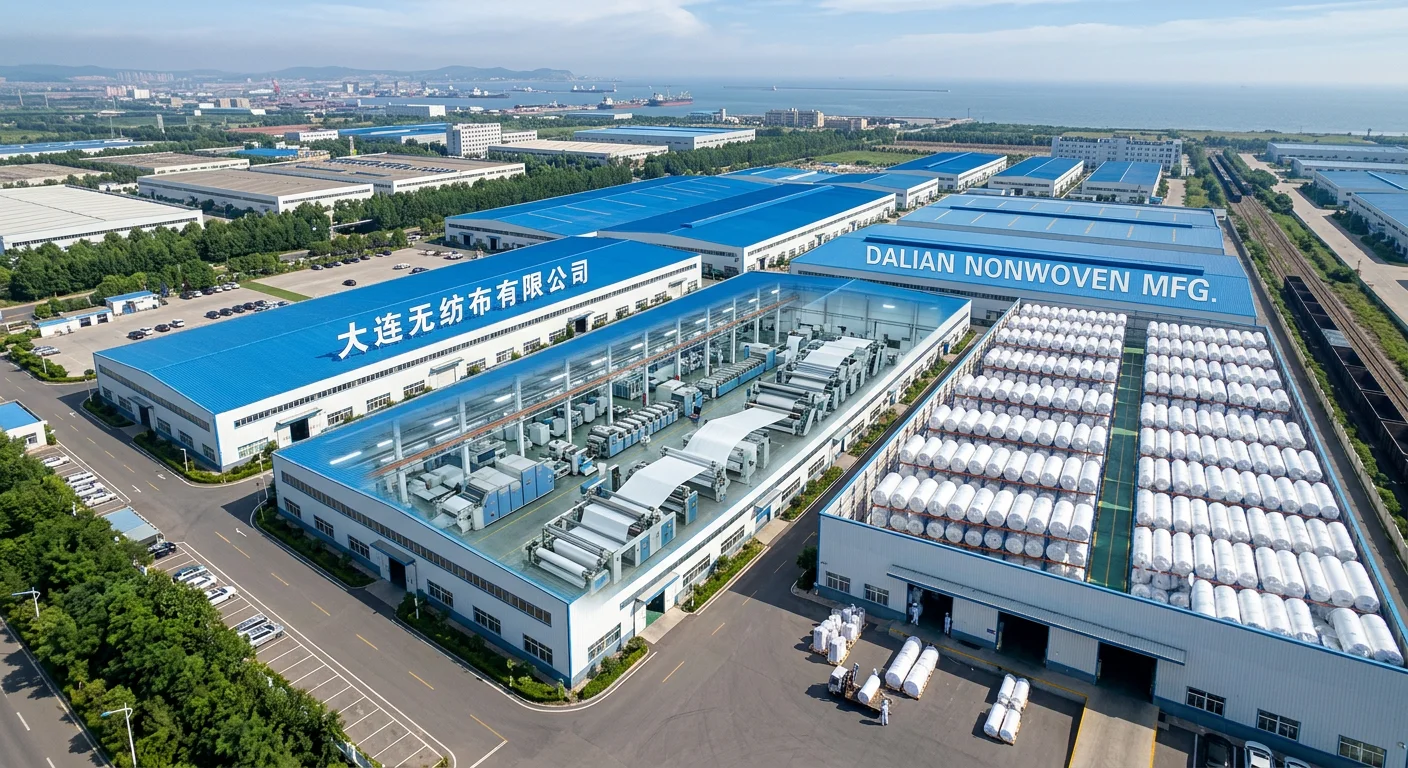 Dalian Ruiguang started in 1991. Over 30 years, they’ve built real technical depth — something most Chinese non-woven fabric production companies skip in favor of chasing higher volume.
The numbers speak for themselves. 100,000+ metric tons of annual output. 16–18 international-grade production lines. 600+ employees across a 200,000 m² facility. Fixed assets approaching ¥1.45 billion. But the real story is what those lines produce.
Where Ruiguang Earns Its Reputation?
Ruiguang holds 58–71 proprietary patents. They focus on three areas most commodity producers pass over:
- Flushable spunlace fabrics — built to meet EDANA/INDA Flushability Guidelines for the US and EU markets. Compliance standards in these regions are strict, and Ruiguang meets them.
- Wood pulp composite spunlace (SPC & wet-laid) — 15,000 t/year SPC capacity. These materials target industrial wipers, medical substrates, and food-contact cleaning products that need low lint and high absorption.
- Meltblown / SMS composites — two dedicated meltblown lines. They serve medical PPE and air filtration applications.
Ruiguang also runs a color masterbatch subsidiary. It handles in-line pigmentation for spunbond and meltblown lines. This cuts downstream dyeing costs and keeps color output consistent across production runs.
Certifications That Matter for B2B Buyers
European and North American procurement teams will find Ruiguang holds ISO 9001, ISO 14001, FSC CoC, and PEFC CoC. The FSC and PEFC certifications cover the chain-of-custody for wood pulp inputs. So your wipes or kitchen towel products can carry “FSC MIX” claims on retail packaging — no extra steps needed on your end.
Best fit for : Wet wipes OEMs, industrial wiper brands, and hygiene converters sourcing flushable non-woven fabric or certified wood-pulp composite substrates for regulated Western markets.
Non Woven Fabric Manufacturers in China vs USA vs Europe: How Do They Compare?
Three regions. Three distinct value propositions. Pick the right one, and you can cut months off your supplier audits.
Here’s the blunt version:
| Dimension | China | USA | Europe |
|---|---|---|---|
| Typical FOB Price (PP Spunbond) | $1.5–2.3/kg | $2.8–4.0/kg | $3.2–4.5/kg |
| MOQ | 300 kg–5 MT | 5–10 MT | 3–5 MT |
| Lead Time | 7–25 days | 2–8 weeks | 2–12 weeks |
| Batch Consistency | Variable (±3–5 gsm mid-tier) | High (±2 gsm) | High to stringent |
China wins on price and speed. Standard PP spunbond, agricultural cover fabric, disposable hygiene substrates — Chinese producers deliver 20–40% lower landed costs than European equivalents. For high-volume commodity orders, the cost gap is hard to ignore.
USA and Europe dominate the high-specification tier. Think medical sterile packaging, automotive IATF 16949-certified materials, and HVAC HEPA filtration media. These products need documented validation history, FDA/EMA regulatory experience, and batch traceability. Most Chinese mid-tier factories aren’t there yet.
Geopolitics adds another layer. US tariffs on Chinese nonwovens (HS 560392) reached 10% in early 2025. The price gap narrowed — but it didn’t close.
The practical sourcing approach comes down to two tiers:
- Use Chinese suppliers for commodity volume and standard materials
- Use European or US suppliers for regulated or specification-critical materials
One strategy. Two tiers. That’s it.
How to Choose the Right Non Woven Fabric Manufacturer for Your Business?
The wrong supplier doesn’t just cost you money. It costs you time, customers, and credibility.
Before you send a single RFQ, match your application to the right supplier profile:
- Medical/hygiene : ISO 13485, ISO 9001, consistent GSM control, liquid barrier performance
- Industrial filtration : stable fiber diameter, custom meltblown structures, documented pressure drop, and temperature ratings
- Agriculture : UV resistance, tear strength, multi-season durability
- Automotive : IATF 16949 certification, low VOC, flame retardancy
Then score every candidate across seven key areas: production capacity, certifications, customization range, lead times, MOQ, payment terms, and after-sales response.
Three traps catch most first-time buyers.
First, production samples that look great but don’t match bulk shipments. Second, certifications that are expired or cannot be verified. Third, pricing that hides tooling fees, inland freight, and export documentation costs.
Here’s how to avoid all three:
- Request production-run samples, not just pre-production ones
- Check certificate numbers with the issuing body yourself
- Ask for itemized EXW or FOB quotes so every cost is visible
Start small. Run an audit early. Build a backup supplier before you actually need one.
Frequently Asked Questions About Non Woven Fabric Manufacturers
Buyers ask the same questions. Here are straight answers.
Are Chinese non woven fabric manufacturers reliable?
The honest answer: it depends on which factory you’re talking to. Large and mid-sized Chinese exporters supplying hygiene brands and medical PPE manufacturers tend to be consistent. Smaller operations with no certification infrastructure are where problems show up.
Your qualifying checklist should cover: – ISO 9001 – ISO 13485 for medical grades – Third-party test reports from SGS or TÜV
Also ask for tensile strength data (MD/CD), gsm uniformity (CV% below 8–10%), and filtration efficiency numbers (BFE/PFE). Those aren’t optional — they’re your baseline.
What MOQ should I expect, and what drives the non-woven fabric price per meter?
Standard PP spunbond runs 1–3 metric tons per color per spec. Medical SMS grades require 2–5 tons. Meltblown starts around 1 ton minimum.
Price per meter moves on four variables:
– GSM weight
– Raw material type
– Order volume
– Finishing treatments like hydrophilic coating or embossing
FOB benchmarks from China: – General PP spunbond: $0.25–0.90/kg – Medical SMS: $1.50–2.50/kg – High-efficiency meltblown (BFE above 95%): $3–8/kg, subject to market conditions
Which non-woven fabric types work for masks?
Standard three-layer disposable masks use a specific layered structure: – Outer layer: 25 gsm spunbond PP – Middle layer: 25 gsm meltblown PP – Skin-facing layer: 20–25 gsm hydrophilic spunbond
Sourcing meltblown from a meltblown non-woven fabric producer? Confirm the electret treatment status first. Then ask for charge decay data at 24 hours and 7 days post-production. That’s where filtration performance lives — don’t skip it.
How long does sampling take?
Here’s a realistic breakdown:
– Sample production: 3–7 days
– Small-run confirmation: 7–15 days
– Full production: 15–30 days
Build those numbers into your timeline before committing to a launch date.
Conclusion
The global non-woven fabric industry is massive. Finding the right manufacturing partner doesn’t have to be complicated.
Need polypropylene spunbond rolls for hygiene applications? Looking for SMS non-woven fabric for medical-grade PPE? Sourcing geotextile solutions for large-scale civil engineering projects? The manufacturers on this list cover all of it — and they represent the best the industry has to offer in 2025. From Berry Global’s massive production scale to Zhejiang Kingsafe’s cost-competitive capabilities, there’s a solid supplier match for every specification, volume, and budget.
So, what’s your next move?
- Shortlist two or three non woven fabric manufacturers that fit your product requirements and target market
- Request samples from each one
- Audit their certifications before signing any long-term supply agreement
The best supply chains aren’t built on luck. They’re built on informed decisions. You’ve just made one.