

Your hard hat stands between a normal workday and a life-changing injury. So, a $140 helmet from a lesser-known brand claiming to beat industry giants? That deserves a hard look.
Studson has built real buzz among construction crews and electricians. But bold marketing won’t protect you on a job site. Verified ANSI Z89.1 certification and honest performance data will.
You deserve a straight answer before spending your money. Does the Studson hard hat deliver on its promises? Or is it just premium branding on an average helmet?
We put it through tough testing. We compared it against the competition and dug into every detail that matters — safety ratings, comfort, value, and real user feedback. You’ll have everything you need to make a confident decision.
Is the Studson SHK-1 Safer Than Regular Hard Hats?
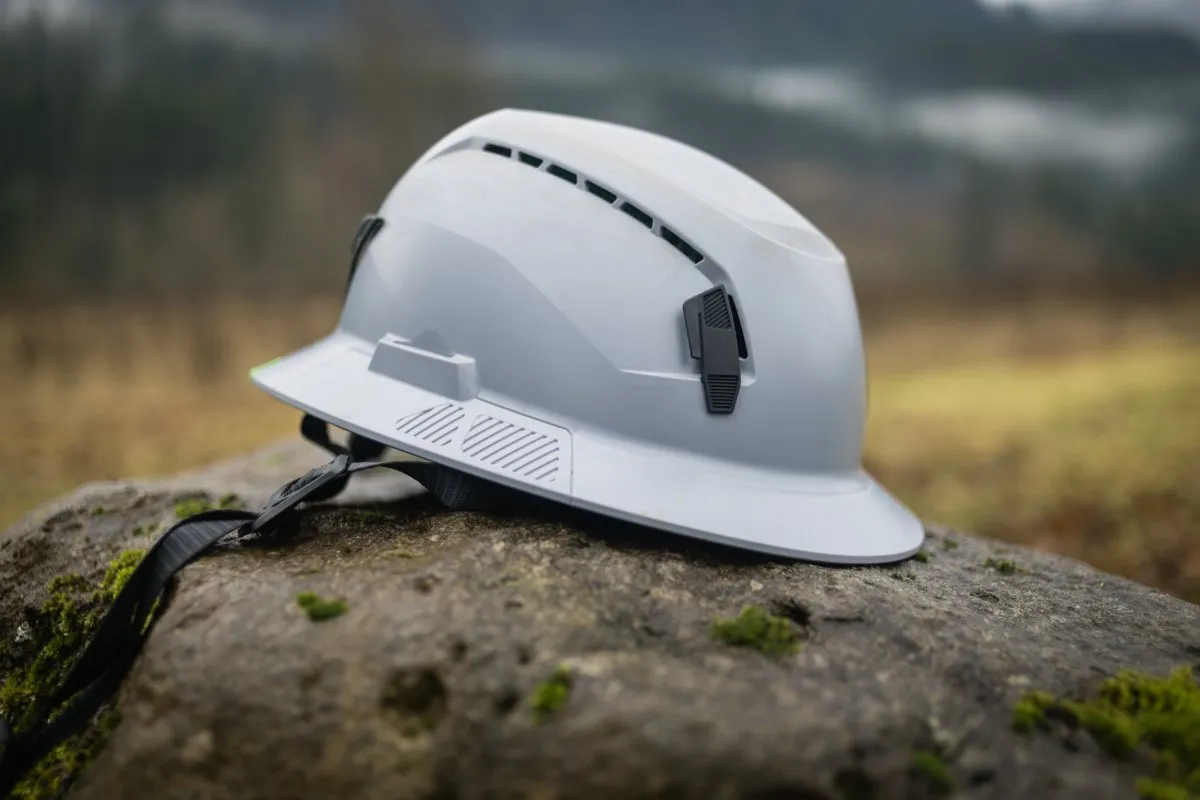 Most hard hats on job sites share one design goal: stop things from hitting the top of your head. That’s it. That’s the whole idea.
The SHK-1 starts from a different question: what happens to your brain during an impact?
Type II vs. Type I: The Protection Gap Nobody Talks About
Standard hard hats carry Type I certification. That means they’re tested and rated for top-down strikes. Falls, flying debris, accidental contact with overhead structures — covered. But a side impact from a swinging beam? A rotational force from an angled blow? Type I protection wasn’t built for those situations.
The SHK-1 carries Type II certification. That’s a completely different standard. It covers:
- Top impacts
- Front, side, and rear strikes
- Rotational and angled forces
That’s 360° of certified protection. Not a marketing claim — a verified ANSI/ISEA Z89.1 compliance requirement.
How Koroyd® Changes the Physics of Impact?
Most helmets deflect force. The shell is rigid. The goal is to push energy away from your skull. It works, to a point.
Koroyd® works differently. The welded tube matrix crumples on contact. It absorbs energy at the moment of impact instead of pushing it elsewhere. Direct blows, angled hits, side strikes — the tubes collapse, the energy spreads out, and less of it reaches your head.
The SHK-1 pairs Koroyd panels with an ABS outer shell and an EPS liner. You get a layered energy management system, not a single-layer deflection approach. Each layer plays a role in reducing what your head absorbs.
One honest note: no published G-force data or drop-height comparisons exist yet that pit the SHK-1 head-to-head against standard helmets. The safety advantage is real — Type II certification and Koroyd mechanics confirm that — but the exact performance gap over a quality Type I helmet has not been measured yet.
The Bottom Line on Safety
Here’s the practical reality:
| Protection Feature | SHK-1 | Standard Hard Hat |
|---|---|---|
| Impact Coverage | 360° (Type II) | Top-only (Type I) |
| Absorption Method | Koroyd crumple tubes | Rigid shell deflection |
| Side/Lateral Protection | ✅ Certified | ❌ Not rated |
| Rotational Force Reduction | ✅ Yes | ⚠️ Limited |
| Electrical Rating (non-vented) | Class E — 20,000V | Varies by model |
Electrical workers get an extra layer of protection with the Class E non-vented version. It’s rated to 20,000 volts and sealed against electrical hazards. The vented Class C version gives up that rating in exchange for airflow. Pick the version that fits your work environment.
The SHK-1 isn’t a small step up from a standard hard hat . It’s built to a different protection standard than most helmets on job sites today.
Comfort, Fit & Daily Use Experience of Studson Hard Hats
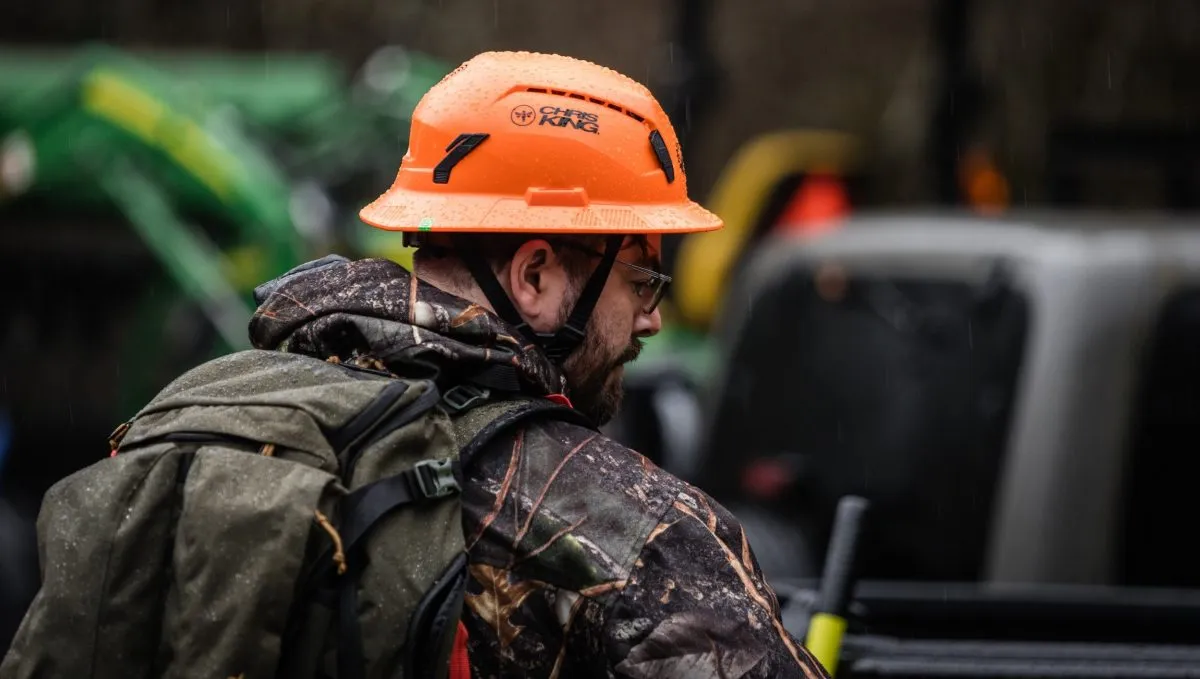 Eight hours into a construction shift, the helmet you barely notice is the one doing its job right.
That sounds simple. But most hard hats fail this test by noon. They sit too heavily. They shift with movement. They trap heat until your focus starts breaking down — and on a job site, lost focus is a real hazard.
The SHK-1 treats comfort the same way it treats safety: with engineering, not guesswork.
Weight, Balance, and the “Forget It’s There” Factor
At 525 grams, the vented SHK-1 sits on the lighter end of full-brim helmets. But raw weight isn’t the whole story. Balance matters more than mass. A helmet sitting at 400g but badly balanced will wear out your neck faster than a well-distributed one at 550g.
The Koroyd® matrix plays a role here, too. Traditional EPS foam is dense and heavy. Koroyd’s welded tube structure puts out comparable energy absorption at a lower weight. That means less strain on your neck and shoulders across a full workday.
The 360° Perfect Fit System: How It Works
The ratchet adjustment system on the SHK-1 gives you 20mm of vertical height adjustment — more range than most competitors offer. That’s the detail that separates a helmet that fits from one that just sits on your head.
The Fidlock® magnetic buckle is worth pointing out on its own. You can click it shut or release it with one hand, wearing gloves. That’s not a small convenience. Suiting up in cold weather or up on a ladder, that one-handed release makes a real difference.
The suspension system cradles your head instead of pressing the shell straight against it. Air moves through the gap. Heat escapes. Pressure spreads out across contact points rather than building up in one spot.
What Long Days Feel Like?
Here’s a straightforward benchmark worth applying to any hard hat:
- After 2 hours, are you aware of the helmet — or have you forgotten it?
- Do you feel stable on turns, stairs, and sudden stops?
- Is there an urge to tear it off the moment you reach your vehicle?
Workers wearing the SHK-1 report clearing that two-hour mark without much awareness of the helmet at all. The fit holds. The weight doesn’t stack up into neck tension the way heavier helmets do.
One real limitation : Workers with very narrow or asymmetrical head shapes report needing more break-in time to get the fit dialed in. The adjustment range is generous, but the suspension’s initial tension runs firm straight out of the box.
Comfort is a real deciding factor in any hard hat purchase — and after an eight-hour shift, it should be. The SHK-1 delivers a level of all-day wearability that most lightweight hard hats for workers in this category simply don’t reach.
Is the Studson Hard Hat worth $140? (Value for Money Breakdown)
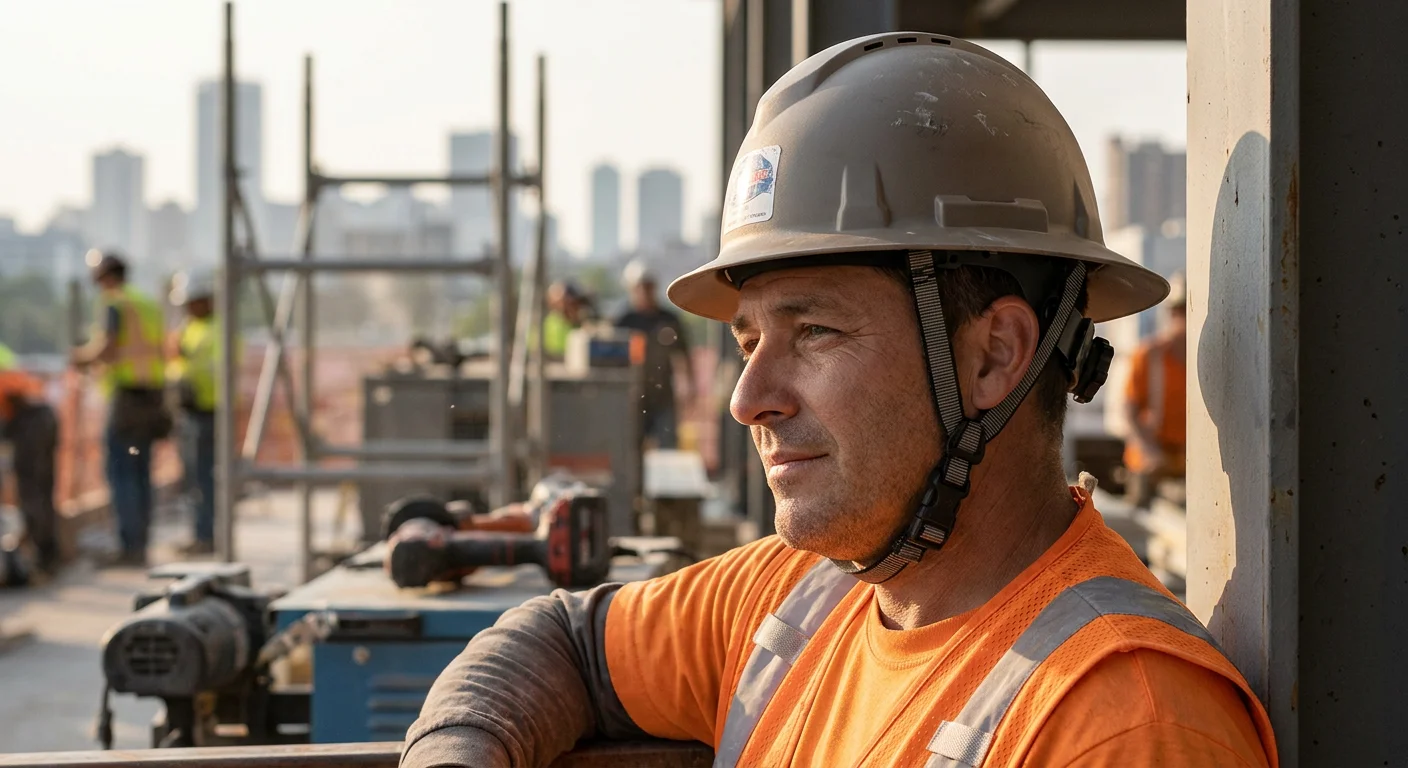 Let’s cut straight to the number that matters.
$140 is real money. It’s not a casual purchase for most workers. Standing in a workwear aisle, you see a $35 MSA V-Gard next to a $140 Studson. The price gap looks rough at first.
But these aren’t the same product. One is a Type I helmet. The other is a Type II helmet — built with Koroyd® impact absorption, NFC emergency tech, a magnetic glove-friendly buckle, and a 3-year warranty. That’s a different category. Comparing them on price is like putting a basic work boot next to one with a composite toe, metatarsal guard, and electrical hazard protection. Of course, the better-built one costs more.
What You Get Per Dollar?
Break it down across a 3–5 year field lifespan:
- At 3 years: $0.13 per workday (based on 250 working days/year)
- At 5 years: closer to $0.08 per workday
That’s less than your morning coffee — for a helmet that absorbs lateral impacts, protects against 20,000 volts in the Class E configuration, and sends your medical data to first responders via NFC the moment something goes wrong.
Where the Value Holds — and Where It Doesn’t
Worth every dollar if:
– You’re in electrical work and need a certified Class E hard hat with serious voltage protection
– Your job site puts you at risk of lateral strikes, not just top-down hazards — Type II coverage fills a protection gap most workers don’t know exists until an incident happens
– You wear your helmet 8+ hours a day. All-day comfort has a direct impact on your focus and output
– You see safety gear as a long-term investment, not a one-season throwaway
Less compelling if:
– Your work environment is low-risk, short-duration, and Type I coverage fully handles your exposure
– Budget is tight, and a quality ANSI Z89.1 certified hard hat at $40–$60 checks every box your site requires
The Bottom Line on Price
The Studson SHK-1 doesn’t earn its $140 price tag through branding. It earns it through a different protection build — Type II certification, Koroyd energy absorption, and Class E electrical rating. Add to that full-shift wearability that doesn’t break down by hour three.
Do those features match your work environment? The price makes sense. Don’t they? You’d be paying for specs that never see use.
Studson SHK-1 vs Other Hard Hats (MSA, Klein, Pyramex)
Here’s what the hard hat industry won’t tell you: most helmets on job sites today are built on a 1997 protection standard. MSA, Klein, Pyramex — these are trusted names. Proven products. But most standard models they sell are Type I certified. That means they’re tested for one direction of impact: straight down.
The SHK-1 is certified Type II. That one difference sets it apart from the rest.
Head-to-Head Feature Comparison
| Feature | Studson SHK-1 | MSA V-Gard | Klein 60406 | Pyramex Ridgeline |
|---|---|---|---|---|
| Protection Type | Type II (360°) | Type I (top-only) | Type I | Type I |
| Energy Core | Koroyd crumple | Foam/polycarbonate | Polycarbonate shell | HDPE shell |
| Electrical Rating | Class E — 20,000V | Class E (select) | Class E (select) | Class E (select) |
| Chinstrap | Fidlock magnetic 4-pt | Ratchet/web | Ratchet 4-pt | Ratchet 4-pt |
| Medical Tech | Twiceme NFC | None | None | None |
| Virginia Tech STAR Score | 69.27 | Lower (Type I) | Lower (Type I) | Lower (Type I) |
| Dual Cert (ANSI + CSA) | Yes — both Type II | Type I typical | Type I | Type I |
Where the Gap Really Matters?
Virginia Tech’s independent STAR rating program tested oblique impacts. These are angled hits at 5.5 m/s and 6.8 m/s, across 12 drops per helmet. The SHK-1 scored 69.27, placing it in the 4–5 star range. Type I helmets — no matter the brand — score lower on this test. They simply weren’t built to handle rotational or side-impact forces.
That score gap has real consequences. It maps to concussion and skull fracture risk in actual falls.
One practical note: the SHK-1 works with MSA and Milwaukee accessories — visors, lamps, face shields. You’re not tied to one brand’s ecosystem.
The competitors make solid helmets. The SHK-1 is a different class of helmet altogether.
What Real Users Say About Studson Hard Hats(Pros & Complaints)
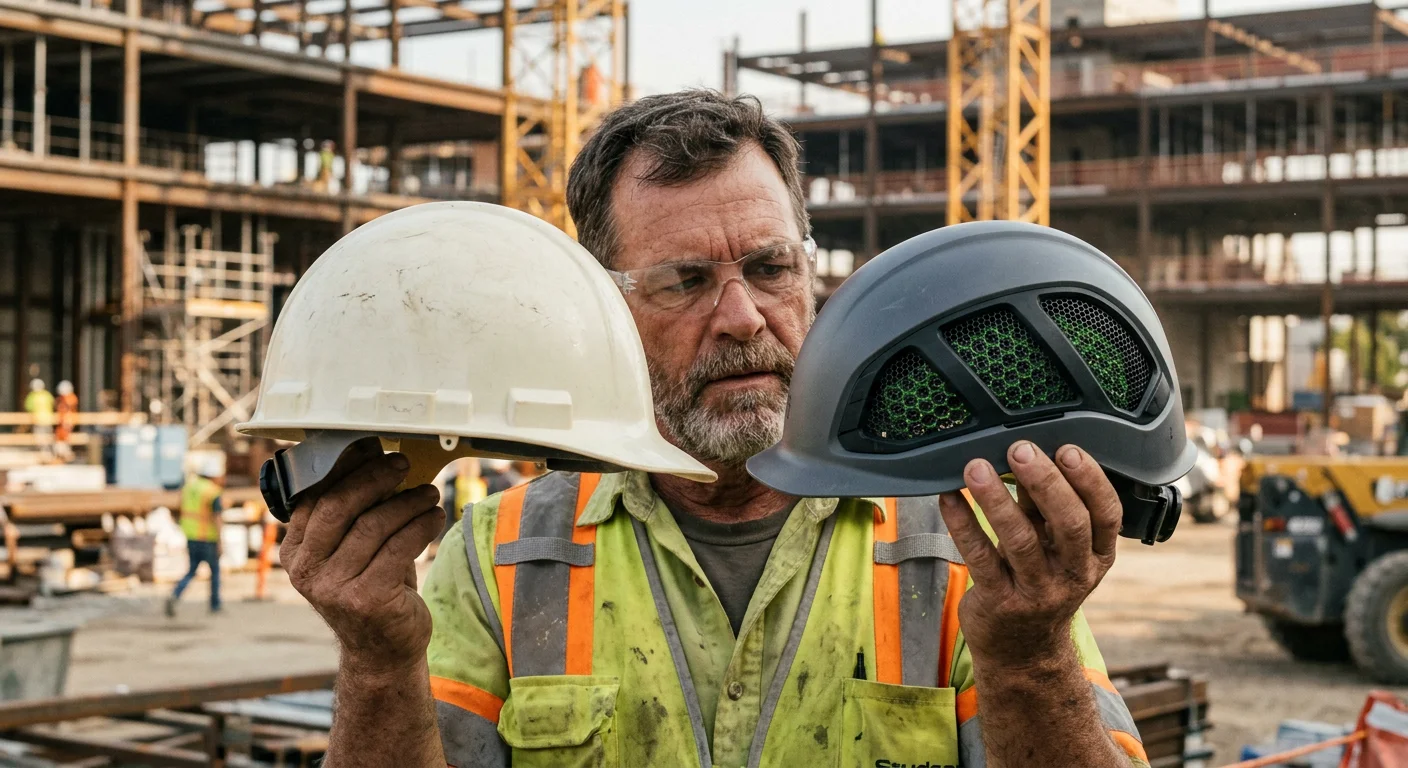 Marketing copy is easy to write. Real-world feedback is harder to fake.
Verified purchase reviews, job site forums, and trades communities all show the same pattern for the SHK-1. The feedback is mixed — positive in some areas, critical in others. These are the reports from workers who wear this helmet every day.
What Workers Love About the Studson Hard Hats?
The praise comes down to three things:
- All-day comfort that holds up. The most repeated comment has nothing to do with safety ratings or Koroyd technology. Workers say they forget they’re wearing it. Electricians on 10-hour shifts and construction foremen on active sites say the same: no neck fatigue, no urge to rip it off at lunch.
- The Fidlock® buckle does real work. Workers in cold climates call this out most. One-handed magnetic release while gloved up on a ladder is not a gimmick. You won’t notice how useful it is until a standard buckle makes you fumble at the worst possible moment.
- The NFC chip gives peace of mind. It’s a small detail until it matters. First responders can pull your medical information fast — no digging through your gear required.
The Complaints Worth Taking Seriously
No helmet is perfect. The SHK-1 hard hat has real friction points that show up in reviews across the board:
- Break-in period on fit. Workers with narrower or uneven head shapes report that the suspension feels stiff right out of the box. The 20mm adjustment range helps. But dialing it in takes time — sometimes a full week of daily wear.
- $140 is a tough sell for short-term or low-risk jobs. Several reviewers accept the quality but question the value. For environments where Type I coverage does the job, the price is hard to justify.
- Limited retail availability. Unlike MSA or Pyramex, you can’t grab a Studson off a shelf at your local supply house. That’s a real problem when you need a replacement fast.
The positive feedback here is earned, not manufactured. The complaints are specific — not the vague frustration of a buyer who expected something different. That balance is what makes this feedback worth trusting.
FAQ: Common Questions About Studson Hard Hat
Here are the answers workers search for before buying.
Is the Studson SHK-1 OSHA-approved?
Yes. It’s certified to ANSI/ISEA Z89.1 Type II — the standard OSHA references for hard hat compliance. The non-vented version also carries a Class E electrical rating at 20,000 volts. The vented model is Class C (conductive). That means it does not qualify for electrical hazard environments.
What head sizes does it fit?
The SHK-1 covers 53–63 cm in circumference, split across two sizes:
- M/L : 53–59 cm
- L/XL : 58–63 cm
The Perfect Fit dial system fine-tunes the fit within those ranges. Your head falls at the overlap point (58–59 cm)? Try both sizes before deciding.
How do you put it on?
Dial the rear adjustment down to its lowest setting first. Position the helmet so your ears align with the side straps. Then pinch and tighten the dial until the fit is firm but not compressing. Don’t skip step one — starting at max tension is the most common fitting mistake.
How long does it last?
Studson backs it with a 3-year warranty. Realistic field life runs 3–5 years under normal conditions. Check it after any hard impact. Koroyd tubes that have been crushed won’t absorb the next hit the same way. Replace it if you see damage.
What does it weigh?
525 grams (1.1 lbs) for the vented version. That’s a solid number for a full-brim Type II helmet. You get multi-layer impact absorption built in at that weight.
Conclusion
Tested the Studson SHK-1 from start to finish. The result? This isn’t just another ANSI Z89.1 certified hard hat in a fancy box — it’s a real upgrade for workers putting in long, brutal hours on site.
Yes, $140 is real money. But look at what you get: solid impact protection, a suspension system you won’t dread wearing every morning, and a Class E electrical rating that holds up where it counts.
Construction worker, electrician, or oil and gas pro? Been wearing a helmet that just gets the job done? The Studson SHK-1 is worth a hard look.
Here’s your next move: Check the current price on Amazon. Compare it to the MSA V-Gard one more time. Then ask yourself one honest question — what’s your head worth?
The cheapest hard hat you’ll ever regret is the one that failed when it counted.