

Picking the wrong work glove doesn’t just cost you money — it can cost you a finger. Yet most buyers still choose between Showa gloves and leather gloves based on habit or a quick glance at the price tag.
Showa’s synthetic nitrile and cut-resistant designs have changed an industry that leather dominated for decades. That doesn’t make them the right choice for you, though. The right glove depends on where your hands are going and what they need to survive.
So before you add anything to your cart, here’s how these two glove types compare — across grip, durability, protection, flexibility, and real-world use cases. You’ll walk away knowing which one fits your work.
What Are Showa Gloves? (Why Outdoor Users Love Them)
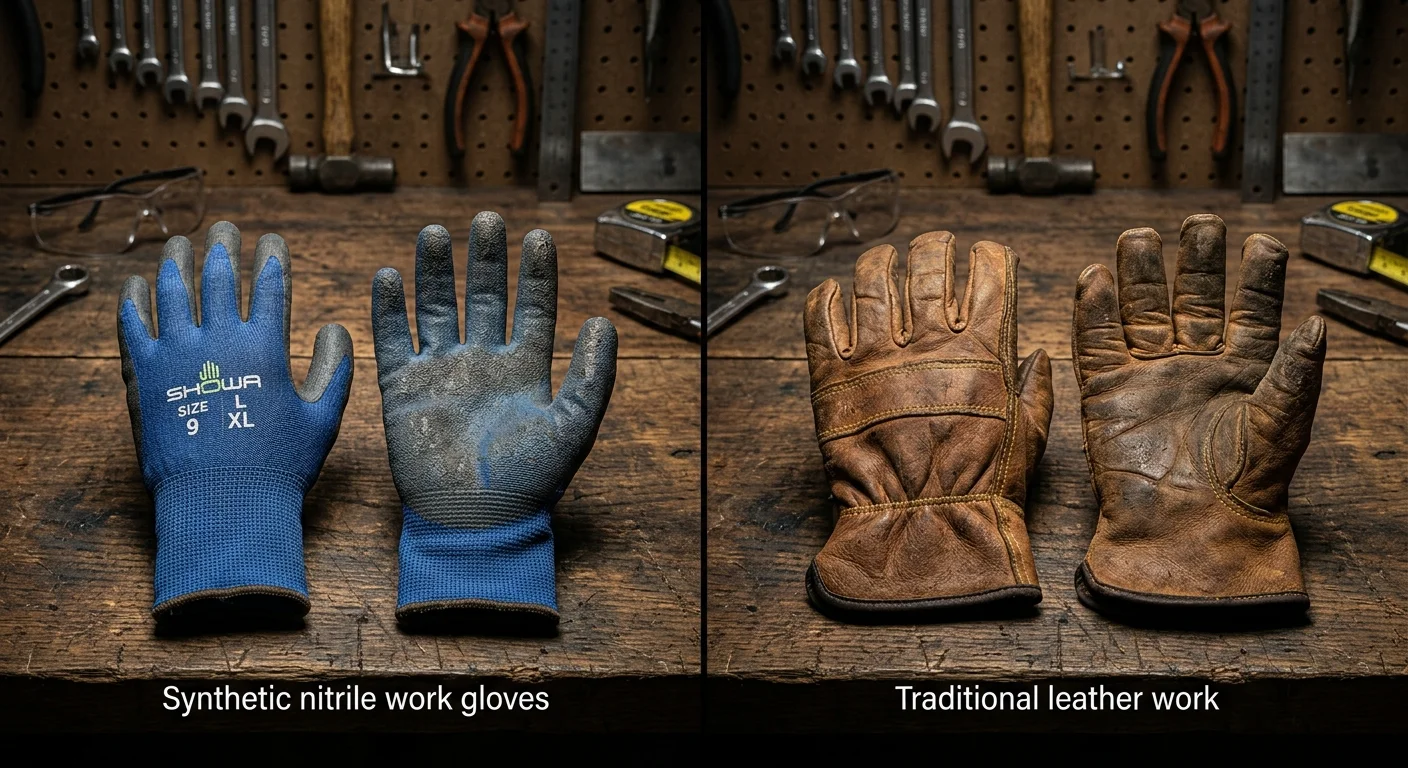 Showa has been building hand protection since before most of today’s safety standards existed.
Founded in Japan, Showa built its reputation on one principle: control every variable. That means in-house machinery, proprietary yarns, custom coatings, and patented hand formers. These ergonomic molds are so carefully designed that only three people in the entire company can access them. The result? Gloves that fit the shape of a human hand — not the other way around.
Here’s why that matters for outdoor users.
A Legacy of Industry Firsts
Showa didn’t follow the industry — it built it. Consider the timeline:
- 1953 : Showa produced the world’s first PVC glove
- First flexible fully-coated PVC — a breakthrough in wet-condition grip
- World’s first disposable nitrile glove — redefining single-use protection
- First biodegradable glove line (Eco Best Technology) — ahead of sustainability trends by years
These aren’t marketing claims. They’re real innovations that shaped what modern industrial and outdoor gloves look like today.
The Atlas Family — Built for Outdoor Conditions
For outdoor users, the Showa Atlas gloves line is where things get interesting. Showa groups its products into eight protection families — cut resistance, impact, chemical, thermal, and more. The Atlas family targets what outdoor work demands most: grip, abrasion resistance, and all-day comfort.
A few standout models worth knowing:
- Atlas 300 — Ergonomic fit with elasticated wrist cuff. Great dexterity for detailed tasks
- Atlas KV300 — Kevlar-reinforced. One of the strongest cut-resistant gloves in the lineup
- Atlas 330 — Seamless knit build with reinforced thumb crotch. Resists oil and punctures
- Atlas 451 — Thermal-insulated with a natural rubber palm coating. Built for cold-weather outdoor work
- Model 281 — Under $15, weighs less than 2 oz, waterproof and windproof polyurethane shell with full breathability
That last one deserves a second look. Under $15, under 2 ounces, and solid weatherproofing. For hikers, campers, and light outdoor workers, that’s a hard combo to beat.
Why Outdoor Users Keep Coming Back?
Showa nitrile gloves and Atlas models earn repeat buyers for one key reason — it’s not just the specs. It’s how the gloves hold up over a full day of use. Showa builds around maximum comfort and movement with equal protection. You get less fatigue, fewer errors, and better output in wet, dry, or unpredictable outdoor conditions.
These are industrial safety gloves built to the same standard professionals use on job sites. Serious outdoor enthusiasts are catching on — and once you try them, you’ll see why they keep coming back.
What Are Leather Gloves? (Why Workers Still Prefer Them)
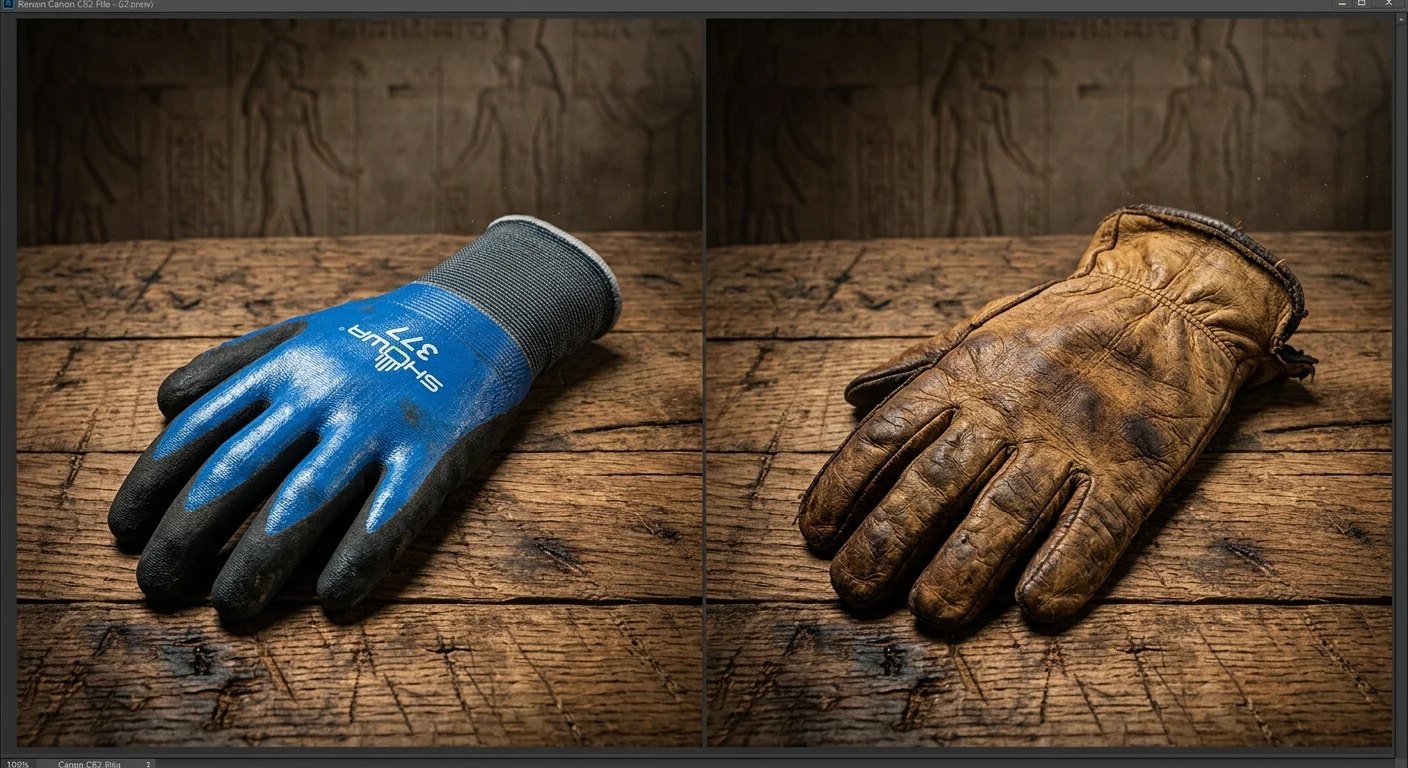
Leather gloves have been protecting human hands since 5000 B.C. — Egyptian artifacts prove it. That’s not a fun fact. That’s a track record no synthetic material can touch.
There’s a reason construction workers, welders, and mechanics still reach for leather every morning. It works. It absorbs punishment. Over time, it molds to the exact shape of your hand. Nothing else does that.
Not All Leather Is the Same
The type of hide changes everything — protection level, flexibility, price, and ideal use case.
- Cowhide — The workhorse. Thick, abrasion-resistant, heat-tolerant. Best for heavy-duty general work. Gets stiff when wet, but nothing beats it for raw durability.
- Goatskin — A flexible and tough material. The high natural oil content keeps it soft. This cuts down on hand fatigue and makes it a solid pick for precision tasks that need dexterity.
- Pigskin — Stays flexible even when soaked. Built for long, wet workdays where most gloves give up.
- Buffalo hide — Dense, heavy, and built for extreme environments like oil rigs and welding bays. It resists friction and force without thinning out over time.
Why Workers Won’t Quit Leather?
Here’s what leather delivers that keeps safety managers ordering it in bulk:
- Leather glove durability stands up to abrasion, punctures, and tears in high-friction environments — few materials come close
- Natural fibers breathe, so your hands stay comfortable across a full shift — no sweaty, fatigued grip
- Cold insulation is built right in — leather traps heat on its own, no extra thermal liners needed
- It molds to your hand with repeated use, improving fit and tactile feedback over time
The bottom line? Leather isn’t surviving because workers are stuck in the past. Job sites deal with rough materials, heat, and impact every single day. Leather handles all of it. That’s why it’s still here.
Showa vs Leather Gloves: Real-World Performance Differences
Side-by-side on a shelf, these two gloves look like a fair fight. Put them through a real workday — wet ropes, freezing temps, abrasive rock surfaces — and the gap shows up fast.
Here’s how they stack up across the metrics that matter.
Wet Resistance: It’s Not Even Close
Water is where leather loses. In rain or while handling wet lines, leather palms soak through in under 20 minutes. Once wet, they stiffen, lose grip, and stop insulating. On a dry job site, that’s manageable. In outdoor conditions below 50°F, it’s a real hazard.
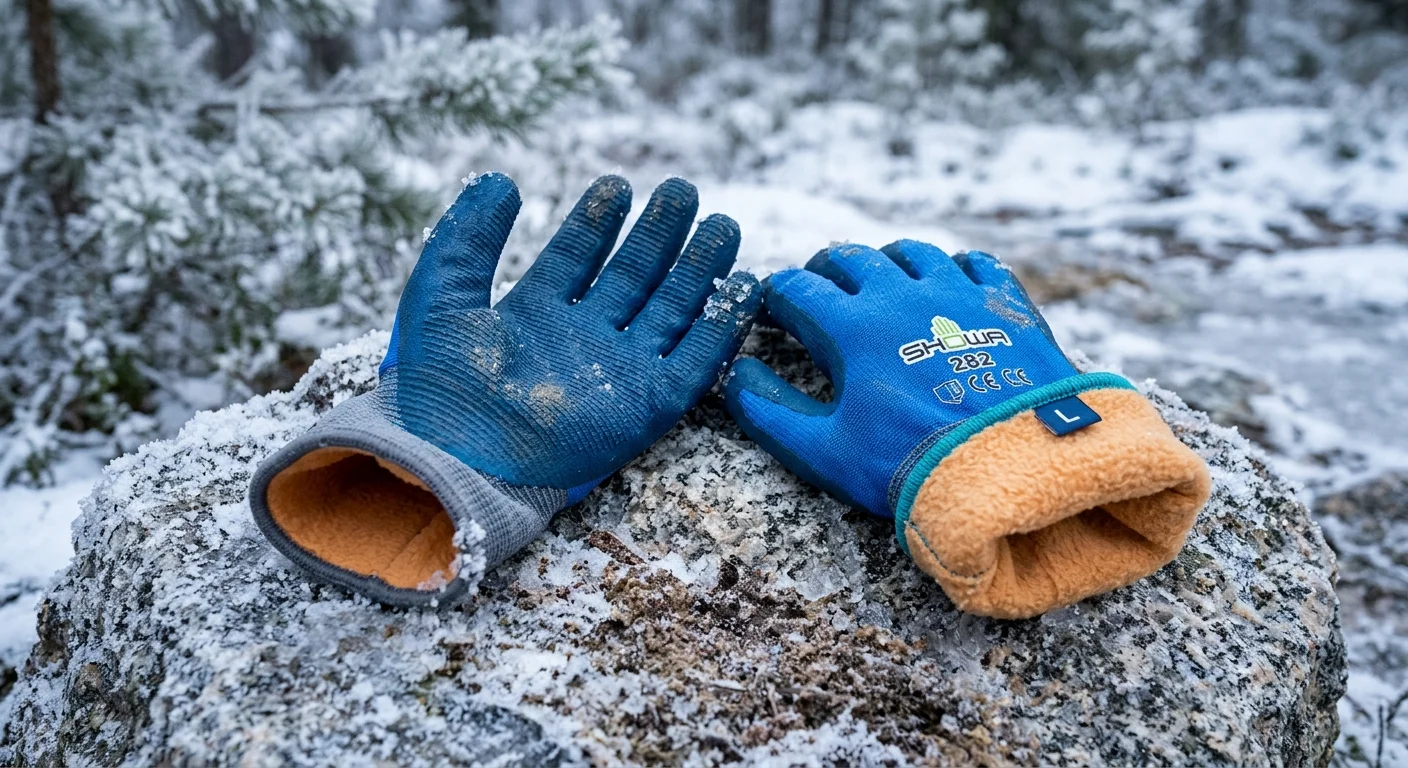
Showa’s Temres polyurethane shell blocks cold water. The Showa 281 stays dry through sustained rain. The Showa 282 goes further — it adds an acrylic liner that holds warmth and buffers moisture even as conditions get worse. In wet or freezing environments, this isn’t a small edge. It’s a different category of protection.
Dexterity and Grip: Depends on the Conditions
Leather has real flexibility. The Rab Khroma Freeride GORE-TEX uses a soft leather palm that handles fine objects well. It gives you solid dexterity in dry, controlled conditions. Shorter finger cuts on some models add task precision.
Cold or moisture changes the picture fast. Leather stiffens quickly, and dexterity drops with it. Showa’s textured polyurethane coating holds grip performance across both wet and dry surfaces. The shorter-finger ergonomic design on the 281 and 282 keeps your tactile feedback sharp — even when conditions are working against you.
Durability: Raw Numbers Tell the Story
Showa’s high-spec models hit 8,000 abrasion cycles. Standard leather tops out around 4,000 cycles — half the lifespan under the same friction stress. That gap is already significant. Add cut-resistant gloves like the SHOWA 541 — built with HPPE and steel-core yarns — and Showa’s advantage stretches beyond abrasion into slash and puncture protection. Leather can’t match that without extra reinforcement.
Leather does hold up well in dry abrasion conditions. The Black Diamond Guide is a strong performer there. But add sustained moisture, and the abrasion resistance drops faster than the dry-condition specs suggest.
Weight, Cost, and Everyday Value
This is where Showa pulls ahead for most buyers:
- Showa 281 : Under $15, under 2 oz — weatherproof and breathable
- Showa 282 : Under $25, under 4.4 oz — adds cut resistance and an insulating liner
- Leather alternatives (Rab, Black Diamond, Kinco): $50 and up, heavier, less capable in wet weather
The Kinco Lined Heavy-Duty Ski glove comes closest in value. It’s durable and affordable for mixed work and outdoor use. Even so, the Showa 282 beats it in wet weather and cut resistance — at a lower price.
For most outdoor users doing real work in changing conditions, Showa gives you more protection per dollar and per ounce than any leather option at the same price level.
Scenario-Based Verdict: Which Glove Works Better?
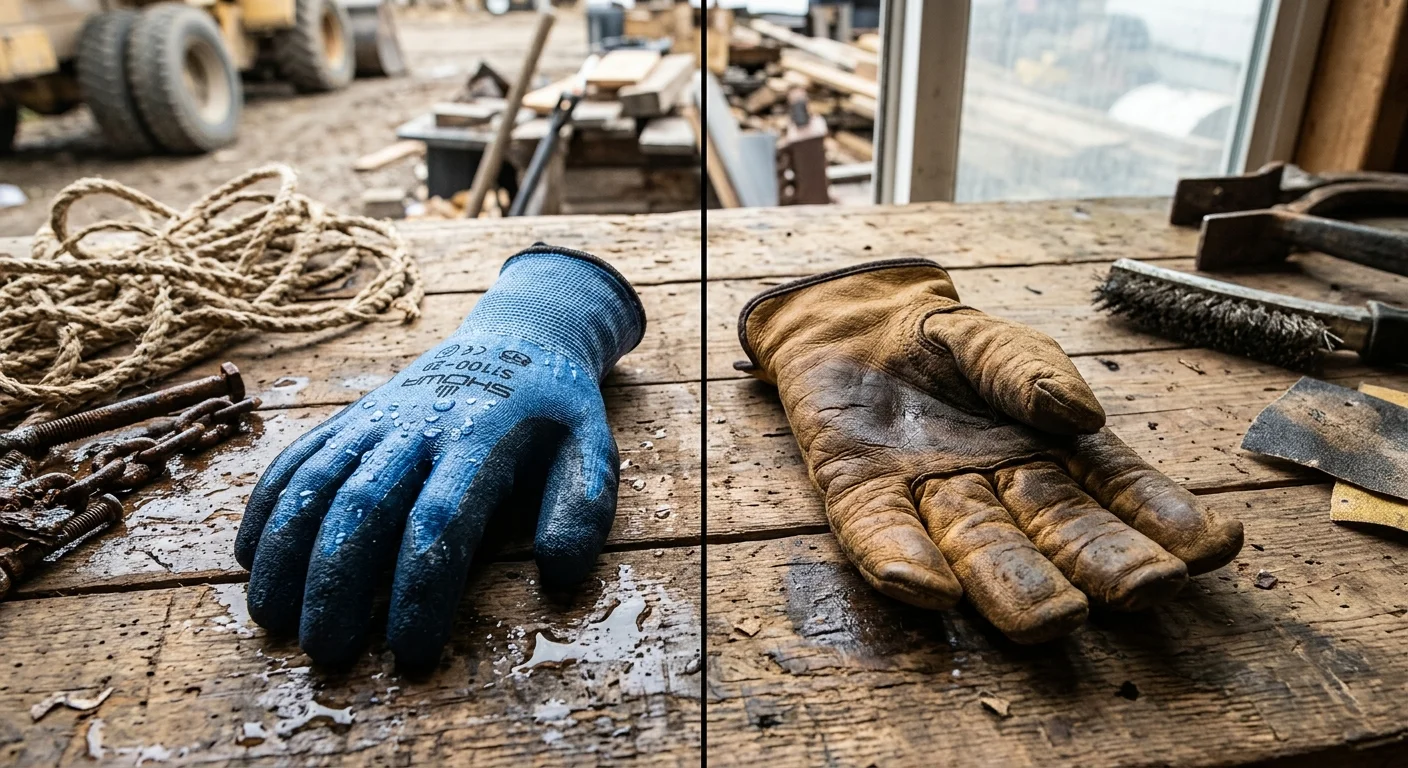 Neither glove wins every scenario. The right choice depends on what your hands face for eight hours a day.
Here’s how to cut through the noise.
Where Showa Gloves Win?
Wet, cold, or chemically active environments — this is Showa’s territory, and it’s not close.
Rain, moisture, oil, chemical exposure — leather starts losing the moment conditions shift. Showa’s nitrile and polyurethane coatings hold their grip and structure under sustained wet stress. Leather doesn’t. It softens, stiffens, and breaks down — often mid-shift.
Scenarios where Showa gloves dominate:
- Rough surfaces — pallets, rebar, concrete, rope: Grab a nitrile-coated model rated EN 388 abrasion level 4. It holds grip without thinning across a full shift. Leather at the same abrasion rating costs more and breaks down faster in moisture.
- Oily or slick parts handling : Textured nitrile isn’t just grippy — it stays grippy. Run a quick oil-and-parts grip test after a week of use. The coating holds. Leather loses that battle the moment it gets saturated.
- Cut-exposure environments — sheet metal, glass, blades: Showa cut-resistant gloves like the 541 (HPPE + steel-core yarns) reach ANSI A5+ ratings. That’s the same benchmark law enforcement uses for blade pat-downs. Leather without Kevlar reinforcement can’t hit that standard at any price point.
- Cold-weather outdoor work : The Showa 282 pairs an acrylic liner with moisture blocking. Under $25, under 4.4 oz. Leather alternatives at that protection level start at $50 — and still fall short in sustained rain.
Where Leather Gloves Win?
Leather earns its place in dry, high-heat, heavy-impact environments. That’s where synthetic materials hit their ceiling.
- Welding and open-flame exposure : Leather’s heat tolerance is hard to beat. Synthetics melt or break down under direct flame. Thick cowhide or buffalo hide takes that punishment without losing structure.
- Heavy construction — hammering, hauling, grinding (dry conditions) : In dry abrasion, quality leather like HydraHyde still ranks at the top of 2026 benchmark testing. The tactile feedback and hand-molding effect over time give experienced workers a fit that no synthetic can match at the same price.
- Precision dry-grip tasks : Goatskin’s natural oil content keeps it flexible longer than most synthetics in dry conditions. For fine motor tasks with no moisture exposure, it’s a solid top-tier pick.
The One-Page Decision Framework
Don’t overcomplicate the choice. Run through this before you buy:
| Your Primary Hazard | Recommended Glove Type | Key Rating to Verify |
|---|---|---|
| Wet surfaces, rain, oil | Showa nitrile or PU-coated | EN 388 abrasion 3–4 + wet grip test |
| Sharp edges, cut risk | Showa cut-resistant (A5+) | ANSI/ISEA 105 cut level |
| Heat, flame, dry abrasion | Leather (cowhide/buffalo) | EN 388 abrasion 4, heat class |
| Cold outdoor conditions | Showa 281/282 | Waterproof rating + liner insulation |
| Heavy impact, knuckle risk | Showa impact-rated models | ANSI Level 2–3 impact |
| Precision dry tasks | Goatskin leather | Dexterity score + tactile feedback |
The short version: Showa gloves outperform leather in wet, chemical, and cut-heavy scenarios. Those cover the bulk of outdoor and industrial work. Leather holds its ground in dry heat and heavy-impact situations — places where synthetics simply can’t keep up.
Still unsure? Run a one-week wear trial. Photograph the palm after each day of use. That real-world data tells you more than any spec sheet ever will.
Fit, Comfort & Long-Term Wear
Hand fatigue is a real productivity killer. Most workers don’t realize their gloves are the cause until the damage is done.
Fit separates a glove you forget you’re wearing from one that fights you all shift long. Showa builds around this idea. Their hand formers are shaped to match real hand geometry — not a generic mold average. The result is a glove that moves with your hand, not against it. That means less grip fatigue, fewer micro-adjustments, and better output over a full day of work.
Leather gloves take a different path to the same result. A new pair of cowhide or goatskin gloves feels stiff out of the box. Give them two or three weeks of regular use, and they break in to the exact shape of your hand. That custom fit is real — no synthetic glove can match it. Experienced tradespeople swear by this. It’s one of the main reasons leather keeps loyal users, even with its other drawbacks.
Where does each material win over time?
Showa gloves win on day one comfort. The seamless knit construction on models like the Atlas 330 removes internal seam pressure points. You get full dexterity from the first wear. That matters a lot if you’re switching tasks often or doing work that needs precise hand control.
Leather wins on long-term fit. Over months of use, a quality pair of goatskin gloves shapes itself to your grip pattern. No other material does that.
The tradeoff comes down to timeline:
- First day on the job : Showa fits better, moves better, causes less fatigue
- Six months in : Leather may feel more “yours” — as long as you’ve kept up with conditioning treatments to stop cracking and stiffening
One thing both gloves share: neither performs well in the wrong size. A loose palm kills grip precision. A tight finger box cuts off circulation and speeds up fatigue. Get the fit right first — everything else comes second.
Showa 281 vs 282: Which Model Should You Choose?
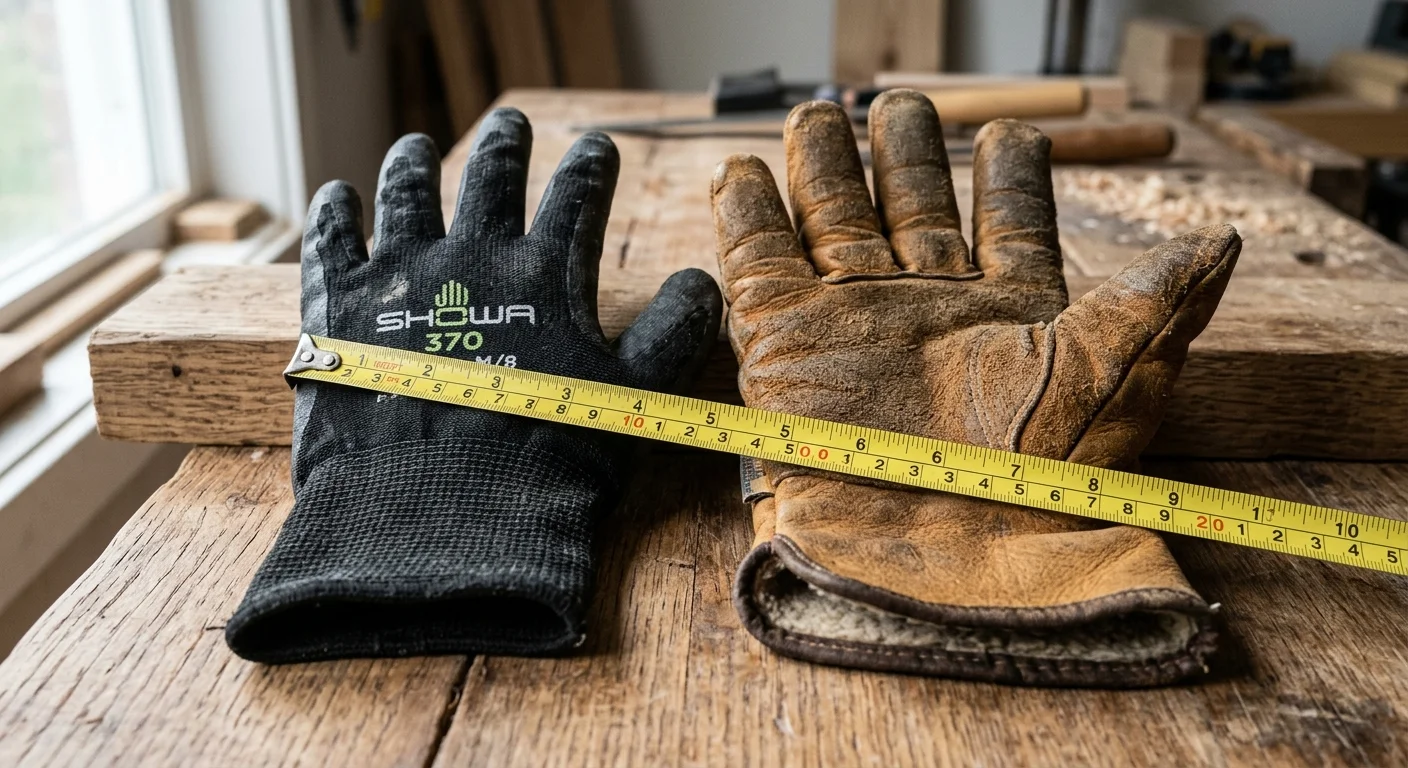 Two gloves. Same shell. Very different jobs.
The Showa 281 and 282 share the same microporous polyurethane (Temres) exterior. Both are waterproof and breathable. They handle wind, moisture, and abrasion without trapping heat. But that’s where the similarities stop.
The 281 is an unlined shell . It’s your go-to for cool, wet conditions. You want versatility here — pair it with a liner for colder temps, pull it off when you don’t need it. It’s lightweight and fast-drying. Proven over 2+ years of heavy rain use. It covers everything from bike errands to gutter cleaning to stripping sharp brass fittings.
The 282 adds a built-in acrylic fleece liner . You also get micro-roughened nitrile fingertip grip and flexibility rated down to -58°F. It’s the clear winner once temperatures drop into the mid-teens. Light snow, sleet, slush, heavy frozen precip — the 282 handles all of it. No fuss, no fumbling.
Here’s the quick decision guide:
| Condition | Best Choice |
|---|---|
| Cold temps (standalone) | 282 |
| Mild/cool-wet + versatility | 281 + separate liner |
| One glove for all seasons | 282 sized to fit over a liner |
One practical note : Japanese sizing runs small — size up at least one. And if your 282 liner delaminates with extended use, cut it out and swap in a separate liner. It dries faster and performs just as well.
Price-wise, the 281 runs around $4. The 282 lands between $20–40 depending on the variant. The 282-02 adds a draft collar and elastic cinch. It runs a touch warmer, though the extended cuff isn’t waterproof.
For most outdoor users, the 282 is the smarter single investment. Buy it a size large, run it solo in cold weather, and leave the liner at home when conditions ease up.
Quick Answers to Common Buyer Questions
 Still on the fence? These are the questions buyers ask most — answered straight.
Are Showa gloves more durable than leather?
In wet and cut-heavy conditions, yes. Showa’s high-spec models withstand up to 8,000 abrasion cycles. Standard leather tops out near 4,000. In dry heat, quality leather still holds its own — but wet conditions wipe out that advantage fast.
Which glove is better for cold outdoor work?
The Showa 282. It’s waterproof, rated to -58°F, and costs under $25. Leather options at the same level start at $50. They still underperform in sustained rain or slush. You pay more and get less in harsh weather.
Are Showa nitrile gloves chemically resistant?
Yes. Showa chemical-resistant gloves are built for oil, solvent, and chemical exposure. Leather is a different story — it soaks up chemicals. That weakens the material and creates a contamination risk over time. It’s not a safe option for chemical work.
Do Showa Atlas gloves sacrifice grip for flexibility?
No. The textured polyurethane coating holds grip performance on both wet and dry surfaces. The leather grip breaks down once moisture gets in. Showa’s coating holds up. You get flexibility without giving up control.
What’s the price difference?
The Showa 281 runs around $4. The 282 lands between $20–$40. Quality leather gloves start at $50 and go up from there. For most buyers, Showa gives you better protection per dollar. That gap grows in variable outdoor conditions where leather struggles most.
Is Showa a reputable brand?
Showa was founded in Japan. The company made the world’s first PVC glove in 1953. It also made the first disposable nitrile glove. These are documented industry firsts — not marketing claims. They shaped how modern industrial safety gloves are made and used across the world.
Conclusion
Both gloves have earned their place — but they don’t belong in the same hands.
Need chemical resistance, a strong grip in wet conditions, and all-day dexterity? Showa nitrile gloves outperform leather in modern industrial and outdoor settings. Leather still wins where raw heat resistance and heavy abrasion are non-negotiable. But for most people reading this, Showa is the smarter, more versatile investment.
Here’s the bottom line: the wrong glove isn’t just uncomfortable — it’s a liability.
Stop guessing. Match your glove to your actual environment. Browse the Showa Atlas and Showa Best lineups. Compare protection ratings against your specific use case. Make a decision backed by data — not habit.
The best industrial safety glove is the one you’ll wear every day. Pick the one that fits your job, not the one that’s always been around.