
Thousands of workers face a daily choice: the right respiratory protection. Half face masks offer more protection than disposable respirators and pair well with safety glasses, making long shifts comfortable. They suit tasks like painting, chemical handling, or dust work but don’t cover as fully as full face masks. Understanding their benefits and limits helps match protection to risk, work conditions, and budget.
Half Face Masks: Core Advantages
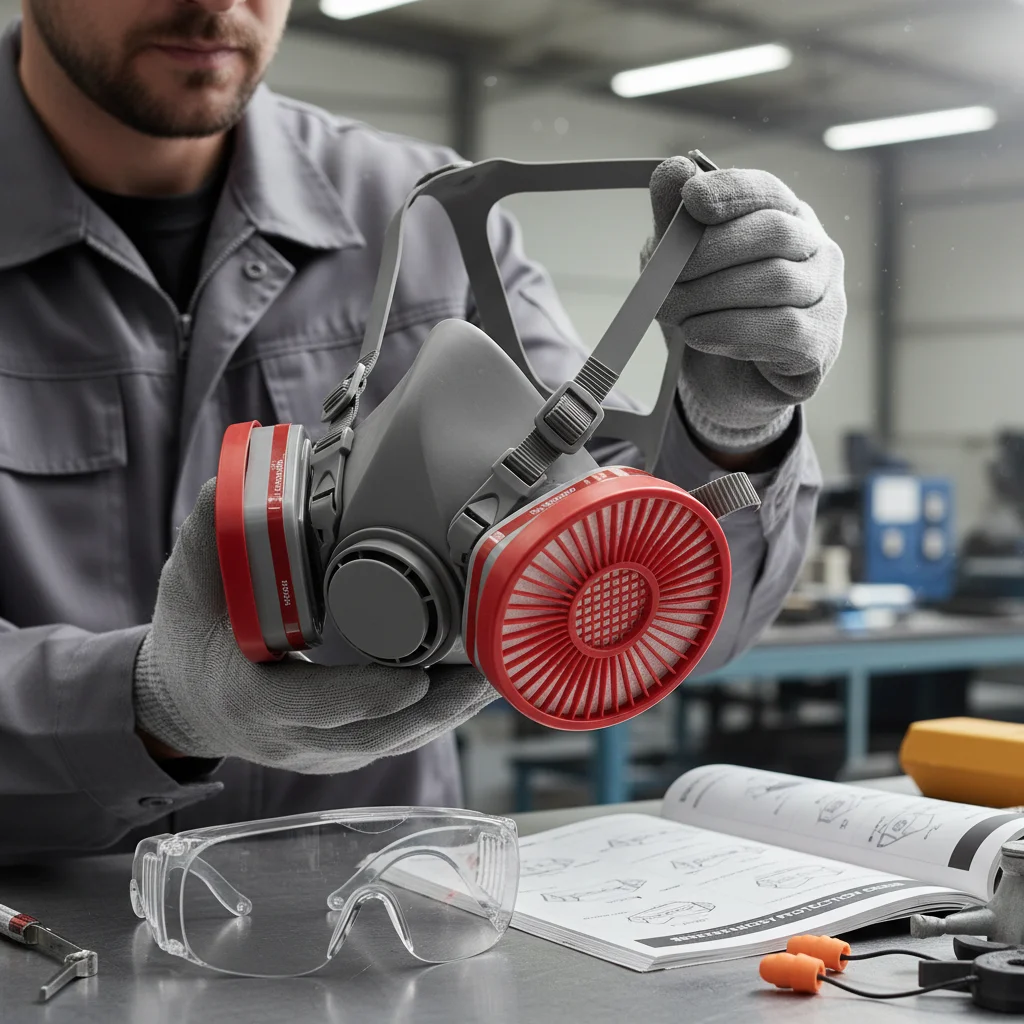 Half face masks earn their place in respiratory protection through seven practical benefits that matter at work.
Superior Protection That Meets Real Standards
The numbers tell a clear story. Half-mask respirators deliver an Assigned Protection Factor (APF) of 10 with the right fit. The mask cuts airborne contaminant exposure to one-tenth of outside levels. For most workplace scenarios, this hits the sweet spot.
Here’s what that looks like in practice. You’re working with formaldehyde at levels up to 7.5 ppm (ten times the permissible exposure limit)? A half-mask with the right cartridges provides adequate protection. The same applies to particulate exposure up to 50 mg/m³ in supplied-air mode.
NIOSH certification under 42 CFR Part 84 backs this up. These aren’t marketing claims. They’re tested, verified protection levels that meet OSHA requirements under 29 CFR 1910.134.
Reusable Design Saves Money and Waste
Unlike disposable N95 respirators , half face masks last. The elastomeric facepiece handles repeated use. You replace the filter cartridges, not the entire unit.
Calculate the economics. A quality half-mask costs more upfront than a box of disposables. But over six months of regular use, you’re replacing cartridges maybe twice instead of buying 100+ disposable masks . The math favors reusability for regular users.
Works With Your Other Safety Gear
Industrial safety spectacles fit well with half-masks. The design doesn’t block eyewear. Full-face respirators create redundant eye protection. This matters during long shifts. You need clear vision and respiratory protection at the same time.
OSHA permits contact lenses with half-masks. Add chemical goggles for eye protection. This flexibility fits different worker needs. Safety stays intact.
Lighter Weight, Less Fatigue
A half-mask sits on your face with minimal bulk. No heavy visor. No extra weight on your neck. During an eight-hour shift, this difference adds up.
Workers report less neck strain and headaches compared to full-face options. The reduced profile also improves balance. You won’t feel top-heavy in tight spaces or while bending.
Proven Performance Across Chemical Exposures
Half-masks handle specific chemical thresholds well. For carcinogen levels at or below 500 µg/m³, filter-type half-masks designed for dusts, mists, and fumes provide appropriate protection. Dealing with certain chemicals at levels up to 0.5 mg/m³ (10 times the PEL)? Air-purifying half-masks with high-efficiency filters meet OSHA requirements.
The filter cartridge system adapts to different hazards. Swap organic vapor cartridges for particulate filters based on your exposure. This versatility covers multiple work scenarios with one facepiece.
Better Than Surgical Masks, More Practical Than Full-Face
The comparison reveals clear tiers. Surgical masks offer no specified APF. They require no fit testing. They’re barrier devices, not respirators. Half-masks match N95 respirators in APF (both rated at 10). But they offer reusability that disposables can’t match. Full-face respirators provide higher protection. They also add cost, weight, and complexity many situations don’t require.
Fit Testing Creates Accountability
Required fit testing (qualitative or quantitative) might seem like a disadvantage. It’s a feature. The test confirms your mask creates a proper seal. You know it works before entering a hazardous environment. That peace of mind comes from verification, not assumption.
Quantitative fit testing unlocks the full APF potential. The protection factor isn’t just theoretical. It’s measured for your specific face and mask combination.
Half Face Masks: Key Limits and Risks
The seal makes or breaks everything. Data shows how often it breaks.
Fit Testing Shows Hidden Problems
Here’s the hard truth: 13% of workers pass basic fit tests but fail exact testing. You thought your mask sealed right. The quick smell test said yes. The exact test said no.
One study caught this gap. Nine people tested half-masks with and without skin barriers. Even without any barrier, 11% still failed exact fit testing. The masks weren’t broken. The users weren’t careless. The gear just didn’t seal on some face shapes.
OSHA sets the standard at a fit factor of 100 for half-masks. Full-face respirators get a rating of 500+. That five-fold gap isn’t random. It shows the basic limit of covering part of your face.
Skin Protection Creates a Problem
Medical tape injuries happen. Pressure sores form on the nose bridge during long wear. Workers try protective barriers. The barriers ruin the seal.
The numbers show what happens:
- Silicone scar sheets : Lowest good fit factor in testing ( P < 0.05). Can’t reach control-level seal even with care.
- Silicone gel tape : Broke the seal in trials. Scientists marked it as dangerous.
- Foam dressing : One person failed exact testing with this barrier.
Two barriers showed promise. Cavilon got the highest fit factor versus other options ( P < 0.05). It matched the no-barrier control. Tegaderm also matched control results. But even Tegaderm showed an 11% failure rate in one person across all test setups.
You face a choice: protect your skin and weaken your seal, or keep the seal and risk pressure sores. Neither works well during an eight-hour shift.
The APF Number Needs Perfect Setups
That Assigned Protection Factor of 10 has strings attached. It needs proper selection. Right fit testing. Regular wear. No facial hair. No skin barriers. No weight loss or dental work changing your face shape.
Real workplaces get messy. One study found elastic half-mask respirators had zero detection failures in 36 uses. Good results. But the control group using N95 filtering respirators failed 28.1% of the time (18 out of 64 uses). The risk gap of -28.1% (95% CI -39.1% to -17.1%) shows half-masks beat disposables.
Still, that study used proper fit. The second fit fails—from facial hair, weight changes, or barrier use—that APF drops. You breathe dirty air without knowing it.
Limited Eye and Face Coverage
Half-masks cover your mouth and nose. That’s it. Chemical splashes hit your eyes. Flying debris strikes your forehead. Vapors bother exposed skin. You need extra PPE to fill these gaps.
This brings match-up problems. Chemical goggles fog up. Face shields get in the way of head straps. Each added piece of gear brings new seal worries and comfort issues. The mix-and-match design that looked like a plus becomes a setup problem.
Half Face vs Full Face Masks: Critical Comparison
Protection Levels
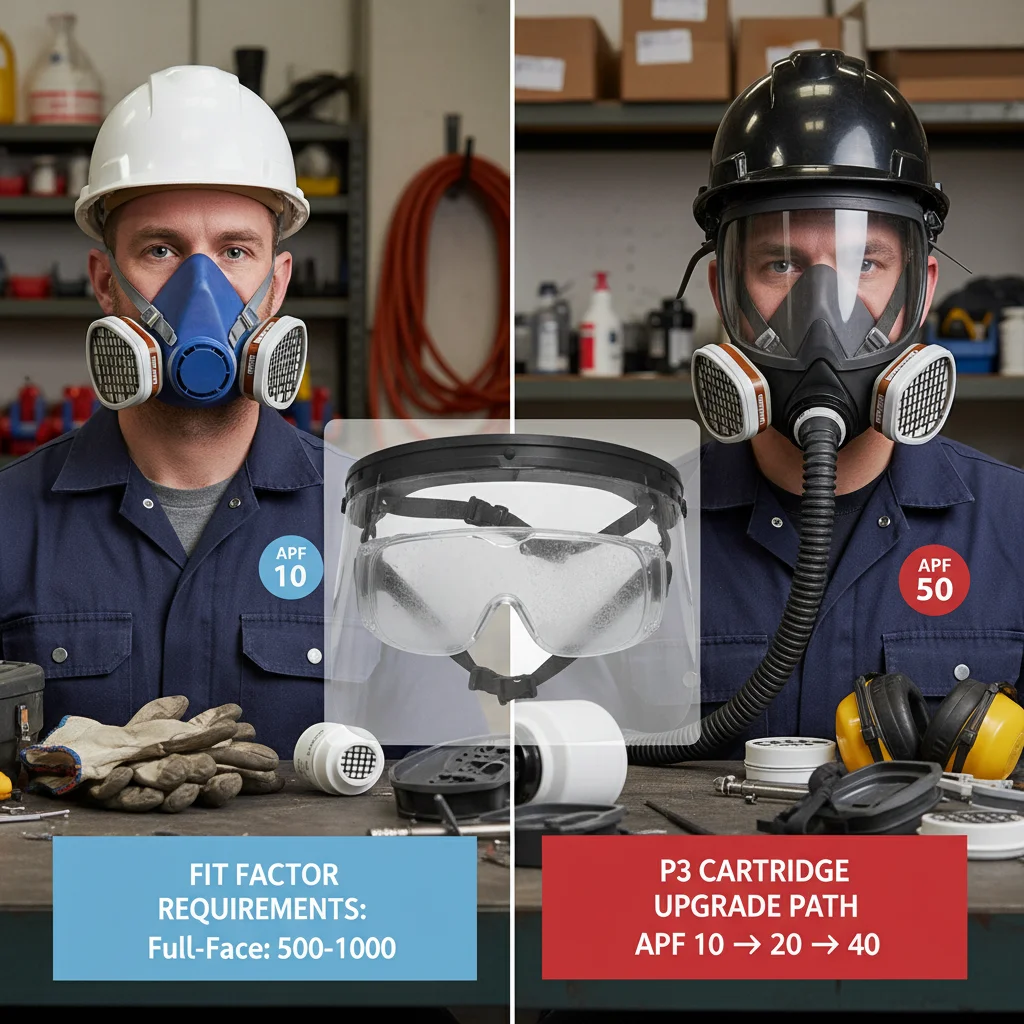
Half face masks reduce exposure about 10 times (APF 10), rising to 20 with P3 filters. Full-face masks start higher, cutting exposure 50 times or more (APF 40+). For high contamination or unknown hazards, the difference is important.
Coverage and Eye Protection
Half-masks cover nose, mouth, and chin only. Eyes need separate goggles or shields. Full-face masks protect eyes and breathing in one piece, solving the goggle-mask fit problem.
Comfort and Weight
Half-masks are light and easy for short tasks. Full-face masks are heavier. Long shifts can cause neck strain, but the larger seal stays secure during physical work.
Fit Testing
Both types need clean-shaven faces. Half-masks often use qualitative tests, while full-face masks require quantitative tests for higher protection. Some face shapes do not fit half-masks well, but full-face masks fit more head types.
Vision and Communication
Half-masks allow full peripheral vision and clearer speech. Full-face masks provide good forward visibility but reduce side vision and slightly muffle speech.
Cost
Half-masks are cheaper and easier to maintain. Full-face masks cost more but include eye protection, reducing the need for extra PPE.
Usage Scenarios
Half-masks suit short, moderate-risk tasks. Full-face masks are better for high-risk, long-duration work or where eye protection is essential.
Key Takeaway
Choose based on hazard level, task duration, comfort, and fit. Both designs work well if used correctly with proper testing and training.
Best Times to Use Half Face Masks
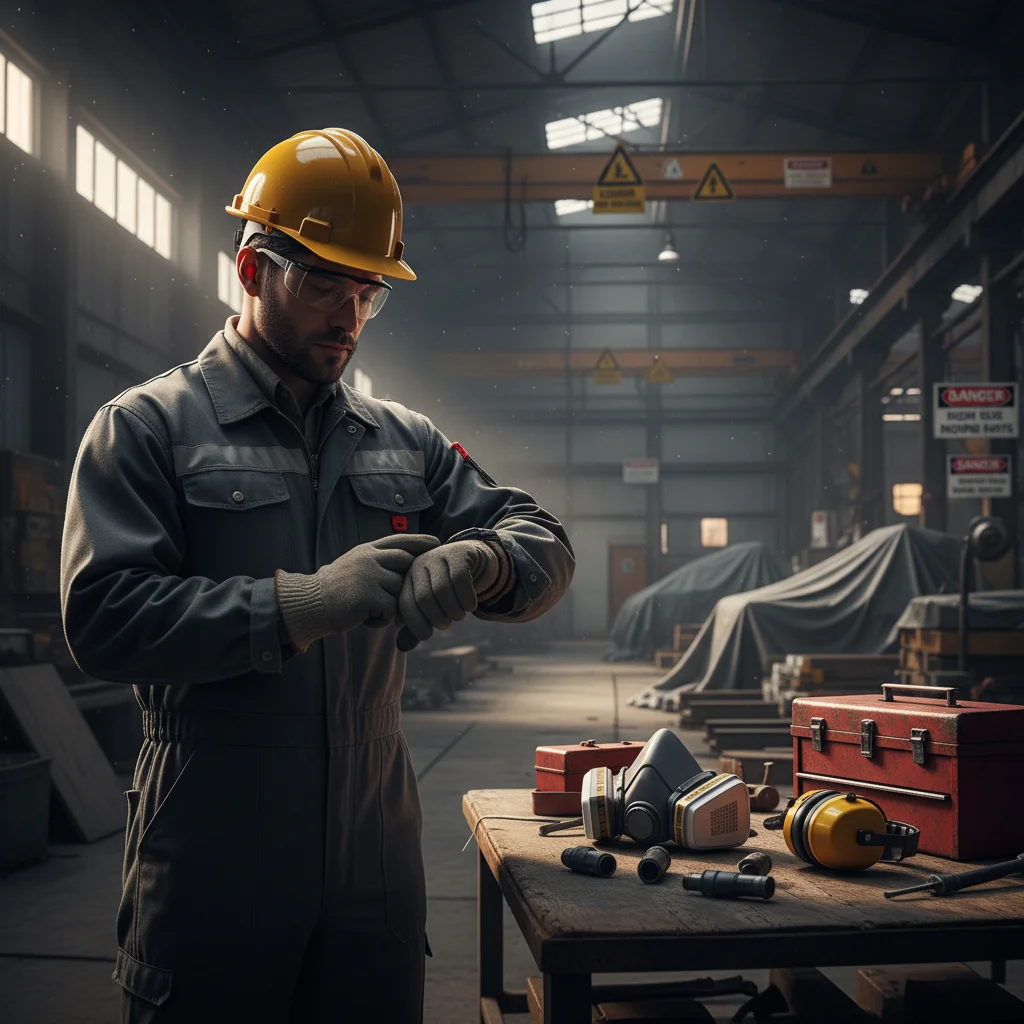 Half-masks work well in specific conditions. Their protection level must match the hazard. Their design benefits must outweigh the drawbacks.
Healthcare Settings During Respirator Shortages
N95 supplies run out. Elastomeric half-mask respirators (EHMRs) become the backup option. A 2015 survey of 289 clinicians showed the problem: 10% availability of EHMRs versus 94% for N95s. Healthcare systems weren’t ready.
Shortages arrived. Clinicians used half face masks beyond single-shift FDA limits. The masks provided protection. Skin damage appeared. Among 542 Chinese healthcare workers wearing respiratory protection during long shifts, 97% reported skin damage. The nasal bridge suffered most—97% of damage happened there.
The CDC now lists EHMRs in official shortage plans for filtering facepiece respirators. The logic is simple: reusable beats unavailable.
Airborne Disease Exposure With Barriers
COVID-19 patient care put half face masks in high-risk situations. Success needed fit testing under OSHA protocol: normal breathing, deep breathing, head side-to-side, head up-down, talking, grimacing, bending over. The complete sequence.
Skin barriers made this possible. Cavilon delivered the highest fit factor among tested options ( P < 0.05). Tegaderm matched no-barrier performance. Both passed the critical threshold. The 89% pass rate (8 out of 9 participants) with these barriers proved half-masks could handle airborne pathogen exposure with correct validation.
Skip silicone scar sheets. They showed the lowest fit factors in testing.
Pandemic Response With Failed Supply Chains
Community and household settings gave mixed results. Influenza risk dropped—OR 0.16 (95% CI 0.03–0.92)—with masks worn within 36 hours of symptom onset. That pooled data combined mask use with hand hygiene.
The problem: compliance stayed around 50% for “mostly” or “always” worn. Home use lacks workplace rules. People remove masks between tasks. The protection works. The discipline doesn’t always stick.
ICU and High-Risk Roles With Training
Hospital intensive care units have 42.9% of surveyed workers (463 out of 1,080 total) who benefit from half-mask programs. Nurses make up 44.5% (477 workers). These high-contact roles need solid respiratory protection during long patient care shifts.
Training makes the difference. EHMR use linked to real safety climate gains: proactive behaviors ( p < 0.001) and compliant behaviors ( p < 0.006). User confidence showed an odds ratio of 1.3178 ( p = 0.013).
Breaking down EHMR adoption barriers ( p < 0.001) explained 62.7% of variance in safety climate scores. Workers who understood the gear and trusted the fit did better across safety measures.
Who Should NOT Use Half Face Masks?
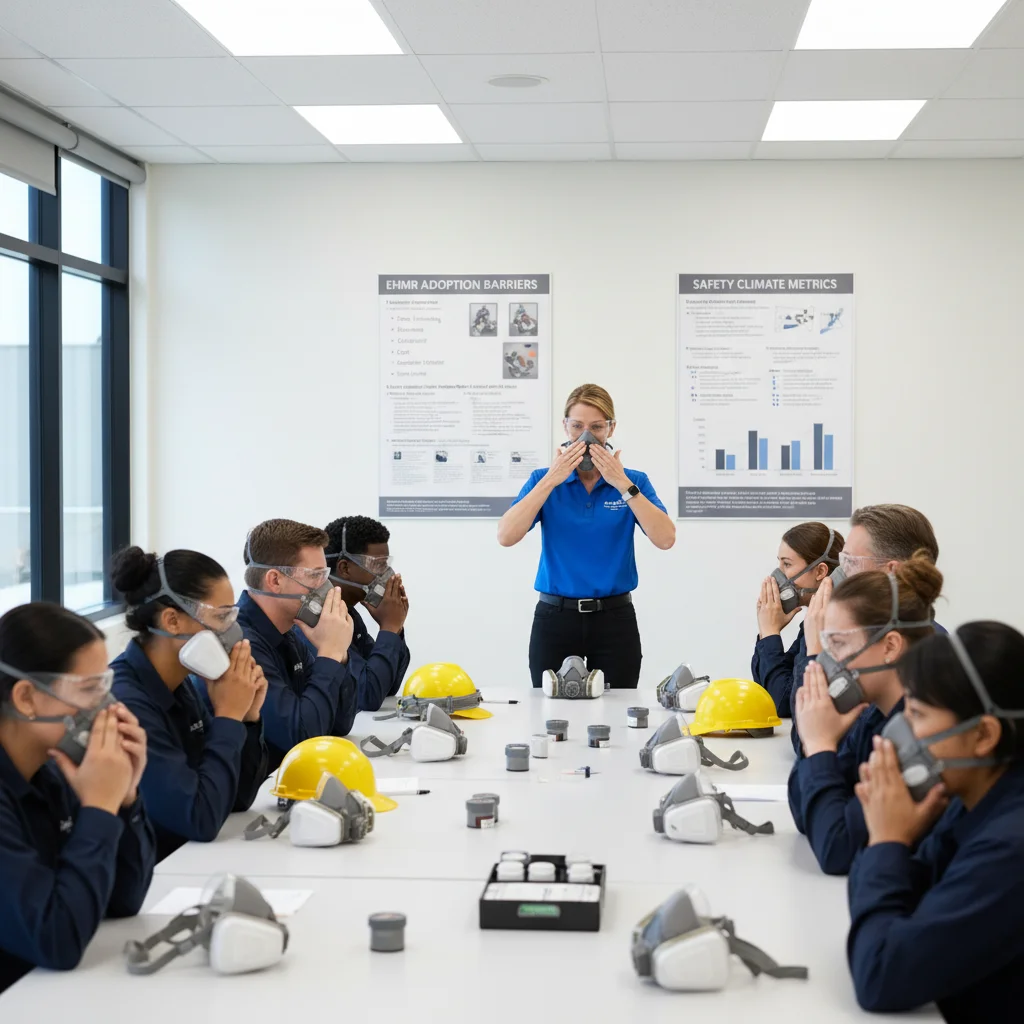 Half-face respirators are not for everyone. Real data shows that for certain groups, these masks simply cannot provide safety.
Medical and Physical Limits
People under 18 years old cannot use these masks safely. Their facial bones are still growing, so a mask that fits today might leak next month.
Your health matters, too. If you suffer from asthma, COPD, or weak lungs, the extra effort to pull air through a filter can be dangerous. Anxiety issues are also a risk—panic attacks inside a sealed mask are serious. Finally, never use these if you are allergic to silicone or rubber materials.
The “False Pass” Problem
Quick “smell tests” aren’t perfect. Research shows that about 11% to 13% of workers pass a basic smell test but fail a precise machine test. This means one in eight people might believe they are safe when they are actually breathing dirty air.
Movement Breaks the Seal
You don’t stand still at work. You bend, talk, and turn your head. While a mask might seal perfectly when you are still, simple movements like bending over or grimacing can open small gaps. If the mask shifts on your face, the protection stops.
Skin Bandages Cause Leaks
Wearing a tight mask for long shifts can hurt your nose bridge. However, putting padding under the mask usually destroys the seal. Thick pads cause immediate leaks. Even thin tapes failed for some users in trials. You often face a hard choice: painful skin or leaking air. Neither is a good option.
Sizes Don’t Fit Everyone
Most masks only come in Small, Medium, and Large. But real faces vary in width, chin shape, and nose height. Makers design for the “average” face. If your measurements fall outside typical ranges, standard sizes won’t seal provided. Relying on a poor fit gives you false confidence, which is dangerous.
How to Select the Right Half Face Mask?
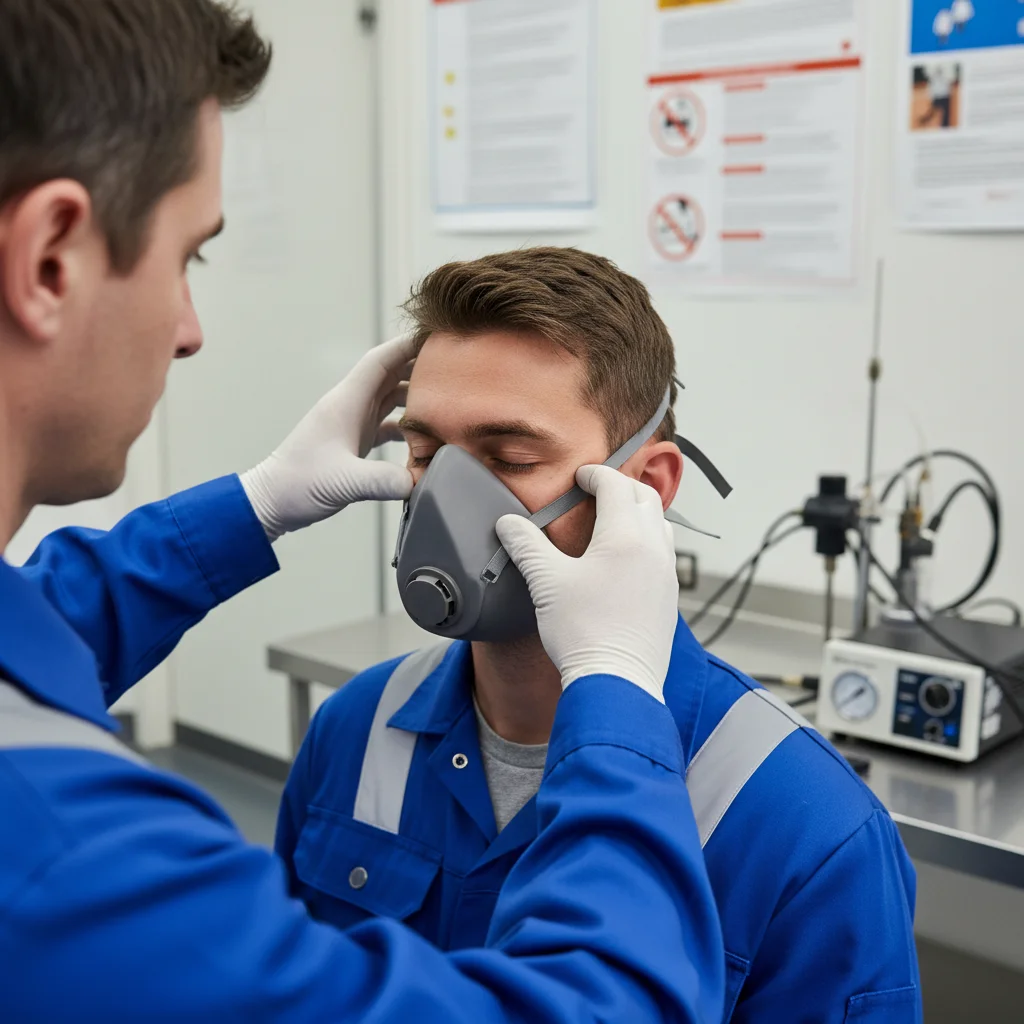 Selecting the right respirator isn’t guesswork—it’s a calculated decision based on exposure, fit, and compatibility.
1. Assess the Hazard
Check your exposure levels against Permissible Exposure Limits (PEL). Standard half-masks give you an Assigned Protection Factor (APF) of 10. Airborne contaminants might exceed 10 times the PEL. Or 50 times with P3 filters. In that case, you need a full-face respirator or supplied air.
2. Measure, Don’t Guess
Faces have different nose widths and chin depths. So, don’t default to “Medium.” Use sizing charts based on ISO 16976-2. Standard fits actually fail 11-13% of users. That’s why specialty sizes like “Short-Wide” exist.
3. Choose the Right Filters
Match the filter to the danger. Use P3 for toxic dust or specific cartridges for gases. Also, keep filter weight under 300g. Heavier filters break the seal when you move around.
4. Verify Compatibility & Standards
Test your mask with safety glasses and hard hats at the same time. Your eyewear might break the nose seal. That means the setup fails. Always check for CE markings and NIOSH approvals. This helps you avoid fakes.
5. Validate with Fit Testing
Confirm your choice with quantitative fit testing. Qualitative (smell) tests give false confidence to about 13% of users. Maybe you can’t get a solid seal. Or you need eye protection built right in. Upgrade to a full-face mask then.
Real User Experiences and Professional Insights
Respiratory protection works in real workplaces, not just in lab tests. Feedback from healthcare workers, industrial users, and safety professionals shows what really matters.
During COVID-19 frontline work, 542 healthcare workers in China wore respirators for long hours without breaks. 97% developed facial skin damage, mainly on the nose bridge. Pressure injuries appeared within hours. Skin barriers reduced pain but often broke the mask seal, causing fit test failures. Cavilon worked best among barrier options, while Tegaderm showed mixed results.
Industrial workers prefer half-mask respirators when exposure levels allow. They are lighter, cause less neck strain, and work better with safety glasses. Speech is also clearer. However, workers report smelling vapors at times. This matches testing data showing around 13% fit failures, even when masks are worn correctly.
Safety managers face three main problems: limited fit-testing capacity, facial hair non-compliance, and poor cartridge replacement habits. Audits found about one-third of cartridges used past their safe service life.
Training makes a big difference. Confident users follow rules better, but 18–31% false pass rates mean many users think they are protected when they are not. Weight changes, dental work, or facial injuries can ruin a good fit.
Experts recommend quantitative fit testing, full size options, exposure-based cartridge schedules, and checking PPE compatibility. Well-managed programs have achieved up to 91% exposure reduction. Masks alone are not enough.
Making Your Half Face Mask Decision
Here’s what matters: half face masks balance protection with practicality. Use them for chemical vapors, dust, and paint fumes. You get solid respiratory protection without the bulk of full-face coverage. The comfort advantage is real—you’ll wear them for full shifts. This beats having the “best” mask sitting unused in your toolbox.
Don’t fool yourself about the limits. No eye protection means you’re gambling with splashes or airborne particles. The face seal needs clean-shaven skin and regular fit testing. Without these, you’re just wearing expensive decoration.
Your next move? Match your specific hazards to the protection level you need. Facing known chemical exposures in controlled environments? A quality reusable half face mask with proper filter cartridges makes perfect sense. There’s a chance of eye exposure, skin contact, or unknown contaminants? Don’t compromise—step up to a full face respirator.
The best respiratory protection equipment is the one that fits your work reality. Plus, you’ll use it right every time. Half measures in safety aren’t safety at all.