

Every buyer faces the same uncomfortable question at some point: Is the recycled PP I’m sourcing good enough — or am I trading quality for a lower price? There’s no simple yes or no here.
Virgin polypropylene and post-consumer recycled PP can look identical on a spec sheet. But they behave very differently on a production line or in a customer’s hands.
I’ve watched manufacturers make costly material decisions based on assumptions that fall apart under real-world conditions.
So what separates new PP from recycled PP? Let’s break it down across four key areas:
-
Performance — how each material holds up under stress and repeated use
-
Safety — contamination risks and compliance considerations
-
Color consistency — what to expect batch to batch
-
Long-term value — total cost beyond the price tag
And more to the point, how do you know which one your product needs?
What Is New PP (Polypropylene) in Simple Terms?
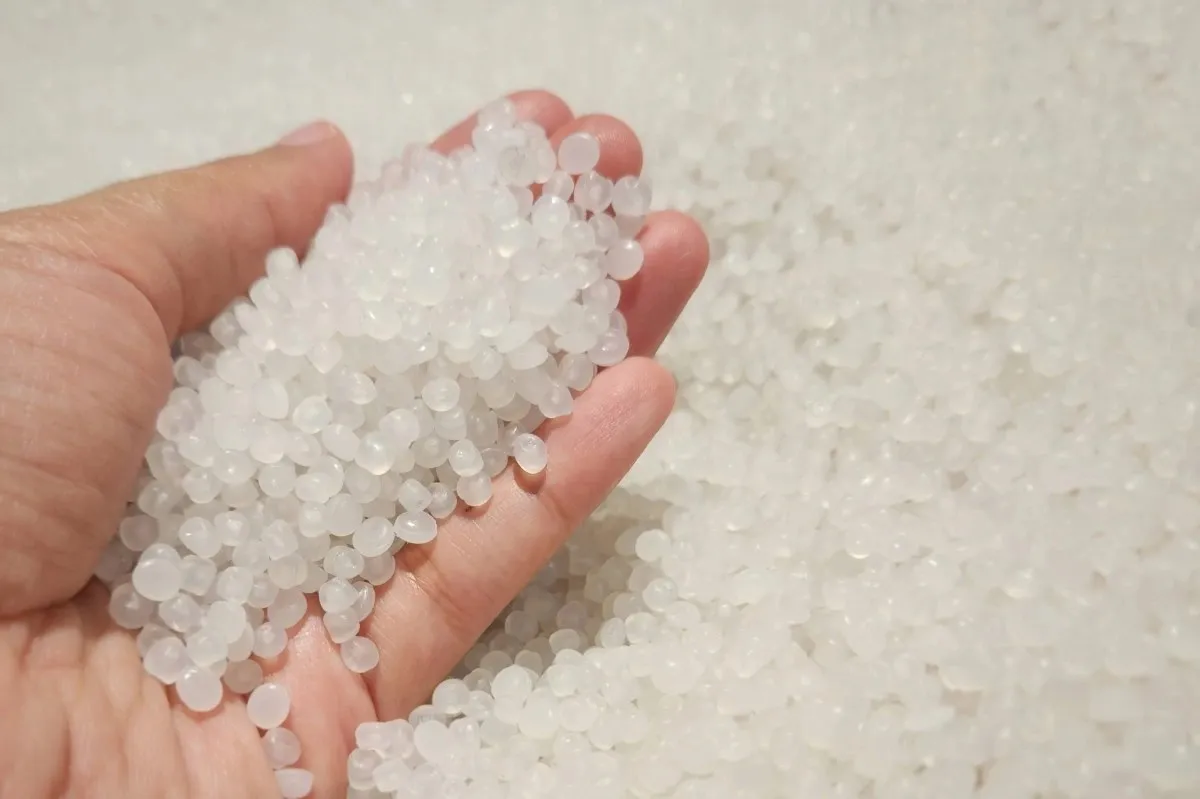
Polypropylene is one of those materials that’s everywhere — and almost nobody thinks about it.
That yogurt container in your fridge. The flip-top cap on your shampoo bottle. The woven rice sack in your pantry. All PP. All recycling code 5.
Virgin polypropylene starts from scratch. It’s a polymer built from propylene monomers. Think of it as a clean chain of repeating units — no history, no contamination, no prior life. That’s what makes it the baseline standard.
The numbers tell a clear story:
-
Density: 0.90–0.91 g/cm³ — lighter than water, lighter than most common plastics
-
Heat tolerance: holds structure up to ~171°C (340°F), far above what polyethylene manages
-
Moisture absorption: negligible — it doesn’t swell, warp, or weaken in humid environments
It also resists acids, bases, and most solvents. FDA-approved for food contact. BPA-free by nature.
PP comes in two practical variants worth knowing:
-
Homopolymer PP — stiffer and stronger. Great for rigid containers and precision parts.
-
Copolymer PP — tougher at low temperatures. Preferred for automotive trim and impact-sensitive packaging.
The one genuine weakness? Cold. Below 0°C, virgin PP turns brittle. Outdoor use requires UV stabilizers too — skip them, and sunlight will crack it over time.
In controlled environments and standard applications, virgin PP is a known quantity. The flow is predictable. Molecular weight stays consistent. No surprises coming off the mold.
That predictability is what recycled PP has to compete with.
What Recycled PP Actually Means in Real Production?
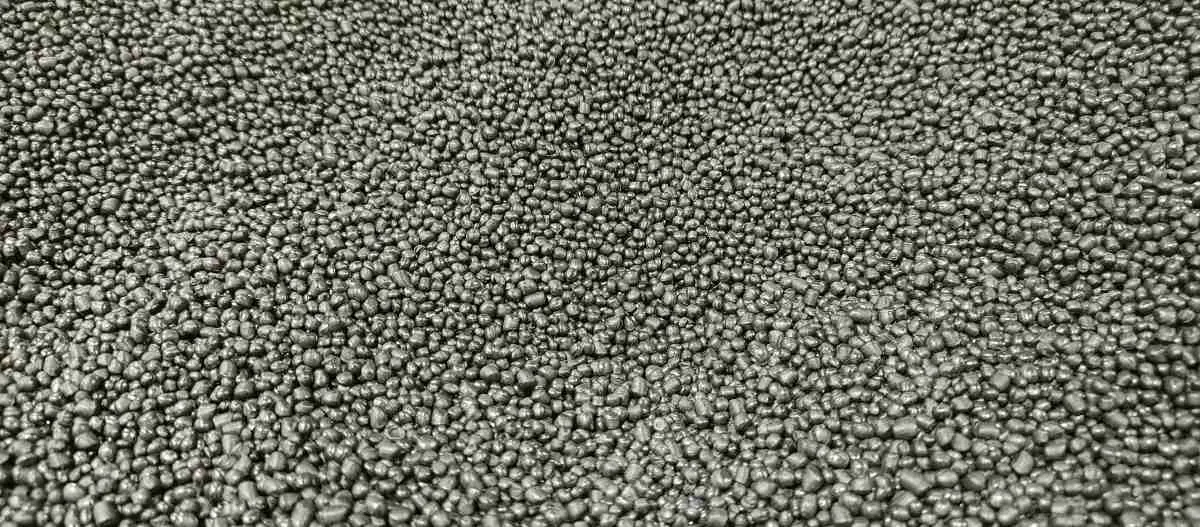
Recycled PP is not a single thing. It’s a category — and what falls inside that category varies more than most buyers expect.
On the shop floor, rPP comes as a blend of two source streams:
-
Post-industrial scrap — factory cut-offs, production waste, clean and consistent
-
Post-consumer waste — used products collected, sorted, and reprocessed, with far more variability
Both go through the same processing steps: collection → sorting → shredding → separation → compounding into pellets . The output looks like resin. But it isn’t the same as resin.
Here’s what matters for production planning: mechanical recycling degrades PP at the molecular level. Each heat cycle cuts down chain length, flexibility, and strength. After 2–3 recycling cycles, rPP loses too much performance for demanding applications. That limit is fixed. You can’t negotiate around it.
To compensate, manufacturers blend rPP with virgin PP or add stabilizing additives. That helps. It does not bring back the full performance you’d get from virgin material.
One number worth knowing: the global PP recycling rate sits at 3% — well below HDPE at 10% or PET at 15%. PP is hard to sort with precision. Items like black takeout containers are a good example — most curbside systems can’t handle them at all. That’s a big part of why the rate stays so low.
So “recycled PP” on a spec sheet means you need to verify everything — feedstock purity, melt stability, contamination levels, and color consistency. A supplier claiming 100% rPP may not be wrong. But whether that material works for your application is a completely separate question.
New PP vs Recycled PP in Real Use
Most material decisions look clean on paper. The trouble starts once the resin hits the machine.
Working with recycled PP exposes a specific kind of problem — not catastrophic failure, but accumulated small inconsistencies that build up across a production run. A shift in flow rate here. A warped edge there. Color that doesn’t match the previous batch. Each issue looks manageable on its own. Together, they eat into margin, confidence, and customer trust.
Here’s where virgin PP and recycled PP split apart in actual use:
Dimensional Stability Under Repeated Stress
Virgin PP holds its shape with consistency. Its molecular weight is uniform. Its melt-flow rate ( MFR ) stays stable. Its shrinkage behavior is well-documented across suppliers.
Recycled PP doesn’t have that reliability. Post-consumer feedstock carries a history — multiple heat cycles, varying contamination levels, inconsistent sorting. That background creates a material that can warp, shrink at uneven rates, or develop surface defects that only show up under stress or temperature change. For tight-tolerance parts — medical housings, automotive clips, structural brackets — that unpredictability is a genuine production risk.
Color and Surface Quality
This one catches buyers off guard, especially those new to rPP. Light or bright colors? Standard recycled PP can’t deliver them. The feedstock arrives in mixed shades and holds residual pigments from previous products. So manufacturers lean on dark colorants — black and dark grey dominate recycled PP applications for that exact reason.
Virgin PP gives you a full color range with solid batch-to-batch consistency. Need precise color matching or natural/white tones? Recycled PP will keep flagging issues at the quality check stage, run after run.
Odor and Contamination
Post-consumer PP carries trace contamination that industrial washing can’t remove completely. In enclosed or heated environments — food storage lids, appliance interiors, children’s products — residual odor turns into a real end-user complaint.
Virgin polypropylene carries none of that history. You start clean every single run.
The bottom line: recycled PP works fine in applications where tolerances are loose, colors are dark, and odor sensitivity is low. Push outside those limits, and the real-world differences become hard to overlook.
Why Recycled PP Looks Cheaper (But Costs More in Reality)
At first glance, recycled PP (rPP) looks like a steal. Empty plastic bottles and scrap cost almost nothing. Add the energy savings from recycling. On paper, rPP seems way cheaper than new virgin plastic.
That theory makes sense. The reality proves otherwise .
What Drives the Cost Up?
Start the recycling process, and those early savings vanish fast:
-
Sorting is tough: Recycled PP mixes with other trash. You need pricey machines and extra workers to separate it. You also lose a ton of usable material during this step.
-
Quality drops: Heat and melt plastic, and it loses strength. Factories fix this issue by adding new plastic and costly chemical additives.
-
Food safety rules: Making food-grade plastic demands advanced cleaning, testing, and certification. These extra steps push costs through the roof.
-
Small factory sizes: Most recycling plants run smaller than new plastic factories. This lowers efficiency. Running them costs more per ton.
The Real Price Tag
All these extra steps push the final price of recycled PP above that of new PP. Industry experts highlight a massive price gap. Recycled PP costs almost twice as much as virgin material . Extra testing and additives cause this jump.
Take a bucket maker wanting to use 100% recycled plastic to cut costs. Quality checks and production fixes add up fast. The maker ends up paying more for recycled material than for new plastic.
Where Recycled PP Saves Money?
Recycled plastic cuts costs in a few specific cases:
-
In-house factory waste: Grind up and reuse your own clean factory leftovers. This costs very little. You skip the collecting and sorting steps.
-
Government rules: Some countries tax new plastic heavily. Others offer cash rewards for using recycled materials. These policies drop the final price of recycled PP.
-
Oil price spikes: New plastic comes from oil. A huge spike in oil prices makes recycled plastic the cheaper option for a short time.
The bottom line: Recycled PP looks cheaper in theory. In practice, it often costs more. Check the actual price of the exact material you need. Base your business budget on those real numbers. Don’t assume “recycled” means “cheaper.”
Is Recycled PP Safe? What Buyers Ask First
Safety is the question that kills procurement conversations. It deserves a straight answer.
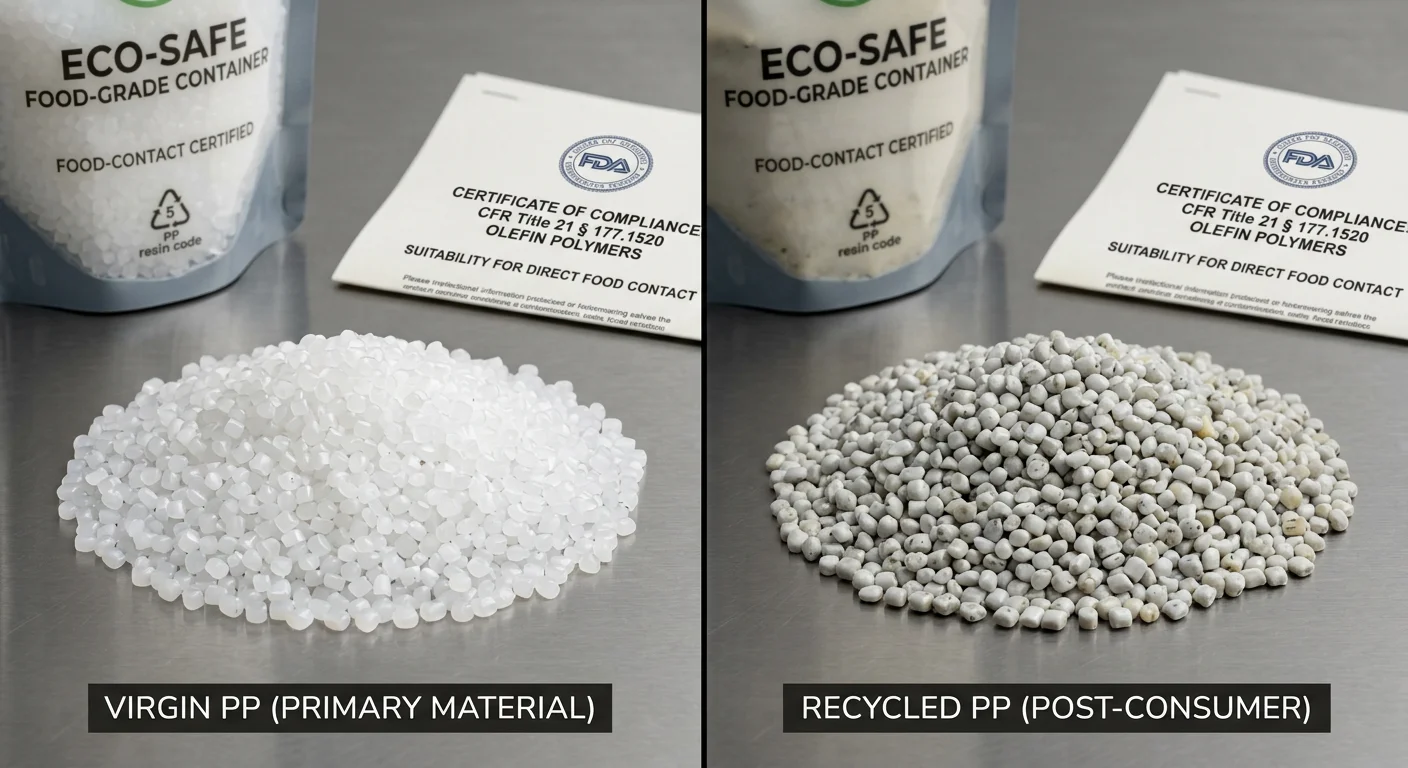
Here’s the baseline: virgin PP holds FDA and EFSA approval for food contact. Recycled PP does not — not by default, not without proof. Safety for rPP depends on the process, the application, and the documentation. No paperwork from a supplier? Treat their rPP as non-food-contact material. Full stop.
The five questions buyers ask — and what the answers mean:
“Can recycled PP be food-safe?”
Yes, in theory. Rare, in practice. In the EU, food-contact rPP must meet Regulation (EU) 2022/1616. That regulation sets a migration ceiling of 0.5 parts per billion (ppb) for any non-authorized substance. Most rPP on the market fail that threshold. Prevented Ocean Plastic made headlines for earning the first EU food-safe rPP certification under 2022/1616. The fact that it was a “world first” tells you how uncommon this is.
“What contaminants should I worry about?”
Post-consumer PP carries a history. That history includes phthalates, BPA, benzene, residual colorants, and traces of other polymers like PE or PET. These aren’t theoretical risks. Research shows recycled plastic can carry higher toxic chemical loads than virgin — not lower. Physical contamination degrades melt flow and creates processing instability. It also produces non-intentionally added substances (NIAS) that are hard to screen out.
“Does recycling make PP more toxic than virgin?”
Studies say yes, under certain conditions. Each recycling cycle concentrates what was already in the feedstock. After 2–3 heat cycles, molecular weight drops, stability declines, and contaminants build up. That’s not a fringe concern. It’s a known property of mechanical recycling.
“Which certifications should I require?”
Here’s the short list, by region:
-
EU : Reg. (EU) 2022/1616 process authorization + Reg. (EC) 1935/2004 framework compliance + GMP under Reg. (EC) 2023/2006
-
US : FDA No Objection Letter (NOL) for the specific recycling process and feedstock
-
Both markets : Migration test reports with numeric results, ISO 9001 quality system, documented input stream traceability
“What about microplastics?”
Virgin PP is non-toxic, and no direct cancer link from PP itself has been established. But rPP is more degraded, more brittle, and more defect-prone. It fragments faster under heat, abrasion, and repeated washing. That’s why many brands exclude rPP from products that face high mechanical stress or repeated heating cycles.
The practical checklist before you approve any rPP supplier:
-
Post-industrial vs. post-consumer ratio — post-industrial scrap is cleaner and more consistent
-
Source stream specifics — mono-stream industrial waste behaves very differently from municipal mixed collection
-
MFR shift data — a large melt-flow rate change compared to virgin signals, real degradation
-
Migration test reports — ask for actual numeric values, not just a compliance declaration
-
Contaminant screening frequency — per-lot testing matters; annual snapshots don’t
The rule experienced buyers follow: assume rPP is not food-contact safe unless a specific, documented process approval proves otherwise. Outside of food contact — crates, automotive trim, outer packaging — rPP is a solid option. You just need to verify feedstock quality and confirm the performance specs match your actual use case.
Simple Decision Rule: How I Would Choose as a PP Manufacturer
Three questions. That’s all you need to cut through the noise.
After covering performance gaps, safety considerations, and cost realities — here’s the decision framework I’d use on the floor:
Step 1: What fails if the material underperforms?
-
Safety component, regulatory requirement, or high liability exposure → virgin PP only
-
Performance-critical part with real customer impact → virgin PP, or a controlled rPP blend with documented feedstock
-
Non-critical application, generous tolerances, dark colors acceptable → rPP is worth evaluating
Step 2: What does your application demand?
|
Application Type |
Recommended Material |
|---|---|
|
Food contact, medical, precision parts |
Virgin PP — no exceptions |
|
Automotive trim, structural outdoor goods |
rPP at 20–50% with virgin blend |
|
Bins, pallets, park furniture |
High rPP content is viable |
Step 3: Can your supplier prove it?
Ask for MFR shift data, migration test reports, and source stream documentation. A declaration isn’t proof. You need hard data before you commit.
Here’s the one rule to keep: match material grade to failure consequence . Then, verify every claim your supplier makes before the purchase order goes through.
Conclusion
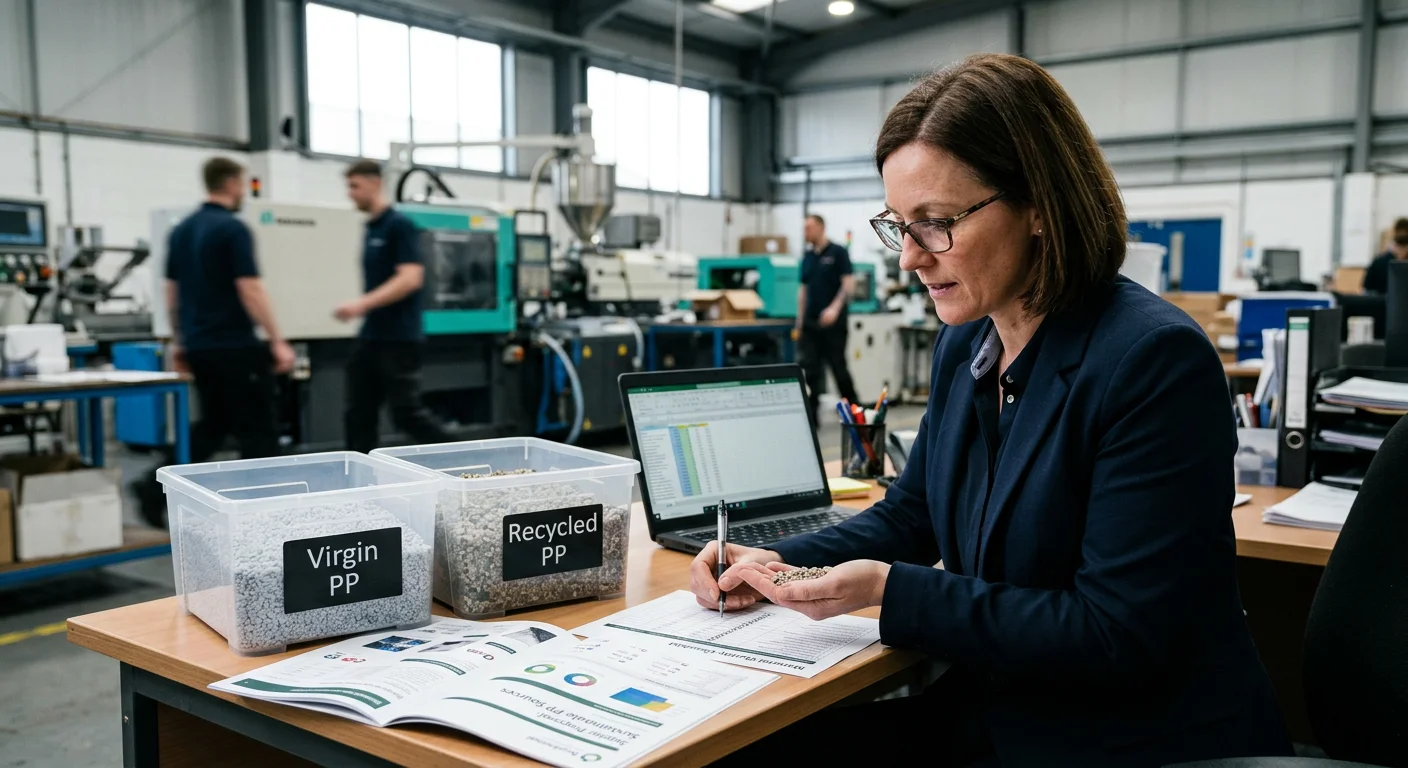
Here’s the honest truth: there is no single “better” PP — just the right PP for the right job.
Virgin PP leads on consistency, color clarity, and compliance. That matters most where food safety or tight mechanical tolerances are non-negotiable. Recycled PP leads on cost and sustainability — but only when your supplier controls the source material and processing quality with real discipline.
The mistake most buyers make isn’t choosing the wrong material. It’s choosing without asking the right questions first.
Before your next order, push your supplier on three things:
-
Where does the recycled feedstock come from?
-
What’s the MFI range batch-to-batch?
-
Does it carry any verified certification?
Those answers tell you more than any spec sheet ever will.
Still weighing your options? We supply both virgin polypropylene material and certified recycled PP resin grades — and we’re happy to help you figure out which fits your application. Reach out and let’s talk through it.
The best material decision is an informed one. Start there.