

Your hard hat stands between a normal Tuesday and a life-changing injury. So when Milwaukee launched the BOLT safety helmet into the construction PPE market, it got our attention fast.
Milwaukee built its name on tools that survive jobsite abuse. But does that same toughness carry over into head protection? That’s the real question for serious tradespeople.
This breakdown is for you if:
– You’re an electrician hunting for a solid ANSI Class E hard hat
– You’re a safety manager trying to sell the price tag to your crew
– You’re a contractor sick of sweating through a cheap lid before 9 a.m.
We put it through hard testing. We ran the comparisons. Here’s what we found.
What Makes the Milwaukee BOLT Hard Hat Different from Standard Hard Hats?
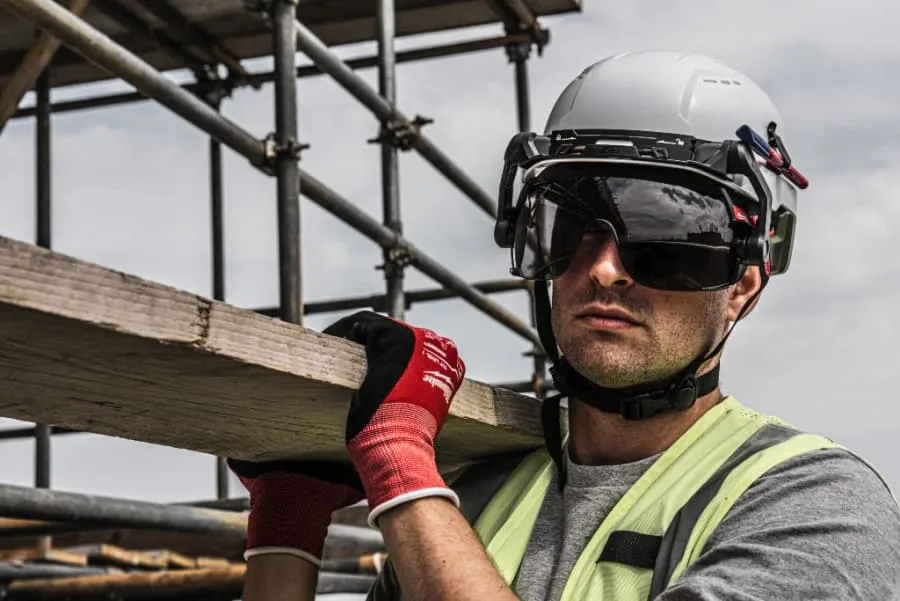 Most hard hats do one thing: cover the top of your head and hope for the best. Milwaukee built the BOLT to do far more than that.
The differences start at the shell itself. The BOLT 100 uses ABS thermoplastic—tough, lightweight, reliable. Step up to the BOLT 200, and you get Lexan polycarbonate. It’s lighter than ABS, more flexible, and much harder to crack under impact. That’s not a minor upgrade. That’s a different class of protection.
Type 1 vs. Type 2: Why It Matters
Nearly every standard hard hat is Type 1. That means it handles impacts from straight above. Drop something sideways, or catch a swinging beam at shoulder height, and that helmet is already past its limit.
The BOLT 200 is a Type 2 helmet. It’s built for 360-degree protection, including hits from the side. For anyone working in tight spaces or around active equipment, that’s not a bonus feature. That’s the core purpose.
Built for Heights—Not Just Jobsite Floors
This is where the BOLT 200 pulls ahead. It carries dual certification: EN397 for ground-level work and EN12492 for working at height. That second certification meets mountaineering-grade elevation standards. The BOLT 100 doesn’t carry it. Most competing hard hats don’t either.
The height-rated chinstrap attaches to the BOLT 200 only. It’s a small detail that becomes a critical one the moment your boots leave the ground.
Suspension, Accessories, and the Small Things That Aren’t Small
Inside, the BOLT 100 uses a 6-point webbing harness with a washable sweatband. The BOLT 200 upgrades to inner foam suspension paired with a breathable crown liner. Over a long shift in summer heat, that difference is real.
On the outside, both models include six accessory slots:
– Four proprietary BOLT slots
– One standard industry-size slot for universal attachments
Face shields, earmuffs, headlamps—they all connect clean. No adapters. No rigging something together.
That’s not how most hard hats work. That’s exactly the point.
Milwaukee BOLT Hard Hat Models: Which One Should You Pick?
Two models. One clear line between them.
The BOLT 100 is built for ground-level work. It has an ABS thermoplastic shell, a 6-point webbing harness, and a washable sweatband. It’s reliable and lightweight. You can also get a vented full-brim option if heat is a constant problem on your site. It covers what most standard job sites need.
The BOLT 200 is a different animal. The shell is Lexan polycarbonate. You get foam suspension with a breathable crown liner. The 5-point chinstrap is tested to EN12492. Type 2 certification adds side-impact protection. That protection can cut skull fracture risk by 75% and concussion risk by 50% compared to traditional hard hats . Virginia Tech ranked the IMPACT ARMOR system at the top of helmet safety testing in 2025. That’s not marketing. That’s independent data.
It also runs up to 15°F cooler than competing Type 2 full-brim helmets. At $99, it’s not cheap—but those numbers are hard to argue with.
Quick Pick Guide
| Your Situation | Go With |
|---|---|
| Ground-level, budget-conscious | BOLT 100 |
| Working at heights or in high-risk environments | BOLT 200 |
| Need venting | Both available (Class C) |
| Electrical hazard zones | Non-vented Class E on either model |
| Maximum TBI protection | BOLT 200 with IMPACT ARMOR |
Both models fit head sizes 6.5 to 14. Both support full BOLT accessory compatibility. No compromises on either end of the lineup.
Milwaukee Hard Hat’s Real-World Comfort: Wearing It All Day on the Job
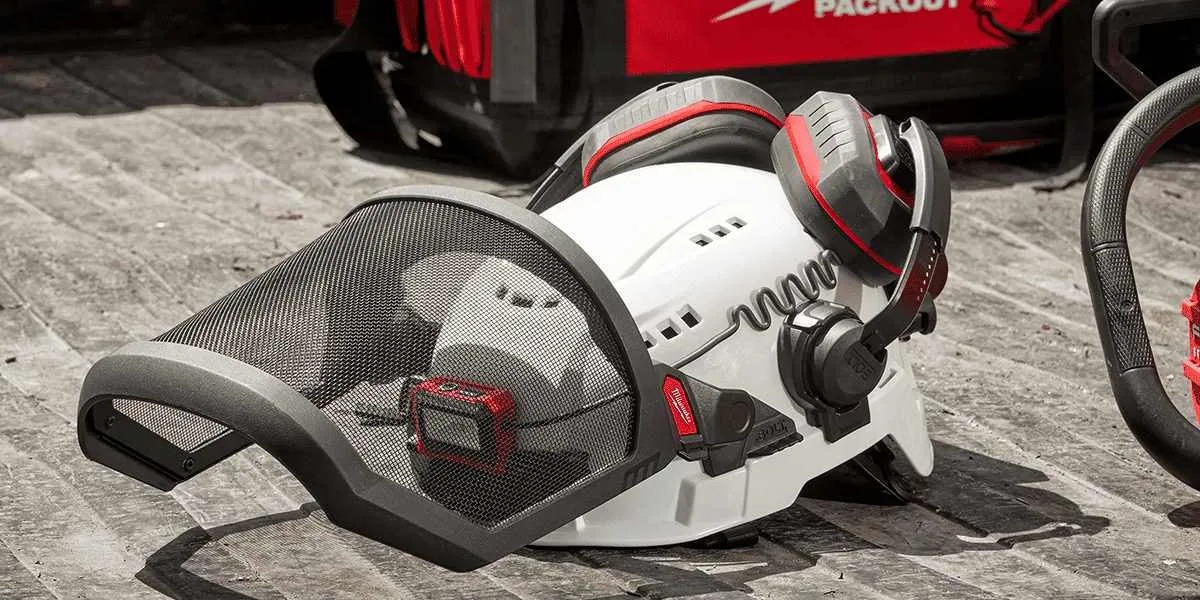 Eight hours in a bad hard hat doesn’t just hurt your head. It eats away at your focus, shortens your temper, and pulls your attention away from the work that keeps you alive.
Milwaukee knows this. The BOLT isn’t designed around a crash-test dummy sitting still in a lab. It’s built for a real person sweating through July in a full-brim lid—moving, bending, climbing, and doing it all again the next day.
What “All-Day Comfort” Really Means on the BOLT?
The BOLT 100’s 6-point webbing harness keeps the shell lifted off your skull. That gap matters. Heat escapes. Pressure spreads out. Your head stops feeling like it’s being squeezed flat by noon.
The BOLT 200 goes further. The inner foam suspension works with the breathable crown liner to do more than cushion—it moves heat away from your head. Milwaukee claims the BOLT 200 runs up to 15°F cooler than competing Type 2 full-brim helmets. On a brutal summer site, that difference separates sharp thinking from barely getting through the afternoon.
Both models include a washable sweatband. Small feature. There is an enormous difference over the course of a week.
The Weight Factor
The Lexan polycarbonate shell on the BOLT 200 is lighter than standard ABS. Less neck strain across a full shift. Less tension piling up between your shoulders by 3 p.m. That’s not a comfort bonus—that’s fatigue control. And fatigue is where mistakes start.
Head sizes 6.5 to 14 mean the fit is truly adjustable. Not “adjustable” in the way that leaves half the crew wearing a helmet that rocks side to side all day.
This helmet was built to be forgotten. That’s the highest praise you can give a piece of PPE.
Milwaukee Hard Hat’s Durability: How It Holds Up After Real Use
Construction PPE doesn’t get a grace period. On day one, it’s already absorbing UV exposure, tool impacts, concrete dust, and whatever the weather decides to throw at it.
The Milwaukee BOLT holds up well under that reality.
The BOLT 100’s ABS thermoplastic shell is the baseline—and it’s a solid one. ABS resists cracking under blunt impact. It handles temperature swings without going brittle. This is the same material that survives getting tossed in a truck bed, stepped on, and left baking in direct sun all August long.
The BOLT 200’s Lexan polycarbonate shell takes things further. Polycarbonate is harder to crack. It bends under stress instead of breaking. Plus, it holds up far better against fatigue after repeated impacts. It doesn’t just survive abuse—it absorbs it and shows no signs of wear.
What Degrades First?
With most hard hats, the shell outlasts the suspension. That’s where things start to break down—and most people don’t notice until it’s too late.
Milwaukee tackled this head-on. Both models come with washable, replaceable sweatbands. The suspension systems are built for field maintenance, not factory service. You can swap parts on the job without sending anything in. The BOLT 200’s inner foam suspension also holds its shape better than standard webbing after months of heavy use. Standard webbing compresses and loses its cushion. The foam keeps performing.
A few practical durability notes worth knowing:
- Both shells have UV stabilisation built into the material—sun exposure won’t speed up cracking the way it does on cheaper ABS lids
- Plan to replace your hard hat every 1–5 years, depending on job-site conditions, even with no visible damage
- The accessory slots hold their fit and retention after repeated attachment cycles—no loosening over time
Cheap hard hats fail without warning. The shell looks fine right up until it doesn’t protect you. The BOLT’s material quality means you’ll see signs of wear before it becomes a safety issue—and that’s what you need from PPE that’s standing between you and a serious head injury.
Milwaukee BOLT vs Other Hard Hats (MSA, 3M, Klein)
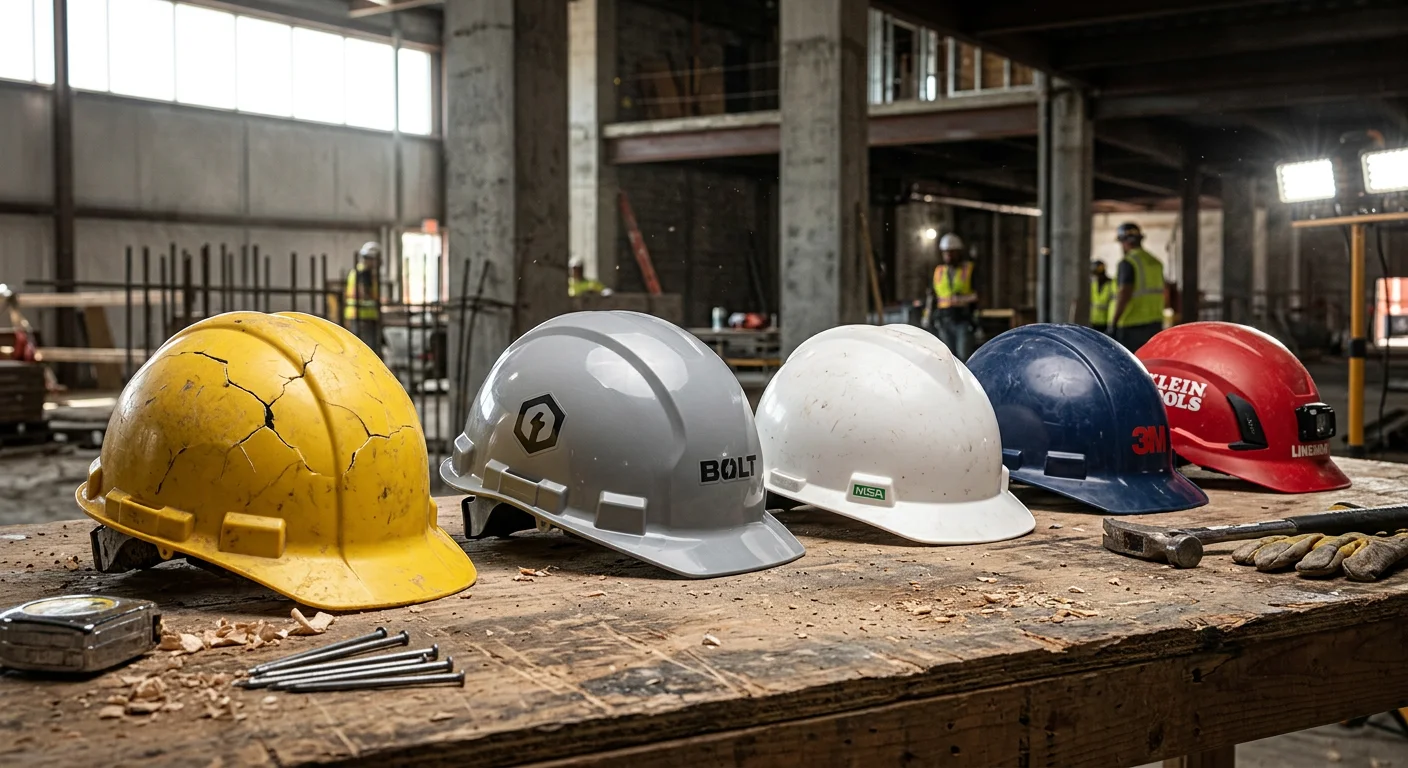 Three names dominated the hard hat market before Milwaukee showed up: MSA, 3M, and Klein. They’ve earned their reputations. The MSA V-Gard has been a jobsite staple for decades. Klein’s lids are trusted by electricians across the country. 3M brings serious PPE engineering to the table. None of that is up for debate.
What is up for debate is whether those helmets keep pace with what the BOLT delivers in 2025.
The Safety Gap Is Measurable
Start with the number that matters most. Virginia Tech’s Helmet Lab ranked the Milwaukee BOLT Hard Hat #1 for TBI prevention in their 2025 testing. Compare that to traditional hard hats—including the Type 1 designs that built MSA, 3M, and Klein’s reputations. The BOLT cuts concussion risk by 50% and skull fracture risk by 75%.
That’s not a marketing claim. That’s an independent lab. Their testing method is built to stress-test helmets the way jobsites break people.
MSA and Klein still ship Type 1 helmets as their main offering. That means top-impact protection only. The BOLT 200’s Type 2 certification covers lateral hits too—the kind that come from swinging lumber, low beams, and the chaos of a crowded work environment. That’s a completely different level of protection. Not a minor spec variation.
The Accessory System Is in a Different League
Here’s where the comparison gets practical fast.
MSA, 3M, and Klein use standard 30mm universal slots. They work. But friction-fit clips and elastic straps compete for brim space. Under real movement, they shift.
The BOLT runs six slots total—four proprietary click-in BOLT slots plus two standard 30mm openings. You can mount a headlamp, face shield, and marker clip at the same time. None of them fights for position. Third-party earmuffs from 3M and Honeywell still connect through the universal slots. So you’re not stuck in a closed ecosystem.
The competitors offer mounting. Milwaukee offers a system.
Milwaukee BOLT Accessories: Useful or Not?
Six slots sounds like a spec sheet flex. In practice, it changes how you work.
Most hard hat accessory systems feel like an afterthought. You get a pair of universal 30mm slots bolted onto the brim. That’s it. The result? A face shield that wobbles. A headlamp that drifts left by noon. A low-level irritation you stop noticing because you’ve learned to live with it. The BOLT hard hat is different. Accessories are part of the helmet’s purpose—not an add-on bolted on after the fact.
What’s in the System?
Six slots total. Four are proprietary BOLT click-in positions. Two are standard 30mm openings for universal third-party attachments. So you’re not trapped in Milwaukee’s ecosystem. Your 3M earmuffs still connect. Your existing face shield hardware still works. Inside the BOLT slots, the fit is clean and firm. No friction-clip slop. No hunting for the right adapter.
The BOLT Headlamp Mount is the standout piece. It works with most standard headlamps. It sits firm and stays put under movement. On a dim interior site or early morning framing work, that stability matters more than any spec number.
The Grey Dual Coat Lens Full Face Shield earns its place without making noise about it. Comfortable fit, solid optical clarity, no complaints after a full day of wear. People who’ve used it describe the system as dependable—not flashy, just reliable, shift after shift.
The Real Value
The accessory system delivers one thing that’s hard to put on a spec sheet: simultaneity. Headlamp, face shield, and a clip marker—all mounted at once, none getting in the way of the others. On a busy site, that’s not a luxury. That’s fewer interruptions. Fewer reasons to leave something unattached.
The accessories aren’t the headline. They’re what make the headline worth believing.
Is the Milwaukee Hard Hat Worth the Price?
$40 gets you in the door. $179 gets you everything.
That gap says a lot about how Milwaukee built this lineup. There’s a real entry point. There’s a real ceiling. Neither one feels like filler.
The base BOLT starts at $40. You get a full ANSI-compliant hard hat with a ratcheting suspension, BOLT headlamp mount, four accessory slots, and a ventilation system that moves air. Not a stripped-down shell. A functional piece of PPE from day one.
Step up to the full helmet system at $179, and you’re buying something different. Modular accessories—full-face metal mesh shield, earmuffs, integrated visor—all click in and hold firm. Think about what you’re not buying on top of it:
- No standalone face shield
- No searching for compatible earmuff hardware
- No lost glasses—the visor is built into the system
People who wear it all day call it “the best helmet available right now.” That’s not marketing. That’s someone who’s worn enough bad lids to know the difference.
For crews needing bulk coverage, the five-pack runs at $139—around $30 per unit. Hard to beat that price for ground-level work.
The straight verdict: the $40 model delivers well above its price point. The $179 system earns its cost for long shifts across multiple job types. You pay for what you use. With the BOLT, you’ll use all of it.
Who Should Buy a Milwaukee Hard Hat (and Who Should Skip It)
Not every hard hat fits every worker. The BOLT is worth the price on certain jobsites—but cheaper options beat it on others.
Buy the Milwaukee BOLT if you:
- Work in electrical hazard zones and need a certified ANSI Class E hard hat with no trade-offs
- Spend full shifts working at height. The BOLT 200’s EN12492 certification and rated chinstrap are must-haves for that
- Run a crew and need OSHA-compliant construction PPE that holds up through a full season of hard use
- Want a modular accessory system that clips on a headlamp, face shield, and earmuffs at the same time—no adapters, no fumbling around
- Care about the TBI protection that Virginia Tech tested independently. Not just a sticker printed on the shell
Skip it if you:
- Need a one-day lid for a low-risk residential visit—a $15 Type 1 shell covers that job
- Own a helmet with a hard hat suspension system that fits well and gives you zero problems
- Work where vented hard hats are banned, and price is the main deciding factor
The BOLT 200 is built for tradespeople who put on a helmet every single day and feel the difference by hour four. The BOLT 100 is a solid pick for ground-level crews keeping an eye on the budget. Neither one is too much—as long as the jobsite calls for it.
FAQ: Quick Answers People Search For
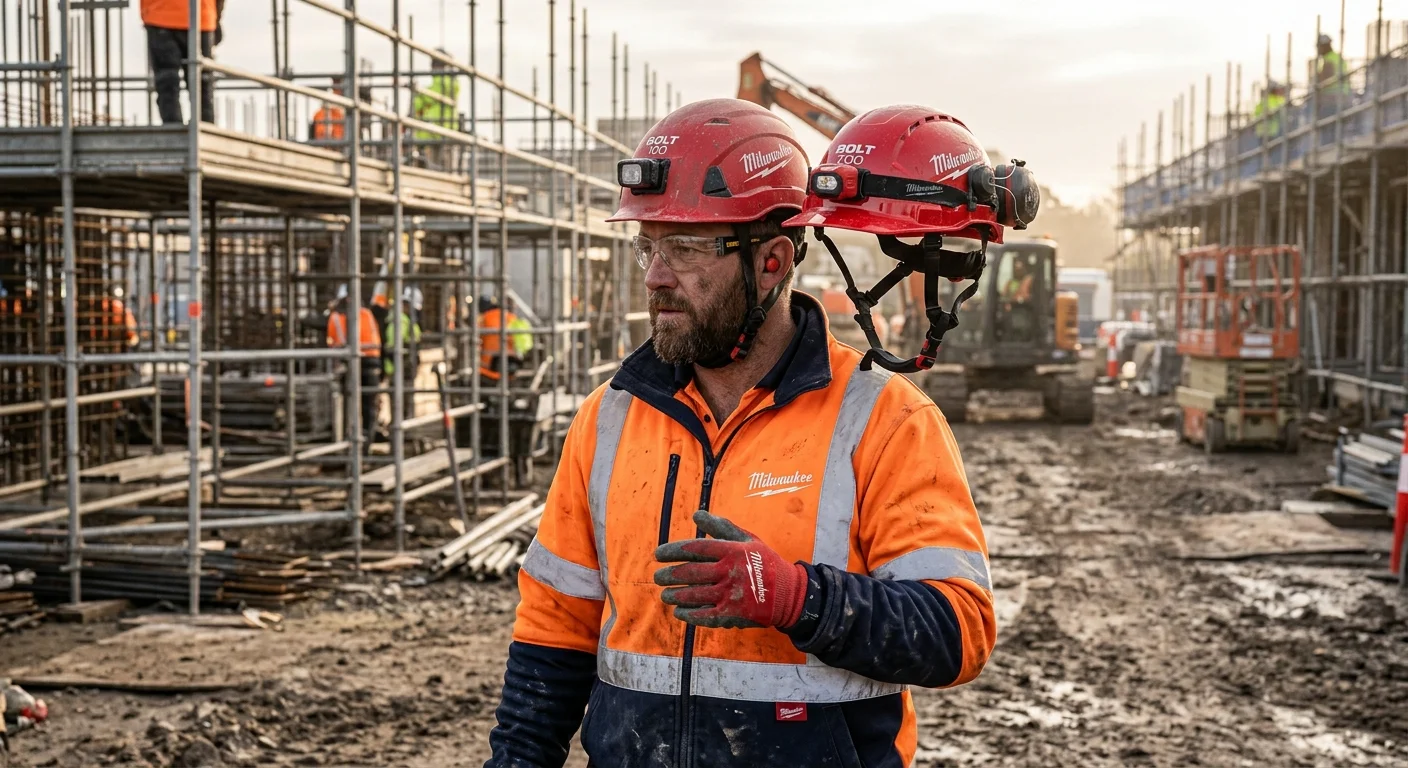 These are the questions that come up every time someone researches the Milwaukee BOLT. Straight answers. No filler.
Is the Milwaukee BOLT hard hat OSHA-compliant?
Yes. Both the BOLT 100 and BOLT 200 meet ANSI/ISEA Z89.1 standards. Non-vented versions carry Class E certification for electrical hazard zones. This covers OSHA’s PPE requirements for most construction and electrical work sites.
What’s the difference between Type 1 and Type 2 hard hats?
Type 1 protects from impacts above. Type 2 adds lateral protection—hits from the side. The BOLT 200 is Type 2. Most competing hard hats, including MSA V-Gard and Klein, are Type 1. That’s it.
Can I use a vented hard hat around electrical hazards?
No. Vented shells are Class C—no electrical rating. For live electrical work, you need a non-vented Class E model.
Does Milwaukee make a hard hat liner for winter work?
Yes. Milwaukee makes helmet liners built for cold-weather jobsite use. They fit inside the BOLT suspension system. Your fit stays the same, and your safety rating stays intact.
What size head does the Milwaukee BOLT fit?
Both models adjust from size 6.5 to 14. That range covers most workers. No modification needed.
Are Milwaukee BOLT accessories compatible with other brands?
It depends on the slot type. The four proprietary BOLT slots are Milwaukee-specific—third-party gear won’t fit there. The two standard 30mm slots work with universal attachments. You can mount 3M and Honeywell earmuffs without any issues.
Conclusion
The Milwaukee BOLT went through long shifts, harsh conditions, and the kind of punishment that separates real jobsite gear from showroom equipment. The verdict is clear: this isn’t just a hard hat with a logo on it.
The BOLT holds up where it counts. You get genuine ANSI Class E compliance. The suspension system won’t leave you dreading the afternoon hours. Plus, the accessory ecosystem fits together the way it should — no forcing, no gaps.
Contractors, electricians, and safety managers — if you’re done settling for uncomfortable PPE that just scrapes by on standards, this hat was built with you in mind.
Here’s what to do next:
– Check which BOLT model matches your worksite classification
– Grab a compatible winter liner for cold-weather work
– Stop treating head protection like an afterthought
Your hard hat is the last line of defence. Make sure it’s one you’d put your trust in.