

Choosing the wrong work gloves doesn’t just cost you money — it can cost you a finger. MCR Safety gloves vs Mechanix is a real debate. You’re not just picking a brand. You’re deciding how well your hands survive the shift.
Both have loyal followings. Both make bold claims. And they land in very different corners of the hand protection PPE market. I tested them in real-world conditions — cutting, gripping, and impact scenarios. Now I have a clear picture of where each one wins and where it falls short.
Keep reading. By the end, you’ll know which glove belongs on your hands.
MCR Safety vs Mechanix: Brand Background & Typical Users
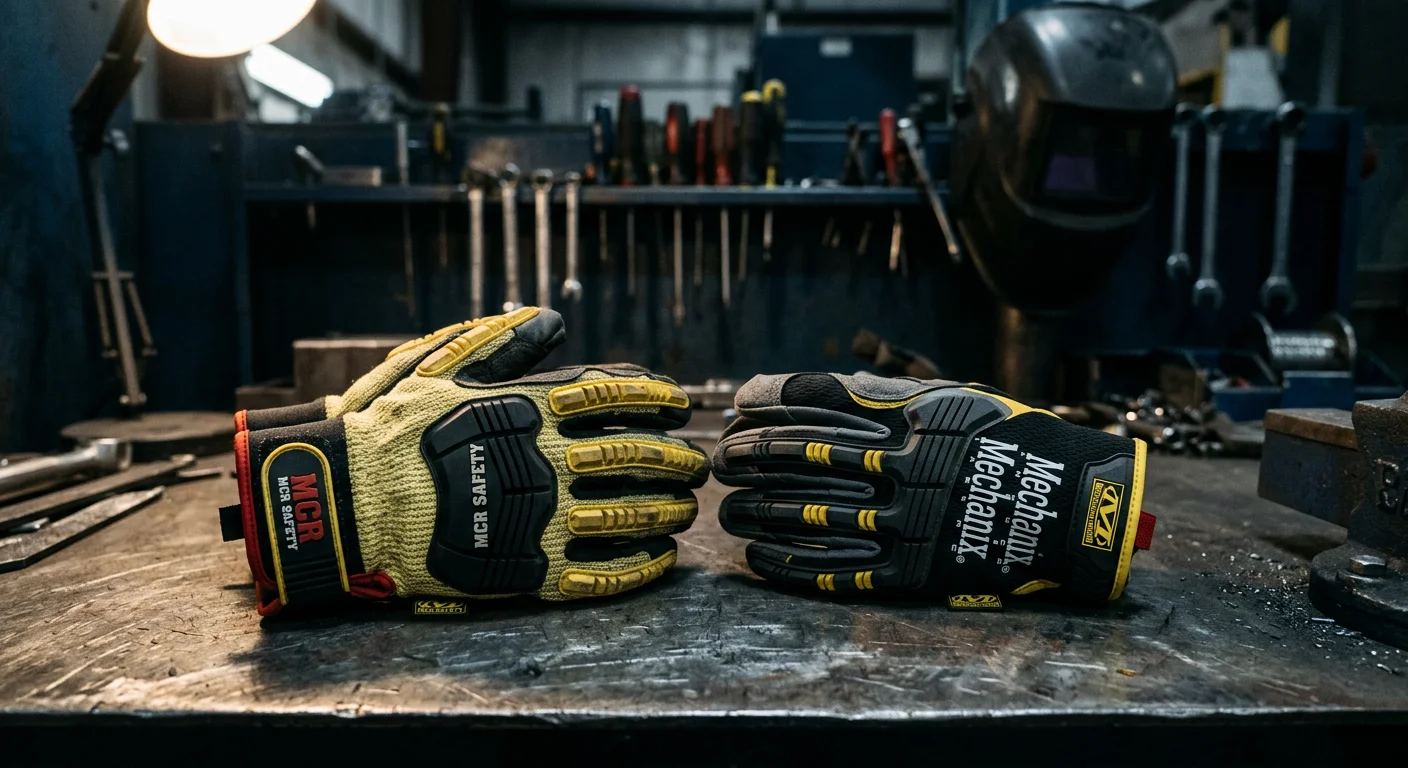 Two very different origin stories. And they matter more than most people think.
MCR Safety started in 2004 from a merger — Memphis Gloves , Crews Glasses, and River City Garments joined under one roof. The combined experience behind that merger goes back over 50 years in PPE manufacturing. Today, they carry 5,000+ SKUs across gloves, eyewear, welding gear, and chemical protection. That’s not just a glove company. It’s a full-scale safety operation. They ship to customers across five continents.
Mechanix came from a garage, not a boardroom. A race mechanic introduced “The Original” glove at the 1991 Daytona 500. NASCAR pit crews wore them on the spot. That motorsports DNA never left. Every design choice since has focused on dexterity, grip, and impact protection.
Who wears each brand?
- MCR Safety serves shop floors, oil rigs, construction sites, and industrial maintenance crews. These are jobs that require certified, compliance-grade hand protection PPE
- Mechanix draws professional mechanics, trade workers, and DIY users who put feel and mobility first — over formal ANSI cut level certification
One brand built its name on breadth. The other built it on specialization. Neither is wrong — but one fits your job better than the other.
First Impressions: What I Notice When Using Both Gloves
Slide on an MCR Safety glove, and something clicks. It feels like gear built for a job site — structured, deliberate, built with a purpose. The Mechanix goes on a different way. It conforms. Wraps. Almost disappears on the hand.
That difference in feel tells you everything about each brand’s design approach. And you notice it before doing a single task.
MCR Safety — First Contact
- The palm reinforcement stands out right away — thicker, stiffer, and less flexible
- Finger coverage feels protective, but a bit bulky on the first wear
- The wrist closure locks the glove in place — useful in high-movement industrial work glove environments
- The stiffness fades after the first shift — this glove needs a short break-in period
Mechanix — First Contact
- The fit is snug and athletic from the start — no adjustment needed
- Glove grip performance is strong out of the box — the synthetic palm grabs surfaces with solid control
- Impact knuckle padding sits flush without limiting finger movement
- The lightweight build makes you forget you’re wearing mechanics gloves at all
What the first impression reveals:
MCR Safety leads with work glove protection. That’s its core message, and you feel it the moment you put it on. Mechanix leads with mobility. Every part of its build reflects that. Neither brand is overreaching. Both deliver what their construction promises. That clear difference in feel is where your buying decision starts.
Protection & Durability in Real Work
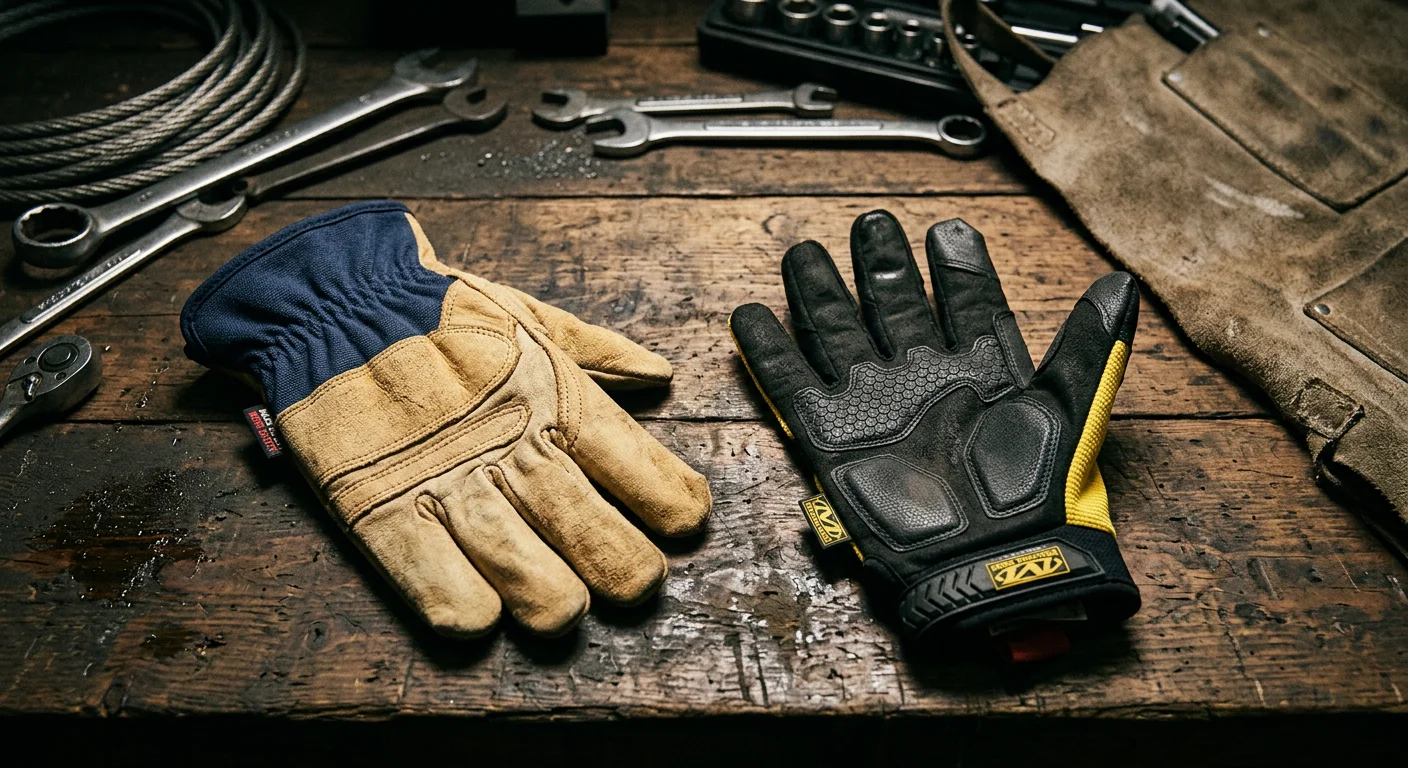 Here’s an uncomfortable truth about glove durability: most workers don’t swap out a glove until it has holes in it. That’s not a standard. That’s a failure point. Real durability means the glove holds its protection level well before it falls apart — and MCR Safety and Mechanix handle that very differently.
MCR Safety builds protection into the material itself. Nylon and DuPont™ Kevlar® zonal plaiting runs across the palm and back of the hand — not as a surface treatment, but woven into the structure. That matters. Rigid polymer coatings crack and separate as fabric flexes over time. MCR’s multi-layer construction uses flexible bonding agents between layers. The glove bends thousands of times without the protection peeling away. In abrasion tests run against ASTM F1790 standards, the layered approach beats single-coat alternatives across the board.
Mechanix goes a different route. Its polymer-based fabrics with proprietary impact padding stay lightweight under real stress. You get resistance to moisture, heat, and mold built in. The synthetic palm holds up under grease, oil, and heavy tool contact without breaking down. What it doesn’t carry is the certified ANSI cut level protection you find in MCR’s Kevlar-reinforced builds.
Where each breaks down under real conditions:
- Abrasion — MCR wins. The Kevlar plaiting handles surface grinding that wears through Mechanix’s synthetic palm within weeks of heavy use
- Impact resistance — Mechanix wins. Its knuckle padding absorbs blunt force better than MCR’s standard builds
- Moisture and sweat — Mechanix holds an edge with mold-resistant fabric treatment. MCR’s coated gloves can trap heat
- Seam integrity under tensile stress — MCR’s stitching holds longer in lifting and stretching scenarios
The bottom line on durability: Do your hands face cut risk and abrasion every day? MCR Safety’s cut-resistant gloves outlast Mechanix in a straight wear-life comparison. Is impact your main threat? Mechanix handles that load better. Neither glove is flat-out tougher than the other — the job decides which one lasts.
Comfort, Fit & Dexterity: Which Glove Feels Better?
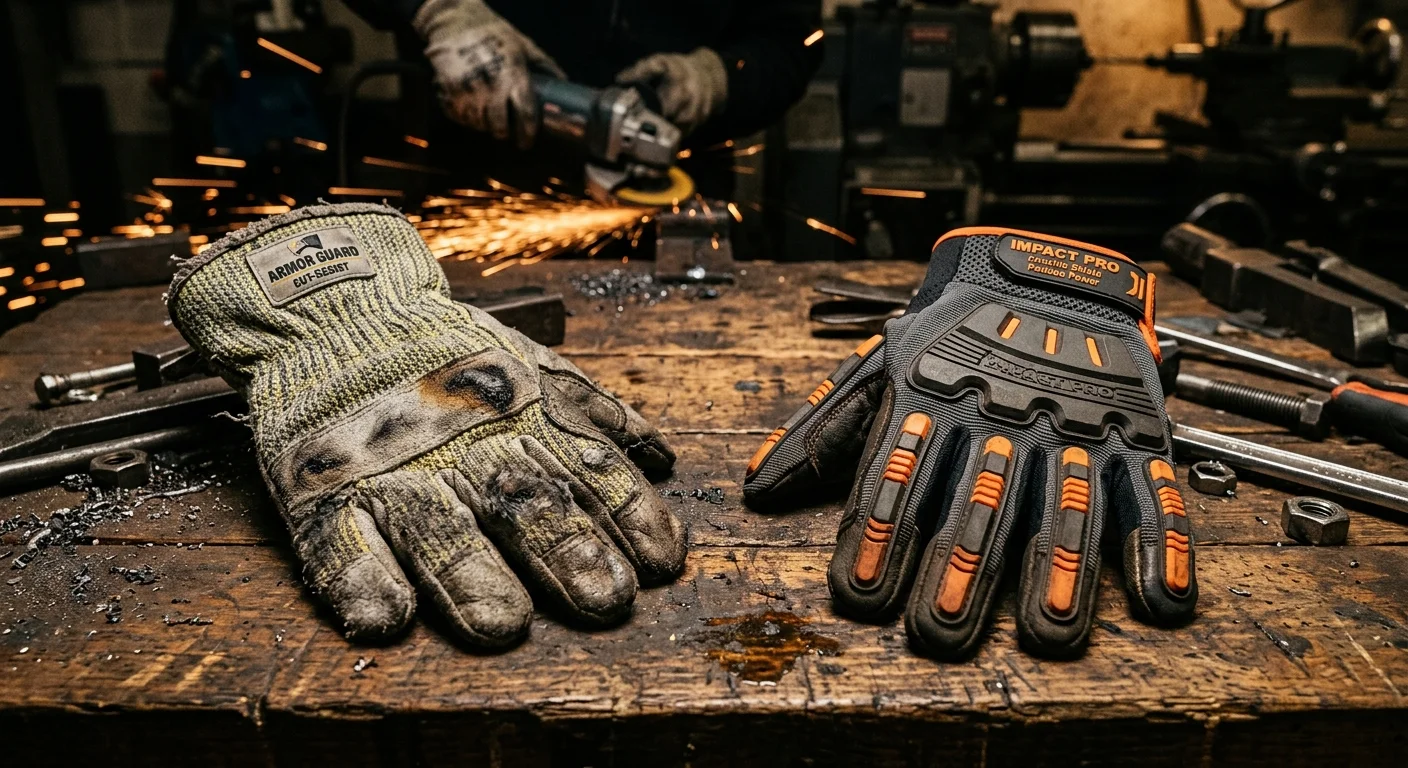 Nobody talks about hand fatigue until hour six of a shift. Then it’s all anyone talks about.
That’s where comfort stops being a nice-to-have and becomes a safety issue. A glove that cramps your hand or kills your grip feedback gets pulled off mid-task. And bare hands on a job site aren’t PPE — they’re a hazard.
MCR Safety is built around structured comfort. Their 3D-Comfort Fit design places materials in zones — synthetic palm panels with spandex inserts between the fingers. This lets the glove wrap your hand without pinching at the knuckles or bunching at the palm. It’s not the instant-fit feel you get from athletic gear. But once it sits, it stays put through repetitive motion. No slipping. No rotating.
Mechanix takes the opposite approach — fit first, everything else second. The Stretch-Fit™ thumb and Fist-Flex™ inserts aren’t just marketing terms. They create real, measurable mobility. Folded-finger construction cuts out the fingertip bunching that ruins dexterity on most industrial gloves. Most users report forgetting they have them on. That’s not hype — that’s the mark of a great fit.
Where each glove separates on dexterity:
- Tactile feedback — Mechanix wins. The thin synthetic palm picks up surface texture, and tool feel far better than MCR’s thicker Kevlar-reinforced builds
- Extended wear fatigue — Mechanix again. The light build keeps hands cooler and cuts down on strain across long shifts
- Cold-condition grip — MCR holds its own here. The nitrile-coated options keep a solid grip in low temperatures without losing palm feel
- Touchscreen compatibility — Mechanix has it built in as a standard feature; MCR’s support depends on the model
The real trade-off: MCR Safety gives up some dexterity to deliver certified work glove protection. Mechanix gives up some cut resistance to deliver a superior feel. For dexterity-heavy tasks — detailed mechanical work, tool handling, precision assembly — Mechanix is the sharper choice. For full-shift industrial wear where glove grip performance and compliance both count, MCR closes that gap fast.
Price & Value: Which One Is Worth the Money?
Let’s put a number on it — because that’s what closes the deal.
MCR Safety gloves run $8–$25 per pair, depending on the model and protection tier. Their Kevlar-reinforced cut-resistant gloves sit closer to the top of that range. Their entry-level coated options land at the bottom. Mechanix covers a wider price band — $15–$55 — with premium impact-rated builds pushing toward the higher end.
On paper, Mechanix costs more. But that number alone doesn’t tell you much.
Here’s what the price buys you:
- MCR Safety : Certified ANSI cut level protection, compliance-grade materials, and heavy-duty durability. Procurement teams buying in bulk — warehouses, construction crews, oil field operations — get a low per-unit cost and fast safety ROI.
- Mechanix : Premium fit, mobility engineering, and brand credibility built on motorsports. You’re paying for feel and function, not a certification stamp.
The real value test isn’t the sticker price. It’s the cost-per-shift.
MCR Safety gloves keep their protection longer in high-abrasion environments. That means fewer replacement cycles and less spend over time. Mechanix gloves used in mechanical work every day can show palm wear faster. But the dexterity they offer cuts down on task errors and hand fatigue — so you gain value through performance, not just protection.
Bottom line: Managing a team on a budget? MCR Safety wins on value per dollar. You’re an individual mechanic or tradesperson who wears one pair of hard hats every day? Mechanix earns its price through comfort and output. Neither brand is overpriced for what it delivers. The real question is which value matters more to you.
Head-to-Head Comparison Table: MCR Safety vs Mechanix
Numbers cut through opinion. Here’s where each brand stands.
| Category | MCR Safety | Mechanix |
|---|---|---|
| Cut Resistance | ANSI A2–A9 (Kevlar®, HyperMax®) | Not ANSI-certified |
| Impact Protection | TPR + D3O® meets ANSI/ISEA 138 | Proprietary knuckle padding |
| Palm Material | Nitrile, PU-coated, Kevlar® shell | Synthetic leather |
| Insulation Option | Thermosock® lining available | Minimal thermal options |
| Waterproofing | Waterproof membrane models available | Limited |
| Price Range | $8–$25 per pair | $15–$55 per pair |
| Primary Standard | ANSI/ISEA 138, ASTM F1790 | Brand-specific testing |
| Best For | Industrial, compliance-required environments | Mechanical work, high dexterity tasks |
One number worth knowing: MCR Safety has 45 years of PPE manufacturing experience behind these specs. That’s not marketing. It’s real, hands-on knowledge built into every ANSI cut level gloves rating on their label. Mechanix earns its spot through strong performance engineering. Certification depth is not its focus. Pick your priority. The table shows you which brand delivers it.
Who Should Choose MCR Safety Gloves? (Best Use Cases)
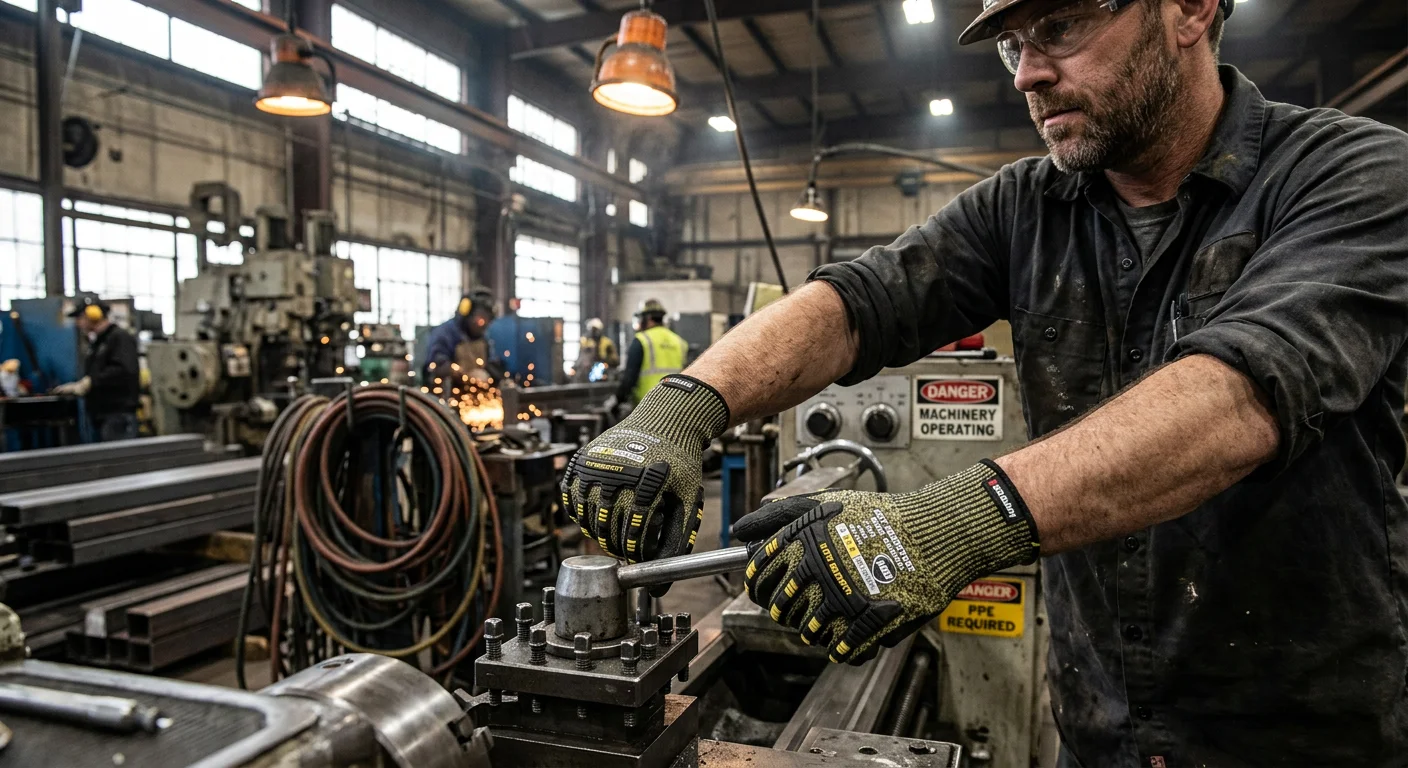 Some gloves protect you. MCR Safety gloves protect your job.
There’s a difference. Work in a place where compliance paperwork follows every injury report — that difference carries a real dollar cost.
MCR Safety was built for workplaces that don’t tolerate guesswork. The certification stack — ANSI cut level gloves, ASTM F1790, ANSI/ISEA 138 — isn’t a marketing checklist. It’s a legal shield. Safety managers sourcing industrial work gloves for a crew of 40 know this. That paperwork matters as much as the glove itself.
The workers who belong to MCR Safety:
- Metal fabricators and machinists — Kevlar®-reinforced cut-resistant gloves with an ANSI A4+ rating. These hold up through grinding, shearing, and edge contact. Not rough protection. Verified protection.
- Construction crews — High-abrasion environments wear down palms fast. Glove replacement shows up on every quarterly budget. MCR builds for that reality.
- Oil field and petroleum workers — Chemical-resistant builds, nitrile-coated palms, heat-tolerant materials. Built for this specific kind of punishment.
- Welders and fabricators — Glove builds made for the job, and they pair with MCR’s full PPE catalog — glasses, garments, respiratory gear. Your hand protection PPE works with everything else.
The pattern holds: MCR Safety wins where the environment is hostile, the task is repetitive, and compliance is non-negotiable.
One more thing worth noting — MCR’s 50-year manufacturing legacy backs up their safety gloves ‘ durability claim. This isn’t a promise in a product description. It’s a track record. Bulk procurement teams rely on it. So do individual workers in high-risk trades. That track record is the whole point.
Your hands face real industrial hazards every shift. MCR Safety isn’t just a good choice. It’s the right one.
Who Should Choose Mechanix Safety Gloves? (Best Use Cases)
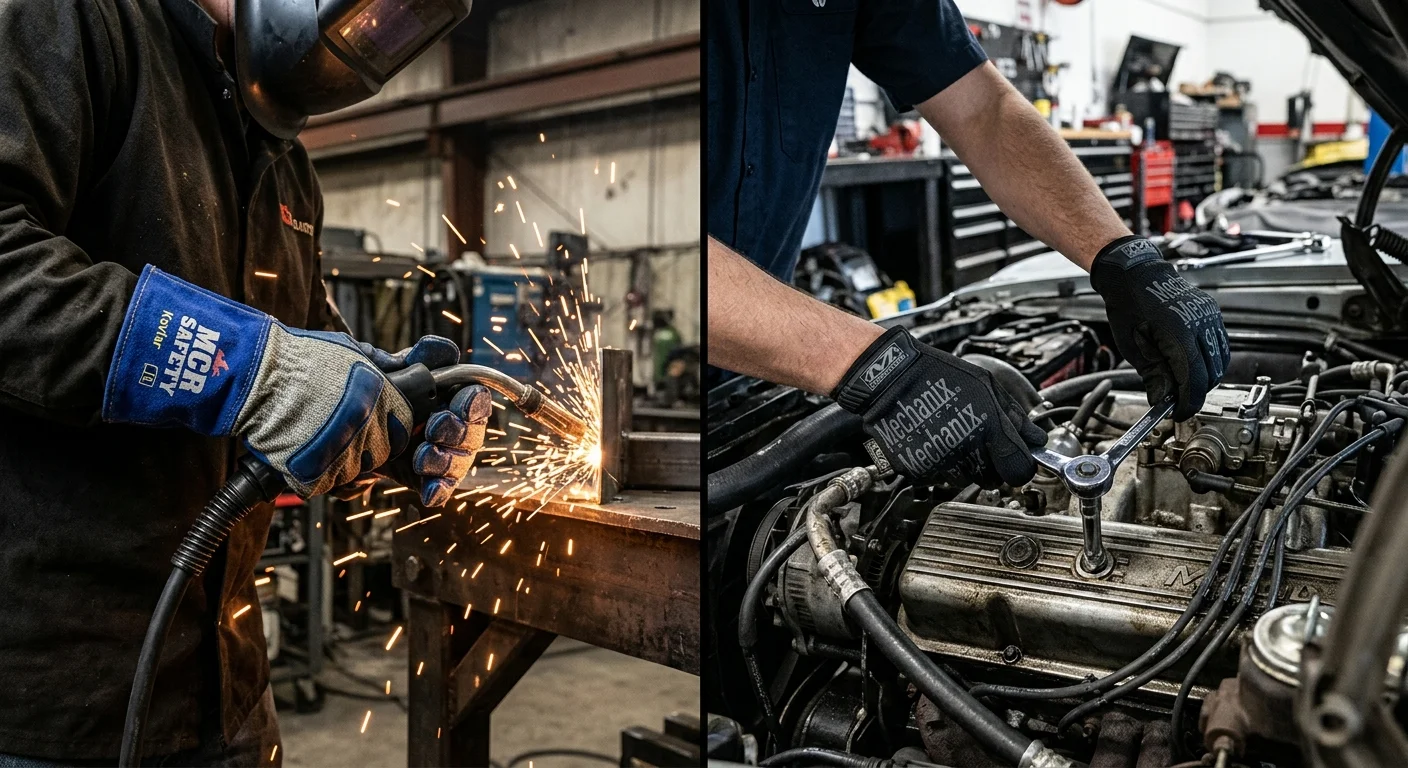 Mechanix built its reputation on one simple premise: your hands need to move, not just survive.
That’s a different philosophy from compliance-first brands. And for the right worker, it’s the right philosophy.
The workers who belong in Mechanix:
- Mechanics and automotive technicians — The Original series was born in a NASCAR pit garage. Suspension work, motor maintenance, tool-heavy jobs — this glove was made for all of it. The synthetic palm handles grease and oil contact without breaking down. Even in junkyard and heavy mechanical environments with monthly replacement cycles, the build holds up.
- Shooters and tactical operators — The Fast Fit series was built for this. The 0.6mm palm uses 52.5% polyurethane and 47.5% nylon. You get solid firearm control without losing hand coverage. It’s touchscreen compatible in field conditions. No glove removal needed between tasks.
- Motocross and impact sport athletes — M-Pact® gloves carry an EN 13594 impact rating. The knuckle protection absorbs blunt force. Your grip stays responsive throughout.
- Precision and fine motor work — Small components, button-controlled devices, detailed assembly work. The Fast Fit’s folded-finger construction gives you the tactile feedback that thicker industrial gloves cut out. You feel what you’re working with.
The price makes the case too. Fast Fit starts at $19. For a shooter or tradesperson who puts dexterity and touchscreen compatibility ahead of ANSI certification, that’s a clear win.
Mechanix doesn’t chase compliance paperwork. It chases performance. Your job demands feel over-formal. Your hands are your most important precision tool. Mechanix is the obvious call.
Frequently Asked Questions
These are the questions that come up every time someone compares these two brands. Straight answers only.
Is MCR Safety better than Mechanix for cut protection?
Yes — and it’s not close. MCR Safety holds certified ANSI cut level ratings from A2 through A9. That protection comes from Kevlar® and HyperMax® construction. Mechanix skips ANSI cut certification entirely. Does your job needs cut resistant gloves? MCR Safety is the clear choice between these two.
Which glove lasts longer?
It depends on the hazard. MCR Safety outlasts Mechanix in rough, high-abrasion, cut-heavy work. Mechanix holds up better under impact stress and moisture. No single brand is tougher across the board — the job decides that.
Are Mechanix gloves real PPE?
They do protect your hands. But they don’t hold the compliance certifications that formal industrial work environments require. For regulated job sites, MCR Safety is the compliant pick.
Which brand fits better?
Mechanix — no debate. The Stretch-Fit™ construction wraps your hand cleanly. The folded-finger design adds an athletic feel. MCR’s structured builds don’t get close to that level of fit and comfort.
Can I use either glove as impact-resistant gloves?
MCR Safety carries ANSI/ISEA 138-rated impact protection. Mechanix uses its own knuckle padding — it works well, but no third party has certified it to that standard.
Final Verdict: Which Brand Is Better Overall?
There’s no single winner here. The right work glove depends on the right job.
MCR Safety is the stronger pick for compliance-heavy workplaces. You get certified ANSI cut level gloves, verified cut-resistant gloves ratings, and industrial-grade materials. These gloves are built for environments where a glove failure has legal and physical consequences. Think construction, fabrication, and oil field work. That’s where MCR belongs.
Mechanix wins where feel matters more than paperwork. You get superior dexterity, an athletic fit, and solid glove grip performance. That makes it the top choice for mechanics, tactical users, and precision tradespeople.
The short version:
- Need certified work gloves protection for industrial use → MCR Safety
- Need mobility and feel for mechanical or precision work → Mechanix
Your hands do the work. Pick the glove that fits the job they’re doing.