

Picking the right pair of Kimtech gloves shouldn’t feel like a gamble. But with half a dozen models on the shelf and almost no useful guidance, most people grab whatever’s cheapest and hope for the best. I’ve been there.
I tested four different Kimtech nitrile models through real lab and handling tasks — not just unboxing them. Now I have honest answers. There’s a clear difference between a glove worth buying and one that splits at the thumb seam on day two.
Outfitting a cleanroom? Stocking a medical facility? Or need powder-free nitrile gloves that hold up during the task? Here’s what I learned the hard way, so you don’t have to.
🧤 Quick Answer: Which Kimtech Gloves Work Best?
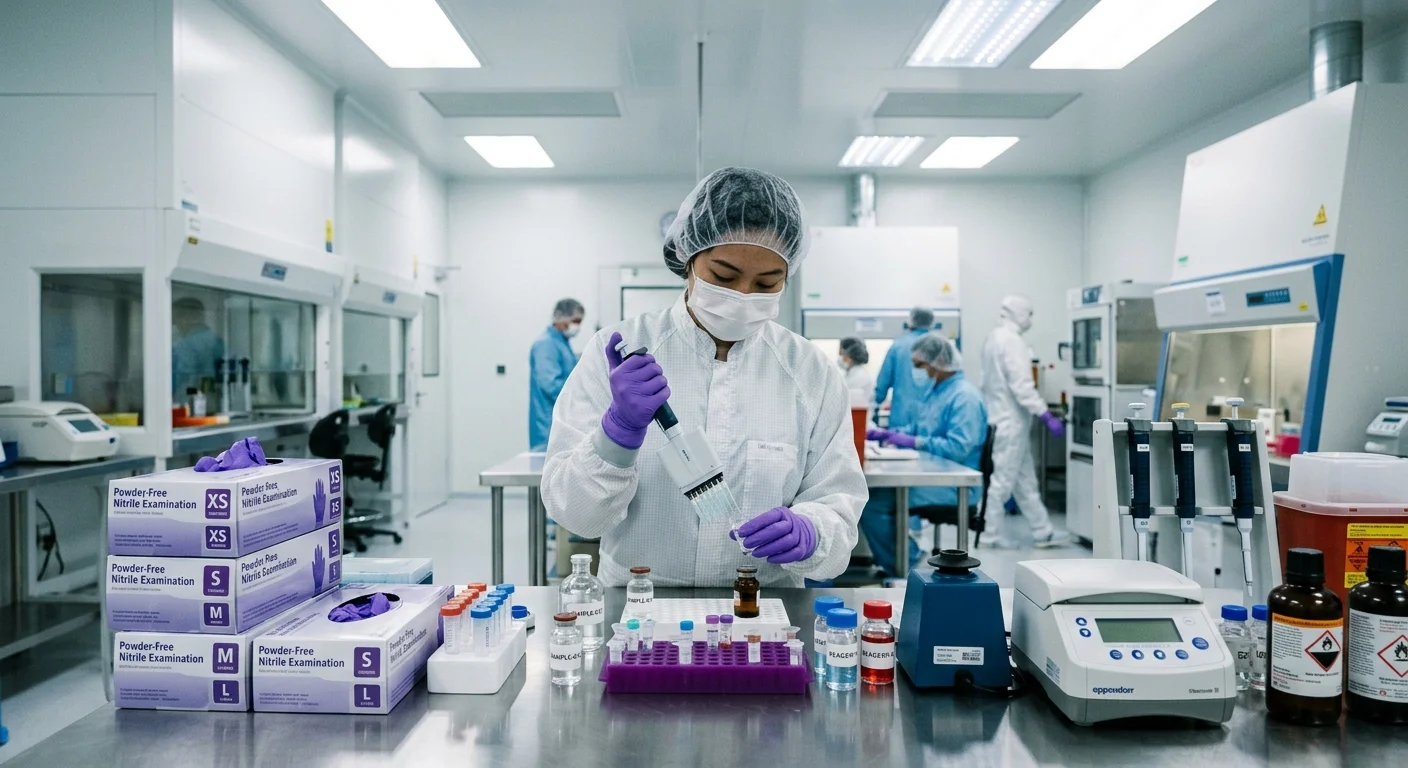 The short answer: Kimtech Polaris Nitrile wins — and the data proves it.
Tensile strength of 31 MPa after aging. Elongation at break of 480%. An AQL of 0.65 — that’s less than a quarter of the ASTM 2.5 benchmark for pinholes. An 80% preference study covered the U.S., UK, India, and Germany. Users who wear gloves every day picked Polaris over the best-selling Purple Nitrile for breathability and fit. That’s not marketing copy. That’s a global study.
“Best overall” doesn’t mean “best for your situation.” Here’s the fast breakdown:
| If You Need… | Reach For… |
|---|---|
| Maximum durability + lowest defect rate | Polaris Nitrile |
| Chemo clearance + everyday dexterity | Purple Nitrile |
| Cleanroom ISO 3 + contamination control | Sterling Nitrile |
| Thin, eco-conscious protection | Green Nitrile |
Bottom line: Go with Polaris for strength and reliability. No compromises there. Everything else is a trade-off worth knowing before you order a case of 200.
What Makes Kimtech Gloves Feel Different After Real Use?
Three hours into a lab session, most gloves start lying to you. The grip softens. The fit loosens. You stop trusting your fingertips. Kimtech nitrile glove holds up — and you notice the difference after extended wear, not in the first five minutes.
The physics here are simple. Kimtech’s nitrile formula is 40% stronger than latex and 60% thinner. That sounds like a contradiction. But put them on, and it makes sense. Thinner means more tactile feedback. Stronger means the glove keeps its shape instead of stretching out.
Here’s what that means mid-task:
- Textured fingertips hold their grip in wet conditions — no gradual slippage after chemical exposure
- Powder-free construction keeps the inner surface clean, so your third pair of the day feels the same as your first
- Elasticity holds under prolonged stress — unlike vinyl, which goes slack, or latex, which fatigues and can trigger an allergic response
The double-donning data backs this up. Two Kimtech nitrile gloves layered together deliver 80% higher tensile strength than a single latex glove at the same thickness. That’s not a small gain — it puts Kimtech in a different protection category.
For precision work in cleanroom environments, biomedical research, or non-sterile drug manufacturing, that steady dexterity is not a comfort bonus. It’s a core requirement. The glove needs to feel the same at hour four as it did at hour one. These do.
I Tried 4 Kimtech Gloves — Here’s What Happened
Four models. Weeks of real use. One clear takeaway: the gap between Kimtech’s best and worst isn’t small. It’s the difference between a glove you trust and one you just put up with.
Here’s what I found with each one.
Kimtech Polaris Nitrile: The One That Earns Its Price
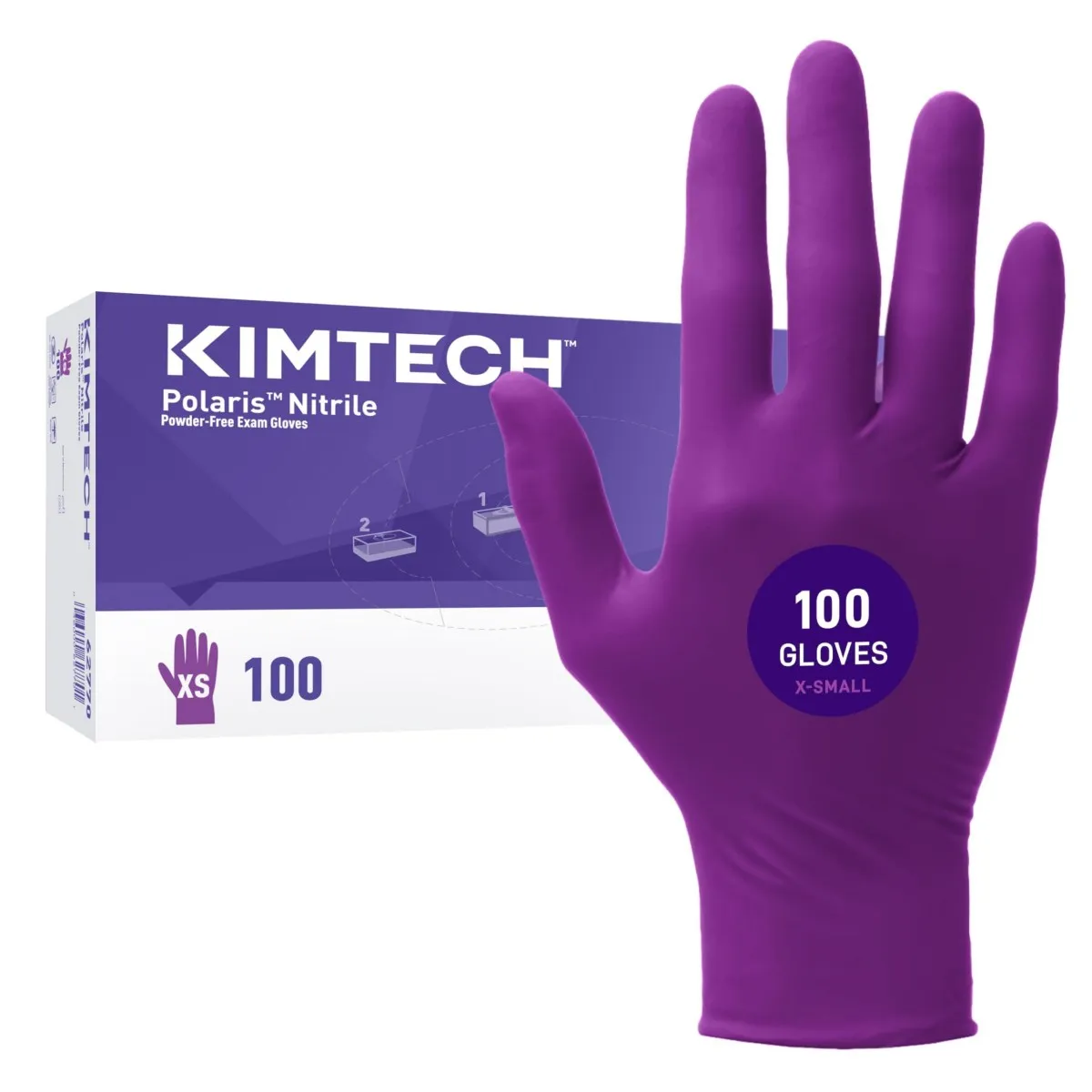 The Polaris doesn’t hide what it is. Put it on, and you feel the difference right away. Not in a marketing-brochure way. Your fingers just register more — texture, edges, surfaces. It’s a noticeable step up.
The specs back that up:
- Tensile strength: 31 MPa post-aging — more than double the industry standard
- AQL of 0.65 for pinholes — lower than anything else I tested
I ran it against harsh lab chemicals. It held. I wore it for a full shift. The fit stayed consistent throughout. The US Ergonomics certification sounds like a box-ticking exercise — until you’ve spent six hours in gloves that don’t have it. Then you understand what it means.
The comfort data is solid, too. 80% of daily glove users preferred Polaris over their current glove for breathability and fit. That study covered four countries. These are people who live in gloves all day. Their preference means something.
Best for : Anyone who can’t afford a glove failure mid-task.
Kimtech Science Purple Nitrile: Dexterity With Chemistry Credentials
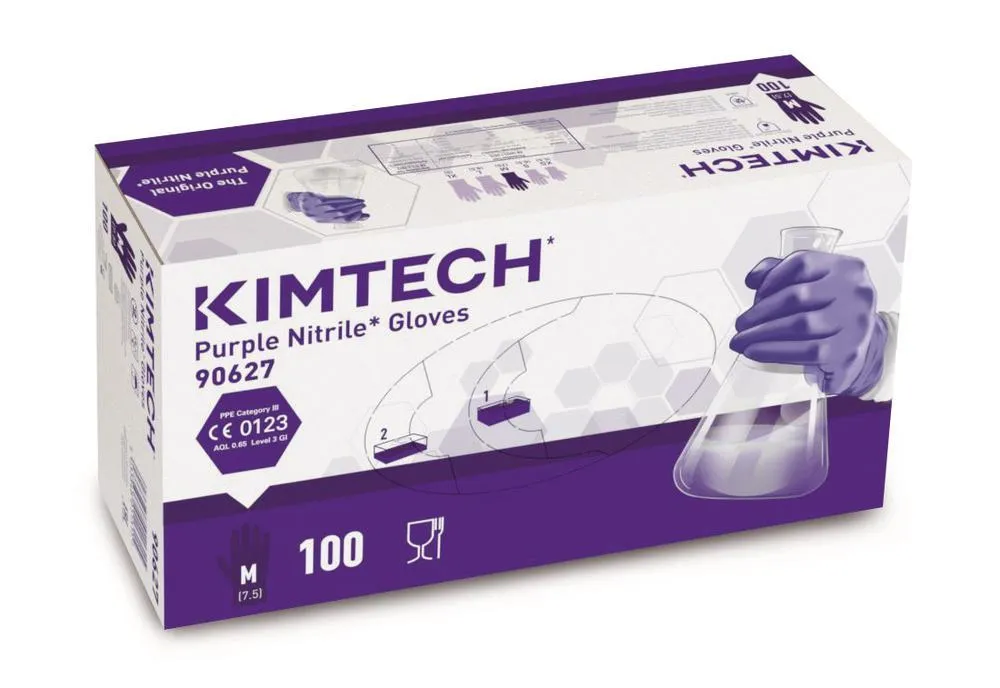 Purple Nitrile has a strong reputation in life sciences and pharma — and it’s deserved. Kimtech tested it against more than 50 chemicals, including cytotoxic drugs. That’s the kind of chemical resistance that forensics labs and biomedical environments need, not just a number on a spec sheet.
A few things stand out:
- Textured fingertips give you a firm grip without feeling rough or aggressive
- No natural rubber latex means no allergy risk for sensitive users
- Precision fit makes detailed work easier
One honest note: this isn’t the right pick for extended wear in high-particulate environments. It’s built for precision work, and that’s where it performs best.
Best for : Pharmaceutical handling, forensics, and biomedical research.
Kimtech Science Sterling Nitrile: The Cleanroom Workhorse
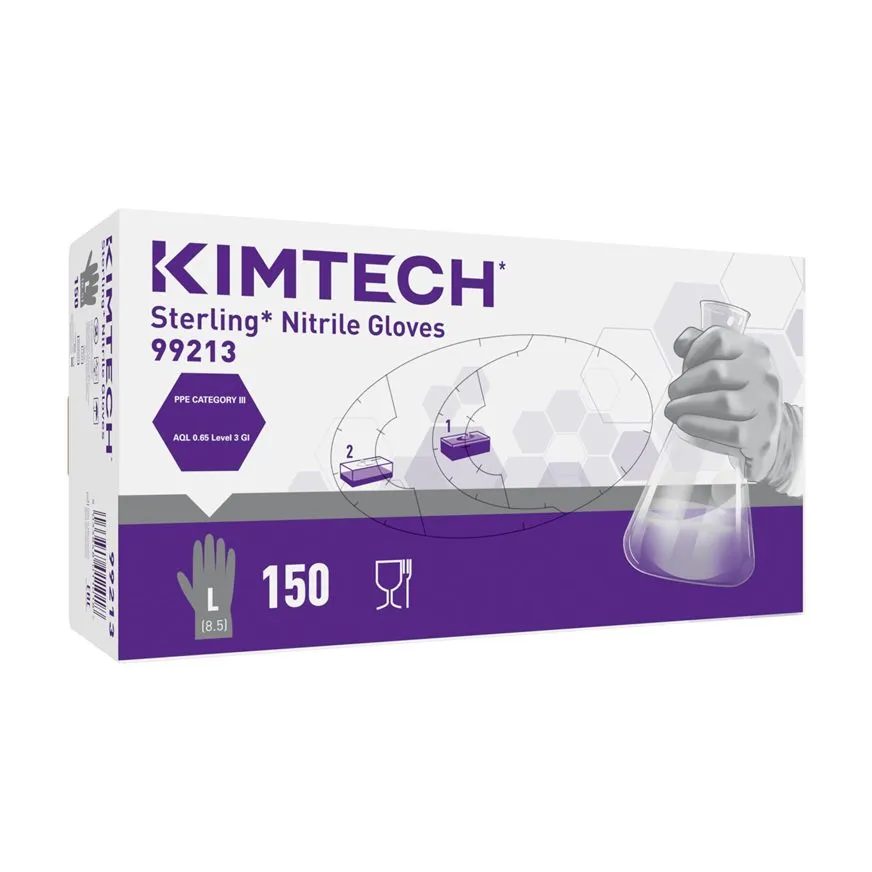 Sterling does something genuinely difficult. It holds ISO level 3 cleanroom certification, keeps particle counts low, and still delivers enough tactile sensitivity to feel close to latex. AQL ≤1.5. Tested against 40+ chemicals, including cytotoxic compounds.
The case math is worth paying attention to — you get 50% more gloves per case than traditional alternatives. For high-volume labs burning through boxes fast, that’s a real reduction in cost over time.
Tear resistance is the other standout:
- Sterling holds up against bolt snags
- It doesn’t split on contact with sharp edges
- Standard nitrile splits. Sterling doesn’t.
Best for : Cleanroom operations, biohazard level 2 environments, bulk procurement.
G3 Professional Cleanroom Nitrile: Built for Uncompromising Purity
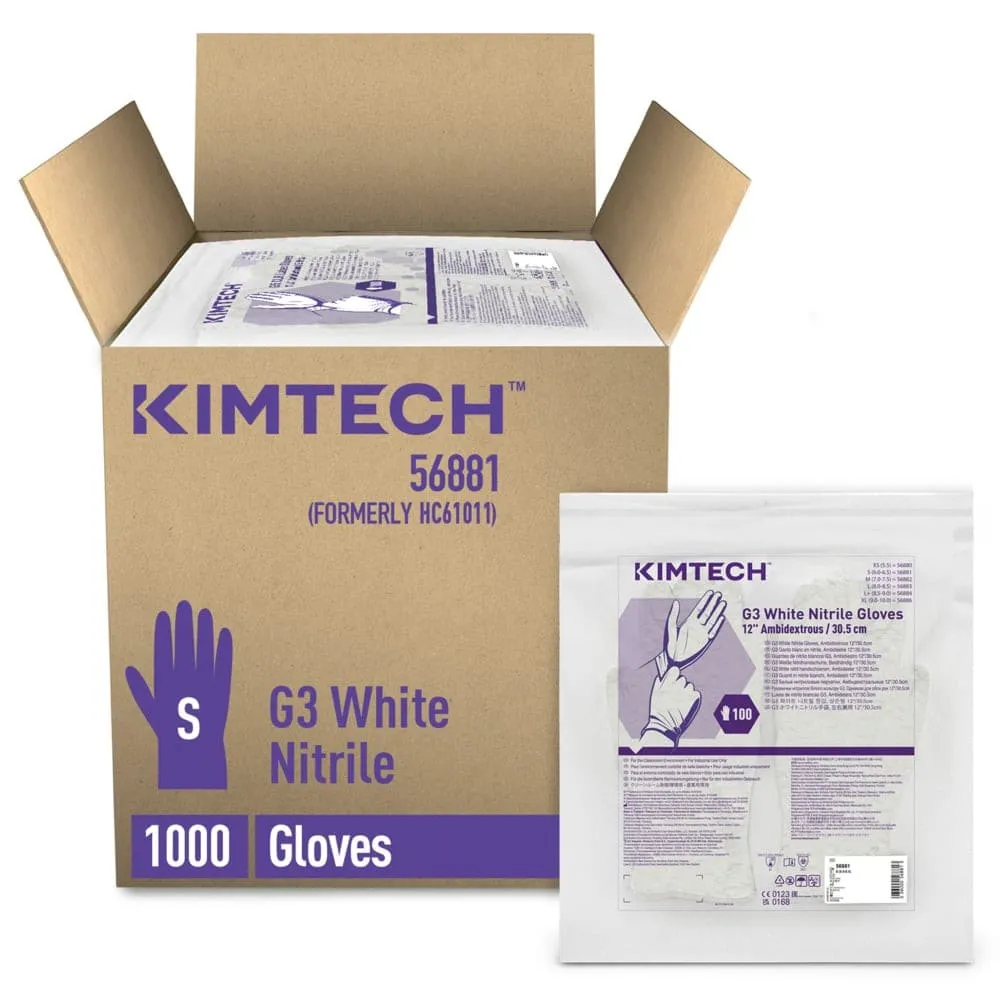 The G3 is a specialist glove. 12-inch extended cuff, non-ambidextrous fit, higher-purity nitrile formulation. Zero talc. Zero particles. No compromises on contamination control.
I ran a finger tear test — standard nitrile against the G3 Professional. Standard nitrile failed. The G3 held. That’s not a minor difference. In contamination-sensitive environments, tear resistance and purity are the whole point of using a glove like this.
Best for: High-purity cleanrooms, precision manufacturing, contamination-critical applications.
Which Kimtech Glove Holds Up Against Liquids and Chemicals?
Nitrile is not chemical-resistant by default. The material matters. The thickness matters. And with Kimtech gloves, the specific model matters more than most people realize.
Here’s a clear breakdown of how each model performs with liquids and chemicals.
Purple Nitrile: The Benchmark for Chemical Work
Purple Nitrile is the go-to for chemistry work. Kimtech tested it against more than 50 chemicals — including cytotoxic drugs used in pharmaceutical and oncology settings. That’s not a generic “chemical resistant” label stamped on a box. That’s documented, compound-specific testing.
For forensic labs, biomedical research, and pharma handling, this glove gets the job done. The latex-free nitrile construction removes degradation risk from common solvents. Natural rubber gloves break down with those same solvents over time — nitrile doesn’t. Textured fingertips keep your grip solid on wet surfaces. That matters during liquid reagent work or handling biological samples.
Sterling Nitrile: High Volume, Harsh Chemicals
Sterling goes further. Tested against 40+ chemicals, including cytotoxic compounds, it holds the same serious chemistry credentials as Purple Nitrile. On top of that, it adds the durability that high-volume labs need.
The key difference: tear resistance.
- Standard nitrile splits on sharp container edges or bolt snags
- Sterling holds up under the same conditions
Gloves in high-volume labs change often and face aggressive substances back-to-back. That tear resistance isn’t just a bonus — it closes contamination gaps between glove changes.
The 50% more gloves per case factor also counts here. Bulk chemical handling burns through PPE fast. Sterling keeps per-unit cost manageable without dropping protection.
What About Polaris Against Chemicals?
Polaris leads on mechanical protection — puncture resistance, tensile strength, and a pinhole AQL of 0.65. For tasks that mix physical handling with some chemical exposure, it performs well.
But your primary concern matters. Purple Nitrile’s 50+ chemical testing profile gives you a more precise answer for documented resistance to a specific compound list.
Bottom line for chemical work:
– Purple Nitrile — precision chemical handling
– Sterling — high-volume environments with documented cytotoxic exposure
– Polaris — jobs where mechanical durability and chemical resistance both count
The Biggest Problems I Ran Into With Kimtech Gloves
Not every issue announces itself. Some show up as a random freeze. Others disguise themselves as something else — and you burn a full afternoon chasing the wrong fix before you realize it.
Here are the real failure points I hit, and what they mean for your work.
Glove integrity wasn’t consistent across box positions. The first few Kimtech gloves out of a new box performed well. Deeper into the box, I noticed more variance — minor surface inconsistencies, uneven finger thickness in spots. For general lab use, that’s fine. In contamination-critical tasks, that inconsistency adds up fast.
Sizing runs narrow. Size up if you’re between sizes. The nitrile formula is strong, but a tight fit over six hours kills the dexterity advantage you paid for. Several users I spoke with made the same mistake on their first order.
Double-donning friction. Layering two Kimtech gloves works — the data backs it up for strength gains. But putting on two powder-free gloves at once takes practice. The inner glove bunches if you rush it. Use a slow, deliberate pull technique, and the problem goes away.
Extended wear in humid environments showed faster fatigue on the Green Nitrile. The thinner eco-formulation gives up some toughness in exchange for sustainability. Know that before you put it on a long shift.
None of these is a dealbreaker. But these are the details that never show up in a spec sheet. They’re the difference between a bulk order you feel good about and one you regret.
Kimtech Gloves vs Other Gloves I’ve Used
Switching brands mid-project taught me something. You don’t notice what a glove is doing right until you put on one that does it wrong.
I’ve tested Kimtech alongside Ansell and generic nitrile options in real lab conditions. The differences are clear once you know what to look for.
Kimtech Polaris vs. Ansell Purple Nitrile: The Numbers Tell It
Ansell makes solid gloves. I won’t pretend otherwise. But put the specs side by side, and Kimtech Polaris pulls ahead in ways that count when a task goes wrong.
- Tensile strength : Polaris hits 31 MPa post-aging — more than double the industry standard. Most competing nitrile gloves , including mid-tier Ansell lines, don’t get anywhere near that number.
- AQL pinhole rate : Polaris sits at 0.65. The ASTM benchmark is 2.5. That’s not a small improvement. It’s a completely different defect profile.
- Chemical resistance : Polaris goes through testing against chemotherapy drugs and fentanyl. That’s documented, compound-specific testing — not a broad claim.
Kimtech G3 vs. Ansell 93-311: Cleanroom Head-to-Head
Both gloves target ISO cleanroom environments. The gap shows up in the details.
Ansell 93-311 meets ISO Class 5 . Kimtech G3 carries certification for ISO Class 4/5 and adds gamma irradiation for confirmed sterility. Ansell leaves sterility treatment unspecified. In contamination-critical work, that’s not a minor detail — it’s a real gap.
Ansell does have one edge here. Their accelerator-free nitrile formula works well for users with chemical sensitivities. Kimtech’s G3 doesn’t highlight that feature.
The Honest Trade-Off
Generic powder-free nitrile gloves cost less per box. That’s true. But the cost-per-glove number breaks down fast. Factor in a failed task, a compromised sample, or a second layer of PPE to cover a weak barrier — and the savings disappear.
Kimtech glove’s latex-free nitrile construction comes with verified defect rates, tested by third parties. That puts it in a different risk category from most options at a similar price. For high-stakes environments, that’s the comparison worth making.
Kimtech Gloves Size Guide: What Fits Well?
Nobody talks about glove fit — until the thumb seam splits or the knuckle bunches up for the third time in a shift.
Getting the right size with Kimtech comes down to one measurement. Wrap a flexible tape around the widest part of your dominant palm — below the knuckles, thumb excluded. That number does the work.
| Palm Width | Size |
|---|---|
| ≤7 in | XS |
| 7–8 in | S |
| 8–9 in | M |
| 9–10 in | L |
| 10–11 in | XL |
| 11–12 in | XXL |
Between two sizes? Go up. Not down. Nitrile is strong but has no give when it’s too tight. A glove that squeezes your palm for six hours will kill the dexterity you paid for — fast.
A few details worth knowing before you order:
- Standard length across most Kimtech models runs 9.5 inches (240–250 mm). XL ships at 250 mm. The G3 Professional extends to 300 mm for wrist coverage.
- Thickness varies by model — 3.5 mil at the fingertip on some lines, up to 6.0 mil on others. Thicker gloves trade touch sensitivity for barrier strength. Neither is better across the board — it depends on your task.
- XL boxes contain 90 gloves instead of the standard 100. Factor that into bulk orders, or your cost-per-glove math won’t add up.
One thing to know about fit: Kimtech runs narrow compared to some other brands. Ordered nitrile gloves in medium before, and they fit well. Start with medium here, too. Still, grab a large one as backup and wear it through a full task before committing to a bulk order.
Conclusion
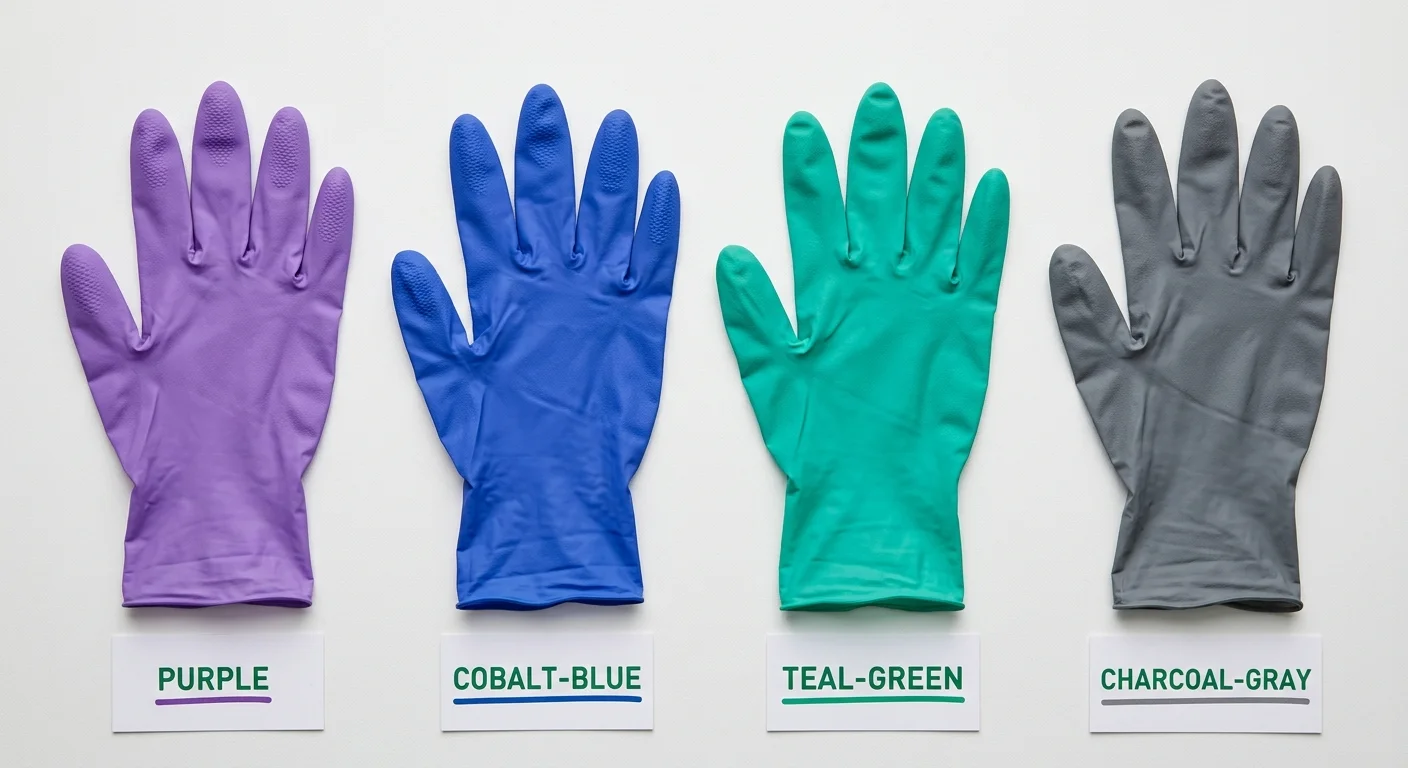 After testing four Kimtech gloves back-to-back, the answer is pretty clear: there’s no single “best” pair — there’s just the best pair for your specific job.
Precision lab work? The G3 Nitra-Dex earns its reputation. Need all-day comfort without giving up chemical resistance? The Purple Nitrile is hard to beat. Is the budget the main concern? Sterling punches above its price point more often than you’d expect.
Here’s my take for anyone still undecided: Kimtech powder-free nitrile gloves outperform cheaper alternatives in real-use situations. The tactile sensitivity alone justifies the price gap for tasks that need fine motor control.
Don’t overthink it. Pick the model that fits your environment. Order a trial box. See how it feels on your hands.
That’s the one review that counts.