
I’ve seen many people wearing N95 masks the wrong way — the nose clip left open, straps twisted, or the mask slipping off while they talk. I used to make the same mistakes too. At first, I thought wearing an N95 mask was just about covering my face. But after learning how the seal and fit affect protection, I realized it’s not that simple. In this post, I’ll share what I’ve learned about how to wear an N95 mask correctly — step by step.
Understanding N95 Masks: What They Are and When to Use Them
An N95 respirator is a special filtering mask. It captures at least 95% of airborne particles that are 0.3 micrometers in size. The U.S. National Institute for Occupational Safety and Health (NIOSH) sets this standard under 42 CFR 84.
Key Scenarios for N95 Mask Use
Airborne Disease Protection: I recommend N95 masks to shield against harmful germs like influenza and COVID-19. They work well for airborne threats.
Wildfire Smoke Defense: The Environmental Protection Agency (EPA) says N95 masks protect against wildfire smoke. They also block fine particles in the air.
Workplace Safety: In many jobs, N95 respirators protect you from dust, chemical sprays, and biological dangers like mold or germs.
Filter Efficiency Ratings and Comparison
| Filter Type | Filtration Efficiency | Oil Resistance |
|---|---|---|
| N95 | Filters 95% of non-oil-based particles | Not oil-resistant |
| N99 | Filters 99% of particles | Not oil-resistant |
| N100 | Filters 99.97% of particles | Not oil-resistant |
| P95 | Filters 95% of particles | Oil-resistant |
| P99 | Filters 99% of particles | Oil-resistant |
| P100 | Filters 99.97% of particles | Oil-resistant |
How to Choose the Right N95 Mask for Full Protection?
Picking the best N95 mask isn’t just about grabbing any mask labeled “N95.” You need to think about specific factors to protect yourself, particularly in high-risk settings.
NIOSH Approval Matters Most
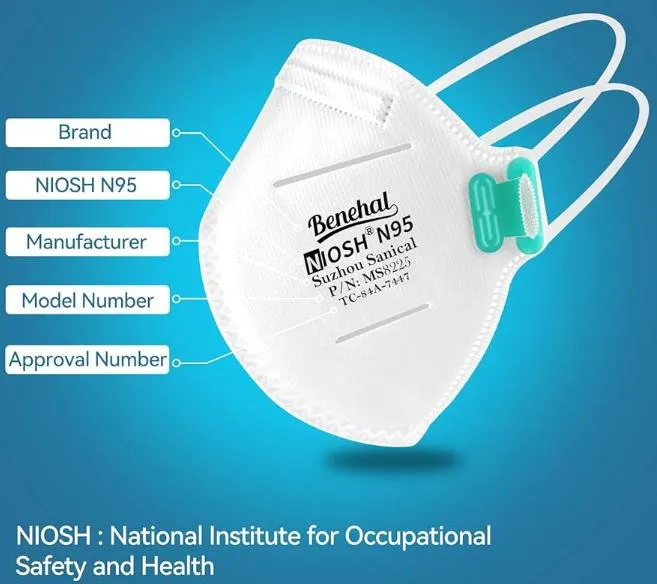
Always confirm the N95 mask is NIOSH certified. This confirms the mask meets strict filtration and safety standards.
Check the official NIOSH certification lists to avoid fake and low-quality masks. I recommend doing this before every purchase.
Fit Type: Headbands vs. Ear-loops
Headbands give a more secure and stable fit. I suggest them for long shifts or active settings. Healthcare workers often use this type.
Ear-loops work faster and suit short, temporary tasks. They may not hold as tightly for long periods.
Getting the Right Fit and Size
N95 masks come in different sizes. A good fit is critical. Gaps reduce protection and create leaks.
I recommend fit testing for professionals. A bad fit won’t give you full filtration. Based on my experience, this step makes a real difference.
Recommended Brands and Manufacturers
I suggest reputable disposable mask brands like 3M, Honeywell, and Moldex. These PPE companies are known for quality and NIOSH-certified N95 masks.
How to Prepare for Safe Use: N95 Masks
Before you put on your N95 mask, I suggest you follow these key steps. They will help you stay safe and protected.
Step-by-Step Preparation Guide
- Wash Your Hands
- Clean your hands well with soap and water. This prevents contamination.
- Inspect Your N95 Mask
- Check for any visible damage. Look for holes, tears, or broken straps.
- Make sure the mask is the correct size for your face. A proper seal is essential.
- Find the NIOSH approval label. Check if you can read it. This label confirms the mask meets official safety standards.
- Check for Facial Hair
- Make sure you are clean-shaven where the mask touches your face. Facial hair creates gaps. These gaps reduce how well the mask works.
- Prepare Your Workspace
- Make sure the area is clean. Remove any obstacles. This helps you avoid accidental contamination.
.jpg)
Ensuring Proper Equipment Setup
I recommend you follow the disposable mask manufacturer‘s instructions for N95 masks. Read the guides for your N95 mask.
Use visual aids if you have them. Diagrams or instructional videos can help. They show you how to inspect and put on your gear correctly.
Critical Notes
The N95 mask filters at least 95% of airborne particles. But it won’t protect you against vapors.
Do a user seal check each time before you enter hazardous areas. This confirms that your mask fits properly and creates a tight seal.
How to Put On an N95 Mask: Step-by-Step Application and Fit Check
Step 1: Hold the N95 Mask Right
Cup the N95 respirator in your hand with the metal nosepiece at your fingertips.
Let both elastic headbands hang below your hand.
For models like the 3M 1870+/1870, open the top and bottom panels all the way. Bend the nosepiece around your thumb. This helps separate the straps.
Step 2: Position Under Chin and Adjust Straps
Place the mask under your chin with the nosepiece facing up.
The foam or mask edge should rest on your nose. The bottom panel should be open and tucked under your chin.
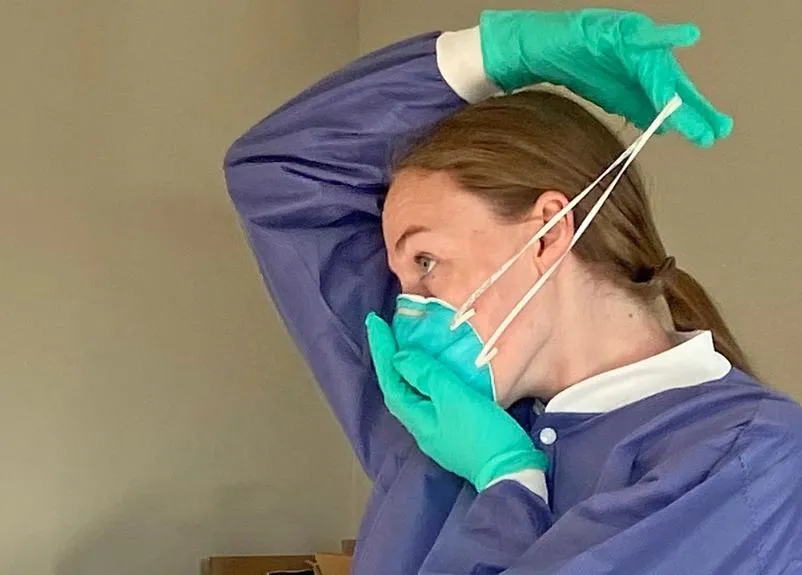
Hold the mask in place. Pull the top strap over your head. Position it high on the back of your head.
Pull the bottom strap over your head. Secure it around your neck below your ears.
Some models work differently. For the 3M 1805, I suggest you pull the first strap around your neck below your ears. Then pull the second strap over your head and position it high on the back.
Step 3: Mold the Nosepiece for a Tight Seal
Use both hands. Place fingertips at the top of the nosepiece.
Mold the nose area by pushing inward. Move fingers down both sides of the nosepiece.
Do not pinch the nosepiece with one hand. This creates a poor seal. Your protection will be less effective.
For masks like the Prestige Ameritech ProGear N95, use your thumbs. Curve the ends of the metal strip around your cheekbones. Make sure there’s no gap between the nose, mask, and cheeks.
Step 4: Check the Mask Fit and Remove Gaps
The face mask should cover both your nose and mouth. It should sit high on the bridge of your nose.
Adjust the panels. Move the top panel toward the nose bridge. Move the bottom panel under the chin. Open the bottom panel all the way.
Remove any wrinkles or gaps along the sides and bottom of the mask.
Check that no hair, facial hair, jewelry, or clothing sits between your face and the mask. These items can break the seal.
Step 5: Do a Seal Check for Safety
Place both hands over the mask. Don’t touch your face or eyes. Breathe out hard.
If you feel air leaking around the nose, adjust the nosepiece. If air leaks at the mask’s edges, move the straps.
I recommend doing this seal check every time. You should not feel air escaping around the borders of the mask.
How to Remove N95 Masks: Step-by-Step Removal and Disposal
Taking off your N95 mask the right way is crucial. It helps you avoid contamination. I recommend following these best practices. They will ensure your safety.
Step-by-Step Removal Sequence for N95 Masks
- Remove the N95 Mask by the Straps
- Do not touch the front of the mask. It is contaminated.
- Tilt your head forward.
- Use both hands to grab the bottom strap. Pull it over your head.
- Then grab the top strap with both hands. Pull it over your head. Let the mask fall forward off your face into a trash bin.
- Handle the mask by the straps.
- Dispose of N95 Mask the Right Way
- Place the N95 masks into a closed-bin waste container.
- Roll or bag both items. This limits contamination.
- Perform Hand Hygiene Right After
- Wash your hands with soap and water. Or use an alcohol-based sanitizer.
- Handwashing for at least 20 seconds is required. This ensures effective decontamination.

CDC and Infection Control Data
The CDC recommends removing your N95 respirator after leaving the contaminated area. Close the door behind you.
Removal protocol focuses on minimizing contact with all outer contaminated surfaces.
Based on my experience and infection control research, hand hygiene after removing PPE reduces the risk of self-contamination by up to 60%.
How to Maintain, Store, and Reuse Your N95 Mask?
N95 Mask Maintenance and Replacement Tips
- Inspect Before Each Use: I recommend checking your N95 mask before you put it on. Look for damage, dirt, moisture, or bent parts. Pay close attention to the straps and nose-piece. Never use a damaged mask.
- Seal Check Every Time: Use both hands to check the seal. Take a quick breath in. Adjust the mask until no air leaks out. Make sure you feel a tight seal.
- Storage for Reuse: Can you reuse your mask? Check with the maker or your employer first. If yes, store it in a clean paper bag. Keep it away from new or unused masks.
- Time to Replace: Replace your disposable mask if the straps stretch out or break. Replace it if air leaks through. Replace it if it gets dirty, wet, or damaged. Got an expired N95 and no other options? I suggest you inspect it closely. Check the straps and nose bridge with care.
- Disposal: Put used or expired masks in a plastic bag. Throw the bag in the trash. Wash your hands after you touch any PPE.
Key Data & My Recommendations
N95 Efficiency : A well-fitted N95 mask filters out 95% of 0.3-micron airborne particles.
Seal Impact : A poor fit can cut mask effectiveness by 60% or more. Gaps or facial hair cause this problem.
Re-Use in Emergencies : Some places use rotation systems, like a 5-day cycle. Based on my experience, not all experts support this method.
Maintenance & Replacement Checklist
Before Each Use :
Inspect all mask parts. Check straps, nosepiece, and surfaces.
Do a seal check.
For Reuse :
Store in a clean, breathable container. I suggest a paper bag. Keep it separate from new masks.
Replace If :
Straps are stretched or broken.
Mask fails to seal.
The mask is dirty or damaged.
Summary Table:
| Action | Frequency | Replace If | Notes |
|---|---|---|---|
| Inspection | Every use | Damage, dirt, moisture | Discard if any faults are found |
| Seal Check | Every use | Air leaks | Adjust/retry or replace |
| Storage (if reuse) | Between uses | Must be clean & breathable | Paper bag; separate from new masks |
| Replacement | As needed | Fit lost, mask soiled/damp | Do not attempt cleaning |
Common Mistakes to Avoid When Wearing N95 Masks
Wearing an N95 mask the right way is critical for safety. Here are the most frequent errors people make—and how to avoid them.
Key Mistakes That Lower Protection
Confusing Ear-Loop Respirators with N95s
Many ear-loop masks are not true N95 respirators. Use certified N95 masks with proper headbands for the best protection.
Facial Hair and Accessories
Any facial hair, piercings, or jewelry where the mask touches your face will break the seal. I suggest you shave or remove these before putting on the mask.
Incorrect Mask Placement
Check that the mask is not upside down, inside out, or with twisted straps. This mistake causes gaps. It reduces filtration.
Partial PPE Use
Using just a mask in high-risk settings is not enough. Pair it with a disposable coverall and other personal protective equipment when needed.
Additional Safety Considerations
Do Not Overuse or Ignore Damage
N95 masks are single-use. If contaminated, dirty, damaged, or used too long, discard and replace. Re-use increases failure risk.
Fit Testing and Long-Term Wear
Regular fit tests are essential to confirm that your N95 fits well. Based on my experience, wearing it beyond 6 hours without breaks can lead to discomfort. It can also reduce breathing efficiency.
Data-Backed Insights
- Studies show that reuse of N95s leads to higher failure rates with each additional use.
- Inspect masks with care. Even small damage can cut protection fast.
Common Questions About N95 Masks
Can I wear a regular surgical mask over an N95 respirator?
CDC/NIOSH guidance: Do not wear a surgical mask over an N95 respirator. This can void the N95’s certification. It is not an approved use.
Fit and protection: Research shows that 13% of healthcare workers failed fit tests when they added a surgical mask over N95s. They passed when using N95s alone. The added layer can cause air leaks at the seal. This reduces protection.
Intended use: Layering was a last-resort crisis strategy during extreme supply shortages. It is not standard practice.
No proven benefit: No scientific evidence supports improved safety by covering an N95 with a surgical mask.
How long can I wear an N95 mask?
Single-use: I recommend throwing away an N95 face mask after each patient encounter. Replace it when it becomes dirty, damaged, or hard to breathe through.
Extended use (crisis situations): The CDC permits extended use for multiple patient encounters in extreme shortages. But do not wear it beyond 8 hours of continuous use.
Reuse: I do not recommend reuse. If you cannot replace it, you need strict decontamination protocols. But each reuse increases contamination and fit-failure risk.
Comfort : Long wear increases discomfort, breathing resistance, and skin irritation.
What if I have facial hair?
Critical for a good seal: Facial hair under the N95’s seal area reduces mask effectiveness.
Requirement: You cannot pass fit testing if facial hair breaks the mask’s seal.
My recommendation: Shave before use. No workaround achieves the required fit with facial hair.
Can I reuse my N95 mask?
N95 mask: Intended for single use. Reuse is not safe except in emergencies with strict protocols. Risks rise with every reuse due to contamination and seal weakening.
How do I know if my mask seal is failing?
Signs of a poor seal:
- Air escaping around the nose, cheeks, or chin.
- Fogging glasses (for eyeglass wearers).
- Feeling an air draft when exhaling sharply.
If any of these occur, adjust the nose clip, straps, or try a different size/brand. Never enter a hazardous environment with a compromised seal.