
Tired of wasting money on masks that don’t actually protect you? With confusing labels and fake products flooding the market, choosing the right 3M mask feels impossible. Our guide cuts through the noise to help you pick certified respirators that work for your needs without the confusion.
Understanding 3M Mask Certification Standards (NIOSH, FDA, CE)
Three major certification systems govern 3M masks: NIOSH (United States), FDA (medical use in the U.S.), and CE/EN 149 (European Union). Each certification has different testing rules and legal requirements. These affect which 3M mask works best for your needs.
NIOSH N95 Certification
NIOSH sets rules for N95 masks in the United States. These rules came from 42 CFR Part 84 in 1995. N95 masks must:
-Block ≥95% of 0.3-micron sodium chloride particles
-Reduce your exposure to 1/10th of the air particles (APF: 10)
-Show NIOSH logo, filter rating (N95), TC approval number (TC-84A-XXXX), brand name, model number, and lot number
The 0.3-micron particles are the hardest to filter. These particles are about 300 times smaller than a human hair. N95 masks work well against viruses and bacteria because most harmful particles are larger than 0.3 microns.
FDA Medical/Surgical N95: Dual Certification
A ” surgical N95 ” or “medical N95” has two certifications:
- NIOSH N95 approval
- FDA medical device approval
Extra FDA tests include:
- Fluid resistance: Must withstand synthetic blood spray at 120mmHg or 160mmHg
- Flame resistance: A Class 1 rating means it won’t burn quickly
- Biocompatibility: Tests for skin irritation and cell toxicity
For healthcare workers, look for masks with both NIOSH and FDA certifications. The 3M 1860 and 1870+ are examples of dual-certified masks.
European CE/EN 149 Certification
3M masks in Europe have CE marking with FFP ratings:
| Mask Type | Filtration Efficiency | Recommended Application |
|---|---|---|
| FFP1 | ≥80% | Good for general dust protection |
| FFP2 | ≥94% | Comparable to N95 |
| FFP3 | ≥99% | Best for high-risk situations |
European standards measure both filter efficiency and face seal leakage. FFP2 masks must have ≤8% total leakage. FFP3 requires ≤2% leakage. This means FFP2 and FFP3 masks seal well to your face while filtering particles.
KN95 Standard: China’s N95 Equivalent
KN95 masks follow Chinese standards GB2626-2006 or GB2626-2019. They work like N95 masks but aren’t NIOSH certified. In the U.S., OSHA prefers NIOSH-approved respirators for workplace use. However, well-made KN95 masks can offer similar protection for personal use.
Key Factors to Consider for 3M Masks
Picking the right 3M mask comes down to four things: filtration grade, face seal quality, breathing resistance, and features for your specific work. Each factor affects how well the mask protects you and how comfortable it feels during long shifts.
Filtration Efficiency Grades: Match Protection to Your Work Environment
3M makes several NIOSH-approved filtration levels. Each handles different particle loads:
N95 respirators (3M 8210, 1870+): These filter ≥95% of non-oil particles like dust and droplets. This grade works for most daily exposure and general healthcare settings.
N99 respirators : These catch ≥99% of airborne particles. Pick this level for places with more aerosol than N95 can handle.
N100/P100 respirators (3M 8233, 8293): These deliver ≥99.97% filtration. They’re built for dangerous dust exposures—lead, cadmium, arsenic, or certain welding fumes. The P100 version also shields you from oil-based particles.
Australian P2 standard (3M 8822): This matches N95 filtration under AS/NZS 1716:2012. Australia and New Zealand markets use this certification for non-oil particles.
All these 3M respirator masks have an OSHA Assigned Protection Factor (APF) of 10. They cut your exposure to 1/10th of the pollutant in the air—but this works only with a correct fit and use per the maker’s instructions.
For medical staff, the 3M 1870+ pairs NIOSH N95 certification with medical-grade features: >99% Bacterial Filtration Efficiency (ASTM F2101) and Level 3 fluid resistance (160mmHg synthetic blood spray protection per ASTM F1862). This double certification suits high-risk medical procedures.
Face Seal Quality: The Make-or-Break Factor
Great filtration means nothing without an airtight seal. OSHA regulation 29 CFR 1910.134 requires fit testing before you use tight-fitting respirators like 3M masks.
Fit testing methods:
– Qualitative test : 3M FT-10 (sweet solution) or FT-30 (bitter solution) creates aerosol around your masked face. Taste anything? The mask fails. This pass/fail method works for disposable and half-mask respirators.
– Quantitative test : Special equipment measures particle levels inside versus outside the mask. The ratio gives a number called “fit factor.” For APF 10 respirators, you need a minimum fit factor to support this protection level.
Design features that improve fit across different face shapes:
- Adjustable noseclip (metal or steel strip) plus foam nose cushion: Fits different nose bridge heights. Stops leakage at this common fail point.
- 3-panel fold design (Aura series 1870+): Expands to cover different face lengths and jaw angles. Covers everything from the nose bridge to the chin.
- Cup-shaped structure (8210, 8822): Makes more space inside. Fits medium to larger faces better. Dual headbands spread tension across your head for stable positioning.
Critical limitation : Facial hair between the sealing surface and your face breaks the seal. 3M bans using these respirators with beards, stubble, or other facial hair in the seal area. Can’t pass fit testing? Don’t enter contaminated spaces.
Breathing Resistance: Balance Protection with Comfort
3M uses electret-charged fiber filtration media in most disposable masks. This tech catches particles while keeping the pressure drop (breathing resistance) lower than mechanical filtration alone.
Valved versus non-valved respirators:
3M’s Cool Flow exhalation valve (models 8822, 8233, 8293) is a one-way design. It opens as you breathe out to release warm, humid breath. This cuts breathing effort and stops heat and moisture buildup inside the mask.
Choose valved masks for : Hot environments, high humidity, or shifts lasting several hours. The valve boosts comfort during long wear.
Avoid valved masks for : Healthcare settings where source control matters. The valve releases unfiltered exhaled air. It won’t protect others if you’re infected. Surgical/medical N95 masks are always non-valved for this reason.
Less breathing resistance means less fatigue during 8-12 hour shifts. Struggling to breathe through your mask? Either the fit is too tight, or you need a model with better airflow for your work intensity.
3M Mask Model Comparison (8210 vs 9205 vs 1860 vs Aura vs Vflex)
Five 3M respirator families dominate the disposable mask market. You’ll find the legacy cup-shaped 8210, the flat-fold Aura series (9205+, 1870+), the healthcare standard 1860, and the pleated VFlex line (9105, 1804/1805). Each design solves specific problems. Storage space, facial fit range, and breathability during long shifts—all improved across these models.
Construction Design: Cup vs Flat-Fold vs V-Pleated Geometry
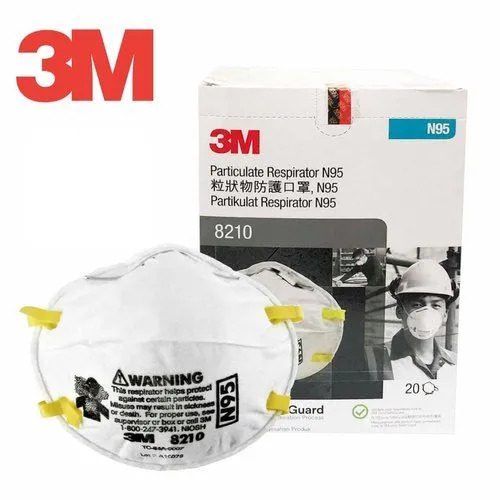
3M 8210 pioneered the cup-shaped industrial N95 decades ago. Its rigid domed shell holds its form off your face. This creates breathing space. Dual headbands staple to the shell. A foam nose pad and adjustable metal noseclip seal the top edge. This cup design never folds flat. It ships and stores in its full 3D form. This takes up significant space in supply closets.
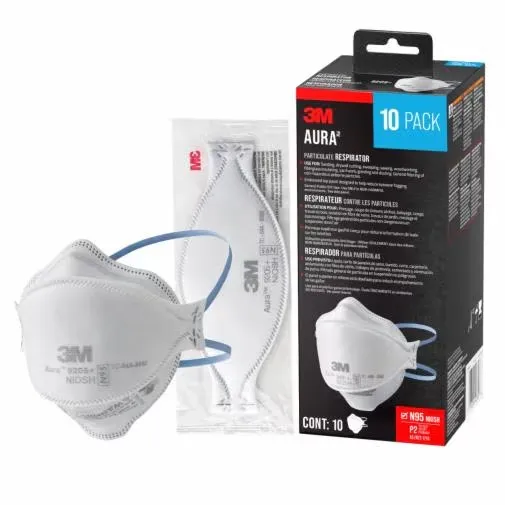
3M 9205+ Aura introduced the 3-panel flat-fold design. Stored, it collapses to pocket size. Three distinct panels expand on your face. The embossed top panel channels exhaled air away from your nose bridge. This cuts eyewear fog. The middle panel contours to your cheekbones. The chin panel tucks under your jaw. Soft nose foam plus the adjustable nose clip complete the seal. No exhalation valve. This design fits a broader range of face shapes than traditional cups.
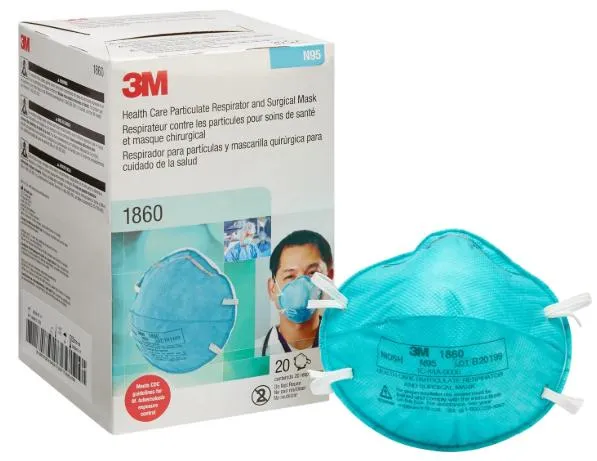
3M 1860 remains the iconic “teal” surgical N95 that hospital workers recognize worldwide. Its molded cup structure resembles the 8210. It adds braided comfort headbands instead of stapled straps. The foam nose cushion is thicker. Teal packaging signals healthcare-grade approval. You get regular (1860) and small (1860S) sizes for different facial dimensions.
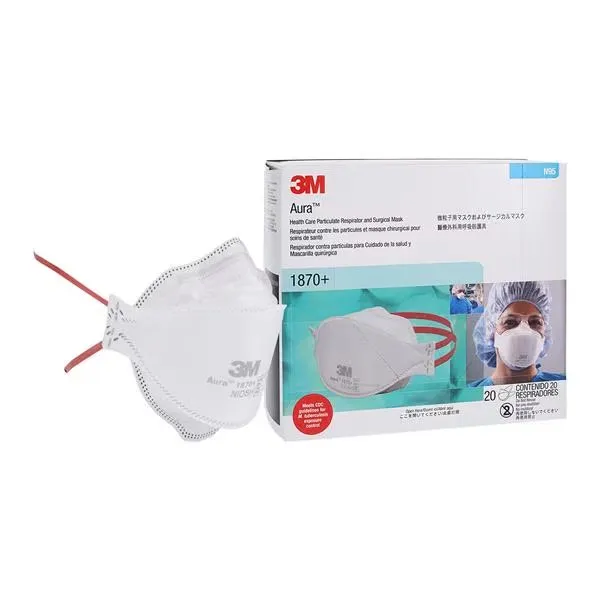
3M Aura 1870+ takes the 9205+ flat-fold geometry and adds surgical certification. The 3-panel construction, embossed top, and soft nose foam stay identical. Extra packaging features maintain sterility for operating rooms. This respirator bridges industrial comfort with medical-grade fluid resistance.
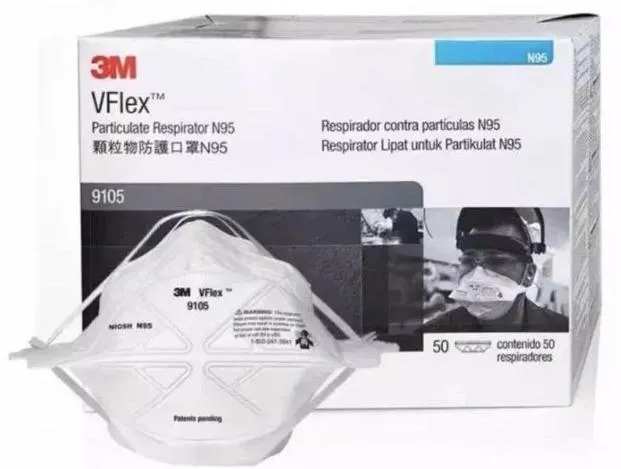
3M VFlex 9105/9105S uses V-shaped horizontal pleats. These expand outward at the mouth area as you breathe. Side positioning tabs help you adjust placement before securing the headbands. The flat pleated design ships more compactly than Aura models. Ideal for bulk storage. VFlex 1804/1805 variants carry the same V-pleated structure. They add surgical approval and healthcare-specific labeling for hospital procurement systems.
Performance Specifications: Where Models Differ Beyond N95 Baseline
All five families share NIOSH N95 certification. This means ≥95% filtration efficiency against 0.3-micron sodium chloride particles. The APF of 10 applies across all models with proper fit. Differences show up in secondary performance metrics:
Surgical N95 models (1860, 1870+, VFlex 1804/1805) pass additional FDA tests. Industrial versions skip these. They achieve ≥99% Bacterial Filtration Efficiency per ASTM F2101. They withstand synthetic blood spray at 160mmHg (ASTM F1862 Level 3 fluid resistance). Your work involves splash risk? Surgical procedures, dental treatments, emergency care—these extra certifications matter for legal and practical reasons.
Industrial models (8210, 9205+, VFlex 9105) stop at NIOSH N95 requirements. No fluid resistance claims. No BFE testing. Use these for dust, non-oil aerosols, and general respiratory protection. Bloodborne pathogen exposure isn’t expected here.
Breathing resistance varies by design. The 8210’s cup shape offers generous internal volume. It creates more dead space, though. Aura’s embossed panels direct airflow better. VFlex pleats flex with each breath. This reduces inhalation effort. Users report Aura and VFlex models feel easier to breathe through during 8+ hour wear compared to traditional cups. Individual comfort depends on face shape and fit quality, though.
Size Options and Fit Range: Matching Mask to Face Dimensions
Standard one-size models (8210, 9205+, 1860, VFlex 9105, 1804, 1805) fit most adult faces. This covers the 5th to 95th percentile of facial dimensions in 3M’s fit-testing databases. But 10-15% of users fall outside this range.
Small-size variants exist for specific models: 1860S (healthcare cup), 9105S, and 1804S/1805S (VFlex pleated). These scale down the sealing perimeter by 10-15%. This fits smaller faces, common among women and certain ethnic groups with narrower facial structures.
The Aura 1870+ and 9205+ lack dedicated small sizes. But the 3-panel fold design’s flexibility often seals well on faces that fail fit tests with rigid cups. Before committing to bulk orders, conduct fit testing with your actual workforce. This confirms seal quality across your team’s facial diversity.
Choosing 3M Masks by Usage Scenario
Your work environment determines which 3M respirator you need. Construction workers inhaling silica dust need different features than nurses performing intubations. Match your respirator’s filtration grade, fluid resistance, and valve design to your actual exposure risks.
Medical Settings
In medical settings, you need masks with both NIOSH and FDA certifications. Look for masks labeled “surgical N95” or “medical N95” on the packaging. These masks have extra protection against fluid splash, which is important in healthcare. The fluid resistance rating shows how well the mask protects against blood spray – look for Level 3 for the best protection. Medical masks also don’t have exhalation valves because valves release unfiltered air, which could spread germs to patients.
Replace medical N95 masks every 2 hours when caring for patients. This keeps them working well and prevents the buildup of germs. If a mask gets wet, damaged, or hard to breathe through, change it right away, even if it hasn’t been 2 hours yet.
Air Travel
When traveling by plane, train, or bus, choose a flat-fold design like the 3M Aura 9205+ or 1870+. These masks collapse to pocket size, making them easy to pack in your carry-on. Look for comfort features like soft foam and adjustable straps for long wear. Most airlines don’t allow masks with exhalation valves because they release unfiltered air, so choose non-valved models.
For long trips (over 4 hours), bring extra masks to change during the journey. A damp mask from breathing can feel uncomfortable and protect less well. Store used masks in a paper bag between changes, not plastic.
Industrial Workplaces
At work, match your mask to the hazards you face:
- For non-oil particles like dust from wood, cement, or grain, use N95 or N95 masks
- For oil-based particles from welding fumes, paint spray, or cutting fluids, use P100 masks
- In hot or humid conditions, add an exhalation valve to make breathing easier
Your employer must do fit testing before you use a respirator at work. This test makes sure the mask seals properly to your face. Test once a year or if you get a new mask model.
Daily Consumer Use
For everyday use, the 3M Aura 9205+ is a good choice because it’s comfortable and folds flat for easy carrying. If you need masks for your whole family, the 3M 8210 is budget-friendly and works well for most people.
N95 masks give better protection than surgical masks , especially in crowded indoor places or when community illness rates are high. People with weakened immune systems or other health conditions should consider using N95 masks in high-risk situations like shopping or attending events.
How to Identify Genuine 3M Masks?
Fake 3M masks flood markets worldwide. Popular models like the Aura 9332+ FFP3 and 9330+ FFP3 show up as counterfeits in many countries. These fakes skip safety testing. They deliver poor filtration. This puts you at serious health risk. Spotting genuine 3M masks protects your health and your wallet.
Quick Authentication Checklist
Before using any 3M respirator, verify these elements:
✓ Holographic 3M security sticker intact on packaging
✓ TC approval number starts with “TC-84A-” (NIOSH N95/P100)
✓ Secure Code and Lot Code present and matching (Safe Guard models)
✓ Safe Guard verification returns green confirmation
✓ Expiry date validates on the 3M official website
✓ No spelling errors or grammar mistakes on packaging
✓ Purchased from an authorized 3M distributor
✓ Proper bulk packaging with user instructions included
✓ Price aligns with typical market rates for the model
Missing even one element? Investigate further. Contact 3M’s anti-counterfeit team through their official website if verification results seem questionable. Authentication takes two minutes. It protects you for years. Don’t risk your respiratory health on unverified masks.
Where to Buy 3M Masks in 2025?
| Retailer | Typical Price | Best For |
|---|---|---|
| Amazon | $1.50-2.30 per mask | Wide selection, Prime shipping |
| Big-box stores (Home Depot, etc.) | $1.75-2.10 per mask | In-store pickup, bulk options |
| Pharmacy chains | $3.00-4.00+ per mask | Medical-grade models |
| 3M official website | Higher prices | Guaranteed authenticity |
Common Mistakes to Avoid When Buying 3M Masks
People lose money and risk their safety by making avoidable errors with 3M mask purchases. These mistakes include ignoring certifications and falling for fake products.
- Using industrial N95 masks in medical settings – they lack fluid resistance
- Wearing masks with facial hair – creates gaps that bypass filters
- Buying valved masks for healthcare or travel – many facilities ban them
- Skipping fit testing – required by OSHA for workplace use
- Falling for unrealistically low prices – counterfeits often cost less than $1 per mask
FAQ: 3M Mask Selection
Product specs get complicated. We offer clear, direct answers to common questions about using 3M disposable masks.
Can I Reuse My 3M Mask?
Most times, no. Disposable face mask manufacturers design these for single use. Short on supplies? The CDC allows limited reuse for short trips, provided the mask stays clean. Store used ones in a clean paper bag. Avoid plastic.
Discard it instantly if:
- Sweat or rain soaks the mask.
- Breathing becomes difficult.
- Straps stretch or snap.
- It looks dirty or has holes.
How Long Can I Wear a 3M Mask in One Shift?
Standard rule: Most jobs allow an 8-hour limit. Working in healthcare? Change it every 2-4 hours for safety.
In dusty places, Dust blocks filter fast. Can’t breathe well? Swap the mask now. Do this even if just an hour has passed. Listen to your body.
Which 3M Mask Model Is the Strongest?
P100 and N100 masks offer top strength. They stop 99.97% of particles. This includes hazards like lead or asbestos. N99 masks sit in the middle (99%). N95 masks handle 95%.
Most daily tasks just need an N95. Fit matters most here. A leaking mask makes the rating useless.
Will 3M Masks Work with Glasses?
Yes! Correct adjustment prevents fog.
- Press the metal nose clip firmly against your nose.
- Rest your glasses over the top edge of the mask.
- Pick a “Cool Flow” valve model. It forces hot air down.
Can Pregnant Women Use These 3M Masks?
Check with your doctor. Masks add load to your lungs. Doctor approves? A valve model (like Cool Flow) aids breathing. Feel dizzy or tired? Remove it at once.
Do These 3M Masks Stop Smells and Gases?
No. N95 and P100 models filter solid particles like dust. They fail against chemical gases, paint fumes, or strong odors. Handle those hazards with a heavy-duty respirator and chemical cartridges.
Can Children Wear 3M Masks?
No. 3M builds these for adults. Kids will find them loose. Bad air slips in through the gaps. Give children pediatric surgical masks instead.
Can I Wear Other Safety Gear with My 3M Mask?
Yes, just test it. Helmets, earmuffs, or shields might bump the mask. This breaks the seal. Wear all your gear at once. Check for a gap-free fit.
Conclusion
Choosing the right 3M mask in 2025 means understanding certifications and matching them to your specific needs. Whether for medical settings, travel, work, or daily use, this guide helps you make informed decisions that balance protection and comfort. Need custom disposable masks for your organization? Contact us today for a personalized quote and expert advice on the perfect solution for your requirements.