

A chemistry lab coat is more than a uniform; it is the primary barrier between laboratory personnel and hazardous substances. For procurement decision-makers, specifying the correct chemistry lab coat means evaluating splash probability, solvent exposure, flame risk, and laundering protocols. A wrong material choice can lead to contamination that undermines safety and compliance. This guide focuses on chemical protection, fabric options, and aligning purchasing decisions with laboratory operations.
Chemical protection starts with how the garment handles spills. Laboratory-grade coats must resist liquid penetration and prevent absorption. Seam construction matters as much as fabric: welded or bound seams prevent wicking, and front closures must leave no gaps. Acids, bases, and solvents degrade common textiles, so the coat must retain integrity for its service life.
Material selection is the core procurement decision. Options include:
- Cotton: breathable but limited chemical resistance; acceptable for incidental dust or dry particulates.
- Polyester-cotton blends: durable and water-repellent, yet vulnerable to aggressive solvents.
- Modacrylic or flame-resistant fabrics: essential for flammable or pyrophoric reagents.
- Coated or multi-layer materials: resist heavy splash hazards, though with reduced breathability.
Safety documentation should anchor your specification. The OSHA Laboratory Safety Guidance outlines hazard assessment and PPE expectations. Cross-reference your material choice with that framework; the least expensive chemistry lab coat is not cost-effective if it fails during a splash event. Prioritize protection, verify laundering capacity, and require vendor test data.
Why Chemical Protection Starts with the Right Lab Coat
Laboratory environments expose workers to a daily mix of solvents, acids, and biological agents, all of which pose a genuine risk to skin integrity. A single splash or airborne particle can lead to irritation, chemical burns, or long-term sensitization. For procurement managers, this reality shifts the focus from mere garment supply to a fundamental safety decision.
A quality chemistry lab coat acts as the first line of defense. It creates a physical barrier between the worker’s skin and hazardous substances, preventing direct contact and significantly reducing the risk of contamination spreading beyond the lab. Fabrics engineered for chemical resistance are not a luxury; they are an operational necessity. When a coat resists penetration and dries quickly, it limits exposure time and minimizes the chance of secondary contact with clothing or surfaces beneath.
For the B2B buyer, the stakes are clear. Selecting compliant coats is not just about meeting a checklist. It is about mitigating liability and protecting trained staff from avoidable harm. A coat that fails under pressure exposes the organization to regulatory fines, workers’ compensation claims, and reputational damage. Conversely, the right garment signals a culture of safety that strengthens workforce confidence. Evaluate the fabric standard, the seam construction, and the closure design. Those details determine whether your team walks in prepared or walks in exposed. The right chemistry lab coat is an investment in operational continuity, not an afterthought in a procurement budget.
Key Materials and Fabrics for Chemistry Lab Coats
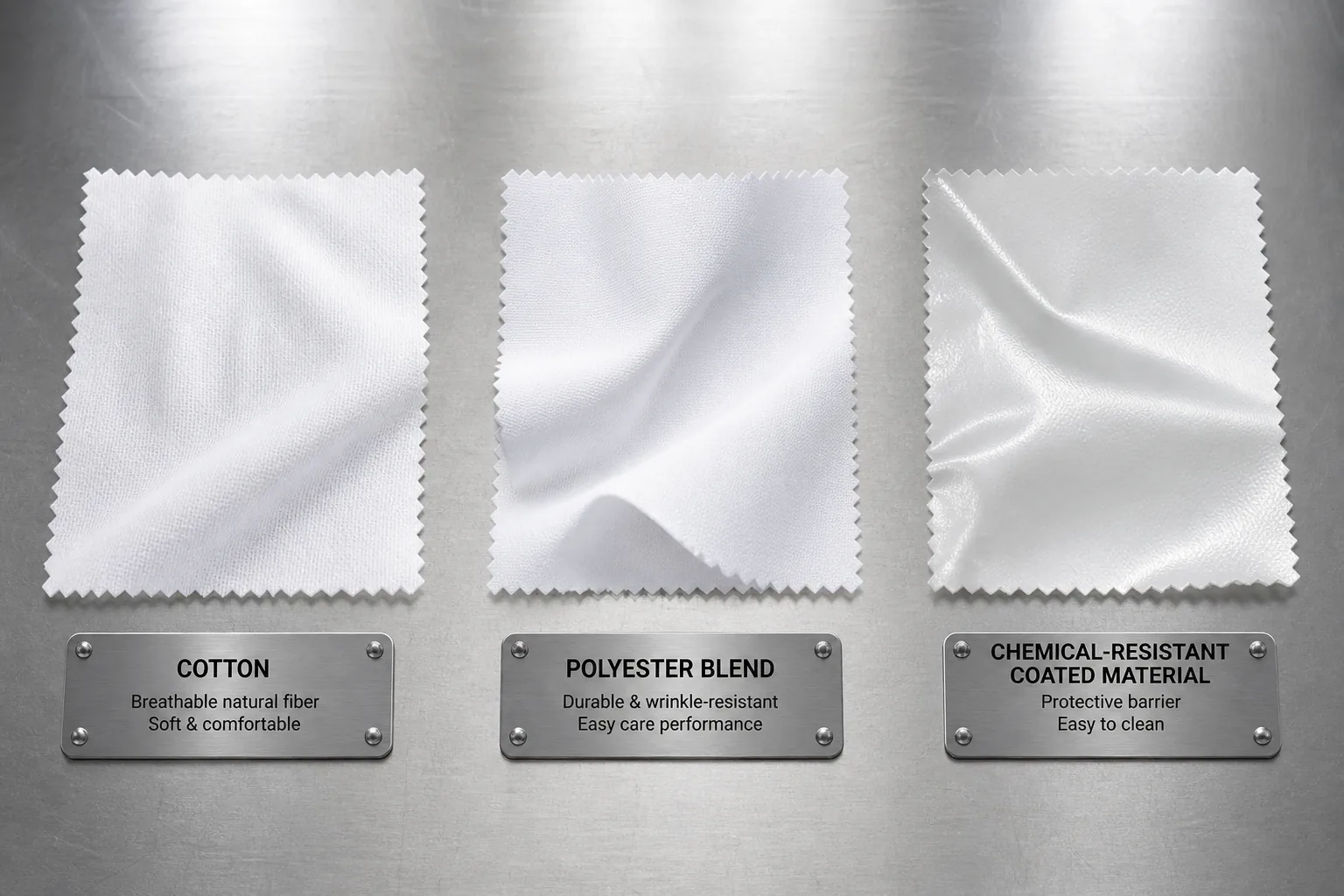
Selecting the right material for a chemistry lab coat is as important as the coat’s design. For routine tasks, 100% cotton offers wearer comfort but limited protection against liquid splash. Cotton absorbs chemicals quickly, and a soaked sleeve can carry the hazard directly to the skin. It is acceptable for low-risk work, yet procurement teams should not treat it as a default option when corrosive liquids are present.
Polyester-cotton blends improve durability and wrinkle resistance, which lowers replacement frequency and keeps staff looking professional. The trade-off is thermal behavior: these fabrics may melt at high heat, creating severe burn risks near burners or hot equipment. Buyers should compare expected service life against exposure to heat sources.
For higher-risk environments, chemical-resistant options such as coated fabrics or FR-treated materials deliver specialized barrier properties. Coated surfaces repel both water and oil-based chemicals, while FR-treated fabrics reduce flash fire hazards. These garments are worth the higher upfront cost when workers handle concentrated acids, solvents, or reactive compounds.
Breathable microporous fabrics balance protection with comfort during extended shifts. They block liquid splash while allowing moisture vapor to escape, reducing heat stress and improving wearer compliance. When specifying lab coats, evaluate the actual chemical load, laundering requirements, and shift duration. A pragmatic approach is to match material to task rather than purchasing one fabric for every operation. This prevents both overprotection and dangerous underprotection.
Standards and Certifications to Check
When sourcing chemistry lab coats for institutional or industrial use, compliance with recognized performance standards is not optional—it is the baseline for worker safety and procurement due diligence. Standards and certifications define exactly how a garment will behave under chemical exposure and fire risk, so verifying them before purchase prevents costly liability and protects your personnel.
- ANSI/ASTM standards establish the core performance requirements for protective clothing, including resistance to liquid splash and flame exposure. These tests simulate real-world laboratory hazards, allowing you to compare products on measurable data rather than marketing claims.
- NFPA 2112 specifies flame-resistant garments designed for flash fire protection in industrial settings. However, not every lab coat labeled “flame-resistant” meets this rigorous standard. If your operation involves flammable chemicals or proximity to ignition sources, require explicit NFPA 2112 certification—do not assume it from a generic FR tag.
- OSHA regulations place the legal obligation on employers to provide PPE that addresses recognized hazards in the laboratory environment. That means you must conduct a hazard assessment and select coats that demonstrably mitigate those risks, documenting your rationale for each material and design choice.
When reviewing product labels, look for two critical specifications: liquid penetration resistance (usually reported as a pass/fail against specific chemical test batteries) and tensile strength, which indicates durability under repeated wear and laundering. A coat that fails on either metric will not hold up in daily use or provide the barrier your lab requires.
For B2B purchases, always request third-party test reports and certificates from your supplier. Do not rely on marketing language—insist on the actual standard designations and ask how recent the validations are. That documentation turns a lab coat purchase from a commodity transaction into a defensible safety decision.

Lab Coat Styles and Features for Laboratory Professionals
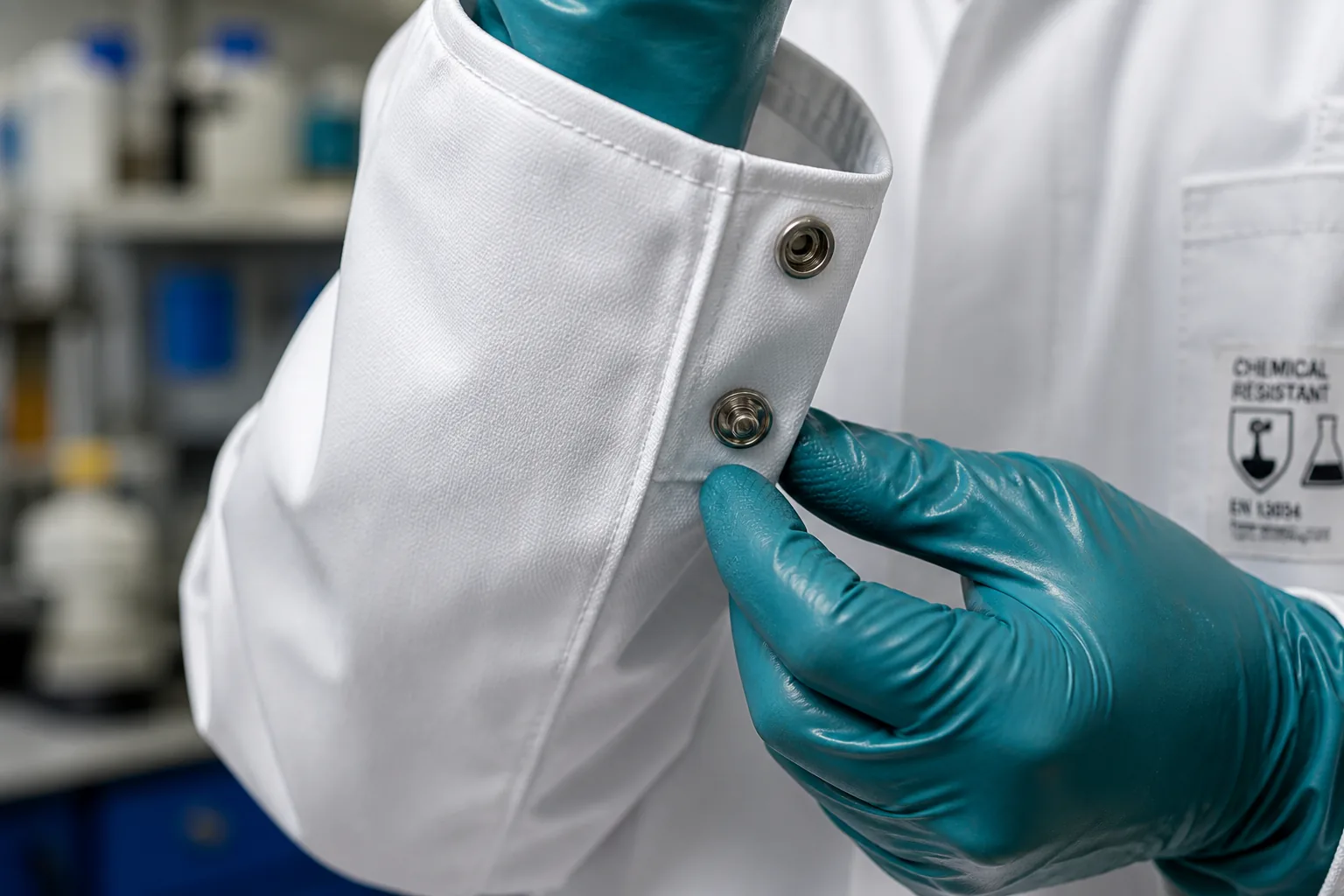
Choosing the right chemistry lab coat for your team is a matter of function first, and every style detail affects daily safety and workflow. The closure system alone deserves scrutiny. Button-front coats remain a dependable standard for most laboratory environments because they allow quick removal after an exposure and tolerate repeated industrial laundering without warping or cracking. Snap-front versions, by contrast, serve personnel working with open flames, high-heat equipment, or reactive chemicals: snaps release instantly under force, which means the wearer can shed a contaminated garment in an emergency without fumbling with buttons.
Beyond the front, examine the cuffs and hem. Knit cuffs are a practical feature that seals the sleeve around the wrist, preventing drips from traveling down the arm onto the forearm. This matters in wet chemistry workflows where reagent spills are a real, not theoretical, risk. Longer coat cuts are equally valuable because they extend coverage over the hips and upper thighs—areas that standard-length coats leave exposed. When your staff leans over a fume hood or sits at a bench, that extra fabric protects clothing and skin from splashes that migrate downward.
Pockets may seem like a minor conveniences, but internal barriers matter. Pockets designed with built-in folds or flaps reduce the chance of chemical residue trapping against the fabric, preventing cross-contamination between the outside and inside of the garment. Finally, consider color and micro-porosity. Hues such as blue or gray help identify chemical splashes and contamination immediately without the uniform looking like standard white lab attire. Micro-porous finishes retain an appealing professional appearance while providing an added layer of resistance against incidental contact. For procurement decisions, these details determine whether your lab coats perform under pressure or simply look the part.
Comparing Chemical Lab Coat vs Medical Lab Coat vs Professional Lab Coat
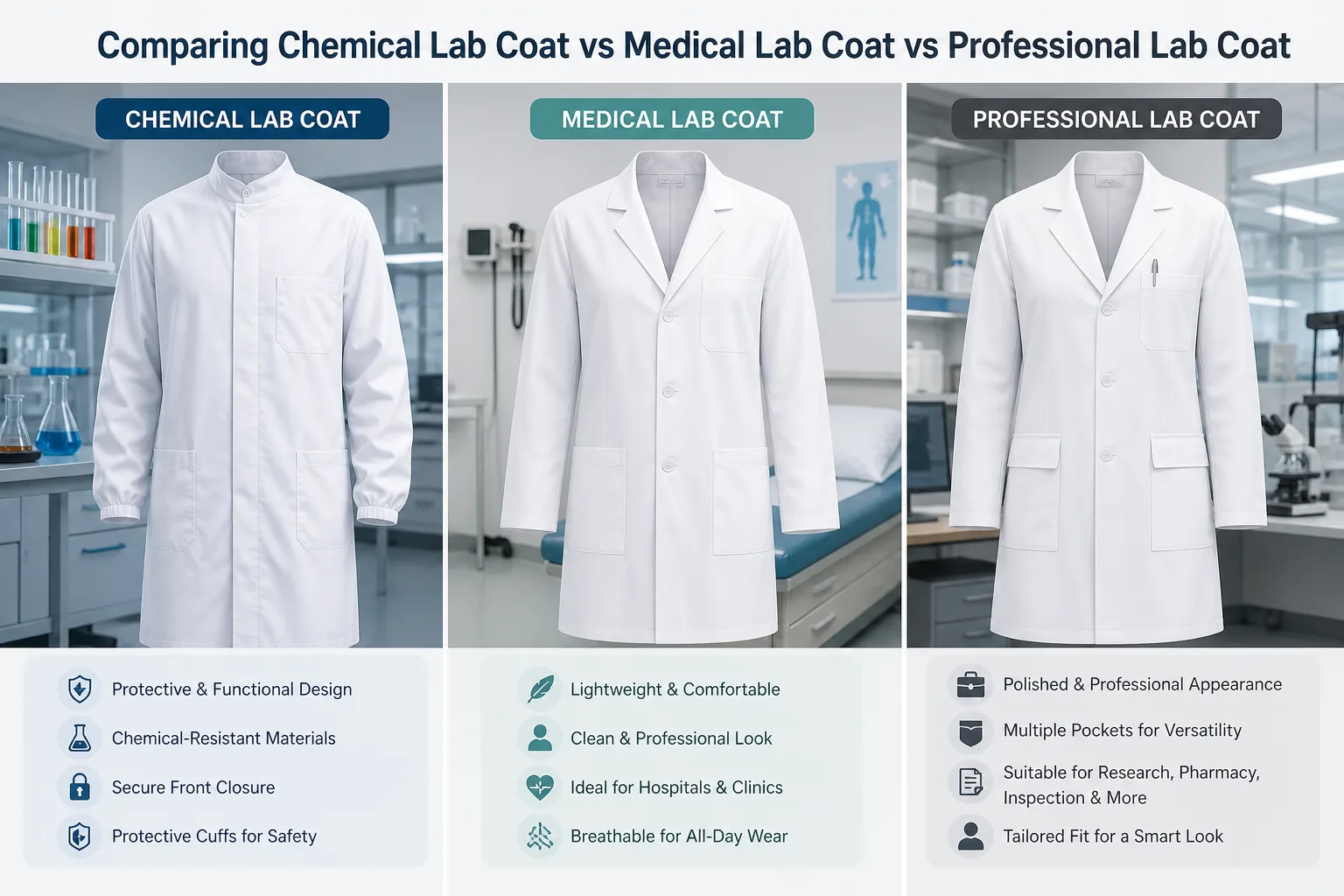
When evaluating lab coats for bulk procurement, distinguishing between chemical, medical, and professional designs is crucial for safety and value. Medical lab coats are engineered for hygiene, typically using lightweight polyester blends that endure frequent laundering and inhibit microbial growth. They serve well in clinical or pharmaceutical cleanrooms but lack the dense weave required for chemical splash defense. In contrast, chemistry lab coats emphasize fluid resistance, often incorporating flame-retardant fibers such as modacrylic or treated cotton to mitigate burn risks in solvent or acid workflows. These garments provide a substantial barrier but can be heavier and less breathable, so ergonomic design matters for all-day wear. Professional or dental lab coats, meanwhile, prioritize style and comfort, using softer fabrics and tailored fits for patient-facing consultation roles. They boost presentation but offer minimal chemical barrier, making them unsuitable for any task involving potential exposure to corrosive substances. For B2B buyers, the decision hinges on workflow assessment: catalog the specific chemicals handled, contamination risks, and task duration. A laboratory handling concentrated acids demands a chemistry lab coat with verified protective ratings, while a medical team might prioritize ease of sterilization. Professional coats fit administrative or customer interaction zones. Ultimately, selecting the right balance of protection, comfort, and presentation requires matching garment attributes to your operational realities—never compromise on barrier integrity where hazards exist, and ensure end-users are consulted on fit and comfort to maintain compliance. This practical approach optimizes both safety outcomes and procurement budgets.
How to Source Chemistry Lab Coats for Your Organization

For procurement teams, sourcing chemistry lab coats is a matter of risk management, not just fabric selection. Your decision must align with the specific chemicals handled in your facility, the frequency of laundering, and the expectations of the staff who wear them daily. A chemistry lab coat that looks durable on paper can fail catastrophically when exposed to a particular solvent, so treat supplier claims as starting points, not guarantees.
Request samples and test product performance against your facility’s specific chemical inventory. Do not rely on generic splash-resistance data. Expose sample fabric to your most aggressive reagents, note the time to breakthrough, and check seam integrity, closure design, and cuff security. If a supplier hesitates to provide samples or refuses to share independent test reports, that is a red flag.
Then evaluate bulk pricing, lead times, and after-sales support from suppliers. Ask for tiered quotes, confirm lead times against your peak usage seasons, and clarify return policies for defective batches. A low unit price matters little if restocking takes six weeks or the vendor is unreachable after invoicing.
Consider custom embroidery or printing for branding, while confirming the coating process does not affect safety. Embroidery holes can compromise barrier properties, so verify whether stitching can be placed away from high-exposure zones or whether printed labels are a better alternative. Always request a post-decoration test sample.
Finally, build a replacement program based on garment life and laundering cycles to maintain protection levels. Track how many washes each coat survives before visible wear or chemical breakthrough appears. Rotate stock accordingly, and budget for routine replacement rather than emergency purchases. Consistent, documented sourcing decisions keep your lab staff safe and your procurement costs predictable.
FAQ
What is the difference between a chemical lab coat and a medical lab coat?
A chemical lab coat is built with materials and features for chemical resistance, such as tight weaves, flame-retardant treatments, or barrier fabrics. Medical lab coats are typically lighter cotton/polyester blends designed for hygiene and comfort in patient care, offering limited splash protection. B2B buyers must match the coat to the specific hazards present in their lab environment.
How do I choose the right fabric for a chemistry lab coat?
Choose fabric based on the chemicals handled and the level of contact risk. For light work, polyester-cotton blends offer good durability. For splash protection, consider coated or laminated fabrics. For flash fire exposure, opt for FR-treated materials. Always verify that the fabric meets relevant standards such as ASTM or NFPA.
Are cotton lab coats safe for chemical use?
Standard cotton lab coats provide minimal resistance to liquids and can absorb chemicals, causing skin exposure. They may be acceptable for low-risk tasks but are not recommended for work with corrosive or toxic substances. For better protection, use specially treated cotton or synthetic barrier fabrics.
How should chemistry lab coats be laundered and maintained?
Follow the manufacturer's instructions. Chemical-resistant garments often require industrial laundering to remove contaminants without damaging the barrier. If a coat is contaminated with a dangerous chemical, replace it immediately. Establish a regular inspection schedule to check for tears, worn seams, or degraded fabric.