

You’re standing in the Home Depot hard hat aisle. A $13 plastic shell on one side. A $120 Ergodyne on the other. The question hits fast: Is this worth ten times the price, or am I just paying for a logo?
Fair question. The honest answer might surprise you.
Both hard hats on that shelf carry the same ANSI Z89.1 certification. Both meet OSHA requirements on a job site. That’s where the similarity ends.
The real differences show up fast. Wear one for eight hours straight. Work under live electrical lines. Suddenly, what you paid starts to matter a lot.
This guide cuts through the noise. By the end, you’ll know which price point fits your risk level, your comfort needs, and your budget — no overspending, no cutting corners on protection.
What the Price Tag Buys You (And What It Doesn’t)
Here’s the blunt truth: the price gap between a $13 hard hat and a $120 one isn’t about safety. It’s about comfort, durability, and features you won’t notice until you need them most.
Both price points clear the ANSI Z89.1 bar. After that, your money buys real, tangible upgrades:
-
Suspension system quality — Budget shells use basic 4-point ratchet suspensions. Premium hard hats (MSA, Ergodyne) use 6-point suspension with foam padding. That extra support cuts fatigue on long shifts. You’ll feel the difference by hour six.
-
Material strength — Cheap models use standard HDPE plastic. Higher-end options use reinforced polycarbonate or ABS. Those materials handle repeated impacts and UV exposure far better. They hold up where HDPE starts to degrade.
-
Venting and airflow — Higher-priced vented designs push heat out faster. That’s a real benefit on a summer roofing job. For a two-hour weekend project, it’s much less of a concern.
-
Replacement parts availability — Premium brands stock hard hat replacement parts. A $13 helmet goes in the trash when the suspension cracks. A premium one gets a $10 fix instead.
What the price tag doesn’t buy you? A higher safety rating on paper. A $13 ANSI-certified hard hat gives you the same legal protection as a $60 one — as long as the class ratings match.
The real question isn’t cheap vs. expensive . It’s how many hours a day you wear it, and what’s underneath you if something falls.
Budget Hard Hats at Home Depot ($10–$40): Are They Good Enough?
Thirty dollars gets you more protection than most people realize.
Home Depot stocks over 300 Type 1 hard hats under $40 — from brands like Cordova, DEWALT, Ergodyne, and BISON LIFE. The price points spread across four tiers: under $10, $10–$20, $20–$30, and $30–$40. That’s a lot of options for budget-conscious buyers.
Here’s the one that stands out at the low end: the Cordova Duo Safety Hard Hat (Model H34R2) at $14.04. It’s OSHA-certified and impact-resistant. It also carries a Class E rating — tested to 20,000 volts. That’s not a budget compromise. You get the same electrical protection standard as hats three times the price.
What do you get under $40?
Most budget hard hats in this range include:
-
Type 1 protection — guards against top-of-head impacts and meets OSHA requirements for general construction and standard industry tasks
-
4-point ratchet or pinlock suspension — functional and adjustable, nothing fancy
-
Class C, G, or E electrical ratings — pick what fits your job
-
Cap style or full-brim options are available even at entry-level pricing
-
Materials : polyethylene or polycarbonate resin — solid enough for standard impact loads
Budget Is the Right Call Here
The $14–$40 range works well for:
-
Visitors and inspectors are doing occasional site walkthroughs
-
DIYers on weekend renovation projects
-
Standard construction sites where side impacts aren’t a documented risk
-
Compliance-only requirements — OSHA needs a certified hard hat on your head. The Cordova checks that box.
One smart move for small crews: Milwaukee BOLT 10-packs run $274.97. That breaks down to $27.50 per unit. Each hat includes a 6-point ratchet suspension and full ANSI/ISEA certification. Buying in bulk puts premium specs within budget reach.
The honest verdict : A $14 Cordova H34R2 holds its own on a job site. It’s compliant, tested, and does the job. It does have limits — long shifts, accessory compatibility, and side-impact jobs are areas where it struggles. For those situations, spending more makes sense.
Mid-Range Hard Hats ($40–$80): The Sweet Spot for Most People
Spend $40 to $80 on a hard hat, and the compromises disappear.
This price band is where serious construction workers land. Not because they’re forced to. The math works out. You get a 6-point suspension system, genuine venting options, Type II side-impact protection, and full ANSI Z89.1 compliance — no triple-digit price tag required.
That’s a meaningful jump from the budget tier. Here’s why it matters on the job.
The Specs That Hold Up
At $50 and above, manufacturers stop cutting corners on suspension. The shift from a 4-point to a 6-point suspension system isn’t marketing fluff. Six contact points spread the impact load across your skull more evenly. That reduces pressure fatigue on eight-hour shifts. Less fatigue means workers keep the hat on through the afternoon — not tossed aside by lunch.
Type II protection enters the picture here, too. Budget hard hats are almost all Type I — top-of-head coverage and nothing more. The $50–$80 range opens up Type II options with tested lateral impact resistance. For job sites with side-exposure hazards, that gap matters.
Electrical class coverage stays solid across the range:
-
Class E (rated to 20,000 volts): $45–$70
-
Class G (rated to 2,200 volts): $40–$65
-
Class C (no electrical rating, maximum ventilation): $40–$80
Three Products Worth Looking At
LIFT Safety DAX Fifty 50 (~$60–$75): Carbon fiber shell. 6-point suspension. Type I Class C rating. Construction crews and road workers reach for this one for good reason. Impact resistance sits well above the baseline, and the shell handles UV degradation better than standard HDPE.
Kevy Safety Type II Class C (~$50–$70): Lightweight build. Exceeds ANSI Z89.1 minimums. Comes in both classic and modern profiles. The Type II rating makes it a strong pick for anyone working near scaffolding edges or in tight industrial spaces.
Full Brim Vented Type I Class C (~$40–$55): The entry point to this tier. 4-point ratcheting suspension keeps the price down. The full brim adds sun and rain coverage that a standard cap style leaves out.
Who Should Buy in This Range
The $40–$80 tier is built for:
-
Professional contractors who wear a hard hat through most of the workday
-
Workers on sites with lateral hazards — scaffolding, confined spaces, demolition zones
-
Anyone near electrical systems who needs Class E coverage with solid long-term durability
-
Small crews that need replacement parts availability — premium brands in this range keep them stocked
The budget tier gets you compliant. This tier gets you comfortable, durable, and ready for what most real job sites throw at you.
Premium Hard Hats at Home Depot ($80–$150+): Is the Price Worth It?
At $80, you stop buying a hard hat . You start buying a system.
That’s not a marketing line. It’s what separates the premium tier from everything below it. The Ergodyne Skullerz 8970 and MSA V-Gard 500 don’t just clear ANSI Z89.1. They’re built around workers who wear their gear through 10-hour shifts, five days a week. At that level, comfort shapes safety behavior. A hat that fits well gets worn. One that doesn’t get pulled off.
What $80+ Buys You?
The jump is real. Here’s where your money goes:
-
6-point suspension with integrated foam padding — this spreads impact load and cuts fatigue over long shifts. Comfortable workers keep their hats on. Uncomfortable ones don’t.
-
Integrated accessory compatibility — face shields, hearing protection, and lighting attachments clip in cleanly. No rigging. No tape. Everything locks into place the way it should.
-
Polycarbonate shell construction — this shell handles long UV exposure without going brittle. Standard HDPE breaks down over time outdoors. Polycarbonate holds up year-round.
-
Type II classification as standard — lateral impact protection is built in from the start, not sold as an add-on.
Who Needs This Tier?
Be honest with yourself here. A premium hard hat earns its price for:
-
Full-time tradespeople putting in 40+ hours a week in the field
-
High-voltage electrical work that requires Class E certification and long-term reliability
-
Multi-hazard environments — job sites where side impacts, falling debris, and accessory attachments all matter at once
-
Supervisors and foremen who need replacement parts on hand so projects don’t stall waiting on gear
For a weekend DIYer? The $40–$80 tier covers your needs. But your hard hat is your most-worn piece of PPE. The premium tier pays for itself in comfort, durability, and the protection gap that matters most once conditions go sideways.
Cheap vs Expensive Hard Hats: Side-by-Side Comparison
Numbers tell the story fast. A Type I hard hat averages $15–$30. A Type II runs $50–$100. That price gap isn’t random — it maps to what each hat does to protect you.
Here’s the full breakdown:
|
Feature |
Budget ($15–$30) |
Premium ($50–$200+) |
|---|---|---|
|
Impact Protection |
Top-of-head only |
Top + lateral (side) |
|
Electrical Rating |
Up to Class E (2,200V–20,000V) |
Class G/E up to 20,000V |
|
Shell Material |
ABS, HDPE, resin |
Polycarbonate, Kevlar, WaveCel |
|
Weight |
Under 1 lb (cap style) |
Under 1 lb to moderate (full brim) |
|
Durability |
Breaks down faster under UV and repeated impact |
Longer service life; keeps its structure |
|
Accessories |
Minimal; add-ons cost extra |
Often built-in: face shields, lighting mounts |
Where the Price Gap Really Lives?
The biggest jump between cheap and expensive isn’t impact resistance. It’s lateral protection and materials. Nearly every budget hat is Type I. A side blow from falling scaffold material goes right past your coverage. That’s the real risk.
Move to $50+, and the Bullard Vector or Pyramex Ridgeline Full Brim enter the picture. Both deliver Type II lateral protection for under $100. The Pyramex Ridgeline Full Brim (~$50) keeps earning “best overall” status — matte black shell, solid reliability, real-world tested.
At the top end, WaveCel technology (~$200) changes how the shell absorbs impact energy. It’s a different approach to protection. Kevlar and carbon fiber shells (~$100+) bring extremely tough durability. One trade-off: they carry Class C only. That means zero electrical protection.
Expensive doesn’t always mean safer on paper. Accessories and design push prices up. An $80 Klein hard hat , for example, isn’t Type II certified. You’re paying for brand name and build quality — not a higher safety rating.
The practical rule : your job involves lateral hazards? Upgrade. Doesn’t it? A certified $20 hat does what OSHA requires. No more, no less.
Comfort & Fit: What You Notice After a Full Day of Work
Eight hours into a shift, the hard hat you paid no attention to at 7 a.m. becomes the one thing on your mind.
That’s not an exaggeration. Neck stiffness, pressure points above the ears, a dull ache across the forehead — these aren’t signs of a bad day. They’re signs of a bad suspension system. This is where cheap and expensive hard hats split apart in ways the product label will never tell you.
The Suspension System Is Everything
Budget hard hats run a 4-point suspension. The shell stays off your head. It meets ANSI requirements. It costs next to nothing to make. It also presses down on four contact points across your entire workday.
Premium hard hats — MSA V-Gard 500, Ergodyne Skullerz 8970 — use 6-point suspension with integrated foam padding. Six contact points spread the load across your skull. The foam soaks up small vibrations and cuts down on hot spots. At hour one, you won’t notice much difference. At hour six, you’ll feel it.
Fit Adjustability Matters More Than You Think
Cheap shells use basic pinlock sizing — a fixed plastic ring with a few notches. It does the job. It doesn’t adjust well.
Mid-range and premium hats use ratchet adjustment systems with smaller, finer steps. You dial in the exact fit you need. That matters on a sweaty afternoon, with a winter liner underneath, or on a shared kit passed between crew members.
The Practical Bottom Line
On site for two hours? The $14 Cordova gets the job done. Clocking full 8–10 hour shifts day after day? The suspension upgrade alone justifies the price jump to the $50–$80 tier. Comfort isn’t a luxury feature in a hard hat. It’s a safety feature. An uncomfortable hat gets pulled off. A hat sitting on the ground protects nobody.
Which Home Depot Hard Hat Should You Buy? (Simple Decision Guide)
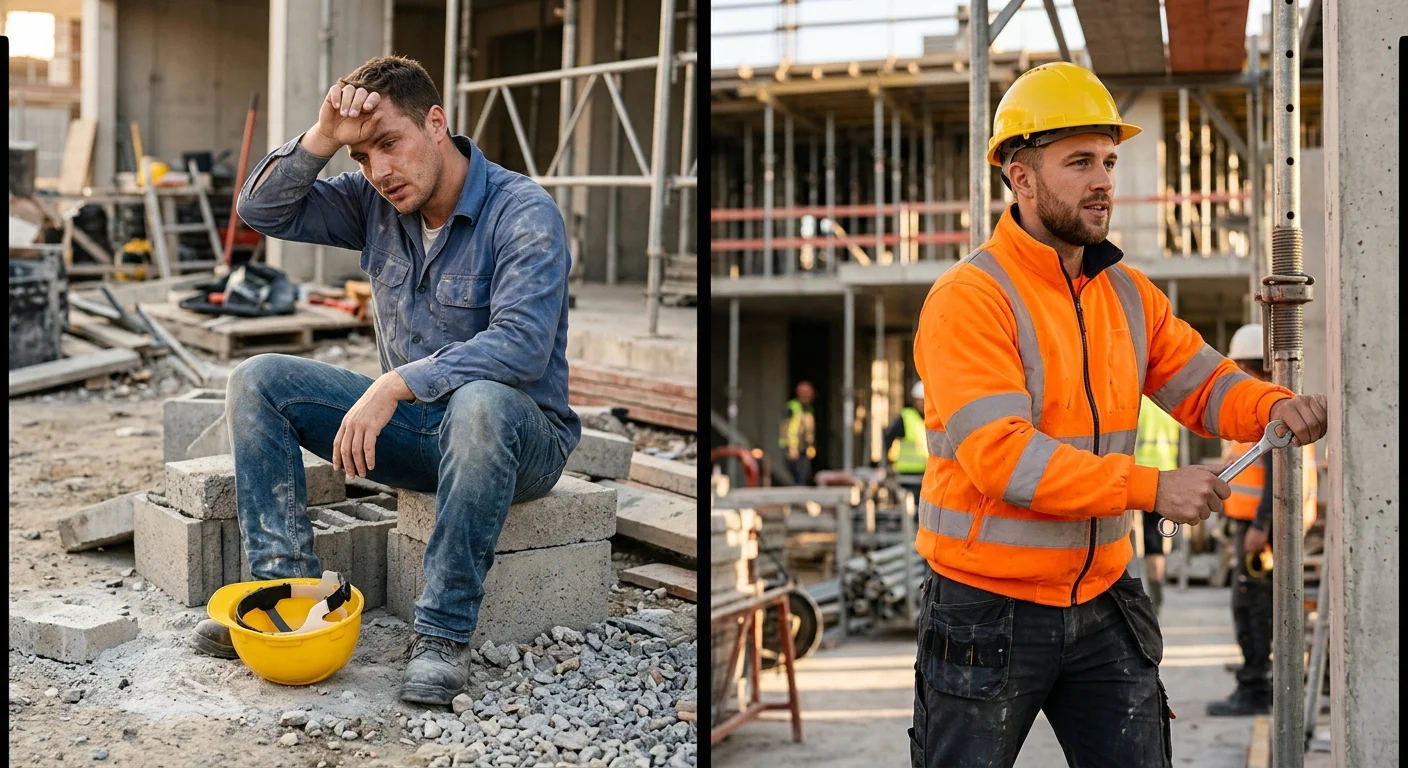
Four questions. Answer them, and the right hard hat picks itself.
1. Where are the hazards coming from?
Objects falling from above? Type I covers you. Doing demolition, working in confined spaces, or anywhere a side collision is possible? Go with Type II — top and side protection. Don’t cut corners here.
2. Is electricity in the picture?
Power tools, overhead lines, or generators nearby? Get at least Class G (2,200V). High-voltage systems or data center work? Step up to Class E (20,000V). Zero electrical exposure? Class C is fine — plus you get better ventilation.
3. How long have you been wearing it?
Two-hour weekend project: a certified $14 budget hat does the job. Eight-hour shifts, five days a week: put your money into a 6-point suspension and a ratchet adjustment system. A comfortable hard hat is one that workers actually keep on their heads. That’s what keeps people safe.
4. Does the label check out?
Flip it over. Check that ANSI Z89.1-2014 (or newer), the Type, and the Class are all printed inside. No label, no certification — walk away.
One last thing: add a chinstrap for height work or uneven ground with a Type II hat. It’s a $5 add-on. It keeps your hat on when it matters most.
FAQ: Common Questions About Hard Hat Price and Safety
Hard hat injuries cost an average of $81,000 per claim. With 84,750 head injuries recorded each year, the stakes are too high for guesswork. Here are the answers to the questions that matter most.
Does a cheap hard hat expire?
Yes — and most people don’t know this. The rule is straightforward:
-
Suspension : Replace every 12 months or sooner
-
Full hard hat shell : Replace every 5 years maximum
UV exposure, chemicals, and repeated heat cycles break down the plastic from the inside out. The damage builds up long before you see it on the surface. Watch for loss of gloss, chalking, flaking, or hairline cracks. See any of those signs? Replace it right away, no matter how old it is.
One absolute rule : Your hard hat takes a heavy impact or survives a drop of 8–10 feet? Retire it on the spot. The shell may look fine. The internal structure is not.
Can I wear a baseball cap under my hard hat?
No. A ball cap cuts the gap between your skull and the shell. Metal eyelets on caps can also weaken Class E or G dielectric protection. The suspension needs 1 to 1.25 inches of clearance to do its job. Close that gap, and impact force goes straight to your head and neck — not into the suspension.
Can I mix suspensions between hard hat brands?
Never. Manufacturers match suspension systems and shells as a set. Swap parts between brands, and you void your ANSI certification. Plus, you get a false sense of protection that could cost you. Stick with original replacement parts.
Does an expensive hard hat mean a higher safety rating?
Not on paper. A $14 Cordova with a verified ANSI Z89.1 label passes the same tests as a $120 MSA. Price buys comfort, durability, and features — not a higher certification tier.
Conclusion
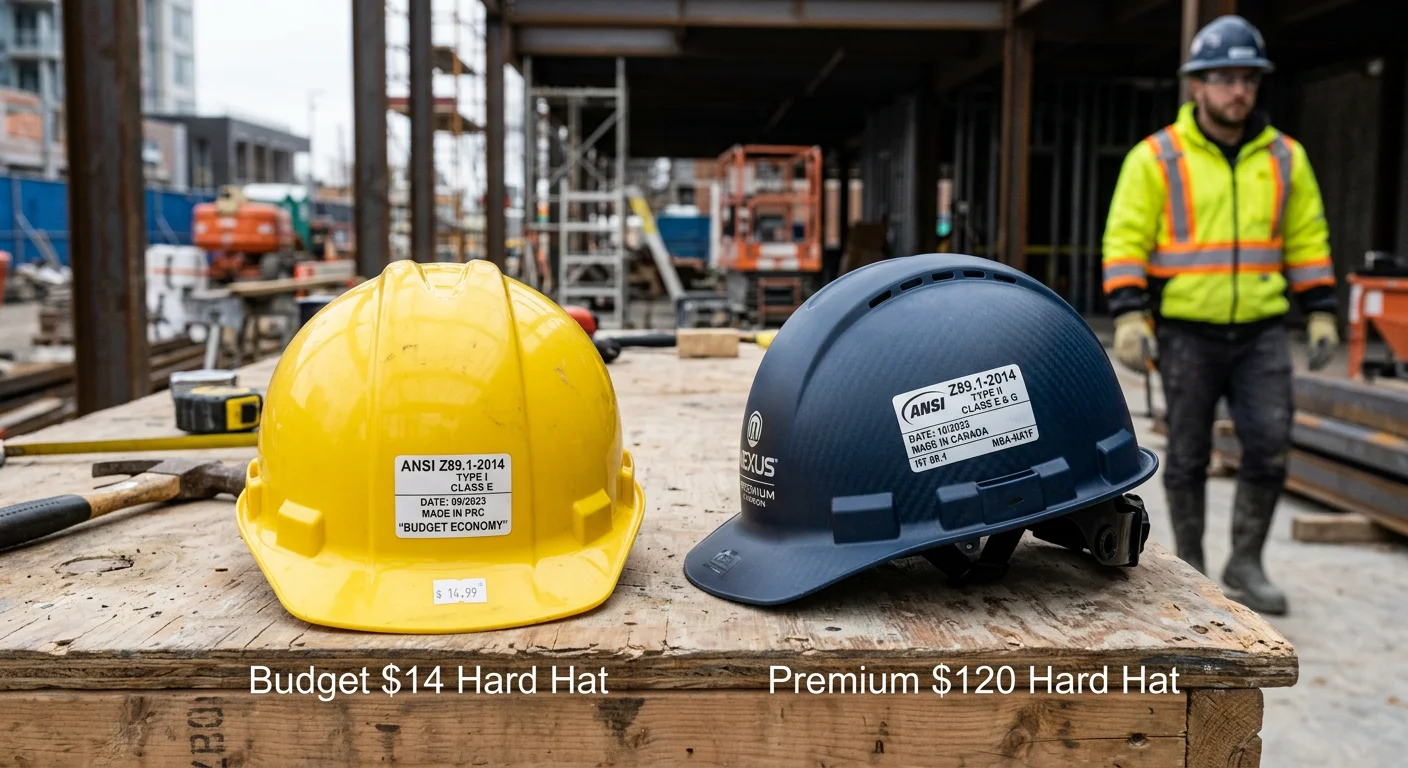
Here’s what the hardware store won’t tell you: the $15 hard hat and the $120 one can both save your life — but each one fits a different job.
For a weekend deck project or light DIY work, a budget ANSI-certified hard hat from Home Depot does the job. Don’t let anyone upsell you on features you’ll never use.
Full-time job site work is a different story. Eight hours a day, electrical hazard zones, extreme heat — these conditions are where MSA, Ergodyne, or Pyramex premium hard hats earn their price. You get better comfort, longer durability, and real protection that holds up over time.
The best purchase isn’t the cheapest or the most expensive. It’s the one that matches your actual risk level.
Before heading to Home Depot, take 30 seconds to get clear on three things:
-
Know your job type
-
Check for the ANSI Z89.1 certification label
-
Match the Class rating to your work environment
That’s it. That’s the whole decision.
Buy smart. Work safe.