

You’re prepping for a health inspection, onboarding a new kitchen crew, or starting your first shift at a food service job. Then the question hits: Do food workers have to wear hair nets? The answer isn’t a simple yes or no. Getting it wrong can mean a failed inspection, a compliance violation, or a rough first week on the job.
Food safety hair covering rules depend on where you work, what role you hold, and which regulatory body oversees your facility. The rules aren’t one-size-fits-all.
This guide breaks down what FDA guidelines and state health codes require — in plain language. No legal jargon. Just practical, real-world clarity. Use it to write a restaurant employee hair policy, or figure out what to do with your ponytail before your next shift.
Do Food Workers Have To Wear Hair Nets? The Short Answer
 Here’s the rule, plain and simple: food workers must wear hair restraints — but only if they have direct contact with food during preparation.
Not every person in a restaurant needs one. A hostess seating guests? No requirement. A server carrying wrapped sandwiches or pouring coffee? Exempt. Step into the kitchen and handle exposed food, though — that’s when the obligation kicks in.
FDA Food Code Section 2-402.11 is the governing standard. Hair restraints must be effective. That means they keep hair away from exposed food, clean equipment, utensils, and unwrapped single-service items. A loose ponytail tucked under a cap doesn’t meet the standard.
Who Has to Wear One — and Who Doesn’t
Required to wear hair nets:
– Kitchen staff and chefs
– Food production and machine operators
– Dishwashers (working near the kitchen environment counts)
– Any employee entering the kitchen, regardless of their role
Not required:
– Counter staff
– Servers and waitstaff
– Hostesses
– Employees handling beverages or pre-packaged foods
Why It Matters?
Hair isn’t just a nuisance — food safety standards classify it as a physical hazard. Hair carries Staphylococcus aureus , a pathogen that causes vomiting, nausea, and stomach cramps. One contaminated dish can set off a serious health issue.
The business side hits hard, too. A single hair in a plate can mean a comped meal, a one-star review, and a damaged reputation that takes months to fix.
Food net food service compliance isn’t about paperwork. It’s about keeping people safe — and keeping your kitchen running without problems.
What It Feels Like to Wear a Hair Net During a Work Shift?
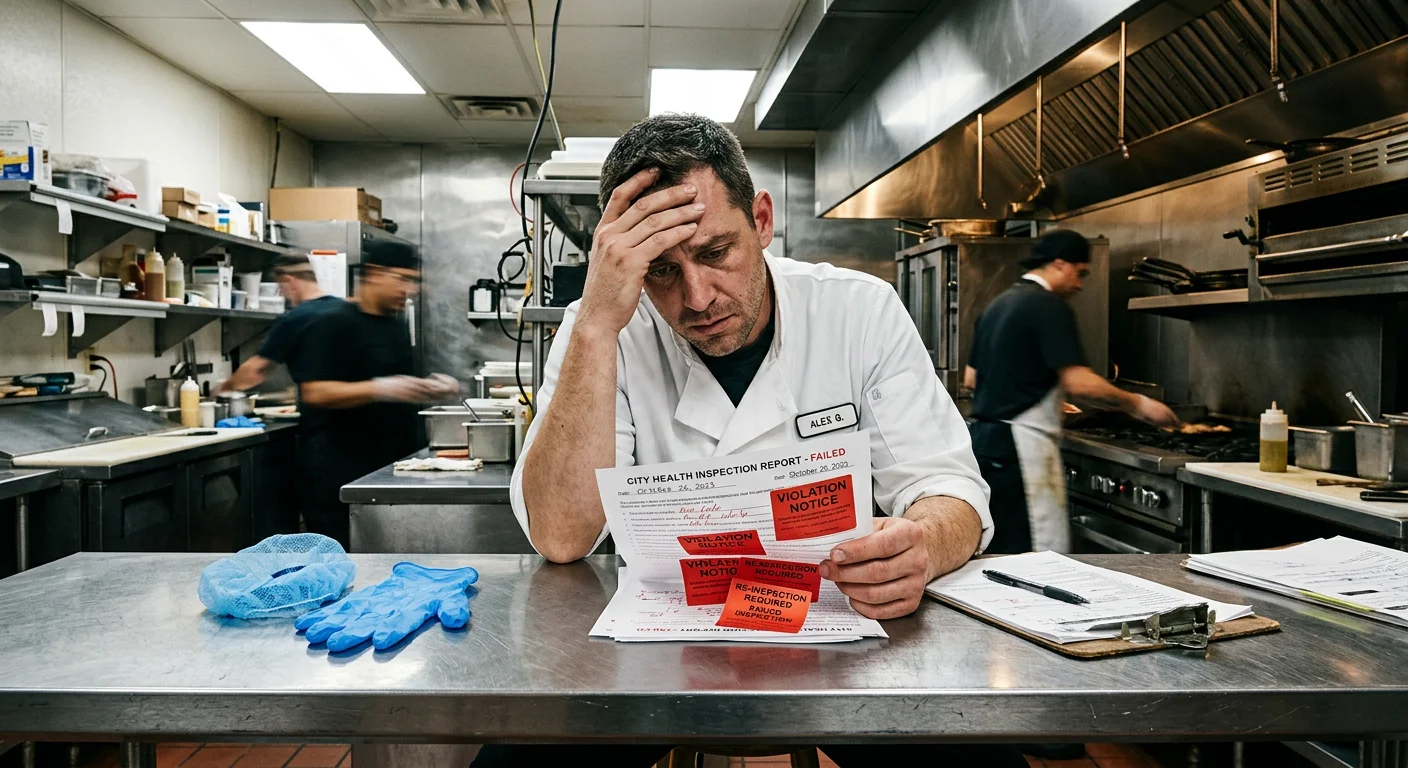 Nobody warns you about the elastic.
The first time you pull on a food service hair net, it’s a humbling moment. You stretch it over your head. The band snaps into place across your forehead. Then you catch a glimpse of yourself in the stainless steel door of a reach-in cooler. It’s not glamorous. Nobody pretends it is.
But two hours into a shift, something changes. You stop noticing it.
Getting the Fit Right From the Start
Most of that initial discomfort comes down to size. A 21-inch hair net fits the majority of food workers well. The elastic sits snug without digging in. The net holds everything in place from the first plate to the last. Go up to a 24-inch, and you’ll spend half your shift pushing it back up your forehead. That constant adjusting is the kind of hair-touching behavior that creates food contamination risk.
Bouffant caps — the rounded, full-coverage style common in food production — tend to feel more comfortable over a long shift. They breathe better than they look. Plus, you don’t need to tie your hair back with any precision before putting one on.
The Practical Reality
The FDA Food Code requires full hair coverage every shift. No exceptions for short hair or shaved heads. Workplaces like Five Guys take a middle-ground approach. Long hair gets pulled back and netted. Short hair may be exempt.
Follow these steps every time:
- Choose the right size — 21″ works for most workers
- Pull all hair back before anything goes on your head
- Stretch the net out fully , then secure the elastic below the hairline
- Check for loose strands — one visible gap is a violation waiting to happen
The hassle people complain about is almost always a fit problem. Not a hair net problem.
Common Problems Food Workers Have With Hair Nets
 Hair nets fail without warning. No dramatic moment, no obvious gap — just a slow build-up of small errors. Inspectors catch them fast. Workers usually don’t.
The average person sheds 33 to 50 strands of hair per shift during routine activity. That number doesn’t drop just because someone is wearing a net. It drops because the net is fitted, positioned, and maintained the right way. Most kitchens struggle with that last part.
The Mistakes That Show Up Again and Again
Placement is the first failure point. A net worn behind the hairline leaves the entire front section of hair exposed. Fringe, temple strands, and side hairs all miss coverage. The net looks like it’s doing its job. It isn’t.
Long hair that hasn’t been tied back first creates bulk. That bulk pushes against the net’s elastic and opens gaps at the neckline. A loose ponytail visible at the base of the skull is a violation — and it’s one of the most common findings during health audits.
Reusing disposable hair nets makes things worse. Workers take them off when they leave the production area, then put the same net back on when they return. The elastic stretches out, coverage weakens, and contamination transfers. Disposable means once — that’s the whole point.
Touching or adjusting a net mid-shift is more than a bad hygiene habit. It’s a documented transfer pathway for Staphylococcus aureus . Scalp flora moves from your hands onto gloves, food contact surfaces, and everything in between.
Beyond Physical Hazard
Hair isn’t a physical contaminant alone. It carries skin flora, microorganisms, and dandruff — biological risks that stay active even after the strand is caught in the net. Coverage gaps are a problem for both reasons.
Hair complaints that keep coming up despite mandatory nets — auditors don’t log that as a personal mistake. They log it as a hygiene culture failure. That means a systemic breakdown in control, and it reflects on the entire operation.
Can Hats Replace Hair Nets in Food Service?
The short answer is no, and the reason matters more than most kitchen managers realize.
A hat covers the top of your head. It does nothing for the hair around your temples, your neckline, or the loose strands near your ears. Those are the gaps that health inspectors document. A baseball cap — or even a traditional chef’s toque — doesn’t meet the FDA food safety hair covering rules standard of effective restraint. Effective means fully contained. Not mostly covered. Not close enough.
Why Hats Fail the Standard?
The problem isn’t just coverage. It’s also a material breakdown.
Hat fabric deteriorates over a shift. Small fibers loosen and fall. A disposable hair net gets discarded after one use. A hat does not. It builds up contamination across multiple shifts. Every edge around the brim is a gap. Every gap is a violation waiting to happen.
Texas Food Establishment Rules list hats as a permitted restraint type. But the rule only holds when the hat is designed and worn to keep hair from contacting food and surfaces. That conditional language is the key. A hat that lets strands slip through the sides doesn’t pass. Not on paper. Not in practice.
When Hats Are Acceptable?
Fine dining kitchens sometimes use chef hats as part of formal uniform standards. That works — but a hair net must be worn underneath. The hat becomes the aesthetic layer. The net does the compliance work.
Some auditors allow a combined hat-plus-net setup in lower-risk settings. The standard recommendation is a 24-inch net — large enough to cover both the head and hat together.
The Right Tool for the Job
| Type | Best For |
|---|---|
| Disposable hair nets | High-volume cafeterias, fast casual, and grocery stores |
| Bouffant caps | Food manufacturing, pharmaceutical settings |
| Beard nets | Facial hair longer than ½ inch |
| Chef hats + net | Fine dining, front-of-house presentation |
One rule applies across all of them. Touch your hair or adjust your restraint mid-shift? Wash your hands and change gloves before going back to food preparation. The restraint keeps hair out of food. Your hands carry what the net catches.
FAQ: Common Questions About Food Worker Hair Requirements
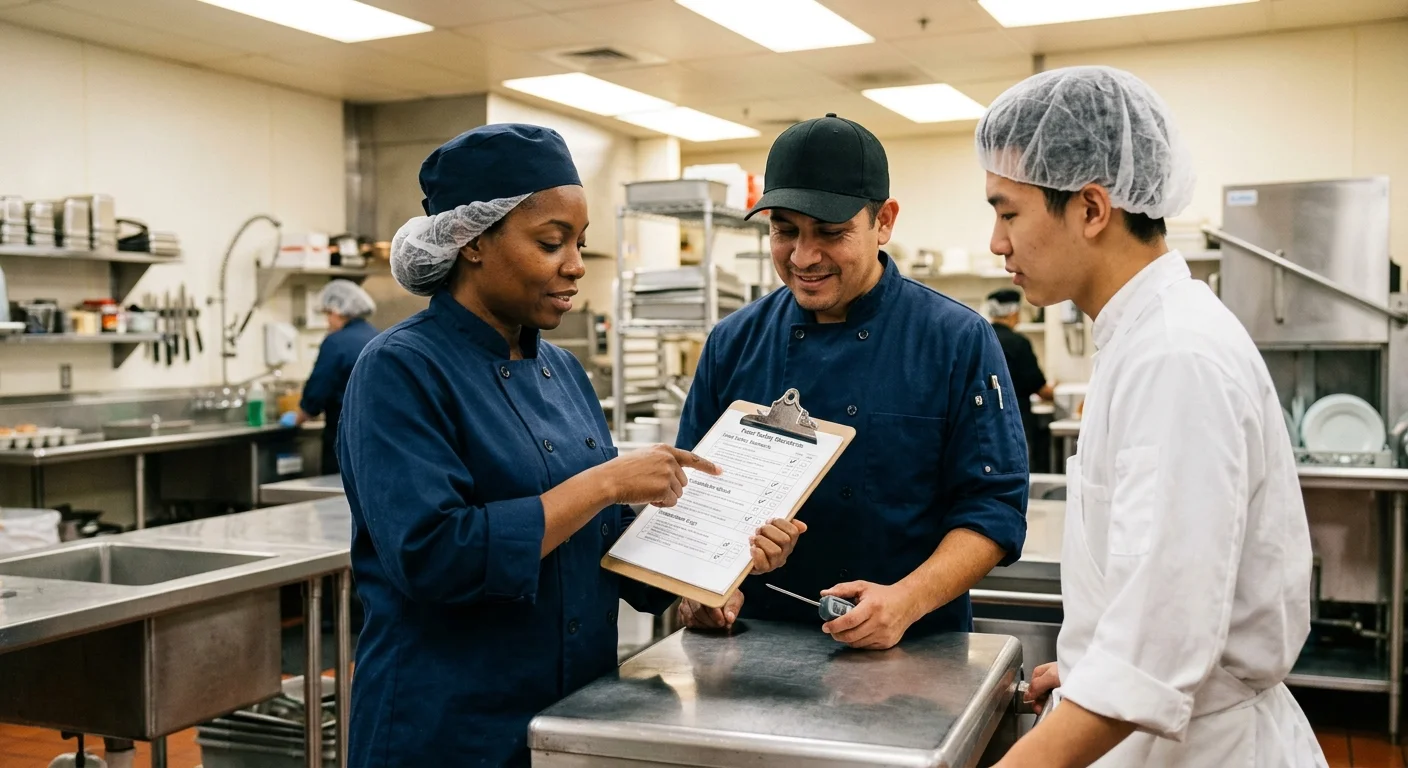 These questions come up all the time — from new hires on their first shift to kitchen managers writing employee handbooks. The rules are straightforward once you know where to look.
Does short hair mean no hair net required?
Not by default. Short hair may be exempt if the style keeps all strands secured with no risk of touching or dislodging. The keyword is effectively . An inspector who spots loose strands near food surfaces won’t accept short hair as a defense. In doubt? Cover it.
Does a shaved head still require a covering?
Yes. Shaved employees still must wear a hair net cap before entering the kitchen. Dead skin cells and scalp debris count as physical contaminants. Also, the rule applies to body hair — not just the hair on your head.
Do beard and mustache rules follow the same standard?
Each one is treated on its own. Facial hair longer than 0.5 inches requires a beard net in many states, though no single federal threshold exists. Check your local health department code. Most establishments set stricter rules than the state minimum.
Where should a hair net be put on?
In the locker room or restroom — never in the kitchen. Putting on or adjusting a restraint near food prep areas creates the exact cross-contamination risk the rule is built to prevent.
What happens if hair contacts food during prep?
Discard the dish. Prepare a fresh one. There’s no salvaging an exposed plate. Document what happened, then check that the restraint is back in place before you continue.
Is one hair net enough for a full shift?
Only if it stays secure and undamaged the entire time. Keep extras on hand. A stretched or displaced restraint mid-service is still a violation — it doesn’t matter that you put one on at the start of the shift.
Conclusion
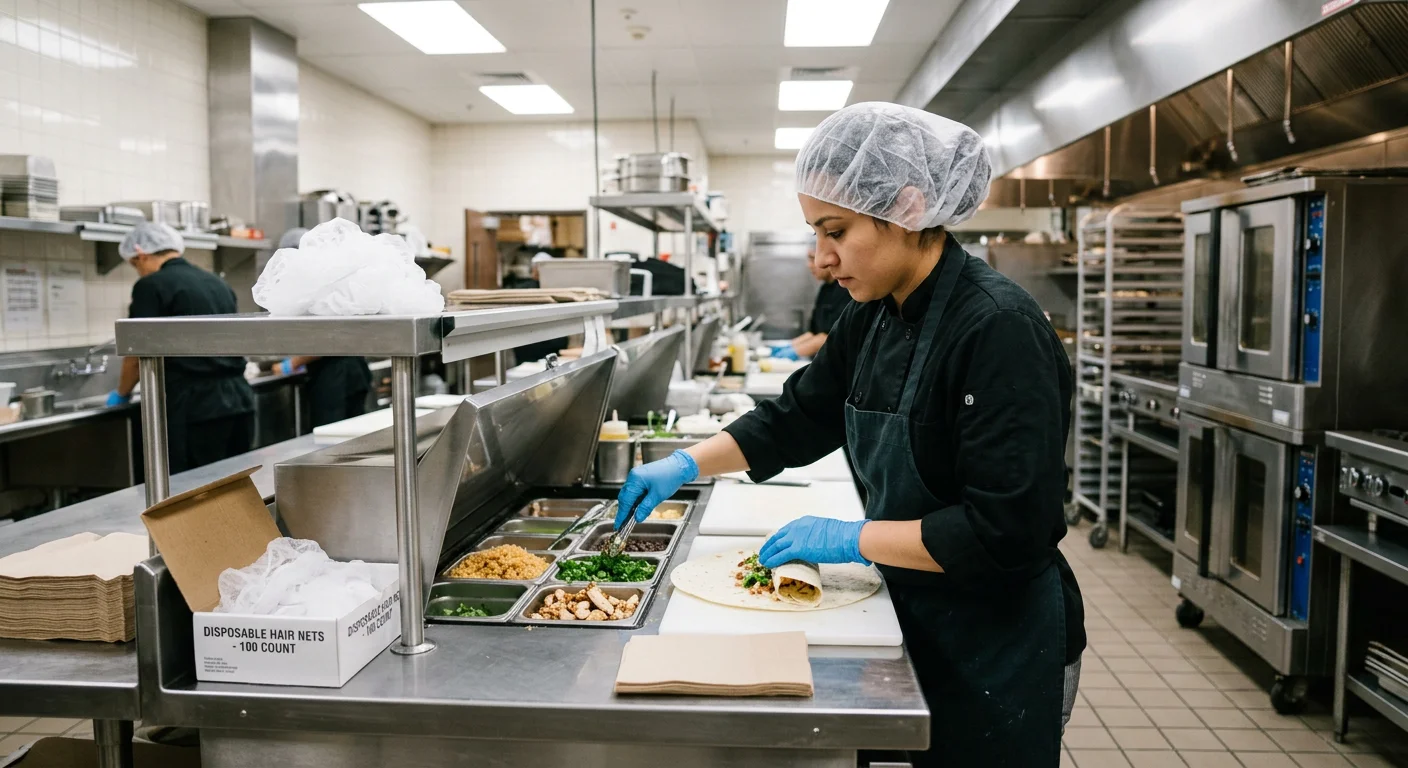 Hair in your food isn’t just unpleasant — it’s a liability. Managing a commercial kitchen or starting your first food service shift? Food safety hair covering rules are not optional. They’re the baseline of doing this job right.
Here’s what matters: federal guidelines set the floor. Your state or local health department may raise it. Your employer has the final word on what you wear. A hat might be enough in some kitchens. A full hair net might be non-negotiable for others. The wrong move is assuming you already know which situation you’re in.
So before your next shift — or your next health inspection — take ten minutes. Check your local regulations. Review your workplace policy. It’s a small step, but it carries real consequences either way.
Nobody remembers the meal that went well. They remember the one that didn’t.