

Finding the right cleaning gloves for sensitive skin is harder than it sounds. It’s not just about grabbing any pair off the shelf — the wrong gloves can make things worse fast.
I’ve been there. You peel off a pair of standard rubber gloves after washing dishes, and your hands come out red, tight, and more irritated than before. Turns out, the gloves were the problem all along.
The good news? The right pair does exist. And once you find it, it makes a real difference.
This guide covers what to look for if you have eczema, a latex allergy, or just skin that reacts to almost everything. You’ll also find out which cleaning gloves have earned a permanent spot under my kitchen sink.
Why Regular Cleaning Gloves Irritate My Sensitive Skin (And How I Know)
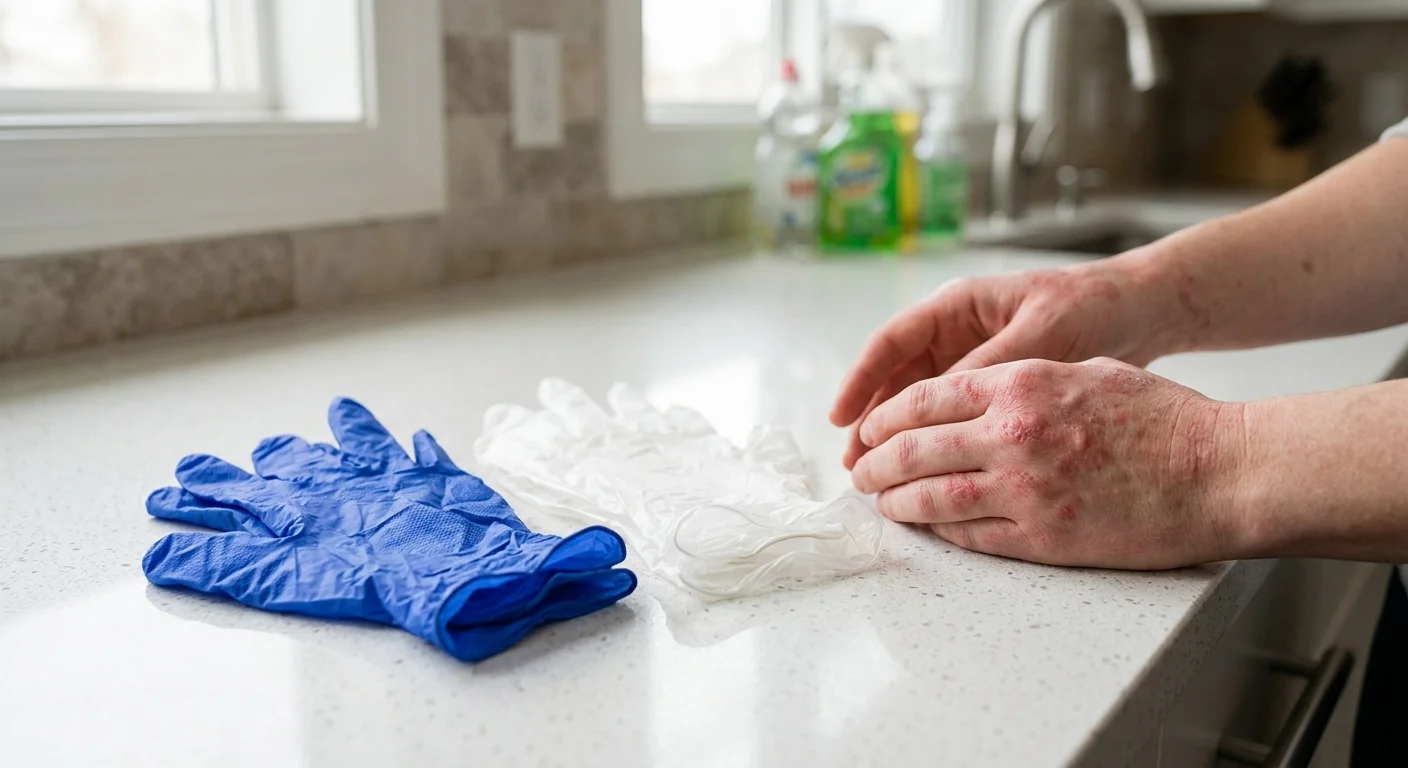
Most people write off the redness and itching as just “sensitive skin being sensitive.” But it’s more specific than that — and knowing what’s behind it changes how you shop for cleaning gloves.
Standard gloves trigger skin reactions in three ways:
1. Allergic Contact Dermatitis
This is the sneaky one. The reaction isn’t immediate. Symptoms show up 24 to 48 hours after exposure, long after the gloves are off and put away. The real troublemakers are chemical accelerators used in manufacturing: thiurams, dithiocarbamates, and mercaptobenzothiazole. Studies tie 80% of glove-related allergic reactions to these vulcanization chemicals. The rash looks a lot like poison ivy — blistered, inflamed, and painful.
2. Irritant Contact Dermatitis
No allergy needed for this one. Wearing gloves traps heat and moisture against your skin. That warm, damp environment leads to dryness, cracking, and in worst cases, open sores that can pick up bacterial or fungal infections.
3. Contact Urticaria
Raised white bumps and hives that appear during or right after wear. Poor ventilation and trapped sweat are the usual causes.
How I confirmed gloves were the actual problem:
– Reactions showed up on my hands and wrists — nowhere else
– My skin cleared up after taking the gloves off
– Symptoms came back every single time I wore the same pair
Start by knowing what to avoid — powder, accelerators, and latex — before you even think about which cleaning gloves to buy.
Choosing Cleaning Gloves for Sensitive Hands: My Experience
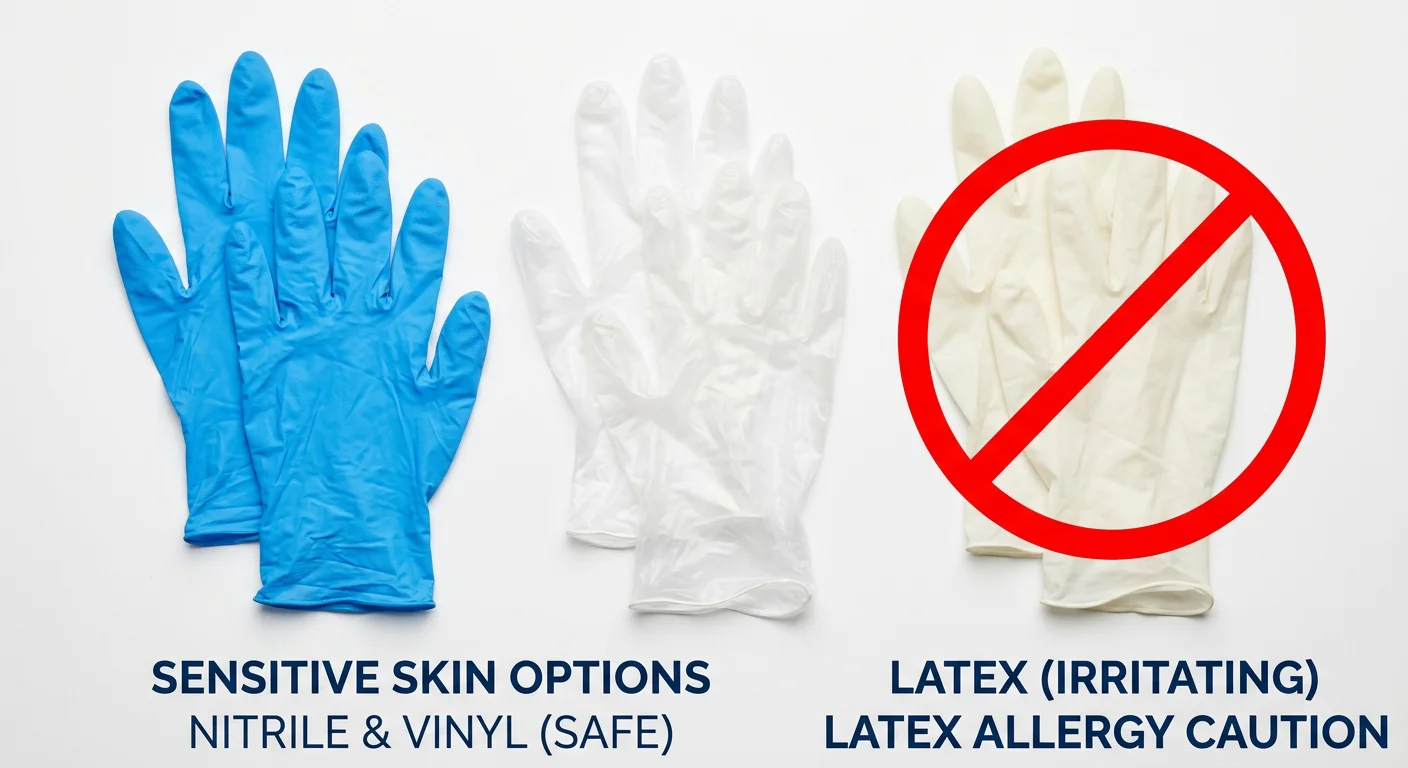
You want cleaning gloves that protect your skin instead of wrecking it. Read the box carefully to find the right pair. Skip the marketing fluff. Your skin reacts to almost everything. Follow these four non-negotiable rules before buying your next pair of cleaning gloves.
1. Go 100% Latex-Free
This is the most important step. Natural rubber latex contains proteins. These proteins trigger allergic reactions. Your skin might just feel a little sensitive right now. But repeated use causes allergies to develop over time. Always check the packaging. Look for the words “latex-free” or “zero natural rubber.”
2. Look for “Accelerator-Free”
People often blame the glove itself for allergic reactions. But safety glove manufacturers add chemicals to make the gloves stretchy. We call these chemicals accelerators. You might get an angry rash a day or two after cleaning. Accelerators sit at the root of this issue. Pick a pair labeled “accelerator-free” to solve this problem for good.
3. Always Choose Powder-Free
Some brands add a fine white powder inside their gloves. It makes slipping them on and off easier. Skip these options entirely. That powder mixes with your hand sweat. This traps chemicals right against your skin. You get severe dryness and itching. Powder-free options go on just as easily. Plus, they stay much safer for reactive skin.
4. Check for the Right Fit
Fit matters just as much as the ingredients. Tight gloves create extra friction. This makes your hands sweat much faster. Loose gloves chafe your skin. Dirty cleaning water also slips down inside loose cuffs. Get a snug fit instead. Keep it close to your skin. Leave room to bend your fingers without feeling squeezed.
My Top 6 Cleaning Glove Picks for Sensitive Skin
Testing dozens of pairs left my hands red and itchy. My list is down to six choices now. These cleaning gloves sit right under my kitchen sink today.
1. Tusko Cleaning Gloves
Let’s start with my favorites for everyday chores. The thick material shields your skin from hot water. Plus, the soft texture gives you a secure hold on slippery, soapy glasses. They slide on with zero effort. We all know the struggle of pulling tight gloves on and off. Skip that hassle. Even damp hands slip right out. This pair stays dedicated to washing dishes in my house.
2. HDX Green Reusable (11 mil)
Tackle heavy-duty jobs with these HDX gloves . Their thick build handles rough work without a problem. You can scrub ovens with absolute confidence. They also protect your hands from strong bathroom sprays. Rips and tears rarely happen. A single pair lasts for months thanks to the tough design. That durability saves you cash over time.
3. Mr. Clean Bliss Premium
These Mr. Clean Bliss ones work perfectly for lighter tasks. The textured grip stops you from dropping wet plates. You get a comfortable, relaxed fit. I pick these for quick cleanups, dusting, and wiping kitchen counters. Grab a pair for your basic chores. Just keep them away from harsh chemicals.
4. True Blues Ultimate Household Gloves
Hate that sweaty feeling? These True Blues are game-changers. They feature a thick cotton lining inside. Your hands stay dry during hour-long cleaning sessions. The material never sticks to your skin. The outside boasts a tough design. Hot water from the sink won’t burn your hands. Dirty gloves? Toss them straight into the washing machine. They cost a bit more. You get amazing value for that extra money.
5. Clean Ones Pure Comfort
Sometimes you just need a comfy glove on a budget. These act as my perfect backup pair. They feel soft inside and slide right on. A solid grip stops soapy dishes from slipping. Also, you get nice, long cuffs. Dirty water won’t splash inside to make a mess. I grab these for organizing dusty rooms. They work great for standard bathroom cleaning, too.
6. AMMEX Disposable Heavy Duty
Not every chore needs a thick reusable glove . Certain jobs bring a serious mess. Think about cleaning up pet waste or emptying a clogged drain. You want to toss those gloves straight into the trash. I keep a box of these AMMEX disposables in my drawer for this exact reason. They hold up much better than cheap generic options. A rough texture on the fingers grips wet sponges without slipping. Best of all, they keep my wrists free from itchy rashes.
Best Cleaning Gloves Materials for Sensitive Skin
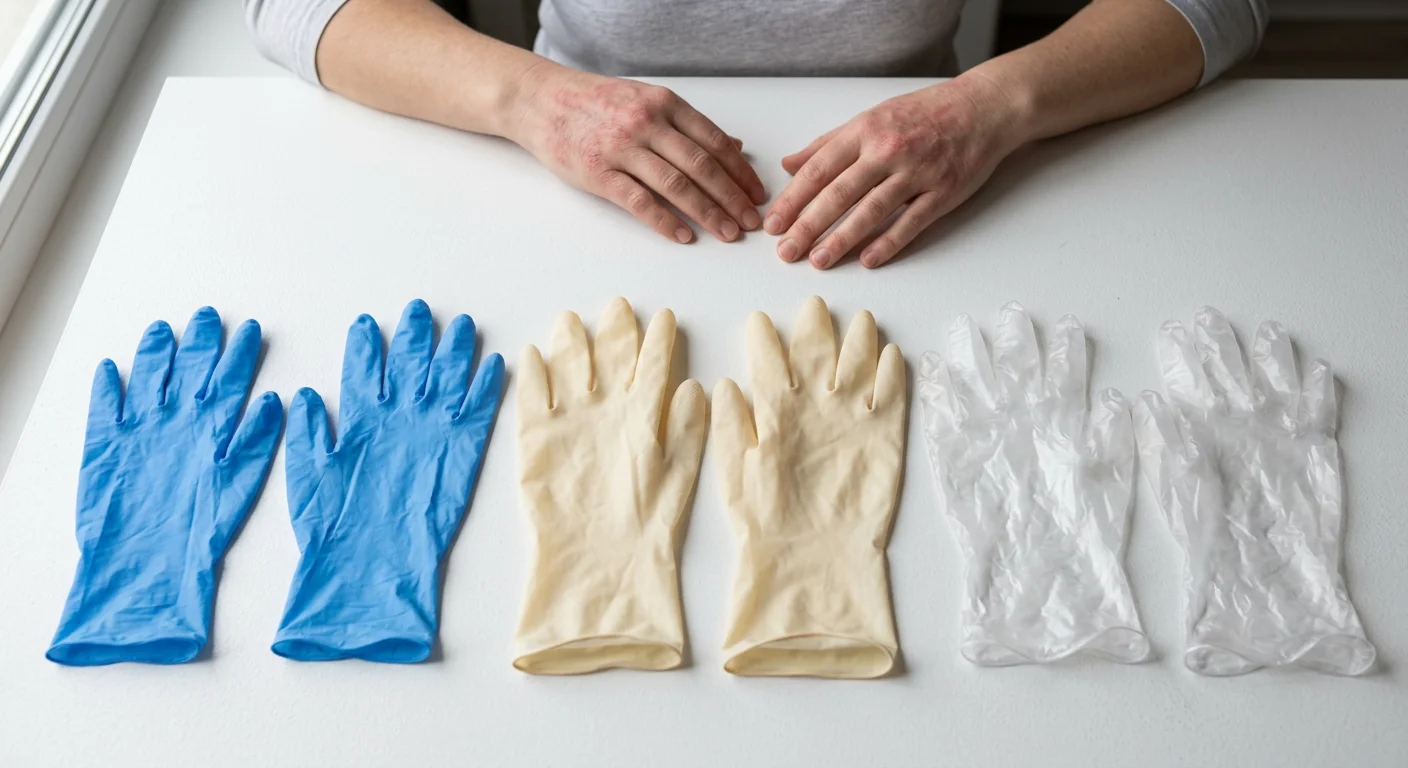
Three materials. Three different experiences on your skin. And only one of them is worth grabbing if your hands tend to react.
Here’s what the real side-by-side looks like — not on paper, but in practice.
Latex: Impressive Performance, Impossible Tradeoff
Latex fits well. That’s the honest truth. It molds to your hand like a second skin. You get dexterity that most materials can’t match. It also holds up against bacteria and light cleaning tasks.
But for anyone with a latex allergy or sensitivity? Hard no. The proteins in natural rubber latex directly cause contact urticaria and allergic reactions. That’s not a distant risk — it’s a real one. The glove failure rate sits around 10%, and damage is often invisible. You don’t see the tear. You feel it later, on your skin.
The performance is real. So is the tradeoff.
Vinyl: The Compromise That Compromises Too Much
Vinyl is the lightest option here. That lightness comes with a cost. The fit is looser and stiffer by nature. You lose tactile precision. The material tends to bunch and shift during tasks. Its puncture and tear failure rate runs as high as ~30% — micro-perforations that let cleaning chemicals through are a genuine concern.
Chemical resistance is weak. Animal fats degrade it. Petroleum, strong acids, and solvents pass straight through. For light food prep and quick rinses, vinyl is fine. For serious household cleaners, it’s not built for the job.
One thing worth noting about skin: powder-free vinyl is safer than powdered, but long wear still carries an irritation risk from plasticizers. It’s latex-free, which matters — but latex-free does not mean skin-safe.
Nitrile: Where Performance and Skin Safety Meet
Nitrile is 3 to 5 times more puncture-resistant than latex. Premium-grade options have a failure rate under 2%. It resists oils, bleach, weak acids, dyes, and petroleum — substances that latex and vinyl either struggle with or fail against outright.
The micro-grain surface holds grip and tactile sensitivity without giving up durability. Plus, it’s 100% latex-free. No natural rubber proteins. None at any stage of the material.
For chemical-resistant gloves for sensitive skin, the comparison isn’t even close:
|
What Matters |
Nitrile |
Latex |
Vinyl |
|---|---|---|---|
|
Latex-free |
✅ Yes |
❌ No |
✅ Yes |
|
Puncture resistance |
⭐⭐⭐⭐⭐ |
⭐⭐⭐ |
⭐ |
|
Chemical resistance |
⭐⭐⭐⭐⭐ |
⭐⭐ |
⭐ |
|
Skin safety (sensitive) |
⭐⭐⭐⭐⭐ |
⭐ |
⭐⭐⭐ |
|
Durability |
Superior |
Medium |
Low |
The one real caveat with nitrile: cost per box runs higher than vinyl. But durability covers that gap fast. With vinyl, you’re swapping gloves every 15 to 20 minutes under sustained use. A solid nitrile glove goes the whole session.
For allergy-safe cleaning gloves that don’t make you pick between protection and skin health, nitrile is where the comparison stops.
Tips for Using Cleaning Gloves Without Irritating Sensitive Skin Further
Even the best cleaning gloves can cause irritation if you use them the wrong way. The material is half the equation — what you do before, during, and after wearing them matters just as much.
Before You Put Them On
Start with clean, dry hands. Wash with a mild, fragrance-free soap. Dry your hands well before putting gloves on — trapped moisture under gloves speeds up the kind of skin breakdown you’re trying to prevent.
Once your hands are dry, apply a thin layer of hypoallergenic hand cream or plain petroleum jelly. This creates a protective barrier between your skin and the glove interior. Both work well with nitrile and vinyl gloves without breaking down the material.
For skin that reacts easily, wear a thin cotton liner underneath. Cotton absorbs sweat and keeps it off your skin. People with eczema rate cotton-lined combinations far more comfortable than synthetic-only options — the breathability makes a real difference during longer cleaning sessions.
While You’re Wearing Them
Fit is non-negotiable. Gloves that are too tight create pressure and friction. Too loose, and they shift and chafe throughout the task. Snug but comfortable is the target — with an extended cuff if you’re working with chemicals near your wrists.
For reusable cleaning gloves , keep continuous wear under one to two hours. Sweat builds up fast. A warm, damp interior is the kind of environment that triggers irritant contact dermatitis. Change disposable pairs between tasks, or the moment you spot damage or contamination.
After You’re Done
Take the gloves off. Wash your hands straight away with mild soap, dry them well, and apply moisturizer. This step gets skipped more than it should — and it’s where a lot of post-cleaning dryness and tightness starts.
For reusable pairs, clean them after every single use. Don’t submerge them to soak — that traps moisture inside and encourages bacterial growth. Store them in a cool, dark spot, away from UV light and heat. Both break down the material over time and raise the risk of secondary skin irritation.
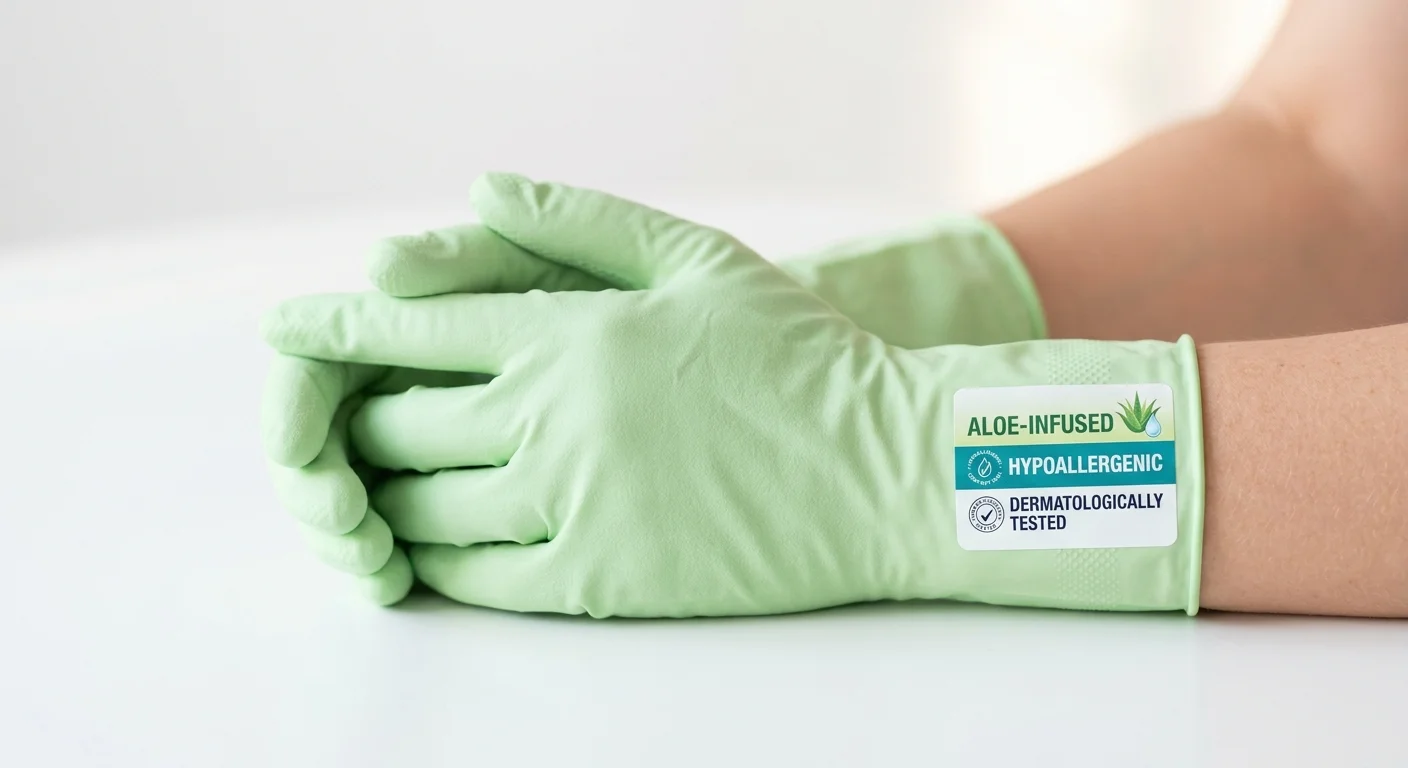
Check for gloves marked ISO 10993-10 , dermatologically tested, or labeled hypoallergenic. Aloe-infused interiors are also worth seeking out — the hydration during wear is noticeable, and there are no reported side effects for sensitive skin.
FAQ: Cleaning Gloves for Sensitive Skin
These questions come up all the time — and they deserve straight answers.
What’s the best glove material for sensitive skin?
Nitrile. Full stop. It’s synthetic, latex-free, and hypoallergenic. It also holds up against chemicals and punctures. Vinyl and TPE work if nitrile isn’t available. But neither one beats nitrile for comfort or protection over long-term use.
Are nitrile gloves safe for eczema?
Yes. Nitrile contains no natural latex proteins. So your irritation risk drops a lot compared to other materials. For longer cleaning sessions, layer a thin cotton glove underneath. It soaks up sweat and stops that damp, warm buildup from pressing against your skin.
What gloves won’t give me a rash?
Powder-free nitrile with a soft lining. Most people overlook the powder — cornstarch and calcium carbonate coatings are two of the most common rash triggers out there. Check the label for these three things: hypoallergenic, powder-free, latex-free.
Can I use latex gloves if my skin is just “a little sensitive”?
No. Latex allergies can develop — or get worse — with repeated exposure. There’s no safe level to test with. Skip latex entirely and go with latex-free options from the start.
How often should I swap gloves out?
The moment they’re damp, soiled, or damaged. Keep wearing a worn-out glove, and a small irritation risk turns into a certain one.
Does glove fit matter that much?
A lot, yes. Too tight creates friction and cuts off circulation. Too loose, let’s clean the solutions that slip inside. You want a snug fit — firm enough to stay in place, but with enough room to move your fingers freely.
Conclusion
Your hands work hard every single day. They deserve better than redness, itching, and that horrible, tight feeling after washing up.
Here’s the clearest takeaway from everything we’ve covered: latex is not your only option. For sensitive skin, it shouldn’t be your first choice. Nitrile cleaning gloves offer the best all-around balance of chemical resistance, durability, and skin-friendliness. Dealing with eczema or reactive skin? A cotton-lined pair changes everything.
No more guessing. No more buying the wrong thing and suffering the consequences. Now you know what to look for. You know what to avoid. You understand why certain materials work better for sensitive skin than others.
So the next step is simple: pick one pair that matches your needs and try it for a week. You’ll feel the difference fast. Good gloves don’t demand your attention — they protect your hands in the background while you get on with your day.