

Wearing a disposable mask in summer can feel less like protection and more like punishment. The heat builds fast, your skin gets clammy, and by midday, you’re counting down the minutes until you can pull it off.
But not all masks trap heat the same way. The right lightweight disposable mask makes a real difference. Most people don’t realize how much until they’ve worn a cooler one.
Crowded airports, long hikes, or a sweaty commute through a heat wave — the mask you choose matters. This guide breaks down what separates a mask that breathes from one that suffocates. You’ll find out which options are worth wearing when temperatures climb.
Why Disposable Masks Feel Hot in Summer?
 There’s a simple physics problem every time you strap on a disposable mask in July.
You exhale. That breath is warm and full of moisture. In open air, it clears within a fraction of a second. But the mask catches it — holds it against your skin like a damp compress. The next breath adds more heat. Then the next. After 30 to 40 minutes in temperatures between 80°F and 120°F, that cycle builds into real discomfort.
And sweat makes it worse.
The Sweat Problem Nobody Talks About
Your face sweats. That moisture soaks into the mask ‘s inner layers. That’s not just uncomfortable — it’s a real problem. A wet mask filters less effectively. The protection you put on starts to break down.
So carrying 1 to 3 spare masks on a hot day isn’t being too careful. It’s just smart upkeep.
Signs the heat is crossing into dangerous — not just unpleasant:
– Dizziness or lightheadedness
– Heart rate is climbing too fast
– A sudden feeling of disorientation
These aren’t small complaints. They’re early signs of heat exhaustion. They call for mask removal, shade, and sometimes medical help.
Knowing why masks trap heat helps you pick one that traps far less of it.
What Makes a Disposable Mask Feel Cool and Comfortable?
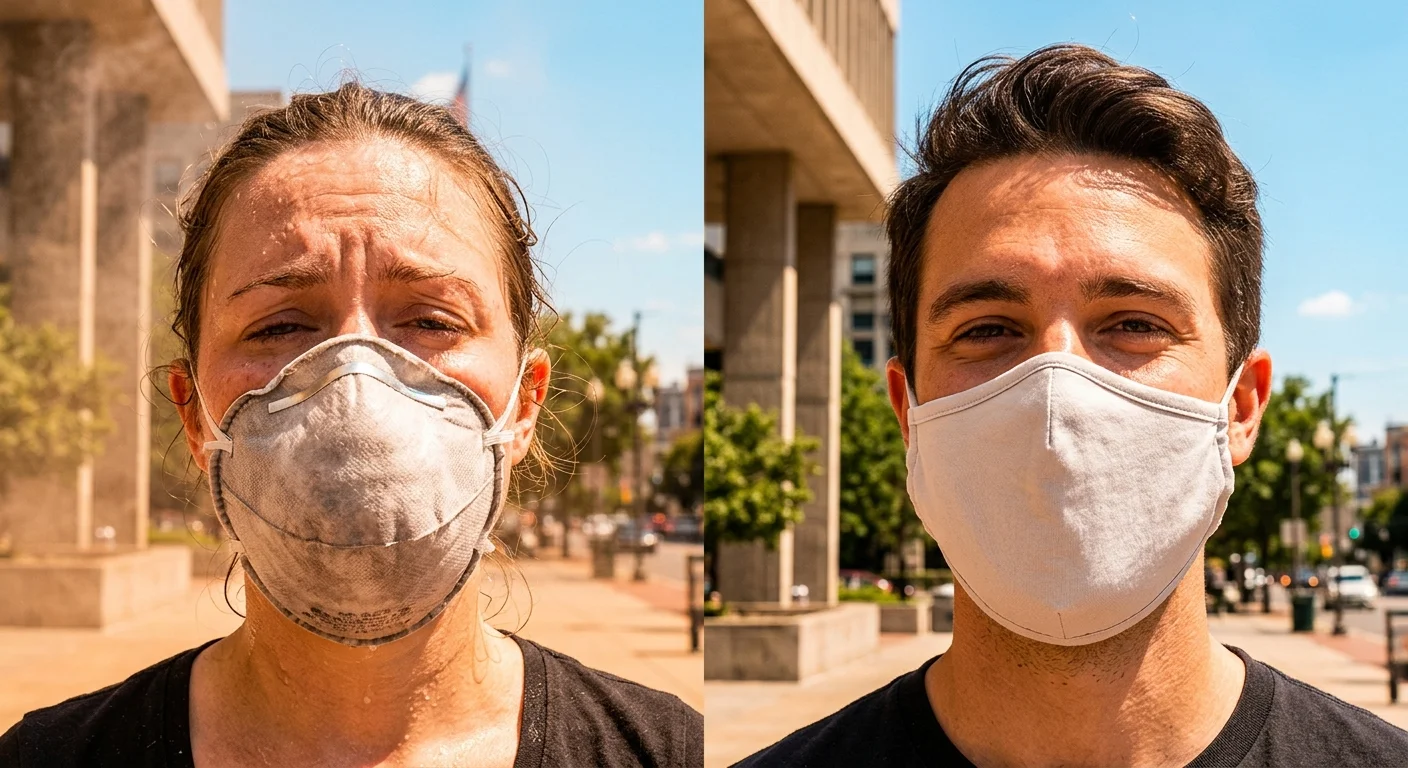 Four variables determine whether a disposable mask feels like a second skin or a steam room. Get them right, and summer wearing becomes tolerable. Get them wrong, and you’ll be peeling them off by 10 a.m.
Breathability Comes First — But It’s a Balancing Act
Here’s the core problem mask engineers wrestle with: denser filtration layers are harder to breathe through. Pull air through tight fibers, and you get excellent particle capture. You also get heat buildup, resistance, and a face that feels vacuum-sealed.
The smarter solution isn’t thinner material — it’s static charge technology. Charged fibers inside a quality 3-ply disposable mask trap particles through attraction, not physical blockage. The filter does more work. Your lungs do less. Airflow stays open. That’s what makes a low-resistance breathing mask actually work.
Weight and Material Change Everything
Lightweight non-woven polypropylene is the standard material in a well-made non-woven disposable mask. It moves moisture away from skin rather than soaking it in. That difference matters more than you’d think.
An absorbent inner layer turns wet and heavy within twenty minutes in summer heat. A moisture-wicking layer stays dry. Dry means cool. It’s that simple.
Research backs this up. Purpose-built cooling systems inside mask microenvironments have shown temperature reductions of 2.57°C and apparent temperature drops of 4.41°C — real numbers that matter when your face is already overheating.
Fit Shapes the Experience
A sweat-proof disposable mask with a solid nose wire does more than seal tighter. It creates a small air gap between the fabric and your skin. That gap does a lot:
- Heat escapes instead of building up
- Your skin stays less damp
- The mask feels lighter throughout the day
There’s a clear difference between a mask you forget you’re wearing and one you keep pulling away from your face. Fit is what separates them.
Cool comfort isn’t luck. Three things have to work together: smart filtration, breathable material, and a fit that holds its shape even as the temperature rises.
The 5 Most Comfortable Disposable Masks for Summer
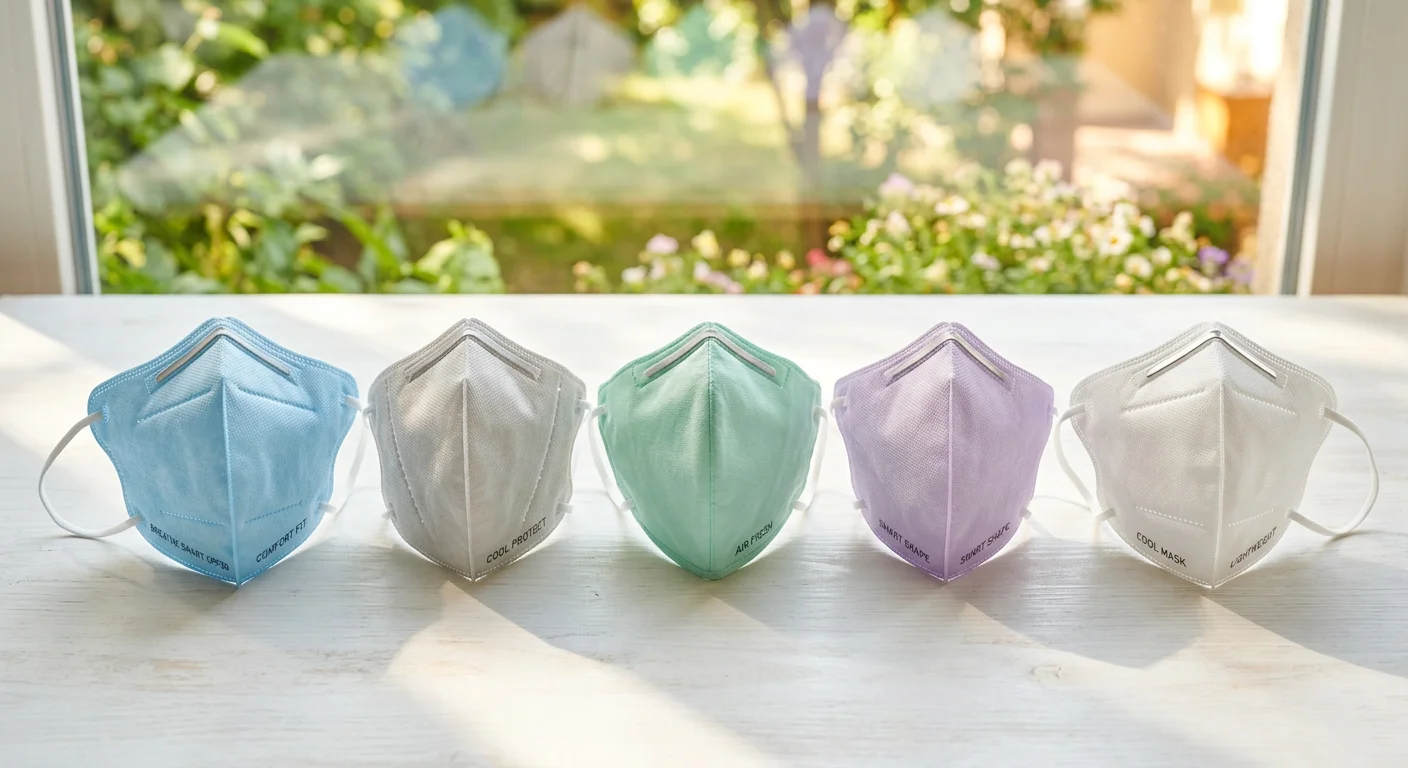 Five disposable masks made it through the heat. Not five that look good on paper — five that hold up at 95°F with a long day still ahead of you.
Here’s what earned each one its spot.
#1 LEVENIS Face Masks 50 Pack — The Everyday Workhorse
Score: 10.0 | Chosen by 1,435 users
More people picked this one than anything else on the list. That kind of consensus doesn’t happen by accident.
The five-layer construction sounds heavy. It isn’t. Two outer layers of soft non-woven fabric wrap around a melt-blown filter in the middle. You get a lightweight disposable mask that pulls moisture away from your skin instead of trapping it. The 3D ergonomic shape fits the jaw, nose, and chin without digging in at the edges.
Long commute. Full airport day. This one holds up through both.
- 5-layer filtration with melt-blown core
- Ergonomic 3D fit — reduces skin contact, improves airflow
- Available in 5 colors | 10% OFF right now
#2 LEVENIS KN95 50 Pack (Black) — When You Need the Numbers
Score: 9.7
Some situations call for more than comfort. Wildfire smoke. Crowded terminals. Dense outdoor events. For those moments, certification matters — and this mask carries it.
Greater than 95% filtration efficiency, verified against GB2626-2019 standards. The 3D ergonomic shape holds the mask away from your face. That means less trapped heat and none of that tight seal-against-skin feeling. You get medical-grade disposable mask protection without the heavy, closed-in fit of a bad KN95.
- KN95 certified: >95% filtration per GB2626-2019
- 3D shape holds structure through sweat and movement
- Available in 4 colors | 33% OFF right now
#3 FriCARE 4-Ply ASTM Level 3 Masks — The Medical-Grade Pick
Score: 8.2
ASTM Level 3 is the highest tier of surgical mask protection. This mask hits that standard across four layers. It’s also FSA/HSA eligible — so it counts as a real health expense, not just a summer accessory.
Twenty-two color options make it easy to keep a rotation going. That matters in summer. Fresh mask, fresh protection.
- 4-ply construction, ASTM Level 3 medical-grade certification
- Each mask comes wrapped — stays hygienic right out of the pack
- 22 color options | FSA/HSA eligible
#4 Good Mask Co. KN95 10 Pack — Built for Long Days
Score: 8.2
The flexible folding design sets this one apart. Most stiff KN95 masks start feeling like a cage after an hour or three. This one bends with you. You get elastic ear loops, a solid nose clip, and soft fabric built for extended wear. Not sure how long the day will run? This is the right pick.
- 95% particle filtration
- Flexible fold — flex fit for movement and comfort
- Soft material rated for long-wear endurance
#5 HAPPYDAY KF94 Premium Mask — The Airflow Specialist
Score: 8.2 | Made in Korea
The boat-shaped design is the story here. Instead of pressing flat against your lips and chin, the KF94 shape bows outward. That creates a real air gap between the fabric and your face. Cool air moves in. Heat gets out. You breathe without resistance — that’s where summer face mask comfort lives.
Korean Ministry certification ranks among the toughest filtration standards in the world. This mask blocks more than 94% of fine dust and harmful particles. Flat-fold masks can’t match that open-air feel. This one delivers it.
- KF94 certified: >94% fine dust filtration
- Boat-shaped design — built-in airflow gap reduces heat buildup
- 4-layer filtration | Each mask is individually packaged
- Large size: 7.95″ L × 6.69″ W (unfolded)
How to Choose Between These Disposable Masks?
The right disposable mask depends on what you’re walking into.
| Scenario | Best Pick |
|---|---|
| Daily commute, casual wear | LEVENIS 5-layer |
| Wildfire smoke, crowded events | LEVENIS KN95 |
| Medical settings, high-exposure days | FriCARE ASTM Level 3 |
| Long outdoor hours, active wear | Good Mask Co. KN95 |
| Maximum breathability, travel days | HAPPYDAY KF94 |
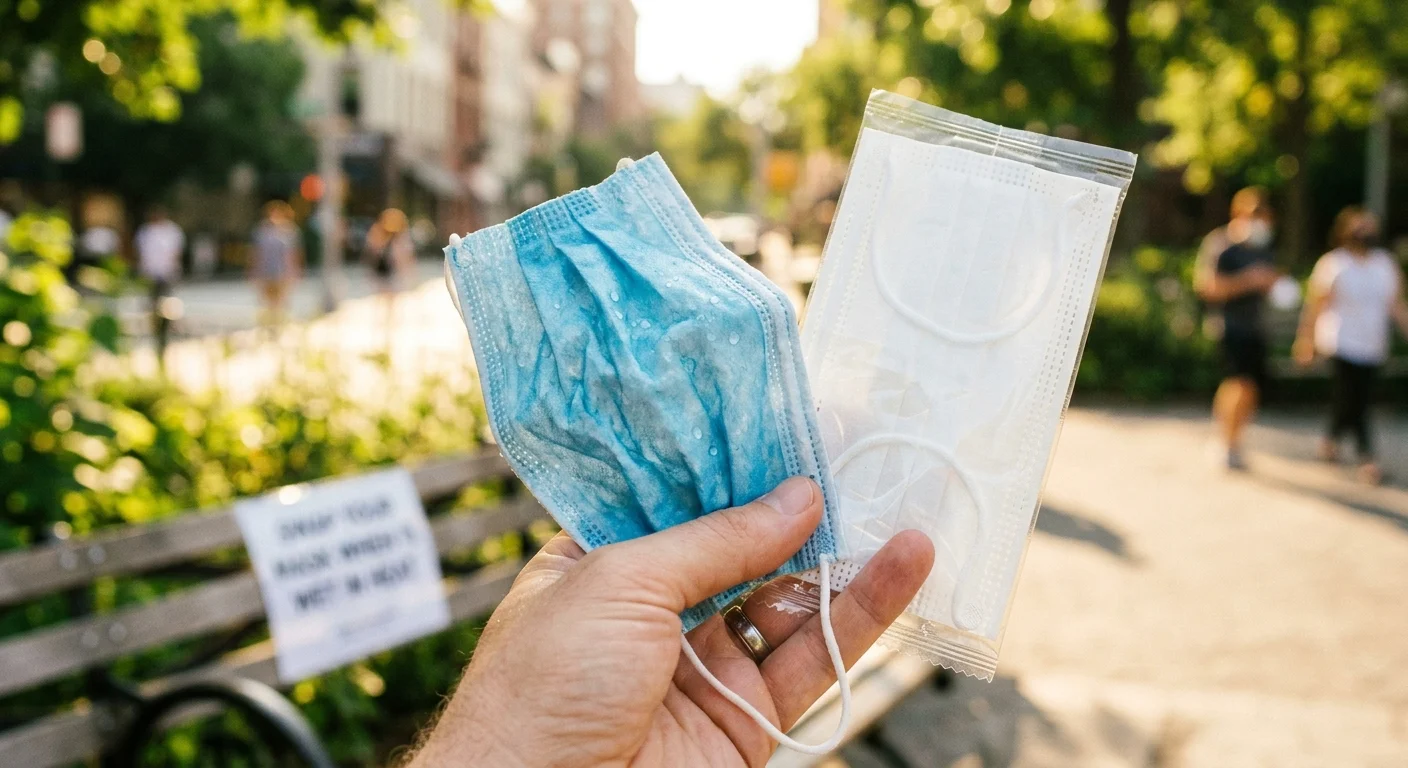
One practical note: swap your mask out once it gets damp. A wet, sweat-proof disposable mask doesn’t filter the same way a dry one does. Carry two or three. In summer heat, that’s not excessive — it’s just the smart way to use them.
Disposable vs Cloth Mask in Summer: Which Feels Cooler?
 Science has a clear answer here — and it’s not what you’d expect.
A 2025 study used thermal imaging to compare a reusable cloth mask with standard N95 respirators . The cloth mask recorded lower face temperatures at every single time point. The statistical confidence was near-absolute ( p = 1.7×10⁻¹⁸). That’s not a close race. That’s a blowout.
The subjective numbers matched the thermal data:
– 77% of participants said the cloth mask retained less heat
– 82% said it felt drier inside — less of that swampy, sealed-in humidity
– Among eyeglass wearers, 60% noticed less fogging with the reusable option
So cloth wins on feel. But the story has a catch.
Comfort Isn’t the Same as Safety
The same research confirmed something else: neither mask type raises your core body temperature during summer exercise. Your face makes up 1% of the total body surface area. Masks affect a tiny slice of an already small number. The heat you feel is real — the physiological heat stress is not.
Filtration tells the other half of the story:
| Mask Type | Filtration Range |
|---|---|
| Cloth | Up to 23% |
| Surgical disposable | 42–88% |
| N95/KN95 | 83–99% |
Cloth masks run cooler. Disposable masks filter far better. In summer heat, that tradeoff is the whole decision.
How Long Can You Wear a Disposable Mask in Summer Heat? (+ Tips to Stay Cooler)
The numbers are clear. At a perceived temperature of 34.4°C, heat discomfort hits before the 30-minute mark. Drop to a cooler 24.7°C, and you still run out of comfort past 60 minutes. Heat builds slowly. It always wins.
Humidity makes things worse. At 70–80% relative humidity, moisture inside the mask stops evaporating. Your exhaled breath has nowhere to go. The stuffiness goes from mild to suffocating — fast.
The practical rule: swap your mask every 30 to 60 minutes on hot, humid days. Don’t wait until it feels unbearable. By that point, filtration has already broken down.
Signs It’s Time to Replace
- The inner layer feels wet or heavy against your skin
- The structure has softened or lost its shape
- Breathing feels more restricted than it did when you first put it on
Any one of these means the mask is done for that session.
Practical Tips to Stay Cooler Longer
Use a mask bracket. Internal frames create an air gap between the fabric and your face. In testing, 77% of users reported less heat buildup, and 82% reported a drier interior compared to flat-fit respirators. That small gap makes a real difference.
Slow your pace. Walking at a relaxed speed in a breathable face mask in a hot weather situation can match the thermal sensation of going mask-free at moderate effort. Your pace is a variable you control too — not just the mask.
Protect your skin. Trapped moisture breeds bacteria. Change your mask often and pick a moisture-wicking face mask with low-retention inner layers. This cuts the risk of heat rash and maskne — two issues that push people to stop wearing masks altogether in summer.
FAQ: Summer Disposable Mask Questions Answered
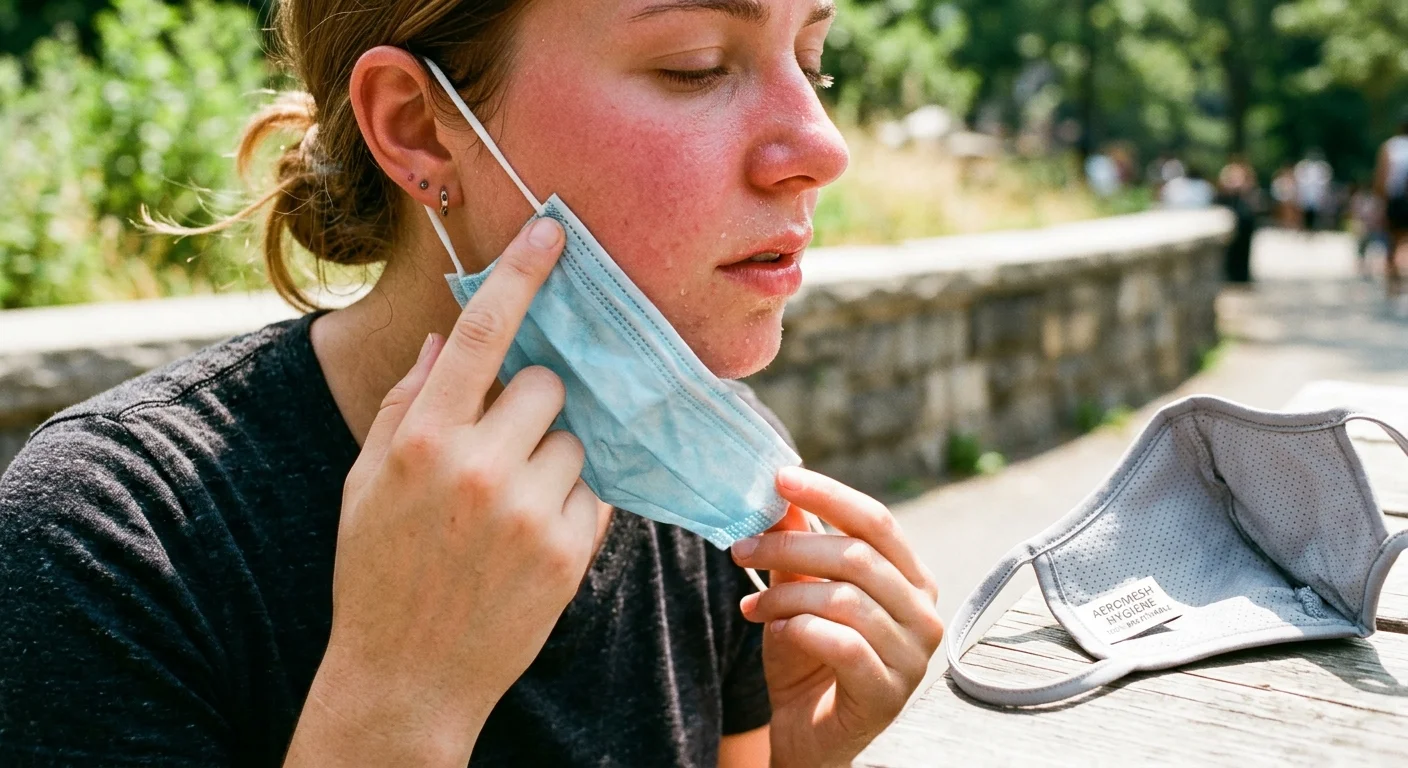 Quick answers. No fluff.
How long can I wear a disposable mask before replacing it in summer?
Swap it every 30–60 minutes on hot, humid days. Feel the inner layer getting damp? Or is the structure going soft? That mask is done. Don’t push it — just swap.
Do more layers mean hotter?
Not always. An ASTM Level 3 mask (3+ layers) can match Level 2 at Delta P <6.0 mm H₂O/cm². Breathability depends on material density, not how many layers you have.
Which is cooler — Level 1 or Level 3?
Level 1 wins on airflow: Delta P <5.0 mm H₂O/cm² versus <6.0. That gap in resistance is real. For low-risk summer errands, Level 1 keeps things noticeably more comfortable.
Can disposable masks cause heat rash?
Yes — moisture buildup is the main culprit. Go with a low Delta P mask. Change it every four hours. Pick one with a moisture-wicking inner layer to keep skin dry.
Will a disposable mask fog my glasses?
Use a Level 2 or 3 mask with a nose clip at least 8.0 cm long. Pinch it tight across your nose bridge. This cuts exhaled air from escaping upward. A Delta P below <6.0 reduces that air leakage even more.
Should I use a KN95 in summer heat?
High-risk setting? Yes, go with a KN95. KN95s hit ≥95% filtration, but the breathing resistance runs higher than loose-fit disposables. There’s no Delta P ceiling like ASTM’s <6.0 spec. So cap your wear at one to two hours once temperatures start climbing.
Conclusion
Summer heat doesn’t force you to choose between protection and comfort. That’s the whole point of this guide.
The right lightweight disposable mask exists. It’s built from breathable non-woven layers. It sits off your skin so air can move freely — without dropping your protection. Crowded airport, dusty trail, sweaty commute — there’s a mask made for that specific situation.
Here’s what to take away:
- Prioritize airflow resistance over brand names
- Match your face mask to your specific situation
- Never wear a disposable past the two-hour sweat threshold in serious heat
Go check your bag right now. The mask in there — does it feel thick, stiff, or unfamiliar? Swap it before your next trip. Your face will feel the difference within the first ten minutes.
Cool, protected, and comfortable. No compromise needed. That’s just buying smarter.