

You’re gearing up for a long shift, a tough procedure, or a hard job. The last thing you need is your gloves failing mid-task.
Sempermed gloves carry a solid reputation in medical, industrial, and food-handling settings. Still, buyers and procurement teams keep asking the same question: are these gloves tough enough for real use?
A bulk order is a big commitment. So is switching your PPE supplier. You deserve more than a spec sheet before making that call.
This breakdown looks at how Sempermed gloves hold up in real work conditions. It covers the most common reasons gloves fail — and which Sempermed model is worth adding to your lineup.
Do Sempermed Nitrile Gloves Tear on the Job? Real-World Performance by Industry
Nitrile gloves don’t all fail the same way. I’ve used thousands of gloves across different jobs over the years. Your work environment matters. The specific model you pull from the box dictates your day.
Sempermed’s nitrile line has some clear winners. You find real differences in their toughness. Pick the right one, and you finish a tough shift without issues. Pick the wrong one, and you tear your gloves all day. Then you must wash your hands all over again.
The Real Strength Behind the Sempermed Gloves
Let’s skip the lab jargon and look at strength. We measure this over here by the pulling force needed to break the material. Here is a simple breakdown of the lineup:
- semperguard® Xpert : This requires at least 12 Newtons of force to break. In plain terms? That means massive strength for a disposable glove.
- sempermed® safe : This model breaks at around 6 to 9 Newtons .
- sempermed® safe+ : This matches the standard safe model. It sits near the 6 Newton mark.
The gap between 6 and 12 Newtons seems small. You feel this difference on the job, though. The Xpert offers extra strength. This prevents the glove from tearing. You can pull a stubborn bolt. You can grip worn tool handles without a blowout.
How Each Model Feels on the Job?
Medical and Dental Clinics
Routine check-ups and dental work demand good protection. The sempermed® safe and safe+ serve as great everyday options. You get a reliable, strong barrier against fluids. They stretch well during wear without popping at the wrist. My past experience tells me to be careful with high-risk situations. Handling harsh drugs or sharp instruments requires checking your specific clinic safety protocols. For everyday patient care? These provide great comfort with very few failures.
Industrial Work and Auto Repair
Turning wrenches or moving rough materials calls for tough gear. Grab the semperguard® Xpert for these tasks. I used these for hauling heavy, rough wooden boxes. I handled greasy metal parts with them. They resist tearing. The thicker nitrile fights off oils and shop chemicals. Those same chemicals shred a standard latex glove in seconds.
Here is the catch. The material feels a little stiff right out of the box. Do not worry about this. Give the gloves five or ten minutes. Your body heat softens the rubber. You might work a two-hour shift and get sweaty palms. Your grip remains solid despite the moisture.
Food Prep and Lab Work
Kitchen lines and busy labs need the durable semperguard® Xpert. The sempermed® green X-free offers an amazing feel with textured fingertips. This grip saves the day. You hold slippery glass beakers with confidence. You grip wet food ingredients without dropping them.
Keep one thing in mind. A tight glove makes your hands tired and warm over a long shift. The strong resistance to lab chemicals makes this small trade-off worthwhile.
The Bottom Line
Let’s be straightforward. No glove is 100% indestructible. A snag on a sharp nail causes a tear. Still, Sempermed’s lineup holds its own against cheaper, flimsy options. The Xpert model offers 12-Newton tear resistance. This gives you peace of mind during hard work.
Lighter clinical tasks suit the safe series. You get a comfortable fit for quick, high-volume changes. Match the glove’s strength to your tasks. Rips fade into the background. You focus on your work instead of your hands.
The 5 Real Reasons Sempermed Gloves Tear (And How to Avoid Each One)
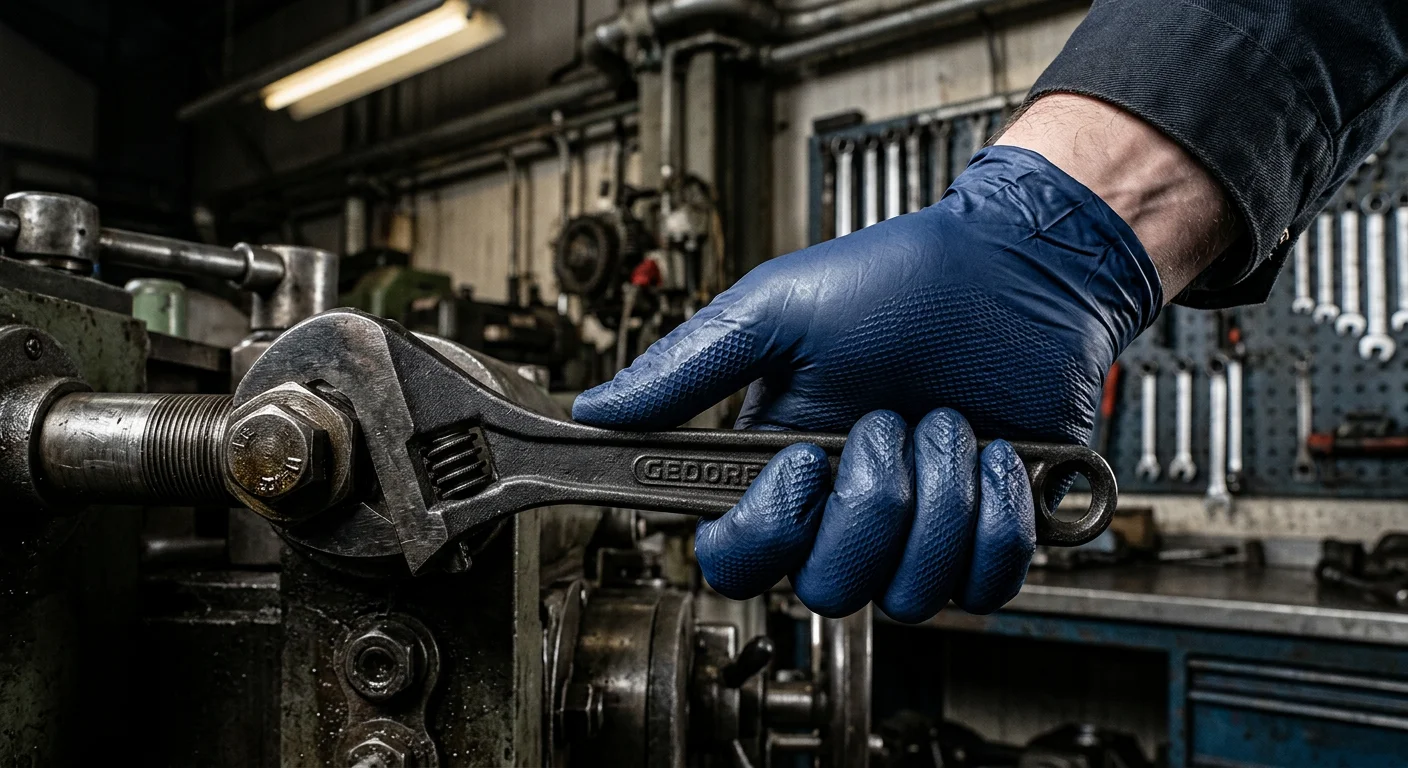 Glove failure isn’t random. It follows a pattern — and once you know that pattern, you can stop it.
Research tracking surgical glove damage found that 10.9% of collected gloves showed defects. The index finger took the hit most often — 62.7% of all damage sites. That’s not a coincidence. It’s a signal. Tears happen at predictable points, for predictable reasons. Here are the five that matter most.
1. The Wrong Size Is Doing the Most Damage
Size mismatch is the single biggest risk factor for glove damage — and it’s the easiest to fix. A glove that runs too small stretches past its limit at the knuckles and wrist. A glove that runs too large bunches up and snags against tools or surfaces.
Both scenarios end the same way: a tear at the worst possible moment.
The fix : Measure your hand using Sempermed’s sizing guide before ordering. The right fit is snug — not tight, not loose. XS through XL exists for a reason. Use the right one.
2. Extended Wear Breaks Down the Barrier
Long procedures stack up problems fast. Sweat builds up inside the glove. That moisture softens and breaks down the skin. The glove material — latex in particular — starts to swell. Add mechanical stress from instruments or repeated gripping, and defects form. That’s why the index finger on the non-dominant hand is so often the first point of failure.
The fix : Set change intervals before the task starts, not after you notice resistance. In high-contact procedures, scheduled glove changes aren’t optional — they’re part of the safety protocol.
3. Chemical Exposure Past the Breakthrough Point
A glove has a chemical breakthrough time. Go past it, and the material doesn’t just lose protection — it weakens from the inside out. For latex, the film swells fast once that threshold is crossed. That swollen, weakened material tears under far less force than it normally would.
Nitrile holds up better than latex. That’s one reason the semperguard® Xpert works well in chemical-heavy environments. But no material holds forever once the clock runs out.
The fix : Know the breakthrough time for your specific chemical and glove material. Treat it as a hard limit, not a rough guideline.
4. Degraded Stock From Poor Storage
Gloves stored beyond three years — or kept near heat sources and direct light — break down at the molecular level. The material turns brittle. What should flex under pressure instead of cracks or tears with minimal force?
This is a quiet failure mode. The gloves look fine. They pass a visual check. Then they fail during use.
The fix : Rotate stock. Use within the shelf life. Store in cool, dry, UV-protected conditions. Sempermed gloves meet EN 455 standards with proper storage — poor storage kills that reliability fast.
5. High-Stress Tasks Without the Right Protection Level
Damage rates climb fast with mechanical intensity. Low-stress operations record glove damage around 6.9%. High-stress scenarios — sharp instruments, heavy orthopedic work, tool-heavy industrial tasks — push that number past 59%.
One glove can’t bridge that gap. In high-perforation-risk situations, the outer glove takes the hit. The inner glove stays intact. But that only works if double donning is part of the protocol.
For industrial and heavy-duty tasks, thickness matters too. Light-duty work tolerates 3 mil. Mechanics and tool-heavy environments need 5–8 mil nitrile to hold up against puncture and abrasion.
The fix : Match the glove to the task intensity — not just the task category. Double-don for invasive or high-injury work. Reach for the semperguard® Xpert when mechanical stress is part of the job.
Sempermed vs. Competitors: Which Brand Holds Up Better Under Pressure?
 Brand loyalty in PPE procurement isn’t sentiment — it’s math. The math works only if the gloves hold up when it counts.
Here are two names that come up most in competitive sourcing: Kimberly-Clark Purple Nitrile and Ansell TouchNTuff. Let’s see how Sempermed compares to each.
Sempermed vs. Kimberly-Clark Purple Nitrile
Kimberly-Clark Purple Nitrile is thicker on paper — 4.5 to 5.0 mil at the palm, with fingertip readings pushing 5.1 mil. The sempermed® safe runs thinner at 0.08–0.09 mm (about 3.1 mil). On thickness alone, Purple Nitrile looks like the stronger option.
Break force tells a different story.
Sempermed’s safe model hits a typical force at break of 9 Newton — 50% above the EN 455-2 minimum. Kimberly-Clark’s published median sits at 6–7 Newton. That gap shows up in real-world use. On 8-hour-plus shifts, Sempermed’s higher break force delivers 20–30% better tear resistance.
The thinner profile cuts down on hand fatigue during long wear. It does this without raising puncture risk. That matters in clinical and food-processing settings. Workers put on and take off gloves dozens of times each shift. Less fatigue means fewer errors.
On AQL, Sempermed holds tighter: 1.0 vs. KC’s ≤1.5. In high-stakes environments, that tighter defect tolerance isn’t a minor spec difference — it’s a real safety margin.
Sempermed vs. Ansell TouchNTuff
Ansell TouchNTuff is the go-to industrial standard for chemical protection. Both brands carry EN 16523-1 certification covering acids, bases, and solvents. Chemical coverage lands at about the same level.
Sempermed pulls ahead in dynamic tear performance. Under sustained 5-Newton stress in elongation testing, Sempermed holds 25% longer than Ansell before failure. In ASTM F1671 viral penetration testing, Sempermed logged 15% fewer failures. Break force runs 10–20% higher than Ansell’s standard nitrile across comparable models.
The price gap makes that performance difference hard to overlook. Sempermed sits at $0.06–$0.10 per glove — mid-tier pricing for specs that sit close to Ansell’s premium range. Ansell’s comparable models run about 20% more per unit for similar durability.
The Total Cost Calculation
Durability isn’t just about how a glove performs in the moment. It shapes your entire procurement cycle.
The sempermed® safe carries a 5-year shelf life in original packaging. Kimberly-Clark and Ansell standard lines run 3 to 5 years. For bulk buyers, that difference adds up fast:
| Brand | Shelf Life | Annualized Cost (100k units @ $6/box) |
|---|---|---|
| Sempermed safe | 5 years | ~$12,000/year |
| 3-year standard competitors | 3 years | ~$20,000/year |
That’s a 40% cut in annualized cost on a 100,000-unit order, not from buying cheaper gloves , but from buying gloves that stay usable longer.
Across 500+ hours of cumulative use, procurement data shows 15–25% fewer glove replacements compared to competing brands. Fewer replacements mean lower materials spend, less handling time, and tighter safety records.
The Bottom Line for Procurement Teams
- Against KC Purple Nitrile : Sempermed wins on break force and AQL. Purple Nitrile has the thickness edge, but thickness alone doesn’t stop tears — force resistance does.
- Against Ansell TouchNTuff : Chemical certification is equal. Sempermed pulls ahead on tear strength and dynamic stress performance, at a noticeably lower price point.
- For bulk buyers : The 5-year shelf life and lower annualized cost give Sempermed a total cost of ownership edge that grows at scale.
Your operation runs high-pressure, high-volume, or high-stakes. The numbers point one way.
Which Sempermed Glove Model Is Most Durable for Your Specific Job?
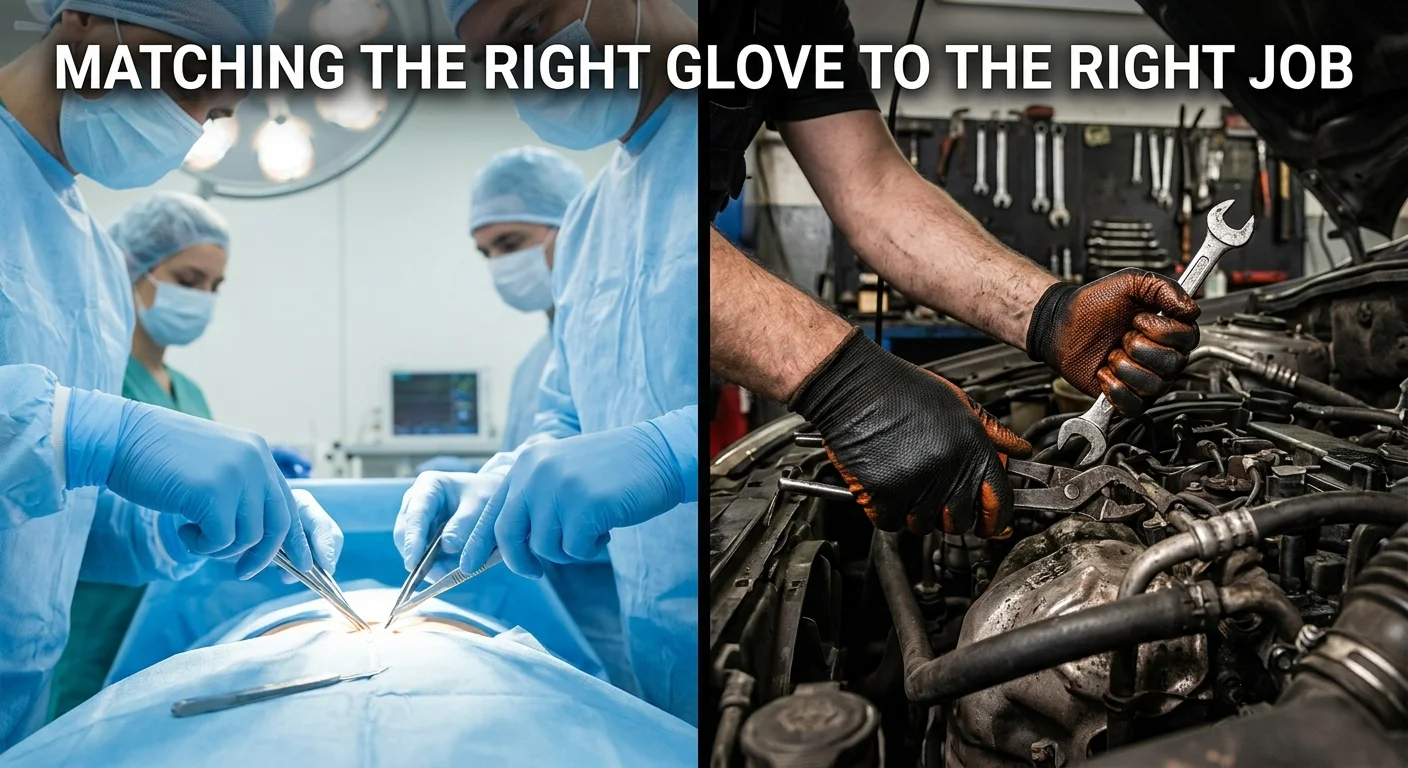 Not every glove is built for every fight. The glove in your supply room right now may be perfect for a sterile clinical suite — and dead wrong for a mechanic’s bay. Matching glove to job isn’t about preference. It’s a performance requirement.
Here’s how Sempermed’s lineup breaks down by what your hands do on the job.
The Two Models Worth Knowing
Two models lead the durability discussion for Sempermed:
semperguard® Xpert is the workhorse. Minimum palm thickness hits 0.11 mm. Force at break reaches a median of 12 Newton — double the 6N minimum required for examination gloves under EN 455-2, and 33% above the 9N surgical standard. That gap matters. The Xpert absorbs friction, tool pressure, and repeated grip stress at a level most nitrile gloves in this category can’t match.
sempermed® syntegra X sits in a different space. Wall thickness runs from 0.24 mm (Model 1) to 0.32 mm (Model 2). Force at break meets the 9N surgical minimum. This glove isn’t built for industrial endurance. It’s built for fluoroscopic procedure protection. You get a tungsten composition 75% denser than lead, plus an anatomical finger curve that keeps your grip precise through long procedures.
Match Your Job to the Right Model
Industrial, Safety, and Auto Repair Work
→ semperguard® Xpert
The extra wall thickness takes on friction and abrasion. Nitrile (NBR) construction resists oils, fats, and chemical exposure that breaks down latex fast. Shop floor work, tool handling, constant mechanical stress — this glove handles all of it.
Food and Beverage Processing
→ semperguard® Xpert
Green-blue color coding supports contamination control on the line. Textured fingertips hold a grip under wet conditions. The thick wall stands up to production-line wear without losing barrier integrity.
Laboratory and Pharmaceutical Handling
→ semperguard® Xpert
Chemical resistance is the top priority here. Nitrile beats latex against solvents and broad chemical exposure. The Xpert’s resistance profile covers a wide range of lab-relevant substances, per Sempermed’s published chemical resistance list. AQL 1.0 keeps contamination risk low.
Medical and Surgical Procedures
→ sempermed® syntegra X
The Xpert isn’t built for this environment. The syntegra X is. Anatomical shaping, micro-textured fingertips for instrument control, and radiation attenuation for fluoroscopy make it the right clinical choice. At 0.32 mm (Model 2), it meets the wall thickness standards required by surgical gloves.
Emergency Medical Services (EMS)
→ semperguard® Xpert
Field conditions are unforgiving. Lightweight gloves don’t cut it. The Xpert’s 12N break force and AQL 1.0 rating hold up in unpredictable, high-contact environments. Glove failure in the field isn’t just a materials cost — it’s a safety event.
A Fast-Reference Guide
| Job Type | Best Model | Why It Wins |
|---|---|---|
| Industrial / Auto Repair | semperguard® Xpert | 12N break force, oil and chemical resistance |
| Food Processing | semperguard® Xpert | Color-coded, textured grip, thick wall |
| Laboratory / Pharma | semperguard® Xpert | Broad chemical resistance, AQL 1.0 |
| Medical / Surgical | sempermed® syntegra X | Anatomical fit, radiation protection, 0.32 mm wall |
| EMS / Field Medical | semperguard® Xpert | High resilience, tight barrier, field-ready |
One model doesn’t cover every need. For most high-demand environments — industrial, food-handling, lab, field medical — the semperguard® Xpert is the go-to durable choice. For clinical and surgical teams using imaging equipment, the syntegra X fills a gap no other Sempermed model is built to close.
Know your job. Pick the right glove for it.
FAQ: Your Top Questions About Sempermed Gloves and Tearing Answered
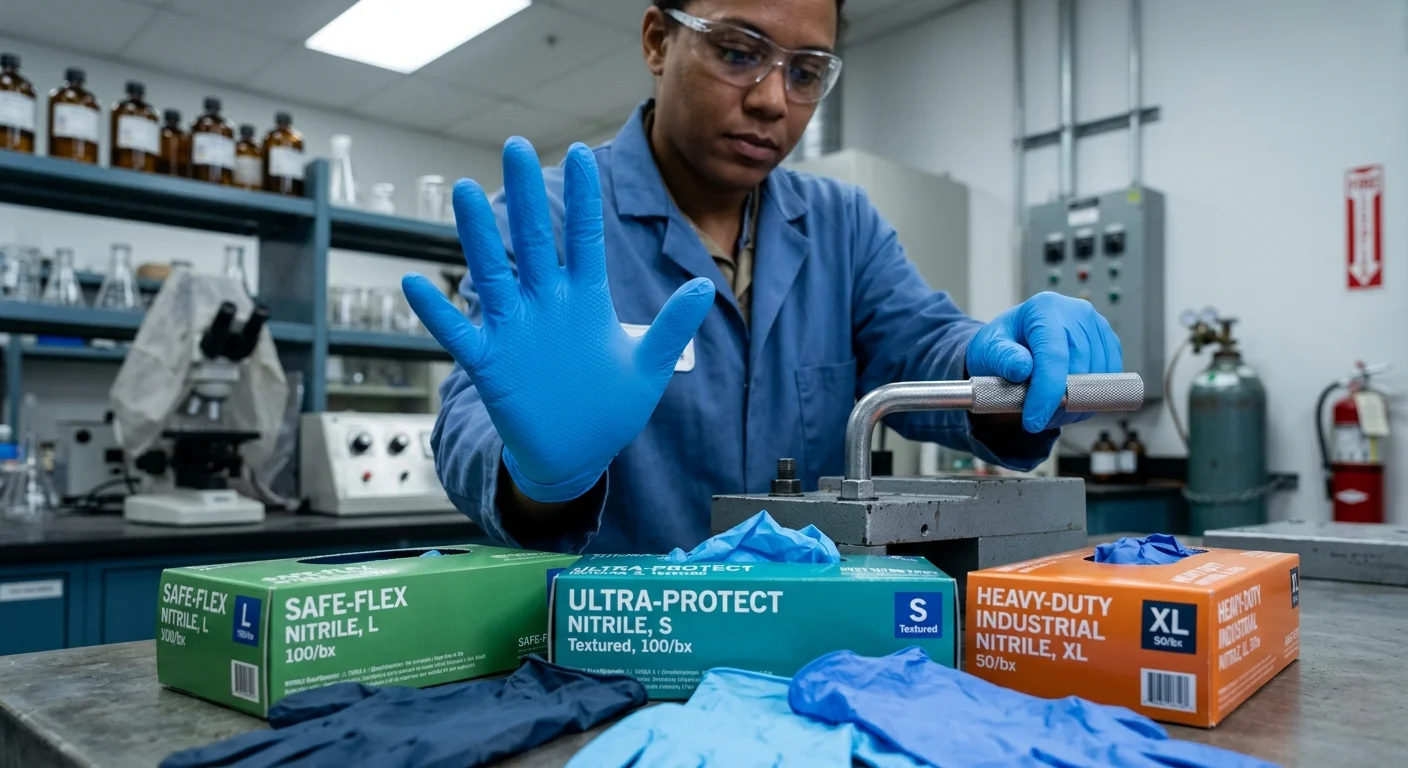 The questions keep coming — and they should. Gloves sit between you and everything that could go wrong.
Do Sempermed gloves rip easily?
Not under normal use. Every model in the Sempermed line meets EN 455-2 force-at-break standards. Break force starts at 3.6N for the vinyl syn-stretch and goes up to 12N for the semperguard® Xpert and sempermed® supreme. The right answer depends on which glove you’re holding — the numbers vary by model.
Here’s the full picture:
| Model | Material | Min Palm Thickness | Force at Break | AQL |
|---|---|---|---|---|
| semperguard® Xpert | Nitrile | 0.11 mm | ≥12 N | 1.0 |
| sempermed® safe | Nitrile | 0.08 mm | ≥6 N (typical 9 N) | 1.0 |
| sempermed® supreme | Latex (surgical) | 0.21 mm | ≥12 N | 0.65 |
| sempermed® green X-free | Nitrile | 0.05 mm | ≥6 N | 1.0 |
| sempermed® syn-stretch | Vinyl | 0.08 mm | ≥3.6 N | 1.5 |
Which Sempermed glove is the most tear-resistant?
Two models share the top spot at 12N — but for different reasons.
The semperguard® Xpert is built for mechanical environments: oil exposure, friction, and tool handling. The sempermed® supreme is the go-to for surgical settings. Its latex build gives you tactile precision, the same 12N break force, and a tighter AQL of 0.65.
For clinical exam work, the sempermed® safe holds up well. Its typical 9N performance covers most exam-room demands.
When should I replace my gloves — is there a set time limit?
There’s no universal clock. Pull them off and switch to a fresh pair after you spot any damage, feel unusual resistance, or finish a task involving oils, chemicals, blood, or body fluids. Inspect before and after every use — not just after.
In high-stress situations, double-donning protects the inner glove and extends its life. It does not reset the replacement rule, though. Damage is still damage.
Does shelf life affect tear risk?
Yes — and more than most people expect. Degraded material tears faster. You may not see anything wrong on the surface, but the structure has already weakened. Check the shelf life for your model:
- Xpert / safe / supreme : 5 years unopened
- syn-stretch / green X-free : 3 years
Store in cool, dry, UV-protected conditions. Poor storage speeds up material breakdown. Once that happens, the force-at-break specs on the box no longer apply.
Are Sempermed gloves safe for chemical handling?
The sempermed® safe carries EN 16523-1 certification. It also meets EN ISO 374-1/-2/-4/-5 and ASTM F1671/D6319. That covers bacteria, fungi, and viruses — including SARS-CoV-2, Hepatitis B/C, and HIV.
For chemical exposure, nitrile outperforms latex and vinyl. That’s a clear pattern across testing. Still, no glove holds up through full chemical immersion without a time limit. Check the published permeation times for your specific chemical before you start any task.
Conclusion
 Here’s the honest truth: Sempermed gloves don’t rip because they’re a bad product. They rip because they’re the wrong product for the job.
Pick the right model, the right size, and the right material for your work environment. You’ll get reliable barrier protection that holds up where it counts. Push them past their design limits — or grab the nearest box without checking the mil thickness — and no brand will save you.
You came here with a real question. You have real work to do. So use the model guide and comparison breakdown above to match your job to the right glove. Order a small batch before going bulk. Your hands — and your budget — will thank you.
The best glove isn’t always the most expensive one. It’s the one you chose with intention.