

Fogged-up glasses mid-project aren’t just annoying — they’re a safety hazard. Put on a respirator, and your lenses will cloud over within minutes. That’s the reality for glasses wearers in dusty workshops or paint booths. It’s a real frustration.
The GVS Elipse half mask keeps coming up as the fix for this exact problem. Users swear by its ultra-low-profile design. It sits closer to the face and pushes exhaled air away from your eyes — not up toward your lenses.
Does it hold up in practice? Here’s an honest look at how the GVS Elipse performs with glasses on — seal quality, real-world fogging results, and whether it’s worth the upgrade.
Does the GVS Elipse Respirator Fog Up Glasses? (The Short Answer)

Short answer: No. The GVS Elipse respirator does not fog up your glasses.
This isn’t a marketing claim — it’s the result of deliberate engineering. The GVS Elipse half mask uses a nasal area ridge to do two things at once. It seals the respirator tightly against your face. It also pushes exhaled air downward — away from your lenses.
That seal is the whole game. Exhaled air has nowhere to go upward. So fogging stops being a problem.
A few other design details that work in the glasses wearers’ favor:
- Low-profile, swept-back filters — they sit flush and low, so your frames aren’t fighting for space
- 130g total weight — light enough that the fit stays stable and the seal holds through extended use
- Works with safety glasses and earmuffs at the same time — no drop in protection
The full-face version of the GVS Elipse goes further. Its visor meets EN166 anti-fog standards. You also get a field of view 15% wider than comparable full-face masks.
Real-world user reports back this up. Fogging rarely comes up. The one exception: a single half-mask review mentioned minor condensation. That’s one case — not the norm.
For glasses wearers, the GVS SPR457 Elipse and its siblings mark a real design shift. This mask was built with your situation in mind.
What Makes the GVS Elipse Different for Glasses Wearers?
Most respirators are built for bare faces. The GVS Elipse was built for the rest of us — people who wear glasses every day.
A few smart engineering choices set it apart. Each one makes a real difference when you’re fitting a respirator over frames.
The exhalation valve is doing serious work. The large central non-return valve cuts breathing resistance and stops moisture from building up inside the mask. Less trapped moisture means less warm, wet air pushing upward. That’s why fogging stays rare with this mask.
The face piece material adapts to your face. The GVS Elipse uses medical-grade TPE — a soft thermoplastic that shapes itself to your face rather than fighting it. It’s latex-free and silicone-free. It also bends around glasses frames without losing the seal. Stiffer mask materials can’t say the same.
The filter placement is no accident. Low-profile, swept-back filters keep your line of sight open and leave space for your frames. No crowding at the temples. No pressure points that push glasses out of place and break the seal.
Sizing options exist — and they matter. The S/M mask fits about 70–80% of users. M/L suits larger or longer faces. A proper fit is the base of a good seal. A good seal is what keeps exhaled air moving down instead of up.
The four-point strap system pulls its weight. Four adjustable positions let you fine-tune the fit around your specific frame shape. It also stays secure in high humidity and wet conditions — useful for shop work or anything that makes you sweat.
For prescription lens wearers, the Elipse Integra model takes things further. It comes with built-in goggles using polycarbonate lenses that meet anti-fog standards and go beyond anti-scratch requirements. There’s also an approved prescription lens insert. You can drop external glasses and remove the compatibility issue at the source.
The total weight — mask plus filters — is 132g. Light enough to wear all day without adding extra strain to a face already holding up a pair of frames.
Real-World Testing: GVS Elipse Respirator with Glasses in Different Use Scenarios
Three environments reveal more about a respirator than any spec sheet: a dusty workshop, a spray booth, and a long outdoor shift where sweat becomes its own variable.
Here’s how the GVS Elipse holds up across each one.
Spray Painting: High Breathing Rate, Zero Reported Fogging
Spray painting is the stress test. Your breathing rate climbs. You exhale more air. A failing seal or fogging glasses shows up here first.
The full-face Elipse handles it well. The panoramic polycarbonate visor carries EN166 anti-fog certification. Real-world use backs that up — no reported lens blurring, even under heavy load. The A1P3 and A2P3 filter combinations keep breathing resistance low throughout. That matters because labored breathing speeds up the conditions that cause fogging.
Field of view holds up too. The Elipse visor measures 15% wider than comparable full-face masks. That’s a meaningful difference — you’ll notice it while tracking a spray pattern across a panel.
DIY and Long-Shift Outdoor Work: 30–40+ Hours of Glasses Compatibility
Extended wear brings a different set of problems. Frames shift. Pressure builds. Small fit issues you don’t notice at minute ten turn into real problems by hour four.
The half-face Elipse weighs just 130g. That low weight keeps frame drift to a minimum. The medical-grade TPE facepiece works with your frame shape, not against it. It flexes under pressure instead of holding rigidly. So your glasses stay in alignment, and the nose seal stays consistent over a long shift.
The low-profile filter placement earns its place here, too. Swept-back filters keep your downward sightlines clear. That’s more useful during extended ground-level work than in a short workshop session.
The Fogging-Seal Connection: What It Tells You
Fogging isn’t just an annoyance — it’s a signal.
Glasses fogging up while wearing the Elipse points to a seal problem, not a design flaw. Exhaled air escaping upward means the facepiece isn’t seated right. The fix is adjusting the fit, not swapping out the mask.
A simple check works here. Breathe normally for a few minutes under light effort. Then look for any warmth or moisture on your lenses. Clear lenses mean the seal is doing its job. The 645 cm² pleated P3 filter media and valved exhalation design cut internal moisture buildup — that’s what keeps exhaled air moving down instead of up toward your lenses.
Across spray painting and long-wear use, fogging on glasses with the GVS Elipse is rare. Poor fit causes it — not the mask itself.
GVS Elipse vs. Competitors: Which Half-Mask Works Best with Glasses?
The half-face respirator market is crowded. But masks that work with glasses — no fogging, no broken seal, no frames digging into your temples — are rare. Manufacturers won’t tell you that. The list is short.
Here’s how the GVS Elipse compares to the top competitors for glasses wearers.
GVS Elipse vs. 3M 6502QL
The 3M 6502QL is the go-to pick on most PPE forums. It’s easy to find, priced fairly, and performs well for general use.
But “general use” isn’t the same as “glasses-friendly use.”
The GVS Elipse uses a latex-free, silicone-free TPE facepiece. It flexes around your frames. The 3M 6502QL is built differently. It seals well on a bare face — but it doesn’t adjust to the added geometry that glasses bring. The Elipse’s four-point adjustable strap system gives you more control, too. You can fine-tune the fit around different frame shapes, which the 3M doesn’t match.
On fogging: zero complaints reported for the Elipse with glasses. The 3M’s record is murkier. User reviews consistently rate the Elipse as “very good” among half-masks. The JSP Force 8 comes up as a close rival for overall seal quality — but for glasses compatibility, the Elipse pulls ahead in the reviews.
GVS Elipse vs. JSP Force 8
The JSP Force 8 has a slight lead in raw seal performance for bare-face users. Some reviewers rate it a bit higher overall.
For glasses wearers, that gap shrinks fast. The Elipse’s swept-back filter design and flexible facepiece tackle frame interference head-on. The Force 8 is a solid mask — but its design doesn’t account for the clearance problems that frames create.
GVS Elipse vs. Moldex Series
No fogging complaint data exists for Moldex masks among glasses wearers in the reviews surveyed. That’s not a pass — it’s a gap in the data.
The Elipse takes a different approach. Its flexible design pairs with a silicone diaphragm that pushes exhaled air downward . That’s a built-in, engineered fix for glasses fogging — not a side effect or lucky outcome.
At a Glance
| Feature | GVS Elipse | 3M 6502QL / JSP / Moldex |
|---|---|---|
| Glasses fogging | None reported | Unclear / no data |
| Filter efficiency | P3 / P100 >99.95% | Varies |
| Glasses compatibility | Excellent — fits over or under straps | Limited data; Elipse leads in reviews |
| Price | ~$25 USD | Comparable range |
| Reusability | Replaceable filters, reusable body | Varies |
For glasses wearers doing dust work, grinding, or spray painting, the Elipse is the one mask in this comparison with documented, design-driven fogging prevention. That’s not a small detail. It’s the whole point of your research.
Need full eye protection? The Elipse Integra adds built-in polycarbonate goggles that meet anti-fog and anti-scratch standards. It also accepts an approved prescription lens insert. That takes external glasses out of the picture altogether.
For everyone else: tighten the four-point straps from the rear first, check that your glasses sit flat over the straps, and you’re good to go.
How to Stop Your Respirator from Fogging Your Glasses: Practical Tips
 Fix the seal first. Everything else comes second.
Lenses cloud up mid-task, and the instinct is to grab an anti-fog wipe or adjust your glasses. That’s treating the symptom. The real problem is almost always air leaking out of the nasal area of your mask and rising straight toward your lenses.
Research on N95 respirators confirms this. The nasal and malar (cheekbone) areas are the most common spots for exhalation leaks — even in masks that otherwise fit well. Fogging is a signal, not a coincidence. It shows you exactly where your seal is failing.
Here’s how to address it, step by step.
Start with the nose seal. On the GVS Elipse, the nasal ridge does the heavy lifting. Press it hard against the bridge of your nose before tightening anything else. That one contact point decides whether exhaled air goes down or up.
Tighten the straps in order. Start from the rear lower strap, then work forward. Pulling from the wrong direction shifts the facepiece and opens a gap at the nose seal. That’s the last place you want a gap.
Check your glasses’ position. Frames resting on top of the facepiece break the cheek seal. Try positioning frames under the straps but above the facepiece edge. That keeps both the seal and your sightline solid. Test a few positions with your specific frame shape before starting work.
Run a quick breath test. Breathe at a steady pace for two or three minutes under light effort. Warm air or moisture on your lenses means the seal hasn’t seated right. Re-adjust and test again before getting deep into a project.
Fogging persists after a proper fit? Treat your lenses straight on. Rub a small amount of dish soap onto both sides of your lenses, then buff it off without rinsing. This leaves a thin film that breaks up condensation before it forms. Commercial anti-fog agents work the same way. Hand sanitizer works in a pinch, too.
One thing worth knowing: fogging predicts a poor fit with just 71% sensitivity. That means about three out of ten bad seals produce no fogging at all. Clear lenses are not a guarantee. A proper fit check matters no matter what.
Who Should Buy the GVS Elipse Respirator?
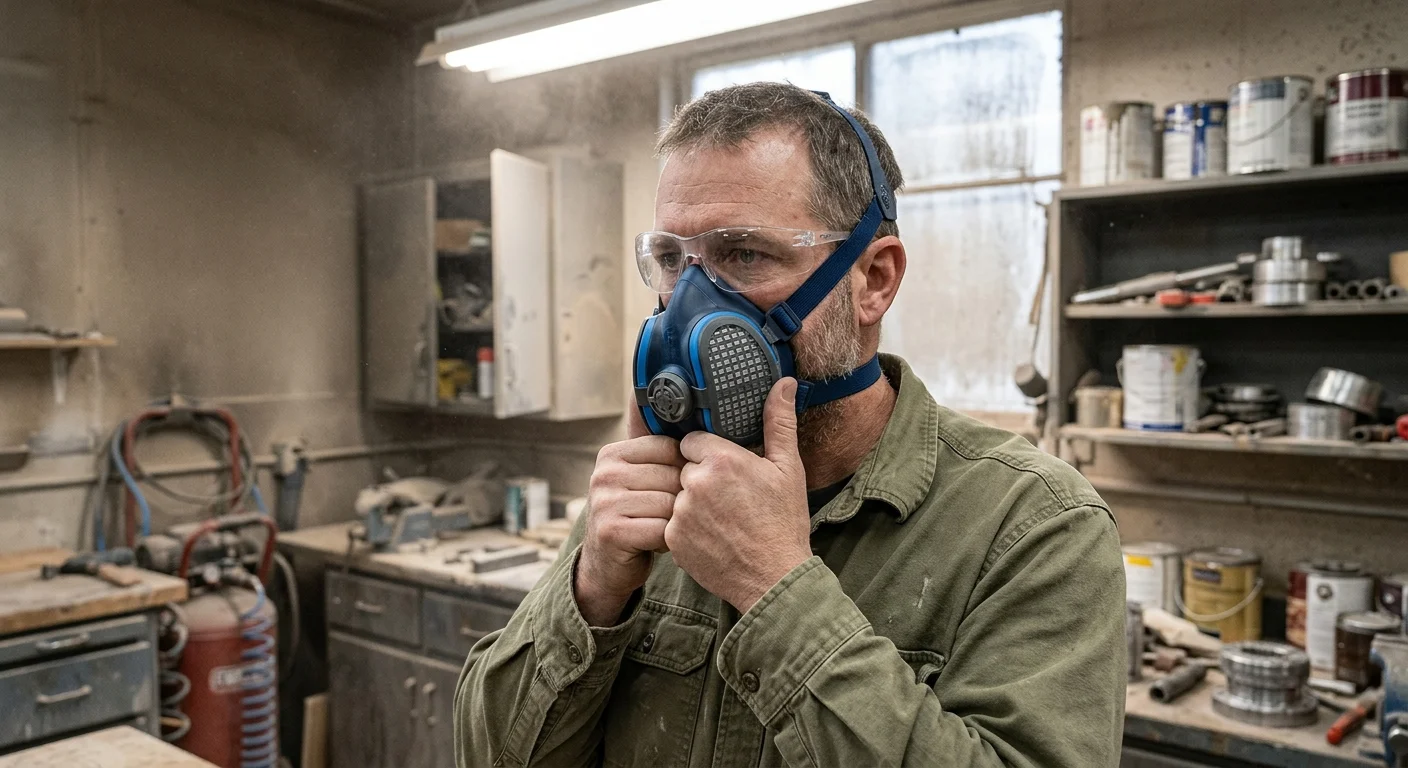 The GVS Elipse has built its reputation by solving one specific problem — and solving it well. Wear glasses and need a half-face respirator ? This mask was built for you.
Here’s who gets the most out of it:
- Glasses wearers — prescription frames, safety glasses, or ballistic goggles all fit. You keep your full field of view, and the seal stays intact.
- Woodworkers — P100 filtration catches fine dust particles. The mask stays clean all day and won’t fog up your face shield.
- Painters and grinders — P100 delivers particulate protection at ≥99.97% efficiency. Pair it with the right filter cartridge for your specific hazard.
- Allergy sufferers and dusty-environment workers — the HEPA dual-filter setup catches airborne particles before they trigger coughing or irritation.
- Long-shift users — it weighs just 130g with a breathing resistance of 3 mbar. You can wear it all day without feeling worn out.
Two real caveats worth knowing. Oversized or odd-shaped frames may need extra seal adjustment to get a tight fit. Heavy exertion can cause sweat to pool inside the mask. You’ll need to stop and clear it out by hand.
At around $25, the GVS SPR457 Elipse or the GVS Elipse P100 (sold as the SPR451 at Walmart) comes with filters included. That’s a better value than most bulkier options out there. Replacement filters are easy to find and cost very little.
Fogging glasses kept you away from respirators? That’s no longer a problem.
Conclusion
 Glasses wearers who’ve dealt with fogging know the frustration. The GVS Elipse is different — and that’s not just marketing talk. Its low-profile face seal sits well clear of your nose bridge. Exhaled air escapes downward instead of pushing straight up into your lenses. That’s a deliberate design choice, not a happy accident.
Will it fog your glasses? Yes, sometimes — during heavy exertion or in cold environments. But stack it against bulkier competitors, and it’s the most reliable daily-use option this category has seen.
You wear glasses. You need a half-face respirator that doesn’t fight you every single time you put it on. The Elipse delivers on that. Grab one, dial in the fit with the nose piece adjustment tips above, and get back to the work that counts.
Your lungs — and your lenses — will thank you.