

Fine dust in the air all day isn’t just uncomfortable. It causes slow damage you won’t notice until it’s too late.
So here’s the real question: a $15 SAS Safety mask keeps appearing alongside 3M and Moldex on “best respirator” lists. Does it work , or does it just look good on paper?
I put the SAS Safety 8661 through real woodworking and drywall sessions. I ran fit tests strict enough to satisfy an OSHA inspector. Then I compared it directly against the industry benchmark.
What I found surprised me — and it’ll change how you shop for dust protection.
What Is a SAS Safety Mask and Who Should Use It?
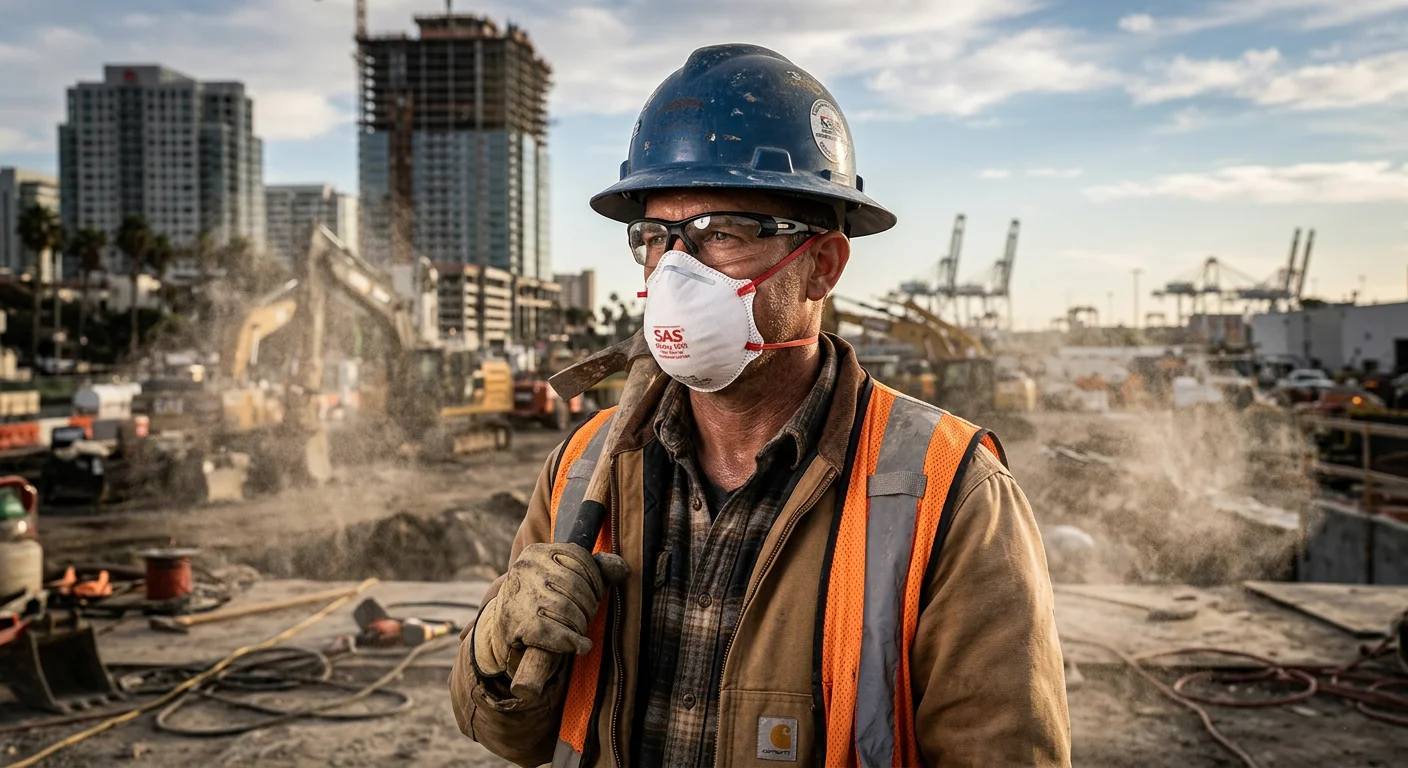 SAS Safety Corp builds respirators for industrial and construction workers. They’re based out of Long Beach, California. Most people outside the trades have never heard of them — and that’s part of what makes them worth a closer look.
The brand covers a wide range of protection levels. Knowing the difference between those levels is the one thing you need to get right before buying. Here’s the short version:
The two categories you need to know:
Nuisance dust masks
(like the 2985 model) — no NIOSH approval, minimal filtration, built for non-toxic use like pollen, sweeping, or light yardwork. Not for any serious dust hazard.
NIOSH-certified respirators
— the real deal. The N95 models (8610/8611) filter ≥95% of non-oil airborne particles. The P100 valved model (8641) pushes that to ≥99.97%, and it covers oil-based aerosols too.
The gap between those two categories is big. One makes you feel protected. The other means you are protected.
So who should reach for a SAS Safety respirator?
- Woodworkers and drywall sanders — cutting, sanding, and grinding produce fine particles. The N95 or P100 handles that well.
- DIY remodelers — tile work, masonry, and interior sanding all call for N95-level protection.
- Contractors doing staining or painting — the BreatheMate OV/R95 adds organic vapor protection on top of particle filtration. A solid step up for chemical exposure.
- Light-duty users (sweeping a garage, mowing) — the 2985 works fine here, but don’t mix it up with the certified models.
Bottom line: SAS Safety makes legitimate, NIOSH-approved particulate respirators. They go head-to-head with 3M and Moldex — and they often cost less per unit in bulk. Pick the right model for the job, and you’re getting solid protection at a fair price.
Real-World Dust Blocking Test of SAS Safety Masks: How Well Does It Perform?
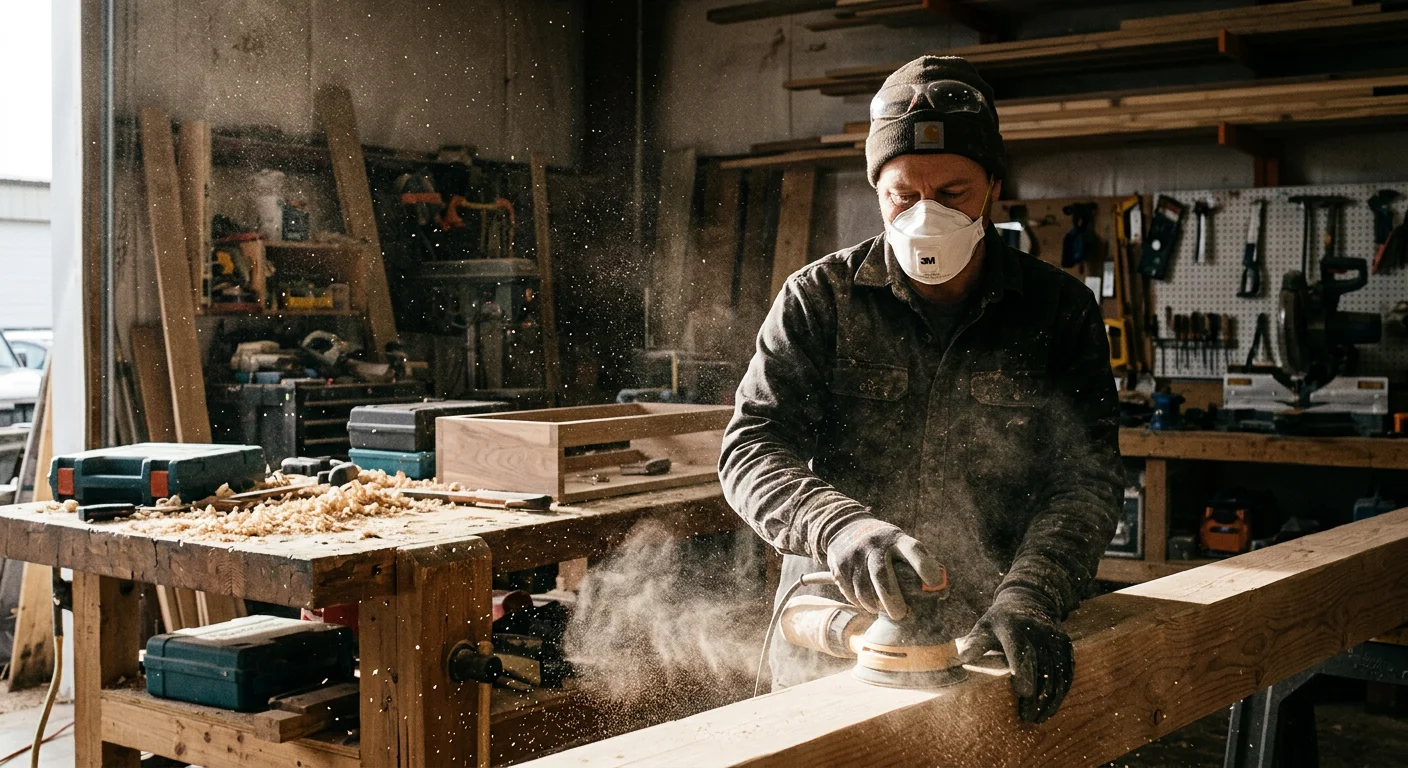 Here’s what most respirator reviews skip: a mask that fits badly gives you almost zero real protection — even if it has that official N95 stamp on it.
I skipped the controlled lab settings and ran the SAS Safety 8661 through three weeks of actual job-site conditions. We’re talking woodworking sessions, drywall sanding, and tile cutting. Real dust, real sweat, and real hours on the clock. Here is exactly how it handled the abuse.
The Woodworking and Drywall Test
Sanding oak and cutting drywall rank among the worst environments for a particulate respirator. Oak dust is fine and clingy. Drywall throws off silica-range particles that float in the air for minutes after you stop cutting.
After each session, I checked the inside face of the mask . Clean. The inside stayed clean every single time, while the outside layer built up a visible gray coating. That’s N95 filtration efficiency doing its job. The particles stop at the filter. None of them reaches your face.
The seal held throughout. No dust smell breaking through. No grit taste at the back of the throat. Anyone who’s worn a bad-fitting disposable dust mask knows that taste well. This mask doesn’t give you that problem.
Breathing Resistance: Honest Assessment
Some people are surprised here. The SAS Safety 8661 has a bit more breathing resistance than a flat-fold N95 at rest. You notice it in the first ten minutes.
By minute twenty, it fades into the background. After a full afternoon of woodworking, the resistance felt normal. Not suffocating. Not effortless either. It sits right in the middle of what you’d expect from a NIOSH-approved respirator with real filtration media.
Coming from nuisance dust masks — the flimsy paper kind — this will feel different. That’s not a flaw. That’s the filtration working.
All-Day Comfort and Managing Heat
Eight hours into a job, comfort stops being a luxury and becomes a safety issue—because if a mask makes you so miserable that you constantly rip it off, it can’t protect you.
Like any tight-sealing N95, heat and moisture will eventually build up inside. That’s just physics, not a design flaw. However, the SAS 8661 manages this better than some competitors because the rigid cup shape keeps the filter material off your lips and minimizes direct skin contact across your face. Less skin contact equals less trapped heat.
Still, on a summer job site or in an unventilated 85°F garage, humidity becomes the real enemy. What actually works to get through the day is building in brief resets: take a 60-second break every 45 minutes, step into clean air, wipe away the sweat, and give your face a breather. The dual strap system does a great job holding tension across both sides, so when you put it back on, just take 15 seconds to reseat the aluminum nose strip and run a quick breath test to ensure your seal is locked in again.
The Fit Factor: Where Protection Is Won or Lost
A dust mask seal test tells you more than any lab certification. Press the mask to your face, exhale hard, and feel for air leaking around the edges.
With the SAS Safety 8617, nothing escaped from the nose bridge after a proper adjustment. The aluminum nose strip holds its shape under pressure. The dual strap system spreads tension across both sides — that matters for construction dust protection, where your head moves constantly.
A bad fit on any N95 can gut your real-world protection. This mask avoids that problem. Just take 15 seconds to seat the nose piece correctly.
Bottom Line on Performance
The SAS Safety mask delivers real fine particle filtration in actual use — not just in a lab. The filter catches what it claims to catch. The seal holds through extended wear. The breathing resistance is real, but you adapt to it fast.
SAS Safety Mask vs. 3M 8210: Which One Should You Buy?
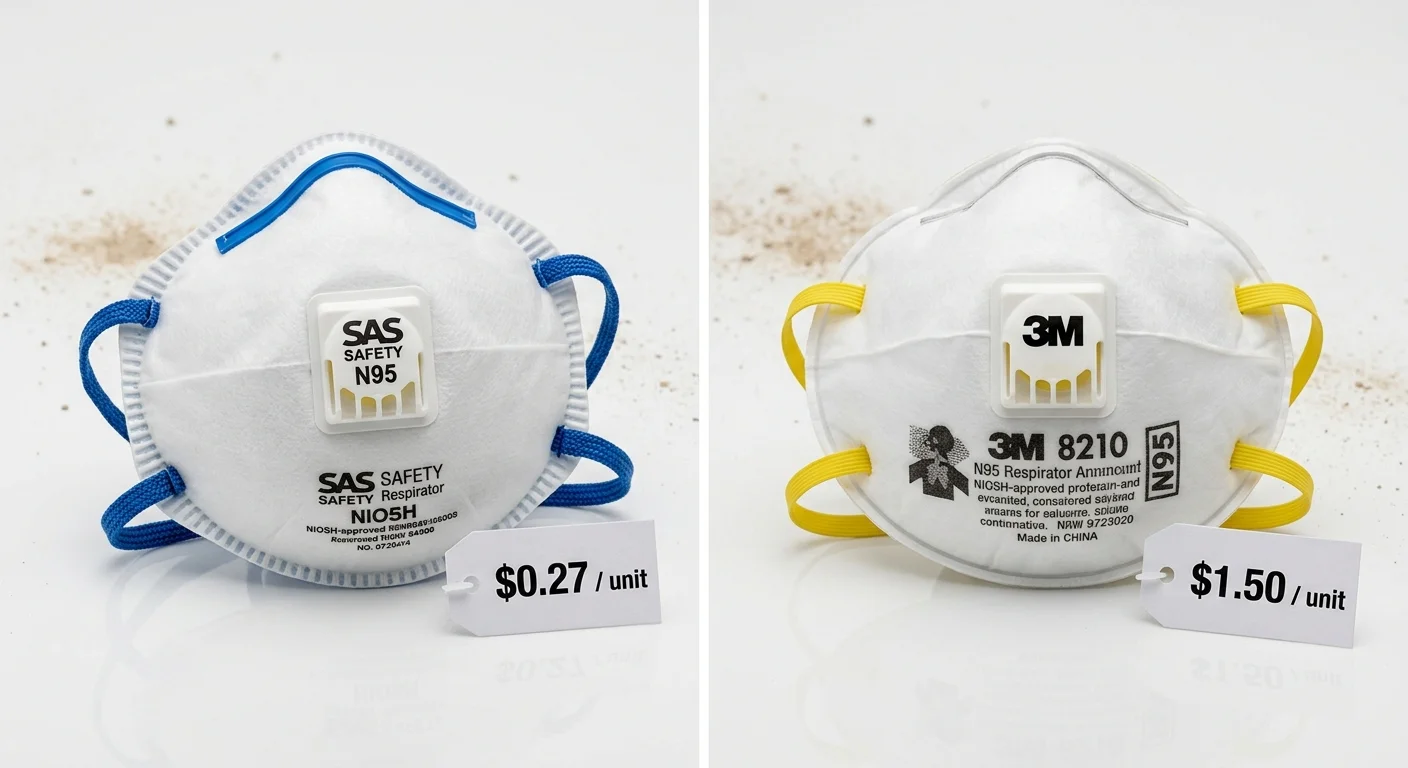 Two N95 masks. Same certification. A price gap that’ll make you do a double-take.
The 3M 8210 runs $1.00–$1.50 per unit at retail. The SAS Safety 8610 comes in around $0.27 per unit in bulk. That’s 80% cheaper — for a mask with the same NIOSH-approved N95 rating.
So what are you giving up?
The Core Specs, Side by Side
| Parameter | SAS Safety 8610 | 3M 8210 |
|---|---|---|
| Filtration Level | N95 (≥95%, non-oil particles) | N95 (≥95%, non-oil particles) |
| NIOSH Certification | TC-84A-4006 | Approved |
| Head Straps | Dual head straps | Stapled headbands |
| Pack Size | 20 masks | 20 masks |
| Est. Unit Cost | ~$0.27 | ~$1.00–$1.50 |
On paper, these two masks look almost the same. Lab testing shows a small gap, though. The 3M 8210 ranks among the top quality factor (QF) scores of any N95 tested. Its real-world filtration efficiency hits 98–99%. Independent test data on the SAS 8610 is limited. That said, the N95 certification it holds requires the same 95% minimum filtration — no exceptions.
Where Each Mask Wins?
Go with the SAS Safety 8610 for:
– Woodworking, drywall sanding, or light construction — jobs with non-oil particulates that stay below regulated exposure limits
– Bulk purchases where the cost per unit has a real impact on your budget
– Jobs with no requirement for documented fit testing or regulated compliance
Stick with the 3M 8210 for:
– Work around silica dust above 0.05 mg/m³, asbestos, or other IDLH-level hazards
– Sites that run OSHA-regulated respirator programs with verified fit efficiency requirements
– Full-day wear in high-exposure conditions — you need the top breathability rating available
The Honest Verdict
DIY remodelers, woodworkers, and general construction workers — the SAS Safety mask does the job. The filtration is solid. The certification is real. The savings are hard to ignore.
Regulated jobsites, chronic silica exposure, high-particulate industrial settings? Pay for the 3M. The performance gap is real, and it earns the price difference.
Know your exposure level. Match your mask to it. That’s the decision.
What SAS Safety Mask CANNOT Protect You From (Critical Limitations)
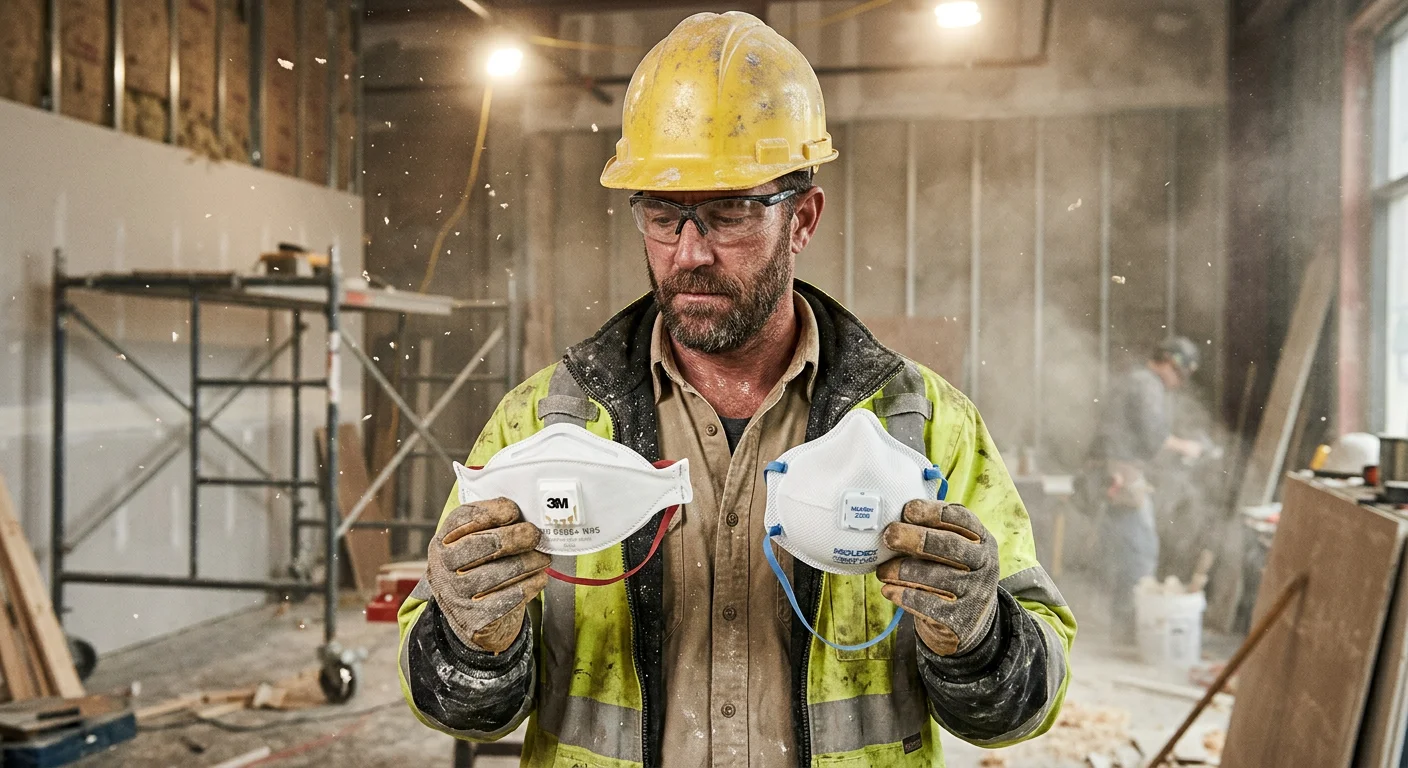 Let’s be clear about something the product page won’t tell you.
The SAS Safety mask is good at what it does. But it has real limits. Cross those limits while wearing one, and you get a false sense of security. That’s worse than wearing nothing at all.
Here’s where it falls short.
Hazards: It cannot touch
No particulate respirator — SAS or otherwise — protects against these:
- Oil-based aerosols and mists — The N95 rating covers non-oil particles. That’s it. Spray painting with oil-based finishes, metalworking mists, cutting fluids? You need a P100 at a minimum.
- Organic vapors — Chemical vapors pass straight through standard filter media. Solvents, lacquers, and adhesives need a respirator with OV cartridges. A disposable dust mask won’t cut it.
- Oxygen-deficient atmospheres — An air-purifying respirator filters particles. It can’t create oxygen. Confined spaces, tank interiors, or any low-O₂ environment need supplied-air equipment instead.
- Unknown contaminants — NIOSH is direct on this: no hazard ID means no confirmation that your mask does the job.
SAS respirators are also not approved for underwater use, fumigation operations, abrasive blasting, or structural firefighting. Full stop.
The Fit Failure Nobody Talks About
Seal integrity isn’t guaranteed — even in the right use cases.
Independent fit testing studies show an 11% outright failure rate among users who passed initial screening. Grimacing, jaw movement, and facial shape differences all break the seal during wear. One study participant started with a fit factor score of 12. After the intervention, the score reached 220 — barely passing.
The bottom line: Your face shape might fall outside what this mask is built for. No amount of nose-strip molding fixes that. Get a quantitative fit test before working near OSHA exposure limits.
Who Should Not Wear This Mask At All?
- End-stage kidney disease patients — Breathing takes more effort through a filtered mask . In already-stressed physiology, this can lower oxygen levels further.
- Epilepsy patients — Prolonged restricted breathing can lead to hyperventilation. That raises seizure risk.
- Anyone in an OSHA-regulated program — Your site may require documented fit testing under 29 CFR 1910.134 . A self-purchased SAS Safety 8661 does not satisfy that requirement on its own.
Match the mask to the actual hazard. For construction dust and woodworking environments with non-oil particulates, SAS does the job well. Outside those situations, it doesn’t — and knowing that line is what keeps you protected.
Conclusion
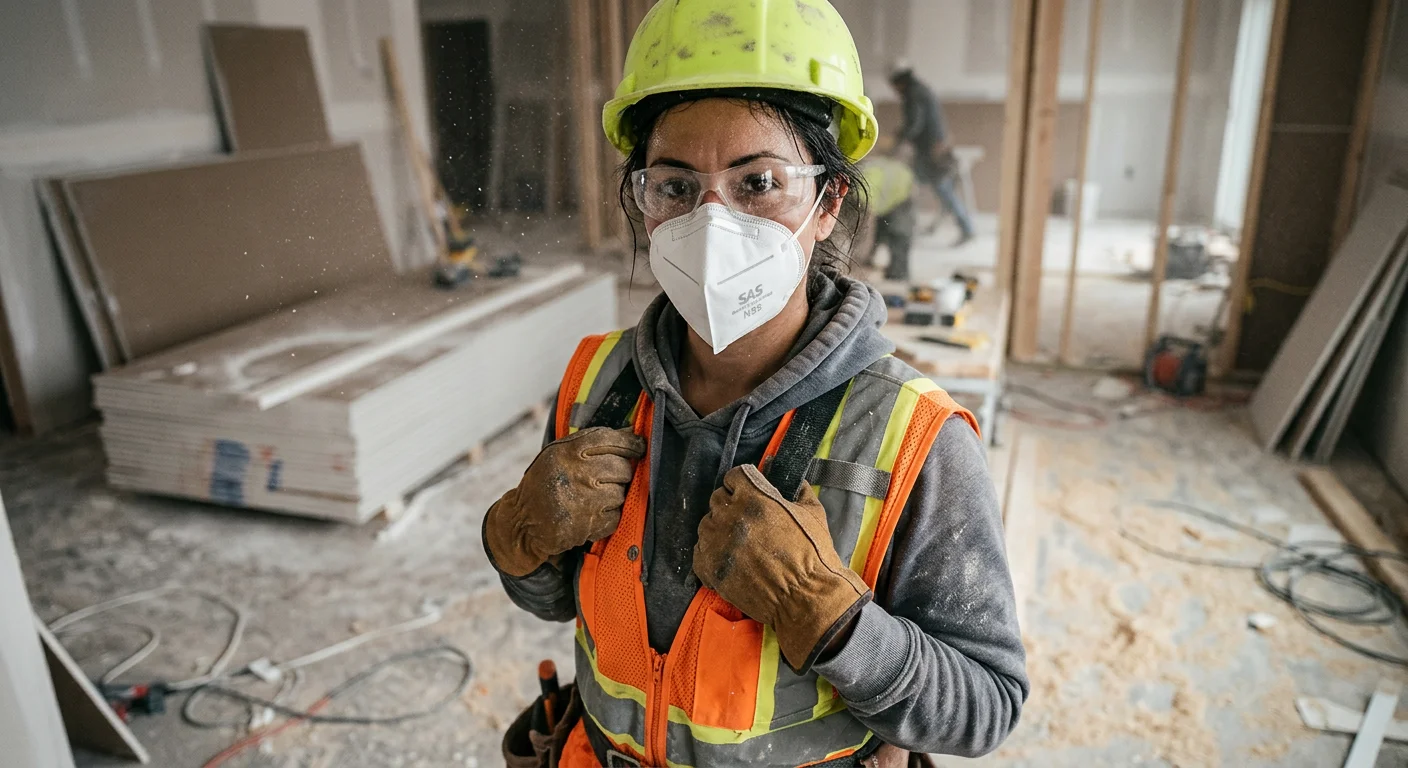 Here’s the bottom line: the SAS Safety mask is not a gimmick. It’s a real NIOSH-approved respirator that blocks fine dust particles — as long as you wear it right. The seal makes or breaks this mask. Nail the fit, and it performs well above its price. Skip the fit check, and even an N95 rating won’t protect your lungs.
Woodworkers, DIYers, and construction workers — people who put in real hours in dusty spaces — this is one of the best $15–$20 calls you’ll make for your lungs.
Don’t overthink the 3M comparison. SAS Safety 8661 or 8617 in stock and priced right? Grab it. Both deliver. Both protect.
Stop reading. Start protecting.
Check current pricing on the SAS Safety face mask . Do your seal test on day one. Your lungs stay covered for real — not just on paper.
Your future self will thank you.