

Not all N95 masks perform the same. Wear one for hours on a packed flight or walk through a city thick with wildfire smoke — the difference becomes clear fast. Benehal has been picking up attention as a cheaper option compared to big names like 3M. But the real question isn’t just about price. It’s about safety. This review gives you real data on Benehal’s N95 mask filtration efficiency, NIOSH certification, fit, breathability, and daily wearability. So you can make a confident decision before you buy — not after.
How Well Does the Benehal N95 Filter? Filtration Efficiency Data Breakdown
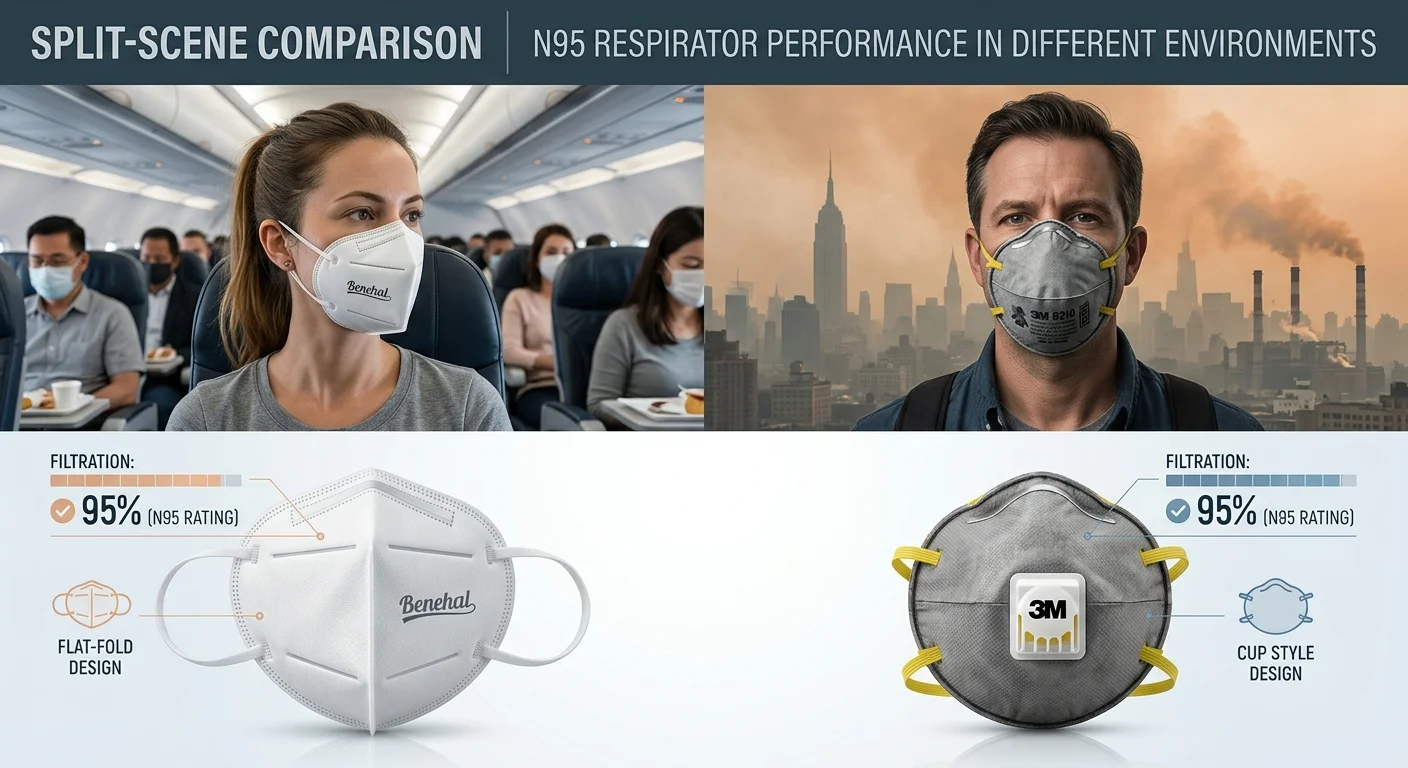 Here’s where the numbers tell a story that marketing language never will.
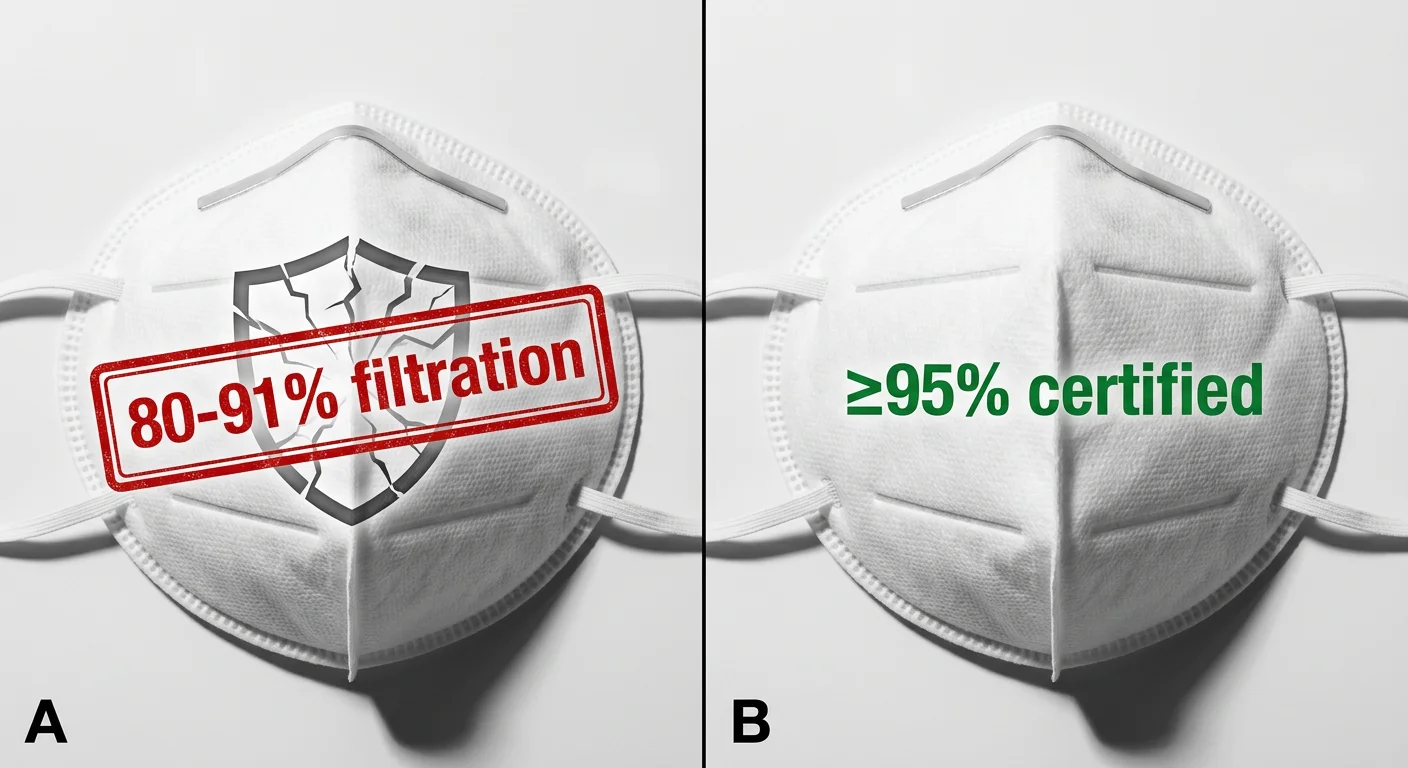
Independent filtration testing put the Benehal N95 at 80.4–91.8% filtration efficiency (FE). That single data point matters — a lot. NIOSH sets the minimum bar for a legitimate N95 respirator at ≥95% filtration efficiency. Benehal doesn’t clear it. Not even close at the particle sizes that matter most.
The Particle Size Problem Nobody Talks About
Not all particles carry the same risk.
The Benehal N95’s weakest performance showed up at 0.3–1 µm particle diameters. That’s the size range covering airborne viral particles, fine wildfire smoke, and PM2.5 pollution. At those sizes, Benehal hit 80.4–91.8% efficiency. Compare that to certified masks tested under the same conditions:
- KN95 (molded and duck-bill shapes): ≥98.1% FE across all particle sizes
- Gerson 1730: ≥98.1% FE
- Medline N95: ≥98.1% FE
- 3M N95 (post-VHP sterilization): >95% FE
- 3M Vflex N95: >95.6% FE across tests
At larger particle sizes — 2 µm and 5 µm — most respirators in the comparison group cleared the 95% threshold with room to spare. The Benehal N95 stayed below it.
What the NIOSH Standard Requires?
To earn NIOSH N95 certification, a respirator must filter at least 95% of NaCl test particles, with a count median diameter of 0.075 ± 0.020 µm. That’s not an arbitrary number. The test targets the particle size a mask finds hardest to capture — on purpose.
The Benehal N95 missed this standard across the fine particle range in independent testing. That raises a direct question: the filtration data doesn’t support N95-level protection. So what are you wearing?
A mask that filters at 80–91% when you need 95% isn’t a budget win — it’s a calculated risk. The efficiency gap between Benehal and verified competitors isn’t small. It’s the difference between a real respirator and a false sense of security.
Fit, Seal & Comfort of Benehal N95 Masks: Real-World Wear Experience
 A mask that doesn’t seal is just a face decoration.
Filtration numbers tell only part of the story. The other part lives in the gap between the mask and your face. That narrow space is where contaminated air slips in — no matter how good the filter material is on paper. Fit is what decides whether your N95 performs like one.
The Seal Problem Is Bigger Than You Think
User-seal-check data reveals something uncomfortable. Even among trained wearers, a good seal is far from guaranteed.
- Male wearers passed seal checks at a 72.1% rate
- Female wearers dropped to 53.1–58.1% — meaning close to half achieved no meaningful seal at all
Accuracy rates followed the same pattern. Males reached 68.2–70.5% accuracy on seal checks. Females landed at 57.5–59.4%. That’s essentially a coin flip for protection.
So why does this matter for Benehal? The brand uses a flat-fold design. That design demands a precise fit against your face’s contour. Cup-style respirators like the 3M 8511 hold their shape on their own. Flat-fold masks depend on how well the edges conform to your face. Contact breaks down during conversation, head movement, or the natural shifting that builds up over hours. At that point, you’re breathing unfiltered air.
What Extended Wear Feels Like?
Comfort isn’t a luxury feature. It’s a compliance feature. A mask that causes heat buildup, pressure points, or moisture discomfort gets pulled down, repositioned, or removed. At that moment, all filtration performance becomes irrelevant.
Benehal’s inner layer scores well on softness during the first wear. The fabric doesn’t feel rough against the skin. The nose wire bends easily and stays in place without snapping back. For short wear — a grocery run or a transit commute under 45 minutes — the comfort is fine.
The picture shifts at the 2-hour mark.
Heat starts to build. The flat-fold design limits the air pocket between the filter and your mouth. That speeds up moisture buildup. For long-haul travelers — a 10-hour flight or a full day in a polluted city — that steady discomfort creates a real compliance problem. You start adjusting. You pull it down. The seal breaks.
The Fit Tolerance Reality
Independent sizing data shows respirator fit tolerance averages around 82%. Some models dip below 70% — a level that points to real fit design problems. Benehal’s flat-fold format tends to fall short for users with narrower or smaller facial profiles. That includes many women and smaller-framed adults.
The elastic ear loops add convenience. But compared to over-the-head straps, they deliver less clamping force. Less force means a weaker seal around the perimeter. More convenience. Less seal integrity.
Bottom line: Benehal’s comfort works for brief, low-stakes wear. But for situations that demand full N95-level protection — wildfire smoke, crowded airports, high-pollution destinations — the gap between borderline filtration and an inconsistent seal creates compounding risk. That’s a hard combination to justify.
Benehal N95 vs 3M 8511 vs Moldex 2200: Head-to-Head Comparison
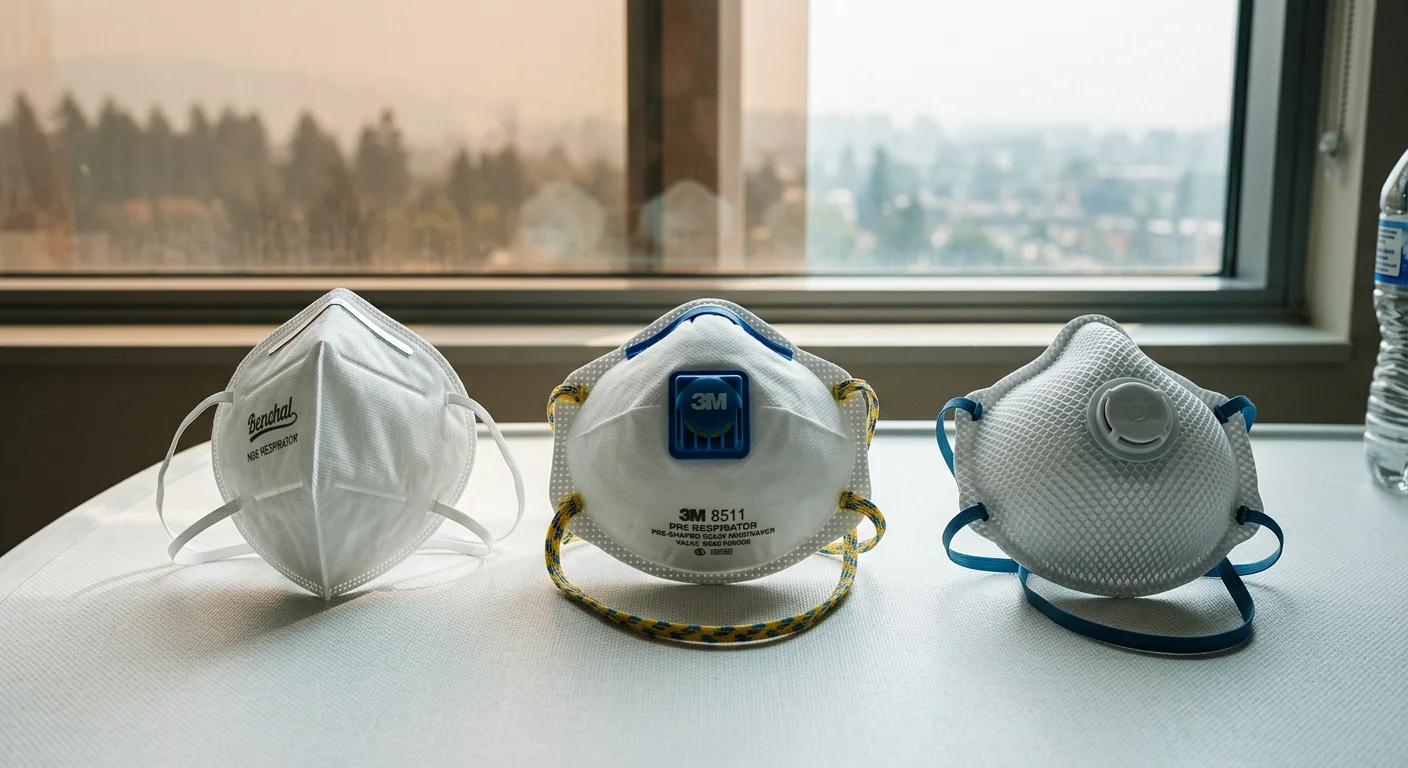 Three masks. All NIOSH-certified. All carry the N95 label, which means ≥95% filtration of airborne particles. But put them side by side, and you’ll see something the certification label won’t tell you — these masks are built for very different situations.
Here’s how they stack up.
Design: Structure Is a Feature, Not an Aesthetic
The biggest difference between these three isn’t price. Its shape.
The Benehal MS8225-B folds flat. That’s a real, practical plus — it fits in a jacket pocket, a travel kit, or a desk drawer. Each mask comes in its own wrapper. That matters in clinical or medical settings where keeping masks clean during storage is a real concern. You also get a nose cushion, which is a comfort detail you don’t often see in budget N95s. That said, flat-fold masks are softer in structure. For heavy, extended tasks — grinding, sanding, hours in dusty air — cup-style masks hold their shape better. Flat-fold designs don’t.
The 3M 8511 is built rigidly. Braided headbands, a stiff shell, and a Cool Flow™ exhalation valve — all designed for eight-hour industrial shifts. The shell won’t press against your mouth. The braided straps hold up through many cycles of putting the mask on and taking it off. Better construction means better durability over time.
The Moldex 2200 lands in the middle. Its Dura-Mesh® shell resists collapsing. The Softspun® inner lining helps wearers with sensitive skin — fewer pressure points and less irritation during long wear. The base model has no exhalation valve. That makes it a better fit for healthcare settings where you need to protect the people around you, not just yourself.
The Comparison at a Glance
| Dimension | Benehal MS8225-B / 6255 | 3M 8511 | Moldex 2200 |
|---|---|---|---|
| NIOSH Certified | ✅ | ✅ | ✅ |
| Filtration | ≥95% | ≥95% | ≥95% |
| Exhalation Valve | 6255 model only | ✅ Standard | ❌ (2300 has valve) |
| Shape | Flat-fold | Cup | Cup |
| Headband | Elastic | Braided | Standard straps |
| Nose Comfort | Cushion padding | Nose foam | Softspun® lining |
| Individually Wrapped | ✅ | ❌ | ❌ |
| Price per mask (approx.) | $1.00–$1.80 | $2.00–$3.50 | $1.50–$2.50 |
| Best suited for | Budget / medical / travel | Heavy industrial | Moderate industrial / healthcare |
Price: Where Benehal Makes Its Case
Benehal is the most affordable of the three, and the gap is not small. At $1.00–$1.80 per mask, it comes in under the Moldex 2200 ($1.50–$2.50) and well below the 3M 8511 at $2.00–$3.50.
For bulk orders — office supply programs, school health plans, travel emergency kits — that difference adds up fast. A box of 50 Benehal masks costs far less than the same count of 3M 8511s. For light to moderate daily use, where you don’t need heavy industrial durability, that price gap is hard to ignore.
One thing worth knowing for 3M buyers: Singapore-market packaging of the 3M 8511 can bring down the per-unit cost. The NIOSH filtration specs stay the same. Useful to check if you’re buying in volume.
Which One Fits Your Situation?
The right mask matches your actual use — not the brand name on the box.
Choose Benehal if budget is your main priority and your use is light to moderate — commuting, travel, clinic work, or bulk-supply needs. The per-mask wrapper and nose cushion add real, practical value that goes beyond the price tag.
Choose the 3M 8511 if you’re wearing a respirator through a full shift in a hot, high-dust environment. Construction workers, industrial teams, and safety managers with heavy daily use will find the braided headbands and rigid cup worth the extra cost. A mask that stays comfortable all day means fewer adjustments — and every adjustment breaks the seal.
Choose the Moldex 2200 if you want cup-style structure at a mid-range price, have sensitive skin, or need a valve-free mask for a healthcare setting. It’s the steady, reliable option between the 3M and Benehal — not the most feature-packed, but it does the core job well.
The honest summary: All three are NIOSH-certified N95 respirators . But certification is just the starting point, not the whole picture. Benehal holds its own as a solid value option for lower-intensity use. Travelers get a compact fold and a wrapped mask ready to go. For anyone putting in long hours in tough conditions, the 3M 8511’s durability and comfort make the higher price a fair trade.
Know what you need it for. That’s where the right answer is.
Where Benehal N95 Masks Work Best (and Where They Don’t)
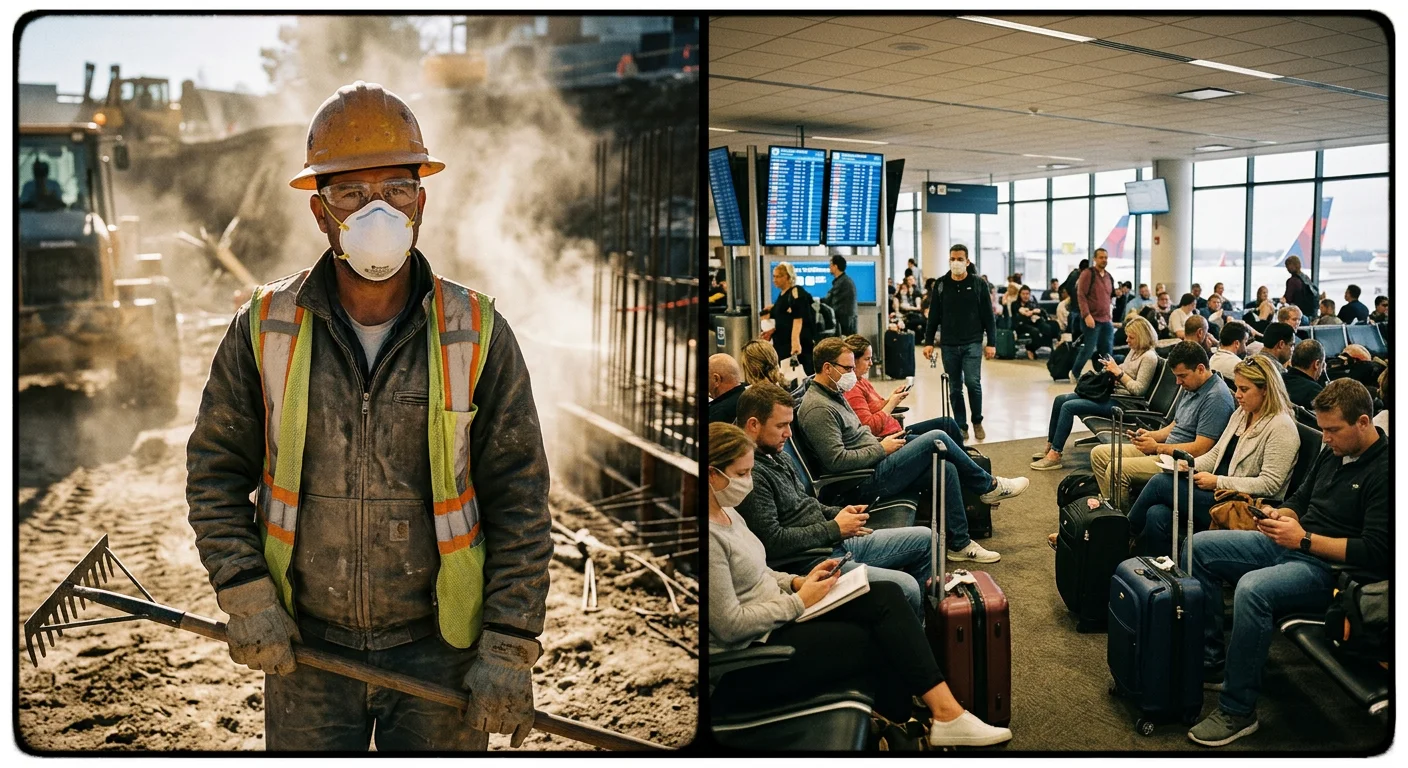 Protective gear is only as good as the situation it’s used in. A mask that handles a dusty construction site may fail in a different setting — without any warning. That gap is where people get hurt.
Here’s a straight look at Benehal’s real performance.
Where It Earns Its Place?
Benehal N95s deliver solid protection in the right conditions — the ones they’re built for.
At low airflow rates (5.5 cm/s), filtration efficiency reaches 99.88%. At the NIOSH-certified flow rate of 85 L/min, performance stays at 99.5% or higher for particles around 750 nm. For environmental particles smaller than 750 nm, the removal rate hits 100% under controlled conditions. Those aren’t small numbers.
The sweet spot for Benehal comes down to particle size and breathing rate. Particles larger than 300 nm — dust, smoke, bacteria, PM2.5 pollution — are where this face mask shines. Light to moderate activity keeps performance close to what the N95 label promises.
Strong-fit scenarios where Benehal holds up:
- Construction and renovation sites with airborne dust and particulates
- Travel through high-pollution cities with elevated PM2.5 readings
- Busy transit spaces — airports, train stations, crowded platforms — with moderate aerosol exposure
- Outdoor time during wildfire smoke events
- Non-surgical healthcare settings with general airborne particle risk
Travelers moving through polluted cities get extra value here. Benehal’s flat-fold design and individual wrapping make clean storage easy. It’s compact to carry, and the price makes bringing extras a no-brainer.
Where the Protection Gets Thin?
Most product pages skip this part. You won’t find it on the box.
Independent bench testing used fine aerosols at 350 ± 6 nm diameter — conditions that mirror real breathing. The result: real-world filtration efficiency dropped to 54.1%. Not 95%. Not close.
The physics explains it. At higher face velocities (16.5 cm/s), efficiency drops to 96.60%. Add heavy breathing, physical exertion, or a brisk walk through a terminal — the gap between rated performance and real performance grows fast. The filter media can’t keep up with higher respiratory demand.
Small viral particles in the 10–80 nm range make things worse. N95 masks — as a product category — don’t give reliable protection against particles that small under real breathing conditions. Benehal is no different.
Seal is the other weak point. No elastomeric lining means Benehal’s seal depends entirely on how well the mask fits your face. Field tests show gaps between the mask and the face that let unfiltered air pass through the filter completely. By comparison, N99 masks with elastomeric lining test at 90.5% real-world efficiency. That beats a poorly fitted N95 rated at 95% on paper.
Situations where Benehal isn’t the right choice:
- Surgical environments or direct patient care in operating rooms (not surgical-grade certified)
- High breathing-rate exposure to small viral particles under 100 nm
- Any setting where a reliable face seal can’t be maintained
- Settings that require elastomeric-lined respirators for full containment
The Honest Summary
Benehal N95 works. Larger particles, lower airflow, proper fit, moderate-risk environments — in those conditions, it gives you real protection at a price that makes regular replacement practical.
Push past those conditions — high exertion, fine viral aerosols, a loose seal — and performance drops faster than the label suggests. That’s not a flaw specific to Benehal. It’s a physics reality across the entire N95 category. The key is knowing which side of that line your situation falls on before the mask goes on your face.
FAQ: Benehal N95 Masks — Your Top Questions Answered
People ask the same questions about Benehal every time: Is it real? Is it certified? Will it protect me? Fair concerns. Here are direct answers.
Is Benehal N95 NIOSH certified?
Yes — and you can check it yourself. Benehal’s MS6115L carries TC number TC-84A-5530, approved January 31, 2012. The MS6215 holds TC-84A-8474. Both TC numbers belong to Suzhou Sanical Protective Product Manufacturing Co., Ltd. — the company that makes Benehal masks . Go to the CDC-NIOSH Certified Equipment List. Search those TC numbers. A genuine mask matches. No match? Walk away.
How many layers does a Benehal N95 have?
Three. The MS6115L is built with:
- PP spunbond outer layer
- PP meltblown filtration core
- PP spunbond inner layer
That middle meltblown layer is where the filtration work happens. Also worth noting — no staples in the construction. That matters. Staples create pressure points and scratch skin during long shifts.
How do I spot a counterfeit Benehal mask?
Benehal puts anti-counterfeiting verification codes on the packaging. Scan them or type them in to confirm the mask is real. Genuine masks show the correct TC number on both the mask body and the box. Watch for these red flags:
- Mismatched TC numbers
- Missing TC markings
- Packaging that looks or feels wrong
Buy from authorized distributors to stay safe.
Is the Benehal N95 safe to wear all day?
For light to moderate use, yes. The latex-free dual head straps, soft nose cushion, and no-staple build all cut down on fatigue. The cup shape keeps its form — it won’t collapse against your mouth mid-shift. One hard limit: no N95, Benehal included, is rated for air with less than 19.5% oxygen or IDLH environments. Know your environment before you put it on.
What’s the difference between the N95 and P95 models?
The MS6115L and MS6215 are N95 models. They filter non-oil-based particles — dust, smoke, fine minerals. The P385 is rated P95. It filters both oil and non-oil-based particles and comes with an exhalation valve. Working around organic vapors or oily aerosols at petrochemical sites or certain lab settings? The P385 is the right choice.
How long do Benehal masks last in storage?
Shelf life is five years from the manufacturing date. Store them cool, dry, and away from direct sunlight and chemical exposure. Some models come individually wrapped. That wrapping protects the filter media until you’re ready to use each mask.
Conclusion
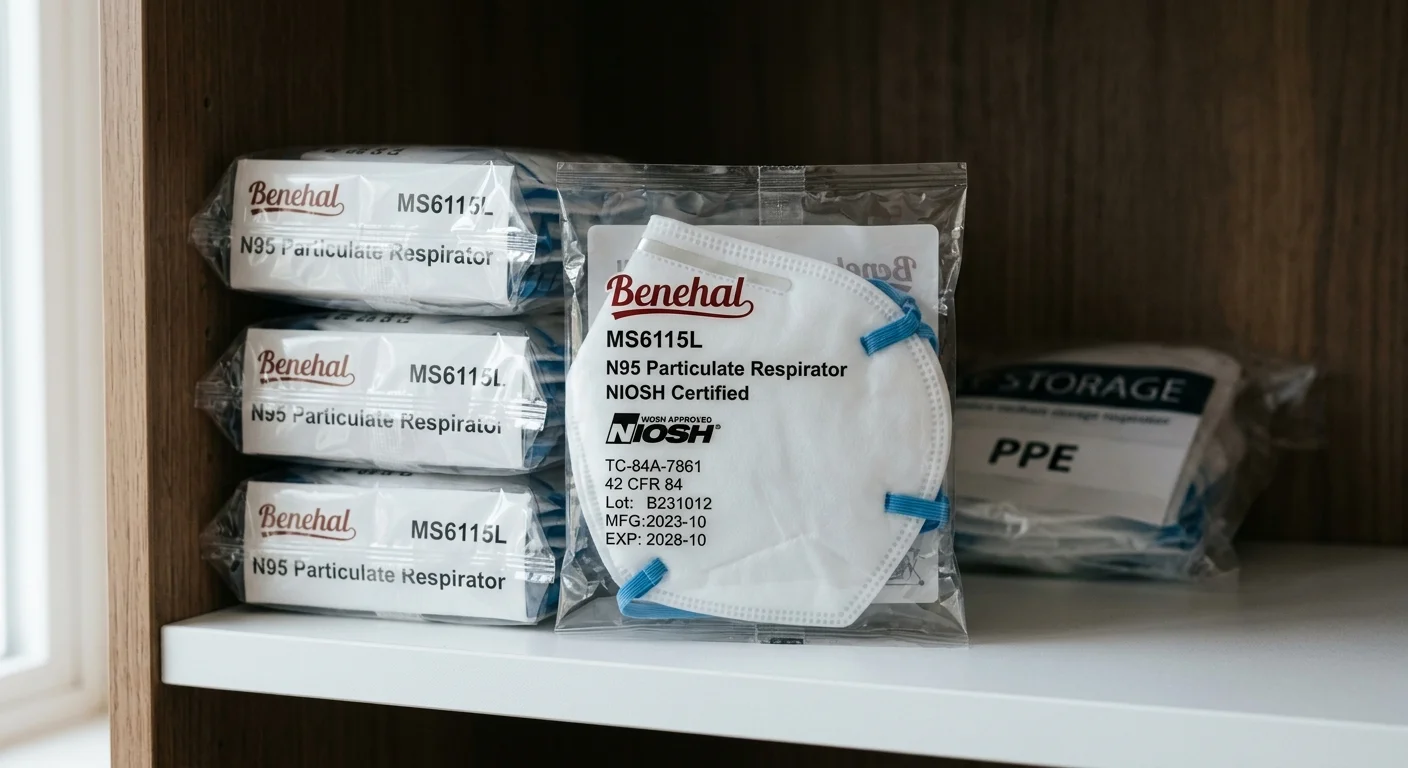 Here’s the bottom line on Benehal N95 masks: they’re legitimate, they work, and they won’t let you down when air quality matters most.
NIOSH approval isn’t a marketing badge. It’s a verified promise. Benehal ‘s N95 mask filtration efficiency holds up to the ≥95% standard that protects real lungs in real conditions. On top of that, the fit is comfortable enough for extended wear — more so than you might expect at this price point. You’re getting a solid respirator that goes beyond what the cost suggests.
That said, no mask fits every face or suits every situation. Know your use case. Verify your source. Cross-check the NIOSH approval number before you buy — every single time.
Traveling to a place with heavy pollution or wildfire smoke? Benehal earns a spot in your travel kit.