

Altitude headaches, labored breathing, that unsettling lightheadedness at 14,000 feet — most travelers don’t think about oxygen until they’re already gasping for it. Picking the right oxygen mask before your trip matters more than you’d expect. It could mean the difference between reaching that dream peak and turning back early.
The problem? Walk into any medical store — or scroll through Amazon at midnight — and you’ll face a confusing lineup: simple face masks, non-rebreather masks, venturi masks, nasal cannulas. Each one delivers a different oxygen concentration. Each one fits a different situation.
What Is an Oxygen Mask and Why Does It Matter for Travelers?
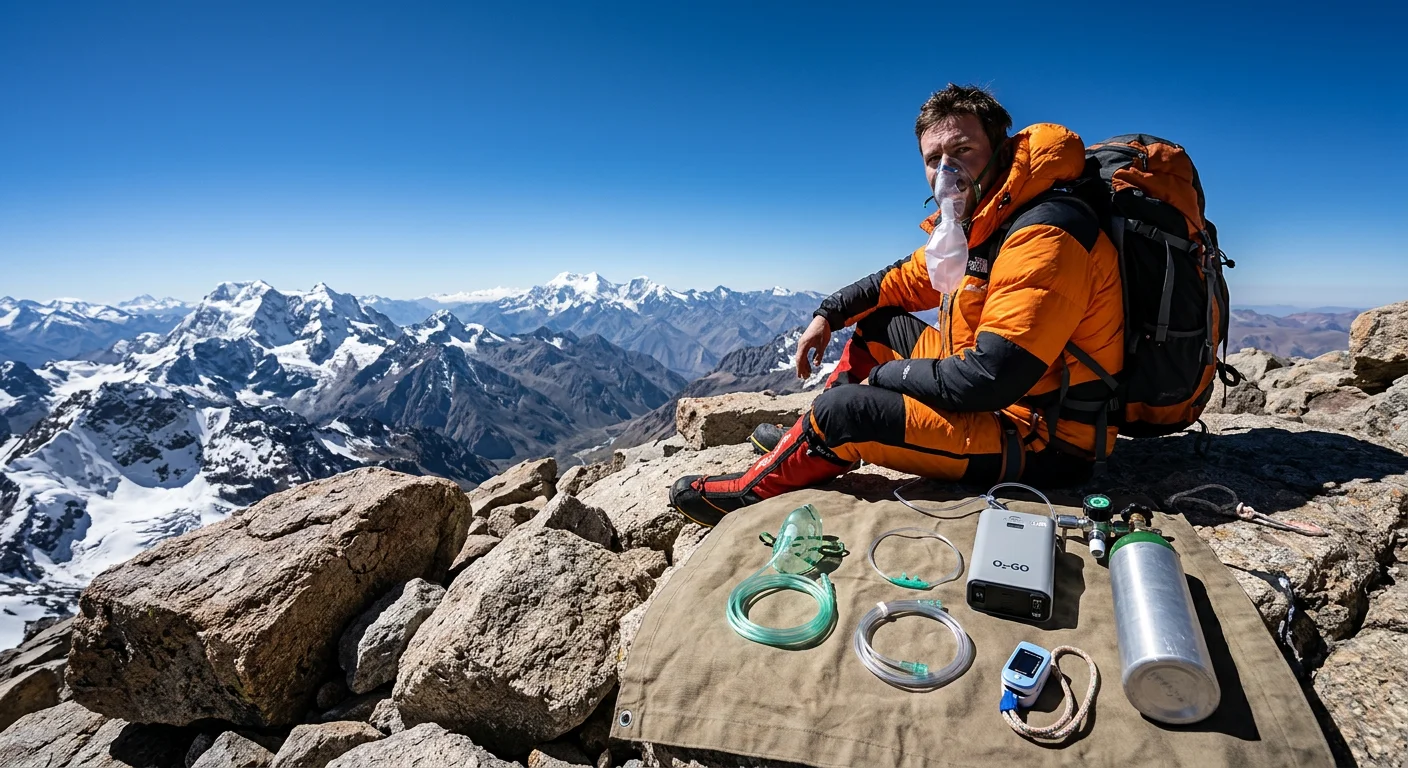 An oxygen mask is a sealed covering worn over the nose and mouth. It delivers supplemental oxygen straight to your airways. For travelers, it’s a safety net you hope never to need — but can’t afford to skip.
Here’s the science behind why it matters. Your lungs need at least 100 mmHg of oxygen pressure to move adequate oxygen into the bloodstream. As altitude rises, atmospheric pressure drops — and so does that oxygen pressure. The result is hypoxia: a quiet, deceptive state of oxygen deprivation. It dulls your judgment, weakens your coordination, and can knock you unconscious before you notice anything is wrong.
That’s why oxygen masks are built differently from other face coverings. Nasal cannulas deliver just 24–44% oxygen at 1–6 L/min. Protective filtration masks don’t supply concentrated oxygen at all. A proper oxygen mask forms a tight seal over both nose and mouth. It pushes meaningful oxygen concentration to where your body needs it most.
Two scenarios make this knowledge essential for travelers:
- High-altitude destinations — trekking at 12,000+ feet, where thin air triggers altitude sickness in unprepared visitors
- Aviation emergencies — commercial aircraft deploy cabin oxygen masks once altitude pressure exceeds 14,000 feet. You get about 10 minutes of supply to stay lucid while pilots bring the plane down
One detail most travelers miss: facial hair can break the mask seal. This cuts its effectiveness by a lot. It sounds minor — until you’re the one relying on that seal at 35,000 feet.
The 7 Main Types of Oxygen Masks Explained
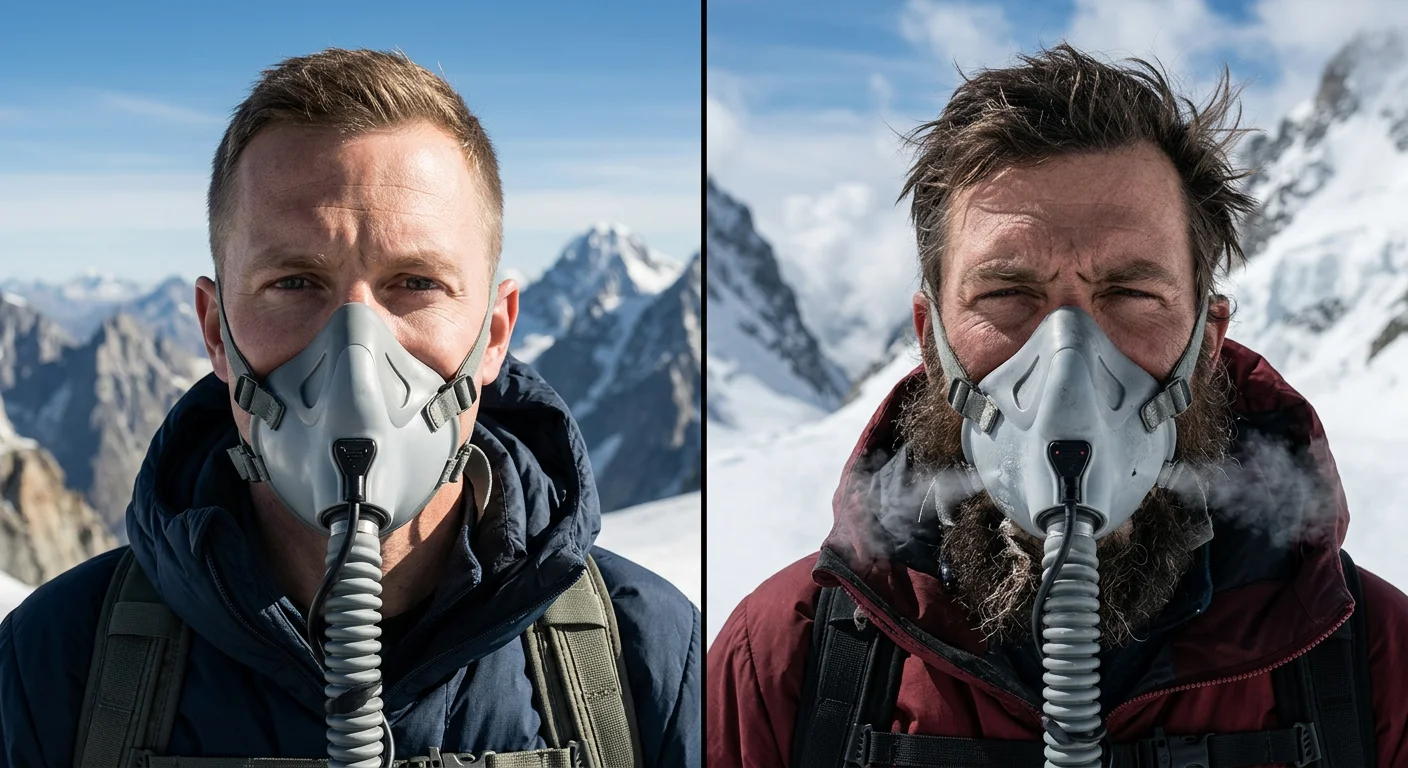 Seven distinct designs. Seven different oxygen concentrations. Seven different use cases — and picking the wrong one isn’t just inconvenient. At 18,000 feet, it’s a real risk.
Each mask type uses a different delivery method to hit a different FiO₂ (fraction of inspired oxygen) target. FiO₂ is the percentage of oxygen in the air you breathe in. Normal air sits at 21%. Below that threshold, altitude pressure weakens every breath — and your body starts to struggle.
Here’s what each type does, and where it belongs.
1. Nasal Cannula
Two soft plastic prongs. They sit just inside your nostrils and leave your mouth free. This is the lightest, most wearable option in the lineup — the kind you can wear for hours without noticing it’s there.
- FiO₂ range : 24–44%
- Flow rate : 1–6 L/min
- Best for : Continuous low-level supplementation at altitudes below 18,000 feet, light aircraft cabins, and trekkers dealing with early-stage altitude discomfort
There is a ceiling, though. Nasal cannulas max out around 25,000 feet. Above that, the flow volume isn’t enough. For travelers doing moderate high-altitude treks, this is still the most practical, portable option available.
2. Simple Face Mask
A clear plastic cup covers both nose and mouth, held in place with elastic straps. Small side ports let ambient air mix with the oxygen flow. That mixing is what keeps the FiO₂ range moderate rather than high.
- FiO₂ range : 35–50%
- Flow rate : 5–10 L/min
- Best for : Non-pressurized aircraft, continuous supplemental oxygen over 1–2 hours
No reservoir bag. No one-way valves. It’s a straightforward, middle-ground mask — more oxygen than a cannula, less bulk than a rebreather system. The fit is bulkier, so it’s a bit less convenient for travel. Still, it’s easy to find and simple to use.
3. Venturi Mask
This one works differently. A hard plastic conical body comes fitted with color-coded adapters. Each adapter is calibrated to deliver a specific FiO₂ level. It uses the Bernoulli effect to control how much ambient air enters the flow.
- FiO₂ range : 24–60% (tightly controlled — blue adapter = 24%, white = 60%)
- Flow rate : 4–12 L/min
- Best for : Situations requiring exact oxygen concentration, such as managed medical conditions during travel
That precision is both its strength and its limitation. For most travelers, the adapter system adds unnecessary complexity. It’s a low-feasibility option for casual packing — but it’s valuable when controlled FiO₂ delivery is non-negotiable.
4. Non-Rebreather Mask (NRB)
The non-rebreather mask is the high-intervention option. A large 500–1000 mL reservoir bag fills with near-pure oxygen before each breath. A tri-valve system handles the work — one valve for inhalation, one for exhalation, and one that blocks ambient air. You breathe from that bag, not from the surrounding air.
- FiO₂ range : 60–100%
- Flow rate : 10–15 L/min
- Best for : Rapid correction of acute hypoxia, emergency use below 25,000 feet
Oxygen consumption is high at this flow rate — 30 to 60 minutes per supply. This mask is for urgent situations, not routine altitude management. Aviation emergency oxygen systems often use this design for exactly that reason.
5. Partial Rebreather Mask
It looks similar to the non-rebreather, but without the full one-way valve system. The reservoir bag is still there. The difference: about 20% of exhaled gas cycles back in with each breath. That conserves your oxygen supply over time.
- FiO₂ range : 35–90%
- Flow rate : 6–10 L/min
- Best for : Altitudes between 18,000 and 25,000 feet, where sustained oxygen delivery is needed without burning through the supply too fast
Think of it as the middle path — more oxygen than a simple mask, longer-lasting than a full non-rebreather.
6. Face Tent
Picture a loose drape instead of a fitted cup. The face tent sits over your face and chin, but the edges stay open on purpose. No seal. No pressure. Just a gentle stream of oxygen with ambient air mixing in around it.
- FiO₂ range : 30–50%
- Flow rate : 5–12 L/min
- Best for : Comfort, humidified oxygen delivery, or anyone who finds sealed masks claustrophobic
Travel feasibility is higher than you’d expect given the loose fit. FiO₂ is less precise with the open design. But for travelers who need light supplemental oxygen and can’t tolerate a sealed mask , this is a solid option worth knowing about.
7. High-Flow Nasal Cannula (HFNC)
The HFNC looks like a basic cannula — wider prongs, curved shape, softer material than the standard version. But it operates on a different scale entirely. It pushes heated, humidified oxygen at up to 60 L/min, cutting down the dead air space in your airway and making each breath more efficient.
- FiO₂ range : 21–100%
- Flow rate : 20–60 L/min
- Best for : High-altitude oxygen demand, extended use in clinical or expedition settings
This isn’t a pack-it-in-your-daypack option. The setup requires a heating unit, a humidifier, and a high-capacity oxygen source — all of which make it impractical for general travel. For serious high-altitude expeditions or medical-grade supplementation, though, nothing else in this lineup comes close to its sustained performance.
Quick-Reference Comparison
| Type | FiO₂ Range | Flow (L/min) | Travel Feasibility |
|---|---|---|---|
| Nasal Cannula | 24–44% | 1–6 | ✅ High |
| Simple Face Mask | 35–50% | 5–10 | ⚠️ Medium |
| Venturi Mask | 24–60% | 4–12 | ❌ Low |
| Non-Rebreather | 60–100% | 10–15 | ⚠️ Medium |
| Partial Rebreather | 35–90% | 6–10 | ⚠️ Medium |
| Face Tent | 30–50% | 5–12 | ✅ High |
| HFNC | 21–100% | 20–60 | ❌ Low |
The right mask isn’t the most powerful one. It’s the one that fits your altitude, your duration, and what you can realistically carry with you.
Key Factors to Consider When Choosing an Oxygen Mask
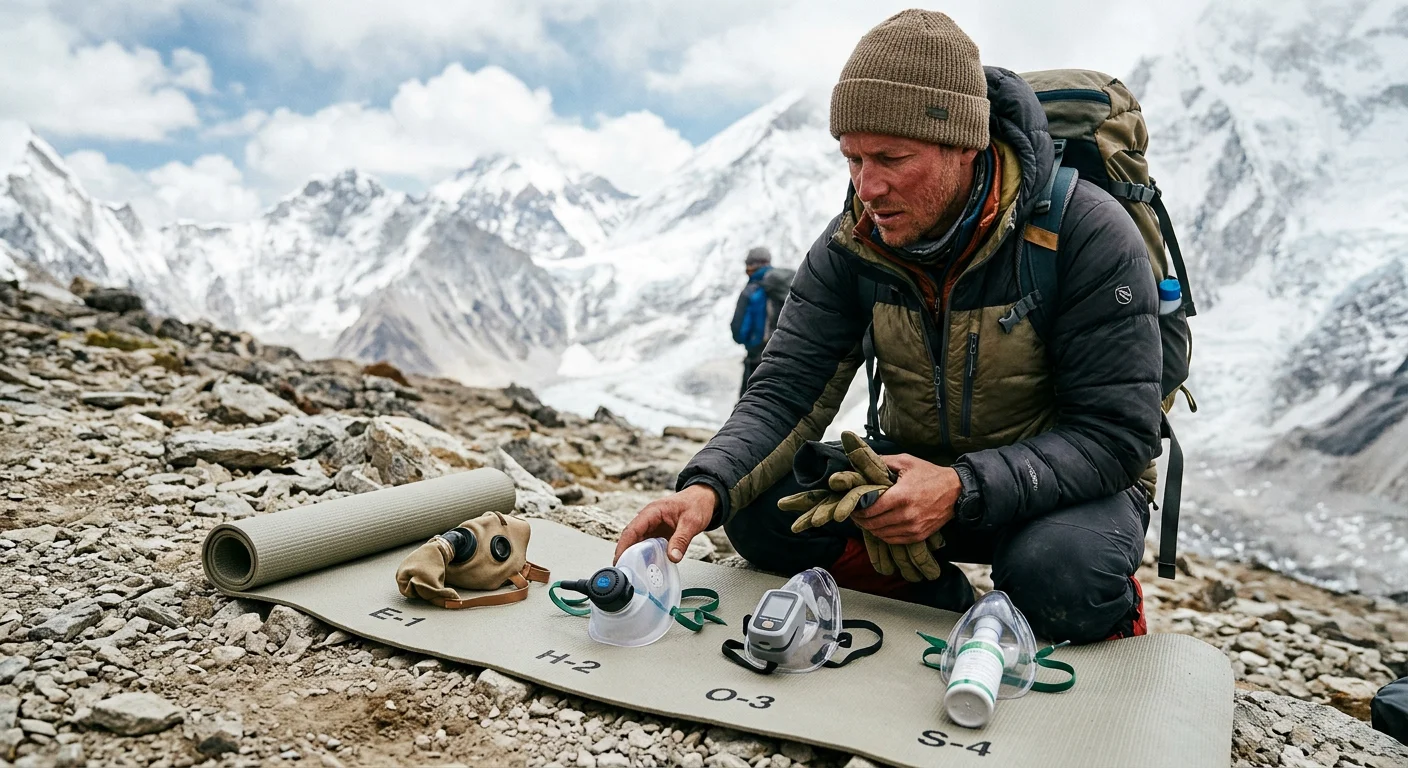 Picking an oxygen mask isn’t about finding the most impressive-looking device. It’s about matching the right tool to your situation. Get this right, and supplemental oxygen does its job without a hitch. Get it wrong, and you’ll either lack support at altitude or carry gear you didn’t need.
Six factors drive this decision. Work through them in order.
1. The Oxygen Concentration You Need
Not all situations call for the same FiO₂ level. A mild headache at 10,000 feet is a very different problem from acute hypoxia at 18,000 feet. Here’s a key reference point: blood oxygen saturation at 88% or below — or arterial PO₂ at 55 mmHg or lower — means supplemental oxygen is no longer optional.
That threshold tells you what concentration your mask must deliver:
– Low FiO₂ (24–44%) handles mild altitude discomfort
– 60% and above is required for acute or severe hypoxia
2. Flow Rate and Duration
Flow rate and duration go hand in hand. A non-rebreather running at 10–15 L/min drains a portable canister in under an hour. A nasal cannula at 2 L/min stretches the same supply across four hours or more.
Before you pack, answer two questions:
– How long will I need continuous oxygen?
– How much can I carry?
Need more than a few hours of use? The lightweight, low-flow options will serve you far better on the trail.
3. Fit, Seal, and Face Shape
A mask with a poor seal isn’t just uncomfortable — it’s useless. Ambient air leaks in and dilutes the oxygen before it reaches your lungs. Full-facepiece designs (covering eyes to chin) offer a higher Assigned Protection Factor than half-facepiece models (nose to chin). That said, full-facepiece masks are harder to wear for long stretches.
One detail that often gets overlooked: facial hair breaks the seal on any mask that needs direct skin contact. For travelers with beards or stubble, this isn’t a small issue. It drops the mask’s delivered concentration below its rated FiO₂. Factor this in before you buy.
4. Continuous vs. Intermittent Use
A single-day summit or a short layover at elevation? Intermittent, on-demand oxygen works fine. Extended treks, overnight stays above 12,000 feet, or pre-existing respiratory conditions call for something rated for continuous, long-duration use.
This shapes your equipment choice:
– Stationary concentrators work well in a fixed space but become impractical past about 50 feet of tubing range
– Portable cylinders and lightweight liquid-refillable systems are built for the mobility that travel demands
5. User Profile: Age, Size, and Tolerance
Pediatric masks are built to different proportions than adult designs. They’re not interchangeable. For adults, comfort tolerance shapes the choice just as much as medical specs do. A sealed mask that feels claustrophobic will get taken off — and that defeats the point. A face tent or nasal cannula that stays on beats a high-spec NRB mask that comes off after ten minutes.
6. Portability vs. Performance
This is the core trade-off in every travel oxygen decision. High-flow systems deliver strong oxygen concentration — but they need heating units, humidifiers, and high-capacity sources. None of that fits in a backpack. For most travelers, the sweet spot is a lightweight cylinder paired with a nasal cannula or simple face mask. That gives you solid altitude support without the extra weight.
The best mask for your trip covers your oxygen needs, fits your face well, and travels with you without dominating your pack.
Step-by-Step: How to Choose the Right Oxygen Mask for Your Trip
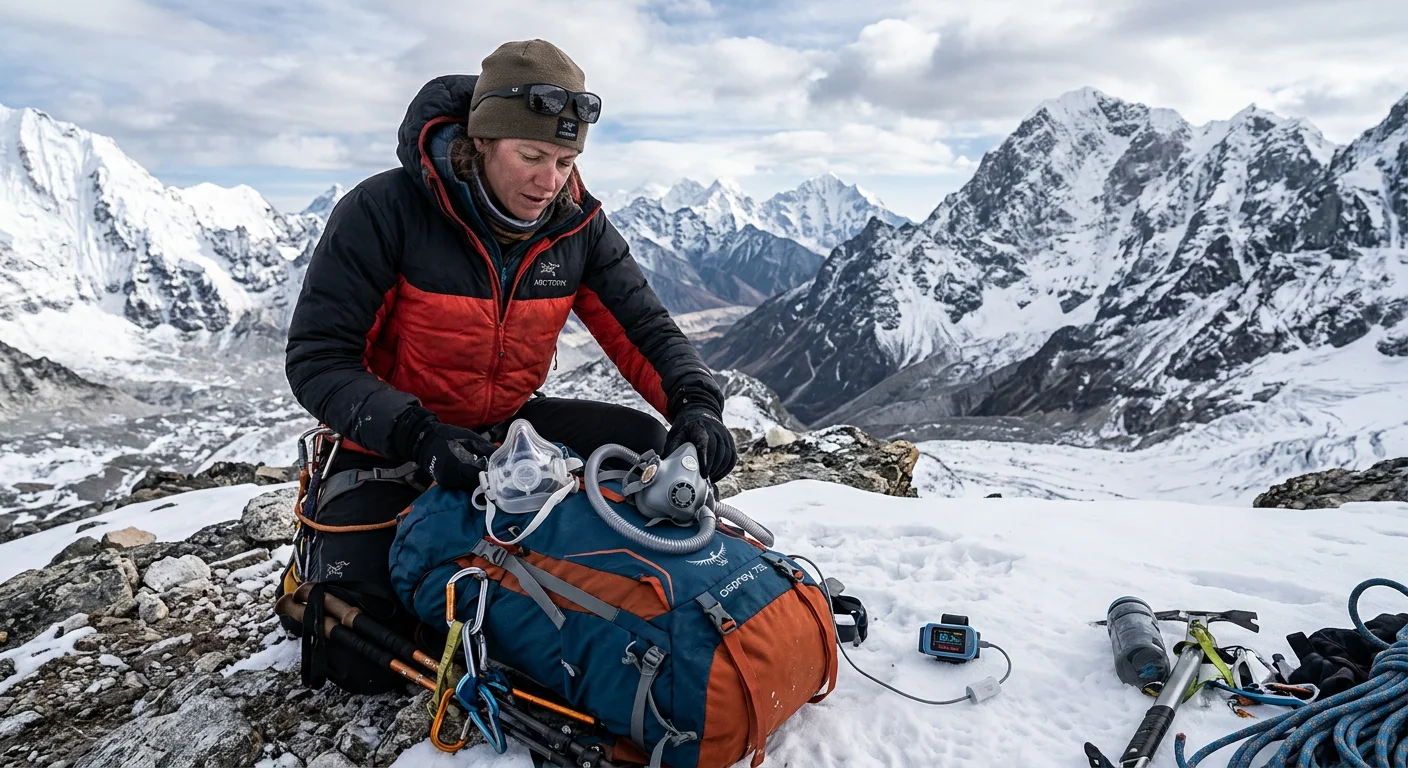 Four questions. That’s all it takes to cut through the confusion and land on the right mask for your trip.
Work through each step in order. By the end, you’ll have a clear answer — not a shortlist of maybes.
Step 1: Know Your Destination Altitude
Everything starts here. Altitude determines which mask category you can even consider.
- Below 18,000 feet : A nasal cannula is FAA-compliant and sufficient. The conserving OxyMem cannula stretches your oxygen supply by 75%. That triples your bottle’s duration. Plus, both hands stay free for eating, talking, and moving around.
- 18,000–25,000 feet : FAA regulations require a face mask at this level. Clear or blue oronasal masks both top out at 25,000 feet. The blue version uses thicker material and leak-resistant straps. It’s the stronger choice where a reliable seal matters most.
- Above 25,000 feet : A diluter-demand mask is the only option that reaches 40,000 feet MSL. It triggers on inhalation, mixes ambient air with pure oxygen on demand, and forms a tight silicone seal. That seal holds up even in extreme conditions.
Step 2: Measure Your Blood Oxygen Before You Leave
Don’t guess. A pulse oximeter costs very little. It tells you where your SpO₂ sits before altitude stress hits. The target is above 90%. Drop below that threshold and supplemental oxygen shifts below from optional to necessary — no matter how you feel in the moment.
That single reading shapes everything: how much oxygen you carry, what flow rate you need, and whether a cannula is enough or a mask is essential.
Step 3: Match the Mask to How You’ll Use It
Think about the shape of your trip — not just the peak altitude.
| Traveler Type | Best Match | Why It Works |
|---|---|---|
| Casual tourist (short flights, altitude below 18,000 ft) | Conserving cannula (Oxymizer) | Comfortable for hours; saves 75% oxygen; easy to talk and eat |
| Serious mountaineer (extreme altitudes) | Diluter-demand mask | 40,000 ft ceiling; tight silicone seal; inhale-only delivery |
| Traveler with chronic illness | Blue oronasal mask | Leak-proof fit; thicker build; higher-quality strap system |
| Emergency responder | Quick-donning mask | 5-second deployment; pressure-demand delivery; one-hand ready |
Step 4: Confirm Your Oxygen Source Matches Your Mask
A great mask paired with the wrong regulator delivers nothing useful. Before you pack, check compatibility:
- PreciseFlow A-5 regulator — works with both cannulas and standard face masks ; switchable between constant-flow and conserve modes
- O2D2 regulator — supports multi-user setups and includes audible alarms; suited for group expeditions or shared kit
Check the altitude dial markings on your regulator. Above 18,000 feet, the mask-only zone begins. The dial should reflect that boundary.
Pre-Departure Checklist
Before the trip, run through this once:
- Inspect the mask : straps, silicone facepiece, oronasal seal — test the fit against any facial hair too
- Calibrate the regulator : confirm flow modes and altitude settings are set right
- Calculate carry volume : match your bottle capacity to your target altitude and expected duration (18,000 ft: 1–2 L/min; 25,000 ft: demand mode)
- Verify system compatibility : make sure your mask, regulator, and oxygen source all work together — sort this out at home, not at elevation
FAQ: Common Questions About Choosing an Oxygen Mask for Travel
Travelers ask the same questions. The answers are simpler than the medical jargon suggests — but the details do matter.
Do I need to bring an oxygen mask when I travel?
Not always. The deciding factor is your baseline blood oxygen.
- SpO₂ at 85% or below — supplemental oxygen becomes a medical necessity, not a precaution.
- PaO₂ drops under 50 mmHg — the same rule applies.
Healthy passengers keep SaO₂ above 90% for most flights. That’s because cabin pressure stays at the equivalent of 8,000 feet (2,438 m). Not sure where your levels stand? Check with a pulse oximeter before your trip. One reading tells you what you need to know.
Which oxygen mask type works best for high-altitude travel?
For air travel, an FAA-approved portable oxygen concentrator (POC) is the standard choice. Here’s what makes it practical:
- It does not count as carry-on luggage.
- It supports both continuous and pulse-flow delivery.
- It removes the old 4 L/min ceiling that once stopped high-need travelers from flying.
You’ll need a doctor’s prescription plus a signed letter listing your required flow rate. Book at least four to six weeks ahead — most airlines need advance notice to approve on-board oxygen.
Will wearing an oxygen mask dry out my nose?
At low flow rates — 1 to 2 L/min — nasal dryness stays minimal. Higher flow rates raise the risk. That’s one more reason to match your delivery to your actual need rather than running at maximum output.
Do I need a prescription?
Yes. Three things are non-negotiable for air travel:
- A doctor’s signature
- Your prescribed flow rate
- Written confirmation of your oxygen requirement
Train and bus operators carry their own rules. You’ll need a release letter, battery documentation, and confirmed resupply points along your route.
Is higher flow always better?
No — and this is one of the most common mistakes travelers make. The targets are clear:
- SpO₂ ≥ 85% for adults
- SpO₂ ≥ 90% for children over one year old
Adjust your flow to hit those numbers, then stop. More oxygen than your body needs does not improve performance. For travelers with hypercapnia, high-flow delivery without medical supervision adds real risk. Let your numbers guide the setting — not guesswork.
Conclusion
 Picking the right oxygen mask isn’t about medical jargon. It’s about knowing what kind of traveler you are. Chasing summits above 4,000 meters? Flying long-haul with a respiratory condition? Preparing for the unexpected on a remote trail? Your situation points you to the right oxygen delivery system.
Here’s what this guide boils down to: the best oxygen mask matches your altitude, activity level, and health needs. Not the priciest one. Not the one a friend used on a different trip.
Before your next adventure, take five minutes to do these three things:
- Revisit the comparison table
- Note your destination’s elevation
- Cross-check with your doctor’s guidance if you have any underlying conditions
Your lungs work hard every time you explore. Give them the right support — and go further with confidence.