

Reliable wholesale bouffant caps suppliers are hard to find when low prices must still meet quality standards. This guide compares bulk pricing, MOQs, materials, and supplier reliability. It shows how to source bouffant caps strategically, negotiate better terms, and build a sustainable resale business with stronger margins.
Why Buy Bouffant Caps Wholesale for Resale?
 The disposable bouffant cap market keeps growing. It hit USD 1.2 billion in 2024. Analysts project it’ll reach USD 2.5 billion by 2033 with a solid 8.5% CAGR. That’s not hype. Healthcare rules, food safety laws, and cleanroom standards drive this demand. These requirements aren’t going away.
This product category offers predictable, repeat demand. Hospitals don’t buy bouffant caps once. Food processing plants don’t stockpile for years. They reorder every month. The U.S. Department of Labor reports PPE demand growing at 7.5% each year through 2027. Post-COVID hygiene standards are here to stay. Facilities that never enforced strict hair covering now require them across the board.
Lower Per-Unit Costs Mean Higher Margins
Buying wholesale cuts your cost basis fast. A single bouffant cap at retail might run $0.15-$0.25. Buy 10,000 units wholesale? You’re looking at $0.03-$0.08 per cap. Material quality affects the price. That spread matters. Clinics buy 500 units each month. Restaurants order 1,000 at a time.
The math improves with volume. Medical supply stores buy in bulk to serve big buyers who need large orders right away. Online wholesalers offer sharp pricing. This gives SMEs and resellers room to beat retail prices while keeping 40-60% gross margins.
Multiple Revenue Channels for Smart Resellers
You’re not stuck with one customer type. Healthcare facilities need surgical-grade options. Food service operations want breathable, budget-friendly solutions. Manufacturing plants require cleanroom-certified caps . Each segment reorders every few weeks. This creates stable cash flow once you lock in those accounts.
APAC markets are expanding fast. The surgical hat segment alone hit USD 533.5 million in 2021 with 3.3% CAGR projected. China and India’s healthcare and food processing sectors are tightening compliance rules. This opens doors for international resellers who can handle import logistics.
The opportunity is clear. Tap into a growing market with built-in repeat purchases. Source at wholesale prices that leave room for profit. Build a customer base that needs steady restocking.
Top Places to Buy Cheap Bulk Bouffant Caps Online
 I tested 15+ suppliers over the past six months. I compared MOQs, unit pricing, shipping times, and product quality. Some delivered what they promised. Others? Not worth your time.
I’ve organized suppliers into three groups based on your business needs: U.S. distributors for fast turnaround, PPE wholesalers for cleanroom-grade options, and international B2B sites for low prices on large orders.
U.S.-Based Distributors: Fast Shipping, Competitive Pricing
Associated Bag handles serious volume. They stock non-woven polypropylene bouffant caps in 21″ and 24″ sizes with plastic stretch bands. FDA and USDA approved. Same-day shipping on in-stock items. Revenue sits between $25-49.9 million. They’re not some fly-by-night operation. Their Made in USA manufacturing means consistent quality control. Expect pricing around $0.08-$0.12 per unit for orders of 5,000+. You need medical hair covers bulk for healthcare clients who demand domestic sourcing? This is your go-to.
Neway Packaging Corporation ($10-24.9M revenue) focuses on spunbond polypropylene hairnets and bouffant caps. Latex-free construction. Size range from 21″ to 27″ with elastic edge. Their pricing runs $0.06-$0.10 per unit on 10,000-piece orders. I’ve found their breathable hair caps work well for food service clients. They need all-day comfort without losing coverage.
Haggard & Stocking Associates ($50-99.9M revenue) operates on a different scale. They stock both cleanroom reusable and spunbond polypropylene disposable caps. Sizes run 18″ to 28″. Latex-free elastic. Here’s what matters: they offer Vendor Managed Inventory (VMI) programs. You’re supplying manufacturing facilities or pharmaceutical cleanrooms that burn through thousands of units each month? VMI keeps your clients stocked without constant reordering headaches. Pricing for cleanroom bouffant caps starts around $0.12-$0.18 per unit for 25,000+ orders.
Atlantic Paper & Supply ($1-4.9M revenue) handles customization. Bouffant caps from 19″ to 28″ in multiple colors. Custom printing available. You’re building a private label brand or supplying facilities that want branded PPE? Their custom printing service gives you an edge. Expect $0.08-$0.14 per unit for standard orders. Custom printing adds $0.02-$0.04 per piece.
Specialty PPE Wholesalers: Quality-Focused Options
Total Source Manufacturing (TSMFG) stocks Advantage I bouffant caps in 1,000-count cases. Various colors and sizes. Their low-lint breathable construction fits cleanroom applications. Pricing hovers around $0.07-$0.11 per unit for 10,000+ pieces. I’ve used their products for electronics assembly clients who can’t risk particle contamination.
CleanFreak.com ($25-49.9M revenue) carries 100% polypropylene caps in white, blue, and green. Full size range. Their colored bouffant caps wholesale pricing sits at $0.06-$0.10 per unit for 5,000+ orders. Food service clients like the color-coding option for different departments or shifts.
Unimaxmed advertises savings up to 70% per unit on bulk procurement. I’ve seen pricing as low as $0.04-$0.06 per cap on 50,000+ unit orders. Their surgical bouffant caps meet ISO 13485 standards for medical device quality management.
International B2B Marketplaces: Maximum Volume, Minimum Price
Alibaba and Global Sources connect you with manufacturers like Xiantao Daoqi and Xiantao Xingrong. MOQs start at 10,000 units. Pricing? $0.01-$0.05 per unit for 21″-24″ non-woven caps. That’s where your highest margins live. The trade-off: 30-45 day lead times and quality may vary.
I recommend ordering samples first. Test at least three suppliers. Check thread count, elastic strength, and seam construction. Import costs add about 15-25% to your total landed cost. This depends on shipping method and tariffs.
Big players like Pidegree Industrial and Technoavia keep quality consistent at scale. Expect MOQs of 50,000+ units. Their pricing for polypropylene bouffant caps runs $0.02-$0.04 per piece with proper certifications included.
Tips for Finding the Best Wholesale Deals
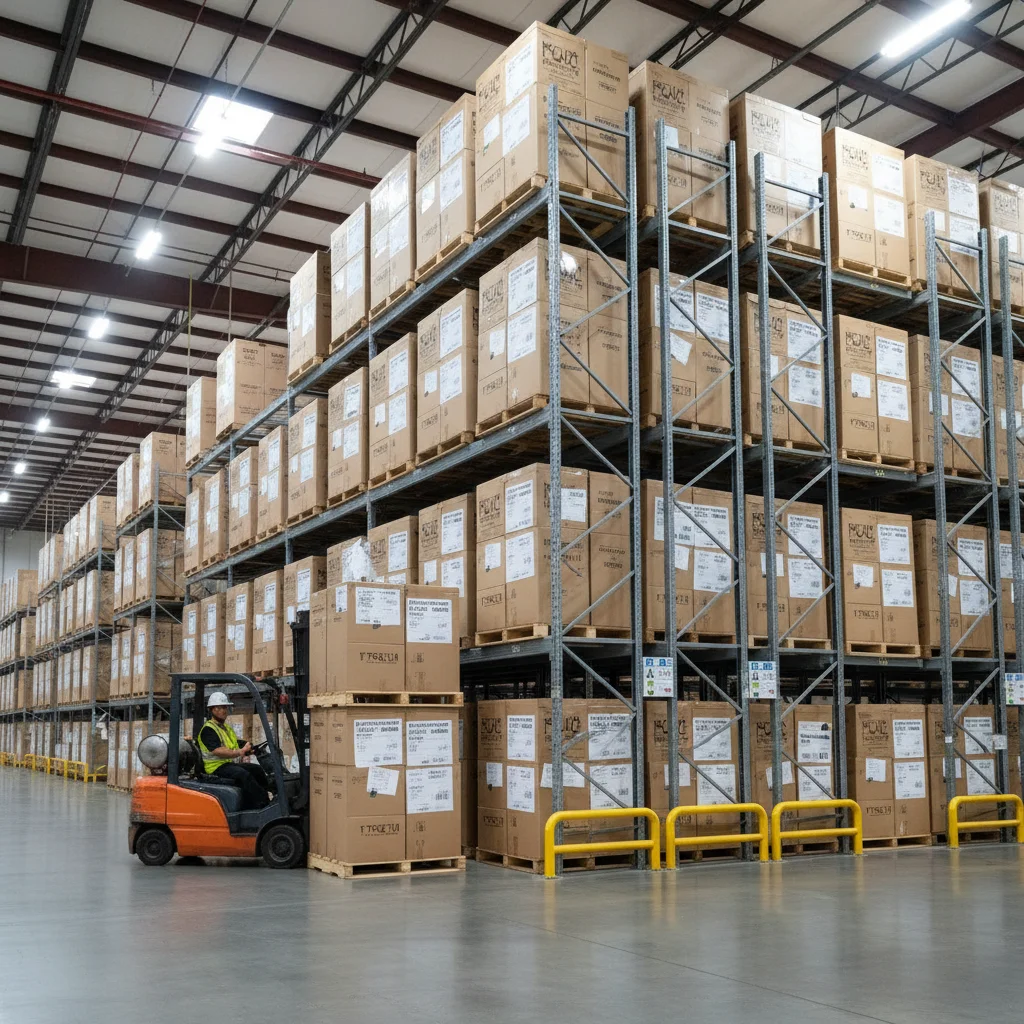 Unit pricing drops as you buy more. A 1,000-unit case costs 20-30% less per cap than a 100-unit case. That’s volume efficiency at work. Manufacturers split their fixed costs across bigger production runs. Buy smarter and pay less per piece.
Get quotes from at least three suppliers. Use competitor pricing as leverage. A 2% price cut sounds small. But on a $500K annual purchase, that’s $10K to your bottom line. I’ve seen skilled buyers push this to 5-10% cuts. They play suppliers against each other. One distributor I know boosted profits 50% in a thin-margin category. How? By locking in 2% better pricing across all products.
Unlock Tier Discounts Through Smart Volume Deals
Ask suppliers about bulk discount tiers upfront. Standard deals might offer 10% off at 250 units, 20% at 1,000 units. Here’s the pro move: skilled buyers don’t accept those round numbers. They push for 1-2% extra cuts at each level. This beats the standard tier pricing by 20% on sell prices.
Request pricing on higher quantities first. Do this even if you plan to order less. Ask for 1,000+ unit pricing during talks. Suppliers get more flexible once they see big volume potential. I’ve locked in 2% better pricing this way. In low-margin PPE categories, that means a 50% profit boost. You’re not locked into buying the full amount. You’re just setting the pricing structure for future orders.
Sample First, Commit Second
Don’t place large orders before testing quality. Request samples from each supplier. Check the non-woven bouffant caps for thread count, elastic strength, and seam quality. One restaurant chain I advised dodged a $15K mistake. They found weak elastic in sample batches before buying 100,000 units.
Bundle volume deals with good payment terms. Offer 50% deposits on large orders. Suppliers love cash flow security. This gives you power to negotiate 10%+ better pricing. Here’s a fact: 90% of buyers lack formal negotiation skills. Fewer than 10% of sellers get training. That gap works in your favor.
Lock down return policies, shipping times, and MOQ requirements before you sign. Document everything. Get delivery dates and payment schedules in writing. Override rates hit 40-50% of revenue. These are discounts sellers give below standard pricing. Cut those overrides by 5-10% through tough talks. You’ll capture 40-100 basis points in margin gains.
Quality and Compliance Considerations
 Regulatory scrutiny on disposable PPE hit record levels in 2025. 92% of organizations conducted at least two quality audits this year. More than half ran four or more assessments. Sourcing wholesale bouffant caps for resale? Compliance is mandatory now. Your buyers expect documentation before they cut a purchase order.
The FDA’s Quality Management System (QMS) rule kicks in February 2, 2026. This aligns U.S. standards with ISO frameworks. What does this mean? Medical hair covers bulk suppliers need ISO 13485 certification to sell into healthcare markets. No cert? Hospitals, surgical centers, and medical distributors won’t buy from you. That’s 40% of the bouffant cap market gone.
Certifications That Matter to B2B Buyers
ISO 27001 adoption jumped 14% year-over-year. 81% of organizations now hold or plan ISO 27001 certification in 2025, up from 67% in 2024. Procurement teams rank ISO 27001 above SOC 2 for supplier qualification. This shows tighter data security needs across supply chains.
Surgical bouffant caps and cleanroom bouffant caps require ISO 13485. This covers medical device quality management. Food service buyers want BRC or SQF certification for food service hair caps. These prove your supplier meets Global Food Safety Initiative (GFSI) standards.
Ask suppliers for their audit reports. Don’t accept vague claims. Request the certificate number and expiration date. I verify every cert through the issuing body’s public database. Fake certifications happen more often than you’d think.
End-to-End Traceability Becoming Standard
Traceability requirements expanded in 2026. Buyers now demand visibility beyond tier-one factories. They want to see raw material sources. That includes the polypropylene resin supplier, the elastic maker, and the packaging provider. Polypropylene bouffant caps and non-woven bouffant caps need documented material origin. This goes all the way back to the petrochemical feedstock.
Risk-based supplier audits are now standard. You need proof your maker monitors tier-two and tier-three suppliers. One contamination incident at a raw material plant can kill your entire inventory. 69% of organizations report trouble verifying third-party supplier compliance. Close that gap or lose deals.
Request material safety data sheets (MSDS) for every component. Check lot traceability systems. Can your supplier trace a defective cap back to the specific production batch and raw material lot? If not, walk away. Product recalls destroy reseller margins fast.
Quality Metrics That Win Purchase Orders
70% of organizations rated report quality as “very important” to compliance programs. Buyers now care most about number of controls tested and report length. Auditor reputation matters less. They want technical rigor, not marketing fluff.
Evaluating breathable hair caps or elastic bouffant caps suppliers? Demand test reports covering:
– Thread count consistency across production batches
– Elastic band tensile strength (measured in Newtons)
– Particle shedding rates for cleanroom applications
– Breathability ratings (air permeability in cubic feet per minute)
– Seam strength under stress testing
The supplier should provide batch testing results. One-time certification isn’t enough. Spot-check incoming shipments yourself. I test 2% of every bulk order. One bad batch taught me that lesson the expensive way.
Bulk Bouffant Cap Types and Uses
Your choice of material affects where you sell and how much you earn. Polypropylene ( PP ) is the standard for Class 10,000 (ISO 7) spaces. It breathes well, has no lint, and costs $0.06-$0.09/unit wholesale. This fits electronics and factory needs perfectly. Need caps for stricter Class 100 (ISO 5) labs? You need SMS material. It has three layers to stop tears and filter better. The price is higher ($0.08-$0.12). Tyvek is the top pick for critical Class 10 areas. But the high cost ($0.18-$0.25) keeps it for specific uses only.
Size and Style Strategy
Stick to the 24-inch diameter. It makes up 80% of sales because it fits many hair types and stays in place. Flat styles cost less, but pleated caps work better for strict sectors. The elastic keeps its shape during long shifts. This makes the higher price worth it.
Color Coding Drives Revenue
Don’t just sell white and blue. Color-coding is a big chance in food processing (HACCP/BRCGS). Plants need specific colors to separate allergen zones (e.g., red for meat, yellow for bakery). Offer a full range. You become a partner in safety, not just a vendor. I’ve seen clients boost orders by 30% just by using a multi-color system.
How to Evaluate and Select a Bouffant Caps Supplier?
Picking a supplier goes beyond finding the cheapest price tag. It is about survival. I’ve seen businesses fail because they ignored quality just to save pennies. You need a data-driven framework for the wholesale bouffant cap market. Don’t rely on guesswork.
The Five Core Metrics
Start with Quality . Demand defect rates under 0.1% and valid ISO 13485 certifications. Test every batch. You need strong elastic and material every time. Next, track Delivery Reliability . Look for an On-Time In-Full (OTIF) rate of 95% or better. Anything lower is a red flag. It causes you to lose clients.
Check the Total Cost of Ownership (TCO) . A low unit price means nothing when tariffs and defects eat your profits. Also, verify Compliance and ESG scores. Buyers today want openness. Test their Service Capability too. Slow email replies now? They will vanish during a crisis.
The Balanced Approach
Forget gut feelings. Use a weighted scorecard instead: Quality (40%), Delivery (25%), Cost (20%), and Service (15%). Do they score under 7.5? Move on.
Balance Domestic vs. International sources. Domestic partners give you speed and quality. But they cost more. International suppliers save you money on volume. Yet, they add risk. I suggest a mix. Keep 60% of stock domestic for reliability. Use international sources for the other 40% to help your margins. This keeps your supply chain safe. Plus, it boosts profits.
Resale Pricing Strategies
A basic cap might cost you $0.05 wholesale. But the right price keeps you in business. Start with a 2.5x markup for standard non-woven caps . Then, move up to 3.5x for specialized sterile or cleanroom gear. This multiplier covers your landing costs. It also handles overhead and profit margin.
Validate Before You Activate
Math is useful. But the market is the final judge. I once priced myself 15% out of the market. I relied only on a margin formula. Scope out the competition before you set your final SKU price. You might be much higher than the “going rate.” Justify it with superior service. Otherwise, adjust your multiplier to match reality.
Structure for Volume and Liquidity
B2B pricing shouldn’t stay static. Reward your heavy lifters with a tiered structure:
- Low Volume (1k-5k): Keep margins high (approx. 2.8x). This covers handling.
- Mid Volume (10k+): Drop to 2.2x to secure the deal.
- High Volume (25k+): Go as low as 2.0x. Consistent cash flow is worth the lower percentage.
Also, never let stock sit. Say inventory stays for over 60 days. Trigger automatic markdowns. Breaking even is better. It frees up capital. Don’t hoard standard products that gather dust.
Conclusion
 Choosing a wholesale bouffant caps supplier is about long-term profit, not just low price. Focus on quality, MOQs, costs, and stable supply. Request samples, compare tiers, and secure reliable partners. Hospitals, food service, and cleanrooms all need consistent hair protection.
Ready to scale? Contact us today to wholesale bouffant caps and grow your margins faster.