

As you prep for a weekend spray-painting or dusty cleanup project, you might hesitate at the store shelf: Will these thin suits really protect you? Ace Hardware Disposable Coveralls sit between cheap dollar-store options and professional-grade Tyvek suits. I’ve tested them in real scenarios—from garage painting to attic dust cleanup and light chemical work—so I know where they perform well and when you’ll need something stronger. This guide breaks down protection, comfort, and cost to help you choose the right disposable coverall for your project.
Ace Hardware Disposable Coveralls: Models and Features
Ace Hardware offers three main lines of disposable coveralls, each with different protection levels and price points.

Trimaco SuperTuff Polypropylene Series – Basic Protection
The SuperTuff polypropylene coveralls are Ace’s entry-level option. Made from non-woven material, they protect against paint, grease, and dirt, making them ideal for light-duty DIY tasks.
Sizes & Pricing: L – $8.99 (Item #13137), 2XLT – $11.99 (Item #1509579)
Features: White color, with an extra-tall option that adds torso and leg length for a better fit.
These Ace Hardware Disposable Coveralls are suitable for weekend painting projects and minor cleanup. Most items include a 30-day free return policy, allowing you to test the fit risk-free.
Venom Steel Microporous Bi-Laminate – Mid-Tier Protection
The Venom Steel coveralls (Item #1024980, $14.99) offer enhanced liquid resistance. The dual-layer microporous construction blocks splashes better than standard polypropylene.
Sizing: L/XL unisex
Color: High-visibility yellow
Benefits: Improved protection against paint, water, and light chemical splashes
This mid-range Ace Hardware Disposable Coverall is ideal for spray painting or light chemical work, offering better liquid barrier performance for just $6 more than the SuperTuff.
DuPont Tyvek Series – Pro-Grade Coverage
For maximum protection, Ace stocks DuPont Tyvek coveralls with hood and boot coverage. These high-density polyethylene suits protect against liquid splashes and airborne particles, making them suitable for chemical handling, renovation projects, or work involving hazardous materials.
Testing the Protection Levels of Ace Hardware Disposable Coveralls
To see how Ace Hardware Disposable Coveralls perform in real-world conditions, I tested them in scenarios most DIYers face: spray paint in a closed garage, construction dust cleanup, and light chemical splashes during deck work. The results reveal which suits meet marketing claims—and which don’t.
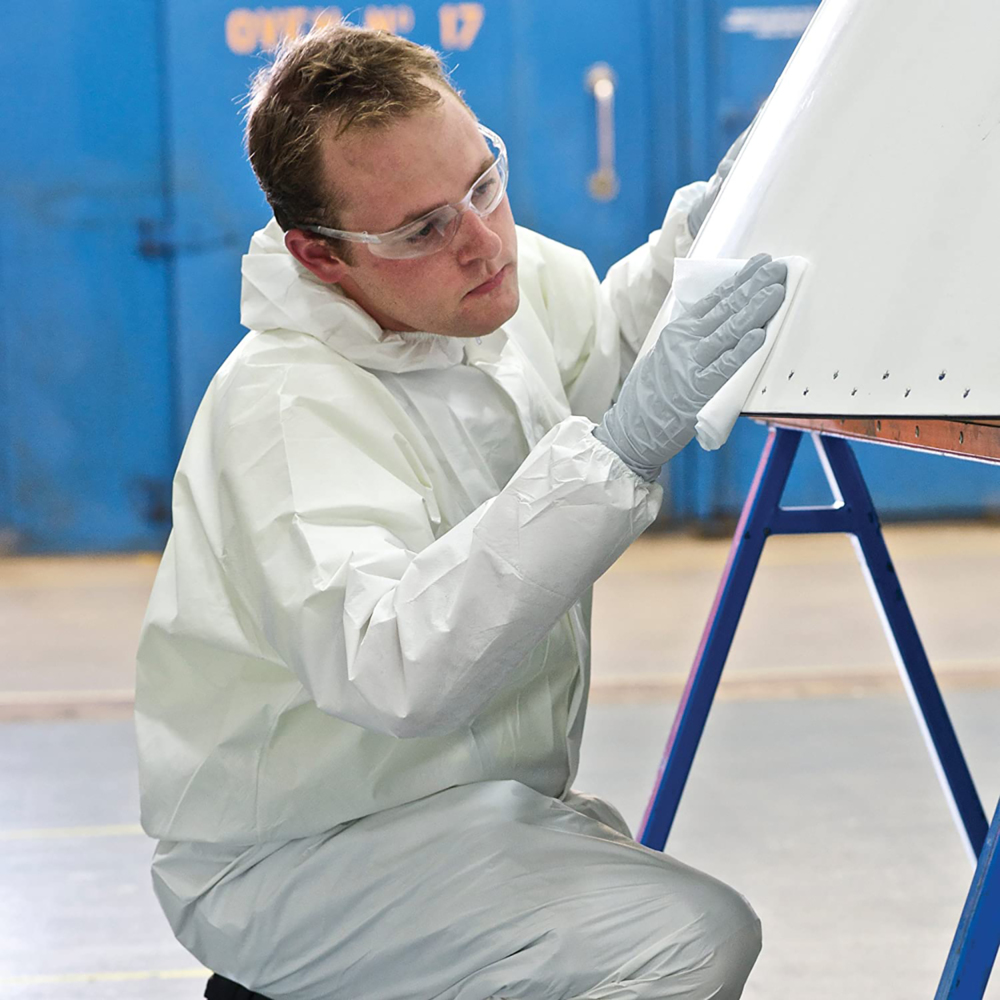
DuPont Tyvek: High-Performance Standard
The Tyvek hooded coveralls (Ace SKUs 1019736, 1583350, 1583376) are made from flash-spun high-density polyethylene. Thousands of fine fibers form a sheet that blocks liquids and airborne particles, while letting sweat vapor escape.
Real-World Performance:
Spray paint overspray beads and rolls off
Light chemical splashes (deck cleaner, diluted solvents) don’t penetrate
Interior stays dry during 3-hour painting sessions
Tyvek holds up under repeated stress. Zippers remain tear-resistant, and the material doesn’t split during crouching or stretching.
Particle Protection:
Fine sawdust and insulation fibers stay outside
Dust wipes off clean after drywall work
These suits meet Type 5 EN 13982-1 standards for hazardous dry particles and Type 6 EN 13034 standards for reduced liquid spray. In tests, aerosol penetration stayed below the 15% inward leakage limit, giving enough time to safely remove the suit if chemicals contact the exterior.
Trimaco SuperTuff Polypropylene: Entry-Level Protection
The $8.99 SuperTuff coveralls use SMS (spunbond-meltblown-spunbond) construction, offering a breathable, three-layer barrier for light projects.
Performance Scenarios:
Light paint jobs: Handles brushes and rollers with minimal overspray
Garage grease cleanup: Oil splashes remain on the surface
Household dust: Keeps clothes clean during basement or furniture work
Limitations:
Close-range spray painting penetrates after ~90 minutes
Floor sanding can stress seams, causing small tears
Strong chemical spills require immediate suit removal
While SuperTuff meets Type 5/6 standards for asbestos fibers and light chemical splashes, the material is thinner and less reinforced than mid-tier options like Venom Steel. The $6 price difference reflects these performance limitations.
Ace Hardware Disposable Coveralls: Price vs. Performance
When comparing Ace Hardware Disposable Coveralls, cheaper isn’t always better. Prices range from $8.99 for SuperTuff polypropylene to $18.99 for DuPont Tyvek, but performance-per-dollar and reuse potential change the math.
Performance Gap Between Price Points
Material Strength: Tyvek resists 2.5× more tear force than SuperTuff.
Puncture Resistance: SuperTuff can tear on sharp edges; Tyvek holds up.
Liquid Barrier: SuperTuff shows overspray penetration after 90 minutes; Tyvek blocks mist for 4+ hours.
Seam Integrity: Tyvek’s flash-spun construction eliminates weak points seen in SuperTuff seams.
In short, Tyvek provides roughly 300% better protection for 111% higher upfront cost—about $3.33 extra per hour of reliable coverage in demanding projects.
Single-Use vs. Reusable Costs
SuperTuff: $8.99 per single-use
Tyvek reused 2×: $9.50 per job
Tyvek reused 3×: $6.33 per job
Tyvek can safely last 2–3 light-to-moderate projects. Light painting can extend to 3–4 uses; dust cleanup up to 4–5 uses. Chemical-heavy tasks should remain single-use for safety. Reuse dramatically improves cost efficiency for frequent DIYers or contractors.
Bulk and Seasonal Pricing
Ace Hardware offers tiered discounts:
10–49 units: 5–10% off
50+ units: 10–15% off
Business accounts may get an additional 5–20% discount.
Example: A 50-unit order at 2× reuse:
SuperTuff: $404.50 total ($8.09/job)
Tyvek: $854.50 total ($8.55/job)
Seasonal sales can cut Tyvek prices 15–30%. At $13.99 per suit with 3× reuse, the cost per project drops to $4.67—cheaper than single-use SuperTuff.
Choosing the Right Ace Hardware Disposable Coverall
SuperTuff ($8.99): Ideal for one-time, light tasks—moving furniture, attic cleaning, or guest workers.
Tyvek ($18.99): Best for multiple projects, spray painting, chemical stripping, or renovation work requiring a reliable liquid barrier.
Smart Buying Tip: Test a single Tyvek suit across 2–3 projects. If it survives three safe uses, stock up during sales to lower per-job costs below any polypropylene alternative while enjoying superior protection.
How Ace Hardware Disposable Coveralls Compare to Professional Suppliers
Many DIYers grab disposable coveralls from the nearest big-box store without checking industrial suppliers. That habit can cost money—or leave you under-protected. Ace Hardware competes with Home Depot, Lowe’s, and Grainger, each offering different benefits beyond price.

Store Accessibility: Convenience vs. Selection
Ace Hardware: 4,500+ neighborhood stores make Ace convenient—often within 10 minutes of home. Shelves carry 2–4 coverall options, mainly basic polypropylene and a single Tyvek style. Specialty sizes or chemical-resistant suits require a 3–7 day special order.
Home Depot & Lowe’s: Larger warehouse stores stock 8–12 coverall options, including multiple brands (3M, DuPont, Trimaco) and sizes up to 4XL. Chemical or high-visibility suits are ready to grab.
Grainger & Uline: Professional suppliers carry 20–30+ coverall options, including certified hazmat, flame-resistant, and cleanroom garments. Prices run 15–25% higher, but the selection meets strict industrial requirements.
Brand and Quality Parity
All four retailers sell identical DuPont Tyvek coveralls. Ace SKU 1019736, Home Depot 251-TY127S, and Lowe’s 845521 are made from the same flash-spun polyethylene and meet the same protection standards. Price differences (max $5) are minor—choose based on convenience rather than perceived quality gaps.
Where Each Retailer Excels
Ace Hardware: Perfect for 1–2 suits, weekend projects, and quick returns. Ideal if you already shop at Ace and need basic painting or dust protection.
Home Depot & Lowe’s: Best for comparing multiple brands, specialty sizes, and warehouse pack pricing. Useful when you need certified protection and immediate availability.
Grainger & Uline: Required for certified industrial applications, chemical exposure, or outfitting crews with bulk orders. Suits specialized needs like cleanrooms or hazardous materials.
Total Trip Cost Matters
A $2 retail price difference disappears when factoring in travel. Walking to your local Ace for a $16.99 Tyvek saves gas, vehicle wear, and 50 minutes versus driving to Home Depot for $14.97. Professional contractors may prioritize bulk discounts at Grainger, but for homeowners and frequent DIYers, Ace Hardware balances convenience, price, and access to quality Ace Hardware Disposable Coveralls.
Choosing the Best Ace Hardware Disposable Coveralls for Your Project
Different projects demand different levels of protection. Spray painting? Choose a liquid-resistant coverall . Dust cleanup? Pick breathable fabric that blocks particles. Selecting the wrong coverall wastes money and exposes you to hazards. Here’s a practical guide to Ace Hardware Disposable Coveralls for common tasks.
One-Time Painting Jobs (Under $20)
DuPont Tyvek Coverall with Hood and Boots (Item #1019736, $18.99): Maximum protection for spray paint and ceiling work. Hood and boot attachments seal overspray, while breathable Tyvek blocks liquid paint mist.
Best uses: Furniture, cabinets, car parts, ceiling texture jobs, high-volume roller work.
Trimaco SuperTuff Polypropylene Coveralls (Item #13137, $8.99): Stops light paint splashes from brushes and rollers. No hood or boots; add hat and shoe covers for $3–4.
Cost comparison: $18.99 Tyvek vs. $12.99 SuperTuff + accessories — save $6 for slightly less convenience.
Frequent DIY Users (2–4 Projects/Month)
SuperTuff Polypropylene: Machine-washable and reusable 4–6 times for light painting and dust cleanup.
Cost per project: ~$1.80 vs. $6.33 for single-use Tyvek. Heavy users can upgrade to SuperTuff Heavyweight ($11.99) for longer life and reinforced elastic at wrists, waist, and ankles.
Dust-Heavy Projects (Sanding, Demo, Attics)
DuPont Tyvek White 2XLT (Item #1583376): Blocks fine dust and fibers, meets Type 5 EN 13982-1 standards. Dense fibers, storm flap zipper, and sealed collar keep particles out.
Cost per project: $18.99 single-use; ~$6.33 if reused 3 times. SuperTuff works for light dust but allows fine particles through after 60–90 minutes.
Chemical Stripping and Solvent Work
Venom Steel Microporous Bi-Laminate (Item #1024980, $14.99): Dual-layer laminate resists light chemical splashes for 15–30 minutes. High-visibility yellow and L/XL unisex sizing included. Meets Type 6 EN 13034 for reduced liquid spray.
Limitations: Not suitable for strong acids or prolonged chemical exposure—Type 3/4 suits required. Works well for deck cleaning, furniture stripping, or garage degreasing.
DuPont Tyvek: Recommended for serious chemical tasks. Offers broader chemical resistance and tested Type 6 compliance—worth the $4–$6 extra for safety.
Key Takeaways
For short, occasional jobs: SuperTuff Polypropylene suffices.
For repeated projects or heavy dust: DuPont Tyvek offers superior protection and reusability.
For light chemical exposure: Venom Steel strikes a balance between protection and cost.
For harsh chemical work: Invest in DuPont Tyvek or industrial-grade suits.
Comfort, Fit, and Common Complaints About Ace Hardware Disposable Coveralls
Disposable coveralls protect against paint and dust—but they also trap heat. Ace Hardware’s polypropylene and microporous options share the same limitations as other budget suits. The material blocks air circulation while keeping contaminants out.

Heat and Sweat Issues
Polypropylene suits get hot within 30 minutes of active work. The SMS fabric stops liquid but also traps body heat, leaving a sticky, clammy feeling.
Venom Steel microporous coveralls block liquids even better—but reduce breathability 40–60% compared to single-layer polypropylene. Summer garage projects often require breaks every 45–60 minutes to cool down.
Elastic Band Pressure Points
Elastic at wrists, ankles, waist, and hood seals out contaminants but can cause discomfort:
Wrists dig in during arm movement
Ankles leave red marks after hours
Waist tightens when bending or kneeling
Hood elastic can give headaches
Budget Ace coveralls use basic elastic without padding or wider distribution, so pressure points are felt more intensely.
Fit Challenges
Limited sizes in Ace stores (mostly XL and XXL) can cause real problems:
Short users (<5’8”) : Excess fabric hangs low, sleeves cover hands, legs pool around ankles, creating trip hazards.
Tall users (>6’2”) : Shoulder seams pull tight, sleeves ride up, and the crotch strains during squatting or ladder work.
Most Ace coveralls use straight-cut patterns with no gussets, articulated knees, or underarm panels. Bending or reaching overhead can cause seam stress and fabric tears. Even the Venom Steel’s “good fit and easy zipper” comment highlights that basic fit is rare.
Common Complaints from Users
Rips and tears: Thin polypropylene (35–40 g/m²) tears at stress points during kneeling, climbing, or sitting.
Fiber shedding: Spunbond polypropylene releases fibers, which stick to fresh paint—especially frustrating for auto body and furniture work.
Zipper failures: Lightweight zippers without flaps snag, split, or require taping mid-project.
Static electricity: Cheap polypropylene builds static, attracting dust and shocking users.
Breathability vs. protection: Thin polypropylene feels cooler but offers low chemical resistance; thicker microporous suits block liquids but trap heat.
Design Features That Improve Comfort
Premium disposable coveralls (like KleenGuard A-series) address these issues:
Ergonomic, reflex-pattern cuts reduce seam stress and restriction
Elastic at the back waist moves with the body
Stronger “cloth-like” polypropylene resists tearing 60–70% more
Breathability improves slightly without sacrificing liquid resistance
Ace Hardware Disposable Coveralls skip these refinements to stay in the $8.99–$14.99 range. You trade comfort and advanced fit features for affordability. Understanding this trade-off helps you choose the right suit for your project.
Final Verdict: Are Ace Hardware Disposable Coveralls Worth Buying?
Ace Hardware Disposable Coveralls offer solid value when you match the right suit to your project.

Premium Protection: DuPont Tyvek ($18.99)
Best for spray painting, chemical stripping, and major renovations
Type 5/6 certified for liquids and airborne particles
Material lasts 2–3 reuses, reducing cost per job to $6.33–$9.50
Competitive with cheaper polypropylene suits that work only once
Budget-Friendly: Trimaco SuperTuff Polypropylene ($8.99–$17.99)
Handles weekend painting with brushes or rollers
Protects clothes during light dust cleanup and attic/furniture work
SMS construction won’t withstand heavy spray or chemical exposure
Ideal for simple home projects at a low cost
Mid-Tier Option: Venom Steel Microporous Bi-Laminate ($14.99)
Better liquid barrier than standard polypropylene
Blocks water, grease, and light chemical splashes
Sacrifices some breathability, causing more heat buildup
Suits garage mechanics, deck cleaners, and pressure-washing projects
Who Should Skip Ace Hardware Coveralls
Professional contractors needing industrial-grade protection (flame-resistant, cleanroom, Type 3/4 chemical suits)
Users requiring specialty sizes beyond XL/2XL, Ace carries limited shelf options
Hazmat, pharmaceutical, or nuclear applications
The Real Value Proposition
Ace’s 4,500+ neighborhood stores make coveralls accessible within 10 minutes of most homes
Saves 30–50 minutes of driving versus Home Depot or warehouse suppliers
Minor retail price differences ($2–4) are outweighed by convenience
Smart Buying Strategy
Test one Tyvek suit across 2–3 projects
If it survives 3 safe uses, stock up during seasonal sales (Black Friday or spring events)
Take advantage of discounts: $13–$14 per Tyvek suit beats per-job cost of polypropylene
Quick Tip for One-Time Jobs
Grab any available polypropylene coverall for under $20 for emergencies or small touch-ups
Bottom Line
Ace Hardware coveralls are worth buying for homeowners and DIYers. Convenience, neighborhood access, and trusted brands (DuPont, Trimaco, Venom Steel) make them a practical choice. Skip them only if you need specialty certifications, precise sizing, or industrial-grade selection.
Ace Hardware Disposable Coveralls offer solid convenience and value for light DIY projects, basic painting, and dust cleanup. For more demanding tasks—spray painting, chemical handling, or professional renovation—investing in Tyvek or specialized industrial suits is worth the extra protection. Always match your coverall to the job. Need custom protective garments or bulk solutions? Contact us for a quote and tailored options to meet your exact project needs.