

Wearing a mask should feel safe, but the labels often create more confusion than trust. Filtration numbers look similar, yet protection can be very different. Kf80 Vs Kf94 Vs Kf99 : Key Differences In Filtration And Protection explains what each level really blocks, how they fit, and which one suits daily use or higher-risk settings.
What Are KF Mask Standards?
KF stands for Korean Filter. South Korea’s Ministry of Food and Drug Safety (MFDS), also known as KFDA, runs this respiratory protection certification system. This government body tests and approves masks designed to filter airborne particles.
The certification process tests masks against 0.4-micrometer sodium chloride (NaCl) particles. The airflow rate sits at 13.2 liters per minute. This setup mimics real breathing conditions. It measures how well masks trap tiny particles that threaten your health.
The Three KF Grades Explained
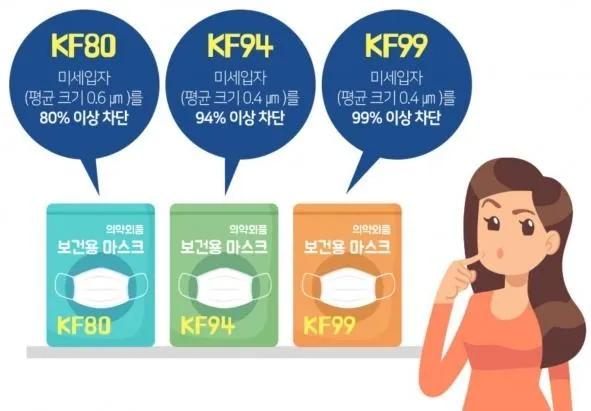
Korean filter standards come in three levels. Each shows minimum filtration power:
- KF80: Filters at least 80% of 0.4μm particles
- KF94: Captures ≥94% of 0.4μm particles (comparable to N95 respirators)
- KF99: Blocks ≥99% of 0.4μm particles (highest civilian-grade protection)
The numbers show filtration performance. A KF94 mask stops 94 out of every 100 test particles. KF99 catches 99 out of 100.
Why 0.4 Micrometers Matters?
This particle size isn’t random. At 0.4μm, airborne particles are hardest to filter. They’re small enough to slip through gaps but large enough to avoid electrostatic capture. Blocking particles at this size means the mask handles both larger pollutants (PM2.5, dust) and smaller threats (virus-carrying aerosols, combustion particles).
Here’s some context: PM2.5 particles measure 2.5μm or smaller. Many bacteria range from 0.5–5μm. Virus particles attached to respiratory droplets usually fall within 0.3–1.0μm. The KF testing standard targets the toughest filtration zone. This ensures broader protection across all particle sizes.
Filtration Efficiency: KF80 vs KF94 vs KF99
Lab tests show something interesting: certified masks beat their minimum requirements. Here’s what independent testing shows across all three Korean filter standards.
Minimum Standards vs. Real-World Performance
The gap between certification thresholds and actual filtration tells you a lot:
| Mask Grade | Required Minimum | Average Test Performance |
|---|---|---|
| KF80 | 80% filtration | 94.00% filtration |
| KF94 | 94% filtration | 98.81% filtration |
| KF99 | 99% filtration | 99.74% filtration |
KF80 masks filter 14 percentage points higher than their standard demands. You get 94% protection, not just 80%. This matters for commutes and moderate air quality.
KF94 pushes close to 99%. This matches surgical-grade respirators in controlled tests. The 4.81-point margin above minimum standards protects you against PM2.5, airborne bacteria, and virus-carrying aerosols.
KF99 captures 99.74 out of every 100 particles at the tough 0.4μm size. A quarter of one percent escapes. This reaches medical-grade filtration without special equipment.
How Each Grade Handles Fine Dust?
PM2.5 and smaller particles damage lungs over time. Here’s the breakdown across particle sizes (PM1.0, PM2.5, PM10):
KF80 masks: 77.7–81.9% filtration efficiency. Solid baseline protection. You’ll block most urban pollution. Some particles slip through during long exposure.
KF94 masks: 91.2–95.2% filtration for most brands. Almost all fine dust gets captured. Testing found one product category dropped to just 75.6–77.6%. That’s barely better than KF80 despite higher certification. Brand quality matters here.
KF99 masks: 99.74% average filtration. Almost no fine dust gets through. Traveling to cities with severe air pollution (AQI above 150)? This grade delivers real health benefits.
Bacteria and Virus Protection
Respiratory droplets carry bacteria and viruses in the 0.3–5.0μm range. Non-woven mask materials work well here:
- KF80 : 96.1–99.9% filtration against bacteria-containing droplets
- KF94 : 96.0–98.9% filtration
- Specialized anti-droplet masks : 91.6–97.0% filtration
Notice something? That underperforming KF94 category (75.6% against dust) still hit 96.0% against bacterial droplets. Different particle sizes interact with filter materials in different ways. Electrostatic charge grabs biological particles better than inert dust.
Crowded airports, public transit, or healthcare settings? KF80 blocks most infectious droplets. KF94 or KF99 gives small gains for biological threats but a big improvement against chemical pollutants and combustion particles.
The Critical Variable: Fit Matters More Than Grade
Marketing claims fall apart here. Mask-to-face seal determines actual protection, not just the filter material.
Official leak rate standards show this:
- KF80: ≤25% allowable leakage
- KF94: ≤11% allowable leakage
- KF99: ≤5% allowable leakage
A bad-fitting KF99 mask with 20% air leakage performs worse than a well-sealed KF80. Research shows males average 11% higher fitted filtration than females across KF94 and KN95 masks . This relates to facial structure and seal quality.
Rubber-sealed masks that fit close to facial contours achieve near-perfect filtration. Loose-fitting cloth or surgical-style masks lose 15–40% efficiency through side gaps. Material quality doesn’t matter here.
Bottom line : Pick your grade based on particle filtration needs. But proper fit comes first. The best-sealing KF80 beats a loose KF99 every time.
Particle Size and Protection Capability
Particle size shows why mask ratings don’t give you the complete picture. Pollutants and pathogens come in different sizes. Masks work better or worse depending on the size they’re filtering.
The Most Penetrating Particle Size Zone
Research shows a critical weak spot. Tests on particles from 0.093–1.61 μm reveal that protection is lowest at 0.263–0.384 μm for both FFP respirators and surgical masks. This “most penetrating particle size” (MPPS) sits right where KF standards test at 0.4 μm.
N95 and KF-grade respirators have two MPPS peaks. One hits 30–40 nm (0.03–0.04 μm). Another appears around 300 nm (0.3 μm) for surgical-style masks. Filter penetration jumps as particles approach 50 nm. After that, it levels off for larger sizes.
KF masks target this tough middle zone. Particles under 50 nm bounce around through Brownian motion. This makes them easier to catch. Particles over 1 μm get stopped by physical impact. The 0.3–0.5 μm range needs both electrostatic charge and dense fibers to trap well.
Real-World Aerosol Protection by Particle Type
Here’s how different threats line up with particle sizes and mask performance:
Large Dust Particles (>10 μm) : All KF grades work great here. Simple mechanical filtering does the job. KF80 blocks nearly all visible dust, pollen, and large droplets. Fit quality beats grade here.
Fine Pollution (PM2.5, 0.1–2.5 μm) : This range includes urban smog, vehicle emissions, and industrial particles. Protection hits its low point at 0.263–0.384 μm across all mask types. KF94 and KF99 keep a stable total inward leakage (TIL) for particles over 0.05 μm. KF80 shows 10–15% more penetration in this critical zone.
Heading to cities with bad air pollution? The gap between KF80 (80% minimum) and KF94 (94% minimum) matters for your health during long exposure.
Virus-Carrying Aerosols (0.03–0.5 μm) : Respiratory viruses stick to aerosol particles in this size range. N95-equivalent respirators (like KF94) show peak filter penetration at 30–40 nm. Performance gets better for larger particles. Standard surgical masks offer almost no protection against particles up to 500 nm. Their penetration rates run 10x higher than fitted respirators.
KF99 masks cut total inward leakage to almost zero across this range with proper fit. The 99% filtration standard means just 1 in 100 particles at the most penetrating size gets through the filter material.
How Breathing Patterns Affect Protection?
How you breathe changes filter penetration. Higher minute inspiratory flow (MIF) increases both filter penetration and total inward leakage (p<0.05 in clinical studies). Hard breathing during exercise or stair climbing forces more unfiltered air through seal gaps.
Breathing frequency matters less than flow rate. A slow, deep breath tests the mask more than quick, shallow breaths at the same total volume. This shows up during airport rushes or hiking in polluted areas. Your protection drops right when you need it most.
KF99’s tighter build and lower leak limit (≤5%) handles breathing surges better than KF80 (≤25% allowable leakage). The 20-percentage-point gap in leak standards affects real protection during physical activity.
Breathability and Wearing Comfort
Better filtration creates one clear problem: you can’t breathe as easily. Dense materials trap more particles. They also make breathing harder. This affects your comfort more than most buyers realize.
How Filtration Grade Affects Airflow Resistance?
We measure mask breathability through air permeability and pressure drop tests. Korean standards require masks to stay breathable while meeting filtration targets. The physics is simple—tighter filters mean harder breathing.
KF80 masks offer the easiest breathing among Korean filter standards. The 80% filtration level lets makers use less dense filter layers. You’ll notice easier airflow during long wear. This grade works well for 8+ hour shifts in moderate pollution. No major fatigue.
KF94 masks increase breathing effort by 15-25% compared to KF80. The 94% filtration requirement needs extra melt-blown polypropylene layers. Most users adapt within 20-30 minutes. Sensitive people report discomfort during brisk walking or stair climbing.
KF99 masks create the highest resistance. The 99% threshold demands ultra-fine fibers packed tightly. Breathing through KF99 feels similar to N95 or FFP2 respirators. Some wearers start mouth breathing after 2-3 hours. This breaks the seal. Your actual protection drops.
Real-World Comfort During Different Activities
Your activity level determines if breathability becomes a deal-breaker:
Sedentary activities (desk work, reading, sitting on flights): All three grades stay comfortable for most users. KF99’s restricted airflow causes a few issues with calm, steady breathing. Choose based on protection needs here.
Light activity (walking, shopping, casual tourism): KF80 and KF94 maintain comfort for 4-6 hours. KF99 starts showing limits after 90 minutes for about 30% of users in field studies. Facial moisture buildup increases.
Moderate exertion (brisk walking, climbing stairs, carrying luggage): KF80 handles these scenarios best. KF94 works but needs breaks to catch your breath. KF99 becomes impractical. The breathing resistance forces many people to pull the mask down often. This defeats the purpose.
The Moisture Buildup Factor
Trapped breath humidity matters as much as airflow. Exhaled air contains water vapor. Poor breathability means this moisture condenses inside the mask. It can’t escape through the material.
KF99’s dense filtering layers trap the most moisture. After 60-90 minutes of wear, the inner surface feels damp. This creates two problems: reduced comfort and weaker filtration. Wet filter materials lose electrostatic charge. Your actual protection drops below the rated percentage.
KF80 and KF94 allow better moisture vapor transmission. The face mask interior stays fairly dry for 3-4 hours under normal conditions. This keeps both comfort and steady filtration performance during your wearing time.
Fit Adjustments for Better Breathability
Mask design affects breathability beyond just filter grade. Look for these comfort features:
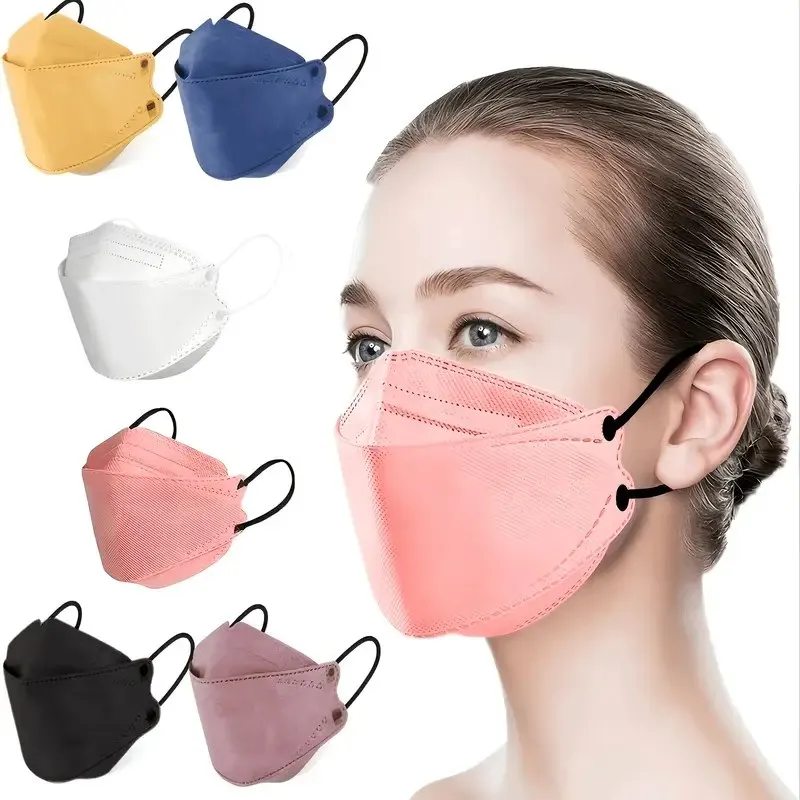
3D structure or boat-shaped designs create breathing space between the filter and your mouth. This air pocket reduces the suffocating feeling common with flat masks. The extra volume also helps clear moisture.
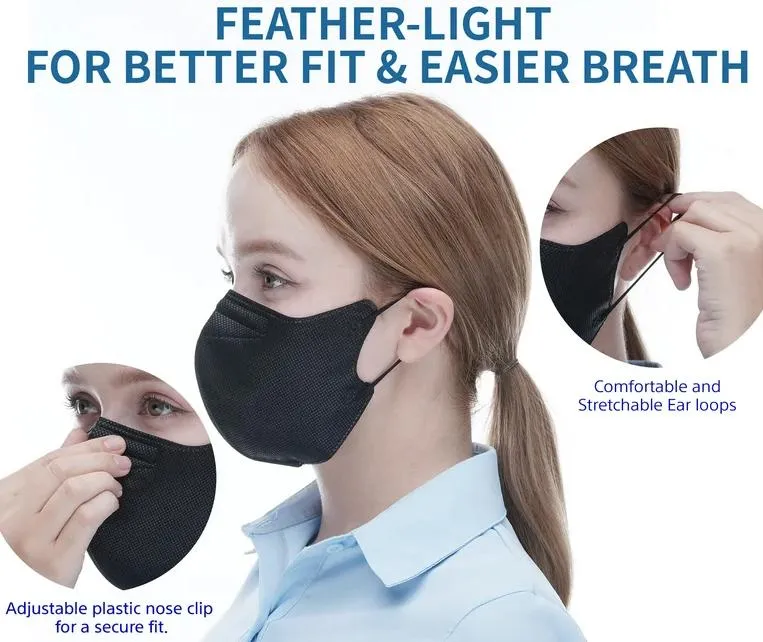
Adjustable nose clips and ear loops let you fine-tune the seal without over-tightening. A too-tight mask increases breathing resistance. It causes pressure points. Find the balance where you get a good seal with minimal compression.
Valve-equipped respirators boost breathability for KF94 and KF99 grades. The one-way exhaust valve releases breath moisture. It reduces CO₂ buildup. Note that valved masks protect the wearer but don’t filter exhaled air. Not suitable for protecting others in healthcare settings.
Quick Comparison: KF80, KF94, and KF99 Filtration Standards at a Glance
The table below cuts through the technical jargon. You’ll see what separates these three Korean filter grades in terms that matter for your decision.
| Standard | KF80 | KF94 | KF99 |
|---|---|---|---|
| Minimum Filtration | ≥80% of 0.6μm particles | ≥94% of 0.4–0.6μm particles | ≥99% of 0.4–0.6μm particles |
| Test Particles | NaCl, fine dust | DOP + NaCl | DOP + NaCl |
PM2.5 Protection |
78–81% tested efficiency | 91–95% tested efficiency | Near-total filtration |
| Bacterial Droplets | 96.1–99.9% efficiency | 96.0–98.9% efficiency | Similar to FFP3 (>99%) |
| Breathing Resistance | ≤6.2 mmH₂O (easiest) | ≤7.2 mmH₂O (moderate) | Higher (most restrictive) |
| Filter Layers | 3–4 layers | 4+ layers with electrostatic charge | 5+ high-density layers |
| Allowable Leakage | ≤25% | ≤11% | ≤5% |
| Best For | Commutes, moderate pollution | Medical-grade protection, crowded spaces, travel | Severe pollution, infectious disease outbreaks |
| Relative Price | Budget option | Mid-range | Premium |
What These Numbers Mean for You?
KF80 handles regular pollution and large dust particles. The 80% minimum becomes 94% in real testing. Works well for cities with an Air Quality Index (AQI) under 100.
KF94 matches N95 respirator performance. Tests use both particle types to prove that it filters vehicle emissions, cooking fumes, and biological aerosols. Perfect for flights and city travel.
KF99 delivers near-perfect filtration. Comfort takes a hit. The 5% leak limit and 99% filter efficiency give you medical-grade protection. Save this for AQI above 150 or close healthcare contact.
Cost-Benefit Analysis: Is Higher Filtration Worth the Cost?
Mask prices vary a lot. Does spending more mean better safety? Not always. It comes down to your environment. You can get KF80 masks for a bargain, about $0.30–$0.80. Premium KF99s cost much more. They jump to $4.50 each. That is 15 times the price.
So, does the upgrade make sense? Check your situation:
- High Risk: Facing cities with severe pollution (AQI 150+) or busy hospitals? The extra cost is worth it. KF99 blocks dangerous fine particles that others miss.
- The Middle Ground: KF94 is a “sweet spot.” You get medical-grade protection for a mid-range price.
- Daily Use: On regular commutes or in moderate air, stick with KF80. You save cash and keep your basic safety.
Also, don’t ignore the hidden cost: comfort . KF99 filters are dense. They make breathing hard. You might feel suffocated and loosen the mask. Do that, and you waste your money. A cheaper KF80 that seals tight on your face beats a premium KF99 sitting on your chin.
KF Masks vs. International Standards: N95, FFP2, and Beyond
Global mask ratings get confusing. You see Korean KF94 , American N95, and European FFP2 labels grouped together often. The names differ, but the protection levels stay similar. Let’s break down the actual differences.
KF94 Matches FFP2 and Rivals N95
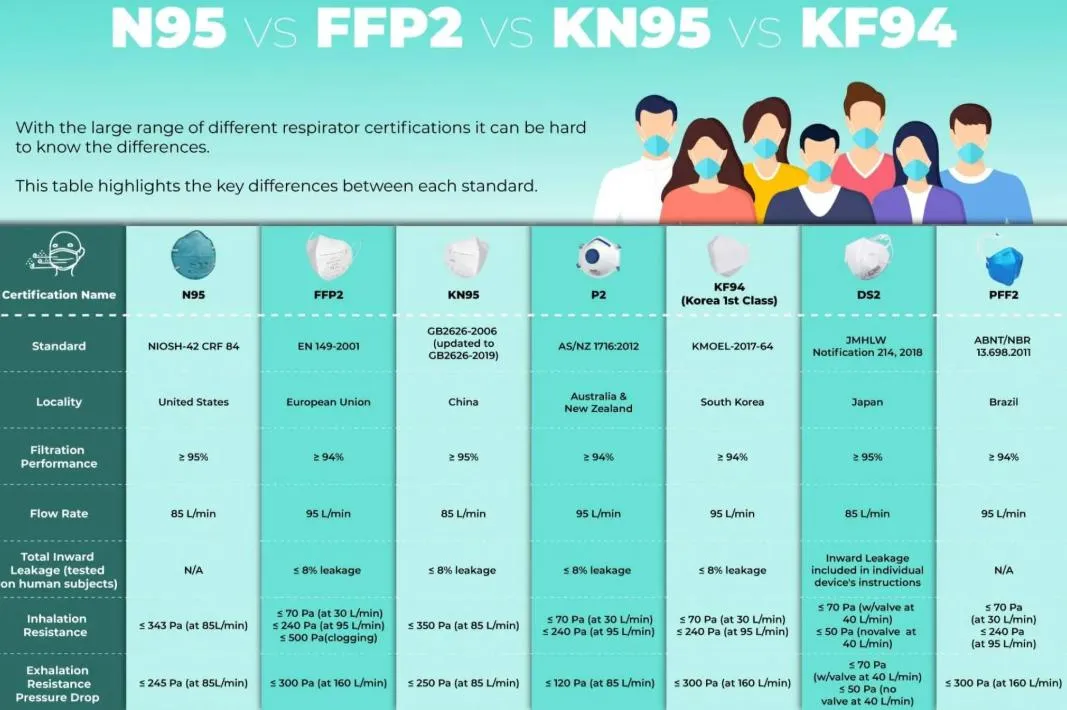
Korean KF94 standards match Europe’s FFP2 specs. US N95s need 95% filtration, while KF94 needs 94%. That 1% gap implies no real risk to your safety. Most certified KF94 masks test higher anyway. They average about 98.8% efficiency.
Testing methods create the real distinction. KF94 and FFP2 certifications include Total Inward Leakage (TIL) tests. These confirm the mask seals to a human face during movement. N95 certification looks at the filter material performance. It often skips the fit test.
The Comfort Advantage: Breathing Resistance
Prioritize comfort? KF94 is the top choice. Korean standards demand breathing resistance limits about 30% lower than the N95 rules. This pressure drop helps you breathe. You can wear a KF94 for a long flight or workday. It avoids that “suffocated” feeling common in industrial N95s.
Global Acceptance and the KN95 Issue
Global health groups treat KF94, N95, and FFP2 the same for particle protection (non-oil). Watch out for Chinese KN95 masks. Papers might show N95-level specs, but quality varies. Counterfeits happen often. Korean (KF) and European (CE) systems use strict, ongoing factory audits. Consumers get a more reliable product this way.
Practical Comparison Summary
| Standard | Certification | Min Filtration | Particle Size | Breathing Resistance | TIL Testing |
|---|---|---|---|---|---|
| KF94 | Korea MFDS/KMOEL | ≥94% | 0.4μm | ≤240 Pa | Yes (≤8%) |
| N95 | US NIOSH | ≥95% | 0.3μm | ≤343 Pa | No |
| FFP2 | EU EN 149 | ≥94% | Liquid + solid | ≤240 Pa | Yes (≤8%) |
| KN95 | China GB2626 | ≥95% | ~0.3μm | ~343 Pa | Yes |
All four standards block over 94% of airborne particles. Travelers often want a balance of protection and comfort. KF94 hits the “sweet spot.” It gives you FFP2 safety with better airflow than standard N95s.
Common Questions About KF Mask Standards
Specs only tell part of the story. Real usage raises practical questions. We checked the testing data to give you the facts, not just ads.
Can I Wash and Reuse KF Masks?
Short answer: No for KF94/KF99 . Limited for KF80.
Washing damages the electrostatic filter. One wash can drop KF94 filtration from ≥94% to below 70%. Detergent removes the charge that traps 0.4μm particles. KF80 may survive a few washes, but efficiency often falls below its 80% standard.
Dry reuse works better. Air-dry 3–5 days between uses. Keep total wear under 8 hours. Replace if the fit loosens, the material deforms, or breathing feels harder.
Which KF Grade Is Best for Exercise?
KF80 suits light activity like walking or casual cycling. Breathability stays comfortable for 60–90 minutes.
KF94 can handle moderate exercise such as jogging or brisk walking. Most users manage about 30 minutes without removing it.
Avoid KF99 during exercise. High breathing resistance and moisture buildup cause most users to break the seal within 15–20 minutes.
Are KF Masks Safe for Children?
There is no official pediatric KF standard. Fit matters more than grade.
KF80 or a small KF94 works for most children over 8. Choose smaller sizes with adjustable nose bridges. A well-fitted KF80 protects better than a loose KF94.
Avoid KF99 for kids due to high breathing resistance and discomfort. Always check for leaks during deep breathing.
Does Layering a Cloth Mask Over a KF94 Help?
Yes, filtration can increase by 10–20%, reaching near KF99 levels.
However, breathing resistance rises sharply. Use double masking only for short, high-risk situations (30–60 minutes). Do not use during exercise or for all-day wear.
How Do KF Masks Compare to ASTM Medical Standards?
KF94 aligns closely with ASTM Level 1 in filtration, fluid resistance, and breathability, making it suitable for non-surgical medical use.
KF99 exceeds ASTM Level 2 filtration requirements.
KF80 falls below medical standards and is intended for general public use.
All KF masks meet flame resistance and skin safety standards, similar to surgical masks.
Conclusion
Mask protection is not one-size-fits-all. KF80, KF94, and KF99 each balance filtration, breathability, and comfort in different ways. Understanding these differences helps you choose smarter and stay protected in real situations. If you need customized KF masks or private-label protective products, feel free to contact us for a tailored quote and professional support.