

You’ve probably bought a Walgreens Mask for convenience—but who actually makes it, and how much protection does it provide? Walgreens sells masks under its own brand, yet it is not a manufacturer. This article examines Walgreens’ business model, OEM supply chain, certifications, and independent test data to clarify what Walgreens masks really offer, and when certified alternatives may be the better choice.
Walgreens Mask Business Model: Retailer or Manufacturer?

Walgreens face mask products are sold by a retail company, not produced by a manufacturer. Walgreens Boots Alliance (WBA) reported $147.7 billion in revenue in fiscal year 2024, generated through retail pharmacy and healthcare services, with no disclosed business segment related to mask or PPE manufacturing. This distinction is essential for understanding what Walgreens-branded masks represent on store shelves.
Walgreens operates as a retail pharmacy chain and private label brand owner rather than a mask manufacturer. That model directly shapes how Walgreens surgical masks are sourced, labeled, and regulated.
What SEC Filings Reveal About Walgreens’ Operations
Public filings with the U.S. Securities and Exchange Commission describe WBA’s core activities as retail pharmacy operations, prescription fulfillment, and consumer health product sales. Across these disclosures, there are no references to mask manufacturing facilities, PPE production lines, or industrial manufacturing subsidiaries.
In financial reporting, Walgreens facial masks are categorized as front-of-store retail merchandise and grouped with everyday consumer goods, not with products manufactured internally as regulated medical devices.
Where Walgreens Invests Its Money
Capital expenditure disclosures further support this classification. WBA’s investments focus on store remodels, pharmacy infrastructure, distribution and fulfillment centers, and retail IT systems. There is no disclosed capital spending tied to mask factories , PPE manufacturing equipment, or production labor costs that would typically appear if Walgreens were producing masks internally.
The Private Label Reality Behind Walgreens Masks
Walgreens-branded masks follow a standard private label structure. Third-party manufacturers handle production, while Walgreens controls branding, packaging, and retail distribution. Packaging commonly states “Distributed by Walgreens” rather than “Manufactured by Walgreens.”
Public FDA establishment listings do not identify Walgreens or WBA as a mask manufacturing entity. Instead, supplier relationships are governed through Walgreens’ Supplier Code of Conduct, which sets requirements for quality audits, regulatory compliance, and production standards. This structure aligns with OEM sourcing rather than in-house manufacturing.
Who Makes Walgreens Mask Products? Understanding the OEM Supply Chain
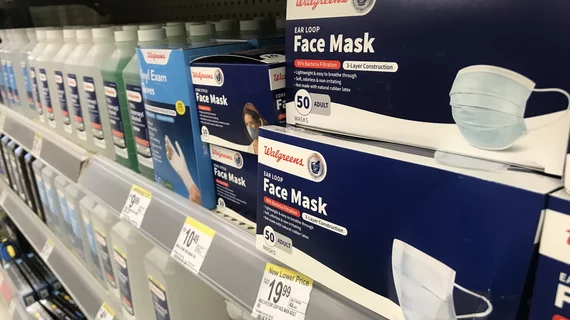
Walgreens Mask products are sourced through a private label supply chain rather than produced in-house. Walgreens does not publicly list the face mask manufacturer on most product pages, and details such as factory names or production partners are generally not disclosed. Instead, Walgreens positions itself as the brand owner and distributor, while manufacturing is handled by third-party suppliers.
What the Packaging Reveals
Physical packaging provides more reliable information than online listings. Walgreens mask boxes consistently state “Distributed by Walgreens,” not “Manufactured by Walgreens,” indicating brand ownership and retail responsibility rather than production control.
Some packages also include limited manufacturing clues, such as:
FDA establishment registration numbers linked to the producing facility
Country-of-origin labels, which may vary by product line and batch
Occasional references to external manufacturers, though these are uncommon
Together, these details confirm that Walgreens functions as a private label distributor, with mask production handled by external manufacturers across different regions.
Evidence from Independent Testing
Independent testing provides one of the few verifiable insights into Walgreens Mask manufacturing origins. Armbrust Labs tested a Walgreens Ear Loop Small Face Mask and identified Thailand as the manufacturing origin for that specific product and batch. This confirms that at least part of Walgreens’ mask supply is produced by overseas contract manufacturers rather than by Walgreens itself.
Multiple Manufacturers and Variable Supply Chains
Available evidence indicates that Walgreens Mask products are sourced from multiple OEM partners rather than a single factory. Manufacturing sources may change over time based on availability, cost considerations, and product specifications.
As a result, two Walgreens mask boxes purchased at different times may originate from different factories while carrying identical branding. There is no public registry that allows consumers to trace a specific production batch back to its manufacturer.
Manufacturing compliance, including material performance and any certification testing, is handled at the OEM facility level. Walgreens’ role focuses on branding, distribution, and retail compliance. In practical terms, the quality and performance of a Walgreens Mask depend on the specific contract manufacturer responsible for that production run.
Walgreens Mask Types and Their Manufacturing Origins

Walgreens Mask products are sold under three private label product lines, each aimed at a different price point and use case. However, transparency around manufacturing origin and performance verification varies widely across the lineup.
Ear Loop Face Masks: Entry-Level Protection
The Walgreens Ear Loop Face Mask is the lowest-cost option in the Walgreens Mask lineup. It uses a basic earloop design and is available in small sizes. Independent testing by Armbrust Labs identified several limitations:
Particulate filtration efficiency measured at 82.495%
Below the commonly cited ASTM Level 1 benchmark of 95%
Double-layer construction consistent with cost-focused manufacturing
Ear loops are noted as weak in durability assessments
At 82.495% filtration, this Walgreens Mask functions as a general-use face covering rather than medical-grade PPE. ASTM Level 1 surgical masks typically achieve at least 95% filtration under standardized test conditions.
Armbrust testing also identified Thailand as the manufacturing origin for this specific product and batch. The double-layer design reduces material cost but limits filtration performance compared with ASTM-certified masks, which usually use a three-layer structure including a melt-blown filter layer.
High Barrier Medical Grade Face Mask: Limited Disclosure
Walgreens also sells a product labeled “High Barrier Medical Grade Face Mask .” Despite the name, no publicly available documentation confirms ASTM certification.
Product listings and packaging do not disclose the manufacturer, country of origin, ASTM Level classification, or FDA establishment registration number. Without these details, the “medical grade” designation cannot be independently verified, and the actual protection level of this Walgreens Mask product remains unclear.
Cone Style Masks: Minimal Public Information
The Walgreens Mask cone-style option provides the least transparency. Public information does not identify the manufacturing facility, applicable standards, country of origin, ASTM certification status, or independent test results.
While cone-style masks can offer improved facial fit compared with flat designs, the absence of disclosed performance data means purchasing decisions rely largely on form factor and price rather than verified filtration capability.
What This Means for Protection
Among Walgreens Mask products, the ear loop model is the only option with publicly available test data, and that data shows performance below medical-grade standards. The other product lines rely on internal quality controls without independent verification. For low-risk, short-duration use, this may be acceptable. For medical, occupational, or prolonged indoor exposure, the lack of transparent manufacturing and certification data becomes a meaningful limitation.
Are Walgreens Masks ASTM Certified? Quality Standards Explained
There is no publicly verifiable ASTM certification disclosed for Walgreens Mask products. Packaging does not list ASTM Level 1, 2, or 3 claims, and product listings do not reference ASTM certification. Available independent testing data also suggests performance below commonly cited medical-grade benchmarks, making certification status a key consideration.
The 82.5% Filtration Gap
Armbrust Labs tested a Walgreens Ear Loop Small Face Mask manufactured in Thailand and measured a particulate filtration efficiency (PFE) of 82.495%. By comparison:
ASTM Level 1 masks are typically associated with ≥95% PFE
ASTM Level 2 and Level 3 targets are commonly cited at ~98% PFE
At 82.495%, the tested Walgreens Mask does not meet medical-grade filtration thresholds. While this level may meet a basic epidemiological minimum for general face coverings, it does not qualify as medical-grade protection.
It is also important to note that these results reflect material filtration only, not real-world fit or seal. In practice, gaps around the face can further reduce overall protection.
What “Not a Respirator” Indicates
Walgreens Mask packaging includes the disclaimer “Not a respirator.” This clearly separates these products from N95 or KN95 respirators and indicates they are not intended to meet respirator-level performance or certification standards.
ASTM-certified surgical masks typically display clear Level indicators (1, 2, or 3) on packaging, often alongside references to test reports or FDA registration information. Walgreens masks do not display these indicators.
Missing Certification Documentation
Medical-grade mask claims are usually supported by documentation such as third-party lab reports, FDA establishment registration details, and explicit ASTM Level statements. For Walgreens Mask products, this documentation is not publicly disclosed. This includes the “High Barrier Medical Grade Face Mask,” which uses medical-grade language without providing verifiable certification details.
What This Means in Practice
Walgreens Mask products function as general-use face coverings rather than ASTM-certified surgical masks. They can provide basic barrier protection against larger droplets, but do not guarantee the filtration performance required in medical or high-risk environments.
For short, low-risk activities, this level of protection may be sufficient. In healthcare settings, crowded indoor environments, or situations involving prolonged exposure, the absence of verified ASTM certification becomes a meaningful limitation, and higher-certified options should be considered.
Walgreens Masks vs National Brands: 3M and Honeywell Compared
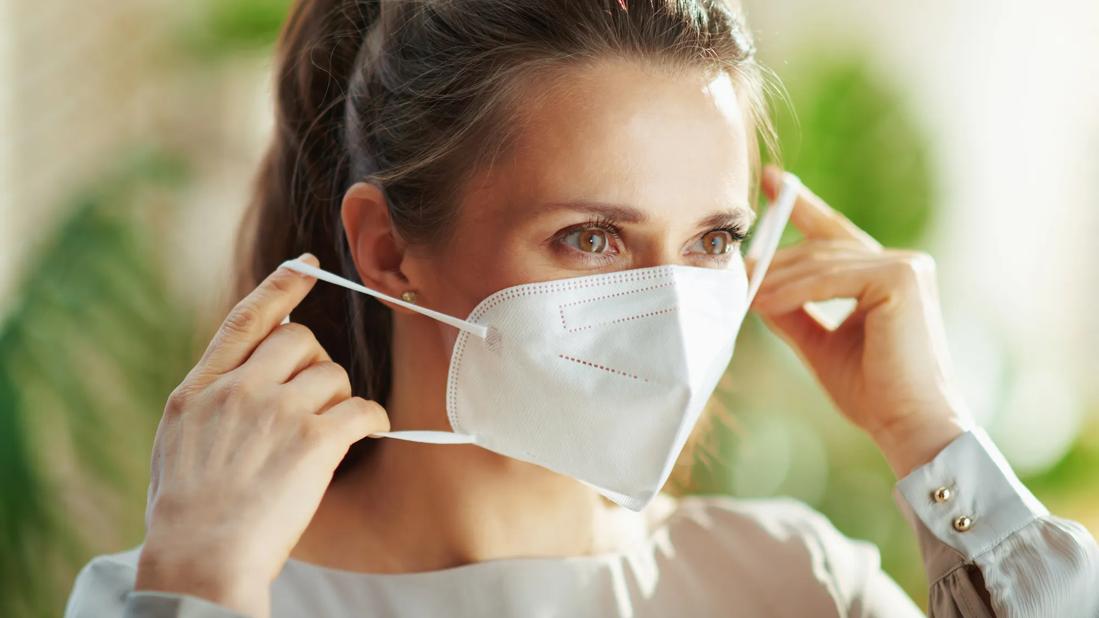
The key difference between Walgreens Masks and national brands such as 3M and Honeywell lies in manufacturing control. 3M and Honeywell design and produce their masks in their own facilities, while Walgreens sources masks through external OEM partners. This difference affects filtration performance, consistency, and overall value.
Filtration Performance: The 95% Threshold
3M N95 respirators are certified to filter at least 95% of airborne particles. Models such as the 8210 use multi-layer melt-blown filtration media and a tight facial seal, ensuring inhaled air passes through the filter rather than leaking around the edges.
Honeywell’s DF300N95BX meets the same ≥95% filtration requirement and uses a flat-fold design to balance surface area and breathing resistance. Both brands carry NIOSH N95 certification, the benchmark for occupational and medical respiratory protection.
By comparison, Walgreens’ basic disposable masks have been independently tested at approximately 82.5% filtration efficiency. They are not designed with respirator-level seals and do not offer certified fit performance, which can further reduce real-world protection.
Price and Protection Compared
|
Brand / Product |
Pack Size |
Price |
Cost per Mask |
Filtration Level |
|---|---|---|---|---|
|
3M 8200 N95 |
20/box |
$14.99 |
$0.75 |
≥95% certified |
|
3M 8210 N95 |
20/box |
$23.99 |
$1.20 |
≥95% certified |
|
Honeywell N95 Flatfold |
20/box |
$19.99 |
$1.00 |
≥95% certified |
|
Walgreens Basic |
25/pack |
$12.29 |
$0.49 |
~82% tested |
Walgreens Masks cost less per unit, but the lower price reflects lower and uncertified filtration performance. The roughly 13-point gap between ~82% and ≥95% filtration can result in a substantially higher particle load during extended wear.
When Each Option Makes Sense
Walgreens basic masks are appropriate for short, low-risk situations such as quick errands or brief outdoor interactions, where convenience and cost matter most.
3M and Honeywell N95 respirators are better suited for higher-risk scenarios, including healthcare settings, crowded indoor environments, prolonged exposure, or poor air quality. In these cases, certified filtration and consistent manufacturing justify the higher per-mask cost.
Manufacturing control also affects consistency. 3M and Honeywell manage production end-to-end, helping maintain uniform performance across batches. Walgreens Masks rely on multiple OEM partners, and manufacturing sources may vary over time, which can lead to differences in performance between batches.
How to Verify a Walgreens Mask Manufacturer and Authenticity

Verifying a Walgreens Mask involves checking both the packaging and the physical mask. Because Walgreens uses a private label supply chain, manufacturer details are not always clear online. The most reliable information appears on the box and in the mask’s construction.
Reading the Packaging
Start with the outer packaging. Legitimate Walgreens masks typically include:
A “Distributed by Walgreens” statement
An FDA establishment registration number linked to the manufacturing facility
A country-of-origin label, which may vary by batch
A lot number or production code for basic traceability
Missing key details, such as a country-of-origin label or lot number, is a red flag. Packaging that appears resealed, damaged, or inconsistent may indicate handling issues or questionable sourcing.
Inspecting the Mask Itself
After opening the package, examine the mask closely.
Disposable medical-style masks usually use a three-layer structure: an outer spunbond layer, a middle melt-blown filter layer, and an inner comfort layer. Masks with fewer layers often sacrifice filtration performance.
The material should feel sturdy, not paper-thin. Excessive tearing suggests low-quality nonwoven fabric. A functional nose bridge wire should hold its shape when molded to the face; weak or absent wires increase air leakage. Proper fit matters—persistent fogging of glasses during normal breathing often indicates a poor seal.
Using FDA Registration Information
Some Walgreens masks, especially those marketed with medical-grade language, list an FDA establishment registration number. This number can be checked in the FDA medical device establishment database to confirm the registered facility.
Registration confirms that a facility exists, but it does not guarantee ASTM certification or specific filtration performance. If a product uses “medical grade” terminology without providing verifiable registration or certification details, its protection level cannot be independently confirmed.
Common Quality and Authenticity Red Flags
Even though Walgreens primarily sells its own private-label masks, quality risks still exist. Warning signs include:
Pricing far below typical retail levels
Missing ASTM or regulatory references
Poor fit with visible gaps during wear
Inconsistent branding or printing errors
These issues do not automatically mean a product is counterfeit, but they often indicate lower quality or weaker oversight.
Where You Buy Matters
Buying Walgreens masks directly from Walgreens stores or Walgreens.com offers the highest level of authenticity assurance. Products are supplied through authorized distribution channels and are subject to internal quality controls.
Third-party marketplaces introduce more risk, as listings can mimic Walgreens' branding or misrepresent the seller. For health-related products, direct purchase channels remain the safer option.
Understanding the Limitations
Even authentic Walgreens Mask products lack some verification features found in national manufacturer brands, such as NIOSH approval numbers or publicly accessible test reports tied to specific production lots. This reflects the private label model: supplier standards are managed internally, but consumer visibility is limited.
For everyday, low-risk use, this may be acceptable. For situations requiring verified medical-grade respiratory protection, more transparent and certified options should be considered.
Walgreens Mask Buying Guide: When to Choose Walgreens or Other Options

Choosing a Walgreens Mask should be based on exposure risk rather than price alone. Research shows surgical masks reduce infection risk by roughly 50%, while N95 respirators reduce risk by about 70%. That difference becomes significant as exposure time and crowd density increase.
Match the Mask to Your Risk Level
Low-risk situations (short errands, outdoor interactions, brief indoor stops):
Walgreens basic surgical or cloth masks are generally sufficient. Routine use offers modest risk reduction, with fitted filtration typically ranging from 40% to 75% depending on fit. At around $0.49 per mask, Walgreens Masks are a practical option for brief, low-exposure use.
Moderate-risk settings (offices, public transit, longer indoor exposure):
Surgical masks provide higher protection and can be significantly improved with a better fit. Using a mask fitter over a Walgreens surgical mask can raise fitted filtration from roughly 40–45% to over 90%. Mask layering can also improve performance, though fit remains the key factor.
High-risk scenarios (healthcare settings, crowded indoor spaces, prolonged close contact):
N95 respirators are the safer choice. NIOSH-certified models such as the 3M 9210 can reach up to 98% filtration efficiency for fine particles. By comparison, Walgreens’ basic masks tested at ~82.5% filtration, creating a meaningful protection gap during extended exposure. Proper fit is essential, and facial hair can significantly reduce N95 effectiveness.
Improving Performance of Basic Walgreens Masks
When N95s are not available, basic Walgreens Masks can be made more effective:
Use a mask fitter to improve edge sealing
Adjust ear loops to reduce side gaps
Avoid valve masks and face shields, which offer poor source control
These steps do not convert a Walgreens Mask into a respirator, but they can meaningfully improve real-world performance in moderate-risk situations.
The KN95 Caution
KN95 masks are often marketed as lower-cost alternatives to N95 respirators, but performance varies widely. Independent testing has shown that many KN95 models fail to meet the 95% filtration standard. For consistent and verifiable protection, NIOSH-approved N95s from established manufacturers such as 3M or Honeywell remain the more reliable option.
Price-to-Protection Perspective
|
Scenario |
Recommended Mask |
Cost per Use |
Estimated Risk Reduction |
|---|---|---|---|
|
Short store visit |
Walgreens surgical |
~$0.49 |
~50% |
|
Full workday indoors |
Surgical + fitter |
~$0.49 + reusable fitter |
~65% |
|
Healthcare or prolonged exposure |
N95 (e.g., 3M 8210) |
~$1.20 |
~70% |
When Walgreens Masks Make Sense
Walgreens Masks are well-suited for everyday, low-risk use where convenience and affordability matter most. Bulk promotions can further reduce costs for basic surgical masks. However, discounts should not outweigh protection needs. In higher-risk environments, certified respirators offer a level of protection that private-label surgical masks cannot replace.
Bottom line: Walgreens Masks provide accessible, low-cost barrier protection, but they are not substitutes for certified respirators in high-exposure settings. Match the mask to your actual risk—not just what’s easiest to grab at the pharmacy.
Walgreens masks are sourced from third-party manufacturers, not made in-house. Knowing this helps you judge whether a Walgreens private-label mask fits your protection needs and budget.
Before buying, check the packaging for three basics: the manufacturer or distributor statement, any ASTM certification level, and an FDA registration reference. This allows you to compare Walgreens masks with national brands like 3M based on performance, not just convenience.
If you’re sourcing custom-branded masks or private-label PPE, we can assist with manufacturing options and pricing. Informed choices—not packaging—are what truly protect you.