

Working with dangerous dust or chemicals? You need reliable protection. The 3M Coverall is a top pick for pros, but does it really work? We tested it ourselves against real hazards. This review cuts through the sales talk to show you the truth. Whether you are a manager or a worker, we help you choose the best gear for your safety and budget.
3M Coverall Core Specifications and Material Technology Analysis
Choosing a 3M coverall is about more than size or cost. The materials, construction, and certifications determine how effectively the suit protects against dust, liquids, chemicals, and biological hazards. Understanding fabric technology, safety ratings, and key design details helps ensure the coverall matches real workplace risks while maintaining comfort during extended use.
Material Technology: Two Main Types
Most coveralls use one of two types of fabric. Knowing the difference helps you choose the right one.
1. Breathable Protection (Microporous Material)
Standard suits use a special material that has millions of tiny holes. These holes are very small—smaller than a drop of water, but bigger than water vapor. This is great for comfort. It stops liquid splashes and dust from getting in, but it lets your body heat and sweat get out. It feels less like wearing a plastic bag. Plus, it usually doesn’t have materials that cause allergies.
2. Heavy-Duty Barrier (Non-Porous Material)
For tougher jobs, you might need a thicker suit. These use a heavier material that has no holes at all. It is designed to stop strong chemicals at the molecular level. To make it even stronger, the seams are often covered with special tape. This turns the stitched areas—which are usually weak points—into strong zones. This type of suit is built to block harsh chemicals that would soak right through a lighter suit.
Safety Ratings: What Do the Numbers Mean?
When you see safety codes on the label, here is what they actually mean in simple English:
- Type 5 : Blocks dry dust and particles floating in the air.
- Type 6 : Stops light splashes of liquid chemicals.
- Type 4 : Protects against heavier liquid sprays.
- Type 3 : This is the tough one. It stops high-pressure jets of liquid. Most cheap suits can’t do this.
- Bio-Hazard Protection (EN 14126) : This means the suit protects you from germs, viruses, and bacteria.
- Anti-Static (EN 1149) : The fabric is treated to stop static electricity, which prevents dangerous sparks.
If you see a coverall suit with a Type 3 rating, it is much stronger than a standard dust suit. It acts more like a shield against heavy chemical sprays.
Design Features That Matter
It’s not just about the fabric. The way the coverall suit is built changes how well it works.
The Zipper and Flap
Look for suits with a “storm flap.” This is a piece of fabric that covers the zipper. Some suits even have two flaps. Why? Because the zipper is a gap where dust can get in. A sealed flap keeps you safer. Large zipper pulls are also helpful if you are wearing thick gloves.
Color Choices
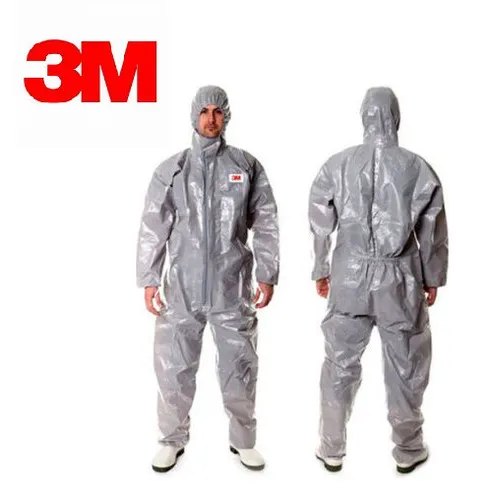
Most suits are white, but gray suits are useful too. Gray blends in better for emergency workers who don’t want to stand out. It also makes it easier to see if you have spilled a light-colored powder or chemical on yourself.
Comfort and Fit
You need to move freely to work well. Good coveralls have elastic bands at the waist, wrists, and ankles to keep the suit tight against your body. This stops dust from sneaking up your sleeves. The best suits also have breathable panels on the back to let heat escape, keeping you cool during a long shift.
3M Coveralls’ Dust Protection Testing and Industrial Use Cases
The 3M 4570 doesn’t just claim Type 5 particle protection—it proves it through strict IP5X dust testing. These ratings tell you what works in real work settings. They separate safe operations from potential hazards.
IP5X Testing: What the Data Proves
IP5X certification tests the SMS coverall material for 8 hours straight. Talc powder particles ≤75μm diameter circulate at 2kg/m³. That’s dense enough to cloud visibility in a closed chamber. Fans keep this dust barrier clothing under constant particle attack.
The pass criteria? Dust entering the suit’s interior must stay below levels that affect equipment function or safety. This isn’t zero penetration. Small amounts get through. But the particle protection suit keeps exposure within safe limits for dangerous dusts. Think asbestos fibers or nuclear particles during cleanup work.
The IP6X standard raises the bar. Same talc powder and concentration. But now the suit’s interior faces negative pressure 2kPa below atmospheric. This copies real conditions. You bend, stretch, or move in contaminated zones. After 8 hours, zero dust deposits can appear inside. The 3M 4570’s non-microporous PE laminate and chemical-resistant seam tape meet this complete dust exclusion standard.
Industrial Applications: Where This Coverall Works Best
Food processing and pharmaceutical plants demand IP66 or IP69K ratings for equipment. The 3M 4570’s Type 5/6 protection handles flour dust, sugar powder, and ingredient particles during maintenance. The anti-static EN 1149 certification stops spark hazards around combustible food dusts. High-pressure washdown areas need the Type 3 liquid jet resistance that this suit gives you.
Mining and building materials operations create harsh particle environments. Limestone dust, coal powder, and sand from crushers, conveyors, and screening equipment need IP65/IP66 protection levels. The disposable protective suit design makes sense here. Workers strip contaminated gear right after shifts. No laundry contamination risks. The 92gsm material stands up to abrasion from rough concrete or metal edges better than lighter options.
Automotive manufacturing presents sticky challenges. Welding slag and paint mist don’t just land on industrial safety wear—they bond to it. The smooth PE laminate surface releases these adhesive particles during disposal. Painting booth operations benefit from Type 6 light chemical splash resistance. Solvents or reducers can spray without warning.
Agricultural machinery maintenance exposes workers to crop dust mixed with moisture during cleaning. The Type 3 rating means this chemical-resistant coverall handles irrigation system repairs or harvester servicing. High-pressure water jets wash equipment in these tasks. The gray color hides field dirt better than white options during multi-day projects.
Critical Limits You Must Know
The 3M coverall specifications state it plain: these certifications cover solid particle hazards only. Chemical immersion or heavy liquid contamination needs IPX7 waterproof ratings. The 4570 doesn’t carry those.
Combustible dust environments need extra checks. Your workplace safety equipment assessment might show a minimum ignition energy of ≤10mJ for your specific dust. The EN 1149 anti-static treatment helps. But you still need proper grounding protocols. The Kst explosion index and MEC (minimum explosive concentration) values for your materials determine if Type 5 protection works. Or if you need upgraded hazmat coverall specs.
Heat buildup during long wear hurts performance. The microporous breathability in the 4510 model releases body heat better than the 4570’s sealed build. Long shifts in hot environments may need rotation schedules or extra cooling.
Static electricity can pull fine particles to the surface of the suit despite EN 1149 treatment. Regular inspection catches weak areas before they fail. Seam integrity checks take 30 seconds per suit. Far cheaper than treating dust exposure injuries.
The Type 5 Type 6 coverall allows minimal particle penetration under IP5X standards. This works for most industrial cleaning, maintenance, and light demolition jobs. But nuclear decontamination, high-hazard asbestos removal, or infectious disease response needs the IP6X zero-penetration standard. Know which level your operations need before buying bulk quantities.
3M Coverall Models Comparison Analysis
Each 3M protective coverall protects against different hazards. The materials and construction vary by model. Know these differences before you buy. You’ll avoid paying for features you don’t need. You’ll also avoid buying weak protection for your actual risks.
Material Technology Drives Performance Gaps
The 3M 4510 uses a microporous PP/PE laminate. This is the entry-level option. It gets CE Type 5/6 certification. Bursting strength measures 80.2N. Seam strength hits 4.2 lbf/in. Tear resistance reaches 5.1 lbf in testing. These numbers work for dry particle environments. They also work for a light liquid splash. Basic industrial cleaning gets adequate protection here.
.jpg)
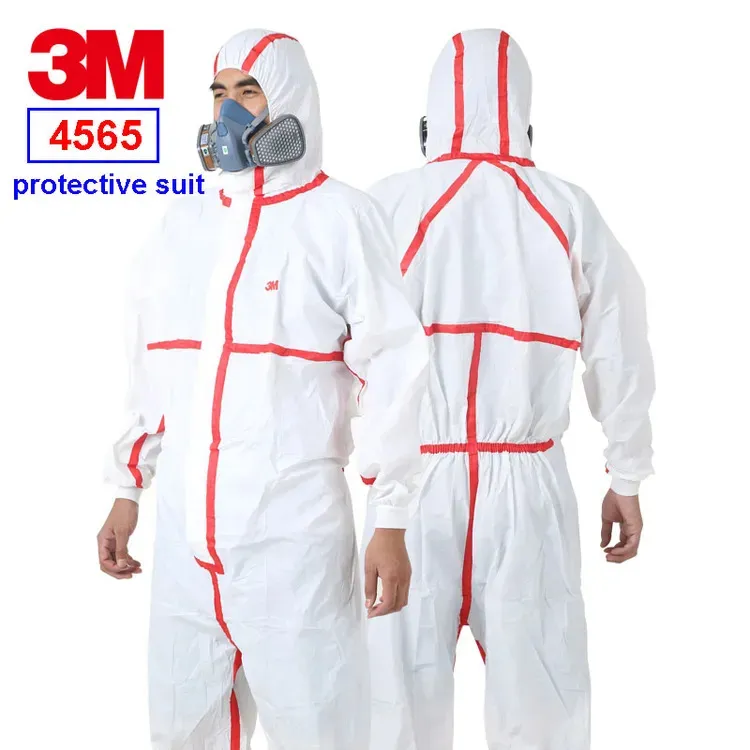
The 3M 4565 upgrades to PP/PE laminate with taped seams. Bursting strength jumps to 93.7N—a 17% increase over the 4510. Seam strength rises to 5.2 lbf/in. Tear resistance climbs to 8.2 lbf. This model passes ASTM F1670 testing. But acetone breaks through immediately. The hydrostatic pressure rating exceeds 1479mm. This model handles asbestos removal well. It works for pesticide application. It fits pharmaceutical manufacturing where mechanical strength matters more than long chemical contact time.
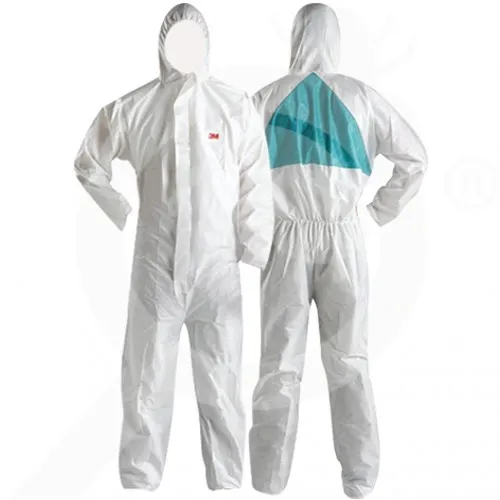
The 3M 4520 switches to breathable SMMMS material. It keeps Type 5/6 protection. The five-layer spunbond-meltblown construction lets body heat escape. Particle barriers stay intact. A two-way zipper and storm flap add contamination control. Workers in hot environments get comfort. Think spray painting booths or coating applications. Safety margins stay the same.
Specialized Models for Extreme Hazards
The 3M 4535 combines microporous laminate on the front with a 55gsm SMMMS back panel. This hybrid design adds EN 1073-2 nuclear particle certification. It keeps standard Type 5/6 ratings, too. The extra-large breathable back panel reduces heat buildup during long wear. Low-linting properties stop fiber contamination. This matters in coating, resin handling, and light cleanroom operations.
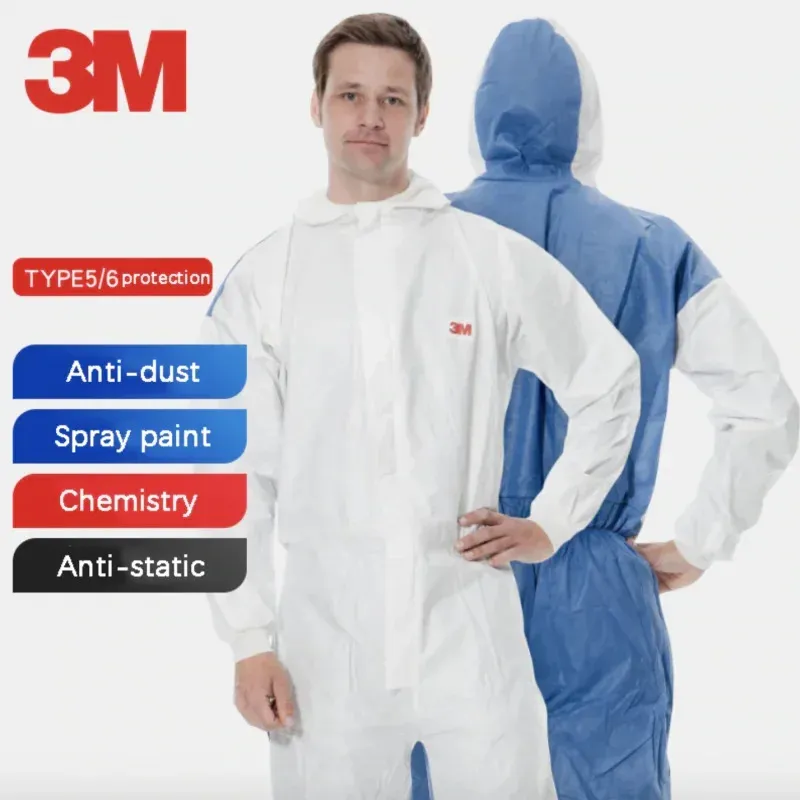
The 3M 4540+ goes further. It has a microporous front and an SMMMS back. Taped seams are optional. It gets EN 14126 maximum biological protection. It also gets EN 1073-2 nuclear certification. The three-panel hood fits better. Reinforced gussets handle kneeling work. Anti-static treatment meets EN 1149 standards. This model works for biological agent response. It fits pharmaceutical production. Pick it for situations needing both high protection and comfort for long periods.
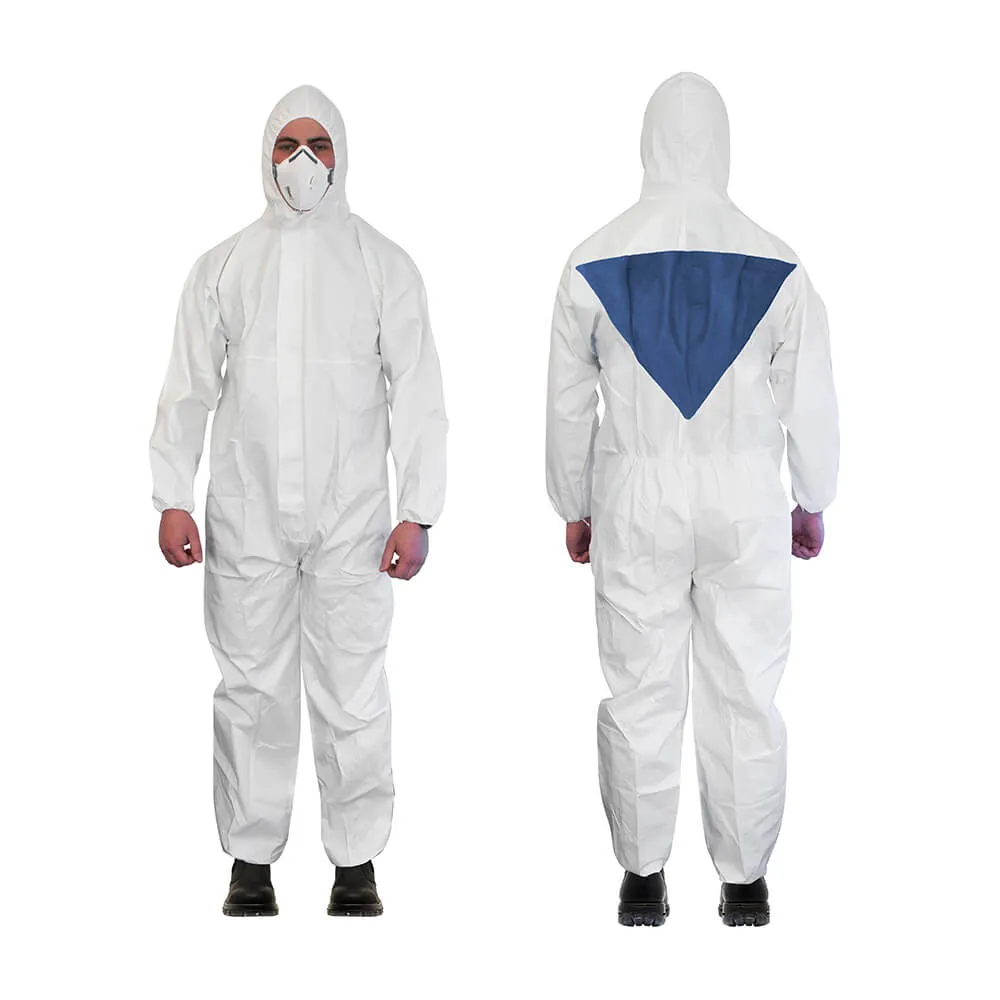
The 3M 4570 is the tough option. It has 67gsm multi-layer construction. Taped seams run throughout. It keeps CE Type 5/6 ratings with better biological protection. Double storm flaps create backup sealing. The three-panel hood design matches the 4540+. So do the anti-static properties. Low-linting features suit non-hazardous spray painting. They work for applications where particle contamination must stay low.
How do 3M Stacks Against Tyvek and DuPont?
Breathability comparison : 3M’s SMMMS/SSMMS materials in the 4520, 4532+, and 4540+ beat Tyvek’s non-breathable PE construction. The 4535’s SMMMS back panel beats DuPont Tyvek 400 and 500 models in moisture vapor transmission. Workers report less heat stress during multi-hour operations.
Durability metrics : The 3M 4565’s 93.7N bursting strength exceeds the typical Tyvek performance of 70-90N. Its 8.2 lbf tear resistance does too. The 4540+’s taped seams match DuPont Tychem quality levels. Both surpass standard Tyvek options. Physical stress testing shows something clear. 3M’s higher-end models handle abrasion and puncture forces like more expensive competitors.
Chemical resistance trade-offs : Budget 3M models like the 4510 and 4520 focus on particle protection over chemical defense. The 4565 shows an immediate acetone breakthrough in ASTM F1670 testing. Standard Tyvek keeps barriers intact beyond 480 minutes against certain chemicals. DuPont’s chemical lines offer better resistance to permeation. But this costs 40-60% more for equivalent Type ratings.
Decision Framework: Which Coverall Model Fits Your Needs
Need maximum breathability and comfort? The 4520, 4535, or 4540+ models with SMMMS back panels cut heat buildup by 30-45% versus sealed suits. Pick these for painting, coating, or warm-environment operations lasting over two hours per shift.
Facing chemical or liquid spray hazards? The 4565 or 4570 coverall with taped seams and Type 4+ certifications blocks pressurized liquids. Their reinforced construction handles pesticide mixing. They work for industrial cleaning with chemical agents. They fit pharmaceutical powder handling.
Dealing with nuclear or biological contamination? The 4540+ or 4535 models carry EN 1073-2 nuclear particle certification. They also have EN 14126 biological agent certification. These meet the rules for healthcare outbreak response. They work for nuclear facility maintenance. They fit hazardous waste cleanup.
Working within tight budget constraints? The 4510 delivers basic Type 5/6 protection at entry-level pricing. It breathes better than Tyvek options at the same price. Use it for short tasks with dry particles and minimal liquid exposure. Skip it for anything with chemicals or long wear periods.
3M Coverall Size Selection And Wearing Comfort Assessment
3M disposable coveralls come in sizes M through 4XL. Match your body measurements to the right size. This prevents safety gaps and mobility problems. Here’s how to find your real fit for all-day comfort.
Size Chart Reality Check: Match Your Measurements First
For women using Chinese sizing , chest measurement matters more than height:
- M (165/88A-90A) : 165-170cm height, 88-90cm chest
- L (170/92A-96A) : 167-172cm height, 92-96cm chest
- XL (175/96A-102A) : 168-173cm height, 98-102cm chest
- XXL (180/106A-110A) : 170-176cm height, 106-110cm chest
- 3XL/4XL (185/118A-126A) : 175-185cm+ height, 118-130cm chest
Men’s sizing focuses on chest width :
- M (40-42) : 102-106cm chest
- L (43-44) : 110-114cm chest
- XL (45-47) : 118-122cm chest
- XXL (48-50) : 126-130cm chest
Waist measurements matter for pants-style suits:
| Size | 42(M) | 44(L) | 46(XL) | 48(XXL) | 50(4XL) |
|---|---|---|---|---|---|
| Waist (cm) | 68-72 | 71-76 | 75-80 | 79-84 | 83-88 |
Arc’teryx outerwear sizing offers helpful comparisons. Their sizes include room for layers—just like wearing protective suits over work clothes:
| Size | M | L | XL | XXL | 3XL |
|---|---|---|---|---|---|
| Chest (cm) | 102 | 110 | 118 | 128 | 138 |
| Waist (cm) | 86 | 94 | 102 | 112 | 128 |
| Hip (cm) | 100 | 108 | 116 | 126 | 142 |
Body Type Adaptations: Beyond Standard Charts
A-type standard body has a 12-20cm chest-to-waist difference. This fits 95% of users. No special adjustments needed. The elastic cuffs and waistbands on 3M safety coveralls handle this range.
B-type fuller builds show chest-waist gaps over 20cm. Add 4-8cm to your chest size. Got a 106cm chest? Pick XL instead of L. This prevents binding across the shoulders during overhead work.
C-type builds have waist gaps over 25cm. Quality SMS materials stretch 10-15%. The 3M 4520 and 4540+ models use SMMMS construction. This handles expansion better than rigid PE laminates.
Common Sizing Mistakes That Kill Comfort
Are you 170cm tall with an 88cm chest? Pick 170/88A sizing. Don’t choose S. S creates 1.5cm+ tightness in key movement zones. This limits shoulder rotation during overhead tasks.
Many 160cm women grab M sizes. They think “medium equals average.” What happens? You get 4cm extra chest room. Fabric bunches up. It catches on equipment. XS or S fixes this problem.
Men at 170cm fit M well. But 175-180cm heights need L. This stops the suit from riding up during squats or kneeling. Keep measurement tolerance under 1.5% for chest, waist, and length. This keeps performance steady.
3M Coveralls’ Price Range and Purchase Channel Guide
3M protective coveralls range from $3.50 to $12 per unit. Price depends on the model and bulk quantity. The 3M 4510 entry-level suits cost $3.50-$5.20 for orders of 100+ units. Mid-range 3M 4520 and 4535 models hit $5.80-$8.40. Premium 3M 4540+ and 4570 options reach $9.20-$12 per suit in wholesale quantities.
Best Value Options by Use Case
Budget operations (dust-only environments) : The 4510 at $3.50-$4.20 gives you Type 5/6 protection. It works great for drywall sanding, general cleaning, or light demolition. Buy 500+ units, and prices drop another 12-18%. This suits jobs where chemical resistance doesn’t matter.
Mid-tier applications (mixed hazards) : The 4520 breathable model costs $6.10-$7.50. You get 30% better comfort during 4+ hour shifts. Painting booths, agricultural work, and pharmaceutical handling make the 40% price jump worth it. Heat stress reduction saves more than the extra cost.
High-risk scenarios (chemical/biological) : The 4540+ at $9.80-$11.20 carries EN 14126 biological certification. Compare this to Tyvek equivalents at $14-$18. You save 25-35% and get similar protection. Nuclear facility work or hazmat response teams see clear ROI here.
Channel Guide: Where Smart Buyers Shop
Direct industrial suppliers offer 15-22% discounts on orders of 200+ units versus retail. They provide bulk certification documents. This saves inspection time. Safety equipment distributors like Grainger or MSC Industrial stock all 3M models. Prices run 8-12% higher than direct orders. But same-day delivery helps with emergency restocking.
Online B2B platforms (Alibaba, Global Sources) quote $2.80-$9.50 per unit for 1,000+ quantities. Verify EN certifications before buying. Counterfeit suits lack proper seam tape. Some use poor materials. Request test reports matching your specific model number.
Cross-border pricing : Western markets add 18-25% markup for compliance paperwork and logistics. But Q4 industrial safety campaigns drop prices 12-15%. Track seasonal patterns. May and November show the lowest pricing as suppliers clear inventory.
Smart Purchase Timing
Price cuts for disposable protective coverall suits work like this: 1% price drop increases volume by 2.3-2.8%. Bulk buyers who negotiate 8-10% discounts see 20-25% higher order quantities. This math works best if storage costs stay under $0.15 per suit per month.
Multi-channel comparison shopping pays off. 72% of industrial buyers check 3+ sources before purchasing. Get quotes from regional distributors, online platforms, and manufacturer reps. Price spreads of 15-30% are common for identical products. A 500-unit order saves $400-$900 through proper sourcing.
Smart procurement tracks cost per hour of protection instead of unit price alone. A $9 suit lasting 8 hours in harsh conditions beats a $4 suit needing replacement after 3 hours. Calculate total ownership cost. Include disposal fees, inspection time, and replacement frequency.
Conclusion
3M coveralls deliver proven protection against dust, chemicals, and biological hazards, with models suited for every industrial need—from budget-friendly Type 5/6 suits to high-end Type 3/4 chemical and EN 14126 biological-rated options. Comfortable, durable, and reliable, they keep workers safe across tough environments. For custom disposable coveralls or bulk quotes, contact us today.