

The pandemic hit hard. Car giant BYD switched gears fast to make face masks. They became a top global producer almost overnight. You might ask: Where are these masks made? Can I trust them?
I will take you inside BYD’s high-tech factories in Shenzhen. See how they build millions of verified masks each day. These products rival big brands like 3M.
What Are BYD Masks?
BYD masks are medical-grade protective gear. BYD Care is a branch of the Chinese auto and tech giant. You get two main types: N95 respirators and surgical masks. Both meet strict international safety rules.
Product Categories and Specifications
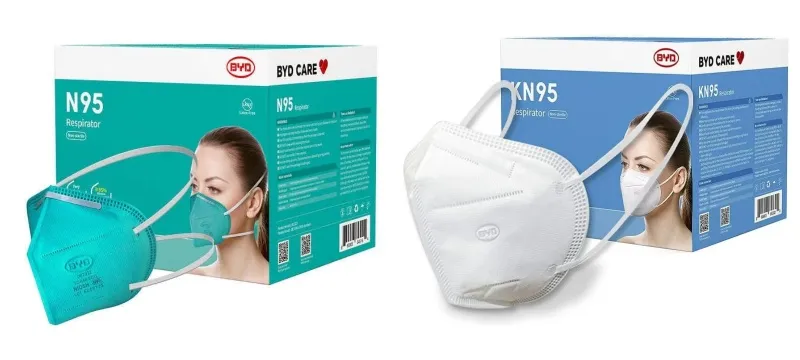
BYD N95 respirators have NIOSH certification. They filter ≥95% of solid and liquid non-oil particles. These respirators fold easily and use multiple layers. The layers include inner, middle, and outer polypropylene fabric. They also have melt-blown material and hot air cotton. An aluminum nose clip adjusts to fit your face. Each respirator comes wrapped separately. You get 20 per box. Bulk cases hold 960 masks (48 boxes).
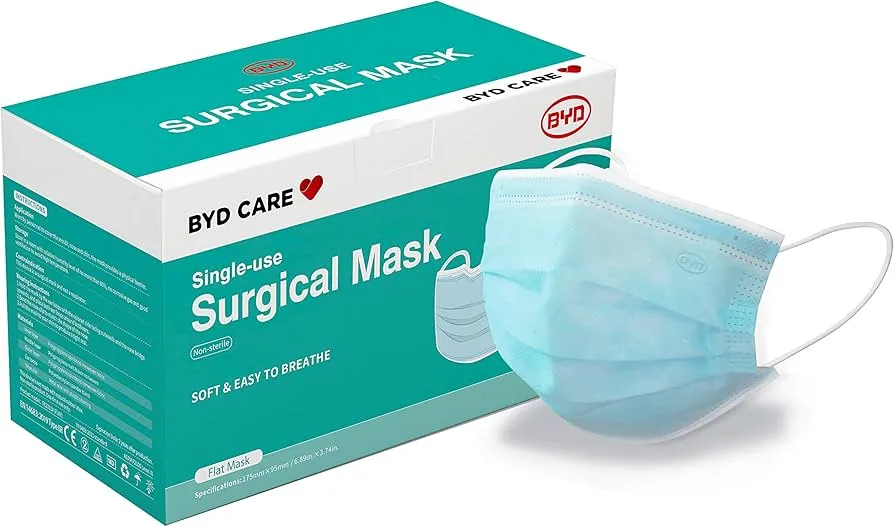
BYD surgical masks offer strong protection too. They filter ≥95% of airborne particles and droplets. These masks have three layers and meet ASTM Level 2 or Level 3 standards. The inner and outer layers use polypropylene fabric. The middle core is a melt-blown material. The blue masks have elastic ear loops. The loops blend polyester and nylon spandex. Each box has 50 masks. Each mask sits in its own blister pack.
Production Scale and Quality Standards
BYD makes 10 million masks daily. This huge output matches century-old medical gear makers. All products have FDA approval. They meet YY0469-2011 Chinese medical standards. Healthcare workers rely on them. So do people in factories, travelers, and anyone needing daily protection. Both mask types skip latex. This makes them safe for sensitive skin, even after hours of wear.
Where Are BYD Masks Made?
BYD mask factory location sits in Shenzhen, Guangdong province, China. The company turned its existing industrial parks into the world’s largest mask production site. These weren’t new buildings. BYD repurposed smartphone plants at their headquarters. The dust-free rooms once made electronics. Now they produce medical masks.
From Car Factory to Medical Powerhouse
BYD did something impressive in 2020. In late January, they formed a 3,000-engineer task force. Within seven days, they finished mask machine R&D and production. Industry standard? Fifteen to thirty days. By February 8, production lines were running in Shenzhen at full capacity.
The first batch came out on February 17. BYD started with 5 million masks per day plus 300,000 bottles of disinfectant. Mid-May brought growth to 50 million masks. By late 2020, they hit 100 million per day across 1,800 production lines.
Self-Built Production Setup
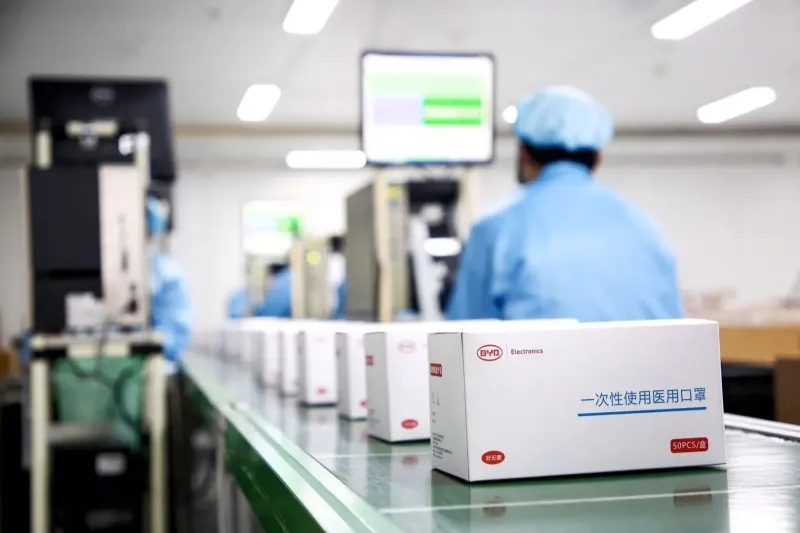
Each production line makes 50,000 disposable masks per day. BYD didn’t buy these machines. They built them. The company added 5 to 10 new machines every day during peak growth. Each machine needs 1,300 parts. BYD made 90% in-house using tools from their electronics, battery, and electric vehicle units.
Staff worked around the clock. Over 100 employees ran 24/7 shifts at first. Hundreds more joined on rotating day and night schedules. The company doubled production lines from the first 100-plus in just weeks.
Production Scale and Distribution
BYD mask production capacity beat century-old medical makers within months. Chinese government checks confirmed quality beats industry standards. The Shenzhen site makes multiple types: disposable, N95, KN95, surgical, and flat masks.
Distribution went worldwide. Shenzhen retailers got 15 million masks at RMB 2.5 (about $0.35) each. California ordered 300 million N95 and 100 million surgical masks through a $1 billion contract. BYD planned to keep exporting even after stopping temporary domestic emergency production.
The BYD mask technology came from existing cleanroom know-how. They turned smartphone plants into mask facilities. This gave them instant setup. No other automaker matched this production shift speed or scale.
Production Capacity and Scale
BYD entered the mask business and changed how PPE gets made at an industrial scale. BYD mask production capacity went from zero to matching 100-year-old medical suppliers in weeks. Even established mask makers couldn’t keep up with these benchmarks.
Unprecedented Scaling Speed
The numbers tell a story. China’s mask industry made 20 million masks each day before COVID-19. This was half of all masks made worldwide. By February 29, 2020, China made 110 million masks per day—a 5.8× increase in one month. N95 production jumped from 200,000 to 1.6 million each day, an 8× surge.
BYD drove this change. Their Shenzhen plants started at 5 million masks per day on February 17. By mid-May, they expanded to 50 million each day. By late 2020, BYD mask production capacity reached 100 million masks per day across 1,800 production lines. Each line made 50,000 masks in 24 hours—about 80-120 masks per minute with automated equipment.
Engineering the Impossible
Most companies need 15-30 days to set up mask machines. BYD cut this to seven days. They controlled their own supply chain. Each automated line needs 1,300 precision parts. BYD made 90% in-house. They pulled components from their battery, electronics, and car divisions. During peak growth, they added 5-10 new machines each day. Operations ran 24/7 in three shifts.
The real challenge? Melt-blown fabric—the filter core. Before the crisis, China had few high-speed melt-blown lines. BYD built new lines in 1-4 weeks. Other companies needed months. A single high-speed line makes 1-2 tons each day. This supports 250,000-500,000 surgical masks. BYD controlled its own supply chain. This gave BYD masks quality control that competitors couldn’t match.
By April 2020, China supplied 50-70% of global face masks . The country exported over 220 billion masks that year—averaging 600+ million each day. BYD’s facilities powered this historic output surge.
Manufacturing Process and Technology
BYD mask technology blends car-grade precision with medical standards. The company used its clean room know-how and battery line automation to build mask production systems. These systems beat traditional medical equipment suppliers. Their machines use IoT sensors, AI quality checks, and live monitoring. You’d find these same tools in smart factories that make chips or electric cars.
Automated Production Lines with AI Integration
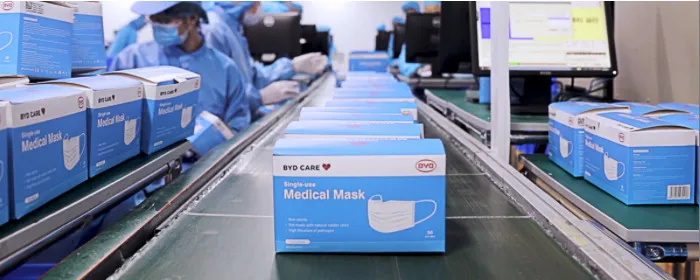
Each BYD line runs with a few workers. Machines do everything: feed fabric, place melt-blown layers, weld parts, insert nose clips, attach ear loops, and package each mask. AI vision systems check every mask at several points. These cameras catch flaws you can’t see—tiny tears in fabric, uneven filters, or crooked nose clips. The AI cuts defect rates by 30% versus manual checks. This matches what other automated quality systems deliver.
BYD put sensors on 1,800 production lines to track performance live. These IoT tools watch machine heat, welding pressure, fabric pull, and speed every second. All this data goes to analytics platforms on cloud servers. Engineers see problems right away. A machine shows wear? Smart maintenance systems book repairs before anything breaks. This method cuts downtime by 50% and slashes maintenance costs by 40%. That matters at 100 million masks per day.
Quality Control and Process Optimization
BYD mask specs need multiple checks. Particle counters test the melt-blown fabric to measure 0.3-micron particles. Breathability tests keep airflow resistance within ASTM limits. Every 30 minutes, automated systems check how nose clips bend and ear loops stretch on sample masks. The quality system runs digital—zero paper. This fits with 28% of manufacturers who now use digital quality systems.
The company uses data analysis to speed up production. BYD engineers looked at data from all 1,800 lines. They found slowdowns at welding and packaging stations. They made changes. Cycle time dropped by 20%. AI gives this same boost in molding work. Faster cycles meant more output. No extra machines or staff needed.
Quality Standards and Compliance
Authentic BYD face masks carry multiple certifications. These prove they meet or exceed global medical protection benchmarks. The company secured approvals from regulatory bodies across three continents. This happened before shipping a single mask to customers. Each certification required independent lab testing. Factory audits were mandatory. Ongoing quality checks continue today.
NIOSH N95 Approval and Performance
BYD N95 respirators hold NIOSH TC approval under 42 CFR Part 84 regulations. Every unit filters ≥95% of 0.3 μm sodium chloride aerosol particles at 85 liters per minute airflow. This is the most penetrating particle size range. Third-party labs verified penetration rates stay below 5% during testing. Inhalation resistance measures 35 mm H₂O. Exhalation resistance stays around 25 mm H₂O at the same flow rate. These numbers fall well within NIOSH limits.
Each BYD N95 displays required markings. You’ll find the NIOSH logo, a unique TC approval number (TC-84A series), the “N95” filter designation, model number, and lot code. This information appears on the mask body or straps. Packaging includes user instructions, limitation warnings, and the full NIOSH approval statement. You must complete quantitative fit testing to achieve a fit factor ≥100. OSHA 1910.134 standards require this for occupational use.
ASTM Level 2 and Level 3 Surgical Masks
BYD surgical masks meet ASTM F2100 Level 2 or Level 3 standards. These are the highest tiers for medical face masks in the United States. Bacterial filtration efficiency (BFE) tests at ≥98% against 3.0 μm droplets. Particle filtration efficiency (PFE) reaches ≥98% for 0.1 μm particles. Breathability measures show differential pressure below 6.0 mm H₂O per cm². This keeps air resistance comfortable during long shifts.
Fluid resistance testing proves critical for surgical settings. Level 2 masks withstand 120 mmHg of synthetic blood pressure. Level 3 units resist 160 mmHg. That’s about double the splash force of arterial blood. Flammability ratings achieve Class 1, the safest category. These specs matter in BYD mask vs 3M comparisons. Both manufacturers target identical ASTM benchmarks.
FDA Registration and Chinese Standards
BYD mask FDA approval came through 510(k) clearance and Emergency Use Authorization pathways. The masks also meet YY0469-2011, China’s national standard for medical surgical masks. This dual certification allows distribution in both Western and Asian healthcare markets. Manufacturing sites maintain registration with the FDA establishment databases. Periodic inspections happen regularly.
Quality Control Testing Protocol
BYD’s QC lab runs tests at three production stages. Incoming materials verification checks several factors. These include melt-blown fabric basis weight, fiber diameter, electret charge retention, and certificate of analysis data. Nose wire samples undergo ≥20 bend cycles without fracture. Ear loop materials face tensile tests. These require ≥10 N breaking force and controlled elongation limits.
In-process controls happen every 30 minutes on active lines. Technicians verify 3-layer construction. This includes outer polypropylene, melt-blown filter core, and inner soft layer. They confirm mask weight stays within ±2% tolerance. They also measure ultrasonic weld strength at ≥10 N pull force on ear loop attachment points. Automated vision systems catch visual defects. These include tears, wrinkles, or contamination spots. Defect rates stay below 0.1% per million masks.
Final product testing validates filtration performance. Labs use sodium chloride and paraffin oil aerosols. Particle counters measure 0.3 μm penetration rates. Breathability chambers track airflow resistance across the mask surface. Fluid resistance equipment fires synthetic blood at set pressures. This verifies splash protection. Each production lot requires passing results before warehouse release. These strict checks ensure BYD care mask specifications remain consistent. We’ve shipped billions of units worldwide with this quality system.
Distribution and Global Reach
BYD mask distributors work across six continents. They built a multi-tier network during the 2020 emergency response. The company shipped to over 50 countries in just eight months after starting production. Government contracts fueled early growth. California placed a $1 billion order for 300 million N95 and 100 million surgical masks. This deal made BYD a major U.S. healthcare supplier. That single order beat many traditional PPE suppliers ‘ full-year output.
Regional Distribution Networks
North America became BYD’s biggest export market. The company supplied medical facilities in New York, Texas, and Florida beyond California. They worked through authorized healthcare distributors. Canadian provinces ordered millions of units for their health systems. Pricing stayed competitive—$2-3 per N95 respirator in bulk orders. Compare that to $5-8 for similar 3M models during peak demand.
Europe got shipments through direct government buying and medical wholesalers. The UK, Germany, France, and Spain ordered tens of millions of masks for national health services. BYD mask reviews from European healthcare workers praised the comfort during 12-hour shifts. The filtration worked as well as CE-certified products.
Asia-Pacific distribution used local manufacturing benefits. Hong Kong, Singapore, Japan, and Australia bought BYD surgical masks for hospitals and pharmacy chains. Southeast Asian markets got products through local medical equipment importers. Prices in these areas ran $0.30-0.50 per surgical mask for bulk buyers. That’s 30-40% less than Western retail prices.
Authentication and Quality Verification
Authentic BYD masks have specific marks to stop fakes. Each box shows holographic security labels, unique lot codes, and QR codes. The QR codes link to BYD’s verification portal. Packaging lists FDA registration numbers, NIOSH TC approval codes, and manufacturing dates. Authorized distributors get certificates of authenticity with every batch. This tracking system tackles concerns from BYD mask vs 3M comparisons. Both brands use similar anti-fraud steps to fight counterfeits.
Third-party retailers must pass BYD’s distributor check. We verify business licenses, warehouse conditions, and handling methods before approval. Direct buys through BYD’s official channels ensure you get real products. Healthcare buyers can find distributor lists on BYD Care’s global sales portal.
Are BYD Masks Made Elsewhere?
All BYD masks come from one place—Shenzhen, China. The company makes no masks outside China. This is different from how BYD runs other businesses. BYD has car factories across Europe and Asia. You’ll find their electronics plants in Cluj, Romania, and Komárom, Hungary. Their Chennai, India, site builds electric cars and parts. But masks? Those come from China only.
Exclusive Chinese Manufacturing Base
BYD mask factory location stays in Shenzhen’s industrial parks. The company turned its smartphone plants into mask production zones. These clean rooms already meet medical standards. BYD grew these same Shenzhen sites in 2020 and 2021. Mask production never left China.
BYD ships masks through import networks. Global Healthcare Product Solutions, LLC, in Los Angeles, handles all U.S. sales as an authorized BYD mask distributor . They get finished products straight from Shenzhen. European buyers get shipments from the same Chinese hub. This setup helps BYD control quality for all authentic BYD masks. Every mask goes through the same tests and checks. Your market location doesn’t change the process.
Common Search Questions (FAQs)
People typing questions into Google want fast, clear answers. BYD masks generate millions of searches each year. Most questions follow patterns you can predict. These patterns help you find the right info fast.
What Questions Do People Ask Most?
“Where are BYD masks made?” tops the list. This guide already answered that—Shenzhen, China. Second most common: “Are BYD masks FDA approved?” Yes. Both N95 respirators and surgical masks hold FDA clearance. They also have NIOSH certification.
“How do I know if my BYD mask is real?” comes up a lot. Check for holographic security labels on boxes. Scan the QR code—it links to BYD’s verification portal. Real packaging shows FDA registration numbers. You’ll also see NIOSH TC approval codes and unique lot codes. Authorized BYD mask distributors give you certificates of authenticity with bulk orders.
Performance and Comparison Questions
“BYD mask vs 3M—which filters better?” Both meet identical NIOSH N95 standards. Each filter≥95% of 0.3 μm particles. BYD mask specifications match 3M’s technical benchmarks. Price differs more than performance. BYD N95s cost $2-3 per unit in bulk. 3M models run $5-8 during high-demand periods.
“What’s the difference between BYD surgical and N95 masks?” Surgical masks meet ASTM Level 2 or Level 3 standards. They protect against droplets and splashes. N95 respirators seal tighter. They filter airborne particles. Healthcare workers need N95s for aerosol-generating procedures. Surgical masks work for general patient care.
“How long can I wear a BYD N95 mask?” NIOSH says discard respirators after contamination or damage. You can use them for 8-12 hours in healthcare settings during shortages. Remove the mask if breathing becomes difficult. Also, take it off if the seal breaks.
Purchase and Supply Questions
“Where can I buy authentic BYD masks in the U.S.?” Global Healthcare Product Solutions, LLC, in Los Angele,s is the authorized distributor. They import straight from Shenzhen. Avoid third-party sellers without verification credentials.
“Does BYD still make masks in 2025?” Production continues at reduced capacity. Peak output hit 100 million daily in 2020. Manufacturing now focuses on government contracts and bulk healthcare orders. Retail distribution is no longer the priority.
Conclusion
BYD uses advanced car technology to build medical masks in Shenzhen. These masks meet strict global safety rules like the FDA and CE. They use special filters for better protection. Always check your seller’s documents to make sure you get the real thing—fakes won’t keep you safe. Your health is worth that extra check.
If you need to customize any type of disposable mask, please contact us at inquiry@morntrip.com.