

Choosing a reliable coverall supplier in Russia often feels harder than it should. Differences in quality, testing methods, and certifications can turn a simple purchase into a slow and risky task. This guide lists the Top 8 disposable coverall manufacturers in Russia, giving you a clear starting point and helping you focus only on producers that deliver consistent protection.
1. Morntrip
Morntrip is a global PPE powerhouse. They export to Russia and dozens of other countries across multiple continents. This disposable coverall manufacturer ships certified products that international buyers trust for reliable protection gear at scale.
Their product line focuses on CE-certified and ISO-certified disposable coveralls. These suits handle tough environments. The coveralls use microporous fabric that blocks contaminants. At the same time, the material lets air through. Each suit includes an integrated hood, elastic cuffs at wrists and ankles, an elastic waist, and a front zipper for quick wear.
Medical, Industrial, and Cleanroom Applications
Morntrip makes disposable coveralls for three main sectors. Medical facilities use them to control infections. Industrial sites need them for chemical splashes and particle exposure. Cleanroom operations depend on them to keep zones contaminant-free.
The microporous material passes hazardous environment standards. Different safety frameworks accept it. Russian facilities follow both local and international protocols. This material works for both.
Bulk Export Capacity
Morntrip ships large volumes. Standard export packages hold 25+ units per case. Larger orders scale into thousands. Distributors and large-scale industrial buyers need this capacity.
Industry sourcing platforms rank Morntrip among the top disposable coverall manufacturers for export. Russian buyers need certified PPE with predictable quality and delivery. Morntrip’s offerings meet these needs. Their quality control systems keep each batch the same. Worker safety depends on every single suit performing as specified. That’s why consistency matters.

2. Technoavia (Техноавиа)
Technoavia has been building PPE networks across Russia since 1993. They run things from Moscow. This disposable coverall manufacturer has 130 stores in Russia. They also reach Kazakhstan and the Czech Republic. In 2018, they made €217.9 million. Growth hit 15.49% year-on-year. They’re Russia’s second-largest PPE seller by both money and store count.
Aviation-Grade Safety Standards Meet Industrial Protection
Technoavia started with aviation safety gear. Flight helmets and aviation suits are still part of what they make. Now they also produce breathing masks, safety boots, and fall gear for factories. Their UNIS-2 coveralls use aviation design ideas for factory work.
Each UNIS-2 suit has a built-in hood. Elastic cuffs wrap around wrists and ankles. An elastic waist closes all gaps. The suits meet EN 11495 standards. Aviation buyers need gear that never fails. Factory buyers get that same trust.
Local Manufacturing With International Standards
Technoavia owns its shoe factory and other plants. Making things locally means faster delivery for Russian buyers. They can also change PPE designs for different dangers. Construction sites have different risks than chemical plants. Hospitals need different options than factory floors.
Their team changes designs to fit these different safety needs. Disposable coverall manufacturers who adapt like this fix real problems. They don’t just sell the same thing to everyone.
3. ARCHDALE (Ардейл)
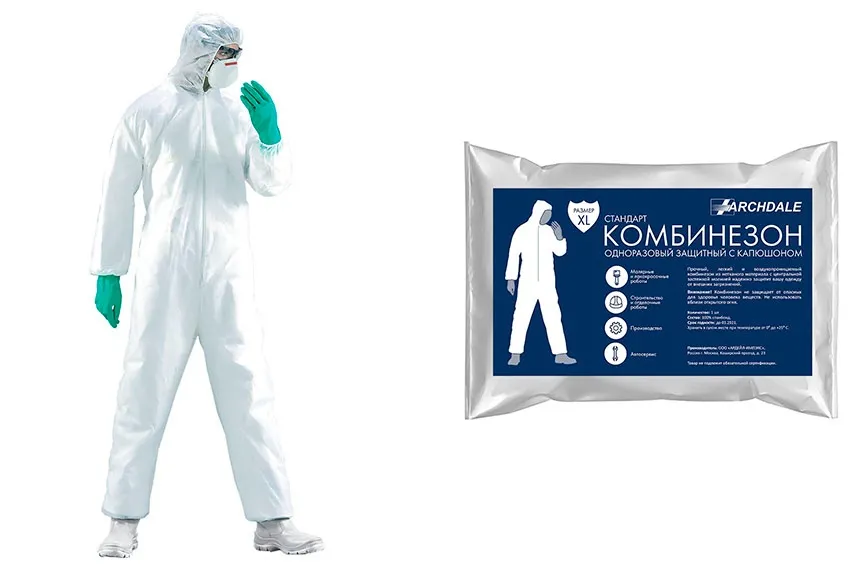
ARCHDALE has run its entire production chain since 1993. This disposable coverall manufacturer operates its own sterilisation facilities. Few Russian suppliers handle both manufacturing and medical-grade sterilisation themselves. This sets ARCHDALE apart for buyers who need proven quality.
Medical-Grade Production With Full Sterilisation Control
ARCHDALE serves the healthcare and pharmaceutical sectors. Their coveralls meet Russian and international medical standards. Each batch passes through multiple internal quality checks before sterilisation.
The sterilisation facility uses physical and chemical methods. This meets strict medical needs. Hospitals won’t accept PPE without correct sterilisation. ARCHDALE handles this key step itself. They don’t outsource it.
Their coveralls give you full-body coverage. You get elasticated hoods, cuffs at ankles and wrists, plus zipper or adhesive closures. Sterile packaging options work for cleanroom settings. The suits shield against biological hazards and particles.
Institutional Orders and Custom Specifications
Federal and regional healthcare networks buy from ARCHDALE often. Russian hospitals, clinics, laboratories, pharmaceutical firms, and emergency response units rely on their steady output.
ARCHDALE customises sizing, packaging, and extra features per client’s needs. Buyers need suppliers with clear documentation and on-time delivery. ARCHDALE built long-term contracts by managing logistics and production schedules.
Disposable coverall manufacturers who manage the full chain respond faster to urgent orders. ARCHDALE’s own sterilisation means they ship critical-care PPE without waiting for outside processing.
4. MAKSIZ (МАКСИЗ) – INVICTA RUMAX
MAKSIZ runs the INVICTA RUMAX brand. They control all production steps. This disposable coverall manufacturer gets every base material from Russian sources. No imported parts means your pricing stays stable. Supply chains keep running without breaks.
Dual-Market Production Strategy
MAKSIZ serves two main markets. Industrial sites use coveralls for handling dangerous materials. Workers face chemical exposure and heavy particle environments. Medical centres need infection barriers. Surgeons, patient care staff, and lab workers all rely on these products.
Russian rules guide each product line. GOST standards set the specs for industrial protective wear. Medical coveralls must pass Roszdravnadzor checks. MAKSIZ runs different quality controls for each sector.
Self-Sufficient Material Supply
Getting materials from Russia cuts out import delays. Currency swings don’t affect costs. MAKSIZ controls raw material quality right from the start. Polypropylene fabric comes from Russian suppliers. Regional partners provide elastic parts and zipper hardware.
This setup shields you from global trade problems. Other disposable coverall manufacturers buy materials overseas. They can’t predict delivery times. MAKSIZ ships on time, no matter what happens in international trade.
5. NITA (НИТА) – KASPER
NITA’s KASPER brand makes medical-grade disposable coveralls for Russian healthcare standards. Top medical groups across Russia use KASPER products. Hospitals keep ordering them because each batch maintains the same quality.
Medical-Focused Manufacturing Excellence
NITA builds coveralls for biological and chemical hazard protection. Each suit blocks fluids and particles that medical staff encounter every shift. The material breathes well and feels light. Surgical procedures run long. Patient care shifts stretch for hours. Protection must balance with comfort.
KASPER coveralls pass strict medical rules. Russian hospitals use them for infection control during procedures. They work in emergency response situations. Patient isolation needs them too. The suits act as strong barriers. Movement stays free.
Core Hospital Supply Partner
NITA supplies Russian medical facilities as a main partner. They serve healthcare networks, not multiple industries. Disposable coverall manufacturers like NITA know hospital buying cycles. They grasp urgent order needs better than general PPE sellers.
Medical buyers want suppliers who ship on time. Certifications must be verified. KASPER’s solid reputation helps. Healthcare administrators managing facility safety budgets can make quick buying choices.
6. Caspersuit (Смелый Каспер)
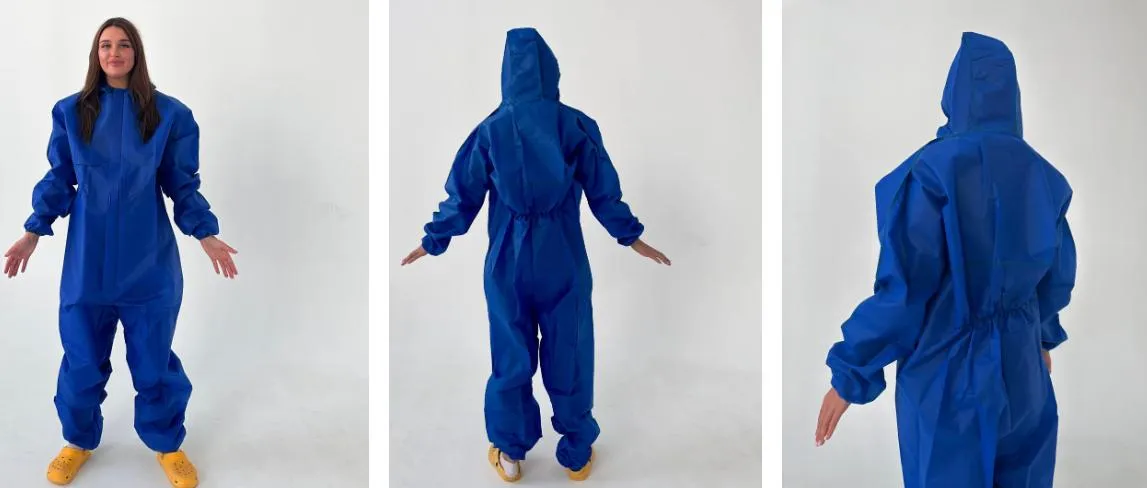
Caspersuit runs from Tambov. They make spunbond nonwoven fabric coveralls. This disposable coverall manufacturer serves painters, repair crews, and light industrial workers. You get practical protection without high costs. The suits work for tasks with low or minor hazards. Full chemical barriers? Not needed here.
Cost-Efficiency for Light Industrial Use
Caspersuit makes mid-level protection gear. Painting creates overspray and dust. Repair work means dirt and small splashes. Construction cleanup requires basic barrier coverage. Their spunbond coveralls stop these common workplace threats. Plus, they cost less than multi-layer materials.
Russian buyers on tight budgets see value here. Disposable coverall manufacturers with affordable options help smaller businesses follow basic safety rules. Caspersuit doesn’t try to win on advanced hazard protection. They focus on practical cost-per-unit value.
Expanding Beyond Core Coverall Production
Caspersuit now makes raincoats and sleeping bags too. They use their nonwoven fabric skills in new product areas. The domestic Russian market pushes this growth plan. They target niche segments. No head-to-head fights with big medical or heavy industrial PPE makers.
7. Armidtech (Армидтех)
Armidtech runs operations from Zelenograd in the Moscow region. This disposable coverall manufacturer makes protective gear with several material types. The product line fits different risk levels in hospitals and industrial sites.
Multi-Material Production Approach
Armidtech uses four main materials. SMS fabric has three layers: spunbond-meltblown-spunbond. This setup stops particles but lets air through. Spunbond by itself offers lighter protection for safer tasks. Polyethene suits stop liquid splashes and chemical contact. Micro mesh versions let your skin breathe during long shifts in medium-risk areas.
Each workplace has its own hazards. Chemical plants need polyethene barriers. Hospital units rely on SMS to control infections. Armidtech picks the right material for your exact hazards.
Custom Design for Client Requirements
Armidtech puts customisation first. Standard products aren’t their thing. You tell them your protection needs, shift length, and how much you move. They build coveralls to match.
This works well for buyers with special safety rules. Construction sites deal with hazards that labs don’t face. Disposable coverall manufacturers who tailor their gear help safety teams hit exact compliance targets. Custom manufacturing makes Armidtech one of Russia’s top 10 protective clothing suppliers.
8. ROOSKOMPLEKT (РООСКОМПЛЕКТ)
ROOSKOMPLEKT makes disposable coveralls for Russia’s most dangerous work sites. Chemical plants, refineries, and emergency teams rely on their gear. This disposable coverall manufacturer builds suits that protect workers from harsh chemicals and toxic materials.
Strong Protection Materials for Risky Jobs
ROOSKOMPLEKT works with layered polyethene and micro-porous films. These materials block chemicals and liquids. Each suit has sealed seams. These seams stop leaks at weak points. You get full body coverage with hoods, elastic cuffs, and boot attachments built in.
They offer different protection levels for different risks. Type 3 coverall suits stay liquid-tight under pressure. Type 4 versions stop spray. Type 5/6 options block particles and light splashes. Anti-static versions prevent sparks. Flame-resistant models handle heat. Liquid-tight designs protect against full immersion.
Certified Quality and Standards
ROOSKOMPLEKT meets GOST standards and EN certifications. They follow PPE Directive 89/686/EEC rules. ISO 9001 quality management oversees every production step. Each batch goes through lab tests and field checks before shipping.
The R&D team updates products as new industrial risks emerge. Regulatory changes get quick product updates. Safety consultants and emergency services help keep designs current. Disposable coverall manufacturers with technical know-how deliver solid protection. ROOSKOMPLEKT distributes across Russia and CIS countries. They also export to international buyers who need certified high-risk PPE.
How to Choose the Best Manufacturer for Your Industry?
Different sectors face different hazards. Each needs specific protective features. A disposable coverall manufacturer for hospitals won’t suit an oil refinery. Match your supplier’s speciality to your real workplace risks.
Healthcare Sector Requirements
Medical facilities need total biological and liquid barriers. Your coveralls must meet ISO 16603/16604 and EN 14126 standards. Bacterial filtration efficiency should hit 99% or higher. Sterilisation compatibility is mandatory for infection control.
Look for microporous film or Tyvek materials. These fabrics block pathogens. They stay breathable and lightweight too. Healthcare workers wear PPE throughout long shifts. Heavy, stiff materials cause fatigue. They also create compliance problems. Single-use disposal works best. Reusable suits risk cross-contamination in medical settings.
Manufacturing and Electronics Production
Dust and particle protection drives manufacturing needs. EN ISO 13982-1 Type 5 certification covers this baseline. Cleanroom operations need antistatic properties. Electronics work requires them too. EN 1149 compliance prevents static discharge. Static damages sensitive parts.
Construction matters here. Workers often move during production shifts. Reinforced seams prevent tears. Flexible materials do too. Cheap coveralls rip after two hours. This wastes money. It also exposes workers to hazards.
Construction Site Protection
Construction crews face coarse dust and minor chemical splashes. Rough surfaces cause abrasion. EN 13034 Type 6 coverall suits handle these moderate risks. Reinforced stitching at stress points extends garment life on active job sites.
High-visibility elements help on sites with vehicle traffic. They work well in low-light conditions, too. Full-body coverage keeps cement dust off skin and clothing. Integrated hoods and boot covers keep paint overspray away. Construction buyers should focus on durability over chemical resistance.
Chemical and Oil Industry Standards
Chemical facilities need the highest protection levels. EN 14605 Type 3/4 certification proves liquid chemical resistance. Multi-layer barrier fabrics with sealed or taped seams create total protection. Integrated hoods and boots eliminate gaps. Chemicals can’t penetrate these.
Check fabric compatibility with your specific chemicals. Not all barrier materials resist every substance. Suppliers must provide clear documentation. You need to know what their coveralls protect against. Oil refineries can’t compromise on these specs. Chemical plants and hazmat teams can’t either.
Bulk Procurement Decision Framework
Production capacity shows whether a disposable coverall manufacturer can meet your volume needs. Confirm minimum order quantities upfront. Large operations need suppliers who ship thousands of units per order. Delays can’t happen.
Customisation adds value for specific compliance needs. Industry markings improve safety programs. Company logos do too. Colour coding for different departments helps. Fit adjustments make a difference. Some manufacturers, like Technoavia, offer rental programs and laundering services. These options reduce upfront costs for businesses testing new safety protocols.
Verify all certifications before signing contracts. Request certificates of conformity for Russian GOST standards. Get international EN/ISO requirements too. Independent third-party testing matters most for healthcare and chemical uses. Internal quality checks carry less weight.
Calculate total lifecycle costs. Don’t just look at per-unit pricing. Single-use suits seem expensive. Factor in laundering costs, though. Consider contamination risks. Think about replacement cycles for reusable gear. Freight terms affect your real costs. Local warehouse access does too.
Sample products before bulk orders. Fit becomes obvious once workers wear the coverall suits. Comfort shows up fast. Material quality and coverage do too. Poor-fitting PPE reduces compliance rates. Good certifications on paper don’t fix this. Request emergency shipment capabilities. Ask about return policies. Chain disruptions happen. Suppliers with backup inventory keep your operations running. Flexible terms help too.
Frequently Asked Questions (FAQ)
What safety certifications do Russian disposable coveralls meet?
Most disposable coverall manufacturers in Russia meet EN 14126 for biological hazard protection. EN 13034 Type 6 certification covers limited liquid splash resistance. EN 13982-1 Type 5 handles airborne particle barriers. Top Russian makers go beyond these basic standards. They add European and international certifications.
Healthcare coveralls meet strict particle filtration rules. Chemical-grade suits pass liquid barrier efficiency tests. Biohazard safety certifications cover medical and industrial lines. Top manufacturers like ROOSKOMPLEKT and Technoavia maintain multiple compliance frameworks.
Can Russian manufacturers export coveralls with proper certifications?
Yes. Top Russian producers secure export-grade certifications. CE Mark approval covers European markets. EAC certification works across the Eurasian Economic Union. ISO 9001 Quality Management System proves process reliability.
Export hazmat suits from Russian suppliers that pass international conformity inspections. Morntrip and Retter Workwear ship certified products worldwide. Their quality control meets buyer standards in dozens of countries.
What materials do Russian manufacturers use for disposable coveralls?
High-density polypropylene (PP) and polyethene (PE) form the base materials. Microporous film laminate (PP+PE) combines chemical barrier strength with breathability. This layered approach works best for maximum protection.
SMS nonwoven fabric dominates medical and pharmaceutical uses. SMS stands for spunbond-meltblown-spunbond. This three-layer structure blocks bacterial filtration above 98% BFE. Laboratory environments need this level of pathogen blocking.
How can buyers verify certification authenticity from Russian suppliers?
Get certificate copies from your disposable coverall manufacturer before payment. Check the certificate number. Verify it with the issuing body’s database. Official regulatory websites list valid certifications.
Examine product labelling for compliance marks. Match batch numbers to the declaration of conformity. Request detailed product data sheets (PDS). These should include specs and protection test results. Use established sourcing networks for supplier background checks. Ask for references from other international clients.
What are typical production and delivery lead times?
Standard bulk orders take 2 to 4 weeks for existing product lines. Quantity and customisation level affect timing. Special large-volume orders extend lead time to 4 to 6 weeks. Custom specs add production time.
Express shipments cut delivery time by several days. Priority contracts help during critical needs. Suppliers with local material sourcing, like MAKSIZ, ship faster. They avoid import delays that slow down competitors.
Which Russian coverall models are most popular for export?
Technoavia UNIS-2 Polypropylene Disposable Coverall leads export sales. It features an integrated hood, elastic cuffs at ankles and wrists, and an elastic waist. Type 5/6 protection meets EN 13034 and EN 13982-1 standards.
Retter Workwear Export Hazmat Suit uses high-barrier PP+PE engineering. This model ships across European and Asian markets. It exceeds standard Russian regulatory requirements. Export certification and proven performance build buyer confidence.
Conclusion
Finding the right partner for protective equipment isn’t just about ticking boxes—it’s about ensuring your team stays safe without blowing your budget. While the manufacturers listed above represent the best of Russia’s production capabilities, we understand that navigating supply chains and securing the best bulk rates can still be a challenge.
If you are looking for reliable, certified disposable coveralls and want to secure competitive wholesale pricing, we are here to help. Whether you need medical-grade sets or heavy-duty industrial suits, our team can provide a quote tailored to your volume needs. Contact us today, and let’s get your workforce protected at the right price.