

Not all surgical gowns protect equally. Using the wrong type can leave you vulnerable to fluids and infections. Comparing Level 3 vs Level 4 surgical gowns, this article shows which surgical gown gives better protection so healthcare workers can feel confident and safe during critical procedures
1. Understanding Surgical Gown Protection Levels
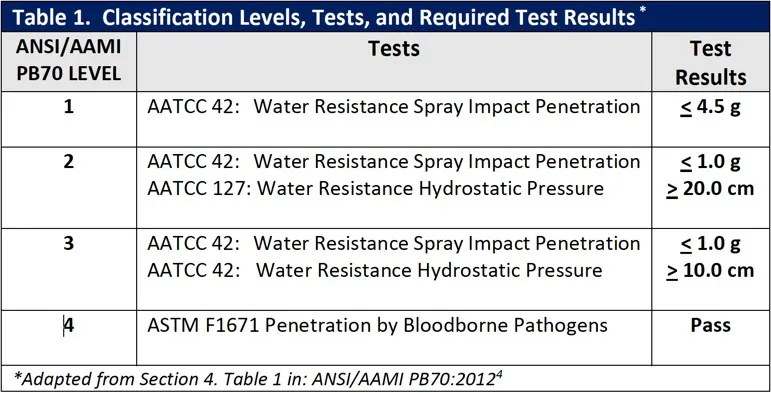
The AAMI PB70 standard evaluates surgical gowns through rigorous testing that simulates clinical exposures. Labs measure impact penetration (AATCC 42), hydrostatic pressure (AATCC 127), synthetic blood strike-through (ASTM F1670), and viral barrier efficacy (ASTM F1671). These protocols ensure gowns perform under real-world stresses like irrigation jets or arterial bleeding.
For surgical gown protection levels, the classification addresses diverse settings—from emergency rooms to transplant suites. The 2025 revision emphasizes expanded testing for non-surgical gowns, but core surgical criteria remain focused on critical zones (front torso and sleeves).
Core Testing Methods for All Levels
- AATCC 42 (Impact Penetration): Sprays 500mL of water; measures blotter absorption.
- AATCC 127 (Hydrostatic Pressure): Applies increasing water pressure until breakthrough.
- ASTM F1670 (Synthetic Blood): Pressurizes blood-like fluid at 2 psi.
- ASTM F1671 (Viral Penetration): Exposes fabric to bacteriophage Phi-X174 surrogate virus.
Levels 3 and 4 build on lower tiers by escalating thresholds, with Level 4 requiring zero viral detection after one hour of exposure.
2. Key Features of Level 3 Surgical Gowns
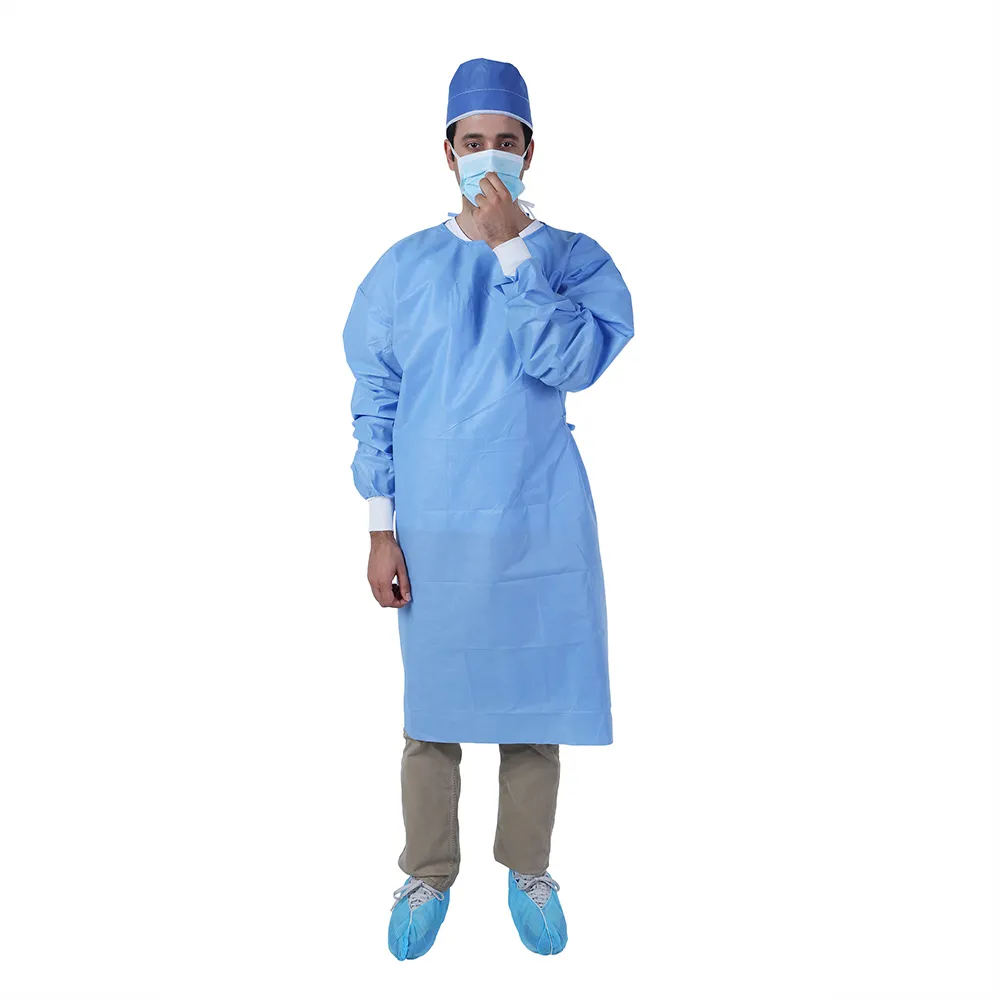
Level 3 surgical gowns strike a balance between robust protection and everyday usability, making them a staple in 70% of U.S. hospitals for moderate-risk cases. Constructed from spunbond-meltblown-spunbond (SMS) or SMMS fabrics, they offer tensile strength and moisture vapor transmission for breathability.
1. Key Features
Moderate Fluid Resistance: Withstands splashes up to 1.0g penetration (AATCC 42) and 50 cm H₂O pressure (AATCC 127).
Breathable Fabrics: SMS/SMMS construction allows air circulation, reducing perspiration buildup.
Reinforced Critical Zones: Extra layers on chest and forearms for targeted durability.
Limited Pathogen Barrier: Effective against bacteria but not validated for viruses.
2. Typical Use Cases
Routine orthopedic surgeries (e.g., arthroscopies with tourniquets).
General abdominal procedures with controlled bleeding.
Trauma interventions involving arterial line insertions.
Emergency department stabilizations with minimal aerosol generation.
Labor and delivery rooms for standard vaginal births.
3. Advantages
Enhanced Comfort: Lightweight design (typically 40-50gsm) minimizes heat stress during 2-4 hour procedures.
Mobility Support: Flexible fabric enables precise movements without restriction.
Economic Value: 30-50% lower cost than Level 4, ideal for high-volume clinics.
Eco-Friendly Options: Reusable variants reduce waste by up to 50% annually.
4. Limitations
- Pressure Vulnerability: Fails under sustained 2 psi exposure, unsuitable for irrigation-heavy ops.
- Viral Gaps: No ASTM F1671 certification, risking exposure in infectious cases.
- Seam Weaknesses: Standard stitching may allow micro-penetration in prolonged use.
Recent CDC evaluations of stockpiled Level 3 gowns confirm 95% pass rates for moderate testing, but recommend annual revalidation.
Key Features of Level 4 Surgical Gowns
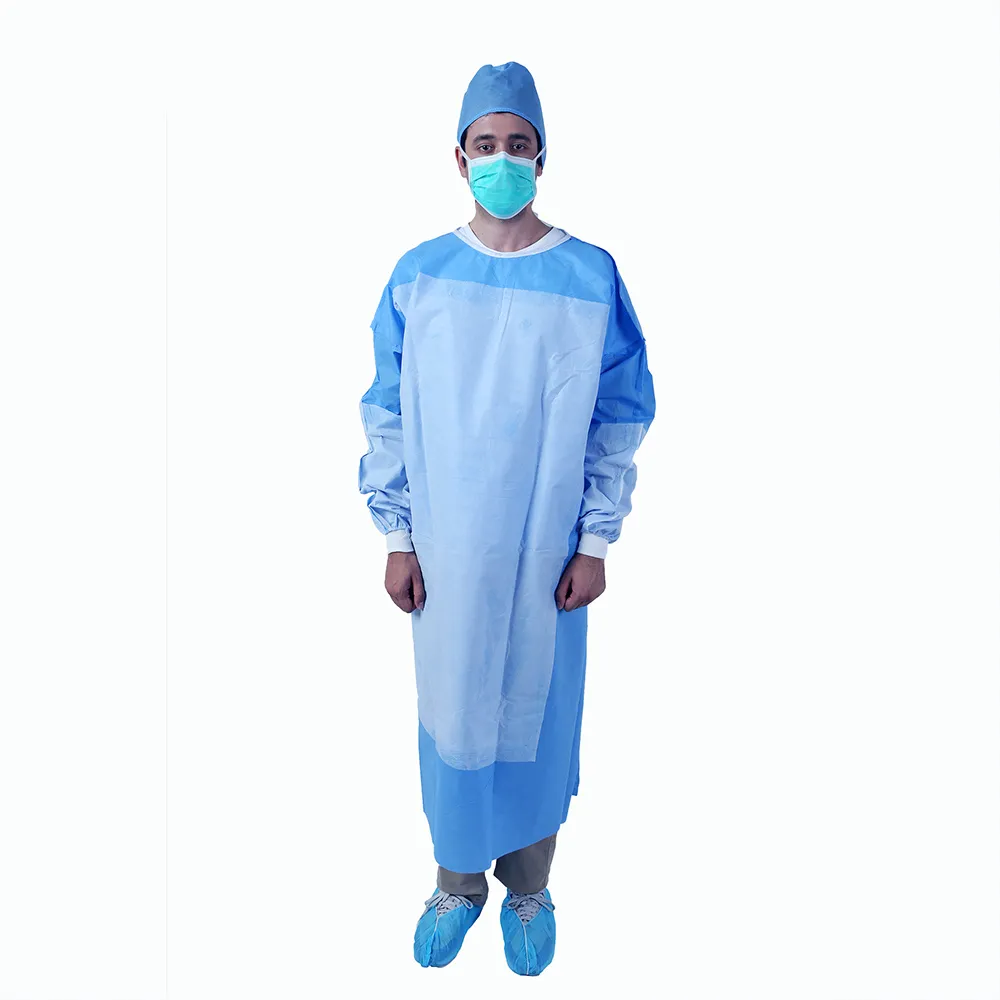
For environments demanding uncompromised safety, Level 4 surgical gowns represent the gold standard, passing all AAMI tests, including viral challenges. Multi-layer laminates with polyethylene films ensure 100% impermeability, critical for procedures exceeding 3 liters of fluid exposure.
1. Key Features
Maximum Barrier Performance: Zero penetration in ASTM F1670/F1671 at 2 psi for 60 minutes.
Advanced Materials: SMS/SMMS with laminated films; reinforced seams via ultrasonic welding.
Extended Coverage: Full front, sleeves, and often back panels for comprehensive shielding.
Viral-Proof Design: Blocks surrogates like Phi-X174, effective against HIV/hepatitis.
2. Typical Use Cases
Open-heart surgeries with cardiopulmonary bypass.
Organ transplants involving vascular anastomoses.
Major trauma laparotomies with massive transfusions.
Orthopedic revisions using high-pressure lavage.
Infectious isolation procedures during outbreaks (e.g., Ebola protocols).
3. Advantages
Superior Contamination Control: Reduces strike-through by 62% vs. lower levels.
Regulatory Assurance: Meets 2025 AAMI mandates for high-risk sterile fields.
Pathogen Defense: Validated against bloodborne viruses, per FDA 510(k).
Durability: Withstands tears/punctures in instrument-heavy environments.
4. Limitations
- Thermal Discomfort: Lower breathability (20-30gsm denser) increases sweat during long wear.
- Premium Pricing: 40-60% higher cost, straining budgets for routine use.
- Weight Factor: Heavier build (60-70gsm) may slightly hinder agility in dynamic cases.
Innovations like breathable back panels in 2025 models address comfort concerns, per Cardinal Health’s best practices.
Level 3 vs Level 4 Surgical Gowns
Direct comparison reveals fundamental differences in barrier performance and clinical applicability. Level 3 surgical gowns permit minimal fluid penetration under standardized testing—up to 1.0 gram in AATCC 42 protocols—while Level 4 garments achieve zero transmission across all required assessments. This distinction proves critical during procedures generating pressurized fluid streams.
| Parameter | Level 3 Surgical Gown | Level 4 Surgical Gown |
|---|---|---|
| AATCC 42 Water Penetration | ≤ 1.0 g | 0.0 g expected |
| Hydrostatic Pressure | ≥ 50 cm H₂O | No specific requirement |
| Synthetic Blood Penetration (ASTM F1670) | Not required | Zero penetration at 2 psi |
| Viral Penetration (ASTM F1671) | Not required | Zero detection at 2 psi |
| Critical Zone Coverage | Front panel and sleeves | Entire front and full sleeves |
Level 4 surgical gowns excel in high-fluid-volume scenarios where strike-through could compromise sterile fields or expose staff to pathogens. Orthopedic procedures using pulsed lavage systems generate aerosolized fluids that overwhelm Level 3 barriers. Cardiovascular operations involving cardiopulmonary bypass present similar challenges requiring maximum protection.
Comfort considerations favor AAMI Level 3 surgical gowns in moderate-risk settings. Their lighter construction and enhanced breathability reduce heat stress during extended wear. Level 4 gowns, while incorporating modern breathable back panels, prioritize impermeability over ventilation due to their dense protective layers.
When to Choose Level 3 vs Level 4 Surgical Gowns
Procedure-specific risk assessment guides appropriate surgical gown selection. Endoscopic examinations, cataract surgeries, and diagnostic biopsies typically involve minimal fluid exposure, making Level 3 protection sufficient. These scenarios benefit from the garments’ balance of barrier performance and wearer comfort.
Major abdominal operations, orthopedic joint replacements with irrigation, and vascular procedures demand Level 4 protection. The continuous fluid challenge in these cases—often exceeding several liters—necessitates impervious barriers. Trauma centers managing penetrating injuries implement Level 4 protocols when massive transfusion becomes likely.
Infectious disease isolation units require careful evaluation. Patients with confirmed blood-borne pathogens mandate Level 4 gowns regardless of procedure type. Facilities managing COVID-19 patients during aerosol-generating procedures similarly upgrade to maximum protection levels.
Additional Factors to Consider When Selecting Surgical Gowns
Ergonomic design influences gown effectiveness beyond barrier performance. Proper fit prevents gaps at necklines and sleeves that compromise protection. Manufacturers offer multiple sizing options and adjustable closures to accommodate diverse body types. Staff training ensures correct donning and doffing procedures that maintain barrier integrity.
Sustainability initiatives gain traction in healthcare procurement. Reusable Level 3 gowns demonstrate significant cost savings—potentially 50% annually—while maintaining protection after proper laundering. Level 4 garments remain predominantly disposable due to their complex construction, though innovative recycling programs emerge for select materials.
Storage conditions affect gown performance. Temperature and humidity control prevent material degradation that could reduce barrier effectiveness. Facilities implement first-in-first-out inventory systems and regular quality checks to ensure product reliability.
FAQs: Level 3 vs Level 4 Surgical Gowns
1. Are Level 4 gowns always needed for every surgery?
Level 4 surgical gowns are not required for all surgeries. Many routine procedures, such as orthopedic or general surgery, involve moderate fluid exposure. Level 3 gowns are sufficient for these tasks, providing both protection and comfort. Hospitals reserve Level 4 gowns for high-risk or long surgeries, where heavy blood, body fluids, or viral exposure is expected. Using Level 4 gowns unnecessarily can lead to higher costs, staff discomfort, and heat stress. Hospitals evaluate each procedure’s risk level, duration, and exposure to select the appropriate gown, ensuring safety and efficiency.
2. Can Level 3 gowns protect against viruses?
Level 3 surgical gowns offer moderate fluid protection but are not fully tested for viral penetration. They are suitable for medium-risk procedures with limited blood or fluid. In high-risk procedures involving viruses, Level 4 gowns are necessary. Using Level 3 gowns in high-risk viral situations increases contamination and infection risk for staff and patients. Hospitals may combine Level 3 gowns with additional PPE, such as gloves, masks, or face shields, to enhance protection. Understanding each gown’s limitations ensures healthcare workers are safe and reduces the risk of infection during surgical procedures.
3. How do hospitals decide between Level 3 and Level 4 gowns?
Hospitals use a combination of risk assessment, procedure duration, and expected fluid exposure to decide between Level 3 and Level 4 gowns. Medium-risk procedures, like routine surgeries, generally use Level 3 surgical gowns for comfort and cost-efficiency. High-risk surgeries with heavy bleeding or viral exposure require Level 4 surgical gowns for maximum protection. Hospitals also consider staff comfort and AAMI PB70 standards. Proper gown selection balances safety, comfort, and cost while maintaining high standards for infection control. Staff education and awareness are key to ensuring the correct gown is used for each surgical procedure.
4. Are reusable Level 4 gowns reliable?
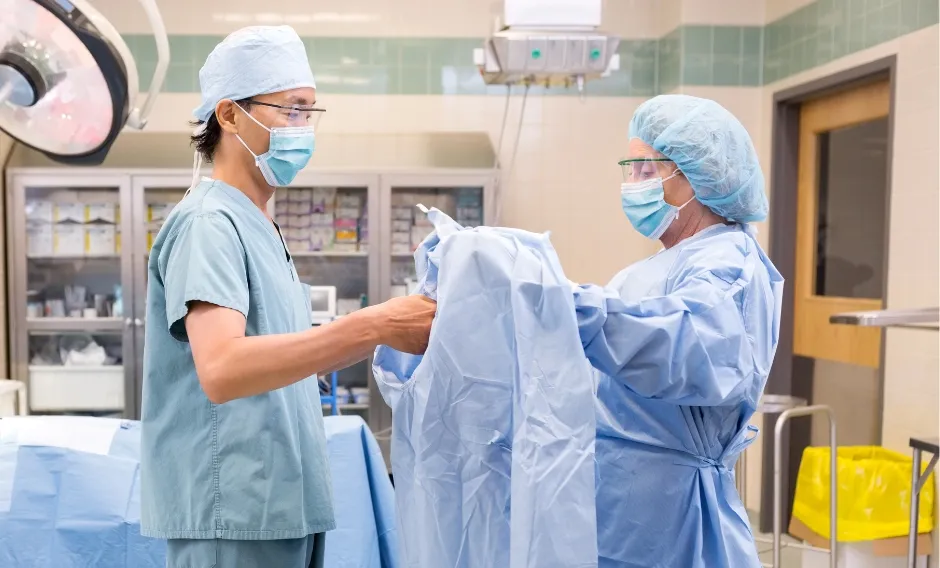
Yes, reusable AAMI Level 4 surgical gowns are effective if properly washed and sterilized. They must maintain fluid and viral resistance after multiple uses, following strict hospital cleaning protocols. Reusable gowns reduce medical waste and can be cost-efficient for high-volume hospitals. They may feel heavier and less breathable than disposable gowns, but they provide the same maximum protection. Hospitals need careful quality control and inspection to ensure that repeated washing does not reduce their protective properties. Staff training on proper use and handling is also critical to maintain safety.
5. Can switching from Level 4 to Level 3 save costs safely?
Switching from Level 4 to Level 3 can reduce costs, but only if fluid and viral risk are moderate. Level 3 gowns are lighter, breathable, and more comfortable, making them suitable for routine procedures. Using Level 3 gowns in high-risk surgeries increases contamination risk. Hospitals should evaluate each procedure’s fluid exposure, staff safety needs, and procedure duration before making this change. Correct gown selection balances protection, comfort, and cost. Risk assessment tools and AAMI PB70 standards help guide hospitals to choose the proper gown level while maintaining safety and operational efficiency.