

Finding a reliable hospital mask manufacturer in Mexico used to mean digging through outdated trade directories, chasing unverified leads, and hoping your shortlisted supplier held the certifications they claimed. That process is exhausting. In today’s post-pandemic procurement world, supply chain resilience is no longer optional — and that kind of guesswork is a risk most healthcare buyers can’t take.
Mexico’s medical manufacturing sector has grown into one of the most competitive nearshore alternatives to Asian supply chains. Yet clear, buyer-ready information on who’s producing compliant, hospital-grade masks is still hard to find.
This guide changes that. You’ll find seven vetted manufacturers below — from global giants running local plants to emerging domestic producers. Each one is ranked, compared, and broken down with everything a serious procurement decision needs.
Mexico’s Hospital Mask Manufacturing Landscape in 2026: Why Nearshore Sourcing Matters Now
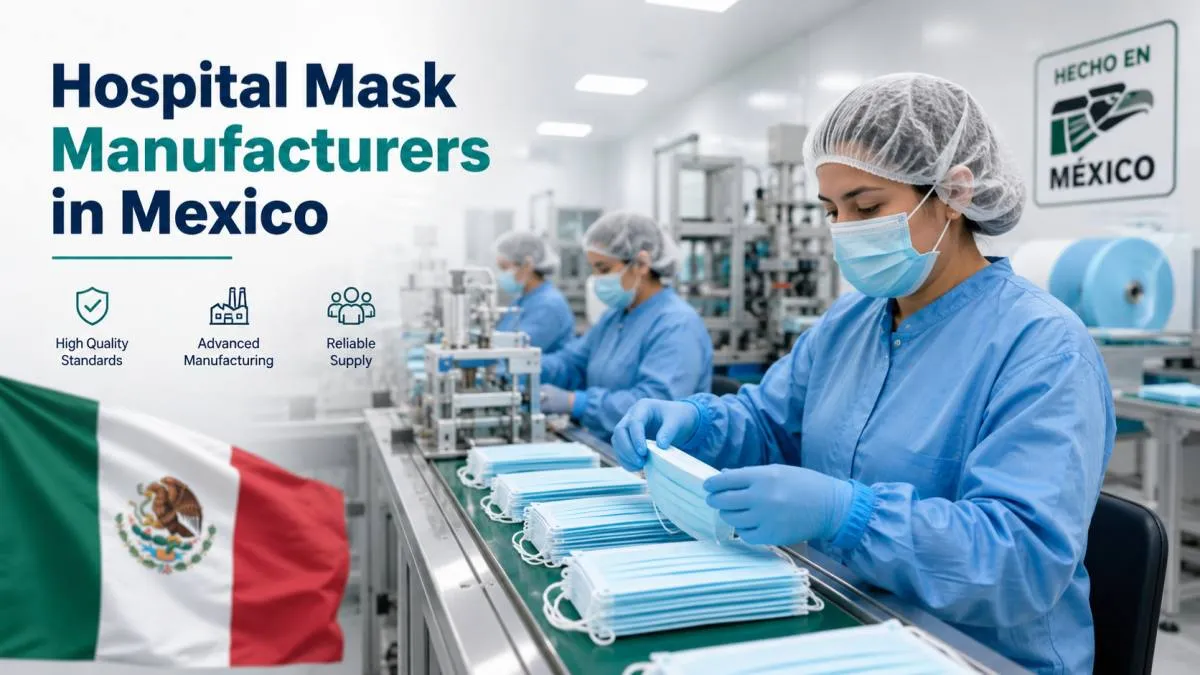 The numbers are hard to ignore. Mexico’s healthcare market hits USD 57 . 2 billion in 2026. The medical device contract manufacturing sector grows at a 10.6% CAGR through 2033. This isn’t a trend. It’s a structural shift.
Sourcing hospital masks and Disposable PPE? The case for nearshoring is clear:
| Factor | Mexico (2026) | China |
|---|---|---|
| Sea Transit to the US | 7 days | 45 days |
| US Import Tariffs | ~0% (USMCA) | >33% |
| Contract Mfg CAGR | 10.6% | Below global avg. |
A June 2025 government decree made Mexico’s position even stronger. It gives COFEPRIS-certified local manufacturers preferred status in public procurement tenders starting in 2026. On top of that, COFEPRIS regulatory reforms now fast-track medical device approvals. Domestic producers get to market faster.
Manufacturing corridors in Tijuana, Mexicali, and Monterrey have doubled their industrial capacity. You get faster supplier onboarding and lower inventory carrying costs. Your supply chain also stops depending on containers stuck in a Pacific port for six weeks.
Mexico isn’t just a cheaper alternative to Asia anymore. It’s the smarter one.
#1 Cardinal Health — Mexico’s Largest Multinational Hospital Supply Manufacturer
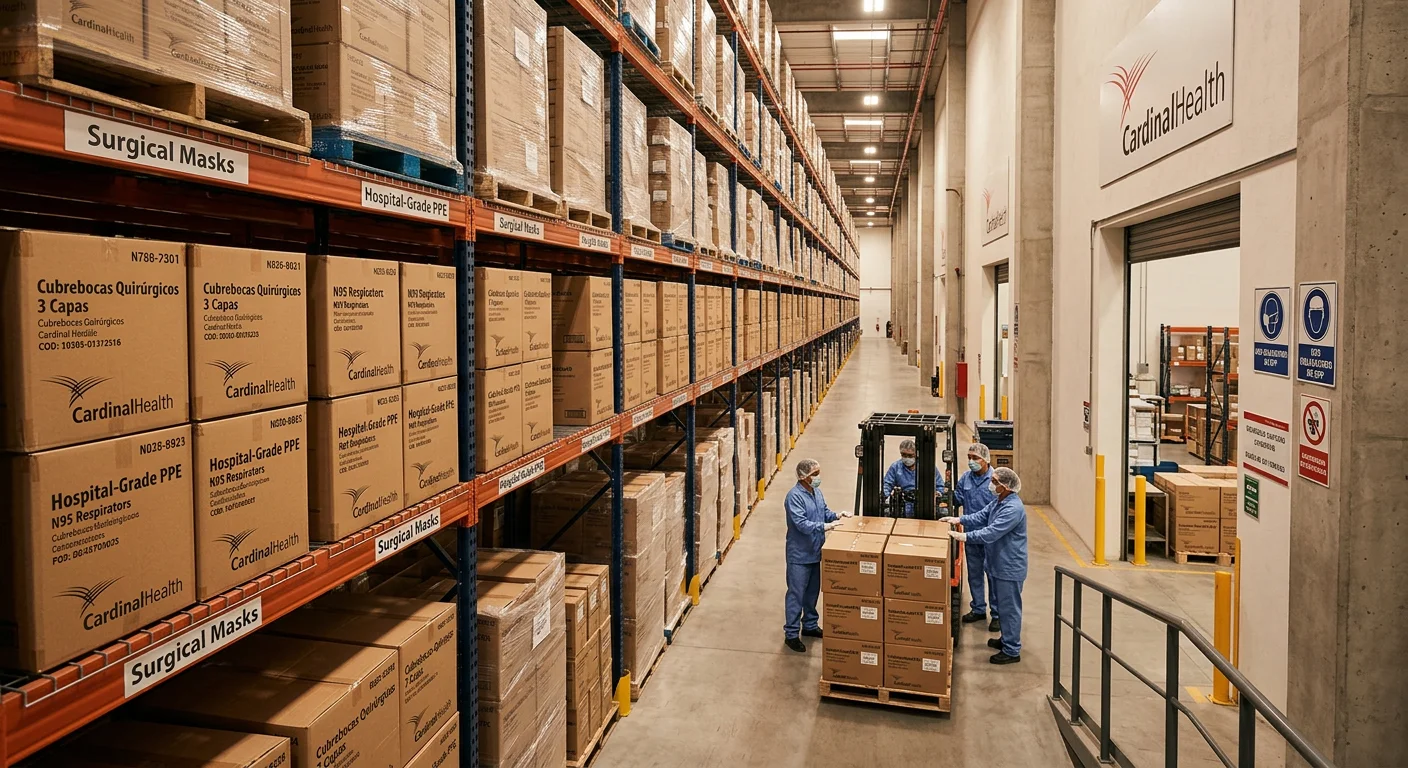 Cardinal Health doesn’t just exist in Mexico’s healthcare supply chain — it drives it. The company runs with over 5 , 000 employees across the country. Add to that a global footprint across 20 manufacturing facilities worldwide, and you get one of the most recognized hospital supply networks serving Mexican healthcare institutions.
Mexico City serves as the regional hub. From there, the team coordinates distribution to hospitals, pharmacies, clinical labs, and medical offices. The product range covers a lot of ground: wound care solutions, urology supplies, vital signs monitoring equipment, operating room consumables, and cardiothoracic drainage systems under the trusted Bard brand. For procurement teams who need broad-spectrum hospital supplies, Cardinal Health offers a single-source relationship with real institutional backing.
On PPE and mask sourcing, Cardinal Health’s N95 products meet FDA-cleared standards and ASTM Level 3 specifications — BFE/PFE exceeding 95%, fluid resistance rated at 160mmHg. Production runs out of US facilities like Springfield, MO. Products reach Mexico through established distributor channels.
How to Access Cardinal Health Products in Mexico?
Direct factory purchasing isn’t the standard route here. Your best path to procurement runs through verified local distributors:
- ATSA Med — atsamed.com.mx
- SMedicalG — WhatsApp-based inquiries for Bard catheters and surgical mesh
- QualityMed — WhatsApp: 33 2793 6573 for cardiothoracic and medical supply orders
- CMCOEM — cmcoem.info for Mexico pricing and bulk quotes
MOQ Requirements stay flexible. Distributors start at single-case or unit-level orders. So whether you run a large hospital system or a smaller clinical operation, Cardinal Health is within reach.
Certifications: FDA 510(k), ISO 13485, CE Mark, and COFEPRIS-compliant product lines for the Mexican market.
#2 3M Mexico — The Gold Standard for N95 & Surgical Mask Manufacturing
3M carries weight in hospital boardrooms, government tenders, and frontline supply rooms. It’s the name buyers trust across all three.
3M’s manufacturing base in Mexico runs through Nuevo León, centered on its Apodaca facility. This plant is part of 3M’s global N95 network. That network grew from 35 million units per month in early 2020 to over 95 million per month by year-end. Mexico’s operations played a solid role in that growth. Industry benchmarks place 3M Mexico’s regional PPE share at 10–15% of output. Around 70% is manufactured locally, with the rest imported from US and Asian facilities.
The two flagship models cover most buyer needs:
- 3M 8210 — flat-fold N95, the workhorse of hospital procurement
- 3M 1860/1860S — surgical N95 with fluid resistance, the standard in clinical environments
Both hold NIOSH 42 CFR 84 certification, FDA surgical clearance, ISO 13485, and CE marking for export markets.
Procurement & Pricing for Mexico Buyers
Bulk pricing falls between $0.90–$1.40/unit for IMSS and Secretaría de Salud tenders. That range is competitive for high-volume healthcare contracts.
To source direct:
- Contact 3M Mexico sales
- Submit your MOQ inquiry — standard minimum is 10,000+ units for N95
- Verify your distributor at 3m.com.mx/distribuidores
- Authenticate product through 3M’s “My N95” checker at 3m.com/myn95
Authorized channels include Grainger Mexico, Interservicios, and Medline Mexico. Send bulk RFQs through 3m.com.mx/contacto.
Counterfeit 3M product does circulate in Mexico’s secondary market. Before you finalize any order, confirm the TC-84A NIOSH stamp and the model-specific hologram. That step protects your procurement from costly mistakes.
#3 Becton Dickinson (BD) Mexico — Medical Device Giant with 12 Local Plants
Sixty-five years in-country. Twelve manufacturing plants. 17,000 employees. BD didn’t build that presence in Mexico by chance — it built it because Mexico works.
BD runs the second-largest country operation in its entire global network. That alone shows how deeply the company has committed here. The latest milestone: a $38.6M facility in Tijuana, Baja California. It covers 15,775 m² and produces automated medication dispensing cabinets at 225 devices per day. From day one, it exports to North America, Europe, Africa, Asia, and Oceania.
The Cuautitlán Izcalli plant in the State of Mexico carries a remarkable distinction. It holds ~52% of BD’s entire global prefillable glass syringe capacity and turns out over 1 billion units per year. This is BD’s largest pharmaceutical systems plant in the world. A $56M expansion recently added new lines for vaccine syringes and injection stoppers — part of a broader $1.2B global four-year investment plan.
On infection control and PPE, BD’s product lines cover essentials like the BD Fluidshield N95 — an industry-standard respiratory option built for hospital procurement.
Sourcing BD Products in Mexico
BD sells through tiered distributor channels serving hospitals and importers. To find authorized partners, start at bd.com/es-mx.
Mexico HQ : Monte Pelvoux 111, Col. Lomas de Chapultepec, Miguel Hidalgo, Mexico City.
#4 Medtronic Mexico — Hospital-Grade PPE from Tijuana’s Manufacturing Hub
Tijuana doesn’t get enough credit. Most procurement conversations default to Monterrey or Mexico City. But this border city runs one of the most concentrated medical device manufacturing ecosystems on the planet — 300+ plants, 60,000 workers, $3 billion in annual exports.
Medtronic sits at the center of it.
Medtronic has operated two manufacturing sites in Tijuana since 2003. That’s not just a factory footprint — it’s full infrastructure. Over 5,500 employees work across those two facilities. They’re part of a larger 15,000-person Mexico workforce spread across six locations nationwide. These aren’t simple parts lines. Medtronic Tijuana handles new product development, complex manufacturing transfers, coronary materials, and advanced aortic valves like the CoreValve Evolut. The work demands precision at every step.
What does this mean for Hospital Buyers?
Here’s the honest picture: Medtronic’s Tijuana facilities don’t list hospital masks or disposable PPE as primary output. Their core strength is life-saving implantable devices — cardiac, vascular, and endoprosthetic systems. All are built to FDA and ISO 13485-equivalent standards under strict GMP compliance.
That context still matters for your procurement decisions. These facilities export to the US under the USMCA framework. They maintain sterility standards for implantable vascular devices. That puts them at the top of what Tijuana’s manufacturing base can deliver.
The cluster itself does produce PPE at scale. Tijuana maquiladoras turn out millions of IV bags and artificial respirators each year. Medline operates nearby too, with a $250M surgical and PPE facility in Nuevo Laredo. That adds serious infection control supply capacity to the region.
For buyers, Medtronic’s Tijuana presence sends a clear signal. Source hospital-grade infection control products from this corridor, and you’re working with manufacturing standards, skilled labor, and US-proximity logistics already proven at the highest level.
- Cluster proximity : Direct border access to California — the US’s #1 medical device market
- Workforce depth : Engineering, quality, and project management talent all concentrated in one zone
- Regulatory alignment : 70% US-owned operations maintain export-grade compliance as standard practice
#5 Shelmex — Mexico’s Premier Local Medical Consumables & Mask Manufacturer
Multinationals get the headlines. Shelmex does the work. This COFEPRIS-registered domestic manufacturer keeps Mexican healthcare systems supplied — day in, day out. It’s built around local demand realities, and it shows. Mexico’s homegrown medical consumables industry is growing up: certified, competitive, and ready for serious volume.
The pricing alone stops buyers mid-scroll:
| Product | Shelmex-Type Local Price | Multinational Benchmark |
|---|---|---|
| Surgical Mask | $0.05–$0.12/unit | $0.15–$0.30/unit |
| N95 Respirator | $0.45–$0.85/unit | $1.20–$2.50/unit |
That’s a 50–70% cost advantage — not a rounding error.
Product Line Overview
Shelmex covers the core hospital PPE range:
3-ply Surgical Masks
— BFE/PFE ≥98%, fluid-resistant, compliant with NOM-137-SSA1-2008 and ISO 13485- N95 Respirators — 4–5 ply, ≥95% filtration at 0.3μm, COFEPRIS Class II registered with an active FDA export pathway
- Particulate Dust Masks — ≥90% efficiency, reusable options available, Class I compliant
Who This Manufacturer Is Built For?
MOQ starts at 50,000–100,000 units. That’s the entry point. It’s sized for mid-size distributors, regional hospital networks, and LatAm wholesalers who can’t absorb the 500,000+ minimums that multinationals demand.
Lead time runs 2–4 weeks, not 6–12. Your inventory window is tight. A delayed container isn’t an option. Shelmex fits that reality.
Shifting away from Asian supply chains? A COFEPRIS-certified local producer like Shelmex checks every practical box:
- USMCA trade alignment — smoother cross-border logistics
- Spanish-language documentation — no translation delays
- Local MRH representation — direct regulatory access
- Regulatory familiarity — your compliance timeline gets shorter, not longer
To verify certification status or start supplier onboarding, go to gob.mx/cofepris. Confirm active Class II registration before you issue any RFQ.
#6 Boston Scientific Mexico (Tijuana) — Emerging PPE & Hospital Supply Manufacturer
A $38.6M investment says a lot. Boston Scientific didn’t drop that kind of capital in Tijuana without a clear strategy.
The facility covers 15,775 square meters. It sits inside the same Tijuana corridor that holds 300+ medical device plants. The main product: automated dispensing cabinets (ADCs) — precise medication management systems shipped to North America, Europe, Africa, and Asia.
Here’s the straight read for procurement teams: this isn’t a dedicated mask factory . It does run inside Boston Scientific’s wider hospital supply network, though. That network includes sterile packaging and infection control product lines — the exact categories hospital buyers need right alongside respiratory PPE.
Why It Still Belongs on Your Radar?
Boston Scientific’s Latin America HQ in Weston, FL, manages regional procurement across the full product range. Their Mexico City office (Insurgentes Sur 1602) covers local operational needs. So bundling hospital supply orders becomes much simpler with that kind of structure in place.
The Tijuana facility’s 500-job ramp-up points to a long-term manufacturing commitment. This isn’t a short-term production move.
- Full regional coordination through Latin America HQ
- Local support via the Mexico City office
- Sterile packaging and infection control lines are available
- Proven infrastructure built for scale
Contact : (888) 272-1001 , Monday–Friday, 8:30 am–9:30 pm Eastern.
#7 Local & Emerging Mexican Hospital Mask Manufacturers: Hidden Gems for Bulk Buyers
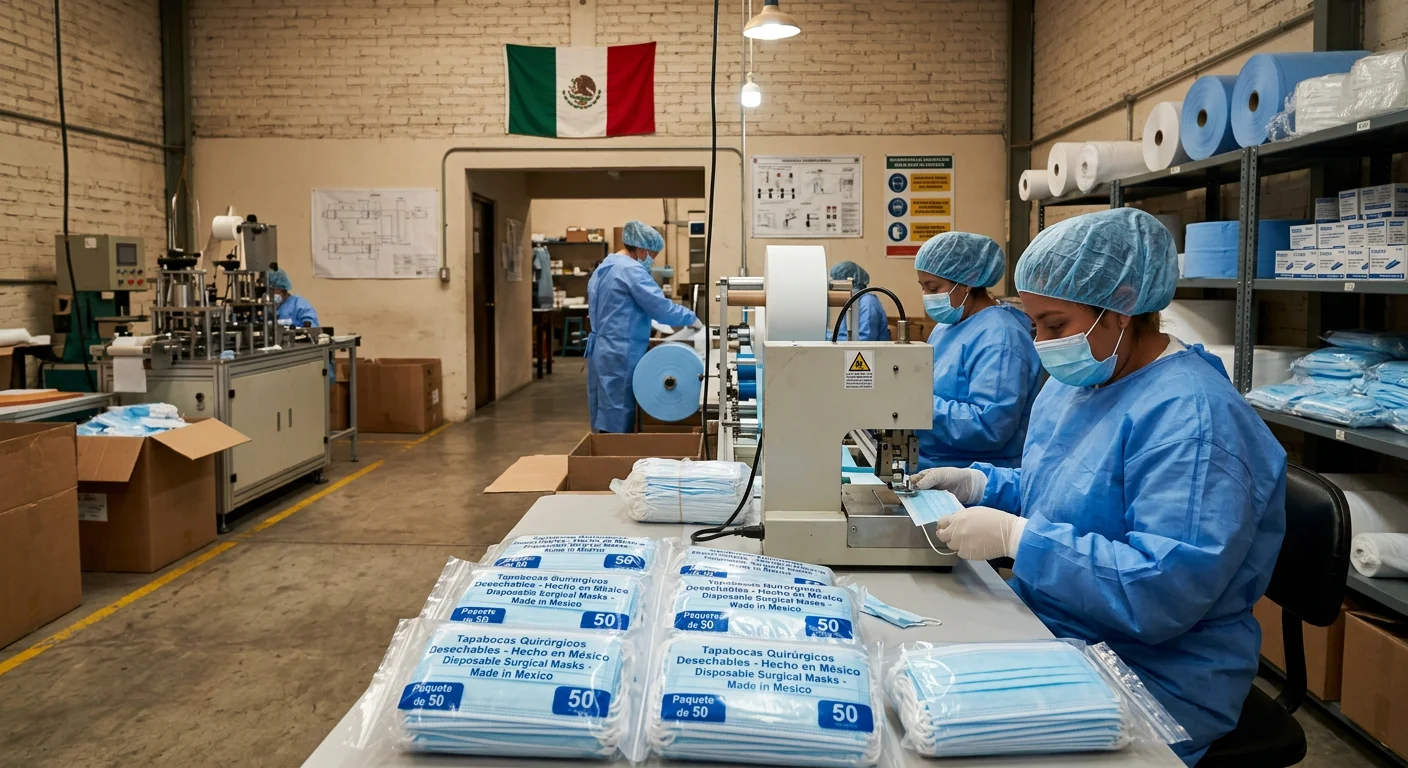 Mexico’s smaller mask producers don’t appear in global supplier databases. That invisibility is what makes them valuable to the right buyer.
Past the multinationals, a growing network of COFEPRIS-registered SMEs and local workshops serves bulk buyers who need flexibility over volume. You get lower MOQs. Custom designs are on the table. Communication moves faster. These are real advantages that work in your favor.
Where to start your search:
- COFEPRIS Database — Search “máscaras faciales” or “equipo de protección” at gob.mx/cofepris. Filter by Registro Sanitario to check any Mexican SME before sending an RFQ.
- AMID Member Directory — Visit amid.org.mx to filter mask producers by region (Jalisco, Monterrey, Estado de México). Reach out to info@amid.org.mx for SMEs not listed publicly.
- Alibaba Mexico Supplier Filter — Check any “Mexico Supplier” listing against their COFEPRIS registration number before locking in an MOQ.
SME vs. Multinational — What bulk buyers get:
| Factor | Mexican SMEs | Multinationals |
|---|---|---|
| MOQ | 50–200 units | 1,000–10,000 units |
| Customization | High (OEM/ODM, 2–4 weeks) | Medium (standard templates) |
| Certifications | COFEPRIS local registration | FDA/CE/ISO 13485 |
Testing nearshore sourcing? Request samples first — 5 to 10 units. Do that before committing to any 100+ unit order.
Side-by-Side Comparison: 7 Hospital Mask Manufacturers at a Glance
Seven manufacturers. Seven different ways into Mexico’s hospital mask supply chain. Here’s the full picture — quick and clear, so your procurement team can act fast.
| Manufacturer | Type | Key Products | Certifications | MOQ | Best For |
|---|---|---|---|---|---|
| Cardinal Health | Multinational | Surgical masks, N95 (ASTM L3) | FDA 510(k), ISO 13485, COFEPRIS | Single-case (via distributors) | Full-range hospital supply |
| 3M Mexico | Multinational | 8210, 1860/1860S N95 | NIOSH, FDA, ISO 13485, CE | 10,000+ units | Government tenders, clinical-grade N95 |
| BD Mexico | Multinational | BD Fluidshield N95, infection control | FDA, ISO 13485, GMP | Via distributors | Infection control, institutional buyers |
| Medtronic Tijuana | Multinational | PPE-adjacent; cluster sourcing | FDA, ISO 13485 | Cluster-based | Border-proximity logistics |
| Shelmex | Local | 3-ply surgical, N95, dust masks | COFEPRIS Class II, ISO 13485 | 50,000–100,000 units | Cost-driven bulk buyers |
| Boston Scientific | Multinational | Sterile packaging, infection control | FDA, GMP | Via LatAm HQ | Bundled hospital supply orders |
| Local SMEs | Domestic | Custom OEM masks, 3-ply surgical | COFEPRIS local registration | 50–200 units | Flexible, low-volume nearshore testing |
Bottom line for buyers : your budget shapes the decision.
- Price-first? Go with Shelmex or local SMEs. Surgical masks can run as low as $0.05/unit.
- Compliance-first? Stick with 3M or Cardinal Health. Both carry the certifications most hospitals require.
- Need nearshore flexibility? Start with the Tijuana cluster manufacturers. They handle border-proximity logistics and smaller, cluster-based orders.
How to Start Sourcing Hospital Masks from Mexico in 2026: Step-by-Step Action Plan
Smart nearshore sourcing comes down to process. Get it right, and you cut costs. Get it wrong, and you pay for it. Here’s what to do.
Step 1: Screen Suppliers Before You Make Contact
Start at the source. Go to vigilancia.cofepris.gob.mx and search for COFEPRIS-registered manufacturers. Use “máscaras hospitalarias” or the matching device code. Filter by border states first. Tijuana has 50+ medical device firms. Nuevo Laredo is another strong option. Both deliver 30–50% lower costs than US domestic sourcing.
Set your price expectations before calling anyone. Mexican surgical masks run $0.05–$0.12/unit at MOQs of 50,000–100,000 units. Join AMID (amid.org.mx) to access their 200+ member supplier directory. Also, mark your calendar for their 2026 annual expo in Mexico City — it runs March 10–12.
Step 2: Request Samples and Verify Credentials
Order 50–100 samples first. Most suppliers send them free, or charge $50–100 with shipping included. Test each sample for BFE/PFE >95% and fluid resistance ≥80mmHg per EN 14683 Type IIR standards.
Then check the paperwork. A real COFEPRIS Registro Sanitario shows:
– A valid registration number
– An expiry date past 2027
– An official issuer seal on a gob.mx domain
No QR code? Unfamiliar domain? Walk away. 20% of border market products carry fake certifications. For US import, ask for an FDA 510(k) clearance number and check it directly at fda.gov/medical-devices.
Step 3: Run a Full Qualification Check
COFEPRIS Class II mask audits cost MXN 20,000 (~$1,000) and take 30–60 days. Worth every peso. Cross-check your suppliers through AmCham Mexico (amcham.org.mx). Their vetting service catches about 15% of exporters as non-compliant. That’s a useful filter before you commit.
The good news: 70% of Mexican mask manufacturers already hold dual COFEPRIS + ISO 13485 certification. Compliant suppliers are out there — you just need to find the right ones.
Step 4: Negotiate Contracts With Precision
Use L/C at sight for payment terms. It cuts risk by 30% versus straight T/T transfers. For large orders, push for a 10–15% MOQ discount above 500,000 units. Also, add these two clauses to every contract: – A 2% defect allowance – Third-party testing rights through SGS Mexico (~$2,000/test)
These protect you if quality slips after you scale up.
Step 5: Inspect Before It Ships
Bring in SGS or Intertek Mexico — Tijuana office, ~$1,500 per container, to inspect 10% of the shipment before it leaves. For US-bound freight, prepare CBP Form 3461 and file FDA Prior Notice in advance. Reject any shipment with a failure rate above 1% on inspection. No exceptions.
A 100,000-unit order runs $6,000–$12,000 FOB — about $15,000 landed in the US. That’s a 25% saving over US domestic sourcing. Plus, your supply chain runs through a land border, not a Pacific shipping lane, so delays hit you less hard.
Conclusion
Mexico’s mask manufacturing sector isn’t a backup plan — it’s a strategic advantage hiding in plain sight.
The seven manufacturers in this guide cover the full range of what nearshore sourcing can deliver in 2026. You get multinational reliability, COFEPRIS and FDA-aligned compliance, competitive pricing, and a supply chain that no transpacific shipment can match. Tired of 90-day lead times? Ready to move beyond Asian suppliers? The infrastructure you need already exists south of the border.
Your next move is straightforward: – Use the side-by-side comparison as your shortlist – Contact two or three manufacturers that fit your volume and certification needs – Request samples before placing bulk surgical mask orders
The supply chain disruptions of the past decade left us with one clear lesson: proximity is protection.
Don’t wait for the next crisis. Start building those relationships now.