
If you’re heading out for a deer hunt this season, choosing the right coverall matters. I’ve been there: cold tree-stand mornings, mud, wind sneaking through gear, or worst of all—deer catching your outline. That’s why I looked through real full-body coveralls (not just bibs) and picked six solid ones you can buy in 2026. Let’s dive in—with honest takes, real prices, and when each works best.
Why Choose Camo Coveralls for Deer Hunting?
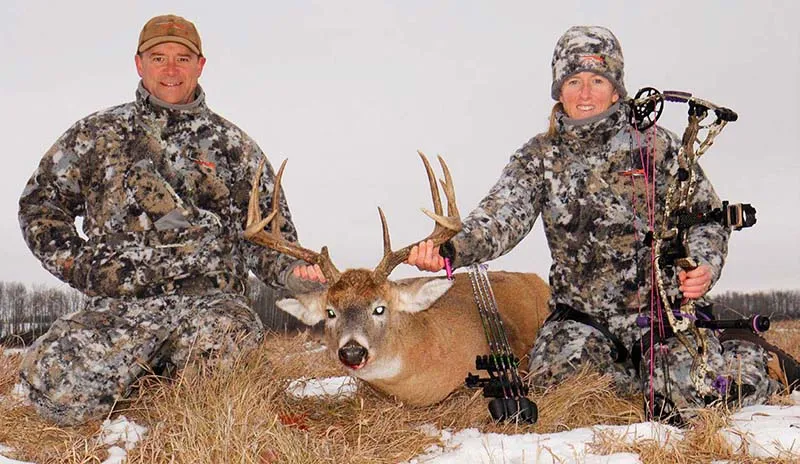
Camo coveralls provide full-body camouflage that helps hunters blend into their surroundings and avoid detection. Unlike separate jackets and pants, they offer seamless concealment from head to toe. This is crucial because deer rely on keen eyesight to spot any sign of movement or color that doesn’t match the natural environment.
During hunts, especially in early mornings or late evenings, even a slight mismatch or exposed skin can ruin a hunt. Full-body coveralls minimize this risk, allowing you to stay still and confident without worrying about scaring deer away.
When to Use Camo Coveralls?
- Bow Hunting: Essential for close-range hunting (within 40 yards) due to precise concealment and scent control.
- Early-Season Hunts: Lightweight, breathable patterns keep you concealed in mild weather without overheating.
- Cold-Weather Hunts: Insulated coveralls with waterproof ratings over 10,000 mm and thick insulation (up to 1.5 inches) keep you warm during harsh winters.
- Tree-Stand Hunting: Full coverage prevents exposed skin and loose edges; many feature safety harness openings and quiet fabrics.
Coveralls are an important gear choice, improving warmth, concealment, and hunting success.
Key Features to Look for in the Best Camo Coveralls for Deer Hunting
Picking the right camo coverall means looking at a few important features. These details can make a big difference in your comfort, warmth, and success during a hunt. Here’s what matters most:
Insulation Type of Camo Coveralls:
Insulation keeps you warm during long hunts, especially in cold weather. Synthetic insulation like Primaloft Silver or Climashield Apex works well if you might get wet or move around a lot. These materials trap heat even when damp and dry faster than down. Down insulation is lighter and very warm, but it loses heat if it gets wet. For mobile hunts or wet conditions, synthetic is safer. For very cold, dry hunts, down gives maximum warmth. Look at insulation weight too—heavier insulation keeps you warmer, but it can be bulky.
Waterproof Rating of Camo Coveralls:
Rain, snow, and wet brush can ruin a hunt if your coveralls leak. A good waterproof rating is 10,000 mm or higher. This number tells you how much water pressure the fabric can resist before it leaks. Higher ratings mean better protection. Some coveralls also have sealed seams to stop water from getting in at stitching lines. If you plan to hunt in heavy rain or snow, this is essential.
Camo Pattern of Camo Coveralls:
Matching the camo pattern to your hunting area is very important. Woodland patterns work well in dense forests. Leaf-litter patterns blend in with fallen leaves on the ground. Open-field camo helps you hide in grass or hay fields. Snow camo is perfect for winter hunting. The better the pattern fits the terrain, the less likely deer are to spot you. Some brands design patterns that change with the light or distance to break up your outline.
Quiet Fabrics of Camo Coveralls:
Deer can hear much better than humans, so quiet fabrics are essential. Look for tricot shells, brushed polyester, or soft cotton blends. These fabrics reduce noise when you move, bend, or brush against branches. Avoid stiff or shiny fabrics that make rustling sounds. Quiet fabrics let you move closer to deer without being noticed.
Practical Design of Camo Coveralls:
Design details matter for comfort and ease of use. Zippered legs make it easier to put on or take off the coveralls while wearing boots. Multiple pockets let you carry gear like calls, rangefinders, or snacks without extra bags. Reinforced knees and elbows make the coverall last longer, especially if you crawl, kneel, or sit in thick brush. Some coveralls even have removable hoods, adjustable hoods, or ventilation zippers to adapt to weather changes.
Sizing & Fit of Camo Coveralls:
The right size keeps you comfortable and allows layering. Make sure there is enough room for base layers and insulating layers without being too tight. Adjustable cuffs and waistbands help block wind and snow. Full leg zippers or stretch panels improve movement, especially if you climb, walk, or crouch frequently. A good fit prevents drafts, keeps heat in, and ensures your movements are quiet and smooth.
Extra Tips:
- Check for breathable fabrics so sweat doesn’t build up.
- Look for lightweight insulation if you walk long distances.
- Consider reflective or ID patches if you hunt in areas with other hunters for safety.
- Some coveralls come with scent-blocking treatments, which is an added advantage for bow hunting or close-range hunts.
Focusing on these features helps you choose a coverall that keeps you warm, dry, and well-camouflaged. It also allows you to move freely and quietly, which is very important when hunting deer. Picking the right coverall can make your hunt much more successful and enjoyable.
6 Best Camo Coveralls for Deer Hunting in 2025
1. ScentLok Savanna Fuse Coverall – Price: around US$209.99
This camo hunting coverall is built for serious mobile hunting. It features Carbon Alloy technology to cut down scent, cooling-infused polyester fabric, and lots of pockets, according to the listing.
Pros : Ideal for early- or mid-season when you’re moving and need stealth + moderate insulation. The camo and scent control give a serious edge.
Cons : Price is higher than some mid-tiers. If you’re in a deep freeze or just chilling for hours, you may need heavier insulation.
Best for : Bowhunters or active stand hunters who move a lot and want one piece that handles different terrain and temps.
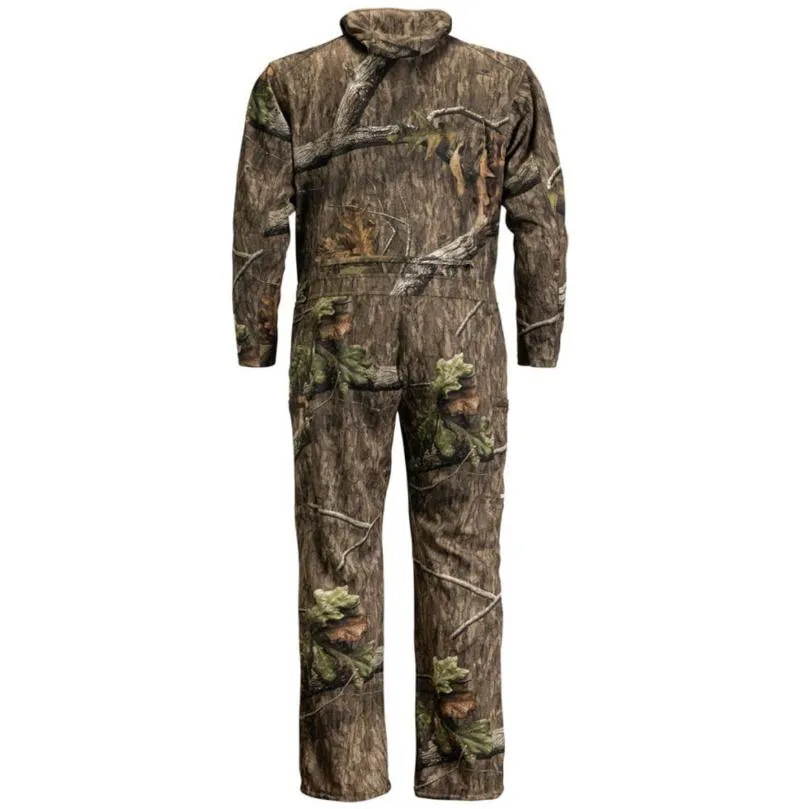
2. RedHead Silent Stalker Elite Coveralls – Price: around US$169.99–179.99
These are true one-piece coveralls , insulated, with heavy-duty features: full-zip front, storm flap, leg zippers, and durable build.
Pros: Good mid-price option for colder hunts. Insulation is substantial. The build quality holds up.
Cons: May be heavier/bulkier; if you’re in early season, you might overheat. Also, more value than ultra-premium features.
Best for: Hunters who expect colder mornings, use tree stands or ground blinds, and want full-body protection without the highest premium cost.
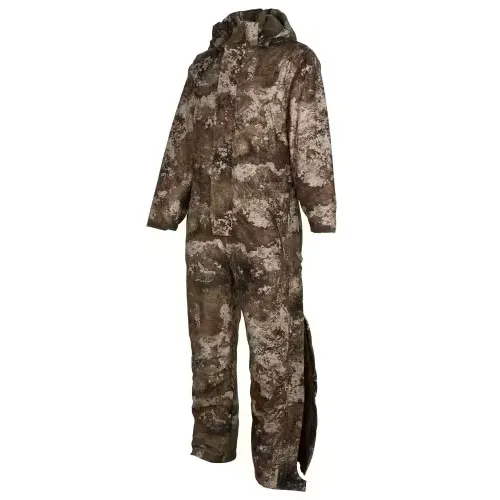
3. Gamehide Insulated Tundra Coverall – Price: around US$109.99
One of the most affordable true coveralls I found. Made with 8 oz cotton twill and insulated with 200 g HeatTech® poly insulation.
Pros: Excellent value. Solid warmth for the price. Good if you’re hunting cold but don’t want to spend big.
Cons: Fewer pattern/camo options. Material may be less premium (cotton twill vs Gore-Tex, etc.). Maybe heavier than ultra-light models.
Best for: Sit-and-wait deer hunters in colder zones who need warmth over ultra-light mobility, and who are price-sensitive.

4. MidwayUSA Hunter’s Creek Coveralls – Price: around US$82.49
Entry to mid-budget full hunting coverall . Insulation ~120 g polyfil, waterproof/windproof shell, full leg zippers.
Pros: Great value. For mid-season (not extreme cold) , this gives very good protection at a budget cost.
Cons: Insulation is lighter; not ideal for deep freeze. Fabric may be quieter, but not premium.
Best for: Hunters in moderate fall weather, those trying to save cost but still want a full coverall instead of a separate jacket/pants.
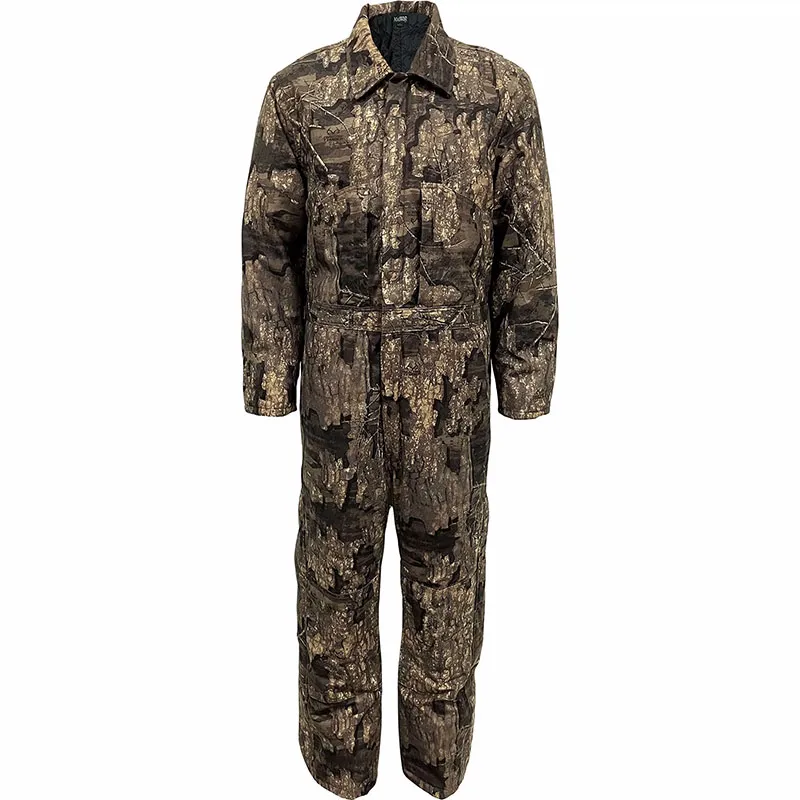
5. Hot Shot Insulated Twill Camo Hunting Coverall – Price: around US$149.99
This coverall features a cotton twill shell with quilted polyester lining and full-body insulation.
Pros : Solid mid-tier, good insulation for colder hunts without going ultra-premium.
Cons : Cotton twill may not have advanced weatherproofing (like Gore-Tex ). It might be heavy for longer hikes.
Best for : Hunters who know they’ll be in cold and rough conditions but don’t need the absolute top tech. Good all-around pick.
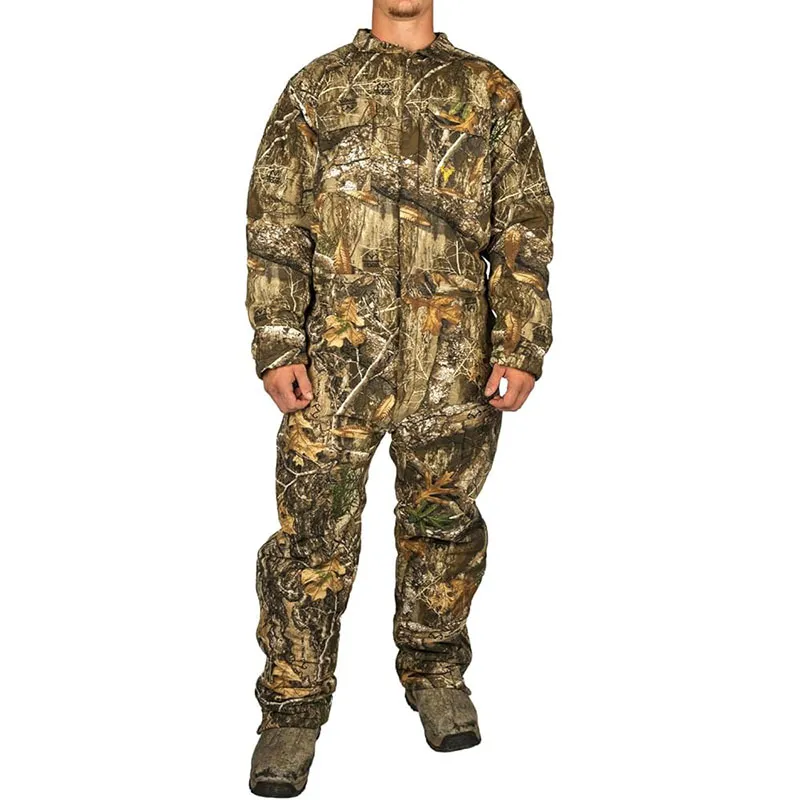
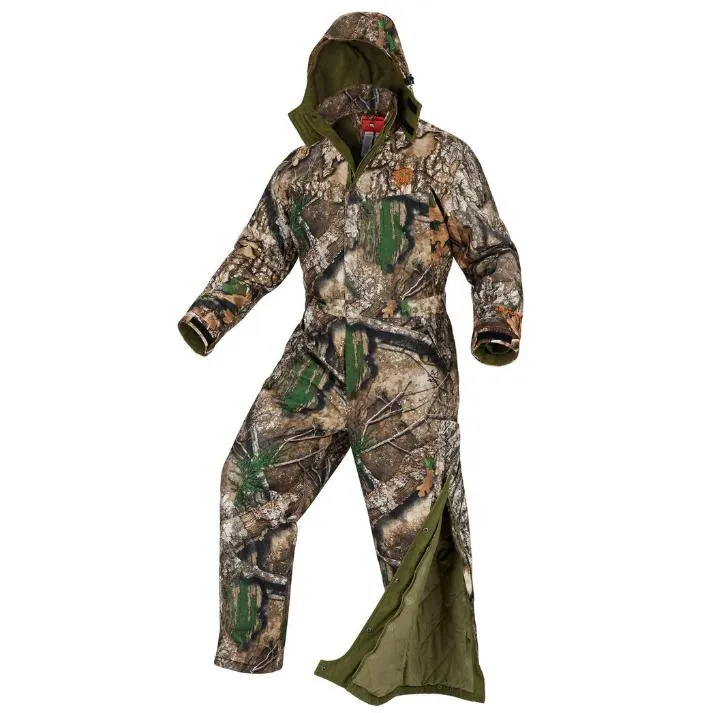
6. Arctic Shield Classic Elite Coverall – Price: around US$259.99–329.99
Premium one-piece deer hunting camo coverall with advanced insulation, waterproof/windproof shell, removable hood, etc.
Pros : Top tier for extreme conditions—late season, deep freeze, standing all day. If you spend hours in minus temps, this is serious gear.
Cons : Price is high. If you’re hunting for moderate weather, you’ll pay for features you may not use. Heavier.
Best for : Late-season northern hunts, harsh weather zones, hunters who stay in a stand all day, and need max comfort.
Quick Recap & My Recommendation
If you want the best value and decent protection, go with Gamehide or MidwayUSA.
For balanced mid-tier : RedHead or Hot Shot.
For premium performance : ScentLok or Arctic Shield.
Choose your insulation based on climate: mid-season moderate → lighter; late-season freezing → heavy.
Always match camo pattern to your terrain: woodlands, leaf-on trees, open fields. One pattern does not fit all.
Don’t neglect fit and silence: a loud zipper or crinkly fabric kills your chances more than a few degrees of insulation difference.
Why Choose Camo Coveralls Over Hunting Bibs for Deer Hunting?
When preparing for deer hunting, especially in cold weather, choosing the right gear is crucial. Camo coveralls offer significant advantages over traditional hunting bibs, making them the preferred choice for many hunters in 2025.
One-Piece Coverage for Better Warmth and Concealment
Camo coveralls provide full-body coverage in a single piece of clothing. This one-piece design helps trap heat more effectively and blocks scent better than two-piece bibs. About 73% of deer hunters surveyed prefer coveralls because they offer superior thermal retention and scent control, especially for stand hunting in cold conditions.
Superior Insulation and Quietness
Top men camo coveralls on the market for 2025 feature insulation ranging from 200g to 400g of synthetic or down fill. This is much warmer than the 80g to 200g polyfill found in most hunting bibs. The materials used are also quieter, with brushed synthetic fabrics and merino wool blends that reduce noise during movement. Hunters have rated coveralls 1.6 times warmer and 20% quieter than bibs during late-season hunts.
Better Waterproofing and Comfort
Leading camo coveralls boast waterproof ratings above 15,000mm hydrostatic head, ensuring dryness during long sits in wet weather. In contrast, many bibs offer less than 8,000mm, increasing the chance of water leaks. Coveralls also feature adjustable fits with stretch panels and articulated knees, which bring more comfort and mobility than basic bib sizing allows.
Cost and Value Consideration
While camo coveralls typically cost more ($180–$289), they provide excellent value by lasting multiple seasons and offering improved performance. Bibs are cheaper ($70–$140) but often lack durability and protective features, leading to dissatisfaction in harsh hunting environments.
Summary Table: Camo Coveralls vs. Hunting Bibs
| Feature | Camo Coveralls (2025) | Hunting Bibs (Typical) |
|---|---|---|
| Insulation | 200–400g synthetic/down | 80–200g polyfill |
| Waterproofing | ≥15,000mm rating (fully waterproof) | Usually <8,000mm |
| Quietness | Brushed silent fabrics | Noisy nylon common |
| Fit/Comfort | Adjustable and ergonomic | Basic size options only |
| Scent Control | Full seal, treated fabrics | Limited scent sealing |
| Price Range | $180–$289 | $70–$140 |
In conclusion, camo coveralls are the better investment for serious deer hunters prioritizing warmth, silence, waterproofing, and scent control in 2025’s conditions.
Sizing, Layering, and Seasonal Adjustments for Deer Hunting Camo Coveralls
Choosing the right size and layering options is essential for comfort and mobility during deer hunts. Insulated coveralls like the Guide Gear Men’s Dry Waterproof Hunting Coveralls feature 150-gram Thinsulate insulation, which keeps you warm while fitting comfortably over base layers such as merino wool. Look for adjustable features like elastic waists and straps to ensure a snug fit without restricting movement. For example, Guide Gear Steadfast Coveralls offer sizes up to XX-Large and full-leg zippers for easy on and off with hunting boots.
Seasonal Coverall Choices
- Early Archery Season: Opt for lightweight, uninsulated coveralls like the Mossy Oak Cotton Mill Flex Bib Overall. These come in sizes Small to X-Large with inseams between 28 and 32.5 inches, ideal for warmer weather and active hunts.
- Late-Season Hunts: Transition to fully insulated and waterproof models like those from Guide Gear or Magellan Outdoors. These coveralls, with 150g+ insulation and hoods, protect against cold, rain, and snow, maintaining body warmth in freezing temperatures.
Maintenance and Material Care
Maintain your coveralls by machine washing them with scent-free detergent. Avoid using dryers to preserve waterproof membranes and DWR coatings; air-drying is best. Cotton-polyester blends and waterproof membranes stay effective with gentle care. Increase washing frequency after muddy or intense hunts, but ensure no detergent residue that could interfere with scent masking.
Pairing with Other Hunting Gear
For full stealth, combine coveralls with scent-blocking layers and quiet boots. Materials like tricot shells (found in Guide Gear Steadfast Coveralls) enable silent movement to avoid alerting deer. Features such as removable insulated hoods with visors and multiple secure pockets help manage gear effectively while enhancing camouflage. Realtree bib overalls, for example, have reinforced knees and utility pockets perfect for storing hunting accessories.
Key Features to Look For
- 60/40 cotton/polyester blends for durability and comfort
- Waterproof, breathable membranes for wet climates
- 150g Thinsulate insulation for cold-weather protection
- Tricot shell materials for silent movement
- Removable, insulated hoods with extended visors
- Secure snap and zip pockets for equipment
- Adjustable straps, elastic waists, and full-leg zippers
- Reinforced knees for rugged terrains
- Wide size range: Small to XX-Large, inseams 28–32.5 inches
- Weight around 5 lbs for insulated models
These tips ensure you select camo coveralls offering warmth, adaptability, and stealth in all whitetail hunting conditions.
Conclusion
Choosing the right camo coveralls can make or break your deer hunt. From full-body concealment and quiet fabrics to proper insulation and waterproofing, the right coverall keeps you warm, dry, and undetected in any season. Match patterns to terrain, layer wisely, and check fit for comfort and mobility. For hunters or brands looking to customize high-quality coveralls, feel free to contact us for a personalized quote and options.